Chris baden: FLOW CHAT | The Tyler Wagner Show #1094
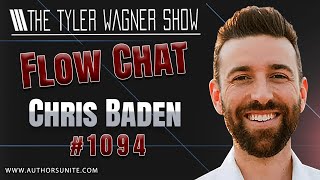
Chris Baden, CEO of FlowChat, explains how his SaaS platform automates direct-message outreach across nine social platforms. He shares how qualifying leads with a four-question filter and running multi-touchpoint DM sequences increase sales, and how turning service expertise into software can raise company valuation from 1-2x to 7.2x.
Chapters
Today we have Chris Baden with us. So welcome to the show, man.
What's up, Tyler? How's it going, man?
Very good. Pumped to have you here. I was just on your show. So for everybody listening, if you haven't already, which I'm sure not all of you have, check out Flow Chat. Is that— that's the name of the YouTube. So it's on. And what's the name of your podcast?
We just call it the Spotlight. Yeah, member Spotlight. Yep.
Okay, cool. So we just did an— he interviewed me, so everybody go check that out. And then tell us a little bit more about you though.
Yeah, man. Well, so I'm the CEO and co-founder of this little project we've been working on called Flowchat.com, and it's fun, man. We help people sell stuff and talk to more people. So it's a sales tool. It's pretty simple. We're on 9 social media platforms now. And we noticed a little something, Tyler. We noticed that people are logging in, all my numbers people out there, they're logging in 12 times a day on average. They're spending like on this thing, they're looking at this thing for over 5 hours a day on average. And what's funny is I'll be speaking at different events in front of other entrepreneurs and they're like, oh, that's, you know, we're the leaders that ban Netflix and like just read, you know, business books and work all the time, right?
Yeah.
It's like, it's like, pull your phones. And we went this, we went to screen time and I was like, you, you, you, I was like, listen, like those are the numbers in the market. So as a marketer and an entrepreneur, I was like, all right, like despite how I feel about social media, this is where people's attention is going. I should probably, it makes sense. It'd be a profitable choice to evaluate more closely how to speak this language. And so we're, we, and 9 different social media platforms, we're able to gather leads, likes, comments, we can import people from Facebook group members on all these different platforms and build targeted lead lists, like we call it ICP, ideal customer profiles. And then we'll, we're deploying direct message campaigns to build know, like, and trust, to build relationships. And of course, there's 1,000 ways to do this in a terrible way. But if you treat other people the way you want to be treated, you approach them the way they want to be approached. When it comes to outbound and even inbound, some people are like, I don't— that's not me, Chris. You know, I never approach other people like I will not be one of those people. That's totally fine. Some people, it's all inbound, right? They're doing their content thing. They're even doing ads. And people are coming towards them, but they still— it comes back to managing the attention in your inbox, in direct message. The reality is there's a ton of revenue there and the fortune is still in the follow-up. And so we really help with those DM campaigns, those follow-up campaigns. You know, listen, you get more touchpoints, you talk to the right people with the right message, it equals more sales. It's a science at this point.
And if anybody knows that, it's me. So I completely agree with that. Um, so wait, I have a quick question because I don't know, I think there's— unless it's complicated, how do I find my screen time? Like, where, where is that?
Oh, um, this will be a good test. This will be— yeah, yeah. All right, let's do it on the spot. So, uh, there's the Settings app of your iPhone. Yeah. And then, uh, I gotta remember, I think it might be— someone's like watching this like, you idiots, it's over here. It might be In like general. Okay, I'm definitely going to be YouTubing this later. If you're listening, reach out to us and let us know.
Okay, yeah, do that. And then we can actually— what I'll do is I'll post it in the description. Um, but if you do find it, let me know because I actually think mine's over 5 hours a day. That's why I wanted to see my—
I found it. Oh yeah, yeah, okay. So I just— I cheated. Uh, when you go to the Settings app, at the very top It'll say, uh, search, and I just searched, uh, screen time. Okay. And then it pops up. So like, that's a faster way of finding it.
Oh, I don't even have screen time on.
Well, okay, there you go. Like, I have mine on. It'll send me a report like, your screen time was, you know, 12, 20% higher this week.
Oh, okay. Okay. So I just turned it on. So sadly I can't give any data, but so are— is yours like, follow that though? Is yours over 5 hours a day as well?
So my daily average right now is 3 hours and 50 minutes.
Okay, okay, gotcha, gotcha. Um, yeah, I— on with all the like Rumble and YouTube I watch, I honestly think mine's like, it might be like 8 or 10 hours. I don't know, it's scary.
It's crazy. Yeah, so, and, and, and, you know, listen, like, uh, not all time is created equal, you know, to be fair. Um, however, you know, whether you're spending your hours on YouTube or Facebook or Instagram or whatever productively or not, your attention is still there. And that's kind of the punchline for connecting with your ICP, your ideal customer profile and prospect, and building that relationship. A big part of the game is just meeting people where they're at, right? Communicate with people the way that they like to be communicated with and meet them with— let them buy the way they'd like to buy. You know, oh, you don't wanna pay via check? You'd prefer to pay via credit or debit card? Like, okay, like bill 9, I'm saying that as like a ridiculous like payment process because of course we're gonna accept credit card or, you know, it's so accepted. But can you imagine if we had to not only sell people but convince them to pay us via check and mail it and then wait? Like that would be absurd. Like, okay, not worth it, you know? But there's parts if we really evaluate our onboarding processes and our delivery processes And in our acquisition processes, we can find a lot of times these little things that are wildly absurd to our prospect and maybe not as obvious to us. And what that's gonna do is reduce the friction and increase sales and continue to build your business and brand.
Dude, I agree. And the check thing, just funny side note, I have actually turned down business before. Well, I've had a few clients, they're like, I only do checks. And I'm like, honestly, man, it's not even worth it. Like, I don't even want it.
Like, I don't, I haven't had a checkbook since 2000. And then, you know, yeah, it's—
I have never actually personally had a checkbook. Literally, I've never had one. So I'm like, but, or if I did, I didn't know. I think when you sign up for a bank account, they give you one, but I like never have used it.
So I never say, I never check that box to even have them mail it to me.
No, never. So yeah. And so I want to get into your story, but one last thing I just want to mention, and then we can obviously dive into Flowchat a little bit later, deeper and like detail. I do think what you've built is ridiculously important because I'm even just thinking about it from this standpoint, right? Like, say you run, you do any campaign, like you're doing a DM campaign on Instagram or Facebook messages, whatever. And then what most people will do is they'll then send a link to have them opt in for something. And I can only imagine how much of a decrease that causes, right? So say you have 50 messages live and then you send that message and the message is like, whatever, hey, you talk a little bit and then go here if you're interested. The drop-off is probably 90%, right? 90% are not comfortable giving you the email and then you lose and then you don't follow up after that because you don't have this platform and you just lost freaking 45 of the people that if you actually had this platform, you could continue the conversation. So it's actually crazy.
So yeah, no, I appreciate you sharing that. And I have this very specific story that I like just recently went through in this particular use case. Is a baller like you, you know, multi-eight-figure operation, right? And look, like, so context really matters. Okay. So, you know, we're running a tech company and that's great, but like, you already know this, but everyone listening, watching, listen, I'm what they call a non-technical co-founder, meaning I can't code anything to save my life, you know, but what I am useful to the world at is picking up on patterns So, you know, like, oh wow, this is a major gap, major pattern in the market. Here's all the smart people that know how to build the buttons that help these people. Like, we should all be friends. Like, I'm that guy, right? And so, and I noticed this pattern with this particular case I'm about to share. This is a multi-eight-figure company and they have great— they're doing paid ads, they have great brand, great— they actually have 8 companies in their portfolio. And they're doing tens of millions of dollars via DM, right? One of their common workflows, just to be specific, is a reel or a short, and at the end of the content, it's DM me keyword XYZ, and then they— now the conversation's in DM, and they have some decent process in place. Obviously, they're selling and doing well, and like you just described, The response is there, maybe an automated follow-up message to get collecting emails. They can follow up in another, you know, communication medium. But there's so much drop-off. In fact, this particular person, I went through all of the funnels myself, opting in. Now, this is before they were a client. Now they're a client. We've helped them with their workflow, but it was before. And what happened was this: there was zero follow-up. You know what's crazy about this, Tyler? I happen to be an ideal customer for like 3 of their 8 companies and services. They could have got at least $30K+ out of me, but I had no idea who they were and like all the things that they offered. And so if they followed up, that would have happened. So what we're able to do with them simply is import all of the messaging that's coming into their DMs. We import for there and we put it into a Kanban format to where now we can effectively manage hundreds and thousands of conversations across 9 different social media platforms. And if all we did was just send 1 or maybe even 2 follow-up messages to all these other people, you know, we're like, we just got this in place. I said this is recent, like we're projecting about $200,000 to $250,000 per month increase in sales just from sending a couple extra follow-up messages. Dude, so the fortunes in the follow-up is still not a lie. Still applies. And when you study sales processes and workflows, when you do the real work, there's no more guesswork. And this is part of like, look, we know we need to get to about 10 to 12 touchpoints, but most people, businesses like Tyler, like, again, you know this, the audience might not know this, like, but you know my secret. I'm really not that smart. I go talk to a company, it's like, hey, Chris, I'm talking to 10 people a day. It's like, cool, I got this brilliant idea, Tyler. We're gonna talk to 20 a day. Check that out. How do you like them apples? Like, that's, you know, it's like, wait, how many touchpoints do you have in your sales process? Oh, 4? Cool. Check this out, Tyler. We're gonna do 12. Yeah, you know, wow, brilliant. You know, but, you know, so we pick, we pick, it's like it's a stock market. Like, that's all I do, you know? Like, it's that, it's that simple. And so when we evaluate the process and we see that there's 4, it's like, cool, I know you're leaving 60% of the revenue that you could be closing within your market because you don't have this in place. And here's the SOP and here's step 5, 6, 7, 8, 9 that you are missing that we can add in, you know, 5 to 10 business days and we can remove now the guesswork and change this copy or this work. Look, we just need to do more sales labor to convert more. Anyway, so I'm on my soapbox. You got me going already.
Oh, I know. Well, yeah, this is your stuff and it's true. And as you were talking, I just realized that there's somebody and it doesn't matter if I say her name. Her name is Lauren Pickner. She runs Impact School. If she's not a client, she should be because she does a lot of DM stuff. She— I'll intro you.
Lauren, if you're listening to this, we need to have a conversation.
Yeah, dude, for real. Dude, I think she would totally use your stuff. So, but here, so let's— normally I do this earlier on, but I am actually truly like so intrigued with FlowChat and everything that you guys have created. So I wanted to touch on it quick, but before FlowChat, like What were you, what were you doing? Let's go like middle school. And I mean, what I'm asking is when you were in middle school, not necessarily what you were doing, but what, what did you think you were gonna be doing now? Like, did you see it project like this at all or completely different? Obviously you didn't see Flow Chat exactly, but you, you know what I mean?
Yes. Tyler, unfortunately I peaked in middle school and I forget what movie I saw that on, but I think that is funny. Um, in middle— man, like, middle school was such like an emotional like part of life. It's bringing back like all these thoughts, memories, and stories. Um, but, but I think the essence of what you're asking, like, Chris, when you were in middle school, what did you think you would be doing vocationally, right?
Yeah, yeah.
So here's a funny story. They made us take this test, I think it was called the ASVAB test, and I was, uh, um, I don't know all the freaking questions, but they assessed me And at the end, end of the test, they're like, this is the thing that you would be best fit for. You know what that one thing was?
I have no idea what it is.
It was to be an actor. Really? Yeah. And I was like, screw that. And I've like never done it. So I don't know, like per middle school, you know, and whatever test I took, I was supposed to like go that direction. Um, uh, I, I, uh, I thought martial arts was really cool, so I was, you know, watching Chuck Norris and Jean-Claude Van Damme, and, you know, so I was like into martial arts. And like, uh, I played sports. I really thought I was going to be a professional athlete, and I was like, you know, and, uh, like martial arts, I was like, yeah, run a school and like maybe compete. I was like, ah, I just want to like get all the belts. And so I got like my third degree black belt, and then I was kind of like, then I got into sports and so I was gonna be a professional athlete, you know, that's more how I was thinking in middle school. And I'll never forget the day when I was 22 years old and I grad— I did get a Division I golf scholarship and that golf, like, dude, I graduated high school at 144 pounds, you know, just about 6 foot. I wasn't gonna be a D1 basketball player, you know, I wasn't like baseball. I was like, I guess I'm going the country club golf sport, you know, like this is the one I could actually compete at the next level at. And so I went that direction, and, and, uh, after graduating, I decided not to go pro. And I was like, oh, I'm not gonna be a professional athlete. I've like screwed up in life. Like, I like, what, you know, what's my life worth? You know, I had like this whole identity crisis. Um, but then I, I started, you know, I got involved in the, the business world from there.
Yeah, the athlete stuff is scary, man. I actually think about that a lot because, I mean, I played sports middle school and high school, but I never thought I would go pro in any of them. So college is kind of where that ended. But like, even the— even if you are like amazing, say you're 6'8" and like it's very clear you could be a basketball player, dude, one injury, done. Yeah. I mean, it's to me the athlete stuff, it's so amazing to me when somebody actually all the stars align and they become like a LeBron James. Like the chances of that are like zero.
Like literally statistically it's insane. Yeah. Because I looked into it a little bit because that was the path I was on, right? Like 10% of high school players will go on to college. 1% of college players will go on professionally. Those, I don't know if that goes across like all sports, it's probably somewhat close though. It's crazy. Like I played with people that are insanely good and you'll never know their name. For example, a name people would know is Ricky Fowler. He's won this year and he's like been, you know, in the mix, you know, making millions for years. Well, I was playing with, you know, Ricky Fowler in Southern California, you know, in college. And you get around that, and at that point, you know, you— I— you get around that type of player, and I'm like, damn it, dude, like, I've been playing every day for 10 years and like focused, like not screwing around, like healthy. And I'm like, bro, I can't— I'm like, never gonna— whatever that is, I'm never gonna be that. And it was great. Like, yeah, and, and it makes me feel so much better inside that he's like top of the PGA Tour, like top 10, top 20 in the world. So I'm like, okay, cool, now I know a little bit what that feels like. But there's other people that were shooting low 60s, you know, if you know golf or whatever. Yeah, no, you're shooting Ricky Fowler numbers, you know, uh, at, in, in college. And it's like, you know, but they had drinking problems or health problems or whatever, whatever, uh, and they just you'll know, you'll— they have the skill but still didn't even make it. Like, this— the, the things that have to come together for that to work is crazy.
Yeah, I think— I guess that's— I actually just had a flashback. It was like 8th grade, and I, I come from like a small town an hour north of Philadelphia, and we went down. I was in this basketball tournament because basketball was kind of my main thing, and we go down to the main city and we play against this team, and some of them are like over 6 feet tall. They're like apparently 8th, 9th graders, and I'm like, okay, first Oh, this seems a little strange, but okay. And then literally one of 'em dunked and I was like, okay, yep, not gonna happen. I'm like 5'9.5". That I, I tell people 5'11", but my license is 5'9.5". So it's a lot.
But regardless, well, I mean, you gotta specify tippy toes or not.
Yeah.
I mean, that's like, that's on the table. Yeah.
So, but like, it just, I realized even younger that just wasn't gonna happen. But basketball I think is a little clearer to, to understand at a younger age.
Yeah, well, I mean, ironically, that was the first sport I mentioned because, like, I— basketball— like, I love playing basketball and played in middle school, and I was like, yeah, I don't even know if I'm gonna make it in high school for basketball.
Yeah, it gets serious fast. Um, so, but I wanna— so when you, uh, so then you start to get into business, like, obviously, assuming at least Flowchat wasn't your first venture.
Oh no, no, no. Oh, okay, we're 2 years into the Flowchat project. Yeah.
Yeah, perfect. So tell us, like, I'm sure you've had some failures, some successes. Can you talk about some of your earlier stages in business? Like what that looked like?
Yeah, totally. Clear skies and smooth sailing, Tyler.
Everything was like this, right?
So yeah, man, I'm out of— like, I graduate Friday, I'm working Monday. It's kind of how it went. Like, I just waste no time. Like, let's roll. And I ironically, like, I worked for a church, non-denominational church. I was the AV director, the audio video director, and I was like, I'm gonna like mess around with like this, uh, like video stuff. And, and so, um, like I'd write, film, produce, you know, like, I don't know, like these little short feature videos and, and things for like sermon series or like outreach for like whatever they had going on. I would just like, you know, make stuff, right? And, uh, you would think like, Chris, you started then, like why do you suck at content right now? You'll find out soon. So no, no. So I like, I was like, well, and this is the first and only job I've ever had in my life, right? $15 an hour. All right. So I'm like doing the thing. And meanwhile, I'm like doing freelance gigs at nights and weekends, just hustling, right? And then I, so that's where I started. And I quickly realized, like I was only there a year. I was like, I came, you know, to the leadership or whatever. And I was like, hey guys, like I think I found a way to like self-fund this whole department. I found like these sites you can like sell your videos and da da da da da. I think it'll take me about 3 to 6 months and I can fund this. And they, and I'll never forget the reaction. The reaction was like, I can like give you an allowance. Or I was like, no, no, no, I'm not, I'm not asking for money. I'm saying like, I'm gonna go create all this stuff. And at that moment I realized I don't think like everyone else. Yeah. And so I didn't, I, you know, now I'll tell you I'm an entrepreneur because I've been employing myself and others for the last 13 years, but I never identified as that originally in the beginning. So, so it was this, that was kind of the beginning of my journey. And the next, you know, position that I ended up taking was a commission-only sales job. I was credit card processing. So I would set up, you know, you go to a restaurant and give them your credit card and they like swipe the card or whatever. I would set up the hardware and the software. Well, I'd mostly negotiate the contract and then they were supposed to have a support team that would go install like the tech stuff. But I wasn't patient enough, so I learned that too so I could get deals done faster. So this hardware software sales, like, you know, genre in Chris's life was born.
And that in itself is entrepreneurial, actually. Like, you literally were like, you noticed conversions maybe were a little lower, but if you learned all the other things, then you could sell it easier because it could get done right then. And I bet nobody else did that.
So I was like, yeah, I'm not waiting till next week. You guys out of your mind? Like, that's stupid. Like, all right. And you know, I'm 20, whatever, mid-20s. I'm like, I just work all the time. Like, let's roll. Yeah. So, uh, now I'm married, I've got 3 kids, and you know, I, I, you know, allocate my time a little bit differently. But, um, you know, at that time though, like you're saying, picking up on those trends, most people look at like, oh, I'm a sales guy. I'm like, no, I'm like an undercover agent. Think about what I'm doing. I get to— my job is to go make friends with all the different business owners. And because it's credit card, I get to see their numbers. I know that at least 70% of their revenue or all of it is going to be done via credit or debit card. So I get to see their margins. I get to learn what business I'm going to start. That's how I thought about it. But I didn't even think— I just thought that was normal, right? So I, so, you know, I was there for 3 years. I ended up building a portfolio of over 200 companies. In just under 3 years. And, you know, there's all the accolades or whatever and stuff that I hit in their, their, you know, company and the metrics and stuff. But, um, and I still have equity in that portfolio that I built like, oh, like a decade ago now. So there's, there's businesses that are paying, you know, transacting, and I get an insanely small percentage of all of those transactions. So it's, um, yeah, I mean Like, look, like I'm blessed with good parents and, you know, like my needs were met, you know what I mean? I ate, I had clothing and shelter and that's great. But when it's come to business, like I've never taken any money. I've always had to create something from nothing. And it starts with listening, practicing empathy and creatively solving problems. Those 3 things have proven to help me not only survive but thrive. And I just keep learning and understanding what people need and what I can do to be useful and render value in the market. And it started in that industry. And then you have a team and you're trying to help them do it and you wrestle with that piece. You're like, screw you guys, you're lazy. I could not spend time with you and just go close another deal or two and still make more. You wrestle with that leadership role, or I did anyway. And then eventually I grow past that and I'm like, okay, it turns out I just suck as a leader and need to learn how to communicate better and build better culture and, and, you know, guide people and train people better. And so you grow through that piece and that, that was the starting. And something that is worth note was the second month. So the second month in, because the first year in I only made $26,000. On my tax return, right? And I can't get married. I can't, you know, hey baby, you want to move in with my parents and eat two, you know, a meal a day? Like, not only could I not close deals in the beginning, like, I couldn't even close the deal to get married. I was like, I had all kinds of— I sucked at sales.
Yeah, right.
And so, so my second month in, I'm doing 70+ hours a week, you know, and the whole month goes by, you know, at that pace. And you know how much money I made? I don't know, $800. Oh man, for the entire month I'm working, you know, the, the like 80-hour weeks, right? And so it's like, okay, you know what, um, I learned something. I learned that I don't get paid to work, I get paid to create results. Totally. Nobody— I work hard, I deserve this. You deserve nothing. Yeah, unless you actually are creating value and results for those that you're serving. That was really humbling for me, but I'm really grateful that I learned that in the beginning of my career. And so what I started to think about was, well, how do I create results for other people? I was like, well, what problems do they have? And like, what do they need? And even to this day, I have a 6, a 5, and a 2-year-old. My 6 and 5-year-old, my 2 boys, like, they, they're now on their 4th business, that their desires are growing. And so they need bigger business models to pick, you know, like their first business, they made $13 selling keychains. But now the toys and the things they want are bigger. So I'm like, you gotta sell something more than $3. And you know, anyway, we can get into like more detail of their business models and stuff, but I'm—
that's the—
the skill and the language of sales and marketing is just that. It is a skill and it is a language. My personality isn't like wired to be the rockstar salesperson. But because it's a skill and a language and I've been a student of it for over a decade, it's been insanely valuable and has changed the trajectory of my life. It's taught me to listen and connect with other people and serve them in a way of solving their problems. And so fortunately, learning that earlier on, you know, that being played out over the next, you know, 13 years, I sold a portion of my portfolio to start my first insurance agency and had a small team of 5, and we sold over $1 million $1,000 of premium in our first year. And I was like, Tyler, I love you. I don't care what auto policy you have. I don't just— I just don't want to talk to you about insurance. And so I was like, this is not the business model for me. I was clean-shaven, suit and tie, in the office every day, and I was like, this sucks. Yeah. So no disrespect to anyone doing those things. Like, it's needed, and it's a very useful, you know, service. One of the most time-tested industries of all time, insurance. Sure, but I'm not gonna wear a suit and tie. I don't. I gotta be out moving around, connecting. Way too— this office life, it doesn't work for me. And, uh, but, but that's part of the journey you're asking about, right? Is like, where do you start? Where do you come from? And you gotta find who you are and how you connect with the world.
Well, that's the key, as I think finding who you are, and that's like— I mean, there were so many things in there that you said that I can relate to. And the problem solving, the suit and tie, I mean, I realized that at such a young age, like, I was in this like this at in college, and it was only once a week, a meeting, and you had to wear a suit and tie, and that was enough. I was like, can't do it for 1 hour to 7 to 8 PM every Wednesday night meeting. It's like, no, I can't. It's too much. I can't do it.
I think I'm getting hives. I think I'm allergic to this. I can't. Tyler, your skin's fine. No, no, no, no. I think it's coming.
Yeah, dude, I hate to die. I hate it. But no, I think, and one of the key things I took from what you just said there is, I think it's like, and maybe it's more like custom to you or something than others, but it's like becoming aware of what other problems are. And like when you're an entrepreneur and that switch turns on, my experience, I think for me, it happened after I read The 4-Hour Workweek, or it was in that earlier stage of my entrepreneurial journey. And what happened is it almost, this is my experience, it gets turned on. And then you start seeing every single problem and then you start 20 businesses. That's how I, like, I just went crazy. I was like, I could do this. And then you realize, okay, sure, maybe you could, but if you try to run 20 businesses at the same time as one individual, they're all going to fail. Right? So then you gotta dial back and be like, okay, I see all the problems. Which ones do I actually like, would enjoy to solve? Right. And that's kind of the journey you went on because the insurance thing, I think that was your brain of like, hey, I can make some money, I can solve these issues for people. But it— you didn't realize the enjoyment part until after feeling it, right? But you had to go to get to this. And now I feel like you're really in what you're supposed to be.
Yeah. What, what I would say, that's such a vital thing you're mentioning because it's like the, the, the short answer to, to all this is focus. Focus on one thing. And you're gonna grow. Here's a great example on the focus piece. I can say it this way. If ever, you know, Alex Hormozi is—
love him—
great, swooping up, you know, attention, mindshare like nobody's business right now. And, and, but so he's here in Vegas too. And we connected briefly. We don't talk, you know, very often, but we connected in Russell Brunson's Inner Circle, like 2017, 2018. And so this is like before, you know, he was doing well already, but it was before the Alex Hormozi of today.
Yeah, I didn't even know about them then. So totally. Yeah, that's great.
Yeah. So it's been awesome to see what he's like built over the last 5 years. And there was a ton of talent in that inner circle too, like entrepreneurs. And, and I'm coming in, you know, as the— I call it discouragement. It's where you're inspired and discouraged all at the same time. I'm totally inspired to like be around all these badass entrepreneurs, but like imposter syndrome. Wasn't just an emotion, it was a fact.
Yeah.
And I'm discouraged. I'm like, you guys are awesome. It's like, thank you for the reminder of how bad I suck right now. But, but that, you know, the way I process, I'm like, I get that emotion, but I want to be in those environments because I'm going to listen and I'm going to learn, I'm going to adapt, and I'm going to grow quicker than I would just by myself. And so, you know, connecting at that point was huge. And he's here in Vegas and while I'm not executing well on the focus on our topic, I'm gonna land this plane. He was talking to an entrepreneur that lives in the same building that he does here in town. It's the Panda Express guy. And dude, their numbers are insane, like billions.
I saw a video about this. Sorry, go ahead.
Yeah. And he's like, so what's the secret? Like, how do you do it? He's like, he's been doing this for 45 years. He's like, I got really good at making orange chicken. I was like, that's awesome. And the essence of what he's saying is like, I did one thing for 45 years and I obsessed about, you know, doing it better and better and better and better. And I got pretty good at it. And so like, while that's the easy answer, I think what happens is like, okay, you know, we, we as entrepreneurs, sometimes we might not be in the appropriate business cycle that they were in, meaning if we hear this earlier on in our journey— like if you look at Orange Chicken's story and if you look at Alex Hormozi even, you're gonna see a time period of which they're trying freaking everything trying to figure it out totally right? It's not this, it's like do-do-do-do-do-do-do-do-do! Oh what's that? We should double down over there. Oh yeah maybe we triple down. So that's more realistic of how it goes so I think it's important for anyone listening, watching, to give yourself some grace, but assign a time frame. Yeah, for 30 days, for 90 days, for 12 months, for 18 months. I like— this is what I'm gonna do. Give yourself permission to box out, uh, you know, mind— you know, mind time to really focus on one thing and experience it, and then, and then make a decision. It's when we start and stop and half-heartedly do things that we get in trouble, because now we don't really know It's not good feedback.
Yeah, dude, I— oh man, couldn't agree anymore. And what I had actually saw, it wasn't the Orange Chicken thing. He had posted something about that where, uh, why it makes more sense to own, like, because Panda Express is like everywhere. So it was like the owner had a decision to franchise or just own them all, and they all are very profitable. So he just actually owns all of them. It was something like that, like TikTok or something. Yeah. So, okay. So then the insurance thing happens and then, and actually let's, let's go to FlowChat now. Maybe there was something in between there too, but, um, so how did you come up though? Obviously you notice a problem, but can you talk about kind of earlier stages of FlowChat? Because I am curious because it's such a great idea, dude. I mean, it's freaking awesome.
Well, yeah. And it's, it's, um, uh, well, thank you. I appreciate it. Um, Yeah, like, so my business partner and I, Sean, we built and sold our first software company a few years ago. And so about 4 years ago now. And after we built that, we exited that, people started asking us like, how did you grow that company so fast? And we eventually said, all right, you know what, pay us and we'll show you. So we kind of slipped into this consulting stuff. And then, you know, You know, 100% success rate. We're growing, you know, sales in people's businesses. Really, we're like our core competency, our sales process and acquisition models. And like, you know, we have productized ourselves in the form of Flowchart because that helps us serve more people at scale. And so that's where this, that's where this evolution began. We worked one-on-one. We like to go high ticket, serve people to your best, highest level and capacity first to get the biggest, craziest result. Then we brought it to the group model. So we're in like a mastermind, you know, 12-week, 90-day, let's implement this specific sales process in your business. And we'd bring on 15 to 20 businesses at a time and we'd do, you know, 3 quarters a year and, you know, kind of chill a little bit more in like November, December and then July. That's how we manage it. And so, and then as we saw this, we're like, this stuff like keeps working, this pattern keeps working. And so even to acquire for, you know, getting 15, 20, you know, different businesses at a time is $25,000 mastermind, like, you know, per seat. And so when we were bringing people on, we're like, well, we could do webinars and build a brand and challenges and summits and like paid ads. We could do all the things. We've done those things. But what if we just did none of it? What if we just had simple conversations and talked to people? And so we did, like we just started like reaching out via DM. And listen, like anyone listening, watching, you can still manage this in outbound and inbound ways. And there's a bunch of ways to screw all this up, but there's a couple specific ways to really nail it and people appreciate it and it can be well received. In fact, a lot of times when people are like, oh, I hate those and like everyone sucks, you know why that's so awesome? Those are all your competition. You know how easy it is to stand out in DMs? All you have to do is be kind. Like, start with a compliment and you now are above 98% of all your competition. Like, it's crazy. Start with a compliment.
I've never tried that actually.
Kindness is not, kindness is not, I know, like, it's not groundbreaking stuff, but it's not maybe the most intuitive. People feel this unnecessary pressure to like, I gotta sell. It's like, No, you don't. And so, like, look, kindness isn't just like a warm, fuzzy, good thing. It's actually a good strategy.
Yeah. So I'm like, mind blown. I don't know why it's such a basic thing, like, because our, like, reach out strategy— sorry to cut you off, but no, no, it was like really big for people because, you know, your business is doing well and like you, you use these strategies and I do a lot of reach out. So like our reach out is normally just like, hey, I think there might be ways we can collaborate. And then that's all it says. And it's like it opens up curiosity and then they respond and then we have like a flow that we go with. So my approach is always like curiosity-driven and very short, and we do a lot of LinkedIn and website reach out. But LinkedIn is where my mind goes to because on LinkedIn you get such long messages, all sales. So when you get this, hey, I think we might be able to collaborate, and that's it, it gets a very high response rate. But I was just like laughing in my— to myself when you said that. I was like, What if on LinkedIn you like reached out and was like, you have a beautiful profile picture? You know, like, like, I wonder, like, maybe that is a little too far. Maybe that could be weird, but I wonder if they would get a good response, right? Like, yeah, I don't know. So sorry, go ahead.
Well, one simple one can be like, you know, hey, I really appreciate the way you're showing up and, you know, the work you're doing, you know, just like keep it up. Like, it can be, it can be really simple. Um, and that one's more general. So that you can really send to most people. I do highly, highly, highly recommend that you have a team that's out, you know, that's building lead lists and doing the qualification. We have our 4 Qs, which are essentially a set of 4 yes or no questions. And if you get yes to the 4 Qs, then they are an ICP, they're an ideal customer profile. And if they make those qualifications, the messages that you send will be genuine and true because you've already defined the criteria. And so where some people get lost and stuck there is like, we want to do personalization, but the challenge is doing personalization at scale. That's the piece that no one really nails. And then they're stuck. They're stuck with, well, this seems good, but I'm never going to do it because it's too manual and too much work. But it's the best. It's the fastest and cheapest, most highly connected way to acquire. So, you know, we help solve that problem, you know, and as we've, you know, gone down like, you know, from one-on-one to group model and then we've, you know, we started looking for tech, we're like, this crap keeps working. Like, all right, we put spreadsheets in place, like that was our MVP or minimal viable product and put team in place. We started looking for tech, like we'll just keep doing, you know, giving away our IP. Time, like here's our IP, you give us money, right? But the valuation of our company in that exchange, I hope this probably won't be for a ton of people, but for a couple of people listening, okay, you're selling your IP for time, for money. That's the exchange and it's high margin. It's a good gig, but the valuation of your company is still a 1 multiple, maybe, maybe a 2 multiple. But as soon as you productize your IP in the form of software, of tech, according to today's market, the median multiple is 7.2. In other words, if you do $1 million of sales through your IP being through tech, some private equity or venture capital will say, I will give you $7.2 million for that. But if it's not in tech, they're saying like, I'll give you $800,000 for it. So I, that might, everyone might not catch that, but for those that are ready, for those that are ready to hear that, not only will you increase your monthly recurring revenue, right? But the business, the greater asset that you're even spending all of your time and money building boosts tremendously. It actually becomes life-changing. So And we can get into white label and FlowChat. Like we help bring tech and white label tech. We help productize, help other agencies productize their IP in the form of tech so that they can get a multiple boost in their company too. So, because I was like, again, what problem are we solving? We can have this like lead gen acquisition problem type conversation. It's great. People also use FlowChat for recruiting. They also use it for raising capital or finding strategic partnerships. You know, there's other applications, but the thing that like I wish somebody would have told me, Tyler, years ago is that if I, because I built all these companies that do like low 7 figures per month and per year in sales, right? And I'm like, but not all companies you build are created equal. So when I learned tech has multiples, I was like, I love software. So, and I stumbled across it. And so, and then my first exit, I didn't understand this. It cost me millions of dollars. It's now as a blessing and I made money, but I also missed out on an opportunity cost of multiple millions, a tuition fee of which I'll never forget. And in this interview, in this conversation today, someone listening, watching, don't let that be you. So I'm, The thing that I really wanted to learn and have, I'm now able to help other people solve that problem and benefit from it through being able to white label FlowChat. We match their IP with our tech to boost the multiple and the asset of their company, which I think is freaking badass.
Yeah, it's amazing. It's huge.
Anyway, man, I went on like a soapbox. I think there was— I love it.
I did the same on your show, so no worries.
You set the tone.
So tell us actually, because it's funny, we touched on it earlier, but like, what if you were to describe it? Like, what exactly is FlowChat? Like, yeah, yeah, yeah.
You're— let me give you a specific case. We're on Facebook and there's a Facebook group. FlowChat allows you to import all the members of the Facebook group and deploy a direct message campaign to build know, like, and trust to sell your product or service to them. That would be one specific use case. So if we're— and there's, there's all— we're on 9 different social media platforms. If we go to IG, Tyler, and, you know, you have a viral post and a bunch of your ideal customer profiles, you know, prospects are commenting, you can import all the people that are commenting and actually follow up and get that second or third follow-up touchpoint with them. And look, when you have the right people and you're sending them the right message, you're going to get more sales with those follow-up touchpoints. So these are specific sales workflows that FlowChat implements into your business so that you're— you, Tyler, as the owner and founder and leader, are not stuck in your DMs. You're not tied to your business. There's clear SOPs and system that you can teach a team and train a team to be right. Right now you and I are talking, but I have VAs, I have setters, and I have closers, and we have someone managing that whole department right now as we're talking, building new conversations. I had a call earlier today and they're like, oh yeah, we were talking about this business. I was like, I gotta follow the conver— I gotta pick up on the conversation. You know, I'm having hundreds and thousands of conversations per day with new, you know, great people that we can serve in our market. And you can too.
Yeah, man, that's awesome. And I'm just realizing, and especially for my audience, that how big this actually could be. I mean, it's big for any person or business that literally sells anything, but for authors, I'm just thinking about this from an angle of selling books. It's interesting because like selling books is such a— I mean, it's difficult, but also at the same time, if you were to build know, like, trust with somebody through messages well enough, it would kind of be, I think, easy to sell them a book. Like, if it was done correctly. So I just had like a revelation or something of how authors— and, you know, obviously most authors don't make a bunch of money off their books directly. It's the back end of the business. But I am just saying that if some— if an author really wanted to get their book out there, this could truly be a method of doing that.
Can we hang— can we hang on that for a second? Yeah, yeah, because this is fun to talk about, like the sales process. So it's like the goal is to sell a book, and what I would call a pipeline is just one sales conversation. It's just one sales process, right? So let's put this pipeline up here of I want to sell a book. You could reach out to someone, you start a chat conversation, and there is the CTA, the call to action is here's my book on Amazon or, you know, wherever on my site, go buy You could also have another pipeline simultaneously running and reaching out to authors who typically want to sell a lot of books. So maybe it would make sense to find event managers that are booking speakers so that you can speak as much as you want to be booked. And when you book 5 or 6 new gigs per month and you're out speaking, you're now selling hundreds or thousands of books per speaking gig. So it becomes like, oh, well, what sales strategy do I want to, you know, install in my business with the objective of selling a book? And those are just two examples I'm giving, you know, per patterns we've seen with other authors in our community. But it gets interesting, it gets fun. You can start using pipelines and different sales campaigns to grow the initiative. It does.
It gets— and if, like, whatever the— say you write a book on— let's just something general marketing, right? And then there's a Facebook group that is all about growth strategies.
Yeah.
And then you could get— and that's like direct, start the conversation, build the relationship, and then like third or fourth message, like, hey, by the way, I actually wrote a book about all this stuff that you apparently want to know because you're in that group. And so that, that could be something there. It's, yeah, I don't know. It's just, it's interesting. I, there's so many, the, the possibilities are really limitless with what you built. Um, cool. So I guess, uh, really last question for you is like, uh, cause I feel we, we kind of went through everything up until FlowChat for everybody listening. Definitely. What is the website? Is it flowchat.com or what is it?
Flowchat.com, F-L-O-W-chat.com. And there's, there's some great free resources there. Our YouTube, YouTube channel, we've got well over 500 videos of, if you love the sales strategy, like there's tons of free stuff there and like frameworks and all, all the resources. It's like, please like go, my only ask is go do it so you make more money and then tell us about it because we love those stories.
Well, dude, it's so awesome too. I just thought too, like, as soon as you get FlowChat, then your YouTube channel becomes like really fun because you're like, oh, I could use this, I could do that. It's like almost like a, like a candy store or something. Let me try this pipeline. Let me try this sales thing. Like, that's freaking awesome. Um, that's where my mind went. I was just like, I'm gonna like want to try all these different things. So, um, and two, And maybe we'll do another show. I feel like we didn't get much into your personal life, but again, I do find your business so interesting. So that's why I kind of stuck on that point. But if there's any—
We did get to hit middle school a little bit. That was good.
Okay. We did. Yeah, you're right. We did hit middle school. So, but we'll leave this as the hanger. I think people would be interested because your kids' ages, 5 and 6, already having 4 businesses. That's really interesting. So for part 2, we'll learn about that, and that's why you got to tune in for part 2.
Um, yes, that, that, that's a good hook, and you won't, you won't be disappointed. Uh, my boys have also got to, uh, stand on a couple stages and share how they're running their business. And, um, so there's, there's actually some meat to it. Um, and like, the one— I'm not— stay tuned for, for part 2. It's just the part You know, the things that, that have impacted us the most, who are the first people we share it with? The people that we love and we care about the most. And so, you know, the skill and language of sales and marketing, whatever my boys and my, you know, daughter decide to do in life, I'm like, I'm gonna give them the skill. Because if you're a doctor, this is going to help you with bedside manner and really lead people in a way that to have the medicine and the care that they need and take care of themselves. If you're a lawyer, It's helping communicate, you know, a voice for those that have a quieter voice and don't know how to communicate and defend themselves. If you're, you know, like you can pick a different industry, sales and marketing. Like when you're deciding with your spouse or significant other or friends where you're gonna go to dinner, that's sales. You're selling each other on what's the right idea and where you're gonna go. Like sales and marketing is such a part of our everyday life. Therefore, I'm very, I think it's the number one life skill. And stay tuned to see how my kids have processed it into 4 businesses now.
Yeah, dude, it's so cool. So yeah, and what a cool story to be like, my first business did $13. Like, I think that's such a cool story.
Yes. And like, dude, you would like— they went door to door, not to friends and family. They went to the— because I just like, I start businesses, I brought them to the cold market. They faced reject. People told them no.
And so Do door-to-door. Best thing I ever did. I don't— I won't get into it, but like, I can't tell you the door-to-door. If you're— if you have confidence issues after door-to-door, you will no longer have issues.
Like, it's an immediate solver.
And like, yeah, crazy things happen. Some people do not like when you knock on their doors, so be prepared. It gets a little crazy.
It— yeah, it stimulates a lot of emotion and thought. Yeah.
So here's where I'll leave it with is if there's anything we didn't share that you want to, please do. And then, you know, let people know your socials, website again, and how they can stay in contact with you and Flowchat.
Yeah. So I'm trying to remember, like, on— it's Chris Baden on Facebook, and I've got like a purple background with like a green ring around it. You know, the Flowchat guy, like, you'll see that their handles on like Instagram and Twitter are the Chris Baden or the Chris Baden. So yeah, those ones are fine. And chris@flowchat.com if you want to email. I don't know, I'm just throwing all the things out there, Tyler. Whatever way you want to communicate, like, I'm happy to help and serve in any way that I can. And like, look, I'm a fellow entrepreneur, I'm a husband, I'm a, you know, father, and just trying to figure it out like everyone else.
Dude, appreciate it, man. Really enjoyed it.
Yeah, man, appreciate it.
More from Tyler


Catherine Nikkel : THE STORY EVERYONE HAS BUT HASN'T TOLD : The Tyler Wagner Show #1120



Scott Ritzheimer: Bring Predictable Success to your Organization | The Tyler Wagner Show #1115


Fred Moskowitz: A GUIDE TO GETTING STARTED WITH IN MORTGAGE NOTES | The Tyler Wagner Show #1113

Mark Podolsky: From Land Investor to Full Time Success How I Made $90,000 Cash in Real Estate


Mark Podolsky: How to achieve a 300% return on investment my foolproof strategy

Mark Podolsky: How to make passive income selling raw land the irresistible pricing strategy