Chuck Hengel: How Booming Brands Are Reimagining TV Advertising | The Tyler Wagner Show #1006
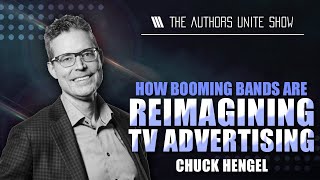
In this episode of The Tyler Wagner Show, host Tyler Wagner interviews Chuck Hengel, founder and CEO of Marketing Architects, an all‑inclusive TV advertising agency. Chuck recounts his career path—from an early analytics role at a marketing firm, through a fast‑growing agency that was sold, to the idea (sparked by his wife) of creating a performance‑driven TV agency that serves under‑leveraged, growth‑stage brands. He explains how Marketing Architects built a technology‑first operation, pioneering broadcast monitoring, real‑time call‑center data, and a proprietary AI‑enabled media buying platform that optimizes spend across thousands of data points. Chuck outlines the “TV formula” – the essential variables of creative quality, funnel optimization, brand positioning, and robust analytics – and warns that a failure in any one element nullifies the campaign. He discusses the unique impact of television, its cross‑channel effects (mobile, search, social), and the importance of retargeting and tracking. Real‑world examples are shared, notably Nuts.com’s transition from a legacy wholesaler to a direct‑to‑consumer brand that leveraged TV to accelerate growth. Chuck also talks about repurposing TV spots for paid social and the credibility boost of mainstream TV appearances. The conversation concludes with Chuck’s motivation for writing the book “All‑Inclusive TV Advertising,” filling a market gap on modern TV advertising, and his belief that a well‑executed TV strategy can dramatically scale businesses. The episode provides insights into AI‑driven media buying, the strategic role of TV in a fragmented media landscape, and practical advice for small‑business owners and marketers.
Chapters
All right everyone, welcome back to another episode. Today we have Chuck Hengel with us. He is the founder and CEO of Marketing Architects, an all-inclusive TV agency that gives brands access to performance TV campaigns without the usual high costs and complexity. So welcome to the show.
Excited to be here, Tyler.
It's grateful to have you on. So first question for you, I'm curious of like the story. How did you get here to this point? Like how did you create Marketing Architects? What was before this that led you to this is the question.
Yeah, well, there's a little bit of luck, I think, with any decision, and we've made it 25 years, and I feel grateful to have that journey. I started out in wanting to get into business, but not necessarily marketing, but I met a marketing firm in an on-campus interview, and that led me to just be fascinated by the creativity combined with what my background was at the time, statistics, and data. I didn't even think that was a career path. So, I got lucky and I joined a marketing firm in an analytical perspective capacity. And then that led eventually to joining a small upstart agency that grew really fast from like $1 million in revenue to a couple hundred million in revenue. And that business was sold to a big agency holding company. And I really wanted to get out of advertising. I thought I would just do something else, but it was really my wife's idea. Who thought, "Why don't you just come up with a different type of firm that would captivate you to stay in it because you're really good at a lot of the aspects of branding, advertising, direct marketing?" And it was really then her idea that led me to the idea of Marketing Architects to build a performance-driven agency that served, at the time, a target kind of company that was really underleveraged, that is kind of an upstart growing business that hadn't really capitalized on mass media advertising. And we've evolved since those early days, but that's what led me here. So, there's been some consistency in that path, but also feel like there were moments that could have gone in very different directions.
Got it, got it. Okay. And then, Marketing Architects, like what exactly— well, I guess I get the point, but I was doing some research and it seems like there's some like AI involved and things like that. So, some stuff that is a little bit over over my head. So I'm curious, like, how does it work? I guess, how?
Yeah, um, so we at— when we launched, we thought, how can we leverage technology to a greater degree, especially than what was happening back when we first started within the agency realm? And so that's just always been technology first, has been, you know, our one of our first core values. So that just led us to invest in things that would quantify advertising results. We were the first to actually company to be involved in broadcast media monitoring. We helped co-fund and launch a platform that measured when an ad would play in radio, and that was really pioneering back in the day. And then, we used that data to power decisions that would take sometimes a month to make, which was, "How is my ads performing?" Well, we would know that same day because we knew the ad aired and we'd know what the performance was. And that led us to develop call center capabilities that we would be able to get the switch-level data from immediately. And that led us to ultimately build our own media buying platform. And there's so many different ways to purchase media. The AI portion of that is just really letting a machine help learn where is the money best invested when there's thousands of different data points that you can buy against. So, it started out really modest, but it just continued to grow and grow. And today, we've been fortunate that our largest team in the company is actually our technology team, which is somewhat unusual for an agency. But it's, you know, that team is just really essential to our growth.
Got it. Okay. So essentially it like, it, so say if you want to advertise on TV shows, like if you want to be a commercial on a TV show, that process would be somewhat complex and expensive, but using it in this platform, it's much cheaper. And then I guess because the AI, it's almost like automated that their placements would occur.
Yeah, well, we have really great humans at our company. So you can, on one hand, say, all right, to decide where to air on TV, a human could make that decision. I wanna air on CNN and over the weekend, and this is the amount of money I wanna spend. That's traditionally been how it's purchased, but you also could, feed data to a system that would say, all right, well, let's not think what a human would do. You know, where does the target audience match best? What do we think the ratings are gonna be? That's a very difficult thing still to figure out. What is that number gonna be? And then based on where it's airing, what's the audience makeup of that? And is there any historical data we can use to predict not only where, we should be clearing, but what the performance may be. So, all those decisions start to get outside the scope of what like one person can think of all at one time. So, computers can now kind of inform that. And we like to say then our value add can be more around strategy. So, instead of the buy decision being so important, how can we help our clients better position their product? How can we leverage knowledge of the category they're in and how do they become a leader in that category? Those are things that you can't automate today. That's where our team can spend their time, is focus on those, those kinds of things. And that's actually what people would rather do, um, rather than the detailed analysis and, and planning of the actual media itself.
Got it. Yeah, that makes sense. And then, um, with that, I, I think like stories help, uh, people a lot of times because then they can kind of see themselves in the situation. So do you have Oh, that's actually funny. Nuts.com is— I was just on a flight and they actually gave these out to everybody. Those are some good nuts. I like them.
Oh, good. I'm glad you liked them. Yeah.
And hell of a domain, right? I mean, what's better than that?
Yeah.
Yourself nuts. You can't do any better.
Yeah. No, there's some really smart people over there. But that story is interesting because they had been a wholesaler for 80-some years. Very successful. They've got great supplier relationships. They roast their product. It's fresh. The family is, I think it's in 4th generation now. They're very caring, incredible people, but they made a decision a few years ago to move into the direct-to-consumer space. So, instead of being a wholesaler or a retailer, how can we sell direct-to-consumer? And they were really smart. They acquired a good domain name, built a strong website, figured out how to position their product successfully. It's a very fun brand. The product is really good. And they've been building a team to be able to sell direct-to-consumer and it's gone really, really well. They've been able to adapt and evolve. And really grow their businesses as businesses have now needed to move into that digital realm. And we're thankful to have a chance to work with people like this that then leverage us to grow faster. So that's our job is to help them reach new and incremental audiences in TV and continue to expand the impact they can have. And so it's been a lot of fun to work with brands like that.
Mm-hmm. So, and we can use them or maybe a couple others, but, It— I'd love to like kind of go through an example of, you know, somebody came to you and you don't have to give names or numbers exactly or whatever, but just curious on like the effect because I think that'll help the audience see like what could occur when this is done correctly. So, you know what I mean? Like companies come to you, they have this budget and the results they got from these placements.
Basically, yeah. Well, the first thing that's unique about us, we only work within the television channel, and yet we're fans of every form of marketing that one of our, one of our brands that we work with does. And so we're not looking to be better at Facebook than another agency, or to help somebody on LinkedIn if it's a B2B firm, or optimize search. Those are things our clients do. But the fact that we work just within the television space, that allows us to have far more impact from that channel. And if we were spread thinly across a variety of other channels. And then in terms of TV's impact, it's still one of those channels that it impacts everything that you can think of. When someone's watching a TV spot, they build some memory of what the brand is all about. A high percentage of people that watch TV, it's upwards of 90%, are watching with a mobile device in their hand. So they're able to go directly to a website if the ad's structured in a way to get them to respond. So they're doing that. Maybe it's an item that's sold on Amazon. They might go check it out there. They might go to review sites. They're gonna certainly search. Maybe they go directly to the website, but there's a lot of search activity. So what happens that's unique in TV compared to other channels, it impacts a lot of things. Yeah. And so it has a disproportionate amount of impact compared to some other channels that might just be getting the customer to click to learn more and make a purchase. You know, TV's doing a lot of things. That's what's still unique about the channel. And now TV's evolving. What is even the definition of television? Is it streaming? Is it your traditional television set? So it's become very fragmented. But the thing that's still unique about it is most people are watching it on some form of large screen, and that is gonna have impact when you see, you know, an ad of some sort. So that's what we really like is when we can find a brand that really is looking to, make a bold move to grow their company, TV can be that kind of both bold growth, bold move. It's not unusual to see sales rates double or even companies double or triple in size over a couple year period of time when they add a channel like television.
So I'm curious, I guess the question would be, and again, if you're able to give examples, great. If not, or I mean, if you have to kind of mask the identity, that's fine. But like, what have you seen work well? Is there like a formula for TV ads or is it kind of like just testing things out basically?
Yeah, I love the word formula 'cause that's how we refer to television. So the thing that we've been able to figure out, and I'm certain a lot of other companies and other marketing spaces have figured out, is what are the variables that have to be in place for success? And if one of those variables is not in place, then what happens to that equation? So in other words, you might make what you think is a really good television buy, but if your creative is bad, well, that's like, you know, multiplying by zero. It wrecks the entire campaign.
Yeah, right.
Or if your funnel is not optimized to manage the responses, okay, you've got the right target, the creative is on target, and people then don't know what to do when they go to the website. Because they're there to check you out, but you don't funnel them properly, again, it's like you've wasted the other variables. And when you think about positioning, television's a really good chance to step back and say, am I unique enough that when someone sees this ad, they're only gonna think about what we do? They're not gonna think about maybe 12 or 13 other people that are in our market space. So that's classic positioning. How can you look unique? It is a formula, and that's, that's really our secret sauce, is we've been able to optimize all the elements of that formula so it all works in concert. Traditionally, companies, when they do a channel like TV, they'll bring 4, 5, 6 different vendors together to do these different components. And the risk of that— it can work, but the risk of that is not everyone's singing from the same sheet of music. And what happens if the campaign has results that are less than what people expected, well, then everyone's pointing their fingers. Well, it can't be us. It has to be this other person. And, uh, and I guess the piece I didn't even mention is just even analytics. It's amazing how many people have not put in place the tracking mechanisms to create clarity of how the campaign's working, especially in a model where there's probably multiple different KPIs coming from different places. And how do we look at all that and make decisions? So, okay, so now you have all these variables and any one of them, if they're not optimized, completely ruins the rest of them.
Yeah, that amazes me too, actually. Um, although it's really, it's not early for it anymore, but I think a lot of people just feel it's kind of, even with just like paid social media ads, like having like a retargeting pixel and actually like Google Analytics and like really seeing what's going on. Most, I'd say 99%, really do not have a clear picture of what's going on, right, when they're doing paid advertising. And that's what you need to know, right? Like, it has to be measured effectively or you can't— like, that's how you make a decision if you scale it to the moon or if you turn it down and re— you know. So that's—
it's a combination of thinking like a human and then using computers. So, right, if you get someone through Facebook to your website and they don't buy, then what do you do with that? Well, it's reasonable to think that everyone's an early adapter or going to buy on the first visit. So if you don't have a good retargeting algorithm, you've— you're not maximizing the total potential of that. Well, then what does that look like? Yeah, so, um, it's not overly complex, but a lot of people miss that. And then how fast do I retarget, and when do I start to spend money? Do I give the person a week before I start to retarget, or do I retarget immediately? And these things matter a lot. Yeah. And so it's the same question in television. If they got into your website, that might require you to even readjust your retargeting algorithm because people that come to the website from a TV spot might not be behaving the same as your Facebook campaign.
Yeah.
So then, you know, can you tell apart the traffic and what do you do differently with each form of traffic? So That's what's exciting about marketing is at its most basic level, it's getting someone to buy a product or service. But when you look, step back, there's a lot of important steps. And that's why, you know, that's why agencies exist. That's why marketing service vendors are out there. I mean, they're the ones that are helping advertisers, helping brands optimize all of these types of decisions and ultimately making all of it work together well.
Yeah, I think that's what, um, has always interested, interested me in marketing is that there's really no ceiling, right? Like if you have a big budget, you know, great, obviously like things can be a little bit easier with that. But if you don't, then I just think you got to be a little bit more creative in how you're going about it. But, um, either way, marketing is like, it's an art. Like it really never ends as far as the possibilities that you could, and paths you could do, and then you could choose a path, combine it with a different path, and then it's a different outcome. So I don't know, it's just one of those things where there is, it's limitless, and I like that about it. So one time, it was a while ago, I wish I had it in front of me, but I, you know, the advertisements like for MyPillow?
Right.
I assume they work because I, you know, they're like on all the time. Like everywhere. So I'm like, unless he's just like burning money, I would imagine he's getting an ROI on this. Um, so I had one of my employees actually go through and like try to create a formula as to how he was doing it. So I have it somewhere in a Google Doc, but it was like years ago. Yeah, so I don't know, it seems like that one works pretty well.
Yeah, I think typically when you see someone with the call to action like MyPillow uses, yeah, if you're seeing those ads a lot, they're making money. They're not gonna be running those ads if they don't. So your assumption there is right on target that they built a formula that people buy that product at pretty strong rates from the advertising they do.
Now, what are your thoughts on this? 'Cause I think in some cases they allow it and then in other cases they don't. But what I tell people, like, if they're on, whether they pay for it or they're just interviewed on TV, I think obviously TV has an audience, so there's value just directly there. But even bigger than that, I think it's, you could use that clip for paid social media ads. And then it's like a branding, it's like a, it's a different perspective when you're on TV. And I think that's one of the biggest value adds. Is, um, like if you're interviewed on CNN, even if it's like a paid interview, um, you're still on CNN and people view that as like, okay, that person must be legit because they're on CNN. So what are your thoughts on— do any of your clients ever like get featured in these mainstream spots and then repurpose them for paid social ads?
Yeah, all the time. So I think consumers are typically going to need before they make a decision, 3 or 4 different points of credibility. So that's one thing that's nice about television. It touches a lot of people, but that doesn't mean that's enough for them to make a buying decision on their own. So that's where all these activities stack up. And all of a sudden you don't even realize sometimes why you've bought something. You probably maybe saw a television spot, it came up in a search algorithm, you saw them on Facebook, and then a friend had the product and said, oh, I really like this. And now, now you've purchased. And it's not up to the consumer to think like that, but they just do that. It's— it's— so it's usually it's not any one thing that can tip the scale. It's everything that seems to be important.
No, definitely. It's interesting. I can't remember even what the product was, but I noticed that of a purchase I made a couple of months ago. I was like, It was like after I made the purchase, I had realized that it was something I'd seen on TV multiple times and it like implanted in my head. Yeah. But it was like after the fact, I was like, oh, that worked. It definitely worked.
Yeah. I don't know if you, what I recommend to people, even though we're talking television here and it's not a channel that necessarily even fits every brand or marketer, but go to a small town once with maybe 1,000 people in it. And there'll typically be 2 or 3 or 4 restaurants and there'll be one that's just far and away better than all the rest of them. They'll have more traffic, more cars out front, and just observe what's different between these businesses. And it's amazing how I always ask myself, why can't every restaurant have a big clientele and be doing well? Well, you'll often just see the differences, how marketing and branding and positioning— there'll be something unique about the restaurant that's doing well. They've got a fun feel to it when you walk in. Um, certainly the quality of food probably matters, but a lot of it's just branding and positioning. And so, you know, this conversation really works no matter what kind of money someone has to spend or what type of business they're in. Marketing, advertising, branding matters a lot and anyone can do it well, but so few people actually do. So, I visit a small town at least once a month in Minnesota and it's just invariable. I learn, I'm like, "Whoa, look what these folks are doing to make a memorable experience here." And usually, it's around how they've designed the consumer experience. And even more so than the food. So that's the success that we have in television. It's, you know, there's a unique formula that goes into it, but that formula can be found in, you know, in every channel or in any type of business that's succeeding.
Yeah, there's a book actually, I thought it was really cool. It's called "Never Lose a Customer Again" by Joey Coleman that I think it came out like 1 or 2 years ago. And basically what he talked about is that, you know, people will have this huge marketing budget but they don't have any budget for like customer experience. And then he explains how like that is actually, it's another type of marketing is your customer experience, right? Because if you invest in that, then referrals, it's just kind of like a mindset shift. I thought it was pretty cool.
Yeah. Well, I think that's super important topic because before you even considered paid media, getting that experience right and getting your business tuned. And even we tell people, you should have a good search ecosystem going, you should be on Facebook. Those are the channels that you should do first. TV wouldn't be a primary channel. So there is even just as you build out your business, there are things that make more sense to do earlier than others. And then when you think about television, since it impacts all those things, well, you certainly want them to be fairly optimized. Before you start TV, you want to have a good social media profile. So when people check you out there after seeing the TV spot, there's things to find and things that they're already impressed with.
Of course. Of course. Um, so what I'd like to do, if there's anything we didn't cover that you want to cover, I kind of want to leave the floor to you. And then also please like let our audience know, because I think a lot of our audience would be interested in this. We have a lot of like small business owners, entrepreneurs, authors that watch and listen to the show. So, yeah, anything else you want to share, please do, and then let people know the website and anything else where people can find you.
Well, the idea to write a book actually came to us in a weird way, that someone was on Amazon looking up television advertising, and there was not any reasonably recent book on the topic. And when you think about how influential television's been to really, the country, it's still a very large channel and people spend a lot of time with it. We were really surprised by that. And so, we certainly told our story in this book, but we thought we could offer great value. And I've run into more people that have now looked at what they do and thought, "Well, it's somewhat generic or there's a lot of people doing it," but then they looked further, no one's really written about it. So, that's been a fun process for us to try to add value. To anyone considering the use of television. We really tried to do that, not necessarily leading back to what we do, but just these are thoughts that would be valuable for you to have success. And the second part of that is the fact we've made it 25 years. We saw a stat that said only about 1 in 1,700 companies make it as long or to scale as large as we've become. So, it's pretty rare that we've gotten this far. And then, there's stories in there of how we've overcome challenge and adversity to to still be at where we're at. So, really those are the two themes that you and I have connected around. Then relative to the channel, yeah, that we're excited that we still can have the kind of impact on our customers that we do. That's something that our team's really motivated by. We love it when we can have an impact where customers look back a year and say, "Man, you really made a huge difference to our business." that really gets us charged up. And that's at the core of what we do is trying to change lives. And so we've tried to really optimize our model as best we can so we can actually say, yeah, we've really made a big difference. So I don't know, those are just a few thoughts I had to leave everybody with.
That's perfect. And what's the title of the book?
It's called All-Inclusive TV Advertising.
Okay, perfect. And is it, it's on Amazon, right?
It's on Amazon, right.
Perfect. Okay. So yeah, everybody listening, you can find it on Amazon. And, um, yeah, again, thank you for coming on the show.
Thank you, Tyler.
More from Tyler


Catherine Nikkel : THE STORY EVERYONE HAS BUT HASN'T TOLD : The Tyler Wagner Show #1120



Scott Ritzheimer: Bring Predictable Success to your Organization | The Tyler Wagner Show #1115


Fred Moskowitz: A GUIDE TO GETTING STARTED WITH IN MORTGAGE NOTES | The Tyler Wagner Show #1113

Mark Podolsky: From Land Investor to Full Time Success How I Made $90,000 Cash in Real Estate


Mark Podolsky: How to achieve a 300% return on investment my foolproof strategy

Mark Podolsky: How to make passive income selling raw land the irresistible pricing strategy