Chuck Knabusch : HOPE IS NOT A BUSINESS PLAN | The Tyler Wagner Show #1082
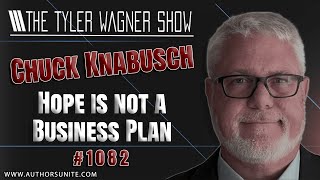
Chuck Knabusch, a former programmer and National Guard veteran, wrote Hope Is Not a Business Plan after a four-month writing sprint that his editor trimmed from 55 chapters to 12. He teaches small-business owners to set realistic expectations, build cheap systems like HVAC booties and paint-chip reference sheets, and batch email instead of hoping things work out.
Chapters
All right everyone, welcome back to another episode. Uh, today we have Chuck Canay Bush with us, so welcome to the show, man.
Well, thank you, appreciate that.
Of course, grateful to have you here. Uh, if you can just start us off a little bit more about you and what you do.
Oh, um, recently I authored a book, Hope Is Not a Business Strategy. That's kind of, uh, been my mantra all the the last 28 or so years that I worked in corporate America. And prior to that, I spent 7 years active and 2 years in the National Guard for the US Army. Got it.
All right. So there's 3 kind of big things there. So what were you, what were you doing in corporate?
I started out as a computer programmer, worked my way through materials, quality, project management, logistics. And I kind of ended my career on the production floor and working again with it and integrating systems for the production floor.
All right, that's cool. So like when you were, let's say middle school, high school, like did you always have an interest in, and maybe like, like with the programming or that type of stuff, like how did you learn that?
Well, back in my day, I mean, the only thing we had in high school were, I mean, The physics teacher had an actual computer board that had a tiny little keypad, looked like a small calculator on it. And that's how we would do any programming if you had an interest in that at all. It was all done in hexadecimal. So I mean, crazy, way, way different from what we did today. But when I was in the Army, it was time to kind of go back to college. And I said, well, let's go for computer science because I enjoyed it. I convinced my professors to say, because I was out in the field a lot, I convinced my professors if I wrote out all my programs, everything that I wanted to do, if they would give me 2 hours after I got back in, after we finished cleaning the vehicles and we got back in, if they'd give me 2 hours because sometimes I was past their deadline, then I would go ahead and key it all in because I'd have it all written. I debug it, and then we'd go ahead and I'd show proof of that because that's basically what computer programming was all about. And they accepted that. And so, I mean, there were times I'm kind of off duty in a tent writing on coding sheets.
Gotcha, gotcha. Um, so wait, would you— in, in where everything is today, I mean, I would assume it's gotten easier. Like, are you able to code stuff today still?
Languages. I, I didn't keep up with, with the languages kind of when I stopped coding. I, you know, I was kind of a COBOL coder for the most part. I mean, I knew some other languages. Now there are a number of systems, and I know periodically the industry looks for COBOL coders, but yeah, I'm kind of well beyond my prime in that.
Gotcha, that makes sense. Um, and then, okay, so that's, that's where that started. And then when you were— you said National Guard? Is that what you said? Yes. So, what any— a lot of times I think for like podcasts, like stories is kind of what sticks with people. And obviously, you know, we'll sprinkle in a lot of value in there too. Although, there is value innately in stories too. But in the 7 years of the National Guard, any stories you would share? Like positive, negative, anything?
Oh, absolutely! I mean, the cell phone that you guys use? We deployed the first one.
Oh, really? That's cool.
Absolutely. Where, you know, everybody likes to post on Facebook or Instagram or whatever else. Hey, you know, this is the old bag phone and, you know, it looks like it could call in an airstrike. Yeah, we deployed the first phone that could go ahead and call in an airstrike. Great big boxy unit called Mobile Subscriber Equipment. We were the first unit in the Army to go ahead, get it. And because of that, my last 4 years on active duty, I was spending like 9 months a year out in the field.
Wow. My brother would think that's so— my brother's a big, oh, what's it called? Call of Duty fan. And they call— yeah, in that game they call in airstrikes all the time. I, I never— I was a Crash Bandicoot fan. I never got into the— so very different. But so I don't know, he would think that was really cool. Just curious on this, like, overall thoughts on the National Guard. Just, I don't know if I've ever had anybody on the show that's from there. So like, as, and you can go into detail if you like, but I just mean like your overall experience, would you say it was like a positive one or just, I'm curious.
I hated to leave. I mean, I really enjoyed my military experience. I really enjoyed the National Guard when I got to that point. But I mean, I was going to college, I was working a full-time job. I was becoming a senior NCO where, you know, it wasn't just the one weekend a month. It was one weekend a month where we'd do the active drill, but then I'd have to go in a couple of times for planning between that and everything else. And something had to— and I had kids and family at that point— something had to give. Um, and I was commuting, I don't know, an hour or so to, to my National Guard unit, and I hated it, but it was some— that was the thing that, that had to go ahead and give because I was also traveling for my civilian job.
Got it. Got it. Okay. And then, okay. And the book too, a lot of our audience, it's due to the company that I run, we help, actually help people write and market books. So, what was your overall experience with the book? And let's start from the beginning and then we'll go into the details of the book. The writing, like, did you have a ghostwriter? Did you write it yourself? What was that part like?
Nope, I wrote it myself. I started out with a business coach kind of in September, a year ago. September, what would that be? 2022, 2021. He and I talked for, I don't know, 3, 4 months and we talked through a lot of different issues. Really didn't do any writing, just kind of getting my thoughts together. And by December, before we kind of broke for Christmas, you know, I said, it's time to go ahead, write the book. He says, I agree. You've got your ideas, you've got everything out. He says, we'll just start checking in about every couple, 3 weeks, 4 weeks, whatever, to make sure, you know, how the writing is going. And I wrote it. It took me 4 months. Now, I mean, because I know nothing about writing books, I wrote like 55 chapters. So I took it to my first, my copy line editor, and they're like, you need a developmental editor. I didn't know why they were saying that, but okay. So they said, well, I said, you know, can you point me in the right direction? And they did. So the developmental editor, she read it and she's like, you know, business books are about 12 to 14 chapters in general. I got to thinking, yeah, some of my favorite books, business books, fall exactly into that. I never thought of it that way. I would just kind of putting things on and kind of throwing chapters as I thought topics were there. So she helped me go ahead and rearrange my content kind of in a more business book format, went back to the copy line editor. She Um, she went ahead and did her thing to make it, make it look beautiful. And I said, well, how do I publish? Um, she's, well, I know a guy, uh, I think he calls himself a publishing strategist. And went to him, and I mean, I knew I was going to self-publish. I mean, this was not kind of a Random House or Penguin or anything big. So, you know, I went to him and he says, okay, this is how we develop the COVID this is how we go through our process. Make sure we have the copyright, get the ISBN numbers and all that stuff. And, you know, so I was done with the manuscript initially in April, and it took me until September to go ahead and actually get it published.
Okay, gotcha. And then as far as the— I mean, obviously you're doing podcasts, that's one of the strategies, but was there any kind of marketing strategy? Because I know you're a bestseller as well. So any marketing strategy that you had?
Again, I've kind of been doing this blind, kind of like walking through a minefield. Every once in a while something will blow up and it'll help. I found another guy who kind of did a little bit of marketing for me, who kind of got me up into the bestseller category according to Amazon. But for the most part, no. Again, this is kind of Probably the bad part of being an independent author, thinking you have a story, is having to go ahead and kind of weave everything together yourself. Finding an organization out there who can pull it together. And when I started with my business coach, great guy, but, you know, I didn't realize what he did do versus what he didn't do. And I would go ahead and encourage you. I mean, again, great guy, great encouragement. But I mean, even if he would network, he doesn't have to do it all himself because I know we're not all experts in everything. But if he would help pull that network together where he could go ahead and say, well, this is— I got a guy who does this, or I've got, I've got a lady who does that, and pull it, help pull it together for a budding author, it would be a fantastic experience.
Gotcha. So let's dive into the book a little bit. Yeah, thanks for sharing that. I guess last thing before we do dive in the book, would you Is there anything you would, and you kind of said it there, but is there anything you would change or do you, did you like the self-publishing side of things? Would you go traditional next time or just overall experience thoughts?
I mean, I don't mind the self-publishing. I would want somebody to take me through it. I mean, I know, I know some of the pitfalls, but again, I would rather have somebody help hold my hand a little bit more and help pull it together for for me because I'm, I'm an operational guy. I can go ahead and get the words on the paper. That's not the problem. It's the sales, the marketing. It's kind of all the, the bundling, all, you know, all that kind of stuff. That's not my forte, and I know that.
Yeah, no, that makes sense. And it's, it's interesting what I found. I've been in the industry like 12 years. It seems like, like people like you, right, that are like more like the right— I guess let's just say writer for now. Obviously you do other things, but let's say writer. They're normally not like good at marketing. right? But then a good marketer is not normally good at the just like going in a room and writing by themselves, right? Because it's very opposite like personalities.
Absolutely.
So just interesting. But they're, you know, together they can be, uh, very good. So, um, so the title of your book, it's called Hope Is Not a Business Strategy. Um, what was your, I guess with writing it, what was your intention? Like how did you come up with the idea for the book?
Well, my wife and I, over the last 5, 10 years, we've had a lot of interaction with small businesses, whether they're contractors, architects, builders, whatever. And we found some were absolutely phenomenal and some were absolutely missing something. And I, you know, I wanted to take my experience from corporate America where corporate America is wonderful in that they have money, they have departments, they have resources, they have bodies that they can throw at any problem. The problem is, is a small business, and again, small is whatever your definition is, but the small business, generally everybody's wearing multiple hats. Everybody's doing multiple responsibilities. They don't have necessarily the resources to throw at it. Um, I learned probably more about my old job when I retired and became a consultant than when I was working it because I was busy working in the business. Instead of getting a chance periodically to step back and work on the business. And that's part of what I wanted to go ahead and do and share, is there are things you can go ahead and do that don't cost a lot or that don't take a lot of effort, and you could go ahead and make a phenomenal difference both for your business, for your bottom line, and for your customer.
Yeah, that makes sense. And I, I mean, I love the title because, I don't know, I think a lot of times It is actually what people do. You know, they're like, oh, this seems like a good idea. Let me just give it a go. And they don't ever, they don't really create any sort of plan. Now I will say, I think a lot of times, if not all the time, plans change. So it's not like you create some business plan and then it literally perfectly outlays itself over the next decade. Like, I don't think that's ever happened. But to have at least some sort of direction and understanding is important. And 2, what happens is the owner gets so caught up in the business that they become their own bottleneck, and then they've kind of just created themselves their own job. So, um, can you give, uh, maybe you can't give names or anything, but can you give some examples of businesses that you've kind of like helped with the strategies in here? And like, I guess I could say like where they were and then how you helped them and then what they become after that became So far my clients have been more corporate America rather than the small business. Yeah.
But I can give you some examples like from the book as to what we saw. I mean, we had an HVAC guy. I mean, he walked up to the house, we were gonna have him come in and I don't know, fix the AC or the heat, whatever. And before he walked in, he put little booties over his shoes so he wasn't gonna track dirt and mud into the house. My wife noticed that immediately from way across the room. And she's like, I love this guy already. And again, I know there's a cost to the booties, but for the, you know, just for that small cost, he made a customer for life in my wife. Absolutely. On the other hand, we put in a pool during COVID probably not the best time to put it in. But I sat down with the contractor. I said, okay, let's set expectations here. I have no clue how long does it take to put in a pool? He says, well, from the time we start turning dirt, about 6 weeks. I said, okay, that's not unreasonable. He said, now I'm not going to start tomorrow or the next day. It'll probably be, you know, anywhere from 4 to 6 to 8 weeks before I can start because everybody wants pools now during COVID That's not unfair either. You know, again, we're setting expectations. Well, he did. He turned dirt about 6 weeks later. Took 21 months before we were swimming.
Oh wow.
So again, there, there was a big gap between the expectation that he set, or that he helped set, and his execution. And there wasn't always the conversation to say, hey, I've lost my subs in this area, I've, you know, I want to provide a quality product, so it's going to take me a few weeks just to to vet some new subs before I go ahead and send them out there. Nope, none of that. He didn't always come out on the job site, or he or a project manager. He would say, oh yeah, your electrical's all hooked up, we're about ready to go ahead and go. I'm like, no, the electrician came out, he looked, he said it was a difficult job, he was going to talk to you, and he left. Oh no, no, that's not possible because I paid him. Well, you may have paid him, But I'm telling you, it's not hooked up. I mean, he spent not, not more than 15, 20 minutes out here. And, you know, just the way our house is built and the way the electrical is going to be, it was going to take him a couple of hours. I knew it. I'm not a contractor. That's not my background. But, you know, we all kind of have a sense of, hey, is this going to be an easy job or just going to be a little more difficult? But I mean, so the guy didn't do that. So again, I mean, a couple of quick things. One, set expectations. He did that phenomenally. He didn't manage expectations. He didn't communicate whether that was weekly or every 2 weeks. He didn't come out to the job site, and I'm guessing not all of his pool projects go 21 months. So if he'd come out to the job site, maybe even just once every, every month might have been the thing to go ahead and see what the progress was, to see if his, his subcontractors were telling him what was going on. So I mean, these are little bitty things that you think would be common sense. But, you know, sometimes we get busy working the business, answering the phones, doing the sales, working with the suppliers, whatever it is, that we kind of let other things slip through the cracks. And then we have what can only honestly be called a massive failure. And again, I'm not a vindictive one. It's not like I never use the pool guy's name. I mean, I think he still did some quality work. The problem was The timeline was an absolute mess. Um, so I mean, we had a, uh, uh, when we bought a house in Mississippi a number of years ago, um, this was— we had— this wasn't bought new. I mean, it was bought from somebody else. They passed along something their contractor had given them, and it was a sheet of paper that had paint chips on it, and it was handwritten what room each one of those paint chips went to. So if we ever wanted to touch up the paint, we knew exactly where to go ahead and start. Again, that would cost the contractor virtually nothing and yet obviously made that customer very happy and they passed it along to who they sold the house to, to us. And it was another phenomenal idea that we were like, we were thrilled with the builder and we'd never met him.
Hmm. Yeah, I think, and sometimes I think people do it and I'm not saying it's necessarily intentional, but they get caught up in it when they're trying to sell something, they'll like overpromise. Right. And again, I don't think it's— there's not necessarily like evil intentions. It's just, you know, you want to make a sale, you're talking back and forth, you're like, yeah, I can finish this in 4 months. And you're like, oh shit, I shouldn't have said that. And so, but really what you want to do, right? If you're thinking long-term, which I would recommend all business owners do, is you want to, you know, the old thing they say, under-promise, over-deliver, right? And that has worked unbelievably well for our clients is we'll always say, look, here's minimally where we're going to get you. And we always exceed it, right? And then by the end, when we show them the results, they're super happy. You get referrals. So either way, I know it can be a mistake sometimes, but it's really never worth, um, not exceeding expectations, right?
So, and again, the, the pool guy, nobody had gone through COVID before. Nobody knew he was going to go ahead and lose all his subs. So in, in that kind of instance, it's just Having an open and honest conversation with your client, with your customer, saying, hey, you know, I've never experienced this before, you've never experienced this before. Chances are you're going to build a rapport on that alone. But I am going to go ahead and get it done. Um, it's going to take me a little bit longer. I lost my sub. Let's say I lost my decking sub. So, you know, we've got some problems, we understand that, um, we'll overcome them. You know, I'll certainly honor the contract. We're not asking for more money. But we are asking for more time. And I think sometimes just having that conversation, because again, we as humans all know mistakes happen, things happen outside our control. But when we go try and hide them, or we try and go ahead and, and say, well, you know, you know, it is, it just, you know, it is, and don't want to address the elephant in the room— everybody sees the elephant in the room. So have the conversation. I mean, So you may have set expectations, expectations may change, just manage the expectations through open and honest communication.
I agree. And another thing that you mentioned, uh, which is probably one of the hottest like topics when it comes— well, really for anybody, but business especially— is like productivity and like freeing up time. So one of the things on your media sheet here that I noticed is, you know, you talk about how to free up time so the owner or the person doesn't have to be the owner, but can focus on their core things. So do you have, like, what are your notes there for like helping free up time?
Well, I mean, for those of us, I mean, corporate America is filled with meetings. I mean, we all hear about the million meetings, but if you are not a decision maker in the meeting, unless it's like an FYI meeting and everybody knows that, hey, Every year we rolled out benefits. Everybody had to go to the benefits meeting. Everybody had to listen to the new benefits. Okay, those you're going to have to go to. But if a meeting doesn't have an objective, if you don't say you're going to go ahead and get this done by the end of this period of time, whether it's a half hour, hour, 3, whatever, then don't go. I'm not talking about an agenda. I don't like agendas. I mean, I don't want to hear that Fred's going to talk for 3 minutes on this subject and and Bob's gonna go ahead and talk for 9 minutes on that subject. Because nobody ever hits those numbers. I mean, that's ridiculous. I'd rather say, what's the objective? And then let all the parties have that conversation knowing that by the end of that meeting, we're not gonna have 3, schedule 3 more. We're gonna go ahead and resolve and accomplish that objective. One, it gives everybody a sense of accomplishment. Two, it makes everything move forward. It makes everyone be cognizant of the time. So we can't just go on and rattle on and tell the stories and, and stuff. We've all seen it. We need to go ahead and constantly be moving forward. And that way, if somebody does take the role of the meeting leader or facilitator, starts saying, well, you know, hey guys, we're running low on time, we can't have— we need to be— we need to get to the point and keep moving on. Nobody's going to get upset by that. Because they know that we have an objective and we're going to go ahead and get this task done in the amount of time that's allotted.
Yeah, I think, and this is kind of a bigger conversation, but I think a lot of times overcommunication before the meeting is key. Meaning?
Absolutely.
Yeah, really making it clear because what happens a lot of times in my— I've never worked in corporate, but my dad worked for a big corporation for like 35 years. So, I've heard like kind of the— I guess, I don't know. He's retired, so I guess I could say whatever I want. I've heard the good and the bad. I'll put it that way. And a lot of times that he would say stuff like that where just so much time was wasted because like there's so many meetings and nothing was getting accomplished because I don't know what instigated the meeting, but it was just kind of like, "Hey, we all need to meet." They would all meet, but there was no intention or goal in mind. They would all meet and talk and then leave and they'd be in the place as they were before the meeting, you know?
So it's like, well, I've been in meetings where the only outcome was we scheduled another meeting.
Yeah.
I mean, another good one is email. Yeah. I mean, I went ahead and I had an out of office that was on all the time and it told everybody that I answer email or I read email basically 3 times a day, 7:30 in the morning, 11:30 in the morning, and 4 o'clock in the afternoon. The reason was, is I'm not going to go ahead and be tied to my phone or my desk or whatever else, answering emails or waiting for an email to come in. I mean, we're not going to play Pavlov's dog.
Yeah.
So, you know, if it's something urgent, even in my out of office, I said, here's my phone number. If it's something you need to have the conversation about right now, because those things come up, call me. Call me. I mean, and if I, if I'm in the middle of a meeting where I can't get out, I'll send you a text back. I'll let you know, or I'll send you an email back saying, hey, I'll get, I'll get back to you in 15 minutes when this is over. But realistically, all of a sudden now, stuff that was urgent and important got through, and the stuff that was important or not important didn't get through. The stuff that wasn't urgent didn't get through, and I could take care of it on my time. I then took control of my calendar. Of my email. I didn't let my email go ahead and control me. I also pushed a lot of people to go ahead and put great email subjects in there. If you need action on this email, put action needed somewhere in the subject. If it's just an FYI, put an FYI. And guess what? It's probably going to fall down to my 4 o'clock reading right before I go home.
Yeah, no, I was going to say I love that because And you wouldn't think it because it's almost so common sense in a way. But if you just tell people, like, use this for urgent and this for non-urgent, they will actually do that most of the time. Because one of the worst things ever— not worst things ever, but it would just be they would feel awkward if they texted you about something and it was obviously not urgent. You know what I mean? Like, it would just It would be silly, right? And you'd be like, really? Like you just, you wanted some fries or something like that? It was that.
Absolutely.
Like, so it, all you gotta do is say it. And like in that scenario, I think a lot of times things will fall in place. Actually, it, it doesn't take that much effort to have people fall in line with a system like that.
Um, and I think that's really what it, it goes down to is creating systems, creating processes.
Definitely.
Because again, so much of our day, yes, I can't go ahead and tell you what email you're gonna go ahead and read today or how you're gonna react to it, but I can tell you you're gonna have email. So do you have a process for email? I know you're gonna take calls today. You know, some of them will be good, some of them will be bad. Do you have a process for that? Do you have a process for taking emails and making them tasks? You know, me, if I have a task, I'm gonna put it on the calendar. If it goes on the calendar, it's probably gonna get done. If it goes on a task list, it's gonna get rolled over to tomorrow or the next day or the next day or the next day.
Oh yeah.
Create these little bitty systems or processes and you'd be surprised how easily all of a sudden the work starts to go ahead. It just, it magically gets done because you're not having to think about, well, I have to do this or I have to do that, or when am I gonna do it? You know when you're gonna go ahead and do it. You've got it already scheduled. You've got it already set up.
Yeah, no, I agree with all that. Like, systems is key. And one of the ways to build systems, by the way, for anybody listening, at least my— what I do is like, and I don't do it every week now, but when I was kind of at that point in my business where I was, it was just too much was on my plate and I had to just, I had to start outsourcing, is I just took inventory of what was I doing, right? So I did a whole week of work and then on that Friday I looked back and I was like, Okay, I did this, this, this. I could hire somebody for all these things. These things I need to keep doing. Like, I can't really hire that out right now. And literally, it took like 80% off of my week. And like you're saying too, I do the same thing. Emails, I'll check in the morning and at the end of the day, so only twice a day. And then, phone calls, which is actually why— I don't know if you noticed this because it was your publicist that actually booked the podcast with us, but I only do phone calls and podcasts on Wednesdays. So, the other 6 days of my week, the calendar's white and I can do focus work and help all my employees to do what they need to do. But I only do calls and podcasts on. So, my whole day Wednesday, it's like 10:00 AM till 9:00 PM the whole day. But every other day is white. And it's such a great system rather than a scattered calendar. I mean, who could focus like that?
Well, you know, whether you like I'm sure you like the podcast, but whether you like phone calls or not, you can get your mind into that framework where, hey, I'm gonna go do it, you know, even if it's something you don't care for. Hey, this is the day I have to do this, but you know what, I'm only going to do it on this one day or this one week or whatever. You can get your mind right to that and say, hey, I'm just going to go ahead and plow through it and get it done, and then I don't have to do it for whatever that cycle is all over again.
You know what's interesting? And I don't think it would work as effective, but I— so oddly enough, so I used to do like 100 phone calls a week. I like talking to people. Uh, I don't know why, I just do. So I think that makes sense. I think a lot of people like talking to people. So regardless though, I just thought when you were saying that is it would be the same amount of time, but it— I don't think it would, would work overall just because people would be delayed so much in booking. But I could essentially, right, in a month I do calls for 4 days. So I could actually squish that all in into 1 week and then I would have like 3 weeks off of phone calls, which would kind of be maybe more desirable. But the issue is, say somebody referred us a client and then they couldn't get a call on our books for a month, then it would be like, okay, well we might lose that.
Yeah. I mean, you have to understand your, your, your, your, order cycle or your process cycle. And you know, right, sometimes you can't go ahead and do once a month. I mean, realistically, if, um, if let's say Walmart only took orders once a month, wouldn't they be far more efficient? Absolutely. But that's not life. So you have to go ahead and make some trade-offs. And you say, well, you've made the trade-off and said, well, I'm not going to do it daily, but I can get away with once a week, and people don't mind a week's delay. But they wouldn't mind, wouldn't mind a month. Now, I mean, it would be interesting, would they mind 2 weeks? Could you go ahead and do it twice a week or 2 times a month? And again, maybe it would work, maybe it wouldn't. But I mean, those are the types of things that you need to go ahead and examine. And to me, that's what planning's all about, not to come up with the perfect plan, but to thoughtfully think through something, to look at alternatives, to say, hey, this might work, this might not work, what are the risks? Pick which way you want to go because then once the chaos starts, and it will, you can go ahead and say, well, no, I don't want to go ahead and take this right up here because I know there's going to be problems. I've thought it through already. It may not be exactly what I thought, but I'm, you know, 80% of the way there, which is a lot further than I would be had I not thought thought it through and not done a plan whatsoever. So again, a plan is just a great guide because you can plan a cross-country trip, but are you going to know every place where they've just went ahead and started working on the roads? Absolutely not. I mean, as good as GPS is, as good as Waze is, and all these other apps that'll tell us that road work has started, you don't know where the accidents are going to happen either. So you've got to always be flexible But realistically, going without a plan, you know, I wouldn't know necessarily what's the easiest way to get from here to LA without going ahead and spending a little bit of time to go ahead and plan that out. Now, you know, how far can I go ahead and go on a tank of gas? You know, do I want to go all the way down to zero miles left in the tank when I pull over? Probably not. So again, all that's part of the planning process. Yeah.
And the ability, like just being okay with pivoting, cuz nonetheless, I agree. It's just like, but also like nonetheless, you will have to pivot. That's like every business eventually pivots multiple times. But, but yeah, man. So what I wanna do, I wanna leave the floor to you. If there's anything we didn't cover, please do. And then, you know, let people know where they can get the book, website, socials and, and everything, dude. I really appreciate you coming on. It was, it was a cool conversation.
I really enjoyed this, Tyler Wagner Wagner. Again, my book is Hope Is Not a Business Strategy: How to Take Control of Your Business So It Won't Take Control of You. I can be found on LinkedIn under Charles Kenney Bush. The book can be found on Amazon. You can go ahead and find electronic copy, soft cover, hardcover, whatever works. I'm also out on barnesandnoble.com. You can go ahead, go to my website, 1310, 1310.com. And you— I sell my book from there too.
Perfect, man. Thank you again for coming on.
Thank you. I appreciate it.
More from Tyler


Catherine Nikkel : THE STORY EVERYONE HAS BUT HASN'T TOLD : The Tyler Wagner Show #1120



Scott Ritzheimer: Bring Predictable Success to your Organization | The Tyler Wagner Show #1115


Fred Moskowitz: A GUIDE TO GETTING STARTED WITH IN MORTGAGE NOTES | The Tyler Wagner Show #1113

Mark Podolsky: From Land Investor to Full Time Success How I Made $90,000 Cash in Real Estate


Mark Podolsky: How to achieve a 300% return on investment my foolproof strategy

Mark Podolsky: How to make passive income selling raw land the irresistible pricing strategy