Control Your Lead Generation | The Authors Unite Show With Dustin Brohm
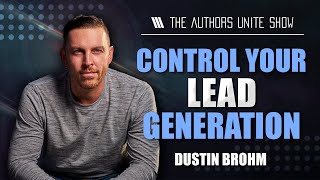
Tyler Wagner interviews Dustin Brohm about lead generation for real estate agents. Brohm covers Facebook ads, retargeting, content marketing, and SEO strategies that help agents build audiences and control where their leads come from.
Chapters
All right everyone, welcome back to another episode of the Authors Unite show. Today I got Dustin Brohm with us, so welcome to the show, man.
Thanks Tyler, appreciate it. Appreciate being on the show, it's an honor.
Yeah man, grateful to have you here. Um, so first question, can you just tell us a little bit more about you and what you do?
Sure, um, I'll do my best to give you the CliffsNotes. So, uh, I'm a real estate agent, have been for about 9 years or so in Salt Lake City. I'm with eXp Realty and And about halfway into my career, about 4 or 5 years ago, I realized, well, out of necessity, that the real estate agents that sell the most homes, they're not necessarily the best agents, they just are the best marketers. They get in front of the most people. And so I changed everything because I was starving to death, basically didn't have enough deals, couldn't pay the bills. And so out of necessity, I started learning content marketing. I started blogging, that led me to social media and how to run Facebook ads, how to promote. And I just, I got really good at it. And I really enjoy it. So I've really leaned into the fact that I'm a marketer who sells homes. And a few years ago, probably 2 years ago, I just started sharing what I had done to turn the corner and to build my business. I started sharing that with other agents and launched a podcast about a year and a half ago. I have a Facebook group, have a coaching program. I do a lot of speaking around the country at different real estate conferences and stuff, just talking about marketing and, and, you know, how agents can sell more homes. And, you know, I'm having a blast. It's a, it's a fun industry.
Yeah, man. Okay, so I'm also a marketer, so this will be a fun conversation. Awesome. So right now, currently, is Facebook ads like the number one tool you're using for generating leads for realtors? Is that the main platform? Yes. Okay. And can you dive a little bit deeper into like the strategy? Like, is it like, are you, or I guess, is it different every time or is there an actual kind of plug and play system that you've kind of created that for realtors, you know, kind of works? Yeah.
So I've, I've created a plug and play system where, you know, certain ads work for a reason. And so, we've kind of figured out what those reasons are. And so, there's some concepts that translate into any market you can copy and paste and you just have to adjust a few things. The key is with anything, Facebook ads can be complicated. There's a lot of different steps, there's boxes to check or not check, and each one can make or break success. So you, like anything, you have to put in the time, you have to put in the work to learn the platform, but there's no better value out there. Ultimately, it comes down to this and I mean, I'm happy to get into specifics, but ultimately you have to get the attention of somebody as they're scrolling lightning fast through their, through their newsfeed. If it does not get their attention, nothing else matters. You could have the best converting landing page the world's ever seen, but if no one clicks on your ad, it doesn't matter. So you really have to start with, is this going to get attention? Who am I trying to reach? Who am I putting this in front of? What do they want? How do I display that in this ad and get their attention? And, you know, video and slideshow, slideshow videos work because it autoplays in the feed. And so it's moving a little bit. There's certain little tricks, but ultimately, ultimately, it doesn't matter what industry you're in. Stop thinking about what you want to tell people. Start thinking about what they need and what they want to hear, and then figure out how you can reverse engineer it into, you know, what you can do for them.
Is there— because this is always— I'm just curious, in the real estate industry, is there a way, or is there like a search or something to know if somebody's actively searching to buy a home? Or is it just by chance, you know, that like you kind of know that— I don't know, people with one child typically move, you know, every couple years, you know? Like, how do you know if somebody's looking for a home? That's what I've always wondered. I feel like it You have to cast a really wide net, maybe.
That's a great question. I mean, yeah, the only way to know for sure is if, you know, and here, there's always a two-part approach. Like Facebook ads are great, but you also have to be doing organic stuff. You have to have social media presence. You have to have a good online presence. You know, people have to recognize your face, recognize your logo and your brand if they do see a Facebook ad. So it all works together, but Facebook ads specifically, You just have to think about who your target, like who the consumer is. So if you're offering a list of homes under a certain amount in a certain desirable area, you think about, okay, who are the people buying these? Are they older? Are they younger? Are they first-time homebuyers? Are they not? Are they investors? Are they not? And then you can start choosing interests and demographics within the Facebook ads platform. Even though they have limited it slightly for real estate mortgage and employment ads, since Facebook's been, you know, dragged through the mud and dragged in front of Congress and stuff, they made some tweaks. But you can still do a lot of interest-based targeting that works. And there's interests on there, like Facebook knows if you've been on Zillow, looking at homes on Zillow. Facebook knows if you've been looking at pages and content related to buying a home, and if you're a first-time homebuyer and all that stuff, so you can still target that stuff. And, but, you know, Facebook ads are not like Google ads where Google ads, you're only seeing an ad because you searched for a certain keyword. Facebook, you're just like saying, okay, who's most likely to be interested in what I want to show them? And then you get it in front of them. Now it's your job to make it enticing enough to click on.
Yeah. And I guess what I just thought of, and that, that was really helpful, but too, what you could kind of do is it's, um, kind of like retargeting, right? So you could do, you know, once you kind of pick your, your target— so say it's like a retirement community, so obviously your demographic would be older. So older, and then target them with like an ad like the 3 steps to picking your best retirement home, and it's like a value video. And then anybody who watches more than like 20, 30 seconds of that, you know, might be interested in potentially getting that, and then retarget with a listing or whatever.
100%. Yes. Yeah. What I was describing is like how to get in front of somebody for the very first time, how to get them to see you. And then you're right, have relevant content that kind of qualifies them for you. So you're right, you can start a custom audience of people who have watched, for example, 25% of a certain video. And you're assuming if they have no interest at all in this topic, why would they spend time watching it? So then once they watch 25%, for example, of a video, they go into a custom audience. You can now retarget future ads, future videos to that custom audience. So yeah, that's where the success is found. Like the big lasting success in Facebook ads is not just running one ad and expecting leads to spit out the other end. While that does happen and you still can get a great ROI, the real power, the real ability to build a long-lasting business, like a System is like what you're saying. Start with something that kind of triggers and qualifies. Then once people tell you, hey, I'm interested in this topic, you know who those people are and start showing other related content to them.
Yeah, exactly. That's what's been really valuable for us is just like the retargeting, right? Just, just even having the pixels, like anybody that visits our website, you know, like if you, if you went to our website today, you are going to see ads for a little while, you know. Exactly.
Yeah.
Yeah. I was just gonna— and I forget what the actual stat is, like 7 times before somebody engages. That's like the average, like they have to see your brand or your content 7 times. And that's not always true. There's people are like ready to buy right now and they just hit you up. But again, that's 1%. So having that retargeting, and if you don't have it, your competitor is probably— one of your competitors will probably have it and then they'll just outpace you.
Yeah, 100%.
So with the blog, do you do like— are you pretty SEO friendly with it, or is it, is it more just like— you are? Okay. So what, for like a realtor, what's like some keywords maybe you'd want to— or like maybe how to buy a home or something? Like, what are some stuff that you're ranking for?
Yeah, so, so the strategy there is twofold. So first, you have to have content that's— that people search for. That could be found through Google, that's not stuff that's ever going to perform well on social media. Nobody gives a crap about, you know, 10 secrets to buying your first home. Like, it's been played, it's been done, it doesn't— nobody cares unless they're actively looking. So it's very low traffic, low interest stuff, but it's great for Google because people search for that. So you need to have that stuff, but then at the same time, I think like 80 to 90% of your content should not be about real estate at all. Make it about the community. Like, is Topgolf coming to town? Is there a new water park that's being built? Like, you know, do a list of the 10 best splash pads in the area, or 5 things to do for free with kids on a rainy day. Like that type of stuff. That's what people share like crazy on social. That's the stuff we share when we see that stuff, we're like, oh, cool. The 10 best hikes, you know, to do with as a family, like, that stuff people share and their guard's down. They're not like, oh, it's just a realtor with some stuff I don't care about. They're going to share it, you're going to get a crapload more traffic to your site. Google's going to notice that some people will wander off into other parts of your site and start searching for homes and reading your real estate related stuff. And at the very least, they're going to see your branding. It's an impression every time. So, it has to be a two-part approach if you're going to blog. And it's the same with any content. If you're going to do a YouTube channel, if you're going to just do Instagram stories, or just, you know, blog on LinkedIn, you can't just talk about real estate all the time because you're limiting how many people care. And once they learn what they need, they're never going to come back. Talking about the community, uh, being that community resource, that local media company is the way to build a big following locally of people that keep coming back to you.
Yeah, that's huge. I— that's actually— that's really huge because I was just thinking like Topgolf is awesome. I, I just did it. Yeah, I'm like maybe 2 months ago and like it was amazing. And so like I could see how that could end up, you know, potentially becoming a client. Like if you wrote a lo— an article, a local, like new Topgolf place, here's all the cool things about it. You know, whatever. And, you know, people share all about it, but it's on your website, it's your branding. And then, you know, maybe it's, you know, new pool park or whatever, or water park, and, and they just keep coming back. And then eventually when they are looking for a home in the area, you know, they've read 20, 30 things from you. It's like, well, where else? Why would I go anywhere else?
Yep, yep. And so maybe then they— if they don't think of you, maybe now they see a Facebook ad because you've retargeted them because they visited your site. And now they see a Facebook ad. And when they are in the place where they are thinking about selling their property or whatever, now they're like, oh, I love their website. Boom. Yeah. You know, it's, that's what it's all about. You just have to throw that net wide. And look, that's the way to become a local celebrity, like a local influencer. And that's how an agent, or any— doesn't matter what line of business you're in. If there's a disruptive company or disruptive technology that's coming, and that your industry is afraid of, if you can, you will insulate yourself by being a local celebrity, a local influencer. And the content is the way to do that. And but that will never happen if all you talk about is real estate. Or if you're a barber and all you talk about is, you You know, well, this haircut, you know, uh, because it just drastically limits how many people actually even care.
Yeah, no, you're so— you're right. And I, I mean, probably almost like 90% or like maybe almost every business I don't think really does that. Like whenever you see marketing, it's always about the business, right? So this is kind of like a— it's a different approach. I like this. This is interesting.
Um, And then there's, you never run out of topics, you know, it's a never-ending, uh, like there's always new stuff to do. Um, I'll tell you a story about Topgolf real quick that's relevant and I think will be helpful. So I did a bunch of, when I first started blogging, I did a bunch of real estate related stuff because I wanted to be found on Google. And I'm like, okay, how do I get more traffic? And so that's when I started noticing what I was paying attention to in the newsfeed. And I'm like, people love hearing about stuff coming to their area. And it's perfect content for real estate. So I was driving home, there was this big monstrosity being built down the street from my house. And I'm like, what is that? And all of a sudden they put a sign up, it's like coming Topgolf. I'd never heard of it. I didn't know what Topgolf was. And so I Googled it and I'm like, oh my God, this is going to be awesome. Like it's a 3-story tall driving range. And it's like bowling alley meets Dave Buster's meets driving range. And I'm like, people are gonna be stoked when they know about this. So I did an article, I called it Topgolf is Coming to Salt Lake City. This was before it came out. I picked a really good image of Topgolf and the 3-story driving range that looked really cool that would get attention in the newsfeed. And then I just started posting it on social. And like 6,000 people shared it on Facebook alone locally. And it just started going nuts and my traffic went through the roof. And what's cool is, you know, I want to say a few weeks later, Topgolf Corporate reached out to me and they're like, hey, our grand opening is happening pretty soon. We're actually doing a media day a few days before the grand opening. We'd like to invite you. You know, we noticed your article. You obviously have an audience. Why don't you and your wife come out? And come to our media night. And so we got like this VIP thing, you know, we were there with like Utah Jazz players and local like news anchors and bloggers and little old me just because I wrote an article. It was amazing. Yeah, yeah.
So that even actually touches on another thing is like relevant or new events. So it's like local but also anything new, because anything new, especially in like— I mean, you're a city, but I can think of like this, the place I grew up in, small town. Like, if anything like that comes around, like, you know, small town, word gets around fast. So if you're the first to write that article, you know, you're talking a few thousand people in a small town. They will all share it and it will all go back to you because that's just how small towns work. So like, yeah, that's, uh, that's— so staying up to date with just like new new events. I wonder if there's like a blog, you know, like how would you do that? I guess maybe there's like a local blog or something, or you know what I mean, like a local— maybe it's a government type thing to just like stay up to date with that, right? Because if you're in real estate, that's just your example, you'd want to stay up to date with anything new that happens in your city. And you don't have to write a blog about everything, right? That's a little over the top, but just, you know, anything that's exciting to you and just be on top of it.
Right, right. And there's, it depends on where you're at. But there's countless resources for that. There's like, if you know any commercial real estate agents that work in the retail segment of the industry, talk to them about new restaurants that are coming in and all that. City council meetings. Some cities and townships will have, you know, like their meeting minutes online, or you can pull like building permits and stuff like, or you could there's probably other blogs, the Chamber of Commerce, like all that. Or just, you know, you don't even have to be the first. I wasn't the first. I just saw it and I was like, oh cool. And I did an article and boom, it went to number 1 on Google. And I started getting phone calls and they're like, is this Topgolf? I'm like, nope. That's how I know it worked well.
That's sick, dude. You could have opened up your own Topgolf at that point.
Seriously. I got dozens and dozens of calls. People thinking that I was Topgolf.
Yeah, yeah, you should have become like an affiliate or something, right?
Right.
So, okay, so another question I have. You said in the beginning like it was pretty, pretty tough. Can you tell like maybe a story of when things just like— to help like first-time realtors, like maybe a mistake to avoid that just like—
yeah, um, first And I already mentioned it. I'll say it again, because it's, it's everything. If you want to sell the most homes, or if you want to sell a crapload of homes and be successful, you obviously, you have to be a great agent and take care of your clients. You have to, you have to do business the right way. If sometimes that means you tell someone they should not sell their home, they should not buy. That's doing good business. That's, that's a given. But beyond that, It's all marketing. You have to become a great marketer and people have to know who you are. If you're not known, you don't exist. That's it. You've got to have an online presence. You have to be found through Google. You have to be seen on social media. You know, you have to have a recognizable name and brand and face and all that stuff. And that's, you know, that was true 100 years ago. It's just we have different tools and platforms now to make it possible. you know, to get in front of more people. So marketing is everything. Um, I was, I was also, because I was so green, I didn't have a clue. So I had a mentor who's great, loved the guy, but he had a very different personality than me. He loved cold calling and door knocking and wearing a name tag and, you know, like going up to people and, you know, and I, that's so not me. Like, I hate that crap. And, uh, and so I never had any success with it. And but I thought that was the only way to succeed because, you know, I was modeling someone who was doing that. And it wasn't until I really like started getting some context about how other agents do business that I'm like, wait a minute, there's got to be other ways. And out of necessity, because I was just like, I had no money, like couldn't pay, but I was behind on my bills, it was bad. And out of necessity, I just Googled like how to get real estate leads, and I started going down the rabbit hole of content marketing and I'm like, oh, blogging sounds cool. But the underlying lesson is you have to become a great marketer and it has to align with your strengths and what you like doing because it's like, this is a very competitive industry. It's hard as hell. It's fun. It's worth it. But you'll never stick with something long enough to win if you hate doing it.
Yeah, that's true. Yeah, 100%. Um, I was gonna ask you another question and it went by my mind. Sorry. Um, well, yeah, dude, no, this is really— oh, that's what I was gonna say. So for like online now, you know, there's a lot of things like people, they're like, I'm not gonna go online. Like, I'm like, now it's at a point where it's like, if you're not online and you're a real estate agent, or really any business, I mean, you're just gonna be swallowed whole.
I can't even wrap my head around that. Like Why? Why wouldn't you? Like, it's literally the way things work now. And we have the ability for free to reach tens of thousands of people. Why wouldn't you take advantage of that? I think people just get stubborn and draw a line in the sand. I know I did. I wasn't going to get on Facebook back in the day. I'm like, screw this, it looks stupid. I don't want to post what I'm eating and I don't care what other people are eating. That was my perspective of Facebook. And so my mom got on Facebook months before I did. And, and I, at the time, I just didn't get it because I drew a line in the sand and I was being stubborn. But look, the world and the market doesn't give a crap about you and your, you know, your line in the sand. Yeah, things work a certain way. And if you're not gonna, if you're not gonna like take advantage of what you have, and if you're like I know it works that way, but I'm not going to do it. Good luck.
Yeah, yeah, you got it. It's all about your ability to adapt. I mean, that's one of the, uh, the biggest things. I don't— and it's kind of random, but do you follow Gary Vee at all?
Absolutely.
Okay. Yeah, so I follow him like religiously. And one of his last things— I don't know if you've heard of the new app TikTok. Have you heard of that?
I— this is bizarre. So I created a TikTok account about 90 minutes ago. Yeah, I've been hearing him talk about it for a while and I'm just like, it's not— yeah, yeah.
Well, well, I, it was— I actually created it. My— somehow my little niece actually created on my phone like a year or two ago. I don't even know how, but, um, I just started using it like a week or two ago. And what— and I started really when I saw his one article and he was saying like Instagram might die or something, you know. I don't want to quote him, but it was like TikTok might overtake Instagram or something. And I was like, okay, Now you got my attention here.
Like, is it the YouTube video?
Yeah, I think he posts, you know, he like repurposes it. So I think I actually saw it on Facebook, but then it like went to his YouTube or something.
That's literally what happened to me this morning. I saw that on Facebook and it was like, this could be the beginning of the end for Instagram or something.
Yeah, that's the one, right?
And I'm like, I'm like, that's interesting. See, that's the importance of marketing and understanding how to get somebody's attention. That headline It's not— call it clickbait or whatever. I think clickbait is only if it's misleading. Yeah. He— the headline grabs your attention because as a marketer, you're like, oh, what is this? Like, I want to hear this perspective. And it got you, it got me. And now we're both on TikTok because of it. You know, I'll probably won't do anything with TikTok for a while, but I want to understand how it works.
Yeah, yeah, no, it's, uh, be careful, man. It's kind of addicting. And I don't know, I don't— I, you know, like the visibility is crazy, but I'll say like at least like for people that would become my client or your client, I don't think there's many of those on there right yet. But I mean, there's pretty much every like middle school, high school person known to man, they're on there.
Well, you know what, uh, what really helped me launch my career as far as helping other agents and becoming a personality and a brand within the industry was because of Gary Vee back when Snapchat was just exploding and he was really pushing Snapchat a lot, 3, 3 and a half years ago, I guess. I heard him say that what everyone should do is whatever industry you're in, find the publications, find the media companies that service your industry and write an article for them called, "Why I'm Jumping on Snapchat for 2019," whatever, and just explain why you're going to use it for your industry and submit it. I did that, "Why I'm Jumping on Snapchat," in what, 2017, I guess it was, 2016, and sent it to Inman and RAS Media, which are some big media companies in real estate, and they both published it. And like, I had thousands of new Snapchat followers overnight, and then I woke up the next morning and had thousands more and thousands more. It was crazy. And so just by doing that, you could do that right now, whatever industry you're in. Just say, hey, here's why I'm jumping on TikTok as a hairstylist.
Yeah, dude, you just actually gave me a good idea. I like that. And in general, that is such A good idea. I was actually telling, um, it's, it's a little bit of a pivot from what you said, but I was telling somebody about this with, with our company. Like, marketing books is, is what we do. Yeah, it just hit me like 6 months ago, and it seems like common sense, but I think this will be helpful for a lot of people, is instead of consistently trying to find my target customer, what I did is I made connections and built relationships with publishers because I realized that a lot of publishers don't do marketing for books. Like, you know, they publish the book, but they don't really do marketing for it. And I was like, well, they already have all of, like, you know, my desired clients, because that— we're a publisher, but we also— we're more on the marketing side of books. So I was like, why don't I just build relationships with all these publishers that already have my people? And, and that's what we've done. And most of my business literally just comes from, like, them being like, hey, this author wants to go that extra mile with the book. It— this is the date, and we, we're going to forward them to you to do the book launch. And I, I couldn't believe, like, I've been doing this like almost 7, 8 years now. Took me that long to just figure. So all I'm saying is that's like low-hanging fruit. So wherever, whatever business you're in, find other companies that aren't necessarily in direct competition and build relationship with them, and then they give you all the clients you could ever want, you know what I mean?
Like, exactly. You just have to think outside the box a little bit about what other people need, where those people are. You know, it's— you have to think.
Yeah, so this was awesome, man. I appreciate you coming on.
Um, yeah, thanks for having me.
Tell us, uh, best social to connect with you, and then if, you know, if somebody does want to go to your website, you know, what's, what's the domain for that?
Cool. So you can find me on all the socials @massiveagent, even TikTok. I'm now on TikTok @massiveagent. I haven't What do they call them? Do they call them tics?
I don't even know, man. Wild over there.
Well, I'm gonna figure it out, but I haven't done anything yet. Um, but if you want to be my first TikTok follower, you can find me there @massiveagent on TikTok, Instagram, Facebook. I'm on LinkedIn, Dustin Brohm. And then just go to massiveagentpodcast.com and, uh, you know, find out about the podcast, listen, find out more about our, uh, one agent per market coaching program and all that good stuff. But massiveagentpodcast.com is home base.
Perfect, man. Thank you again. This is awesome.
You bet, man. Appreciate it, Tyler Wagner.
More from Tyler


Catherine Nikkel : THE STORY EVERYONE HAS BUT HASN'T TOLD : The Tyler Wagner Show #1120



Scott Ritzheimer: Bring Predictable Success to your Organization | The Tyler Wagner Show #1115


Fred Moskowitz: A GUIDE TO GETTING STARTED WITH IN MORTGAGE NOTES | The Tyler Wagner Show #1113

Mark Podolsky: From Land Investor to Full Time Success How I Made $90,000 Cash in Real Estate


Mark Podolsky: How to achieve a 300% return on investment my foolproof strategy

Mark Podolsky: How to make passive income selling raw land the irresistible pricing strategy