Dan Martell : Buy Back your Time | The Tyler Wagner Show #1076
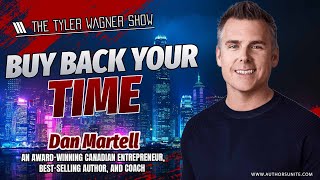
In this interview on The Tyler Wagner Show, Dan Martell shares his journey from a chaotic, addiction‑ridden childhood and teenage incarceration to becoming a serial SaaS founder, investor, and coach of 1,000+ software CEOs. He explains how entrepreneurship served as a positive addiction that helped him rebuild his life, and outlines his core philosophy of "buying back your time" – delegating work, applying the 80% rule, and focusing on high‑impact decisions. Martell details the creation and launch of his Wall Street Journal bestseller Buy Back Your Time, describing a multi‑pronged strategy that included bulk pre‑orders, a book summit, partner newsletter placements, internal email/social promotion, and an extensive podcast tour. He also reveals his agile, chapter‑by‑chapter writing process, the 10‑80‑10 rule for author involvement, and how he leveraged his extensive video library to accelerate drafting. The conversation moves to his use of AI, including a custom Dan Martell GPT model that assists with content creation and future book drafts. Martell discusses his daily routines, habit stacking, nutrition, exercise, and the concept of a "perfect week" that supports high performance. Throughout, he emphasizes mindset shifts – embracing chaos, focusing on purpose over money, and ensuring success matters beyond personal gain. The interview concludes with practical advice for aspiring authors and entrepreneurs, and where to find his book and social channels.
Chapters
All right, everyone, welcome back to another episode. Today we have, I'd say, a guy that I really look up to. And when I was younger, and he doesn't know this, so I waited till we were on recording, he actually said something to me that I can replay in my mind. I'll say it later in the interview, but his name's Dan Martell, and welcome to the show, man.
Tyler, now you got me curious, man. Actually, I'll let it unfold the way you want it to happen, but it's an honor to be here, man. I'm a big fan. Yeah. Yeah.
It was something that it was in an elevator at Mastermind Talks that you said to me that actually changed the trajectory of my life like that big. It was pretty, it's pretty cool. So, but we'll say it at the end. So we'll see.
That's a great open loop.
Yeah, I know. That's awesome. Yeah. Um, but to start, for those that don't know, can you give just a little introduction who you are, what you do? Basically.
Yeah. So, Canadian first and foremost. I live in a place called Kelowna, British Columbia. I spent most of my life though in the US, not most of it, but like my working career. I moved down, spent time all over, but San Francisco. Most people today know me as the software guy. So, I run the largest coaching organization for software CEOs called SaaS Academy. We have 1,000 active clients. I've coached all the top CEOs that people would know from ClickFunnels to Karat.com to Proposify to DealMachine. I mean, you name it, there's a good chance I've worked with the founders. I've built and exited 3 companies myself, so Clarity.fm, Flowtown, Spheric Technologies. And I'm also an investor in software companies. So I've invested first money in companies like Hootsuite, Udemy, Intercom, Unbounce, and 50+ others. I'm actually going to be announcing a $100 million fund that I just put together. Another, yeah, just a bunch of— I do stuff in software. So, that's my world. And I just happened to write a Wall Street Journal bestseller, which is kind of still blowing my mind.
Yeah, dude. It's incredible. Okay. So, I want to start here because I know that you're— everything you just said is amazing, but I know your childhood was not that clarity, I guess, just to use a little pun there for you. And you're the founder of Clarity too, for people that don't know. And you sold that business, right? I think you sold it. But so let's backtrack a little. Before all this, what was your childhood like? Because I was listening to your book and I've heard you speak at conferences, and I know it wasn't the easiest of childhoods, I guess you could say.
Yeah, no, I mean, I grew up in a really challenging environment. I'm the second oldest of four. My mom's struggled with addiction, alcoholism. My dad was in sales, so just traveling a lot to try to make ends meet with 4 kids. And I got diagnosed with ADHD when I was 11. And honestly, from that age onward, I always felt like there was something wrong with me. I was broke in some way. And when I was 13, I got taken out of my home just because of some of the anger issues I had in the environment I was in, got put into the foster care system. When I was 13, my parents got divorced. I got introduced to drugs and then my life just spiraled out of control to a point where I had been in a prison twice by the time I was 17 and tried to take my life in a high-speed chase where I had a handgun sitting next to me and told myself when I stole the car that I was going to pull the gun and let the police do their job and ended up crashing the side of a house. And when I went for the gun, For whatever reason, it got stuck and I woke up sober the next morning in a jail cell, kind of wondering what my life was going to look like. And I ended up— so I was 16 at the time, I believe. I ended up doing 6 months in adult prison due to the severity of my crime in Eastern Canada. Eventually got released to a rehab center called Portage, this incredible place that saved my life. It allowed me to rebuild my relationship with my family and heal a lot of trauma and wounds that had been built. After a very long program, almost a year, I was helping Rick, the maintenance guy, clean out one of the cabins because it was built on an old church camp. And I found this old computer with a book on Java programming sitting next to it and opened it up and followed the instructions, chapter 1, this yellow book, and I got the computer to say, "Hello, world." It's kind of dumb because it turns out all computer books, that's the first thing they teach people how to do. But for whatever reason, I kind of told myself a story of like, oh, maybe I'm like an undiscovered computer genius. It's so silly, things that I thought to myself then. But I just was never good at anything. I just thought like, maybe I'm good at this. I got out, this was 2008, or sorry, 1998, not 2008, 1998, '97, '98. I discovered this small little thing called the internet and just perfect timing. So that's kind of— I got launched in writing software on my computer to quickly moving to web applications on the internet and built a ton of companies in that space and just kept learning and growing. And what happened for me, Tyler, was like entrepreneurship became like this personal development program, right? Just the journey of betterment. And if I wanted to have more success in my business, I had to look in the mirror and say, Who do I need to become? And then software just became the addiction that turned out to be a positive addiction instead of one that was obviously negative, like, like drugs or alcohol and stuff like that. So yeah, man, I've been sober ever since and I've got two beautiful kids. I have a beautiful wife, live in a completely different life. My family and I, it's kind of crazy. I just got back from Nashville where I flew my dad and his wife to come hang out at one of my events where we had, you know, hundreds of my clients fly in and Yeah. Anybody sees our lives today, they just can't even imagine that that was my story.
Yeah, man. And so real quick, I have like 4 questions. So first one is those 6 months in prison real quick. That's kind of a long time. What was that besides obviously, I mean, I would guess potentially boring. What was that like? Or you mean that's when you were reading and really working on yourself so you actually filled the time?
I tried. I mean, I wasn't that smart when I was there. I mean, the big thing I told myself is like, I got to smarten up, right? I can't— because the percentage of people that end up back, if you go to jail twice, it's like 99.8%, right? And I didn't want to be part of that statistic, and I wasn't an adult yet, so I don't have any adult criminal charges because I did this all as a juvenile. But prison's probably like the most degrading thing you can do to a human. And I mean, it's designed to be, so it's not like a big surprise. But yeah, man, I remember spending 3 days in the hole because I got in a fight with this kid named Kirk. And that was horrible. I mean, 23 and a half hours in your underwear staring at a stainless steel toilet and sink. You know, they let you out for 30 minutes to take a shower and go outside in the pen. Essentially, it's just like an open-air concrete square. It's like 10 by 10. Yeah. So yeah, man, prison is definitely not a fun place to be.
Yeah, no. And I think, well, if it did anything good, it probably made outside of prison feel that much better, right? Because you got to experience that. So now I—
Dude, I like— this is what's funny for me is, you know, and there's this great quote that says, I don't need what I want. So like, that's my philosophy in life. Like, I am incredibly driven and I have desires, but I also have zero care if they come true or not.
Ah, okay. Gotcha, gotcha.
Yeah. So it's, I don't need what I want, meaning that I can want things, but I don't need them. I don't need any of that stuff to be happy. Like, I'm happy being free to walk in the woods because I've not had freedom.
Yes, dude.
That makes sense. So I just got, I got blessed, and, and I mean this, like, where I came from and who in the life I get, like, I just have so much gratitude, um, regardless of all the kind of like wealth that I've created because I just know what it's like to not have any of it. So, in many ways, I'm super grateful that I went through what I did. Jason Gaynor, which we met at MMT, no pressure, no diamonds. He says this often, like, I'm who I am because I went through that and I wouldn't change a thing. Zero.
Yeah. I'm curious on your thought on this because I've started to notice a trend. I've done about 2,000 of these interviews. And it seems that like some of the most successful entrepreneurs have like addiction tendencies, but they found a way to like gear it towards like business, like you did with like software. So I don't know, have you noticed that or am I just drawing unfair conclusions?
Well, it's, I love that you brought it up and I don't know if you're like queuing this up for me, but, um, chapter 3 is the 5 Time Assassins. So this is my book, Buy Back Your Time, Wall Street Journal bestseller. We can unpack that for all the authors. Yeah. So, Five Time Assassins, I open it up by talking about some research around chaos, right? So, what it turns out is that most entrepreneurs went through some difficulty between the ages of 9 to 13 years old. And the reason why is because they learned at a young age to deal with a disproportionate amount of uncertainty. Okay? So it turns out if you have the skillset of being able to deal with a large amount of uncertainty, that entrepreneurship fits you really well because that's the name of the game, right? Paychecks aren't guaranteed, customers aren't guaranteed, the future's not guaranteed. And for CEOs and founders, that's super normal. If anything, and that's what I talk about in the book, we create chaos when things are normal. So I call those hand grenades. And as it pertains to your time and productivity, a lot of us create these time assassins that are self-imposed. They're not inflicted upon us. We inflict them upon ourselves and create emotional shrapnel around it. So 100%, you know, most CEOs have gone through dyslexia, addiction, trauma, abuse, et cetera, at a young age because it shaped them to be somebody who can deal with chaos, who can deal with uncertainty.
Yeah, I think it actually goes back to what you said, like you don't need what you want. Like, I notice a lot of times with my businesses and stuff, like I have all these like macro goals that I'm like heading towards, but if I miss the micros on the way, I have zero— there's like 20 different things that are like partially done that are being juggled, but I am able to handle the stress of potentially some of them falling off or whatever, you know, whereas I think people get they zero in, they can't handle one thing going off track, or they're just like, oh.
Most people can't handle getting cut off. The other day I was driving and I accidentally cut somebody off. I'm with my son, Noah. Didn't mean to do it, right? Wasn't trying to be a dick or malicious. And the guy like road raged past me, honking, flipping me off, swearing at me. And I'm with my son. You know what I mean? I'm not a 17-year-old kid in a You know what I mean? And it was just fascinating to watch the lack of self-control that people have. And the reality of it is, you know, you need to just learn to deal with higher quality problems, factors of 10 problems. Sometimes I've talked about this where, you know, it's like $10 problem, $100 problems, $1,000 problems. Like some people, a $1,000 cell phone bill will ruin their month. To me, I wouldn't, not that I'm trying to brag, but it wouldn't even make my register. It'd be like, burp, nothing, zero, right? I want to deal with like $10 million problems.
Yeah. And you talk about that in the book too, actually, where like a lot of times CEOs, because they think they're the only ones that can do the stuff, even though it's like $10 to $100 issues, they are so like, I don't know if it's like an ego thing or they're just lost in themselves, but I think it's every entrepreneur goes through it because they built it up to a point And the only way to get to the next point is to let go of most of the things that you've been doing.
It's 100% a psychological thing. It's not— that's why, like, I spent so much time in the book just unpacking the mindset and the belief structures and the bad habits that I knew people, if I didn't attack them specifically and called them out, that they would— they might do a few of these things and then just slide back to, like, kind of the norm. But I mean, that's the name of the game. If you want to build a business, you got to get really good at letting go. There's just no way. There's not enough hours. It's so funny. Like my dad the other day, he's like, how many people are going to your event? I was like, I don't know. He's like, how do you not know? Because it doesn't— I don't need to know. He's like, don't you care? I'm like, dad, if you understood the things in my life in the grand scheme of like what I can remember and what I need to know, How many people show up to my event doesn't matter, right? The team has red, green, yellow. If it's less than this, they'd let me know. They didn't let me know, so I assume people are going to be there. I'm going to get on stage and do my thing, and I'm going to keep moving through life. And for some people, like he was like, well, how much does your event cost? I'm like, I don't know. Well, how do you not know how much your event costs? Because I don't run my events. He's like, well, who runs your events? I was like, Jasmine. Ask Jasmine. He's like, isn't it weird you don't know? I go, no, dad. There's an event budget. They stick to the budget. I only get called if there's an issue with the budget. If there's no issue with the budget, I don't— per event, we do so many events. Like I just know that there's a percentage of our revenue that's allocated to events. And it's just funny because, you know, I could tell he was uncomfortable for me, for me not knowing, but it had nothing to do with me. It had to do with him, his need of knowing. And he was worried about me not knowing. And I'm laughing because It doesn't change anything in my life.
Yeah. No, for sure. That is actually, that's kind of, that's next level to not even know what the price of the event is. I love that.
Well, you got to build a structure so there's reporting so that you can do that. It's not an abdication of understanding your financials, but it's being very clear of like what information actually is important to know at what frequency, because you can get drowned. Like think about the, you know, I have like, I'm on my coaching company, I have about 60 people. Every day they're making 8, 9, 10 decisions. That's 600 decisions a day. Even if I wanted to be involved in that, there's not enough hours in the day for me to sit down with those people to be involved in those 600 decisions. So there's only one option, which is push decision-making down, create a structure for them to make good decisions, give them the data they need to make decisions that would be aligned with your ideas, Yeah. I mean, I cover it in the book, but a lot of this stuff is, if you've been doing it as long as I've been doing it for 25+ years, I've scaled and exited companies. It's just like kind of what I do is second nature. It's why I wanted to write this book, to just give people a completely different approach to understanding the value of their time, understanding how to buy it back, how to work through people. And that's just part of the game. You got to just let go of control.
Yeah. That's one of the things you say in the book too. And it was by necessity that I ended up actually realizing this. And it was interesting that it was the exact percentage too that you say is 80%. And what I'm getting at here is you're like, okay, so you can do everything correct, let's say 100%. But if you let go and you have a bunch of other people that are at an 80% accuracy, that's still better than zero.
I say 80% done by somebody else is 100% freaking awesome.
Yeah. That's what it is. Yes. And so, the math though is just like, okay, if you get just 60 people at 80% is better than 1 person at 100%, obviously.
Well, you wouldn't— think about the revenue I can achieve at 60 people. So, it's like you can be 100% and you do it and that's fine. It's just you're going to cap your revenue. Like there's just no physical, possible, mathematical way for you to do more with your time at a certain point. Like you can be as productive as you want and all the automation and the hotkeys and all this stuff. I can just always out-execute and move faster because I'm able to hire, train, retain top talent and work through them to— literally, I buy companies, I hire CEOs, I run them, done. Like, how much of my time? I don't know, board meeting, 90 minutes once a month. Yeah.
Sick. So, let's talk a little bit about— and then we can dive more into the content, but a lot of my audience is authors or aspiring authors. So, What was your— I guess we could start with just macro, like overall experience of you writing and marketing the book.
Well, I'm going to give you my plan. My goal every time I do a podcast is to make it one of the best podcasts you've ever had, which is, you know, 2,000 episodes or whatever. It's a lot. I'm going to break it down for everybody. I've got bulk orders, book summit, internal emails and social, 4 is partner email newsletters, and 5 is podcast tours. So, I broke it down into those 5 strategies. We'll start with the first question you asked, which is like writing the book. I had a very unique way to do my book. And the reason why is because I've been teaching this stuff for 15 years. Okay? So, I teach, coach, and I record. I have a YouTube channel, 100,000 subscribers. I've been publishing every Monday for 7 years. I haven't missed a Monday. I publish a lot of stuff on the internet. I have a whole video team. Essentially, the way we did it is once I worked with my writing partner, Paul, once we outlined the whole book, then my video team went through all the outline and found all the videos and all the stories that pertain to those points. So, we have like— because I have an internal audio search for all my content. So, I have an unfair advantage. Where most people I think would talk their book, I'd already talked it. I just needed to grab the video link and transcribe it. So, my writing, outline, obviously pretty exhaustive. I did a book deal with Penguin. It was, I think, a $400,000 book deal, which is pretty significant. Didn't need the money. In hindsight, probably wouldn't do the deal again. Just being honest. Didn't matter. They didn't do as much as I thought they would do. I did all the heavy lifting anyway. And financially, I didn't need the money. But if you need the money, do a book deal. Great. Feels good being the pretty girl at the dance, ego-wise. That's why I did the deal. And then I did a 3-week agile book writing process. So, in the world of software, there's this Scrum agile methodology, and I did a chapter every 3 weeks with my writing partner, Paul. And it was essentially outline of the chapter, inputs to tweak it, and then 3 weeks, they would write for 2 weeks, and then on the 3rd week, we'd sit down, we would review that chapter, and then design the next chapter, and then 2 weeks of writing. So we essentially wrote and edited a chapter every 2 weeks.
Okay. Gotcha.
Yeah.
Then, okay. So you actually were chapter by chapter writing and editing. So it wasn't like a full rough draft because—
No. In hindsight, I probably should have did that. Me and Paul talked about this because he has a process I didn't want to follow because I wanted to be close to the book. In my book, I actually teach this concept called the 10-80-10 rule. So essentially, I was applying the 10/80/10 rule to the chapter writing because I wanted a book I was close to. It was very important to me as an artist, as a creative, that I was involved and every word was there and the ideas per the chapter and the stories I wanted to tell and the interviews and the research and all that stuff. In hindsight, now that I've worked with Paul and I have trust, I would let him write the first draft and then come back and we'd edit it because we ended up doing 3 full edits. And I probably could have skipped one of those if I just let them do the full thing first.
Got it. Okay. That makes sense. And then I saw too, so you hit Wall Street Journal bestseller.
Yeah.
Obviously a lot of—
Number 2 bestseller only because James Clear is a beast.
Dude, he is a beast, man.
I sold like 5,000 or 6,000 copies first week, but he organically sells 23,000 every week and has for 4 years. So like he's number 1, I'm number 2, but technically, well, Yeah. I could have been number 1.
For sure. So, what was the strategy? I'm assuming there was some sort of strategy behind that.
There really— it's kind of a weird thing. So, what happened, Tyler, is I wrote the book, I told my publisher, look, I'm going to presell 4,000 copies to my customers or audience, right? And I'm going to do about 35 podcast interviews. I know the value of my time because I wrote a book teaching people this. Okay? So like I asked them what would make them happy. I look at what the value of my time is, what would the input require on my time? And that was the equation. Okay? This is what changed about 2 months before pub date. So January 17th, let's call it mid-November. We put together a book launch team, and this is the first time outside of like 20-some people that we'd had the book read, but those 20 people knew me. So their feedback was like super supportive and positive. I kind of discounted it. I was like, these are people that are friends of mine. They're not going to give me critical feedback. But when we launched the book team, the launch team, I think we had about 150 people in it and they started reading the digital version and then they started posting the feedback. And I realized that the book was a lot— look, I mean, honestly, I didn't know if I had a good book or not. I don't know. You've written books. The more you read the book, the more I thought it sucked, which is a weird idea, but it's true. And it wasn't until those people were reading it and then coming back in the Facebook group and just be like, holy crap, this is the best book I've ever read. This is the top 5 business books. And they were saying all these positive things that I then realized I can't waste this opportunity to put as much resources I can behind it. And mid-November, I made the decision to bring in My buddy Daniel Decker, who's awesome. Daniel came in and helped me put together the book summit. He helped me put together email copy. Like, he really— he became my book launch manager. And then I went on full blast with like sell martel mode, right? Like, that's what they call me when I get going. So, I essentially pre-sold bulk orders, about 12,000 copies. So, I went from 4,000 to 12,000 in Literally another— it took me about 4 weeks. What was unique about my book packages is I didn't sell any in-person keynotes because I knew, again, buy back time. What's my time worth? Well, flying to do a keynote to sell 300 books, it just makes zero sense. I might as well just buy the books myself, right? So I put together these different bulk packages that I thought were generous and valuable, but just didn't require me to travel. So online masterclass, half-day in-person VIP days here where I live, and a 2-day mastermind for people that invested significant to buy in bulk orders. And I use those packages to sell. I think there's marketing packages and then sales packages, right? So anything that's, I'd say, over 50 copies, maybe 25 copies, that has to be sold. Everything below that can be marketed. Does that make sense?
Yeah, for sure.
Yeah. I worked with my buddy, Clay Bear, who's a genius around this stuff. He's the one that kind of gave me some frameworks for like, don't put too many packages together, make them really useful. The bonuses were all aligned with the book content. So that was the bulk orders. And it was literally just sell by chat, texting and messaging on Facebook and Instagram, everybody I ever met that I thought I could be value added that I can call in the favor. So I had like full-on called in every favor and I left no rock unturned. Like full-on. So that was about 12,000 copies. The book summit, we put it together last minute, like 6 weeks before the launch date. We did it a week before Pub Week. Daniel ran the whole thing. We did a funnel where you had to buy a copy of the book to get a ticket to attend. Right? I think we ended up with about I want to say, I'm guessing to the register, it might've been 300 or 400 people registered. So technically, 300 or 400 books, but we had an upsell. So it was like buy a book copy to go to this summit. We had all these great speakers, Jeff Walker and Taylor Welch, and just awesome people, Jasmine Star, Ryan Levesque, Stu McLaren, just amazing people that I personally turn to for advice. And once they registered, then there was an upsell to buy 4 more and then get access to some of the recordings. That's what we did. It was the recordings was the upsell for the 4 books. If you bought 4, you get the recordings of the summit. And then what happened was, is our Facebook ads didn't work. We thought we'd have about 3,000 people attend. I think we had about 900 when we went live because we We had a live page that people could just share publicly if they were attending. And we streamed it. It was about 4 or 5 hours, the summit. That was really valuable. And we sold 1,480 copies of my book at the summit with the marketing bulk orders. So, on the right side of the page, you had the summit in the center. Right side, we'd have all these packages. And then the partner email, that was a fun one. My buddy, Todd Herman, he wrote The Alter Ego Effect. He's one of my best friends. I remember the conversation with him. He's like, you got to get in people's newsletters. Like, Dan, podcasts are cool, but nothing will sell better than being in people's newsletters. And so essentially, once I get the bulk order sales done, like 2 months prior, the 3 weeks leading up to Pubweek and even the first week and the second week was me just then going back and asking— literally, this is my process. Do you have a newsletter? Yeah. Why? What's up? Any chance you might mention my new book in your newsletter? Yeah, I'd love to. Send me what you got. And I had a swipe file for copy and images. And I probably got into about 25 newsletters, pretty significant ones. And that probably sold another 3,000 copies of my book. So that was a big strategy. My internal email and social probably sold 1,500 copies. Right? I felt like we hit our list pretty hard. But I mean, a lot of the book summit people came from my internal because our Facebook ads didn't work. We messed up our ads, didn't have enough time to execute them right. So lesson learned there. And then the podcast tour, I went from 35 I committed to, and I think today as we talk, I'm at 76. So it went like—
Yeah. Full blow.
And I would say that probably pushed or moved about 3,000 copies. So like right now, if you add all those numbers up, I think it works out, not even, there's been more organics, but I think I sold 21,000 copies of my book almost a month later. So, yeah.
Yeah. That's pretty amazing. So, it's definitely a multi-prong approach. It's not just one thing, but you did focus on, like, I think about—
Well, I mean, 90% of it was bulk orders.
Bulk orders. Yeah. That's the key.
Yeah. And then, I think the book summit would've been a strong number 2.
Yeah.
And then, I would, if I had to pick between the podcast tour and the partner emails, I obviously, the partner emails, but there's a halo effect to the book. So, it's like, can you sell books? Yes. But doing the podcast tour allowed me to reconnect relationships like yourself, right? You need a reason to go on somebody's podcast, right? Like, hey, I want to go on your podcast. It's like, what do you got? What are you doing? What do you—
I'd have you on regardless.
Well, I appreciate it. But for most people, there's got to be an event that's newsworthy typically. And I thought that was a really cool side benefit that led into business deals and other potential customers and stuff. So, I talked to Joey Coleman about— he wrote the book, Never Lose a Customer Again.
That's a great book too, man.
Great book. And look, this book was built by people. There's so many people I could sit here and mention 25 other people, Jason Gaynard, Ryan Holiday, just for giving some great advice. But yeah, Joey told me about the podcast tour. He told me he did 150 podcast stuff. Ben Greenfield told me about the influencer drop. So we did about 150 books to influencers. And for the most part, they did share on social media, which is cool, but I did follow up. That was a big thing. So it took a lot of time because I sent them, then I would follow up on social, chat, text them. But that was at a high level, Tyler. That's how the book And I worked with Daniel Decker to kind of figure out like how many books do we like— even though I get the bulk orders, we worked with a company called Book Highlight to like distribute the books so that they worked the way the BookScan thing. So like we tried to split them up over the 3 weeks to build some momentum for the New York Times. Unfortunately, my publisher ran out of books. They didn't print enough books.
Oh my God. I've heard of that problem happening before, dude.
Yeah. To say I was disappointed would be an understatement.
Yeah, that's fun.
So it's hard to be a bestselling author if you have no books to sell. So that's what I ran into. So we did our best. The team rallied. I was really proud of how they showed up. And then unfortunately, yeah, couldn't get it done.
Got it. Got it. Well, yeah, I mean, I think this part, I'll clip this as like a segment because that literally lays out the whole plan. It makes complete sense. And again, yeah, I mean, that sucks. I've heard that happening so many times though. It's like when you do one of those campaigns, like one of the first things is And I don't know, it's, I guess the publisher feels it's like risky cuz they don't know, but still dude, it's like if you're going for it, you need it there.
But this is the thing is, is they, they, they, you know, I, I honestly, I, it's not the ball at the end of the day, but yeah. Yeah. I'm just gonna leave it at that. They know I'm unhappy. My editor Noah is awesome.
Yes.
Fair enough. Can't say the rest. Same. Can't say the same for the rest of the team.
Gotcha. No worries. This is a nervous laugh, by the way. This is not a happy laugh.
No, I know. I'm okay with it. The good news is like I can, you know, we're in a world of self-publishing. Like I have zero need to have any publisher like me at all. And I definitely will write many, many other books and for sure I learned enough through this process.
So one thing I just, because I have a lot of questions I'd want to ask you, but I know we only have about like 20 minutes left. So, one thing I wanted to ask you, and if it's not your topic at all, we can skip it, but do you have any thoughts on AI and stuff and where that's heading? I feel like you'd be a decent guy to ask that question. So—
I do. I'll tell you, we're working on a new book for my software stuff. And so, the thing with artificial intelligence is that it's near real time and it's changing week to week. Okay? So what I share today fundamentally could be different in 6 weeks, 3 months, 6 months for sure, 18 months guaranteed. But here's what we've built, and nobody has access to this just because I'm a coaching company that's a software coach. So I have access to actually like data scientists and AI developers and all this stuff. I've essentially indexed and created a GPT model for Dan Martell. So I have internally to our team, we have a model that you can ask questions of it and it will answer as if I answered and it's better than I could answer.
It's insane.
It's crazy. Just because I have all the content, right? I have thousands of hours of recordings to train it. So what's cool is the book we write will be heavily influenced through GPT or the Dan Martell GPT model. But I don't think it'll get away from the storytelling and the editing from a person, et cetera, et cetera. So I think if anything, the first draft will be a lot easier to put together since we can just do an outline and have it write based on all my internal frameworks I've already created. It can write the first draft, and then my writing partner, Paul, and the team can essentially edit and do research and interviews and all that stuff to add the spices to the book to make it a great book. I'm not convinced that a GPT AI today could write a bestselling book, but it definitely could in the future, especially if it could pull stories and understand the nuances of— it could scan what are— because I tried to do this. When I decided to sit down and write the book, I reread the top 10 books that influenced my life, 7 Habits, Think and Grow Rich, Good to Great, et cetera. And then I tried to embody that book as I wrote, and just the essence of it. In 7 Habits, he tells a lot of personal stories about his family and his kids. And so, I tried to do that. So, I'm pretty certain that an AI, what's called a copilot, like a writing copilot, could actually produce some great stuff in the near future. It's not there yet today. But for most people that just want a book, it could probably do it today. It just wouldn't be a great read.
Got it. Got it.
Got some editing.
And so, this thing that you've created for yourself, that I could see being very appealing for a lot of people. Is that something that you would maybe like pat or no, you just keep it to yourself?
No, it's— well, so here's what I'd say.
Fair enough.
Yeah. There's a good chance that I will invest and support the company. So, I'm working with a team and there's a product. That's in the kind of like learning management space. So, think of like Kajabi, but if Kajabi had this built into it.
Okay. Gotcha.
So, it would be built into a learning management system for coaches and training. It wouldn't be a standalone kind of interface for anybody.
Okay.
Got it. Yeah. So, if people follow me on social media, I'll probably share it at some point and be like, hey, pretty excited to be involved in this company and here's what it does. And you guys will know, oh, that's the thing that Dan was talking about.
Okay, perfect.
I will be— Yeah, but we have the prototype working now and it's pretty scary awesome.
Dude, that's nuts. So, and then before we change topics, any other thoughts on like AI besides like the book stuff or just, I guess maybe even related to like health or just in a general, any worries with AI? Like how Elon says we're all potentially doomed?
No, I mean, am I worried? I'm worried about the human race in general.
Yeah.
But I think AI is just one of several existential risks that we have that people are kind of not awake to.
Yeah, that's fair.
Yeah. I'm kind of weird like that. I'm just an optimist. And if that optimism then one day proves too optimistic and unfortunately some bad stuff happens, just is what it is. But I'd rather live in an optimistic point of view than a pessimistic one.
I agree. So another topic I wanted to touch on with you is Like I follow you pretty, pretty closely. Not in a weird way, just enough. So you seem to me like you're just always on it, right? So like, not to ask the cliché question of like, what's your routine? But what I'm asking is like, kind of like, what is your routine? And like, how—
Yeah. I mean, what do you do to stay in that flow? I guess I act— the good news is I put it all in the book. I'm actually just— here it is on chapter page 141. That's my perfect week. It's all in there. So, I have a whole chapter called The Perfect Week. But I mean, the thing with habits, and Hal wrote the best book on this, The Morning Miracle, about habit stacking, is if people tried to do what I do today, it would feel like a lot of work because it's a lot of stuff. But for me, I just kept stacking it until it became my identity. So, for example, not working out would feel— as weird as not wearing pants right now.
Yeah.
So, but some people working out is effort. They're like, I gotta psych myself up. I gotta go to the gym, blah, blah, blah. For me, it's the opposite because, you know, sweat every day is a mantra. It's just who I am. You know, I do two a days, like when I'm doing 75 Hard or training for triathlons or Ironman, like 2, 3 times a day isn't weird. So, so, so there's like habits I do, like I would say You know, even my nutrition, like I track my macros. I eat lean and mean protein greens, high quality, dense nutrient-rich food. And you know, I've got, I'm fortunate that I don't have to think about it cuz I have a house manager that takes care of our nutrition, right? Like my lunches are planned. I don't, I don't wonder what's for dinner. It's figured out. Right. And it tracks my macros. They work with my nutrition. So like that's stuff that people would go like, oh wow, that's, that must be nice. It's like, yeah, but you, you can start by just doing meal prep. You can start by just doing meal plan. So I'm just, I've just over the years gotten really good at being somewhat disciplined for things that I like in my life. Because I think about the concept of spiraling up versus spiraling down. And I think most people are either spiraling up or they're spiraling down. And if they're spiraling down, there was a moment in their life where they started the downward spiral, but they don't even know that it was that one decision started the downward spiral. Does that make sense, Tyler Wagner?
Yeah, for sure.
Yeah. So I'm just so cognitive, cognizant of that, that I make sure that today isn't the day I spiral down.
Yeah, that makes sense.
By staying on top of these routines. But I have a lot of routines that I do.
It's kind of like what we were talking about at the beginning where it's like, you know, we'll be juggling like 20 different things and if some things fall off, it doesn't like fuck our whole week up. Whereas to some people, one little thing goes wrong, that's the spiral. And then it just keeps going for—
Totally. Yeah. They're trying, like, I got in a major snow biking accident and like almost broke my femur and, you know, I'm walking with a limp, but I still go to the gym. Some people have a cold and they're like, I gotta stay home in bed and can't work out. It's like, seriously?
Yeah.
I just, I, this is, there's levels to it all. And, and it's whatever per— and, and there's no judgment. Like, it's just whatever they're at in their journey. Right? Here's what I know. It doesn't matter who you are, to some other person, you're living their dream life.
That's true.
That's a cool perspective to consider.
Yeah, it is.
If you're listening to this podcast, I guarantee there's a person in the world that your life would be their dream life. So, it's all perspective.
It is. Because I think with like Instagram, especially, and stuff like so many people focus on what they don't have. Because they're just seeing the highlights of most people's lives. So, instead of realizing what you said, like most people actually would love to have this life, they're focused on the few people that have a "better life," which is arguably not necessarily true. It just depends.
And it's a weird comparison. It's like, I'm not them. They're not me. Why do we compare? Like, I get it's a part of our psychology and like how we navigate the world as humans, but In the grand scheme of things, if you think about it, like most people have demons. So like you think they live a higher quality of life than you. And at the same time, they could be massively depressed on prescription medications, crying themselves to sleep at night, you know, anxiety, cripple anxiety. They could have adrenal fatigue. You literally have no clue. But here's what I know is you can just ask yourself, am I proud of today versus who I was yesterday? And that is a game you actually have control over. So like, that's when I have two boys, that's all we talk about. It's like, are you happy with how you showed up today compared to you from yesterday? Not against your brother, not against your classmates, not against your neighborhood friends, you against you from yesterday. That is the only game that's worth playing.
Yeah, I agree. And that's actually why, and it's not hard to do, but I try to treat everybody just like, I try to leave any conversation better than it was before. Cuz like, like you said, I think a lot of times, actually I would like to say all the people have demons. Everybody does. And it's just, you have no idea. Something could look from the outside like something that's perfect. And then like you said, behind the scenes, they're crying themselves to sleep every night. And I just think everybody has some depression here and there. Like there's down days. I mean—
Dude, I coach like significant 8, 9-figure CEOs. People will look at their life and wish they had it. And what's fun for me is I know for a fact if they had it, they would be completely crippled. Like most people want money. They actually don't know what to do with the money. Like it's so funny. People are like, oh, I wish I was a millionaire. It's like, no, you don't. Because you don't know how to deal with your family's reaction to it. You don't know how to manage it. So you're going to lose it. You're going to get depressed because you're going to lose half of it right off the bat because you're going to waste it on something stupid. Like people think they want things. But if they actually could play this game of, all right, let's simulate this. Let's give it to you, but you are still who you are. You are not ready for that level of success because if you were, you'd have it in your life. Because you don't tells me you're not ready. So, go get ready to be able to get it. The worst thing you could ever do— I was talking to a guy yesterday. He went from poverty to $150 million. It's nice. Yes. And he'll also tell you for the last 2 years that he's been working with a therapist because he's had crippling schizophrenic bouts of purpose in his life and identity.
Oh, wow. Yeah.
He doesn't know what to do with himself. Everything that was a normal human driver prior went away. And it was just too much change and too quick of a shot that it crippled his is mine.
I think there's actually a video I saw you talk about in one of your posts is like, you were like, if you're depressed, it's because you're focusing so much on yourself when you need to focus on helping others. Is that— am I correct?
Yeah. Well, the idea is this is like depression is based on a past that like it's you reflecting on your past. Worry and anxiety is you worried about a future. Neither have happened anymore. So, they're not real. And you get to choose what you focus on. Faith over fear. So, if you have depression, know that you're backwards looking. If you have anxiety, it's because you're future worry looking. And the only person that gets to choose what they focus on is you. Like faith and fear are the same thing. It's a future anticipation of an outcome. Faith is a positive outcome. Fear is a negative outcome. But neither are more probable to happen, right? They are going to happen or they're not, but you can choose what you focus on. So, that's the beauty is when I coach people is we get really clear on the psychology of this stuff and the mindset, right? And if you get good at it, all the material stuff just takes care of itself. It's kind of crazy to watch. Yeah.
That was, I mean, that was a pretty impactful video for me. And it makes a lot of sense because, and I think even Tony Robbins, he's like, it's one of like the 6 basic needs or something like that. Like, you need to be contributing in some way. And I think a lot of times— oh, wow, this is crazy. This came full circle because this has to do with what you told me at the mastermind house, is that basically a lot of times when people are so focused on the money, once they have it, then they don't know what to do, right? Whereas if you actually are doing something that is impactful or meaningful to you, the money will keep flowing and that's great, but then you won't be confused on what to do after you have it because you're still like on that path.
Totally.
Which hopefully— so I'll say what it is now. Hopefully this buildup wasn't for nothing. But so I don't remember the exact words, but it was something along the lines of this. It was after that guy, if you remember, I think his name was Sully, and he did that like poetry thing.
Yeah, yeah. The spoken artist.
Yeah.
Yes.
Yeah. That was like the coolest thing. And after, I think after that, there was like a break in the conference and I was like in the elevator and it was you and Renee outside. And we were talking a little bit and it was something at that time I was just interning for Jason. Like I had no personal success whatsoever at the time. So it was something along the lines we were talking and you gave me your Clarity VIP and you're like, if you ever need help, um, hit me up through here. And I was like, yeah, dude, like I know I'm going to be successful one day. Like it's going to happen. And then you like looked at me and said something like, I know you will, but what are you going to do? That's going to be great. It was something like that. It shifted my focus so much on trying to become a millionaire and actually building something like this that I'm proud of. So, yeah, I mean, maybe seems minor to people, but actually was a complete trajectory change. So, appreciate it.
Well, I mean, I remember I used to say this often when I gave those talks around that time, which is I have no doubt that all of you will be successful. But will you matter?
Oh yeah, it was something like that.
Yeah. It's literally like, you're not in this room if you're not going to be successful. Give it enough time, you're going to do something great, but will it matter?
Yeah.
Right? And deciding upfront, okay, how does this success actually matter and not just be a thing that I personally take all the value from and make it mean more? That was why I would share that message with people. So I'm glad that resonated.
Yeah. Yeah. I think that is exactly what it was. So I forgot the exact terminology you used, but like either way the impact hit, so it worked. So yeah, I know, I think a couple minutes. So I want to like leave the floor to you. If there's anything we didn't cover that you want to share, you know, please do. And then let people know where they can get the book, social medias, all that stuff.
Yeah. Well, I mean, I want to share this. Everybody here is for the most part going to write a book. The best book you could write comes from the most pain you've ever experienced. And the reason why is that person has the most unique perspective on that pain to be able to communicate a story of transformation. So one of my mentors said to me once, he said, we were talking about like impact in life. And he asked me, what pain or problem did you experience that you would like to help other people avoid or get through easier? And I just feel like James Altucher recently said this to me. He goes, "Only people who have gone through massive pain and challenges around a thing can write a great book around it." He goes, "For example, Brad Pitt could never write a book about picking up women because he's a good-looking dude. He's never had an issue around that." He goes, "I could write that book." James Altucher. He says this and it's hilarious. You know what James looks like. But he goes, "But Brad could write a book about how to live with Angelina Jolie and her 17 kids." because he's gone through a lot. So I hope if anybody's on the fence about leaning into writing a book that's going to force them to deal with massive challenges and be very vulnerable like I did in my book, trust me, I had to ask my dad, hey, I'm going to write about this in this way. Is that okay? I had to ask my mom, is that okay? They're still alive. And I just encourage people to lean into that because that is actually a unique transformational tool that you own that I don't have, that Tyler Wagner, you don't have, or whoever. And that perspective is what can have the biggest impact on the world.
Dude. And where can people get the book and socials and stuff?
Yeah. Book is buybackyourtime.com. Best place to get it. You can click through to Amazon or your other retailers, but come back and download the workbook. It's a free workbook. It's got all the different processes and templates that I talk about in the book. And this book is really designed to help people create a life they never have to retire from, right? What I call unlimited creation or your empire, which is a life of unlimited creation. So if that motivates, or it's for the creatives, it's for the artists to do more art, and it's also for the 9-figure entrepreneurs to build a life that doesn't suck. And then I'm on all social media, Dan Martell, 2 L's in Martell. Instagram.com/DanMartell is my favorite. My stories is like, I run that. The team runs the rest of the other accounts, but it's all me. Obviously, it's my content. But yeah, if you read the book and it impacts you, I would just ask that you leave a review on Amazon. That's how the flywheel gets built and it would mean the world.
Thanks again for coming on, man.
I appreciate it. Awesome. Thanks, Tyler Wagner.
More from Tyler


Catherine Nikkel : THE STORY EVERYONE HAS BUT HASN'T TOLD : The Tyler Wagner Show #1120



Scott Ritzheimer: Bring Predictable Success to your Organization | The Tyler Wagner Show #1115


Fred Moskowitz: A GUIDE TO GETTING STARTED WITH IN MORTGAGE NOTES | The Tyler Wagner Show #1113

Mark Podolsky: From Land Investor to Full Time Success How I Made $90,000 Cash in Real Estate


Mark Podolsky: How to achieve a 300% return on investment my foolproof strategy

Mark Podolsky: How to make passive income selling raw land the irresistible pricing strategy