Daniel Holzman: The Meatball Shop | The Tyler Wagner Show #1057
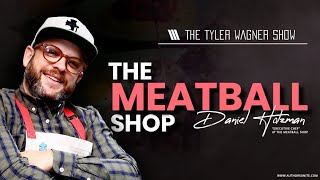
In this episode of The Tyler Wagner Show, chef and restaurateur Daniel Holzman discusses his journey from growing up in New York City and working as a delivery boy to becoming a chef in high‑end restaurants and eventually co‑founding The Meatball Shop with his high‑school friend Michael Chernow. He recounts the shop’s origin during the 2008 recession, its rapid expansion, and the roller‑coaster nature of restaurant ownership. Holzman reflects on how the COVID‑19 pandemic exposed pre‑existing financial strains in the industry and forced a shift toward disruption and resilience. He then delves into his cookbook, Food IQ, explaining how the book grew from a long‑running column with journalist Matt Rodbard, its goal to answer everyday cooking questions, and the decision to publish during the pandemic. The conversation moves to practical cooking advice: using microwaves and Instant Pots for quick meals, mastering one‑pot techniques like finishing pasta in sauce, and the importance of tool selection, knife maintenance, and understanding price differences. Holzman also addresses food‑safety concerns around raw meat consumption, citing regulatory guidelines, bacterial risks, and cultural practices. The episode wraps with promotion of Food IQ’s website and social channels, an invitation for listeners to try the recipes, and a friendly offer to share pizza when Wagner visits Los Angeles.
Chapters
All right everyone, welcome back to another episode. Today I have Daniel Holzman with us, so welcome to the show, man.
Thank you for having me, very exciting.
Grateful to have you on. Um, if you can just kick us off, just brief intro, who you are and what you do.
I'm a chef guy, restaurant guy. I grew up in New York City and, um, I make food for the regular people, so quality-driven, fairly priced pizza and meatballs. I'm a pizza and meatball guy. And, you know, I worked in fancy restaurants most of my life, but this is where I'm at.
No, that's awesome. So tell us a little bit more about— because is it— it's called— is it straight up called like Meatball Shop? Or tell us a little bit more about that story.
So 2008, I was working in fancy restaurants. My high school best friend, my Michael Chernow calls me up and he says, I want to open a restaurant in New York City. I had migrated all the way out to California at that point. And he convinced me to come, come back to the city and open a restaurant with him. And we were like fistfighting best friends, you know, like the kind of guys that are like, you know, not afraid to punch one another in the face. And we, we kind of forged this meatball shop restaurant concept out of kind of thin air together, and we opened it up to great success and It was a full service with a bar, kind of choose your adventure meatballs, 5 meatballs, 5 different types of sauce, different pastas. And at the time, you know, it was a recession in the country. And it was an inexpensive, really fun place where, I don't know, people kind of got excited about the best friends opening a business together. And it was super successful. And really, it was just like a wild ride. We were so, so busy right away. And We opened a bunch of restaurants, one after another after another. And, you know, no story is linear. Like, everything's like a roller coaster of disaster and then success. Two steps backwards, three forwards. And yeah, in the end, we're still dear friends and the restaurants are still open. So it worked out.
Wow. So when you were— because I know you said you worked at fancy restaurants and stuff, but when you were younger, it seems like— did you always kind of know you would be in the restaurant business?
I started working as a delivery boy because my mom worked nights and my brother was older. And so he wasn't around. And my mom kind of got me a job to keep me out of trouble and keep me busy. And I found my way into the kitchen early on. And I loved it. I think mostly because I got so much positive feedback from people talking about, you know, oh my God, you're so young, and you're so— you're doing so well. And it felt so good to hear that. But I never really knew until the end of high school specifically that, you know, this was the path that I was going to take. And at that point, I was kind of birthed a little far enough along that I had a little bit of like an advantage. And it was hard, you know, it's hard to turn that away when you're, when you're good at something or doing well and have some experience. It's hard to turn your back on that.
Yeah, interesting. So And not, you know, that's why I love just having open conversations because I think that that's so true. I've actually thought about this a lot but without really being aware of it, meaning like how often is success rather where like you just keep trying all these things, then you find something that you are good at, and then it's like maybe something else would maybe be more fulfilling. And I'm not saying that in your case, but maybe it would, but it's like then The fact that you have a gift in this realm, it's like, why would you— like, so many people go through life without ever finding their gift, you know? So like, the fact that you were even able to find one is like magical. So it's like, how could you— I just feel like a lot of people find their entire career path kind of by like accident, you know? Like, it's not ever like perfectly—
what do they say? Most Americans have like 5 distinct careers in their lifetime, you know, something crazy like that. Oh, I didn't know. People are people that don't—
don't quote me.
Okay.
No, no. But it makes— I mean, or maybe like 5, 5 different career changes or—
Yeah, people are constantly changing their careers because when we, you know, and then you— but we also put so much pressure on like, you know, as a young person, it's like, what do you want to do? And it's like, well, ask a 50-year-old. They have no idea what they want to do. So like, how do you expect this guy at 20 to have any idea? But then there's, and then there's this other idea that like, you know, if you, if you, if you were well matched for your job, you have a better, you know, chance of, of, of succeeding and excelling. So like, would I, I would be, I would be a shitty banker.
Yeah.
And so this idea that like, that's a better job, because I would make more money. I wouldn't make more money because I would fail at that job. And so potentially, if I was as good at being a banker as I am as a cook, I would make more money. But that's like, you know, potentially, if I, you know, had a full head of hair, and, you know, I could have had a different job. I could have been a movie star. Yeah.
So what is your, like, your favorite thing is like pizza and meatballs? Those are your two favorite things to make?
I actually I, I've got a little bit of that. Like, I don't think it's like an ADD diagnosis. Like, I think I just get really excited about learning new things, and I can be passionate about anything that's fun. And then, um, most things don't hold my interest for, uh, you know, very, very long term. So it's not that I love pizza and meatballs so specifically and only, it's that they're both really interesting, unique challenges that were fun to spend a ton of time getting good at pizza specifically now because baking is just such a fascinating, deep kind of like rabbit hole of a subject to learn about. And the further you go, the more there is to learn. And crazily, it's like one of the oldest ways that we've, you know, sustained ourselves is by milling grains and cooking breads. But in the last like 15, 20 years, there have been huge leaps and developments in our understanding of how it's done. So like this ancient thing is being revolutionized right now and it's really spectacular to be part of that and get to experience it.
Yeah. I wanna talk to you too about your book, right? You have a cookbook called Food IQ. Is that right?
I do. I came, my writing partner Matt Rodbard and I came out with this cookbook at the beginning of the year and it, We wrote it during the pandemic and I gotta tell you, it saved our butts because we were both deep in hard work and concentration while the world was distracted by important, more important things. We were writing a book.
Yes. Okay. So that's why I want to— yeah. So I want to talk about the book just because a lot of our listeners are actually people that like— I want to talk to you like about the writing and the actual content, but my core business is Authors Unite and it's all, it's very book related. So, That's very fitting. But before we talk about that, I want to ask you like, what were, like, what's your take on how, like, with the pandemic, like, what was that like for you and your restaurants? And just, if you were to give kind of an overview discussion on it, I'm just curious, you know.
If I were to give an overview discussion, I would say that overall the restaurant business going into the pandemic, in general was ripe for disruption and upheaval. There's some— it was not working anymore. The financial, kind of like the traditional financial setup of how a restaurant, you know, you spend this much on labor and this much on food cost and this much on this and rent, and it all comes out and here's what your profit should be. That stopped working and was slowly getting the profits were being eroded away, and more restaurants opened than, you know, I think it was like restaurant openings outpaced population growth 10 to 1 for 10 years straight. And, you know, private equity was pouring money into— people were fighting over rents, and rents were skyrocketing. And at the same time, you know, you were having to pay more fines, more taxes. The government was able to keep a closer eye because of the computerized kind of like point-of-sale system. So like there was all of these factors that, that made the restaurant business— it was kind of teetering on, on, on the verge of a big disaster. And then COVID was not— was like, you know, the— it was like the cinder block that broke the camel's back, right? So on one hand, COVID was a— she was a terrible, terrible challenge for so, so many. But on the other hand, it was also kind of like a lot of this— the, the stuff was going on. And you see that throughout so many industries, like industries that were doing well before COVID and were really, you know, some of them did even better, some of them were challenged, but, you know, the great ones kind of came through. And then, you know, like movie theaters, we were all like, do you really go out to the movies as much as we do? Is this really a great business? And then it's like, COVID is obviously really bad for movie theaters, but like, they're not closing because of COVID They were kind of closing anyway, right? Hmm.
Yeah, I see what you're saying. Um, So yeah, it is wild. I just know, and being in Miami, I guess it was quicker than most places that things got back to, you know, quote unquote normal. But in other places, I think in some places there's still stuff going on.
I've got a restaurant in Oakland and it's still, I mean, it's still going on up there. I went up there and I was pretty surprised to see that most of the folks were wearing masks and people were not going out to restaurants. And so there's a lot of the stuff that, um, that passed quicker in other parts of the world. You know, I don't know, the entire world spent the last 2 years pointing at each other and calling each other stupid. So like, you know, who knows, maybe, maybe they're right, maybe they're wrong. I don't know. I don't know. Not great for my business, for sure. Not good for my business.
Yeah, no, I feel you. And I mean, I'll say I think I like the way Miami handled it. But I don't know, like in Miami, I don't think it almost is like it doesn't really exist anymore down here.
But I'm not sure. Yeah, I mean, my LA, LA is pretty much, you know, you wouldn't really know. Like I went to the doctor's office the other day and I was like, okay, okay, I get it. That's still going on here. But by the way, if I was a, you know, at the hospital, I would be like, all these sick people coming in. I would like to make the mask thing a permanent deal, right? Like, anytime I go to the hospital, I want everybody to wear a mask and make me feel better. Yeah, actually want to look at, look at the people in the hospital. And I don't want them to look at me. Hey, you know what?
I hadn't thought of that. It's not a terrible idea, though, just for the sake of like, everybody is sick.
And yeah, like, you're definitely sick, you're at the hospital. And, you know, if I recognize you, I don't, you know, what are you here for? Like, oh, I'm getting this thing removed. Like, we don't need to talk about it. Let's just pretend that this didn't happen.
I'm in agreement.
I actually, like, anytime I go to doctors or hospital or anything, the last thing I want to do is talk with someone, run into your, run into your friend Chad that you forgot to Facebook message back because you actually didn't like him.
Yeah, dude, that would not be good. I'm just trying to get the shit covered, you know what I mean? So no, that's not a bad idea. Yeah, I know the one thing, because I know like tomorrow I'm gonna take a flight to Vegas for one of my friend's weddings, and I don't think— because it's been like a couple months since I've been on a plane— I don't think they do it on the planes anymore. But I remember I went to Dubai, this was like a year and a half, so it was kind of in the middle. And they weren't too strict on like the Emirates, um, flight, but they still did want you to like— they, they still had to say, they were like, hey, in between bites, you know, put your mask up. And I just kept always saying, I'm like, dude, in between bites, this is just madness.
Like, on the, uh, on Delta now, they just give you a Purell pack. They're just like, here's a Purell pack, that'll do it for you, buddy. You could snort it, you can, you can rinse your mouth with it, you could wipe, wipe it on the seat. But just like the the hospital thing, frankly, you know, I don't know who was on the, on the seat before me, but I know that in the 13 minutes between flights that they, they didn't clean the plane. So maybe the Purell ain't doing such a bad thing, COVID or not.
Yeah, I agree. And my— I get what you're saying, and I think that too with flights. My thing is just, I don't know what it is, maybe I get a little anxiety on flights for whatever. It's just like I feel like I can't breathe that well with a mask regardless. And then, then you put me in this like in, in boxed like thing with all these people, and I'm like, dude, like, and then also a mask. I don't know, man, it just makes my anxiety even worse. So I'd just rather avoid that. Um, so regardless, um, so I'm curious, before we get into the details of the book, is what was it— why did you decide to write it? And then what was the actual process, like the behind the scenes of writing it, like So my—
so like, I don't know, 15, 12 years ago, I opened the meatball shop. 15 years ago, my— and Matt Rodbard, my writing partner, was a journalist, um, and he came in for the opening and interviewed me about something, and we kind of became friends and started, you know, had a shared, shared, uh, kind of like passion for traveling to the outer boroughs of New York and looking for interesting eats and You know, at some point I had, I had let him know that I was interested in learning more about writing. And he said, well, why don't we byline a column together if you're serious? And so we started writing this column from, from, for Savor magazine. And then later we turned, we moved it over to Taste, which is an online magazine. And we had the column for like, I don't know, years, you know, 5 or 6 years. And it was started out, it was called, uh, Asian Drinking Food Adventures or something like that, because we'd go get drunk and go look for great Asian restaurants in Paterboros. And then, um, I think both of us, our drinking got out of hand, so we had to scrap that concept. And, um, and it turned into this like 100 Questions for My Friend the Chef. As a chef And as a food journalist, you get so many questions coming in from people, and it's like the simplest questions that people have. Like, I got a piece of salmon, what should I do with it? Or what is, you know, why there are like 3 different types of olive oil in the supermarket. Why is a little jar $30 and a big can $10? Like, what's the difference? What do I use them for? People just don't really, there's some fundamental kind of understanding and learning that doesn't, that people don't know. So, so, um, the column was really popular because we tried to take a question and answer it in, in depth and with an article, and then example it with a recipe, um, which was fun. And it, it, it, um, it got a lot of great feedback. And so we decided to expand it into a book, take some of the more popular questions that we had already talked about, but then also really put 100, you know, like 100 questions For My Friend the Chef was a concept of the book. It was, you know, like, let's raise your cooking smarts. Food, uh, food speak, and, and kind of like being a foodie is something that it was kind of nerdy for a while, and then it really got a little corny. Everybody's like, I'm a foodie. And then we were like, we will, but we want to re— we can reclaim this title of being a foodie, um, and be excited about it because we are excited about what we eat. And It's like, it's like cultural cachet, the culinary currency or something like that. The idea to be, you know, like, you talk about cooking and food and restaurants. And it's a little intimidating if you don't really know, if you don't understand it. Because, well, you know, there's like French people involved. So they make it intimidating.
Yeah, no, that makes sense.
You know what I mean? Like, with that way we can, you don't, it's not just because I want to learn how the best way to cook a steak. But I wanna hear, like when someone says like braise or sauté or sear or poach, like what the hell does that mean? And I think most people just kind of nod and smile and like don't wanna sound like an idiot, so they pretend they know, but most people don't really know. And cooking is so simple and it's so easy and it's such a pleasure. You know, I cook food for myself and my wife every night and it's a quick, fun, delicious, cheaper. There's no reason. It's like learning to cook is the greatest gift you can give yourself.
Yeah, okay. So let's— I think that would be actually a pretty good path based on our listeners to talk about, because a lot of people, they— especially like entrepreneurs, business owners and stuff, they very much like, they'll just order out all the time, or they have the, um, what's it called, like HelloFresh or, um, or whatever, the ones where you just put in the microwave. There's a bunch of them that are like 3 minutes and it's done, but it's already like pre-cooked. So you would say though that it doesn't need to be that way, like there is a productive way. So like if you were to give— and I'm actually, I'm asking this selfishly because I am one of those people, like in the building I live in there's a restaurant downstairs, I eat at it every other day, like it's ridiculous. Um, so What would actually be some like quick meals for someone who's like busy, quote unquote? We're all busy, but if I didn't want to spend an hour in the kitchen, but I would still want to have an awesome meal, what recommendations would you have on that?
I think, um, first of all, I feel like there— one of the chapters in Food IQ, um, is like a tools and technology chapter, and I started using the microwave and an Instant Pot and cooking with it and testing it out and playing with it. So You know, there's— using a microwave, you can cook a lot. Like, I make— I'll make myself for dinner, I'll make myself a baked potato in the microwave, and I absolutely love that. Um, I used to come home— I wrestled jiu-jitsu pretty seriously, and I would come home from the gym just ravenously hungry, no, no, no plan prepared, and I pull a steak out of the freezer and season it and throw it right in the broiler frozen and like 9 minutes later you have a perfectly cooked steak. So I'll take a frozen piece of fish, I'll put it with some mushrooms, a little white wine and butter, and I'll wrap it in plastic wrap and on a plate, stick it in the microwave for 7 minutes and it's like perfectly poached fish. I'll do stuff like that. I mean, I'm, I'm a pretty, I've got good knife skills and you know, I'm a professional chef. So for me, some of the stuff probably goes a little faster, like, you know, some of the knife work. That takes longer for folks, I can kind of knock that out. There's also like a passive versus an active cooking that I think people are like, oh, it's a 2-hour process. Like, no, it's like 10 minutes of work and then you just, it's like an hour and 45 minutes in the oven. So, you know, there's that as well where I'll throw something in the oven and you forget about it for 20 minutes. Um, I think the more you cook, the best way to go about it is to start with a very simple, individual, unique thing like that you like. You know what I like? I like teriyaki salmon. Great. Like, why don't we work on the teriyaki salmon recipe? Um, it's something that shouldn't take more than 15 minutes all in. You can bake a piece of delicious, healthy salmon, and then you can keep on playing with that teriyaki salmon until you're like comfortable with the cooking, comfortable with making the sauce, and then we'll switch out the fish or we'll switch out the sauce. But it doesn't need to be like an all-encompassing, I need to learn everything. You know, you bite— how do you— you know what they— what do they say? Like, how do you eat an elephant?
What? One bite at a time. There you go, buddy. I'm a genius. Got it.
Okay.
So that makes sense. And that actually was pretty eye-opening for me, that one part with the oven, because that is actually what it is. And I know my, my mom, stay-at-home mom, she would cook dinner for us every night. And her, my grandparents and great-grandparents, they always had German restaurants from the town I grew up in. It's like small town. Oh, you might know because you're from New York. So at least that's what I read about you. So like, um, in, uh, Bucks County, do you know like Doylestown?
I don't think I know. Where is Doylestown in Bucks County?
So Bucks County is like an hour north of Philadelphia, so it's not— it's like 2 and a half from New York to drive.
But I don't think I've really ever been to Doylestown.
Yeah, yeah, Doylestown's small. Bucks County is pretty big.
It's between like Allentown and Trenton or something.
Yes, yeah, Allentown. Allentown I think would encompass like Bucks Bucks County.
I mean, I know the Billy Joel song, All About That. Yeah, no, I've, I've, I've driven through there. I've spent a little time at Princeton and been to Bethlehem, so like, I know Bethlehem. Yeah, I know the area.
Okay, great. So yeah, that's where I, um, grew up. And yeah, my grandparents and stuff had, uh, like German restaurants there and stuff. And, um, regardless, so my mom grew up in the business, and then she— they had sold the restaurants and everything, but then my mom, like I said, stayed home mom. She would cook every night. And I'm just like, I'm having flashbacks after you said that. It's like And I want to be clear because my mom listens to my episodes that it was still a lot of work. But now when I think back, it was like, you know, sometimes she would cook like a turkey or like something and she'd actually start it like in the morning, right? So it's like an all-day thing. But in fact, like if you were to actually measure the amount of actual like workable thing, like it maybe was only an hour, but it was in the oven for like 10. You know, so I don't know. Um, it's just in my mind I was always— I would always group that together and be like, dude, I don't have 2 hours to cook dinner tonight, when in fact it's just really it's 20 minutes. And for that other hour and a half or hour and 40, I can be working while it's in the oven.
So I feel like the air traffic control is the hardest, um, is the hardest part. Like knowing when to start what to make sure it all ends up at the same place and the better you are at that, the more efficient the time becomes, and you can kind of really, you know, advantage yourself. Otherwise you wind up like running around. But again, I think that's because people just, just bite off a more intimidating, difficult, complicated recipe than they should. Like, the trick is like cook the salmon with salt in the oven at 350 degrees, and then like it'll be pretty apparent whether you undercooked it, overcooked it, under-salted or over-salted it. Like there's no, you know, you, you, you can figure that part out when you start adding lots of ingredients and complicated techniques. It's very hard to pinpoint like where it went right or wrong and, and get good at it and get any confidence.
Yeah. So it is kind of like a trial and error type of, and you can follow a recipe and stuff, but you know, and even if you follow a recipe, you might like, my mom, I know she does that all the time and she'll like follow a recipe, but then she'll like alter it to what she thinks that we will like potentially more. But that's like a trial and error type of thing. And most of the time she's correct. And then there's been some times where we're like, eh, didn't really like that. And then she'll like change it up. So I think that's what it is too, just a lot of trial and error.
Like, your mom, you said she listens to these episodes, she shouldn't feel too bad. I, I got banned from Thanksgiving stuffing for 5 years straight because I, I meddled with the recipe and almost, you know, ruined the best meal of the year for a full one.
Okay, maybe we'll clip that and we'll tag her and put it on Instagram or something. Um, that's funny. Um, so as I, I was looking through just like the topics, um, in Food IQ, and there's a couple that, uh, stood out, so I just wanted to kind of ask you about a few of them. So, um, and it's funny because the first one, and it's because I know of some people that work at Cutco or did when I was younger. And, you know, they're really nice knives. So there's one part in here that you say, what's the difference between a $30 knife and $150 knife? What is that about?
This is like one of the biggest questions. Like, you know, you get questions like, what kind of pots and pans should I buy? What kind of knives should I buy? You know, those are the type of questions that come in as a chef all the time. And it's nice that now I can make a profit from it. I can just buy the book, buddy. It's in there. Yeah, The knife thing, the knife thing is such a challenging one because so much about it is keeping it— a tool is in the, in like the hand of the beholder, you know, the quality of the tool becomes appreciated and if you want to use the tool. So like, I've got a huge collection of knives, but I do have, I've got 4 knives that sit out on my counter and there's one that I use all the time. For whatever reason, it feels good in my hand and I love it. So what's the difference between a $30 knife and $150 knife? You got to figure out which one you— if you can feel good about the $30 knife, then there's no difference. There's obviously some, some, some, like a lot of, a lot of the, the, the quality of the steel, how, how the, how handmade the process is, where it was made, like, all of these things come into play, like, you know, the economy where it's made. So if you get a knife that was made in India, it might be less expensive than a knife that was made in Japan, but it doesn't mean that it's— the quality is not as good. It might be a better quality, but the economy that it was made in just might have a lower paid wage, right? So like, that kind of stuff starts to play a little bit of a role. But generally speaking, you can, you can take a Victorinox knife and do anything you could do with a fancy expensive, you know, Japanese sushi knife. There's no— that's not a thing. But keeping the knife sharp is more, more important than the quality of the original knife. Yeah.
Got it. Okay. And then another one, and this is coming out kind of rapid fire because I just, I skimmed through some of these topics and there's just some that really stuck out. But this is another one is with the cooking pasta. So like, um, and it says in here is like, how do I cook pasta? Why does it always taste better in a restaurant? So in Miami, like, I've gone out to so many different Italian restaurants here, and one of my favorite ones called Pain and Vino, and they do like the, the cheese wheel. So they like, the pasta is like fresh cooked and it's like comes out steaming, and then a guy comes with this huge cheese wheel right next to you and then drops it in there, mixes it, and then puts it on your plate and then adds more cheese on top. And it is freaking incredible. So why does that taste better than when I try to make it? And I still smother it in cheese and I think I do maybe everything the same, but it does not taste the same. So I'm curious.
Um, So basically, when I think it's pane e vino, right? Like bread and wine.
I don't think that's what I mean. Yeah, bread.
I don't think it's like you said, pain and vino. I don't think it's like you get the hangover first. The, the home. So basically, you know, when you work in a restaurant, the cooking of the pasta is a continual thing. You got your boiling water and you're cooking pasta in it, then you're pulling your pasta out and you're cooking more pasta and you're pulling. So you're never like, cooking the pasta in a pot and then dumping all the water out. But like in a, at home you make it in one go. So you dump all the water out and then you've got this pasta and you have your hot sauce and you just kind of dump it on top. But in a restaurant setting, the way you do it is a little different cuz you're, you're doing, you're, you're making one portion at a time. So you would, you would cook your pasta in the water, you would heat up your sauce in a frying pan next to the boiling water. And then when the pasta's done, you kind of shake it, you know, you pull the strainer of the pasta out and then you dump it into the sauce. And that process of, of kind of like finishing the pasta along with the sauce, you're actually cooking the pasta in with the sauce. And in Food IQ, we advocate cook it for a minute less than it would normally need so that you can really spend an extra minute cooking it with the sauce. Mm-hmm. Is the magic that some of the starch leaches from the pasta and the pasta water and helps to emulsify the oils, the fats, and the liquids in the, in the water, the, the, the, you know, the water water-based kind of like liquids in the, um, in the sauce and helps it to like stick to the pasta. Yeah. So, you know, it really becomes like a, a, a singular dish instead of like pasta and sauce, which is, which is ideal— not ideal.
Got it. No, that makes sense too. Now that I just thought about it, that is actually what I— because I forgot that step when they put it in the— it's been a while since I've been there, but I think what they do, they put it in the cheese wheel and then they actually pour sauce, like not cheese, but the tomato sauce and mix it with that. So that, and they do it for actually a while, like longer than you would think it would need. So you're saying that in that time, it's actually part of the cooking of it.
Yeah. It's like cooking and absorbing and melt, you know, like it's a little like cooking the sauce, the pasta in the cheese wheel. It's a little bit of a gimmicky thing, But the— it's funny, it's like a little bit of a gimmicky thing. It's like a little bit for show, but then it's also really delicious. So you're like, well, great, it's kind of corny, but then it's really great. So it's like, I can't really talk trash about it. But, but I don't— I think you could, you could accomplish everything that they're accomplishing doing it in the wheel in a frying pan. I don't think the cheese wheel is a necessary piece of the puzzle. Yeah.
Got it. Yeah. And actually, It's funny because I've had that exact thought and like, it's— you're definitely accurate on it. And I do think though, like sometimes because it's like psychological or something, there's just like something about like— I get the gimmicky thought, but I also think there's just something about like seeing your pasta encompassed with that much cheese surrounding it that makes it like you think it tastes better, but like it might not taste better, but it actually does because you think it does.
Yeah, I think there's definitely like a psychosomatic or whatever you call that, like, you know, aspect. You eat with your eyes first. And, and it is a thing. It is a thing, you know, presentation, presentation really does matter. Yes, it's a shame that it does sometimes because, you know, there's certain foods that are so tasty, but just really don't look good. Meatballs actually are challenged to photograph.
Yeah, I could see that for sure.
They kind of look like lumps of shit.
Yeah, I wasn't gonna say that, but if you— yeah, go with it. Um, so another thing I want to ask is there's this, um, I'm just curious from you working in restaurants so, so much that, you know, maybe you'd have a perspective on this, is have you ever heard of like the Liver King or like, or seen anything on social media of these people eating raw meat?
So I've seen that guy eating the raw liver and I think it's spectacular. I think he's an extraordinary, extraordinary example of probably the end of our society in a good way. I like to go out with a bang and this is like Atlantis is burning and we're just eating the liver from like a, or like the heart of like Gallimimus style, like Indiana Jones. I don't think that there's any benefit to eating. I think there, I think if, you know, like there is enough science out there that I think any doctor would probably tell you that there's a, there's a, there's a, there's a strong risk of him dying of parasitic infection or getting real sick from that. And, and whatever health benefits might or might not exist are, are like strongly over overwhelmed by the fact that he's gonna die of some weird, like, you know, parasite disease that is only present in like, you know, the, the recently slaughtered liver of a still warm animal. Um, but it's fascinating to watch and the guy's in great shape. I mean, he could probably kick my butt, so I don't want to say too much.
Okay, so that was, um, that was an awesome answer. But so, but so, because that's what I was curious about more is like, I guess it's the parasite. I didn't know exactly what it was, but I had always heard, you know, like you can eat medium rare or just rare steak, but you at least want to cook it a little bit. So the idea that— I mean, he's the most well-known, well-known that does that, but now I've been seeing more and more, uh, of people just eating like completely raw, like just out of a pack. Like it could be out of like a normal grocery store and they just rip the plastic off and just eat it.
You can— there's— look, there's— look, the reality is that it's it's like, I guess there's the federal, the FDA, right? The Food and Drug Administration. And they put together a guideline of temperatures and time that are required for killing bacteria. So like, you know, takes, you have to cook something for this amount of time at this temperature in order to kill the bacteria and make it safe. And those are in certain circumstances, like if you want to can something and put it on a shelf and sell it, interstate commerce. Like, those are laws and there's no, you know, immutable, and you follow the rules. Um, in a restaurant, obviously we cook a rare steak. There's certain, certain cities where you'll see a little disclaimer at the bottom: eating raw food can be dangerous. But, you know, a lot of it also comes down to the food system. Um, uh, when people get sick in a restaurant, most of— or sick, you know, from food— most of the time it's from salad, uncooked food, you know, like a a deer will hop the fence and walk through a field of lettuce. That deer will have recently walked in some fecal matter and, and then that will create a back, you know, like that will infest the lettuce and bacteria. The lettuce all gets kind of cleaned in the same water and then it becomes widespread. And then that's when you hear about You know, romaine lettuce is responsible for E. coli infection and blah, blah, blah, blah, blah. And they're, I remember that.
Yeah.
So that's kind of like where, you know, if you cook stuff, generally speaking, there are some bacteria or whatever that, but if you cook stuff, there are some toxins that'll last that you're, you're pretty safe. That said, like, you know, I went through Japan eating raw horse and raw chicken. They serve raw horse and raw chicken in restaurants. Not an issue. And I've eaten a lot of raw chicken. I never cooked my chicken well done 'cause I don't prefer very, very dry. So I cook my chicken medium, a little bloody around the bone. You know, trichinosis doesn't exist. Like the idea of getting sick from pork, it's just not a thing. I think there's like 3 cases a year or something like that. So I think that there are people like, what do they say about oysters? I think the, the, the re, the, the, we talk about it in the cookbook. It's like if you eat a dozen oysters a day for the next like 300 years, you'll get sick twice.
Wow. Wow. Yeah.
You know, I think, you know, and then the other side of it is people are like, oh, I got sick. I think it was that oyster. And it's like, you got an upset stomach because you ate like a, you know, like a, like a, like a gorilla. You were shoveling bacon fat into your mouth and yeah, your belly got sick, but you didn't get like, food poisoning. Like, food poisoning is a food— for any of us who have gotten real food poisoning, it's not something that you like accidentally think you might have. Like, you're sick. Um, yeah, you know, I think it's— I think that— I think, um, I don't know, I'm not a doctor, but I definitely read the CDC guidelines, and I, and I think people are a little— people are probably more careful. So you should not eat a raw liver right out of the, you know, cavity of a, of an animal that you've just killed unless you're a weird freak. But, you know, you probably can and it'll probably be okay. But if you do it 1,000 times, it's definitely not gonna be as safe as eating 1,000 cooked hamburgers, which, which are less likely to kill you.
Got it. Yeah, the chicken, that's the one that I feel like we've, that is presented the most is like, you can never eat raw chicken because of— was it like salmonella or something?
Salmonella, yes. The thing about the salmonella is, and again, like different countries have different systems of production, like because of the way the food production system in America can produce so much food from so few sources and then deliver them to such a, like a wide variety of places, it can be when somebody gets sick. Like if a batch of chicken, salmonella will put you in the hospital. I mean, it's a really nasty bug. Yeah. It's just not, not a pleasant experience. So what happens is like if a chicken in an assembly line in America where they're, you know, slaughtering and butchering like 100,000 chickens a second or whatever they do, they're dripping and juicing and, and mixing, you know, like one day's supply, or however many, can be like two states worth of food can get contaminated. It can be quite dangerous, um, versus if a local farmer is making chicken and they're washing it and taking care of it, it's less likely, um, that it would be cross-contaminated. And then, you know, like, one person getting sick is, is, is a travesty. But is it really? Versus, you know, killing a couple of states worth of people is really not ideal.
Yeah.
That's when you get into big, big boy trouble. Yeah.
Well, look, dude, very interesting. And I'm actually going to— I already decided I'm going to gift my mom your book, Food IQ. So as I was scrolling through it, I was like, holy crap, you guys cover a lot of stuff in there. So we just scratched— we didn't even scratch the surface. We only talked about like 3 topics. So yeah, man, I want to just leave the floor to you. Like, if there's anything we didn't cover that you want to mention, please do. And then let people know, like, social medias, website, book, any— where they can stay in contact with you.
I appreciate that. You're a very generous host. You're a kind man.
Thank you.
You are. You're a good guy, seems like. Um, I think we covered a lot. My— I, I think, um, I would say that my— I had a really wonderful experience working with my writing partner, Matt, and it was a true partnership. And, and that's something that feels, feels good because partnership is so hard. And with him, it was not. It was just so easy. He's a hardworking, smart, you know, passionate guy. So that was a wonderful experience writing the book. And yeah, I mean, you can go to foodiq.co and we've got a little website and you can learn about where to, you know, you can buy the book from any of the traditional sources online, barnesandnoble.com or whatever. And I'm @chefholzman, which is my Instagram, you know. I love cooking and I love talking about food. People send me messages all the time and people send messages into the info@foodiq.co, you know, like, like, like, uh, email. And, and we're always, you know, talking about recipes in the book or people are sending messages over Instagram about, about, you know, the recipes they've tried. And it's really fun. It's special experience. You cook a book, you, you write a cookbook and then you put it out there and then people use it. And it feels so good, so cool.
Yeah, man, dude, that is, uh, that's awesome. And, um, yeah, I think what, uh, we'll do— so once my mom has it, I'm sure she'll try some recipes. So we'll, we'll be, uh, one of those ones that are messaging you on Instagram, and we'll be, uh, we'll be sharing it. So thank you again, man. I appreciate you coming on.
Definitely. And when you come out to LA, come down to Danny Boy's Pizza and Let's have a slice. I'll buy a slice of pizza.
Done deal.
All right, thanks, brother. Thank you so much.
More from Tyler


Catherine Nikkel : THE STORY EVERYONE HAS BUT HASN'T TOLD : The Tyler Wagner Show #1120



Scott Ritzheimer: Bring Predictable Success to your Organization | The Tyler Wagner Show #1115


Fred Moskowitz: A GUIDE TO GETTING STARTED WITH IN MORTGAGE NOTES | The Tyler Wagner Show #1113

Mark Podolsky: From Land Investor to Full Time Success How I Made $90,000 Cash in Real Estate


Mark Podolsky: How to achieve a 300% return on investment my foolproof strategy

Mark Podolsky: How to make passive income selling raw land the irresistible pricing strategy