Derek Moneyberg : THE TEN COMMANDMENTS OF WEALTH | The Tyler Wagner Show #1085
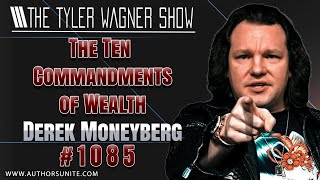
In this episode of The Tyler Wagner Show, entrepreneur and investor Derek Moneyberg shares his life story and wealth‑building philosophy. He recounts how he began earning money as a child—walking dogs, paper routes, and managing other kids’ routes—later scaling to entrepreneurship, real‑estate, and stock‑market investing. Moneyberg emphasizes "distressed" and "boring" assets: out‑of‑favor, high‑quality businesses such as utilities, pipelines, and class‑A retail that generate massive returns when bought at deep discounts during market panic. He critiques popular misconceptions about the stock market, warns against day‑trading, and dismisses crypto as a speculative fad that will likely be suppressed by government‑issued digital currencies. Moneyberg explains his flagship coaching program, the Ten Commandments of Wealth, a 100‑hour curriculum with 10 modules, supplemental interviews with world‑class athletes, and a focus on disciplined, long‑term wealth creation for high‑performing individuals. He shares personal family background—an absent, incarcerated father and a volatile mother—to illustrate how personal responsibility shaped his drive for financial freedom. Politically, he identifies as libertarian‑leaning, skeptical of both parties, and warns that increasing government control threatens individual wealth and autonomy. The conversation ends with details on how listeners can access his courses and follow him on social media.
Chapters
All right, everyone, welcome back to another episode. Today we have Derek Moneyberg with us. So welcome to the show, man.
How you doing? Thank you for inviting me.
Very good. Grateful to have you on. So if you can just start us off a little bit more about you and what you do, and then we'll, we'll go from there.
Well, I, you know, I, today I built a social media business or built an online coaching business. And there was something that's kind of a, you know, something of a hobby. Like, of course, I'm going to run it like a business. But the things that I spent my life doing earlier is, you know, entrepreneurial things. I made my first entrepreneurial money when I was 7, doing, you know, child-type things, walking dogs and, you know, cutting grass, raking leaves, shoveling snow, washing the neighbor's car, you know, all the little things that you could do as a child. But You know, I didn't have the happiest or most stable childhood I had. You know, my father wasn't around. My father was incarcerated for— he had a 15-year sentence for drug trafficking back in the day, back in the '80s. My mother wasn't the best mother. So, you know, some people here could relate to that, that, you know, wherever you came from, I think you could do better. But at that age, I felt like, you know, I need to make some money and contribute to the house. Like, I'm like the man of the house now. At 7 years old. I was trying to do what I could to contribute a little bit, you know. You know, later on, I had— I was 10, I had, you know, a paper route. By the time I was 11, I had 4 paper routes. And that was my first managerial role that when I had 4 paper routes, I could have the other kids in the neighborhood do the paper route. And, you know, I'd keep 25% and they'd get 75%. So I was still getting paid for my one paper route, but I didn't have to do the work anymore. I just had to manage and make sure that everything was well taken care of. And, and that kind of grew from there. And, you know, late, later in life, you know, the 3 main ways that I made money were, again, through entrepreneurship. And later, I made enough money in that, that I started investing in real estate, you know, by the time I was 19, and through my 20s and 30s, and still today. And, and then I started making money in the stock market. I love distressed investing. And there's times where people panic, and there's a lot of misunderstanding about how the economy works or how the stock market works. And when people are panicked and scared and doing crazy things, then sometimes there's very high-quality assets that are on sale that are just mispriced. And if you have the liquidity to buy those in those moments, you can really make tremendous wealth later on. So, you know, in my personal life, I made, you know, over $10 million in profits from real estate. I made tens of millions, plural, in entrepreneurship. I made tens of millions, plural, in the stock market. And I created some coaching courses later for people that, you know, maybe would like some guidance, some leadership, some mentorship in that area. It's not for normal people. This is for people that you're— they're already doing well, and they want to do even better. It's not— normal people don't have very good work ethic, you know. Normal people want to sleep in and not work too hard. And it's nothing I do is about get rich quick. Nothing I do is— it's not for average people. It's for people that are, that are already doing well. But they know they could do even better. And, you know, that's a priority for them to be successful in that area, in one of those areas or all of those areas, and be a well-rounded business person.
Mm-hmm. Wow. Okay. I have a bunch of questions. First one that just came to mind, because I do think it is so misunderstood, is the stock market. And you were saying when people panic, do you— so I kind of have two questions with that. First is like, You know, there's the fear and greed index. Do you think that, like, base— obviously there's more to buying decisions than just that, but do you think that is somewhat of a decent, um, kind of buying metric to look at? Uh, that, that'd be my first one. And then second would be, like, what do you think the most common misconceptions are with investing in the stock market?
Well, Warren Buffett has a, a fantastic quote, a very wise quote from years ago. He says, when when other people are greedy, you know, he becomes fearful. He thinks the market's likely to crash. And when people are fearful, he becomes greedy and he wants to buy everything while it's on sale. I think there's tremendous wisdom in those few words. So I wouldn't disagree with that as a general investment thesis. But, you know, it's a lot more complex than just that. You know, if you can't do basic math, if you don't understand accounting, and if you don't understand economics, and you're at an extraordinary disadvantage against those who can read the financial statements and can do the math and, and, you know, have, you know, better predictive models of the economy of, you know, how humans and governments are likely to behave over time and the contortions and distortions that are going to be created in the global markets because of that. So, you know, I don't disagree with what you said. I think that's, that's a great, you know, macro philosophy, but You need to understand the details or you're at a tremendous disadvantage against those who do understand the details. And I'd say as far as misconceptions that, I mean, this is an extension of what we were just saying, but there's times in the market where, you know, people sit on the sidelines and they do nothing and they do nothing and they do nothing. And, you know, the retail investor sees the market go up, up, up, up, up, and they have that fear of missing out and they think like, oh, you know, I got to get in there. It went up 10% and then 12% and then 20%, you know, year after year. And I'm missing out. I got to get in there. And those are the same people that buy Bitcoin for $69,000 before it goes back to $16,000 or whatever it did, you know, and I'm not a trendy person. I buy boring things. You know, this is like, you know, terrible marketing, but it's reality. Like, I buy boring things that are very high quality. That are just, you know, they're not exciting at the moment. People are thinking like, you know, oh, the energy pipelines or, you know, Class A malls or, you know, high-quality retailers. They're just not exciting. There'll be whatever the new, the trendy thing is gonna be, you know, cryptocurrencies and NFTs. Remember how big NFTs were a couple years ago, year and a half? Who the fuck's making money off NFTs now?
Nobody.
No, people are waking up and they're like, oh, I spent $400,000 on a monkey picture. And, you know, what did I do? You know, what? I could have bought a house with that money instead. I could have bought several houses, you know, with, you know, with money down, you know, making a deposit and getting some bank loans. So I mean, people made some extraordinarily foolish decisions with these trendy things. Well, people don't do that. I buy boring things that are out of favor and they make me tremendous money over time. And the risk profile is much less. The rewards can be, you know, much higher overall. And, you know, it's just not— it's not something that's exciting to young people or dumb people because they don't really understand the economic consequences of their judgments or behaviors. So there's a lot of foibles that take place like that. And I just try to help to banish some of that ignorance. And I try to learn a few things every day and banish some of my ignorance. I try to help my clients to learn some things of have good fundamental practices of not get distracted with the new trendy thing. It's like, well, if we could buy something that's been working for decades or centuries or millennia and it's been working consistently, you know, probably, probably it's going to be popular in the future to have like electricity in your home. Probably it's going to be popular in the future to heat your home in the winter. And some of those oil and gas companies or, you know, boring things like utilities, you know, Pacific Gas and Electric is what I'm thinking about because supplies most of the energy to Northern California. That stock was like $8 a couple of years ago, a year and a half ago was $8, and now it's $17. And if you bought that on margin, you only had to put 30% down. So you would've turned $2.40 into $17. And it's boring. It's a fucking electrical, it's an electrical grid. You're buying the distribution system of electricity to homes. It's not the most exciting things. Um, I made a 500% return on that boring stuff.
So yeah, you know, the older I get— and I mean, I'm 31 right now, so I don't mean to say I'm old, but I started investing very young as well, as I feel like you obviously did too. And I went down a path of investing in all these like small startups, and I've done well with it, but it's kind of a game of where, you know, you lose a bunch and then you have a couple random just like big winners, which that is a game that you could play. But as I've gotten older, I'm just like, the boring investments to me are the most exciting. Like recently I've just been doing some like interest loaning, some Section 8 housing stuff. Like, I don't know, just stuff that to me just seems so beautifully basic, even if it's like an 8% return or 12%. Like it doesn't need to be these like huge, huge crazy gains. It's just like, I don't know, I feel like once you get to a place where you're entrepreneur, like you said, is making you tens of millions, then I'm not thinking about the 500% return anymore. I'm more just like, how do I not lose all this money? How do I preserve it? So 8%, God bless it. That's fine. And I know with inflation, maybe that's not great, but I just am getting at that. I think boring is actually exciting in a way to me.
[Speaker:ROBERT_LEONARD] If you know you have a good nest egg of capital and you have steady growth that's outperforming inflation, then, you know, you can have a lot more leisure in your life. You're not stressed out about, you know, 2 ticks up, 1 tick down, whatever's happening in the market that, you know, I think one other misconception I'll take a moment to make fun of is this day trading thing that people think, oh, I'm a day trader. And when I hear that, you know, I roughly translate that into my head of like, oh, this guy just told me he's a dumbass. He just told me that he's extraordinarily stupid because the numbers on day trading is, you know, 80%— I'm saying that wrong— is 90, 90 80% of day traders lose 100% of their money in the first 90 days. So 80% lose all within 3 months, 90 days. And that's the real data on it. And, you know, to think that some schmuck that, you know, probably never even went to business school, and he thinks that he understands what's going to happen in the economy that, you know, better, better than the algorithms do that, like, You know, you got guys out there that are managing tens of billions and hundreds of billions of dollars and a couple of, couple of banks and firms that are managing trillions of dollars, trillions. And some day trader that doesn't know how many zeros are in a trillion, he thinks that he's going to have a better shot in the market than, you know, these big, huge money managers that can hire the best data scientists, the best statisticians, the best computer scientists in the world, you know, to build these algorithms and models, and you think that you're going to understand what's happening better than they understand what's happening is an extraordinary buffoonery. It's hard to imagine being that dumb. Yeah, it's amazing somebody like that could like remember to breathe and keep their heart beating at the same time.
Dude, actually, when you lay it out, I mean, I, I kind of always thought that, but I never kind of thought of it in the way exactly as you just put it. But when you put it that way, yeah, it's pretty dumb. You know, I mean, that's just pretty basic.
You know, I spent 9 years in universities, and I went to graduate school at the Booth School of Business, University of Chicago's business school, is ranked number 1 out of 416 programs, was ranked number 1 while I'm there. And I don't know how to do day trading effectively. Because nobody can, because nobody can, or they would. So the people that talk about that or, you know, you see, you know, there's a popular trend a while back about a lot of online courses of like how to make all this money in day trading. If you're making all that money in day trading, would you have time to make a course about it?
Yeah.
You know, I built these courses that I did because I like the social ecosystem. I wanted to be around other business people. And so for two reasons, really, I wanted to have a great mastermind group of other, you know, high-level business people that are that are well-educated, that are ambitious. And I wanted to have a peer group of very smart, high-quality people like that. Secondarily, one of my biggest frustrations in life is I didn't have very good mentors or very good role models when I was young. And I'd like to be able to help other people. I don't raise kids, I don't have kids, I don't wanna raise kids, I don't wanna raise a dog. I have a rabbit and a couple houseplants, and that's all the responsibility that I want for keeping something alive. Kind of the nurturing part of my personality is I am happy to help somebody else in business or, you know, point them in the right direction that, you know, if they're serious, if they're dedicated, if they have that internal motivation and they wish they had some help, which I felt that frustration when I was young. And, you know, a lot of my clients are those type of people. And I do find quite a great joy in, you know, having late nights with those people or answering their questions and helping them understand what's happening at given points in the economy and how they might profit from it. So it's been—
Yeah, sorry, go ahead. No, go ahead.
Okay.
No, I was just going to say, I, and I do actually, I want to hear about all your different courses. Just right before we get to that, I wanted to ask more about— So when you were younger, you said like 7 years old, you were already starting to kind of, I guess, notice that your mom and dad maybe weren't, um, I don't know, doing things exactly the best way possible. Let's word it that way. So, um, so, you know, you kind of step up and you're helping out and stuff. I'm curious, like, how did your relationship with your mom and dad evolve? And like, where is it like today, in a sense?
Like, you know, I never really had a good relationship with my mother, and, uh, and that's unfortunate. You know, she had, um I think she had a lot of personal problems. You know, I never met somebody— and I hate to say this, you know, for you to say that about your own mom, but the truth of this is like, I never met somebody that like more of like a victim identity that, you know, anything wrong in her life was somebody else's fault. And, you know, usually my father or me were the common persons to be blamed for whatever, for her shortcomings. And that was very important to me that I learned very early that I'm like, oh, like, you really, it's very hard to get ahead in life if every time you make a mistake, you externalize that and blame somebody else. And, you know, I really made that note of, you know, kind of, you know, younger than I would have liked to, I didn't enjoy it at the time. But I really made that note that like, the people that seem to be doing well in life have a strong sense of personal responsibility for their outcomes. That you have a strong sense of like, well, I'm going to make this happen. I'm going to create this, I'm going to do that, I'm going to earn my spot at some level, you know. So I think that was a very important lesson from my mother that, you know, she— and again, I hate to say this, but, you know, one observation I had is, you know, she would frequently, you know, stub her toe, like, like hit her foot on a door, or a specific piece of furniture we had. And, you know, 2 months later she'd do it again and then again. This is the same damn door, the same thing. And she'd say, "Fucking door!" And I thought that was extraordinary that like, it's one level of crazy if you like, if you hit your foot on the door and you curse at the door, but somewhere in your mind you still make the mental note of like, "Hey, let's make sure we don't do that again. Let's not do that in the future. That, you know, that hurt my foot. That was kind of painful." So that's one level of crazy that you curse at the door at all, but you at least make the note to yourself. It's a different level of crazy when you keep engaging in the same behavior repetitively and externalize the fault of this phenomenon to the door instead of to yourself. So I remember looking at that and I'm being like, you know, like as a child, I was, you know, 7, 8, 9, 10 years old. And I'm like, that's kind of fucked up.
A little bit. Yeah. I can't disagree there.
So it gave me a different perspective about like cause and effect relationships, and it made me think of like, well, you know, what are the things that you have control over that you could, you could change? Or what are the things you could have control over that you should not do? What are the things you have control over that you should definitely do? And, uh, you know, it did make me think about cause and effect relationships much differently, and, um, and sort of internalizing, uh, a sense of personal responsibility, or having a internal locus of control instead of, you know, externalizing events to others. So I think that was a very important lesson. So unfortunately, we never had a great relationship. She's passed away a couple years ago. She's not alive any longer. But I did learn some valuable lessons that, you know, maybe weren't pleasant, but very valuable that helped my life, you know.
And then it's up to you, you don't have to share if you don't want, but what about your dad?
He wasn't really around so much. And, you know, I don't, I don't really have anything negative to— I don't really have negative thoughts about my father or anything, you know, harsh, I would say, about him at all. But I think he's a pretty ambitious guy. And, you know, his father was— I don't know if his father even went to high school at all. He maybe had an 8th grade education. And, you know, his grandfather would have been a coal miner that's, you know, had virtually no education or, you know, no schooling. He did manual labor. So he came from an environment where, you know, they're kind of hardworking Polish guys that, you know, the people that stayed in Poland died in the Holocaust. My father's side of the family were Polish Jews. So the people that stayed there died and the people that left were kind of hardworking, you know, coal miner, factory worker type people in America. And, you know, my father was willing to work, but now he got involved, you know, back in the '70s and '80s and selling drugs. And, and he did very well at it, frankly, made a lot of money. And in the early '80s, he had a couple million dollars. And, you know, being a multimillionaire in the early '80s was really something. There was a lot of money at that time. Now, you know, he went to prison for a long time, and the government took, you know, most everything we had. And that wasn't very pleasant. But, you know, before that time, he was kind of busy working on his business and didn't spend a lot of time with me. And then after that time, he was, you know, incarcerated for a lot of my childhood. So, you know, by the time he came home, you know, I was pretty old. And, you know, it wasn't— we never had like a traditional father-son type relationship. But, you know, we've been cooperative with each other and I wish him well and he wishes me well. And, you know, If he called me and I could help him with something, I probably would, and vice versa. But we never had a traditional father-son type relationship, you know?
Gotcha, gotcha.
I think the lesson I learned from that is, you know, I watched that and I thought, you know, it's great to have that money. Money gives you an awful lot of freedom. And anybody that says that— there's people out there say, oh, money is not everything, Derek. Shut the fuck up. Money. Even having $1 million adds 11 years to your life expectancy. Even a $1 million net worth adds 11 years to your life expectancy. Money is the difference between spending your time doing the things that you would like to do and living a fulfilling life versus showing up at a bitch-ass job and doing what you're told to do and living a much less fulfilling life, asking some fucking bitch Hey, can I go? Is it okay for me to use the bathroom? Imagine being an adult man. You know, I'm 44 right now. Imagine being a 44-year-old man and asking if it's okay to use the bathroom, asking if it's okay that, you know, hey, your wife, you want to take your wife on vacation, but you got to ask your boss first. So think about that. So, you know, money is the difference of having a tremendous amount of freedom and luxury in life and quite literally living longer, having more safety for your family, more security for your family. You know, the highest quality healthcare, the highest, the highest quality and best of everything, you know, versus being fucking poor. And, you know, having tremendous limitations on your life. So I liked that money idea. I just didn't want to approach that the way my father did. That was a very stark warning, where I'm like, well, you know, how can I earn a better spot in a way that's sustainable? And I think that got me, you know, thinking about sustainability that way that even in a lot of my investments are a bit more conservative, a bit more sustainable. There's times where there's tremendous money that can be made, and you have to be aggressive. But I like to, I like to be aggressive when the numbers are in my favor. And that encouraged me to spend a lot more time in university, a lot more time working hard, you know, to lose some sleep when I was young, and, you know, work, building my net worth and building my reputation. And so I wanted to make a lot of money, but I wanted to do it in a way that was legal and sustainable. And, you know, that was also a big influence in my life. So that was also very useful. Not fun at the time, but very useful later.
Yeah, man, I hear you. At least just to be able to sleep at night. I can't— I could see how, like, I forget the movie, what it was, but the guy who— it's with Tom Cruise and he like drives— he's one of the plane guys who gets the cocaine from Pablo Escobar and goes back and forth and he's making tons of millions of dollars, which I totally get how, you know, if you did that once, you could totally get sucked into that and you're making all this money. But at least for me personally, if I was making all that money illegally, I, my health, I think would just, I'm already like paranoid a little, you know, like, I don't know. Like, I don't need to be wondering, like, cause I think with that stuff, it's not if you get caught, it's when you get caught, you know what I mean? So, um, I don't know. I just can't even imagine that lifestyle. I feel like it would be so freaking stressful. Um, so either way, just saying. Um, a question I wanted to ask for you too is like, for your courses, what are like main— it seems like it's a networking opportunity, but also what are you like, what would somebody hope to achieve or learn when in a course? And then I think what would be helpful too is, um, like a story and you don't have to share their name, but like somebody that's gone through your course and like where they were before and then where they were after. I feel like that kind of helps people visualize. Things a lot.
I mean, I really have a broad array of clients. I have a global business. I've traveled to 66 countries, been to, you know, a lot of countries all around the world, and I have clients from around the world. And, you know, I think that the— if I had to say a stereotypical client is, you know, over half of my clients are college-educated already, and they're somebody who's, you know, intelligent, hardworking. They're already doing well. They're already doing above average in life, but they know they could do even better. And, you know, I had a few guys that stand out and I have some female clients, too. But, you know, men tend to be more focused on earning their financial freedom and being a provider for their family. I do have some women that are higher-level professionals or, you know, entrepreneurs. But, you know, most of my clients are men. 90% are men. But yeah, there's a fellow that he's— he was a doctor already. He was in medical school when we started working together and he finished medical school and he's a doctor now in Europe. But, you know, he made so much money in the stock market from 2020 onwards that he doesn't have time to work as a doctor, that he's become more of an investor than a medical doctor. And he's kind of lost interest in it. He made a— made a, you know, about $3 million in a couple of years' time. And, you know, he had a little money to start with, obviously, to be able to multiply that and do that. But, you know, he has a lot more freedom than he expected to and doesn't want to be at a hospital for 90 hours a week, you know. Another client is a guy who was already successful. He sold a small business. He's already a multimillionaire when we met. And, you know, he asked me— he came to one of my live events and then he started taking my mentoring courses. Over time. At one time he was up at least $8 million and maybe he's done a lot better than that since then. But he's built a real estate portfolio, has worked on a lot of investments that he and I have talked through together and in some things that he did independently that I wasn't involved in. But he took some of the frameworks that he learned from me and turned that into serious money. There's some kids that are younger that are, you know, Well, one guy was, was 19 when we started working together and maybe he had 10 grand. You know, he did a little online marketing and little mentorship stuff earlier, selling some online courses and stuff. And, you know, we started at 19. He was an intern. He's 24 right now. And going into 2020, into that recession in 2020, kid maybe had $100,000 net worth, maybe less than that. Turned that into $1.1 million. So he was 23 when he became a millionaire. He's 24 now and has a couple of rental properties, has a nice stock portfolio and has some entrepreneurial income that he's making as well. And he really put those things to use. So there's a female that I'm thinking of that she's working as an auctioneer, you know, like, which is a little funny to me. But, you know, when she talks like funny, like an auctioneer does, it's kind of cute and funny. You know, but she was doing that as an employee and she started, she built her own business and she's making a couple hundred thousand dollars a year now where, you know, I don't know what a female auctioneer makes before then, maybe 30, 40 grand is kind of a part-time thing that you do here and there. But when she started organizing, you know, when she understood how to organize the business structure on the back end and use some of the connections that she already had to, to, you know, take over the full business side instead of just being a representative for somebody else's business. You know, I'm sure that went from something like $40,000 and she told me she's making $200,000 and she's still in her 20s. You know, she's a young girl, so 27, 28 years old. So I mean, there's a lot of people that came from different backgrounds or different walks of life. And, you know, I just try to help them understand some pitfalls to avoid and give them a lot of structure of, you know, these aren't fun courses, by the way. This is terrible marketing, but these are not like It's not like you're going to have fun. You're going to work your ass off. You're going to— if you're not willing to work 20 or 25 hours a week, you're not going to be really good at anything. So it's for people that are, you know, that have a good work ethic. They're already pretty intelligent. They don't have to know anything about business. I have clients that are from, you know, medical background or engineers or things like that, but they have a good work ethic and they're, you know, they have— they want to— they're willing to make a sincere effort and put in the time. And be a little uncomfortable in the short term to have significantly better results over time. Mm-hmm.
And so as you were talking, I was actually just bringing up a link and checking out the course. So basically, like, the course, I mean, it's for anybody that is doing well, wants to do better, and is willing to put in the work, obviously. But it is kind of like overarching, like, here's how you can build wealth. And it could be for anybody's situation, but it's kind of like putting in the steps? Like, would it kind of be like, hey, first you got to make money, ideally through entrepreneurship, but you could do it through a job like a doctor, right? That's a very high-paying job. And then from there, there's these other elements that you help them with, like maybe the boring investments that you spoke of. Does it kind of do that? Like, it just walks you step by step into that stuff?
You know, there's an introductory course that's probably the right starting point for a lot of people. It's called the Ten Commandments of Wealth. And, you know, the Ten Commandments of Wealth is exactly as it sounds, is, is 10 modules in there that, you know, explain in, you know, in detail, both in academic detail and case studies of, you know, what are the 10 things that you really need to know if you're serious about creating significant wealth in your lifetime? You know, in addition to those 10 educational modules, the program's like 100 hours long. It's silly long. It's very comprehensive. Those 10 training modules are about 30-something hours. And then there's a lot of supplemental things that I'm a nerd, bro. I'm a nerd. It's very comprehensive and it's very intense. In addition to that, I did 50— 5-0— 50 interviews with world champion of different sorts, world champion fighters, world champion people that won the Super Bowl, people that are many Hall of Fame athletes. People that won various Olympic medals, gold medals in wrestling, gold medals in volleyball, gold medals in speed skating, gold medals in boxing, etc. So there's a lot of Olympic athletes in there. There's a lot of, you know, Hall of Fame level athletes. And the reason that I asked them to do some interviews for that program is to talk about like, what are the attributes of a winner? What does it take to be a champion? What does it take to earn the Hall of Fame level results in various endeavors? And I think that work ethic tremendously translates right back and forth with business, that the people that put in the work, the people that are willing to do— you have the best information, the best coaches, you put in the time, you do the work— those people are going to have the best results. And I'll stress again, this is not for anybody who wants to get rich quick. This is for somebody who is serious about building wealth over time. Having a lot of financial freedom in your future. It's not going to help you get rich quick. If you want to get rich quick, you're probably going to be bankrupt quick. There's not just free— there's not millions of free dollars just laying around out there that you can be a lazy bitch and collect all this money. It's just— the world doesn't work that way. But if financial freedom is something that's important, creating significant wealth is important. You know, the Ten Commandments of Wealth is a great step in that direction that'll give you a lot of solid frameworks and foundations. And there's more advanced courses that we could look at after that that might make sense for somebody who wants to go forward and spend personal time together.
Awesome. Okay. I have a couple more questions and then I want to leave it to you to share anything that we didn't cover that you might have wanted to. So my next question is like for in crypto, what do you have an overall thought? Like there's some people that are like just Bitcoin maximalists, some are all about Ethereum or these other— like, do you have kind of a, I guess, a foot in the sand about it, or are you just kind of like, hey, it might work, it might not? What are your overall thoughts on it, I guess?
You know, I love the idea of it. So first of all, I've never invested a penny in crypto, and I don't believe in it at all, but I love the idea. I'll explain why. I'll explain why. Spanish. I love the idea of a decentralized currency where a person could maintain some privacy and autonomy to live their life, you know, the way that we traditionally have in the United States and in a lot of places around the world. So I love the idea of having assets or, you know, an alternative currency that would be a hedge for inflation, that you don't have the the government's paws in there, the way that they manipulate the United States currency, or the European Central Bank manipulates the euro, et cetera. I mean, the politicians, inflation only comes from one place. Milton Friedman talked about this 60 years ago. No one has the ability to create inflation except your government. The inflation comes from printing money. And they can constantly devalue the currency year after year and decade after decade. And whenever there's an emergency, whenever some recession or hysteria like COVID comes up, that's an opportunity for the politicians to go, you know, they printed $7 trillion in less than 2 years, right? In 2020 and 2021, they put out $7 trillion between the overt money printing that was authorized by Congress and then the expansion of the Federal Reserve balance sheet. $7 trillion, that's tremendous. That's 40% of all the money that's in existence was printed in like 18 months during that time. So I love the idea of cryptocurrency that it's supposed to be, you know, a hedge for inflation, allows you to maintain your— some privacy or autonomy, etc. But the thing is this: the US government, as well as the European Central Bank and other large governments around the world, the last thing they're going to do is give up control of the money supply. So I think that they're going to play a bait-and-switch game. I think they've let the cryptocurrency run as long as it has because they like the idea of the populace, of the normal people being excited about a digital currency, then at some point they're going to step in and they're going to say, "We've heard you, we've heard you. You're demanding a digital currency." And they're going to point at all these little shitcoins and rip-off schemes and pump-and-dumps that have happened over the years and say, "There's too much volatility. There's too much fraud going on with these little crypto things." So we're gonna create the digital dollar, which by the way, I've been talking about this for 3, 4 years. And now in July, they're launching the digital dollar. And I've been talking about it for years, right? So they're gonna go create their digital dollar. And they're gonna say like, you know, a step or two later, they're gonna use the same laws that they already have. You and I can't go print paper money. We can't go print coins or paper money that competes against the US dollar. You go to prison for 30 years. You go to federal prison for 30 years. It's called counterfeiting. They don't allow you to do that. And they're going to use the same laws that they've already had on the books for over 100 years, and they're going to go apply that to digital assets. So as soon as they launch that digital dollar, I don't know if it's 3 months in the future, 3 years in the future, I don't know when, but I anticipate they're going to say, you know, uh, we can't have these other digital currencies that are causing confusion, or et cetera, et cetera. And they're going to outlaw that. And they've already done it in some countries. And I think they're going to do it in the US and around Europe as well. And if they do that effectively, and then they take paper currency and coins out of the economy, then the government has, you know, 100% awareness of everything you spend every penny on. They know every penny that comes into your accounts, they know every penny that goes out of your accounts, they know what you bought, they know where you bought it, they know where you were, they have the perfect ability to track you, and you have zero privacy. And I can't imagine any future government that wouldn't like to do that. It's terrible for the individual. It's terrible for you. It's terrible for normal people, you know, because it infringes on your freedom so much. But it gives them, you know, a tremendous awareness of what citizens are doing with the money. It gives them the ability to control, you know, they'll have preferred government vendors. They could create a scheme where you have expiring currencies where if you don't spend your money, it expires. So they'll create, you know, that's called a bail-in, essentially, or well, a bail-in is a tangential thought that's a little too complex for what we're talking about right now. But they'll find other schemes like this to, to make wealthy people less wealthy, and to make everybody more dependent on the government. And I find that quite frightening. And I think it's too enticing for them to not do it. So As much as I love the idea of, you know, having these alternative currencies that hedge for inflation, hold their value, something more similar to the gold standard before the Bretton Woods agreement that took us off of the gold standard. As much as I love that idea, I just don't see that the politicians are going to allow that to last for so much longer. And I think it'd be great, but I don't think they're going to allow it over time.
Got it. Yeah, that makes sense to me. Yeah. Interesting. My last question for you is, overall, where do you think the— not to get all political, but I guess that's what I'm doing. Overall, where do you think the country is going? Like the United States? You think we're heading in a good direction, bad direction, or just overall thoughts on things?
You know, I'm not a very political person, and I'm not going to duck your question. I'll share my thoughts about it. But yeah, It's my job to make money whoever gets elected, okay? My one little vote is not going to decide the next election. And I don't even know if we have fair elections anymore. I'm not sure about that. I think some states, if you look at the numbers in Arizona, Pennsylvania, you know, maybe Wisconsin, Minnesota, there's Georgia, there's a lot of questions about what happened in the last couple elections. And, you know, I know numbers very well. I know statistics very well. And when I look at Arizona, Pennsylvania, I mean, that doesn't look right to me. It doesn't look right. So regardless of whatever happens, it's my job to be a beneficiary of like, whoever they elect is gonna have some crazy policies or they're gonna change some things and play, okay, well, if that's what the new playing field's gonna look like, how do we position ourselves to be a beneficiary of that? Now, as far as, you know, freedom in America, No, I think one party— I think both parties are full of shit. And I think one party has lost its mind tremendously more than the other. And they don't even— they don't even love the country anymore. They're just— it's just one communist policy after another. That is eroding your freedom, it's eroding your independence. And they don't want too many people to be— they don't want you to be autonomous. They don't want you to be wealthy. They don't want you to be a small business owner that provides wages to other people, and other people are looking to you to be— to have cooperative alliances to feed their family and to continue their way of life. So they like to— I think they'd like to hurt a lot of small businesses. I think the government would like to have a lot more control and, you know, less independence of the citizens and more central control. And that's very frightening. So I'm not excited about where I see things going with the government. Um, I'd say I'm, you know, pretty, pretty libertarian-minded in general, that, uh, I'm not asking anybody to support me. I'm not asking for a subsidy. I support your right socially. I'd say socially I'm very liberal. Do whatever you want, make yourself happy, but don't ask me to pay the fucking bill for your mistakes. And don't, don't ask your, your audience or my audience or our friends and family to pay the bill for mistakes that we didn't make. So I support your right to pursue your happiness, to pursue your freedom, but don't ask me to pay the bill when you fuck something up.
I love it. So yeah, man, I loved having you on. And if you're down, we'll do maybe a part 2 about some of your other courses and stuff down the road or something. But if there's anything that we did not share that you want to share, please do. And then, you know, let people know where they can get the first course. Just main website, social media is like, how can they stay in contact?
They can look for Derek Moneyberg, M-O-N-E-Y-B-E-R-G, and they're going to find some dope shit. I got a few million followers on Instagram. I got a nice following on TikTok and YouTube, etc. You know, if you're one of those people that I talked about, you're doing well already. You're serious about your future. You're already probably doing above average, but you know, you could do even better. You know, you're not living to your full potential. You know, there's a lot of money and a lot of freedom and a lot of opportunity being left behind. Click that link. I mentioned you could post a link in the— on the page here, click that link. And that'll take you to my 10 Commandments program. If it's something— if success is something you're serious about, if more freedom and independence is something you're serious about, I'd be really happy to help. And Tyler, I appreciate you inviting me on and getting to know each other a bit, sharing a bit of my background or having a few laughs with your audience. I appreciate that. Thank you. For those of you watching, if you're serious about more freedom and independence, click that link. Let me help you make some more prosperity in your life. Be excited to get to know you personally.
Thanks again, man.
More from Tyler


Catherine Nikkel : THE STORY EVERYONE HAS BUT HASN'T TOLD : The Tyler Wagner Show #1120



Scott Ritzheimer: Bring Predictable Success to your Organization | The Tyler Wagner Show #1115


Fred Moskowitz: A GUIDE TO GETTING STARTED WITH IN MORTGAGE NOTES | The Tyler Wagner Show #1113

Mark Podolsky: From Land Investor to Full Time Success How I Made $90,000 Cash in Real Estate


Mark Podolsky: How to achieve a 300% return on investment my foolproof strategy

Mark Podolsky: How to make passive income selling raw land the irresistible pricing strategy