Donnie Vincent : DRIVEN BY NATURE | The Tyler Wagner Show #1083
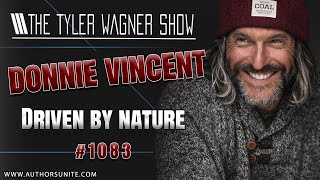
In this episode of The Tyler Wagner Show, host Tyler Wagner interviews Donnie Vincent, a wildlife biologist, hunter, writer, and filmmaker. Donnie recounts his unconventional path from a childhood fascination with wildlife to a bioscience degree and a career in field research, eventually becoming a wildlife biologist and conservationist. He discusses the ethical dimensions of hunting, sharing stories where he rescued animals on the brink of death and emphasizes hunting as a means to connect with ecosystems and manage populations responsibly. The conversation delves into regenerative bison farming with Epic Meats, the impact of stress hormones on meat quality, and the importance of humane, quick kills. Donnie explains his carnivore‑leaning diet, fasting habits, and the physiological rationale behind high protein intake. He shares his writing journey, stressing authenticity, vivid detail, and writing for oneself rather than an audience. The interview also covers his fitness regimen, including the X3 Bar protocol, strength training, rucking, and his recent immersion in Brazilian jiu‑jitsu, which he describes as a mental art akin to chess. Throughout, Donnie references conservation literature such as Aldo Leopold’s Sand County Almanac and advocates for holistic, regenerative approaches to land, food, and personal health. Contact information and upcoming projects are provided at the end.
Chapters
All right, everyone, welcome back to another episode. Today we have Donnie Vincent with us. So welcome to the show, man.
Yeah, thanks, man. I appreciate it. It's an honor to have a— to get a chit chat with you. And yeah, looking forward to it.
Me too, man. Thank you for coming on. So if you can just start us off a little bit more about you and what you do.
I'm mostly known for you know, being a writer, being a hunter, conservationist, biologist, I have a very uncommon path in what most people would consider a work path and educated as a biologist, worked for a little while as a field research biologist for the US Fish and Wildlife Service and the University of Minnesota. And then I've always had an intrinsic and absolute love for wildlife, and I've always had a really deep passion for hunting and supplying my own food and just engaging in wildlife. To me, hunting was a way that I could always get closer to wildlife. It seems counterintuitive, but nothing gets you closer than, than actually engaging in that kind of predator-prey relationship.
100%. So I, I like to start, especially in your case too, is it's, it's cool. It'll be really cool to hear kind of how you landed or, or ended up on this path. So when you were younger, meaning like middle school-ish, high school, and you were kind of thinking about your life later on, I guess, to where you are now, did you foresee it being anything like this at all or not at all?
Zero. Nothing at all. The only thing that I knew, I didn't even know. I talk to kids now and hear, hey, I want to be a doctor, I want to be a nurse, I want to be a fireman. I never had any of those thoughts. Zero. I just wanted to be around wildlife. I, I didn't even— I wasn't even thinking about a job trajectory that would get me around wildlife. I was just kind of taking every moment of my life as it came and doing what it is that I loved and celebrated. And I spent as much time as I could either reading about wildlife and, and hunting, or, or being out in the woods, even if it's in a small woodlot, looking for whatever it was— snakes, frogs, turtles, whatever.
So was that like natural or can you pinpoint where that kind of like love for wildlife actually came from?
Well, I definitely have some people. I don't necessarily come from a hunting family, although my father kind of housed the kid of a hunter. We had always had guns in the house. He always went over gun safety. They were always in a cabinet. They were locked. When they came out of the cabinet, it was a special circumstance. He didn't hunt a lot himself. But he kind of still had this. He was in the Navy, so he, you know, he had some of his service weapons, he had some hunting weapons. And then my father, thank God, he had a really fantastic book collection. And, um, and it— there were books on war and books on wildlife and books on hunting, fishing, camping, survival. And I would just pour through those books. So, I mean, I do think it is kind of this natural progression. But I was— I did an interview with National Geographic a few years ago, and the lady asked me why it is that I was a hunter. Several years ago, and I was shocked at how difficult it was for me to answer because I really couldn't. I could give her symptoms of why, you know, sunsets and sunrises, and I love providing for myself, but really I couldn't nail it down. And then, you know, I started thinking about us as hunters and gatherers and it living in our DNA, and literally that's how we have evolved as a species. And then it, and then it started to make a lot more sense as to why it was so innate for me.
Gotcha. So there was some things there, but it was actually very natural. It was Yeah, that's really cool. Interesting. Okay. And then, so I mean, that must have been somewhat, I don't know if I would call it difficult, but like to see all your, I guess your friend group and stuff all kind of figuring out their career path and then you're, I don't want to use the word stumble, but you're like kind of going in this complete other direction. Was there any doubt at all or you were just like, yo, this is who I am. Like, this is where I'm going.
Yeah, so it was, I was definitely stumbling and I wasn't a very successful student, um, in high school. I actually started to do really well towards the end because I had this realization in maybe 11th grade of, oh my word, this is over in 2 years. And with the family that I grew up in, you're out on your, like, the moment you get that graduation, like, good luck, chief. And, um, and so for me, I just wanted to be around, so I ended up getting, um I ended up getting a 2-year degree in just kind of a bioscience degree so I could work in maybe like vet clinics or maybe a human hospital or something like that. 'Cause I always liked being around kind of that energy of helping animals as well, as oddly as it is to hear. And then a friend of mine came home one day and handed me a brochure to the University of Minnesota College of Natural Resources And there was a moose on the COVID of the brochure. And she said, I don't know if there's something in here for you or not, but I saw this brochure today and I thought you'd love to read this. And so I ended up going to college and becoming a wildlife biologist. And that was the next. And again, I was just taking it one little chunk at a time. I didn't know that I wanted to work as a biologist. In fact, the first day that I was in school, one of my professors said, look to your left and look to your right. The person sitting next to you is likely to never work as a biologist. So if you think you are here to save the African lion or to work on tigers, you're probably not. And I just looked around and I was like, I really don't care. I'm just, I'm taking the next day as it comes.
Yeah. You know what? I think that's so important, man. I think a lot of times that's what stops people is they, they actually think too, it's good to plan, right? But, and to think about your future. But if you think too far out, it can get overwhelming and then you're just, like stagnant, you don't do anything, right?
Yeah.
So yeah, one day at a time there. So, okay, what are your thoughts? I just thought about this when you, when you said that, right? With the veterinarian and then being a hunter. Like, to me, I actually get it, but I could see how a lot of other people wouldn't get it, right? Especially like the people that are, let's say, like vegetarians and they're like hardcore, like against killing animals. Like, I guess the question is kind of macro level, like, what are your overall thoughts on that? Like, because to me it's just like, dude, it is, it's, it's a part of it. It's like, uh, it's a cycle. It's just the way that things are. And I don't— we are supposed to be eating meat. Like, when I, when I go on like carnivore diet is when I feel the best. Uh, maybe add a little fruit in there and stuff, but of course, and, and we actually— so my parents, even though we're in Miami most of the time, they— I grew up in Pennsylvania, like, uh, near some farmland. So we would buy, oh, what the heck is it? I think it's an elk or I, yeah, some, yeah, I think it was an elk.
Probably elk or bison.
Yeah. Yeah. I think it's elk. And they would just buy one basically per year and the shit would last us the whole year, dude.
Yeah. Oh yeah, for sure.
I don't know. What are your overall thoughts on somebody would say that? Like, how could you be a vet and also kill animals hunting?
Like, yeah, I'll give you a, for instance, I have went This is just a for instance, but I have went on 3 different hunts in my life, 4, 4 different hunts in my life where I ended up saving the species of which I was going to hunt. Now that might be a little bit confusing, but I did a hunt a few years ago in Alaska. The film of ours is entitled Winds of Adak, and I was hunting caribou on this remote island 1,300 miles east of Anchorage. And I was on my way to hunt caribou and I found another young bull totally ensnared in a ball of fisherman's rope, of a net rope that was, you know, had washed up on the beach and he was choking himself to death actually. And I grabbed him and kind of wrestled with him and totally cut him free and set that bull free. And not 2 hours later or maybe even an hour later, found a really big old handsome bull that I was interested in taking home with me for food and for skin and took his life and took it with me. And another time I was on a, um, I went on a goose hunt and, uh, on my way to go on this goose hunt, um, ended up finding an injured goose that either had been hit by a car and maybe like wrestled down by a fox, but he couldn't fly anymore and he was a little bit bloody. So instead of going goose hunting, I chased him, pulled my truck over, chased him through a field for a half a mile, which shocking how fast he could run and ended up catching him and then canceling my goose hunt and driving him to the next state over and brought him to a wildlife rehabilitation where he got rehabilitated and then reintroduced. I think he was introduced to a zoo. And I've done it once on a duck hunt as well. And then, and then one time I was going deer hunting and a very large doe had her foot caught in the fence and a barbed wire fence. And I actually contemplated shooting her. I had a tag. She was big, healthy, mature. She's gorgeous animal, would have been fantastic food. But I just thought, well, this isn't really how it's supposed to play out. So I set my bow down, and that was another animal that was— it was me and another friend of mine. We put our bows down and we pulled her out of the fence, and she kicked the living crap out of us while we were getting her out of the fence, kicking us and throwing her head against us. And we ended up getting her out. She was fine. She was great. But that's kind of how I, I, I put it, you know, and I'm gauging with these animals, I'm gauging with these populations, I'm hunting them because I love being part of our ecosystem in such a manner. And I love seeing the animals up close and I love the decoys and the calls and duping them and, and figuring out where a deer is going to kind of traverse his territory and try to put myself in a position with my bow. These are all things that, that we did as original people and, and I still want to do them because it makes me feel the most full, you know. If another way I would essentially kind of put it is, you know, if you brought me to Africa to hunt, you know, what some people kind of confuse as like zoo animals, and you said, hey, it's $10,000 to hunt a giraffe, I have no interest in hunting a giraffe. Even if somebody said, hey, we'll let you hunt a giraffe for free, I have no interest in hunting a giraffe. It's not in who I am. But if I went to Africa and somebody said We are way overpopulated on giraffes. We have to kill 50 bull giraffes or 50 animals out of this population over the next 3 weeks. We're going to butcher them, we're going to feed the villages, we're going to eat it ourselves. We need to kill these giraffes. I would happily go and kill the 50 giraffes or some of the giraffes and help out. That's kind of how I put it. That's how kind of how conservation kind of lends itself to animals, populations, and people.
I love that. So that makes a lot of sense. So it really is like, uh, I guess the word might be like, like there's an ethics to the sport, meaning like you don't— and I guess anybody could do what they want, I suppose. But with the, with the last part, the doe where Thing was in, in the fencing, you know, you're right. I mean, that isn't how it was supposed to necessarily go down, right? It was just like, that's not a part of the sport. It would— and same thing with the, um, do you say duck or—
yeah, I had one with a duck and one with a goose, and I, and I—
oh, both. Yeah, yeah, yeah.
Stop, stop my hunt and rescued them both.
Yeah, and see, so that it's just, I think the intentions are very clear. And I think a lot of times, regardless of an outcome, I think intentions sometimes are even more important, right? Because yes, yes, okay, an animal is dying, but the animal also, when you go to the grocery store, the animal also had to be killed for that stuff to be there, you know? And in fact, actually, to go deeper into that, what you're doing is probably in a more humane way than— I've seen some videos with what they do with the pigs and stuff and all that.
Like, it can be rough.
It looks a little crazy from the stuff.
Yeah.
Um, and then you said also too, and I would like to highlight this just because our audience is a lot of authors and aspiring authors. So you said you're a writer as well. Can you elaborate on that?
Yeah, I just enjoy, um, I kind of found my voice, if you will. I started when we started making films I started writing for the films and it was just, I say started, but really it was the initial first film I wrote. I started writing the voiceovers for it and the editor that I'm partners with and the filmmaker, you know, he said, hey, check this, watch this piece of footage and tell me what your thoughts are. Write a piece for this. I want to do a voiceover here in the film. And I'm not a filmmaker at that time. I didn't know really much about it. So I wrote this piece for the film and he read the words and I was excited to hand it to him because I thought I did a great job. He read the words, he's like, "This is terrible." This is— he said, "I've never heard you talk like this ever. I've never heard you. I've never read these words in which you have behaved in this manner. This is not what are you writing for?" And I said, "I'm writing it for the audience." He said, "Oh no, no, no, no, no, no, no, no, no. You're writing this for you." We're writing this as though— he said, I want you to write this as though no one is ever going to watch this film. This is yours. Screw the audience, if you will. We're not making a major motion picture. This is a documentary about your experience. Let's write about what you want to feel. And I said, well, it's going to be kind of vulnerable. And he said, yes, great. Let's do that. So, I wrote a vulnerable passage and I brought it to him and he said, this is genius. And then, that's when I kind of realized a little bit that I had something there that I could expand upon. And then, I took a freshman English class in college and same thing. And the two events were separate for me. And then, once I realized, Kyle told me that this was garbage. He kind of said, "I want you to write about your emotions. I want you to take me along your—" experience. I also had this event happen in college, and I didn't connect the two until they both happened. But I had this teacher, she said, I want you to write me a story. I want you to write me a fictional story. It could be about anything. It could be a horror story, it could be a whatever you want. And then I wrote this paper, and it was 4 or 5 pages, maybe 6, whatever. Handed in. She said, this is absolutely horrible, Donnie. She said, she said, you're telling me everything you want me to see. You're telling me how I should feel. You're telling me which direction I need to go. She said, I don't— let me go there on my own. Show me, show me what it— tell me, what did the air smell like? What did it feel like on your skin? What did your steps sound like? How, how tired were you? What What was that exhaustion like? You know, what, what did the woman dress like? What was she wearing? And if she was wearing jeans, what kind of jeans was she wearing? Describe, like, you know, and paint the picture for me. Let me go there on my own. Let me, let me see the, the image myself, and let me go on the journey of my own and make my own decisions. So I was like, oh yeah, I totally get what you're saying. So I went back and rewrote it. I handed it into her, and she said, I've been a professor for 30 years. She said, this is one of the best pieces of writing I've ever read in 30 years of being an English teacher or whatever. Wow. Okay. So I was like, yeah. So, so that— those two things, it didn't— even the first one, I was just like, oh, that's cool for her to say. But until Kyle said it as well, then I'll— then I thought, oh, okay.
So if you were to give advice to— because like, I think, um, oh, I'm blanking on his name. There's a famous author, and what he says, he's like, write as you would speak, right? Because a lot of times I think what happens is when people are writing, they're like— there's a lot of different things going on, but one thing is they're like trying to sound smart or something, right? So they'll like write in a way, or— but in reality, you would really want to just write as if you're talking to somebody. Yeah, that's how it will be then interpreted in somebody's mind when they're reading it, and that's what will get them to connect with the piece of work. So is that— would that ultimately be your advice, is just like kind of write authentically as you would speak, or who you are?
That's exactly what I would say is, and I hate the word authentic. I love it, but I hate the word because everyone uses it. I know, but that's really— people ask me all the time, they say, how do I get to do a job like you do? And I say, you don't. You just get to be you. And if you're you for real, people will latch on. I don't care what you are, what you do. If you are you for real people will be interested in it. And if you write with sincerity and honesty and you're authentic in how you convey your ideas, people will glom onto it. The other thing that I would say is I took a photography class and this professor, he taught me this. He said, "No matter what," and I love things that are simply one way. Don't give me conjecture. Don't make me Like calculus was fascinating when I was done with it, but during it, it felt like my skin was on fire. Me too, dude. But this— my professor, my— the photographer professor said, no matter what, the closer you get to something, the more interesting it becomes. So if I'm going to write about a woman's blue jeans, I want to write about how the rear pocket really hugs her cheek. I want to write about the odd stitching and how I noticed that one of the stitches has come undone. She must have leaned against perhaps a barbed wire fence or maybe a rusty car fender in a manner of which would have loosened this stitch. And without saying anything about her jeans, I now put you— I gave you a little touch of who she is, where she may have been, and maybe what the issue was with the jeans. And I tied that in all the way down to the stitching of her jeans, to where you start to paint yourself a picture and you maybe picture your own tattered jeans, you know. And yeah, yeah. And then once I realized that, yep, it really helped me.
Yeah, no, that's huge. It literally, as you were saying it, there was just multiple pictures just popping in my mind as you were speaking. Yeah, that's totally accurate.
Um, and it's oddly how I hunt. Okay. So when I see, when I'm hunting, sometimes I won't take an animal's life because it doesn't have the right shape to me or the right motion or the right movement, or there's fear involved, or there's another emotion involved where the, you know, it just isn't the painting, if you will, of how I see it in my mind. So I won't, even if the animal's close enough and I have them dead to rights, like I won't engage.
Is that— I think I heard something like this. I think it was with chickens, but I— that's the reason I want to ask you because I don't know the answer. Is there something that happens to the meat if you kill an animal when it's in extreme fear? Like, absolutely. So what, what is that? What's the—
so it's going to release cortisol and all these different fear hormones are going to dump into the meat because the animal, you've elicited a parasympathetic response, it's went into flight. Fight or flight. And so, you know, like everything's been tensed up. And that's why, um, like some, um, livestock, right? So there's a company out of, um, Northern Wisconsin called North Star Bison. They have big bison ranches. They don't farm bison in the traditional sense where they raise bison on grain, load them on a truck, bring them to a slaughterhouse. These guys raise bison on prairie. They buy crappy farmland, they fix the soils, it starts regenerating real grasses, the bison come in and start eating the grasses, and you start to get this cyclic event of where the grasses are healthier, the soils are healthier, the bison are healthier, and they're really starting to reclaim the land. And when they harvest a bison, which they do every Thursday, they go out with the tractor that the bison see every single day, and one guy does it. One guy's the executioner and he uses a high-powered rifle and he just goes out where the bison are just enjoying their day. They're just doing their thing and he's very good shot and he'll just sit there and he'll select the animal and then he just brain shoots them and it is lights out. And we went there and filmed this project for a company called Epic Meats. And from the moment—
Oh, I know Epic Meats. You know Epic?
Yes, I know Epic Meats. So we went and filmed the commercial for them, which oddly enough, the owners of Epic Meats were two vegetarians. That they owned one of the largest vegetarian food companies in the world, and they are both marathon runners, and they were struggling recovering from their marathons. So they went and met with a family friend who was a physician, and they said, man, we run a race and it takes us like 4 weeks to recover. What's going on? And he said, you guys need some animal fats and animal tissues and organ tissues to recover. So the gentleman that owned the company, his name is Tyler Wagner Wagner. I forget his wife's name, unfortunately. But so they started supplementing with elk and bison that friends of theirs had killed or had humanely or raised ethically. And then, and then they started realizing like their muscles changed, their tendons changed, their ligaments, their knees, their joints, everything started to get better. So then at one point in time, they owned one of the largest vegan or vegetarian food companies in the world and Epic Meats. And then they had to sell, they sold the vegetarian off and they said they got death threats from the community and everything. But anyway, they started, they, um, their tagline is, uh, feed people as you wish to be fed. And so they hired my production company, Sick Manta, to go and film them a branding piece. So I went and spent 3 days with these bison farmers and So when he shoots it, that bison drops dead. They bleed it right out in the field and within 12 minutes, I timed it multiple times, within 12 minutes the animal is skinned, split in half and hung in the cooler within 12 minutes. It's absolutely incredible. And then the meat is just pristine. It's beautiful. And so that's where you want to be careful even when you're hunting I do mostly bow hunting, and an arrow is basically a projectile with it tipped with what you would call like almost like a scalpel, right? A broadhead. The arrow goes through the deer. The deer has almost no idea what happened. They run and they're bleeding out. There's major hemorrhaging because those razor blades have sliced through major vessels and both and also through their lungs. And so they expire very, very quickly in just a few seconds. Maybe 20 seconds, and they don't even really go into fight or flight. Many times I've shot a deer and had him bound twice because he heard something and he's looking around and then he just falls over dead. Or I even filmed one one time where he went back to eating. I shot him, he bounded twice, he looked around, he went to bend over to start eating again, and he just fell over dead. Whereas a rifle, a bullet, kills by massive shock. So more often than not, you can still kill animals very humanely with a bullet and their meat still tastes fantastic, but the animal definitely knows that it's been shot, right? There's a lot of shock, there's a lot of trauma, a lot of tearing. It still is very swift, but it's a, it's a much larger event than shooting an animal with an arrow.
That's so interesting. So is it also like, does the meat actually taste different too? Like it actually tastes different, or, or is it more like it's just kind of bad hormones that you don't want to take in?
Yeah, I mean, definitely if you're looking for pristine meat, you can definitely— I mean, if we did a blind taste test, I'm not telling you that I'd be able to tell. But the long and short of it is there are people that can tell, and they're— and this is kind of one of those things where maybe you can tell, maybe you can't, but we don't want these hormones in the meat anyway. We don't want the animal to experience this at its death. You know, we as human beings, all we do is take, take, take, take, take. The farmer takes, the rancher takes, the hunter takes, the vegan takes, the vegetarian takes, the city guy takes, the country guy takes. All we do is look at how we can use this earth for ourselves. And it's really odd because if we turn those factors around, which I try to do as much as possible in my life, and you start asking the questions, what's best for the earth? Right? What is best for, um, you know, and, and you start asking these questions, you start getting very different answers than when you start asking what is best for me. Um, so, so yeah, I just read, um, have you ever read, uh, Sand County Almanac by Aldo Leopold? No, I don't think I have. Yeah, read it. Yeah, read it. He's basically kind of the godfather of conservation and kind of the godfather of, of ecosystems. And he, he just has a really good way. He's a hunter and a fisherman and, and he just has a really good way of kind of splaying everything out as this was the natural prairie. This is what we did to it as, and when we came in to create farmland, this is what we did when we put road systems in. And this, he just kind of really relates everything to you know, when we stopped wildfires, this is how it started to affect the prairie. But he has a very eloquent, he has the most poetic, eloquent way of kind of spelling that, you know, should the farmer see his crops coming in, he doesn't care where his grasses went. Should he see his soybeans growing, he doesn't care about the prairie that exists along his fence because they're Weeds, right? And he just has a very poetic way of spelling it out. But Aldo Leopold's Sand County Almanac, it's probably the best ecology book in the world, honestly. And to kind of indicate the relationships between man and the wild. I actually have it laying right here. Oh, nice. Yep. Sand County Almanac by Aldo Leopold. Yep. He's just an amazing man. But But yeah, so we just kind of always, and we're all guilty of this, no one is not guilty of this, that the man that drives the souped-up pickup truck to the person that drives the Tesla to the vegan to the hunter to the farmer to the rancher, doesn't matter. We all are taking, which makes me kind of chuckle and cringe when we all argue amongst ourselves as though one of us is using more than the other, which is a ridiculous notion.
Yeah, what do you— because I, I mean, I watch a lot of Rogan, and one of the things, you know, and he's interviewed like vegans that are very against meat eaters, and then meat eaters that— I wouldn't say they're like against eating, uh, plants and vegetables and stuff, but they think it's healthier to eat meat. And one of the things is when you look at it, like, and yes, they're different, I guess, but in some respect they're both living, right? So the argument that the vegan makes, like, you're killing things, it's like Well, the plant is alive in some respect. I mean, so that argument doesn't really work.
No. And growing that plant takes a great bit of biodiversity out of the field, right? I mean, if you, if a vegan were to walk behind a tractor, they would never want to eat another vegetable. There's snakes that are cut in half, there are mice that are cut in half, there are owls that get run over. And here in Wisconsin occasionally deer will get killed. A sow black bear with her cubs will get run over by tractors and killed in fields. And there's a lot of bycatch that comes from farming, from row crop farming.
Oh yes, I didn't even think about that. So even just like the kind of side things that occur by, you know, farming. Yeah. And then it totally destroys our soils, right?
Our biome. And people don't realize that people want to talk about elephants and blue whales and zebras and, and these megafauna animals, but it all starts with microbes in the soil. And this biome, if you were to take a slice of the pie and you were to look at the soils and the biomes and the roots and the natural plants and then the insects that come off of that, and then the birds with the insects and reptiles, and you start to look at the whole thing up to megafauna, it's there's a whole system. And once that tractor comes through and starts turning that soil, well, those plants use that nitrogen and phosphorus and different elements to grow itself along with the power of the sun, of course. But then that— those goods are out of that soil and we're not replenishing it. We're not, we're not turning those plants back into the soil to have to be detritus material. We're removing those plants. So then we're dumping chemicals in to replace what that soil did. I mean, it's it's a one-way street. It really is.
What is your, and just curious, like what is your kind of diet or what it, what do you only eat meat or do you kind of, what it, what is it?
Just, I eat, I basically kind of eat, I don't know how you want to indicate it. Mostly I eat meat, but, but like an, an, an individual meal for me would be, you know, an, an apple, a big pile of moose meat and then I might eat a sliced up cucumber with some, with some blue cheese sprinkled on it or something like that. And so like that would be a typical meal for me. Lots of meat, lots of protein. I'm a 190-pound guy that is, I'm a pretty lean guy for, for 190 pounds and, and I eat a lot of lean meat. I try to keep my protein at about 200 grams a day. And I'm the type of person that measures out all my food and then I eat. It was really, it was disheartening to me to figure out, it was disheartening me to me recently in the coming years to understand how many, and this is me agreeing with the science of how many vegetables kind of come with warning chemicals, if you will, and chemicals that maybe enhance inflammation and things like nightshades and and different types of vegetables that were really likely to kind of stay away because I'm a garden vegetable guy. Like, I'm a guy that used to eat 2 giant salads a day. I mean, giant salads a day. And then lots of fresh garden vegetables, lots of fresh fruit, lots of berries, strawberries, blueberries, blackberries, lots of apples, and then meat. That's basically my diet. But I've actually cut back on vegetables just because of some of the things that I've read about. Different vegetables causing inflammation and, and some irritable situations in the gut.
Yeah, I've heard about that and I think that's kind of why, and I don't know about the long term, but at least in the short term when you are carnivore, I feel so much better when I'm just eating meat, dude. Like, and especially I don't, there's probably a difference too. Like I've noticed since I've been traveling like down here in Colombia, the meat, it's so good. It just, me and my brother were talking about it, just agrees with us so much better. Everything's just like no inflammation, dude. And we both have like super sensitive stomachs, like we can't eat gluten or any of that shit. So if we like, we know if we ate something that wasn't right because our fucking whole stomach was in flames.
Like it's there 100%, 100%. I eat mostly, I have some bison here, I have a lot of moose meat here because I've killed a moose each year in the last 2 years. And I mean, I get a year supply of meat from a moose and So I'm just moose and vegetables and, and I eat a lot of frozen vegetables. I do, if I'm gonna do veggies like broccoli or cauliflower or peas, I'll buy frozen because they're basically picked and flash frozen at the place where they're picked. They don't have to travel on a truck across the country and they don't have to ripen in a warehouse.
Got it. Okay.
That's actually super interesting because I think a lot of people would be like, would think the fresh is like better or something, but indeed Opposite in this case, unless you can buy local from like a farmer's market or out of your own garden where you're maintaining soils and any of that. Unless you can do that in season, the stuff that you buy frozen is way better for you.
Interesting. Okay. That's all. It's way, it's kind of easy to, I, I like those quick microwavable things. You just throw it in for 3 minutes and you got fucking, yeah. Yeah. Do you do any fasting? Or you do? Oh, okay, you do.
That's awesome. I, I fast naturally. It was funny when I started fasting, I was like, holy cow, you can really get away with not eating. Like, holy cow. Yeah. So, cuz a couple of days I would fast my fasting window, so I would eat, I'd eat my first meal like noon and I'd get to about 6, 7 o'clock is when I'd eat my last meal of the day. It's 6, 7 hour window. But a couple of days I was just so busy that I didn't do my 1 o'clock meal, so I'd eat a giant meal at 5, 6, 7 o'clock. And it was really funny because I'd have like 3 plates and I would just— I'd sit down and I'm sure my body's dumping dopamine into my— like my brain is dumped because I'm, I'm finally hungry. I, you know, I worked out this morning at the gym pushing heavy weights, so, you know, my muscles are craving all this stuff. And so then I'm just feasting, feasting at, you know, at that time, but still measuring all my stuff out still. But when you measure out 200 grams of protein, man, you get to eat like a, an entire chicken, you know what I mean? Like, you get to crush some food, dude.
Yeah, yeah. And I think that is kind of the key. They say you want to do at least 1 gram of protein for 1 pound of body weight, but you want to do a little bit more, right? Because your body doesn't take it all in exactly or something?
Especially if you're training. Oh, okay. Especially if you're training and trying to push heavy weights, which everyone in the world should be pushing heavy weights. Everyone. Like the studies are, I mean, it's essentially the fountain of youth, dude.
Okay. I wanna tell you about this thing. I don't know if you've heard it. Have you ever heard of the X3 Bar? Yeah. You ever heard? Mm-hmm. All right. So this is one of my clients, his name's Dr. John Jay Cuis. He came up with, and it, it, I'm just, it goes with what you're saying. It's, it's very interesting. It's called this X3 bar, and what it does, it's a bar with these bands, and apparently it allows you to do much more force and weight than weights actually will allow you to accomplish.
I'm going to write this down, dude.
It's wild. And literally the protocol is you only work out for 10 minutes a day, 6 times a week, but your muscle growth is insane because you are literally only doing 1 set of each muscle group every other day. So it's like 4 sets per day and it's, it's like push exercises and then pull, right? So you do like chest, tris, all that, but you only do 1 set of each till failure, right? And, and failure is like literally the last rep. It's like getting an inch. Yeah. Like that's a set or that's a rep. So, and dude, it works. And it's like, so I thought about it, like there's so many people that go to the gym for multiple and look, I think, It feels good, so keep doing it if that's what you wanna do. But as far as building muscle goes, the idea that you would spend 2 hours in the gym and do like more reps or something, that is not how it's actually built. No. Something that happens that like if you just go to failure once on a group, it's stimu— it just, the stimulus is nuts and you grow muscle like no other dude. Yeah. It's, yeah. So either way, it just seems too good to be true cuz it's only 10 minutes a day, but the shit works. So either way.
Oh, and I was with a buddy of mine one time, and he's a hyper workout freak. And we were, we were hunting someplace remote and we were in Alaska and we were in a hotel room getting ready to fly out. And he's like, let's do a workout. And I said, I don't want to because we were about to go to a very difficult hunt. And he goes, come on, let's do a workout. I go, I don't want to. And he's harassing me. So finally he goes, let's do a 10. He goes, 10 minutes. I said, this is just dumb. This is so dumb that you want me to work out for 10 minutes. So he finally convinced me. He's a fitness phenom. So he set his timer, we worked out for 10 minutes. My ass was kicked. Like, I was shocked at how— because there was no rest, right? We went, we went for 10 minutes. Like, there's no— we went from push-ups to this to this. We did it all in our hotel room. But so to your point, I'm in the gym 3 days a week, and I'm in the gym no longer than 1 hour. And I do legs because I hate doing legs, but they're— to me, they're the most important thing for what we do. But I do legs on Monday, you know, and this is quite variable, but I do legs on Monday, I do upper body on Wednesday, and I do a full body on, on Friday. And then I train jiu-jitsu. I'm fighting for 3 classes a week. I'm going, um, 2 of the classes I'm learning, but still it's very physical. And then the 3rd class is full-on rolling, full-on, like you pick an opponent, they set a timer, you fight for 6 minutes, the timer goes off, you fight the next opponent for 6 minutes, next opponent for 6 minutes. And it might be you're going against a purple belt, then a black belt, then a brown belt, then a white belt, then— and you're just kind of rolling through all this stuff. And then intermittently in that, you know, I'm doing bike sprints and then I'm doing a lot of rucking. And then when I go out of town, then I'm really doing rucking, right? Then I'm wearing an 80-pound pack for 10, 15, 20 days and covering 10 to 12 miles a day up, down, carrying animals. And it's very physical. Yeah.
And that, and some of that's like cardio, which is great too, obviously for cardiovascular health and all that. One question I just, you might be probably a great person to ask this, so I, I do not like to fight at all, but I would love to learn like jiu-jitsu or one of those arts. Yeah. And jiu-jitsu. How do you say one more time?
No, no, no. I'm telling you, not one of those arts. You want to learn jiu-jitsu. That's the one you want to learn. Okay, perfect.
I thought I said it wrong. I was like, I've been saying it wrong my whole life. That's crazy. Okay, so my question is like, as somebody who truly does not enjoy any sort of like fighting or any of that is— I've heard in other interviews, and it's probably been with Lex Fridman and Rogan, it's— I can't recall the exact ones, but that it's more of like a mind art. Like, it's not so much like— it's not like beating, it's very thoughtful. So in that way, I would like it.
So it's very calculated. Calculated. Okay. Yeah. Very much like chess. It's very much a challenge. It appears as though you're fighting somebody because you have an opponent, but it's very much, in my opinion of what I've experienced, it's very much of a battle within yourself. And so it's been life-changing for me. I regret— I'm 48 and I just started. I started when I was 47. I regret that I didn't start when I was 10 because it would have absolutely changed the trajectory of my life. And I've had a good trajectory, but I would have been a much healthier young man, mind, body, spirit. I would have walked quite a bit taller, in which, in my opinion, I probably would have walked quite a bit further and gotten further, even further in my life. And, and you get really comfortable, at least I do. And I, I do very well managing my fear. It's one of the biggest things about my career that I'm able to kind of— I'm, I'm able to be really close to large keystone predators like grizzly bears and stuff, and I can harness that fear and crossing icy cliffs and getting in small airplanes and bad weather. And I can kind of— I understand the finality of what I'm doing. And so I'm very comfortable in those uncomfortable positions, and my mind is very open to be the weaker one in the fight, and my mind is very open to suffer and fail. And so in doing that, um, man, my mind and body is changing so much, you know. And, and, um, and then when somebody is really choking you and they're leaning on you and they're not only are they choking you, they're pushing against your skull and they're constricting it on you and you are, your mind is solving like, how can I stop this? You know, and you can stop it immediately by tapping or saying tap, but how can I solve this problem? And it is amazing how sometimes you get down to where you know, I'm not going to say the lights are going to go off, but let's just pretend the lights are going to go out. And the lights are going to go out, and then all of a sudden you loosen their grip because they're more tired than you thought, than you realized. And like, you're able to wiggle out. It's just, it's such— I can't recommend it enough. And the sooner you start with a legit instructor, this, I promise you, it'll change your life.
Yeah, we actually, my brother and I were considering it because there was, whenever you travel somewhere, right? There's like expat groups on Facebook and stuff. So we always try to join them and just see if we can connect with people in the new area. And somebody had posted like they train for that in— now I'm like afraid to say the jiu-jitsu word. So whatever. But like they train that thing we're talking about and they'll come and do it personal at your house for like $10. And obviously like in South America, everything's dramatically cheaper than the States. But me and him were like, dude, what, $10? I mean, shit, we could do like 10 lessons in a day. Yeah. Yeah. So maybe, maybe we'll do it. And that just, it sounds, sounds awesome. So yeah, man, I don't know. I want to leave the floor to you. I love the conversation. If there's anything we didn't cover, please share and then let people know where can they stay in touch with you?
Yes, we have Donnie Vincent, Donnie, D-O-N-N-I-E, donnievincent.com. And then you can find me on Instagram, Donnie_Vincent. And that's it. Now, we're just— we keep cranking on our commercial work that we do with our partners and then also working on our films. So, doing our documentaries. And so, that's just growing Sick Manta. And I've been— I should probably speak to you because I get a lot of people that ask me to write a book and I have not written a book or even went down the road of writing a book, but I did a book project. Have you read The Comfort Crisis by Michael Easter?
The title, I've seen it. I haven't read it, but I'm familiar with it.
Yeah, so I took him— he's a— he did a story on me in Men's Health magazine in 2018, and then he was so intrigued with hunting and what hunting was and why it was I was a hunter, which is what the article was in Men's Health magazine, which I was really quite proud that Men's Health would write this, this article on, on hunting. Um, that I took him up to the Arctic Circle for 30-some days, and I really pushed him to the limit. And he came with me and he killed a caribou, and I had him skin it out, and we carried it back to camp. And he wrote a book called The Comfort Crisis, and it is a very, very good book on how we as human beings are destroying our minds and our bodies by always seeking out the most comfortable scenarios. Whereas if we put ourselves in areas of cold and areas that generate fear and areas of no cell phones, no computers, our creativity goes through the roof, our musculature goes through the roof. They were taking groups of 80-year-olds and taking them and doing weight training and spending time outside and almost completely stopping their cellular decay, truly the fountain of youth. So, I urge you to read that book, "The Comfort Crisis" by Michael Easter. He's a beautiful writer, but he's encouraged me to write a book and I just have I honestly don't know where to begin or how do you know? I mean, other than just fricking writing.
Yeah, no, for sure. And dude, I definitely, and I don't know all the benefits, but me and my brother do ice baths and I can definitely tell just from like a feeling standpoint, just from that alone. Yeah. Totally worth it, dude. And the feeling lasts like, I wanna say like 6 to 8 hours. Like you go in an ice bath, like a legit one for 3 minutes. I feel the goodness, if you will, or whatever it is. Yeah. Like the whole day almost. It's fucking awesome.
Oh yeah, yeah, yeah. No, that is definitely something to get in your regimen for sure. Yeah. Yep.
So, but yeah, thank you again, man. I appreciate it, brother.
Appreciate it. Thank you.
More from Tyler


Catherine Nikkel : THE STORY EVERYONE HAS BUT HASN'T TOLD : The Tyler Wagner Show #1120



Scott Ritzheimer: Bring Predictable Success to your Organization | The Tyler Wagner Show #1115


Fred Moskowitz: A GUIDE TO GETTING STARTED WITH IN MORTGAGE NOTES | The Tyler Wagner Show #1113

Mark Podolsky: From Land Investor to Full Time Success How I Made $90,000 Cash in Real Estate


Mark Podolsky: How to achieve a 300% return on investment my foolproof strategy

Mark Podolsky: How to make passive income selling raw land the irresistible pricing strategy