Dr. Gerald Horn: The Breinfuel | The Authors Unite Show #992
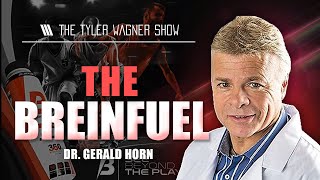
In this Authors Unite interview, host Tyler Wagner talks with Dr. Gerald Horn—a LASIK surgeon, inventor of the industry‑leading eye‑whitening drop (licensed to Bausch Health as Lumify) and founder of four pharmaceutical startups. Horn recounts his early curiosity (the cabinet‑string experiment), his path from biochemistry student to LASIK surgeon, and how a chance observation during a radial keratotomy procedure led to repurposing phentolamine into the eye‑drop Nixol, later commercialized as Lumify. He explains the business journey of licensing, IPO, and the development of other ophthalmic products. The conversation then shifts to nootropics: Horn critiques the regulatory hurdles, the prevalence of unproven supplements, and highlights his own product, Brain Fuel, a liquid nootropic designed to sustain mental focus during long surgery days. He details the 12‑ingredient formulation—caffeine from green coffee/tea, antioxidants (green coffee bean extract, green tea extract, vitamin C, vitamin E, beetroot, L‑theanine, astaxanthin), a low‑glycemic sugar (D‑ribose), protein (collagen), medium‑chain triglycerides, zinc with quercetin, and creatine—explaining the physiological rationale for each (caffeine as stimulant, oxidative‑stress mitigation, fuel for mitochondria, support for neurotransmission, etc.). Horn discusses concepts of oxidative stress, mitochondrial function, telomere length, and how the blend aims to provide sustained energy without crashes, improve satiety, and potentially influence longevity. He shares anecdotal evidence (e.g., poker pro Phil Hellmuth’s performance, personal waist‑reduction), flavor options, and distribution plans (Shopify site, upcoming retail). Throughout, Horn balances enthusiasm for functional CPG products with a cautious, evidence‑based stance on nootropics.
Chapters
All right, everyone, welcome back to another episode of the Authors Unite show. Um, today we have Dr. Gerald Horn. He is a LASIK surgeon and founder of 4 pharmaceutical startups. He invented and licensed what has become the industry-leading number one doctor-recommended eye whitening drop to Bausch Health Care, and he is the holder of over 70 US and international patents. He developed a new approach to adding mental focus and duration productivity during long surgery days that was so effective it led to launch of Brain Fuel, a cerebral beverage. So welcome to the show, man.
Thank you. Well said, by the way.
Thank you. Yeah, no, I— there was a couple words now I remember I asked you before we hopped on and recorded. I was like, I'm going to mess this up. So glad we got it right. And when I was younger and I was trying— I'm going to start this off with this. When I was younger and I was trying to hide from my parents that I was smoking weed, these eye drops, I think, would have came in handy because that's how I could get away with it.
Those eye drops have crushed it because they really whiten your eyes, and that's one of the important uses.
Yes. Oh man, that's funny. Um, so let's start here. I kind of like to start from the foundation and then work our way to like how we got here today. So when you were younger, did you foresee or think like you would have done any of this? And when I say yeah, I mean like a kid, like did you have aspiration, like entrepreneurial tendencies, or I wanted to be a fireman. Okay.
And then the only thing I can ever remember from my childhood, besides that I was kind of a little bit nerdy towards the science side, but when I was really young, like 4 years old, I invented a way to open all my mom's kitchen cabinet doors. And she comes home one day and there's string everywhere. I mean, she couldn't even open a cabinet. I said, watch this, Mom. I thought I was going to pull one string and everything was going to open. You know, I'm like, it was just sort of a nutty thing to even think. And it's a good metaphor because that's kind of how I got into drug development. I had a biochemistry major. I was just doing my thing. I was not in the pharmaceutical space. And I had some ideas and, you know, I talked to some companies and they said, why don't you see if you can come up with something? And it's sort of like me taking those strings and putting them on those those handles and all those kitchen cabinets. I'm like, why wouldn't this work? But it did.
Got it, got it. And then what was your first— like, with your companies, what was the first one that you start? Or late— were you first a LASIK surgeon? Was that kind of the first step?
Yeah, yeah, I was a LASIK surgeon. And, uh, earlier on in my career, one of the procedures we did left your, your, your effective part of your pupil kind of tiny, the optical part, and that caused some glare and halo at night. It's called radial keratotomy. I'm like, you know, if we could just move that pupil to be a little smaller when we wanted it to be, be like a filter, you'd actually have much better quality of vision. And, um, I knew there was a need. And, and I talked to, um, SebaVision at that point. The VP said, you know what, I love that idea. Hey, great. I'm thinking I'm done. We're just really more friends. He goes, "Yeah, if you come up with a hot way to do it, let me know." So I actually was going to Toronto with my family and our medical school pharmacology book is like that thick, Goodman and Gilman. So I took it with me and it's just one of those things I just like lucked into. Hey, why don't we use this kind of molecule? And they were using that molecule, it's called phentolamine, for some medical emergency thing, okay, that, you know, it's kind of technical. And I'm like, that should work. And so I'm comfortable to take drugs that exist and repurpose them. That was an easy way to get started, right? So I came up with the concentration. I realized that could work for what we needed to do for the eye, and it did. That became Nixol. So that's the major asset right now of an IPO that was just done by a company called OcuPhyto Pharma. That was my first you know, entree into drug development. We turned out a really nice term sheet from Allergan because the royalty stream wasn't that good. And, um, but it's come to live another life. So that was how I got started on that.
Got it. Okay. And then you, you're a founder of 4 pharmaceutical startups. Are you still like with them all today, or, or—
Yeah, it's funny, every one of them has got a life. Um, so Lumify's on the market. I didn't invent the name. I called it Luminess, um, and Lumify was a better name. And Bausch has crushed it with their marketing. You know, it's not just me. I mean, the drug is, is cool because it was a Fortune 500 world of eye redness removers, you know, great names. Visine's a great name. Clear Eyes is a great name. Urene's a great name. Those are all the big names over the counter, but all of them work You put the drop in and all the blood vessels on the surface of your eye constrict. Well, that isn't that good for you. I mean, you need circulation, right? So after you use them for a couple days, you'd get what's called rebound. It's not that they weren't great companies with a great product. Their product been around for 50 years. I'm like, why are we getting rebound? We should be able to just constrict the vessels that are causing the problem selectively. Microvessels. The microvessels are this giant network on the front of your eye you can't see until they get irritated and they turn red. So I'm like, okay, if I could selectively constrict those vessels, we would still have good blood flow. And what I didn't know is when you get that whole network to constrict, your eyes get really white because there's like— there's nothing on the top of the white of your eye. You didn't know there was something there, right? But there was. And it made the white kind of off-white. When you constrict these vessels, the white just pops and the redness goes away and you can use it over and over. Doctors loved it. It became number one doctor recommended. And I just realized what drug to use. It was the active ingredient in a glaucoma drug. And I took the concentration and interesting, that drug as a glaucoma drug caused redness. So who would have thought? To use that drug. That was the weird part. That is weird.
Okay.
Yeah, because the concentration was way too high. And that's, I had this idea. So I make the concentration like way lower and you would think it would do nothing and it whitened like crazy. So that was an interesting story because I knew that was gonna be a good product. I mean, I knew it would be an effective product, right? I don't know about the commercial success. Took me 3 years and a great, key opinion leader in ophthalmology to get excited about it, to get an audience, and finally get a company formed, raise the money, do the studies, and get it licensed.
Yeah, that's wild. There's one, um, have you, have you ever heard of Roto-V?
Oh, of course, dude.
That one burns, man. That one hurts.
Well, in Japan they have pain scales and It's almost like a samurai thing, you know. It's not, it's not good enough unless your eyeballs melt. I mean, it's like they can, they can take some pain.
Yeah, no, no, that one is, um, I don't need that one. I'm sure it definitely works, but the pain you go through, I'm almost like, I'd almost rather just have a red eye, I think.
Well, it's not a, it's not a U.S. thing, you know. They, they have a different mentality in Japan. They love it.
So we were talking about earlier too, which is something very interesting to me because I, I wouldn't say like I'm a full biohacker, but I am very interested in the subject. I have an amazing doctor down here. I do like IVs, blood tests. So I'm very in it.
Go ahead. No, you told me that. I remember you told me that. Yeah.
So like, what do you— what are your thoughts on nootropics in general? I guess to start there, and then we can kind of get into more specifics.
Okay, well, there's a philosophical part to that question. Okay, I love the idea of nootropics because of the following: the FDA universe— look at the pandemic, look at drugs that have been developed that had side effects after they were commercialized— the stakes are so high, the rules of, of not the game but of formulation are very strict. So if I have one ingredient that could do something called the active. It's almost impossible to have two. The rules require your proof be so substantial that two's better than one. And how do you define better? And the trials cost a fortune. You got to have a control group, one active, the other active separate, then both together. Now you're talking, you know, $50 million trials or whatever. And so the nootropic space is sort of exciting because what are nootropics? They're supposed to be things that help your brain. So you got a lot of things in our sandbox you could consider. There's a lot of chemicals and supplements and things in this world, right? Well, you don't have to have the good and the bad, the yin and the yang. You don't have to go through an FDA trial to prove your label, but you got a lot of products out there that don't really work. So long as they don't cause harm, I think the nootropic space is a great space because that's where you can really find something that's really differentiating, and we will.
Is there anything on the market that you like right now for nootropic?
I'm not saying this because it's my product, it's Brain Fuel.
Yeah, yeah, so tell us more.
Brain Fuel is the ultimate nootropic.
Okay, okay. How does it work? I still need to try it, so I just have to order one and give it a go because I— or go ahead and then I'll tell you kind of what I'm currently messing around.
Go ahead, tell me. I want to hear from you.
Uh, well, well, so it's kind of a bunch of everything, but like with my doctor, obviously the— it's not nootropics or anything, but, um, the IVs with the vitamins and stuff, that stuff obviously helps. Um, I do do TRT as well. I've noticed a big difference in that. Obviously, I think when your testosterone's higher as a guy, at least, you perform better in all aspects of life, I feel. But this one thing I've been trying lately, it's called Ultimate Shrooms. And I don't think it's even a nootropic really, but it's got like lion's mane and like 8 different mushrooms. It's a powder. And that seems to help with like focus and long-term energy. And that's really— oh, what's the Joe Rogan one? I haven't—
Alpha Brain. Yeah, I wanted to—
what are your thoughts on that as well? I haven't tried that.
Okay, so there's a lot of there there to what you just said.
Yeah, yeah, for sure. Oh, and the last one too, I want to know what you think of, uh, what's it called, modafinil? Do you know, is it called modafinil or something? I'm blanking on it now.
Wait, wait, wait, wait, wait, wait, is that the Cousin de Bracetam? Does that ring a bell?
No, no, it's one— Tim Ferriss, I think, talks about it. Hold on. Give me one sec.
Yeah, yeah.
Modafinil. And it says it treats narcolepsy, sleep apnea, and shift work sleep disorder, but I think it's been used for focus. So either way, maybe you're not familiar.
I'm not familiar. I would not want to— oh, Provigil. Provigil. Is that the product that's derived from some sea fish or something? It's an extract. No, it's an extract. It comes from a crayfish or something. Okay, so a couple of things. The nootropic space is exciting because it's hard to measure efficacy, and there's a lot of opportunity for us to do better than we ever did before. I mean, this is just a landscape being explored right now, so it's an exciting— I think it's an exciting place to be. Now, you think about how the brain works, right? You have acetylcholine, that's this chemical that your brain uses, the nerve your nerve receptors, you know, nerve signaling, all that stuff needs it. So the first thing people think of it, well, let's come up with precursors of acetylcholine, phosphatidylcholine, for example. And everyone's like, well, that should really help because we'll have more of these receptors. So a lot of products have a lot of things that sound good. In my opinion, the first thing is, do you have a shortage of them? Are you lacking them? So the same thing with vitamins. A lot of vitamins sound great. If you're not a chronic, you don't have chronic alcoholism, there's very few vitamins you're deficient in. So I think there's a sort of a concept phase where a lot of things make sense, but whether they'll withstand the test of time, I can't really speak to. I don't want to denigrate anyone else's concepts. I think AlphaBrain has some good stuff in it, by the way. And I think it has a lot of other stuff that I would question. I think most of the herbs should be questioned. Most of the chemicals that don't have hardly any science, like piracetam is a good one. That's a popular one. It's got a cousin molecule. A lot of college kids were thinking that's going to be the next, you know, great thing for focus. Just be skeptical. I think that's the main thing, but you know, it's a space with a lot of opportunity. So in my opinion, the nootropic space is exciting for me, and Brain Fuel evolved the following way. There's 12 ingredients in Brain Fuel. If you looked up every one of them, they're all nootropic. Every one of them has a study or many studies that show cognitive benefits. Now, I didn't do that on purpose. I was literally just trying to be a busy surgeon. I'm a LASIK surgeon. My days are busy. I don't like to take lunch breaks. I get in a rhythm. I'd like to go with the rhythm. And, you know, I'm fine, but when I get home, you know, I'm not social. You know, after dinner, I'm like done. I'm toast. I'm like, it doesn't have to be that way. So I started looking at caffeine. So what is caffeine? Well, it's the ultimate nootropic because there's 4 billion cups of coffee served a day in this planet. And if you're not drinking coffee, there's another gazillion of matcha tea. So tea and coffee, you know, there's not as much caffeine in tea, but anyway, is that a nootropic? There's lots of studies showing, we all know there's something cognitive that happens with caffeine, but caffeine's polarizing. Kids on energy drinks that drank too much of them, some have died. So caffeine's been polarizing even though most of us love caffeine. Well, why is that? The pharmaceutical space says caffeine's a molecule. You put it in water, you got a molecule in water. That's not, to me, the essence of caffeine. Caffeine evolved to sit in a coffee bean so animals could graze on it. There's more than caffeine in that coffee bean. There's polyphenols, there's caffeic acid, there's all kinds of good stuff that complements caffeine. There's a clue there. Many of them are potent antioxidants. If you think grapes are good antioxidants or red wine, there's more potent antioxidants in coffee beans, in your coffee, than almost anything else you'll ingest other than maybe certain supplements. So I started out with, okay, is caffeine energy or is it a stimulant? What do you think?
That's a good— wow, I've never thought about it like that. Is it energy or— well, okay, wait, let me try that. I don't know, but like if I drink too much, I get shaky, so stimulant is what's coming to my mind.
Bingo! Yeah, and, and that's exactly what should happen with a stimulant. It could be Adderall, it could be caffeine, it could be amphetamine, which I never had, but it could be anything. If the stimulant says hit the accelerator, you better have gas for that engine, and you better have good fuel, and the engine better be ready to accept it. Caffeine's all over the place. You drink it. Caffeine and water used to— when I started testing this for myself, caffeine made me sick. Caffeine and water makes me sick. 100 milligrams of caffeine in water makes me sick. 360 milligrams of caffeine in Brain Fuel, that's doesn't bother me at all. And that evolved for a reason because, okay, if it's a stimulant, then I'm at the mercy of what my body is ready to do to jump when caffeine says jump to my brain and my body. Well, sooner or later, and it's usually sooner, whatever you happen to have in your system at that moment with a zero-calorie drink or a 55-gram carb energy drink, which, you know, it dunks up your brain basically. You sputter. You're not— the caffeine is telling you to go. You got nothing to work with. For a train to go, you need fuel. You know, you can't just want the train to go. You can't just have a conductor who wants to go fast. That's caffeine. So basically, I wasn't thinking about a CPG product like, okay, for myself, I'm going to support a stimulant. Well, that became a really interesting piece of science. How do I do that? Well, I want a sugar because that'll release quickly. I want something to support the caffeine when it first comes out. I want to slow the caffeine release down if I can by having gastric emptying be slower because caffeine absorbs in your intestines more than in your stomach, you know, in your duodenum. So I wanted some healthy fats in there and I wanted some good protein in there. But then if I wanted good protein, it turns out the amino acid sequence in whey protein is different than in collagen, may be different than some plant proteins. So plant proteins and collagen are better for your brain than whey protein. Hmm. Better amino acids, glycine, glutamic acid. Those are amino acids your brain can really use. Now, why does that matter? This takes us into a segue to all human health. And into anti-aging. So what happens is you can't afford to have your brain get too wired because it can't handle it. So when you want to use your brain a lot and it gets tired, you feel that brain fog, right? You feel that wired sensation?
Yeah.
Okay. That's because when the brain is told to go and heat up, it's got one little chemical pathway to make sure you don't get into what's called oxidative Stress. You could track all of health and all of life and all longevity to two things: the DNA you're born with and what oxidative stress is going to do to cause other problems that then cause disease. So every second we breathe, oxygen gets in our hemoglobin, gets to our cells. Why? The Krebs cycle. We turn ADP to ATP. Using oxygen. Now, I don't know if this is God's plan, but burning fuel cleanly as a concept to me means you breathe it in and every cell in your body used it perfectly. It's gone. You consumed all that oxygen and you got no negative aspects to it. That's not what happens. Every little thing about life, you yelled at your significant other, because you had a bad day, you've been grinding too hard, so you're on fumes, you got substance abuse, you drank too much. All of those things mean, and more, pollutants, processed food. Now the oxygen comes in and all that crap is in your body. Those little mitochondria are trying to process the oxygen. They get waylaid. They don't suck. They don't take in the the whole molecule. They just get a little atom and they split it. An oxygen atom is like hydrogen peroxide. That's really what hydrogen peroxide is basically. So we know hydrogen peroxide is great for wounds, but you don't want to drink hydrogen peroxide. That would not be good. So what is that single oxygen do that's different? It's waiting for electrons, it needs electrons. So if it's in your brain, which gets a lot of oxidative stress because 20% of our oxygen consumption is up here and it's 2% of our body weight. So it can't handle too much going on. And what happens when the oxygen splits and only use one of them? The other one sucks electrons out of the next neuron, the next cell membrane, or if it's by your mitochondria, whatever's next to it. And if you look at Alzheimer's disease and they look at the amyloid plaque, that you'll see oxidative stress is a fundamental problem. And it goes for every— your systemic circulation, the health of the endothelium lining of all your blood vessels. All we know about chronic inflammation, right? Starts from that. That's oxidative stress at the heart of all of it. So your immune system is not going to function as well if you have too much oxidative stress. Now, we evolved to know that our system tries to reverse and suppress oxidative stress. We have antioxidant systems in our body, but they're not that good. And so when I was developing Brain Fuel, I'm like, I have an ulterior motive here because I'm getting older, and I've looked up all the data, you know, vitamin C and vitamin E and all these other antioxidants. There's one called astaxanthin that's a really strong one. So some are fat soluble, some are water soluble. The first thing is studies take a complicated thing and they try to do one little thing. I'm going to try to put a little vitamin C in this study and see if it cures heart disease, cancer, it makes us live 100 years. Well, it doesn't work that way. So what I did with Brain Fuel is I respect oxidative stress and caffeine. If I want the product to be good and I want benefits for myself, I want to crush oxidative stress. Okay, I can't say or claim what the health benefits will be, but Brain Fuel has more antioxidants than have ever been in a beverage as far as I know. All the good stuff in a coffee bean, all of that is in Brain Fuel because I take green coffee bean extract. There's no roast. People say roasting has some negative side effects too. There's things that are considered mild carcinogens that you get when you roast coffee, like they're called acrylamides, polyaromatic hydrocarbons. Whenever you burn or heat something, coffee bean is 400 degrees of heat. That's a lot. You get something you wish you didn't have. So, so you got all the best of what's in coffee, have green tea extract as well, to have all these chemicals, like thousands of compounds that are in coffee beans. Then I combine vitamin C and E, and I'm thinking I want the fat-soluble E water-soluble C. Just did a little research. There's studies out there combining the two showing much better data than one alone, which made sense to me. But I want to pile it on in a healthy way. I added beetroot because beetroot's a very, very good antioxidant. So, so all of that, and L-theanine is an amino acid, but it's one of the best amino acids, uh, antioxidants, even though it's amino acid. So you have a whole blend of things. The caffeine comes from green coffee beans, comes from green tea, plus some added caffeine that's purified from coffee beans. Because once I supported it so well, you wouldn't get enough energy. I mean, there's so much support there. The energy we think we get from caffeine is the wired jittery feeling before it gets wired and jittery. It's of some value. Once you really support it, now you can have a lot more caffeine involved. And so that was the beginning, a caffeine blend and antioxidant blend, okay? What about the fuel? Sugar, quick-releasing sugar. Well, D-ribose is the only sugar I know that doesn't have anything to do with glucose. It lowers your glucose. So people think anything with sugar, I'm gonna, my glucose goes up, blah, blah, blah. Not this one. And your body makes D-ribose, and it's readily available as a supplement. So I thought that was cool. Then I added the protein. I used collagen. Then I had to find a way to make it stay in water well. So we had to have, you know, a right way to do that. You can't just throw collagen in water. And then MCTs. MCTs are great. Medium-chain triglycerides. The whole ketosis thing, the whole intermittent fasting thing. It isn't just ketosis. Those MCTs are great for your brain. Your brain can use them as energy. Your body can use them as energy. They never make it to a fat cell. Either your liver turns them into ketones for ketosis, you know, or you, you know, find another way to use it. So I had this fuel blend concept, short, medium, long range, help make the caffeine last longer, all these blends, right? So I have fuels, antioxidants, caffeine blend, and then I took What's left? Things like zinc are great for your brain. Normally, when you have a zinc supplement like antiviral zinc or something people talk about, doesn't get in your cells. You need something to facilitate zinc getting in your cells. Well, one of the great facilitators are called quercetin and polyphenols. Guess where they are? They're all over coffee beans. So if you want to take a zinc supplement and just have a black cup of coffee, you're going to get way more potential benefit out of your zinc. Whereas you could take 10 milligrams, I'm not sure it'll even help you if it doesn't get in your cells. So that was another thing that was part of my last blend. Creatine. People— creatine is sort of also polarizing. People think, well, it's bad for your kidneys, and it could be because if you're a bodybuilder, you might take 20 grams of creatine to start off Finally, you'll get down to 2 or 3 is your maintenance dose. Well, that's all you need for your brain. The creatine converts ADP to ATP, also oxygen on the one end, and on the body side, it helps it on that end. So creatine's had a lot of good data on just brain support, cognitive benefits from creatine. So you don't need a ton of it. You just need the right amount of it. So when you take a look at other things like zinc and adding creatine, And then you see the 12 ingredients. I call them 4 nootropic stacks because each one, each blend, every one of those things is a nootropic if you were to go look at data and see if cognitive benefits that have been identified, and they all interrelate to each other. So to me, I call it a nootropic super stack, but only talking to you because I don't think that's a term that can be branded very readily. And I don't care, but it's got a lot of elements that interact with each other. Right? So you need to control the caffeine and how it releases and how it's supported, the antioxidants. Long, my contention is caffeine can't last forever. A lot of people who drink Brain Fuel will tell you 10 or 12 hours later, their brain's different. Different in the sense of if they're grinding. If you have nothing to do, I don't think you'll notice that much with Brain Fuel. On a surgery day, it's obvious to me because I don't crash anymore. On a regular day, it just seems kind of good. My energy feels good. The more I try to test it, right? Test the limits of what it can do, really grind, really use your head. Also physically, you know, go to some high level of performance endurance. You get to see the brain feels different. It lasts a long time. You don't get the jitters, crash typically. The only exception I'd say to all of this is study in Baden-Württemberg, Germany in 2019 took a bunch of coffee drinkers. First, they had their coffee before they had any breakfast, and then they had it with or after. Before breakfast, cortisol levels spiked, more stress hormones came out. Their glucose levels were 50% higher than if they did it with or after breakfast. Which supported my whole point. Because with or after breakfast, you put some fuel in the system for the caffeine to work with. Now, if it's a crappy 6-layer pancake with syrup, maybe that wouldn't work. But if it's a lean breakfast, you know, eggs and avocado toast or something, you're on the right track.
I know, you know, I've actually heard that cortisol thing before with coffee. My only problem. It like, it's interesting. I don't even drink coffee in the morning because I really need it to wake up. Like, I'm usually pretty energized when I wake up. I do it on just to go to the bathroom like that. That's the only— so, and I, and I run every morning and like, if I don't go to the bathroom before my run, my run just sucks. So like, I, that's the first thing I do in the morning is drink coffee and it is only for that reason. So it's— do you have any, uh, alternatives? Prune juice?
I mean, seriously, just have 2 prunes.
Yeah, 2 prunes.
Forget the juice. 1 or 2 prunes is all it takes. And so look, how about a little fiber?
Oh yeah, yeah, there you go.
You know, I have pea fiber in Red Jewel too. I didn't even mention that. But the point is, yeah, the point is, in human history, being able to have good mental focus, be sharp, and stay sharp is important, right? And so there's a reason coffee and caffeine have become popular, because they do something for us, something good, but it's not nearly what it could be. And this is a sort of a different, probably a somewhat disruptive way to experience caffeine, and you're going to see more of it. Support caffeine metabolically and you will benefit. How often have you had a day where I just like, my memory's great, I'm sharp, you know, even if it's just talking to friends, you're sharp, you remember things, you're sort of witty, you just feel on, that your body feels on too.
Yeah.
I would like it too if you're playing basketball and you're playing defense You're not even moving. You're relaxed, but you know you can move faster. That concept, that being in the flow concept, when your brain and your body are both in a good place, that's what Brain Fuel is trying to do. And what excites me is, so then I got excited about, to me, my health. I drink it every day, mostly because I want all the antioxidants. I believe, can't prove, By the way, we just did a cognitive study that showed great improvements on Brain Fuel versus off of it, but I believe those antioxidants are going to be great for me and for my future health because it's not just one. I don't think you can win with one or two. You gotta— they all work a little differently. So you have all the good ones in a coffee bean, and the ones in tea are different, and vitamin C and E do certain different things, and, you know, so does beetroot. And L-theanine does something else. So you have all this going on, and it's a really big deal if you keep your— what will happen is if you have a lot of anxiety and you have a lot of soreness and discomfort, you're in a lot of oxidative stress. And I mean, look, I have anecdotes. We have a private equity guy who got BrainFood from a friend of mine, and he said What is this holy water? Every day of my life, I'm like 70 years old and I work out a lot and I am wracked with pain and I drink this stuff. And why is it a coincidence? I don't know, but it wouldn't surprise me if some good things come from having some antioxidant support. And to do it on the pharmaceutical side, you'd have to pick one. Maybe you could pick two, but that's a big study. So there's, um, some interesting corollaries to Brain Fuel. It has to try to— if it has to make you really do well at high metabolism, you should be even healthier at regular metabolism. That's the concept. Yeah, right, that would be the concept. So then I'd like— okay, what I wish I could do, you know, you know about telomere length.
Yeah, okay, we talked about that before.
Yeah, I'm not that up on the science, but yeah, they can measure telomere length. But how, how much variation is there when they do those studies, you know, from time to time? How long? So, so they will, they will study different ingredients, nutritional ingredients, what they do to telomere length. Well, 6 of the 12 ingredients in Brain Fuel have been shown to increase telomere length. Now, is that relevant? I don't think I know that right now, but I think we're a year or two or three away from saying, okay, here's a definitive way to analyze telomere length that's meaningful, and here's how long you'd have to do something nutritionally to do that. Here's what you'd have to do to get the right baseline. And here's a study, I don't know if it's a month later or a year later, we'll measure your telomere length and it means something. So I think that'll happen in my lifetime. And somebody's going to have a nootropic supplement, which what I think ours is, is a liquid nootropic supplement, right? Someone will have a nootropic supplement that supports telomere length, or we could say supports it not shortening, either or, right? Same thing. And now you're talking about something really important, your chromosome. Your DNA, can we do something to support its health? That's what I'm going for. I'm going for that as my little, what should we call that, my little extra trap door that I put in Brain Fuel for myself because I sort of needed it anyway to support the caffeine, right? So I can't make that claim, but there's a lot of interesting things about any product that tries to be a functional, better-for-you product. If you put healthy things into something, it'll take a lot of time to study what nootropic ingredients really matter, and some will.
Got it. Yeah, interesting. Yeah, I, I have to, um, today I'm actually— I'm gonna, I'm gonna give it an order because I want to try it. Because the thing with coffee is it is short-lived. Right? Like, at least for me, like, it'll only— in the morning, I don't really even need it, but probably around afternoon is when I start to feel like my energy dip a little. So, like 1 or 2 o'clock, and then I'll have some that'll get me to like 5, 6. But then, just like you, because my day, I think, is so interactive with people, like a podcast, by the time I'm at the end of the day with like friends, family, I'm similar, like I almost, it's kind of a shame, like I almost don't want to speak because I'm just, yeah.
Different people have different curves to their energy throughout the day. I'm like you. I don't need it when I wake up, I'm ready to roll. But I take mine on a surgery date around noon. And that gets me through the, and people will tell you, don't take it at 2 or 3, you might still not feel, you might not feel like you have insomnia, you just feel like you could write a book. Midnight and you're still ready to work, you know. So I would— you're the person who might want to— and by— I don't like people to take it before they eat anything anyway. As good as it is, it has its own fuel system in it. Yeah, but everything has a limit. So, you know, by the time you take it in the afternoon, sometimes I'll break an intermittent fast with it. A sidebar: if you had healthy collagen and healthy MCTs and other things that are in that product, guess what happens? That's why I'm writing this eBook. Your cravings change. Your cravings for sweets and sugar changes. There's something about the right kind of fuel that wants to change things. You have to be willing to accept the fact I don't feel like I really have the craving I had. I still have the habit though. Yeah, but away as quickly. So there's a lot of interesting, you know, aspects to, um, something like this that has, you know, 100 calories in it, but they're all chock full of good stuff for you. So next thing you know, what happens? No, one more thing. So the nerve, the nerve to the eye that causes stinging, right? Same nerve we use for taste. Trigeminal nerve. That's the most tachyphylactic— is the pharmaceutical term— tachyphylactic nerve ever. What does that mean? It quickly gets used to whatever it's doing. So if I take a drop that stings and I take the same drop 10 minutes later, it doesn't sting that much.
Yeah.
If I have something absolutely delicious, preferably because I haven't had anything like it a long time before that, and I have it again and again and again. It doesn't taste delicious after a few times. Our taste receptors are tachyphylactic. That's a big part of my book because tachyphylaxis means things get dull, the senses get dull. What happens to your gastric receptors that tell you when you're full? They get tachyphylactic. I'm not going to say just brain fuel. If you were to have the right combination, right, of good lean protein, good healthy fats, not that go to your fat cells, like the MCTs that you can use for energy, okay? That fundamentally changes what you crave. Your taste buds get a little break. Your portion control gets a little break. Your receptors start working better. Your taste buds start working better. Why do we gorge? And I do it myself because when my taste buds stop working well, it's like I can't get the flavor. I need more food to try to get the, you know, satisfy my taste, you know, the consumption I need. Yeah. You know, my taste demand. And so that changes. And that's a— so it's almost like it's an internal way to start resetting. There's a reason some people their whole life are in balance. Great athletes, certain ones. I've never seen MJ look fat. Never. He doesn't have to know any of this. He's a natural. He's eating those things. His body's staying in rhythm. He's figured out what he likes. He's so probably in tune to feeling good. He knows if he has too much of this, he feels like crap and it's not worth it to him because he's already in balance. We could all get closer to that point, not even just with Brain Fuel, but with the concept. So that's exciting to me because if you could internally start the re-sculpting process, because every, this is every day. So if every day your cravings are a little different and your portion control stops a little quicker, what happens over the course of a year? So I started drinking Brain Fuel without any dieting or anything else because as I get older, my waist got a little bigger. And so far it's been about 2 months just taking a Brain Fuel a day. My waist has dropped 2 inches. Now, it's not a study, but I'm writing the book. So I want at least, you know, I've already known the satiety when you drink it, it quickly changes, you know, how much you want things you probably were just a little bit of a glutton for.
Yeah.
So taking advantage of that is a big start. You know, so anyway, I think that in summary, because it's been 45, the nootropic space is a lot bigger than Brain Fuel. This is just an example. And there's going to be other ways to get nootropic benefits. I'd like to do at least a couple other SKUs here, a relaxation SKU. For example, would be kind of cool. An immune boosting SKU. People are doing, people are claiming all kinds of stuff. But every generation something pops through because it does it better. That's what Lumify did. So we'll see if that's what Brain Fuel does. And if I'm successful, maybe one or two of these other things, just because the nerdy pharma side is really handy when you look at the you know, CPG side, because I think the future of our health is functional, better-for-you CPG products should be driving our health. They're more like the drugs, right? More natural type drugs. And then the pharma side should be kicking in where we leave off. So we prevent more disease. Kind of obvious. We can prevent, we can prevent way more disease than we're doing now.
Anyway, so, um, no, yeah, no, this was, uh, really helpful, uh, for me specifically because I definitely— I'm a sugar guy. Like, I do, I, I crave, uh—
me too.
Yeah, man, like, uh, the other night I had some crème brûlée and I was like, oh shit, I like this stuff. Um, but, um, no, no, I feel like this was like a kind of like a download and it, it makes complete sense to me actually 'Cause if I could just have a Brain Fuel like right around like noon or something.
Oh, great.
Then I could see myself going and still being able to actively participate in just normal conversation at night instead of kind of being like brain dead, which is the current situation. 'Cause I kind of like give all my energy to this, you know? And then at nighttime I'm like, yeah, I got nothing else to say. Like I'm done.
So we have a great citrus flavor, a great punch flavor, and a tart berry. But I think that our peach mango is the one that hits the— they each have their fans, but the peach mango seems to satisfy the most across the board.
Okay.
That might be a good flavor for you to start with if you want to see what it does.
Okay. And what I want to do, last question for you. If there's anything else you want to share, please do, but also where can people find Brain Fuel, and then like social media, website, where can they stay in touch with you?
Yeah, so right now we're a Shopify site, and our website Brain Fuel is spelled b-r-e-i-n-f-u-e-l.com. Uh, you can purchase it online. We are in, um, some final phases of testing with, you know, some retail outlets. That's going— you know, we only launched 3 months ago. That's going extremely well, so we'll probably be in some retail later this year. I don't know if you know, but a CPG startup first year, the place you don't want to run to is retail. You want to get your traction, for sure. You want to get better margins. The more you prove yourself, the more you can negotiate. So we're very happy with our e-commerce launch. I don't know if you know this, some really well-known people, like, by happenstance came to us. Somebody gave him a brain field, Phil Hellmuth. Okay, Phil Hellmuth drinks Brain Fuel before both of his last two matches on the air. That's sick. And, and then he came back in a 6.5-hour marathon the first time and 5 hours the second time and won both times. And he says, I like it because I get 10 hours of energy. I don't get too high, I don't get too low. He just keeps drinking it.
That's awesome.
That's been kind of fun for us.
That's awesome. Well, and, um, thank you again for coming on the show, man.
Thank you.
More from Tyler


Catherine Nikkel : THE STORY EVERYONE HAS BUT HASN'T TOLD : The Tyler Wagner Show #1120



Scott Ritzheimer: Bring Predictable Success to your Organization | The Tyler Wagner Show #1115


Fred Moskowitz: A GUIDE TO GETTING STARTED WITH IN MORTGAGE NOTES | The Tyler Wagner Show #1113

Mark Podolsky: From Land Investor to Full Time Success How I Made $90,000 Cash in Real Estate


Mark Podolsky: How to achieve a 300% return on investment my foolproof strategy

Mark Podolsky: How to make passive income selling raw land the irresistible pricing strategy