Dr. Sanjay Prasad: Empowering Patients to Make Well Informed Decisions | The Tyler Wagner Show #1010
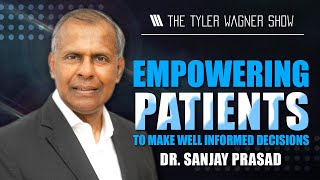
In this episode of The Tyler Wagner Show, Dr. Sanjay Prasad, a 30‑year veteran surgeon and author, discusses his personal journey, the problems he sees in the U.S. surgical referral system, and his solution—SurgiQuality. He explains how referrals are often based on habit and relationships rather than outcomes or cost, leading to unnecessary or sub‑optimal surgeries. SurgiQuality is a concierge‑driven platform that, with a patient’s HIPAA‑authorized records, solicits multiple surgeon (and other specialist) opinions, validates outcomes, and presents bundled pricing, allowing patients to make informed choices. The conversation covers the impact of COVID‑19, which halted elective surgeries and accelerated telemedicine, creating an opportunity to “reset” healthcare. Dr. Prasad outlines the current B2B rollout with self‑insured employers and Fortune‑100 companies, plans to expand to B2C, and the future of bundled, zero‑deductible surgical pricing. He also talks about his patient‑focused book, Resetting Healthcare, and provides practical ways for listeners to stay updated, join pilot programs, and access the platform.
Chapters
All right everyone, welcome back to another episode. Today we have Dr. Sanjay Prasad, um, and he has been a medical surgeon for 30 years. So welcome to the show.
No, thank you, Tyler. Thanks for having me aboard. Appreciate it.
Of course. Grateful to have you here. So, um, I like to start these interviews off, uh, like this, cause I'm always curious. When you were, um, younger, did you see yourself doing at all what you're doing right now or for the past 30 years, or was it something completely different?
Yeah, very, very different, uh, than most kids today. Um, you know, I decided I wanted to be a surgeon. In 7th grade. So really, very, yeah, very early on. And, you know, I was a kid and I had an ear infection. I went to go see my ear, nose, and throat doctor, my ENT doctor, and just, he gained all my— he gained so much respect. And he had such a broad knowledge base, had the power to heal and to prescribe and It just, you know, it was so enamoring for, you know, what I was 12, 13 years old at the time, and, uh, endearing and very kind as well. And those are all the qualities that I kind of— he just became my role model, if you will. Yeah, got it.
Okay. Um, and so I want to say this too. Um, so you are also, also an author. You have a book. Did it just come out recently, or how long has that been out? Resetting Health.
It's been out since June of this year. And, you know, if you want to know really my whole story, I came to this country, I was born in India. I came here when I was a year old in 1962. See, now you know how old I am. But our family came by ship. So, you know, air travel wasn't— was too expensive, prohibitive. So it took a month journey through the Suez Canal. And really, we came here, as my mom was telling me the other week, we came here looking for a solution to a healthcare problem in the family. We're looking for a surgeon. And it's so ironic, or maybe it's not ironic, but maybe just so serendipitous. I don't know, I don't know what adjective you would use. But here I am, I grew up and became a surgeon in the Washington, DC area. And, uh, helped tens of thousands of patients over, you know, 30 years. And now I'm helping patients find the best surgeon for them. So it just all comes full circle, I guess.
Yeah, I love when that happens. So, uh, the company— your main company, Surge Equality.
Yeah, the, the name of the company is Surge Equality, and it's all about surgery. It's all about quality care, surgeon outcomes. Empowering patients, um, to make, uh, you know, well-informed decisions.
So how did you come up with the idea for the, for the company? Like, what problem were you solving?
Yeah, the, the problem as I see it in surgical care, uh, I mean, there are many problems in surgical care, but I, I, I really focused in on, uh, the referral system, uh, that is how and why a primary care physician refers you to this one surgeon or these two surgeons within your entire network of, you know, 300 orthopedic surgeons. They pick one or two. And, um, but as I discovered over 30 years, that referral is being made on the basis of relationships, on the basis of habit, but not necessarily based on cost, not necessarily based on the surgeon's outcomes and what is best for you. And that's, that's the part of surgical care, if you ask me, that's the part that we're trying to improve.
Got it. Okay, that makes sense. Yeah, and I know, I mean, depending on, I guess it's different for different types of surgeries, but some surgeries could be like hundreds of thousands of dollars, right? Like, they can be pretty—
yeah, true. If you add up the costs associated with that episode of care, what we talk about with the surgical case, we're talking about the surgeon fee, the anesthesia fee, the facility fee, um, you know, the post-op rehab fee, uh, the time off from work. And if you add all that up, it could easily run into hundreds of thousands of dollars.
Got it. And so with SurgiQuality Is it— is it— it's basically a website where they're able to go on. And how does that actually work with like the referral process? Like, is it— because I know down here I actually have like a, I guess you'd say, a functional medicine doctor. Like, I, I decided to— obviously for emergency care I have to go to the hospital, but I got out of the what was in my insurance, um, just because it didn't seem Um, like I was having stomach issues and they kept referring me to people and none of them were solving my issue. So, and then I, I found out, uh, that I had a gluten intolerance with a different doctor. I removed gluten and my stomach was fine. So it's, it's like either way. Um, so is that what this kind of does? Like, like it removes that refer— like you don't need the referral then, or do you still need it?
Well, what we're doing is we're turning the tables. So instead of you trying to hunt for the right surgeon or the right, you know, nutritionist, or, uh, what we're doing is we are forcing the system to compete to take care of you. So think of it that way. Um, and so we accomplish this in two ways. One is a personalized concierge. You would have a personalized concierge once you're told you need surgery. And all you would have to do is sign a HIPAA release for your medical records, and the concierge does all the magic on the back end, accesses your medical records, accesses your imaging that shows, you know, a torn rotator cuff in your shoulder, uh, whatever it might be. We, we send it up to the cloud, all HIPAA compliant, then we send it to multiple surgeons in your network, uh, whether it's Blue Cross, Cigna, Aetna, whatever it might be. Um, and then we ask the surgeons to validate necessity, uh, put in their past outcomes and put in their overall pricing. We get back that information to you. You make intelligent choices. Um, it just makes a ton of sense.
Got it. I like— well, I think the, uh, patient would definitely like this a lot more for sure. Um, and it's— yeah, it does make a lot more sense because I've always thought Like with the referrals, it's almost like you're only giving me a couple options. And then if I— what if none of them work? And are they the best? Like you were saying in the beginning, like, what if they're not the best options? So is this almost like— not to equate it exactly like this, but it almost seems like, you know how like Yelp is for restaurants? Like, like this is for medical care, for surgical care.
SurgiQuality, as the name implies, Yeah, so yeah, surgical.
Yeah. Okay, gotcha. Because that would be way easier. So is there like reviews and stuff?
Yeah, so the surgeons, you know, if you've got a torn rotator cuff, they'd have to put in their past experience. That is, how many did they do last year? What was their success rate? What was their complication rate? And then we, we validate that on the back end with their electronic medical record. And then we star grade them with each quality measure. And so you get a list of surgeons, a list of shoulder surgeons that specialize in that, and then also get their past experience, you know, what their complication rate was, how many they've done. You know, it just empowers you, right, to take control, you know, to get back in the driver's seat and take control of your healthcare.
Yeah, no, I, I love this, honestly. Yeah, that would have been much easier for me. I would have just liked to be like, how do you help with stomach issues, or like stomach issues, or whatever? How many happy clients? I'd be like, all right, that's my guy, or that's my girl.
No, but I think, uh, you know, what you went through is very interesting. Yeah, you went through— you went to multiple specialists, right? And that's what our platform does. For example, if you have a tumor in your colon and you go see a surgeon and he wants to remove, you know, half your large intestine, you know, we also send that case to gastroenterologists. And some gastroenterologists will use a colonoscope and actually remove the tumor all through a colonoscope, get you back to work quickly. Very little morbidity and mortality, a tenth of the cost. Um, see, we're getting back multiple opinions from multiple specialties, and that's the beauty of what we're doing.
Okay, so that's huge because, yeah, like, whatever your primary care deems in the normal or the original process, I guess we'll call it, uh, deems is best, they'll send you to that type of specialist, and then typically, like, that is the path that you take. Right. So it's not like different specialists are inputting feedback. Like, so this actually gets distributed to all the possible ways it could be fixed.
Yeah. Yeah. I was talking to a vascular surgeon last night. I was having a drink with him and very interesting. He said to me, uh, you know, we see patients all the time with, with pain in their leg as they're going up the steps and They get diagnosed with what we call claudication, which means the vessels in their lower leg are just not pumping blood, enough blood to the muscles, when they really have a knee problem or a meniscal tear in their knee. And they're getting surgery for the vascular system when they really should be getting orthopedic surgery. I mean, this is what's happening today. People are are getting surgery they don't need. People are getting complications from surgery they don't need. Um, it's just a total mess right now.
Yeah, okay, I like this a lot. Um, so how does it work, like, if somebody wanted to join this? Like, what does that look like?
So we go B2B, so we're, we're working with self-insured employers. We've got some large Fortune 100 companies that are starting to use the platform. And so you are enrolled in a benefit program under your employer's program. And this is something you learn about when you enroll in open enrollment. And then when you need surgery in the pre-authorization workflow, you get connected to our concierge anytime you've been told you need surgery. So that's where it makes the most sense.
So what if you're like self-employed and have like a dozen employees? Is that not big enough yet, or do you plan on expanding to like B2C at all, or it just doesn't work that way?
We certainly will expand B2C, um, we're just not quite there yet. We're trying to capture lots of volume in terms of surgeries, um, you know, we get the attention of the surgeons and the surgery centers and the hospitals, um, you know, I think we need to start there first. Totally.
Gotcha. Well, let me know. I'm a little— I'm not at the 100-employee mark yet. I'm a little bit smaller right now. So let me know. Okay. So I want to go back to the book. And actually, right before we do that, one of the questions, you know, obviously when people come on the show, we get like one-sheets. Obviously with COVID-19, a lot has changed. So what have you seen like change the landscape of the U.S.
healthcare since COVID Well, it's changed tremendously, as you know, Taylor. Uh, you know, prior to the pandemic, people were going to the surgery center, going to the hospital, having surgery. Uh, it was business as usual. COVID hit. It was such a horror to so many families, you know, across the planet. And, uh, the one thing that happened in 2020 is all elective surgeries, all non-urgent surgeries went on pause. You couldn't, you couldn't get surgery. You had to wait. And it was a good thing. But, you know, now in '21 and beyond, these surgeries are starting to get scheduled again. This pause has been great because now we have a chance to reassess what we were doing in surgical care. And we have an opportunity in this country to reset healthcare as we knew it once before. And of course, the other thing is telemedicine has taken off like big time, right? And now you can have virtual visits with your surgeon and your doctor. Um, it's been a big addition to surgical quality, no question.
Got it. Now, when you say reset to like what it, what it was like before, what was it like before? And then how did it go wrong.
Exactly, where it was going wrong was you were getting referred to the surgeon, not necessarily the best outcomes, getting surgery you don't need. You know, now we have a system, a real platform that can take your medical records and send it to multiple surgeons before you, you know, you have surgery and empower you with quality information on surgeons so you make better decisions. That's how we're resetting the care.
Okay, gotcha. Now, was it always like— with the problem that you're solving there, was it always that way? Or like, when— I guess, when did it kind of veer off? Or I guess before the access was less, so it was kind of like, let's just say like 100 years ago, right? Like, obviously healthcare has evolved a lot since then, but I guess you, you just maybe had like your one local doctor, like 100, maybe a little longer than 100 years ago. But do you know like what it was kind of like then and then how it shifted into what it became?
You know, back then, uh, you know, the whole insurance system kind of morphed, um, and really caused a rise in the cost of healthcare. Uh, you know, technologies have improved, or you got robotics and all sorts of new pharmaceutical agents as well. That have increased the cost of healthcare. But we were coming, you know, it was like we were coming to a head where the cost of healthcare was really impacting not only the employer's bottom line, but when you look at an employee with their high deductible health plan, you know, they're making some difficult choices now between, you know, paying the rent and putting food on the table or paying that high deductible for Johnny's surgery. So It's, um, you know, the system definitely needed to be fixed. There's no question.
Got it. And, um, so I want to dive deeper a little bit into the book because a lot of our listeners, they're aspiring authors or authors now. So, um, and the reason for that is I, I run a book publishing, book marketing company. Um, so, uh, curious, like, overall experience with the writing publishing of your book? Like, any tips? And what was the whole experience like?
Well, uh, you know, for me it was, it was a bit easier because I'm so passionate about, about solving a major problem in healthcare. But, you know, number one, you need to have the passion, right, Taylor? Uh, I mean, and you need to be able to do the research, have the time to do the research. And the pause in surgeries gave me a lot of time to do that. And then put your thoughts together, put them together, put them on pencil and paper or, you know, on your laptop, and start building on that on a daily basis. And you'll come up with new ideas every single day, and you'll reform and retype and edit, and it's just an ever-evolving process. But, you know, it's such a, such a wonderful, joyous feeling. It's exhilarating when you finish, and that finish may take 6 months, it may take a couple years, but you're, you're, you're so proud of what you wrote, right? Because now you're sending a message, a very important message to the world, right? Not just about yourself, but about your story. And the story, you know, can be very engaging, can be very moving. It can, it can launch and ignite a grassroots revolution. And that's what we tried to do.
Yeah, I love that. So because yeah, writing a book is hard. So if you're passionate about it, obviously it makes it easier. And I think too, you have to, to make the marketing easier, like, like kind of with this podcast in a sense, um, like if you really believe in the product, then the marketing is easy. Right. So like what you're doing, like, is you're solving like a real problem. You really believe in it. You're really passionate about it. So it makes it really easy to say that, like, you know, Surge Equality, like, it, it's, it's amazing. Like, I, I don't, I haven't even used it, but to me it seems like whenever it's ready, I want to use it. So I'm like, I'm ready, man. I want to be your first small business signup. So you let me know.
Great. Yeah.
Um, And then, um, if somebody were to read Resetting Healthcare, what would be, I guess, a couple things like— and what would be the ultimate thing they would get out of, out of reading it?
Well, I think they would start to realize, uh, some of the decisions that are being made for them, right, by the healthcare system, and realize that, you know, they have a chance to really take control of their body and really steer and, and get in the driver's seat and navigate the healthcare maze and ask demanding questions and, you know, and just be more engaged. And you can take better care of your condition if you know more about it. There's no question.
So does it also— I'm just curious because I'm thinking back now when I had this stomach issue and I'm like thinking of all the pain, uh, like problems I had And like, does it somehow avoid the, like, never-ending going back and forth between, like, the doctor and the insurance and, like, having to guess? Like, I feel like what I went through is, like, I would ask the— I would ask my insurance how much the doctor would charge, and then, like, they would give me different answers is what I'm getting. Like, I could never figure out what I was actually getting into. Until I actually got the work done, and then they'd send me a bill. And I'm really like, this is the only thing I know of that you actually like do without knowing what it costs, you know what I mean? Like, that happened to me so many times, I was like, what the heck is this? This is crazy. Um, so sorry, good. That's it.
No, I mean, we are trying to solve that. Um, okay, you know, uh, what we're, what we're using— and now in the marketplace you'll find bundled pricing where the surgeon fee, anesthesia fee, facility fee are all included in one low cost. But it's starting to take hold, but it is not ubiquitous yet and for all procedures, but it's going to take hold. And when it does, you know, with price competition, we're hoping, and if the health plans cooperate, that we can get to a point where employees and patients can start to get zero deductible options, uh, you know, when they need surgery. So that's going to be coming on the horizon, no question.
All right, that's awesome. Okay, this is getting exciting. Um, very cool. And then, um, with the Surgery Quality, is that like— that's— is that kind of like your main mission? Is this what you see yourself expanding and growing for like the next 10 years? Let's say— I know 10 years is a long time in today's world. We might be like virtual reality by then. But is this kind of like the main, your main business that you see growing?
It's the main focus of where we are today. Absolutely. And, you know, we will continue to work with the large companies initially and then bring this to the middle market and the smaller market as well and work with health plans throughout the country. Yeah.
Got it. So, um, what I'd like to do, I'd like to kind of leave the floor to you. If there's anything that we didn't cover that you'd like to, feel free. And then also, you know, let people know how to— well, I know Surgery Quality is not ready yet for the main masses, but how maybe how they can stay updated, your socials, the website, and then where they can grab the book.
So I'd leave everybody with a thought, and that is, um, you know, you go to a surgeon's office Okay, he's telling you you need surgery, but I think patients need to start to pause. They need to hit the pause button, and they need to really stand up and ask some difficult questions of their surgeon. Doctor, do I really need this surgery? Um, what are the possible options other than surgery? And, you know, uh, And then they need to ask them some very difficult questions. Doctor, how many have you done? What's your success rate? What's your complication rate? These are all the questions they need to start asking so they become well-informed consumers. And it's really crucial. And surgery quality, you know, look, it's gonna be available to the masses. It's just a matter of time. You know, if you wanna learn more about it, you go to surgeryquality, .com, S-U-R-G-I-Quality.com. And if you want to participate in a pilot study, please give us a, a, an ease, drop an email to us at info@surgiquality.com, and we'll get you into our pilot program and get you started. And the book is Resetting Healthcare Post-COVID-19 Pandemic. It's the patient handbook Written for patients, for patients to understand, written in a very easy type language so they can well understand, uh, you know, all the issues. Um, and you can learn more about the book on resettinghealthcare.com. Um, and I'm Dr. Sanjay Prasad, and you can always contact me at info@surgeryquality.com.
Perfect, man. Thank you again, uh, for coming on the show. This was really an enlightening episode. I appreciate it.
Great, thank you so much. Yeah.
More from Tyler


Catherine Nikkel : THE STORY EVERYONE HAS BUT HASN'T TOLD : The Tyler Wagner Show #1120



Scott Ritzheimer: Bring Predictable Success to your Organization | The Tyler Wagner Show #1115


Fred Moskowitz: A GUIDE TO GETTING STARTED WITH IN MORTGAGE NOTES | The Tyler Wagner Show #1113

Mark Podolsky: From Land Investor to Full Time Success How I Made $90,000 Cash in Real Estate


Mark Podolsky: How to achieve a 300% return on investment my foolproof strategy

Mark Podolsky: How to make passive income selling raw land the irresistible pricing strategy