Edwin Dearborn: Business And Marketing Insight | The Tyler Wagner Show #1023
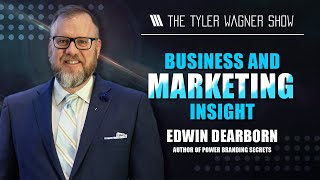
In this episode of The Tyler Wagner Show, host Tyler Wagner interviews Edwin Dearborn, a virtual chief marketing officer, author, and business growth strategist. The conversation traces Edwin’s journey from high‑school ambitions and early hands‑on marketing work at his parents’ travel agency to his formal education in advertising and a career in agency work. Edwin introduces his latest Kindle book, Referology, which frames referrals as a systematic, proactive marketing engine rather than a passive, defensive tactic. He explains why 97% of businesses lack a formal referral process and outlines a four‑tier taxonomy of referrals: soft (online reviews and social mentions), direct (personal recommendations), influencer (nano‑ and micro‑influencer partnerships), and partnership/joint‑venture referrals (formal collaborations with corporations, unions, or professional groups). The discussion delves into practical tactics for generating each type—asking for reviews at the point of service, training staff to solicit tags, identifying and rewarding local influencers, and seeking official provider agreements. Edwin emphasizes the importance of staying top‑of‑mind with past customers through drip campaigns, the financial impact of high‑value referrals, and the concept of “referability” as a competitive advantage for small and local businesses. Tyler shares his own experience building an “Infinite Partnership System” and illustrates how cross‑promotions and referral‑based sales teams can replace costly paid ads. The episode concludes with actionable resources: Edwin’s free and paid ebook, downloadable worksheets, and contact information (brandedshareables.com, LinkedIn).
Chapters
All right everyone, welcome back to another episode. Today we have Edwin Dearborn with us, so welcome to the show, man.
Hey, thanks for having me.
Of course, grateful to have you on. Um, so if you can just start us off, a little bit more about you and what you do.
Well, I'm a business owner, but I'm also a virtual chief marketing officer and mainly provide kind of that C-suite direction. And I do it in two formats. Either as a partnership— I'm a partner in a couple brands where, you know, I get a percentage of the growth. That's my skin in the game.
Yeah.
And then number two, I've got some marketing services that I work with some partners that provide, you know, social media marketing services if they don't want to quite go the virtual chief marketing officer route.
Gotcha. Okay, nice. And then you also— you're— I think you have multiple books, if I'm not—
yeah, I've written one book that you can get on Amazon, and then I have two ebooks, shorter books, that you can also get on Amazon and Kindle.
Okay, fantastic, fantastic. So, uh, how I kind of do these interviews, I like to kind of start from the beginning, not the, not the exact beginning, but part of the beginning, and then kind of get to how you came to the conclusions that you've come to and how you've gotten to where you are today. Um, and you know, we're going to talk about for certain 3 things today. I know you have the 10 core principles of business growth, the 3 Rs of business growth, and brand building through content marketing. So everybody listening, we'll get to that. I just, I think the origin story is important and it kind of helps people connect with you. So, um, let's just start maybe like high school. So in high school, what did you think you would be doing professionally? Is it anything like what you're doing now?
Not at all. Uh, like, dude, I was like, I was so all over the place in high school.
Really?
Yeah, I was one of those people that just lost in I just knew that I was going to be successful in something, you know, like, because I had a lot of ambition and a lot of dreams. Um, I mean, at one time I wanted to be an oceanographer, and so I got certified as a diver when I was 16.
Nice, that's awesome.
Got the equipment, went on dives all the time, was really into it. And then I got a camera, and now I wanted to be a photographer. And then my parents opened a business when I was 19 years old. They opened a travel agency in Orange County, California in the '80s. And, uh, so I needed a job. So I go, I'll do what I can, office work, filing, cuz I'm 19. I don't have any business skills. So, you know, I think back in the '80s, marketing and promotion was handing out flyers. You know, or handing out Rolodex cards, you know, it was like, or maybe some ads in the newspaper or Yellow Pages. That was about it for a small business. So I thought, well, I'll get some flyers. And so these are when rub-on letters, I'm dating myself, but literally this is before the Mac.
Yeah.
For all young people, yes, there was a time in history when there was no computers in business for marketing. So I'm doing rub-on letters and I'm, you know, cheap copier, I'm making flyers and I go around business parks and I hand out the flyers. We started getting response and my mom's like, yeah, people are calling off the flyers. I'm like, really? Like, you know, like, wow, I created an effect.
Yeah.
So I thought I better, you know, I better do something, you know, get some knowledge on this. I took a course at community college, Orange Coast College, in advertising. Might as well, you know, back then I could take a class for $50. So I took the class on advertising and dude, the bug bit me. I was like, this is cool. Like, I was just like, I don't know, just something about marketing and advertising. It was like, I just felt in my place. I felt like this is what I'm destined to know. It was like, I can use aesthetics and messaging to move people to do things in business, to buy more stuff from us. That just intrigued me, that you could use media to make people want to buy business, you know, buy stuff from you.
Yeah.
So I just started reading books, and then I, you know, went to work for an advertising agency 3 years later, and I was like, okay, this is I'm doing marketing, sales. This is just, this is what I was built to do. So that's how I got started.
That makes sense. Um, that's, that's awesome. It's kind of, excuse me, it's a little bit similar to my story actually, where I, I, I was in college, I read a book, The 4-Hour Workweek, and that's what, and then I dropped out and that's what made me realize, that book made me realize I could run my own business. Cause you might recall those like And I don't know if this is some sort of, uh, I'm kind of a conspiracy guy, so I don't know. Oh yeah.
Oh yeah. We'll really get along then.
Oh yeah.
Yeah.
So like, all I remember when I was younger in college and stuff is constant, or I remember other things, but this is one thing is like 9 out of 10 businesses fail. Right. And I, that just kept ringing. It's almost like they tried to scare you out of entrepreneurship or something. Um, but then I read The 4-Hour Workweek and I was like, okay, well, 9 out of 10 businesses might fail, but like, what if they're just not— like, they didn't run them correctly? It doesn't mean I'm gonna be one of those 9. And, and in the new world we live in with online, like, is that even— is that statistic even true still? Like, I don't know. Um, so either way, it was just interesting to me how I went to college even before knowing that I wanted to run my own thing, and then I dropped out because I read that book, and that gave me the confidence to do it. And just like yourself, It was sales, marketing, advertising, and like psychology of why people buy things that got me. I just, I've gone down the rabbit hole, dude. And that's why I wanted to have you on, because I had a feeling you did.
So yeah, I'm in that same rabbit hole.
Yeah. Well, you know what the cool thing too that really drew me to it is that it never ends. Like the rabbit hole of psychology, marketing, like sales, it's limitless. There is no ceiling. And that to me is what I like about it. I think like that's one of the biggest things I like about it. So, okay, so you do that, um, and let's actually— so you have this, uh, this is your newest one, I think, Referology.
Yeah, Referology. Yep.
Okay, so what, what do you talk about in, in this? Um, I know this is like a shorter like Kindle book, but like what do you, what do you talk about it?
So when we had the lockdowns in March of 2020 and we all thought we were going to die and be eaten by zombies a couple of months later.
Yep.
We're all sitting at home prepping and learning how to can food and reloading ammo. And I don't know what everybody else is doing, but that's another rabbit hole people were going down, right? Oh yeah, so we had all this time on our hands and I kind of just had this epiphany that this was time. Somebody said to me, this time that's been given to you is an opportunity to rediscover new skills and abilities. And I was like, wow, it's like the universe is like, we're gonna lock you down and this is an open window for you to learn a whole new set of stuff. I was like, okay, game on. You know?
Yeah.
So one of the things in business, for whatever, I don't know what the trigger was, but I was like, referrals, referrals, you know? Like, it's like, it was almost like making a full circle back to my roots. Mm-hmm. And I was like, is there science to referrals? I mean, there must be. And what's interesting, Tyler, if you ask a business person What's their favorite type of marketing? What do you think they say?
Favorite type of marketing? That's a good question.
I don't know.
I actually don't know. What would you say?
Word of mouth or referrals?
Oh yeah. Okay. That makes sense.
Yeah. But you know, what's your favorite? They're like, oh, I built my business on word of mouth and it's all proud. Right. And you know, and I, yeah, you're right. And if I called you up and I said, hey Tyler, I have a referral for you, your emotional tone would go up.
Oh yeah, yeah, for sure.
People love referrals. So I was like, but, but yet one study was done, it was like 97% of businesses do not have a formal referral process in place. So everybody loves them, but nobody knows how to cause— create them proactively. So I went on to Google and I went on to Amazon, and I just— because I had all this time on my hand, watching hundreds of hours of videos, a guy's talking about word of mouth all the way back from the '80s. I'm buying books about referrals, you know, what inspires them, what's the psychology, like just reading books. And I came to this, this was my additive to the whole mix because I didn't figure everything out. I just, my superpower, I believe, is I figured it out in such a way to get people to do something about it. At a level that they could understand versus I'm not going to read all these books and do the 100 hours. Can you just distill it to some strategies and tactics because I can do without the study? So I thought I'm going to make kind of like a little playbook, bring it down. And in my study, here was my aha moment about why referrals has this— everybody loves it, but nobody knows what to do. Because it's a— I call it marketing's greatest blind spot. And a blind spot is something that you can't judge or think with, or you don't have a solution to. You don't have an immediate solution to. You just look at it and you're like, I don't know. When I would go, you love referrals, but you don't know how to get them on a— you don't know how to turn them on. And the fact is, is we can turn them on. And once you get into that proactive mindset, all of a sudden the blind spot is gone because we've been so taught, or we've believed that referrals is defensive, meaning, you know, it comes at us whenever it comes at us. There's never been an offensive playbook for most people on you love them, how do you get more of them? And they're like, Uh, and then I don't want to ask for them because it sounds like I'm begging. Yeah, it can come across that way. So how do you get more referrals without begging? And that was really what I, I worked backwards from that and went, here's the proactive playbook that if you did these things, maybe not right away, but you'd be building a brand awareness And you become more referable. That's the key. How do I become more referable? How do I become more memorable? So when the person does see the situation or problem that I handle, they go, I know a guy. And you want to be that guy. I know a guy. So the guy goes, problem. They go, I know a guy. You got to be top of mind when people see that problem. Versus, no, I don't know anybody who solves that, you're screwed. You know what I mean? So you want to be that memorable guy when those 100 or 200 people that you've built that referral referability. And so Referology, my book, is the study of referrals. Ology, study of.
Yeah.
How do we study this, break it down, and And then even in my book, I give some proactive strategies that if you just do every day, over time you're like, why are we getting more referrals 6 months later? Because we're doing the things that trigger people to remember us when it comes an opportunity to be referred.
Got it. I love this. Okay. So obviously, you know, we don't want to, well, maybe you do. I don't know.
It's up to you. Yeah, you ask me away. We got time.
Well, I'd love to like go through it. Like what? You know, maybe leave some, uh, so people buy the book, because if you say everything, then maybe they will.
But that's $1.99. I mean, you know, I, I think it makes 60 cents if you buy it, right? The majority goes to Amazon. I, I don't even get a cup of coffee at McDonald's if you buy my book. But I wrote the book. It was more of a labor of love because I saw my parents struggle in business. So I've always had a passion and an empathy for the small business guy that doesn't have a lot of money. And referrals obviously make sense because if I don't have the money for the Google Ads or the expensive website, how do I get up and running? And this to me is— and then also there's industries where advertising is difficult because of legal reasons. Like if you're a financial advisor, we can't say that, we can't say that, we can't say that. Yeah, can you say almost nothing? Okay, can you get referrals? Oh yeah, yeah, I can get referrals. Okay, good. So that's an open channel then, 100%.
That's one of the things I love about, like, one of my, um, uh, it's funny, I guess he's my cousin, he's like my second or third cousin or something. He, he runs a CBD company, um, in Pennsylvania, and he can't run advertising, right? So I was like Like my method, like how I grew my business, we actually do book marketing. Like that's our main thing. So what I did is I connected with a bunch of publishers, like literally thousands. I have a sales team. All we do is connect with people that also work with authors. So publishers, authors, writers, editors, and PR agencies. And we build relationship with them. They refer to us and we refer to them. And that's it. We don't do like really very little direct to author, like very little. And it makes it such an easier process. Like as you definitely, you obviously know, but when somebody tees you up with a referral, I don't even view that as like a sales call. Like I view it as like a, it's like a get to know you call. The sale's already done. You know?
Amen. Amen. It's like— and what is interesting is that's the power of referrals, is that it's almost a done deal when it's brought to you. Like the closing rate. I mean, I've done so many analysis on this for companies, and every time referrals are like— it's like falling off a log once it actually makes the appointment, right? When you actually connect. Number 2, the trust factor just completely transferred. And if you take a look at all the statistics, the lifetime value of a referral is way more money. They spend more money. I asked a dentist one time who had no referral program in place, and I said, so how do you— oh, I do postcards and Facebook ads and this and newsletters and emails. I go, what about referrals? He goes, yeah, I accept them. I go, okay, that's it? That's all you do for referrals? Yeah. Okay. The doctor, what was the best referral you ever got? He's like, wow, that's a good question. He's like, oh, I had this guy, this patient bring his wife who need full mouth reconstruction, one of the best of the best, and have titanium this and ceramic this and gold and silver and Platinum, whatever, right? $60,000.
Yeah.
I said, you made $60,000 on one referral. Can you imagine if you had one of those a month? Just one $60,000, not including the ones you just happen to get. He's like, I never thought— I go, there's no ROI like a referral. But here you are willing to accept it. You make tons of money on it. But you've got nothing in place. Because if I asked you what to put in place, you wouldn't know. Because back to my point, it's a blind spot. But what if I pull back the curtains of Oz and we actually get to see the psychology of referring? What would happen if you could tap into that power? He's like, dude, what do I do? He was like, you know what I mean? Wow, no longer a blind spot.
That is what it is. You're 100% right. And it's so cool to see because like me and you kind of came to the same conclusions, right? Where I just like, I just call it more like we literally have a course, it's called Infinite Partnership System and it teaches that. So it's, and it's a little different I think than what you're saying, but like, I just view business through like, not how many clicks I can get, not how many leads I can get, but like, how many people can I partner with and build relationship with that I refer to them, they refer to me? And actually, what ends up happening too is, because you're both in a similar industry, is sometimes you create other little businesses together.
Absolutely. You nailed it. So, let me just tell you something. We have observed exactly the same thing. And can I share with you the 4 different types of referrals?
Yeah, let's do it. Let's get it. Good.
Like, we're so like on the same— see, if you get intelligent people, and we're fairly intelligent people, to look at a problem, we'll probably deduce the same principles.
Yeah, 100%. I'm in.
Okay, good. All right, so referral number 1 I call a soft referral. This is a mention of your brand on social media or a positive review on Google, Yelp, or Facebook. I'm reading it from my book, actually. They're not directly telling any specific person to choose you, but many of these help online searchers to choose you over others. But I call that a soft referral. Like, I'm not referring you directly, Tyler Wagner Wagner, but I'm leaving a positive review. And if 100 other people do that and you go on to Yelp and you look at that thing, it— all those reviews have kind of referred you in that direction, have they not? You're like, well, I mean, if 100 people love the chicken pad thai. I mean, it must be good.
Yeah, 100%.
And I'm checking it out. Yeah, they got the most reviews. So that's a soft referral. So the very first thing that I tell businesses is aggregate more reviews because it's— they're, they're indirectly referring you more clientele. So your Google reviews, when people come to your dental office, are you having them tag you? Are you having them do selfies? That's a soft referral. If you had 20 patients a day tag you in your practice on social media, after about 6 or 9 months, the local community like, yeah, I've heard of that guy, I think I saw him on Facebook, right?
100%.
The soft referral. Those are really easy to get because if you're doing good service, the key that we do is, how did you like your service? Oh, and they go on and on. I go, would you be willing to say that online? That's the closing question. Would you be willing to tell me, tell others what you just told me? Oh, absolutely. Then right in the moment of excitement, you get them to leave that review or tag you on social media. That's free. That's a strategy that works, and you can do it every single day. That's a soft referral. Okay, the next referral type is what I call a direct referral. I call you up, or you call me up, we have a discussion, you've got an issue, you come. I live in the Las Vegas area. You go, hey Edwin, I'm coming to Las Vegas, I love Thai food— my favorite food, by the way— I love Thai food, where's the place? I go, Nataya's Secret Kitchen in Summerlin, which is a city just a couple miles from Las Vegas, a little community. Upscale community. You go to an entire secret kitchen, I swear you're gonna have the best Thai food ever. That's a direct referral. So now you come to Vegas, you ask me about the local scene, I send you there, you walk in because I— you didn't have to go to Yelp, you didn't have to sit there and go to a blog. You— I hooked you up and I sent you directly to the best Thai place. That's a direct referral. Mm-hmm. Okay. The third one is kind of like two, but it's a very specific type of direct referral. And I call these influencer referrals. This is when you're working with an influencer who partners with you, and it may or may not have a professional or paid— like there's nano and micro influencers. A nano influencer is 10,000 or below followers. A micro influencer has between 10,000 to 50,000. Followers and they're very active in the community and they love posting stuff and they've got an active database. So a lot of people think of influencers as Instagram models with 5 million followers. And I'm like, those people aren't gonna, that isn't gonna move the needle for you. But if you're a local business and you got local leaders, you know, he's got 5,000 followers in the local city, but they're engaged.
Huge.
That's huge. So about 1 out of 20 of the people that you associate with on social media and in your email database are a nano or a micro influencer. So I tell people, identify who they are and then work out some way of working with them. Maybe it's a little bit of money, maybe it's you give them a discount, maybe they get a free meal. Like if I was a restaurant, I'd be like, hey man, You got to pay for the meal, but the Thai iced teas and the mango rice, that's on me. You can have many of those as you want. You go, okay, good. You just come in here, take photos, Instagram it, tag me, right? What would happen if I had 100 foodies that were big on Instagram in Las Vegas tagging me and talking about my food? Would that move the needle? Absolutely. So that's the third level is you've got to identify who is active on social media. And here's a simple question. As they're coming into your restaurant or they're coming into your practice, you ask them, hey, are you active on social media? And if they are, you know what they'll do? Dude, you look how many followers I have.
Yeah.
Now you sit down with them and you go, you get special rewards, you get special benefits, you get special pricing. You get special treatment. You're now my VIP. Mm-hmm. You see?
Yep.
No, you gotta ask, and then you gotta be— have a whole system that brings them into the fold. And guess what happens when you treat somebody like a VIP?
Yeah, 100%.
They influence. And okay, the fourth one— yeah, the fourth one is what you I call partnership or joint venture referrals.
There we go. All right.
So see, right? But you can see the scale, like soft referral, direct referral. Now I'm moving in influencers. Okay, now I'm working with corporate brands. Yeah, you know, Coca-Cola, the official drink of the NFL, that's a corporate joint venture. And a lot of business people don't realize that They think, well, yeah, that's the NFL and that's Coca-Cola. Uh-uh. Now, as a dentist, you could have, I'm the official dentist of the Henderson Police Department. I'm the official dentist of the Auto Mechanics Union.
Mm-hmm.
So you could start to go, okay, so guys come in and they go, what do you do for a living? I'm a union boss. Hmm, union boss. You start to, you know, could I become the sole provider for your union? Could I be— could I form a partnership with this doctor group? So lawyers who have to do accident cases, the guy's mouth got all damaged and you go, I want to be the official dentist. If you get injury cases into your law firm, I want to do the dental work.
I see. Okay, I like that a lot.
So now, like you were telling me about your third or second cousin, how they, you know, they couldn't advertise because what they did, and so partnerships became that. And I think it's a growth hack that most people don't look. Now, those 4 types of referrals, when you list them out, people are like, I never looked at that there was actual different types of identities that do different types of things that would benefit directly my business. And you go, I can ask for referrals every day. I can ask people if they're influencers every day. I can incentivize referrals. And here's another statistic of why people leave a brand. There was a study done Well, why do people go from buying a Chevy to buying a Ford or buying Nike to buying Adidas or going from Starbucks to whatever? Why does one person leave a brand to go to another? And 70% of the people surveyed said indifference from the original brand, meaning they, once they closed them and got them done, it's almost like they forgot about them. Mm-hmm. They stopped engaging them. They stopped calling them. They stopped marketing to them. Yeah, like with a dental practice or a financial advisor or mortgage company, I'm like, do you have a special drip campaign and marketing campaign for your past clients? 99% say no.
Oh yeah, I'm sure, right?
So you're not staying in front of the people that bought from you, so you stop talking to them. 3 years later, they gotta buy a home again. They forget about you. They see the guy that ran the Facebook ad, 'cause that was the moment they were on Facebook and they just clicked, screw it. They forgot who you were and now you just miss out on a $60,000 commission.
Yeah.
They bought a million-dollar home and you weren't there. And you're like, why didn't you remember me? You weren't dripping on them. You weren't staying in front of them every month. You weren't sending them postcards and happy birthday cards and, going, "Hey, I'm still a realtor." So you fell out of sight, out of mind, and that's what I call being referable. Are you actually staying in front of your past customer base? And I guarantee you, I mean, Tyler, survey this. Find a guy who's like actively engaging the people that already bought. I just bought a GMC truck. From this dealership. I get emails from them every single week. I get service call, how's your truck, Edwin? I'm like, you're getting my business again. Yeah. And then when I showed up and I wanted something done, they forgot to put a wrench in the toolkit. They ran out to another dealership down on the side of town. No, Edwin, you're not going there. We'll get it for you. They sent a courier, they came back and they put the wrench in my toolkit. That they forgot to put in.
That's sick, right?
Right. So I'm like, this is where I'm buying my trucks. 100%.
Oh my God.
Let's say I buy another truck, you know, I buy a bigger one because I make more money, you know, 5 years from now, I buy a $60,000, $70,000 pickup. And then, you know, when my friends move in, hey, where should I get a pickup? I'm bringing, you know, they'll probably make another $100,000, $150,000. Off of me in the next couple of years. Yeah, because they stayed in front of me and they kept servicing me even though the sale was done.
Dude, that's huge right there. That's huge. I think, like, like you said, 99% of business, probably even more than that. Like, it's, it's a, it's a percentage point, you know? Like, it is, um, that's crazy. And, and Yeah, you have to develop that plan. I think a lot of people do that because like, it's like right after the sale's done, it's like the excitement, you deliver the service, but it's like, dude, that's the person— they've already paid you money. Like, that's the person who would be willing.
Yeah, that's the person that's supporting your life.
That's better than a referral. Like, that's the only thing better than a referral, somebody who's already bought from you, you know.
Totally. Now Let's say I forget about him and I did not find— I didn't get a review from him. I didn't ask for a referral. I didn't ask if he was an influencer. I didn't ask if there was a corporate partnership possible.
Yeah.
You just see how much money and opportunity I keep leaving. So then you talk to a dentist who's serviced 5,000 patients over the last 15 years. I go, if you got a review out of a third of them, you'd have 5,000 reviews on Yelp and Facebook and Google. and you'd be crushing it.
Oh, you'd be killing it as a dentist. You— nobody would even be close to you.
You don't even have to buy any ads.
Yeah, you're on Google Maps, you would be the first thing that popped up.
Always. Now we have people like, dude, 5,000 reviews, like, I mean, I don't have to decide anymore, they already decided for me. And then 5— those 5,000 people were tagging you every time they visited, and then 50 of those people happen to be presidents of associations, clubs, Boy Scouts, Girl Scouts, whatever, baseball clubs, and you formed and you became the official dentist of Boy Scout Troop 489. I go, just those 4— ability to recognize those 4 and proactively engaging on that over and over and over, because, and because no one else is doing it. Yeah, it's an unlock.
Yeah, it is. So wait, let me ask you this because I'm curious how you could see this working with like a local business. So like, say that Thai restaurant you're talking about, right? So this could be another layer. Um, and I guess it's smaller purchases, so it could be a little tough to track all this, but my idea for local business would be like, so what would somebody else do that they would potentially also want to go to that Thai restaurant, right? So like, um, I'll just use this example. Again, restaurants I haven't really looked at too, too much in this pattern, but I'm associating it with me as a book marketer and a publisher, right? Like that connection. So locally, if I had a Thai restaurant, maybe I would go to all the local other— maybe other restaurants and other places and try to create like cross promotions, right? And then you have, um, so I'm trying to think with it, the Thai restaurant's just tough, but like, so say even if there's like a golf place or something, right? There's like a hitting balls nearby, like go and just like talk to them, create a relationship with them. They're near your restaurant and maybe you could put your business cards like on their thing and have a special code for them and just do it with everyone around you. Like, why wouldn't you do that?
Because I think a lot of people, you know, I mean, first of all, people are not that savvy in business and marketing when they start a business. That's why 9 out of 10 fail.
There you go. Yeah.
And even though what we're saying here is very simple to you and I, it's actually kind of sophisticated for a business.
That's good to hear because to me it almost feels like common sense, but it's not. And I'm glad that you're saying, you know, this is uncommon.
Common sense is uncommon.
Yeah, there you go.
Yeah. And the other thing is a lot of people are so working in the business that they can't work on the business to get more business.
True. Yeah, that's true.
So you almost have to go, okay, look, business owner, you're going to have to pop out, stop making the Thai food all the time. Yeah, you can be in the kitchen, quality control, making sure everybody's doing the dishes the way they should. So there's no reduction of quality. But what if, you know, you had a process where the waiters and waitresses and, and, you know, the girl that, you know, the bartender and all that kind of just became part of the corporate training? Like, hey, so did you have a good time this evening? Loved it. Hey, would you mind if we take a photo right now and you put it on? Are you big on it? Oh, I love Instagram. Can we do it right now? Or hey, or right before they order, by the way, if you tag us on Instagram, you get a free, uh, iced tea. Okay, what's an iced tea cost you? A buck?
Oh yeah, for the restaurant it probably costs them like— yeah, like nothing.
Like nothing, right? Do you see what I mean? Hey, but they get like, yeah, I'm tagging you right now.
Yeah.
Okay, good. So you give these little— and so you can train the employees to maybe not ask for referral, but they know how to instigate the influencers, they know how to instigate the reviews, they know how to instigate the tagging. And you make it part of the corporate culture to involve the person in the experience and to share the experience. It becomes part of corporate policy.
That is awesome. Makes sense, right?
So you actually have to elevate the awareness and the knowledge and the abilities and the how-to. Well, how do I engage without sounding like I'm begging and make it fun and interesting? And yeah, we'll tag you right now. I have never— well, except once. I had a waitress one time. I was at some egg and steak and bacon kind of cafe, you know, just hole in the wall, but awesome food. I was just eating out. She goes, so how'd you like it? I said, I loved it. She goes, would you mind saying that on Yelp? I was like, wow, you know, yeah, I will. I love that, you know, like, and I did. I left, I left the review on Yelp.
Yeah.
Now, if she had not asked me, it's not because I didn't, I hated the place or I didn't like the place. I just needed that little mental tickle to get me to do it. Now you do that, let's say she got 2 or 3 a day, doesn't sound like much, but you do that for a year, a place is gonna— their SEO is gonna be out the roof. They're gonna be ranking on page 1 for so many search terms because all the keywords and the reviews that people are leaving. Yeah, best breakfast place Henderson, Nevada, best eggs and steak Henderson, Nevada, all that I mean, Google and Yelp, look at all those keywords.
Yeah. No, it's huge.
It's huge. And then you have tagging and next thing you know, a year later, you're a local legend.
And the thing that you're saying, the biggest, for me, the biggest takeaway is just that shift of like, and I, I kind of was doing it, not thinking about it in this term, but it now it's all come together for me is like, it's just being proactive. And that's why most people view a testimonial, a review, a referral, they view it as just like, oh, it happens from time to time. And it's like, well, yes, but what if you created a system where you kind of made it happen all of the time? You know how you felt about that?
[Speaker] You inspired it to happen.
[Speaker] Inspired, yeah, that is the right word.
[Speaker] You invited it to happen. You made it available. So if it's a blind spot for the business, maybe it's also a blind spot for your customers. Maybe they're totally happy to leave a review. They never, you know, they're so busy eating their food or drinking their drink, they didn't, you know, it's not like they hate you, but if you go, hey, you know, hey, you leave a little review on Yelp, let's say you're a bar, I'll put a couple, I'll put a little extra little, I'll make the drink a little stronger. Oh yeah. Hell yeah, you put an extra shot of that Tito's vodka in my martini? We're doing this right now, baby, right?
No, and here's the thing too, is that I, like, I think you were alluding to there, I think people, like, if they have a good experience, I think they like giving the review. Like, just like you were saying, like, I go out in Miami, nice restaurants all the time, and I never leave a review 'cause I don't think about it. Like, I just don't, but I still love the experience. But if they asked me, I would be happy to. In fact, I would like to, 'cause it would make me feel good and make me feel like I'm helping them. And that's like a—
Okay, so now I have a referral idea for you.
Okay, yeah.
You go, I have a free referral video series for restaurants and I'll train your staff on the protocols for free. And all I ask is that when I come in here, I get a free meal. Right, dude.
I'll be eating free around here all fucking day.
Like, every night you're just having steak and lobster and halibut. You're like, dude, how do you do this? Like, what do you make, a million dollars? You're like, well— and you just come in and go, I'll train all your staff, we'll blow up the reviews, you'll be, you'll be Miami famous, I'll make you Yelp famous.
Yeah.
Or just give me, you know, give me a call, give me the meal cost every time I come in.
Dude, I love this idea. I'm serious. Oh my God, I think I'm gonna try that, um, especially because there's a steak place I go to all the time and like they have good reviews but like not, not a ton and it's not— but they're very good. So like if I train them to do that, I mean, this place probably has like, I don't know, 500 customers a day at least. Dude, oh my God, I'm just—
you know how many reviews and tags and influencers Wait a second. And videos and hot— I mean, Miami's got some hot looking people. That's, that's a sexy people. It's like Vegas. It's got sexy people.
Yeah. Oh, the, the Instagram influencer, like you're there, they're here for sure. Um, dude, so that's so crazy because like my business, I didn't even think about that. Like my business is high ticket, so it's not like a volume type thing. It's, it's more like Right? So like, but a restaurant, oh my God, you could, if you did this within a month, you could have, let's just be realistic about it. Not everybody's gonna say yes, but I think let's just say half of the people say yes. And you ask everyone that had a good experience, dude, within a month you could have fucking 10,000 reviews. Like I'm mind blown right now. Like 20,000 reviews. Like it's, You should actually do a test model.
Like, I'm gonna take you as a restaurant. How about this? I'll do my services for free. You gimme a good discount on the meals. You gimme 10, 20% of the growth. We'll just mark the stats. I'll mark, and then we'll keep how much money you're averaging, how many reviews and tags and social media activity you have. And then we'll, after 3 months, and then you gimme 10% of the net of any growth from your yearly average.
I love it. Yeah, yeah, no, it's, it's brilliant.
I'm actually gonna go do this.
Yeah, I think we've got—
as I'm talking, I'm like, why am I giving this vice away and I'm not doing it?
No, I'm like, uh, I, I don't even know. I, I just think it— and it could work, it really works for any business, but like how high volume, like restaurant, that is just so crazy how quickly that review count could add up. It's in a day you could get over 100, which would change your whole business. Like 100 reviews would change a business like that. That's, yeah. So I don't know.
Right. Plus it's like, you know, so if you're a restaurant, I mean, the other thing is catering. Maybe you've got a catering side to your business. Hey, by the way, we do catering, we do events, we do weddings, we do, you know, if that's what you do, right? Some places. I mean, it's a source of business. So they could be— or do you ever have corporate events? We'd love to have— do you have corporate parties? Okay, if you bring 10 people or more, we give you 5% discount. Plus here's our VIP package. You know what I mean? If you come in, Dom Perignon, all at a club membership price. Like, oh yeah, I belong to the Lawyers Association of Miami. Well, bring your lawyer friends because you'll get all this. Again, corporate sponsorship. But you've got to think about like, well, who's walking in and how do I leverage their connectivity to the world online and offline? That's all it's about. How do I leverage their database, their social media contacts, their friends and family?
Yeah.
And incentivize them to start talking about me. And that I can do every day. And I don't need a budget. I don't need a budget. I mean, in multilevel marketing, what's the very first thing they tell you to do?
Go to your—
write down 25 of your friends and family and call them. They know that you have— the first step is tap into your database, tap into your circle of influence. That's where the first sales come from. That, that's why multi-level marketing companies make so much money, because they get the guy, he's all pumped and excited, and I just signed up and woo, and this is going to make me a millionaire and passive income, blah blah blah. And he goes out and he signs up maybe 3 people. Even if he doesn't stick with it, at least he got the 3 people sold.
Yeah, true.
He got 3 new customers for him.
Yeah, dude, I love— again, and it goes back to— I think we were talking about this before I hit record— is the limitlessness of it. That's what's baffling to me. And it's like, and you know, like, the thing— and again, I, I, I do lean a little on the conspiracy side, so like, I always wonder too with paid ads. Like, I hear— I was talking to somebody yesterday actually about Google Ads, and they were saying like there are like click farms. So you pay Google and then like sometimes— I don't know how it works, but like sometimes you're not really getting real clicks all the time. It's not necessarily Google doing that to you.
That's not what I'm saying, but I'm saying competitor that's just trying to get rid of your budget so that you don't—
so you don't even know. It's just like, it's just crazy. But, but because of the way that this internet marketing thing has been sold to everyone, it's just so funny to me that people are willing to put a budget aside for Facebook ads, which to me is like a risk. Like you don't know but they're not willing to— maybe let's just say they don't have the time to do it themselves. Okay, hire someone. And hey, maybe you could actually structure it like I have a sales team. I pay them commission, so they go out, find partners for me, and then I give them a percentage of all the business that comes from that partner. I don't pay them any, so no up— I— they get paid if I get paid. And like, dude, why? Again, I know to us it's like common, but, um, that's why I'm always like, why? But it's They just don't— they didn't think about it. It is a higher level business understanding. It is.
Yeah, absolutely. I mean, just think about it. You're— I don't know if I'd open a restaurant because my fear is, is that I could get shut down again through COVID. You know, that, you know, I take out this big loan, I build up a database, and now I can't serve food. Mm-hmm. That's like— I've always wanted a restaurant, but over the last year and a half, I'm like, I don't know if I'd ever want to own one.
No. Yeah, not now. Not now.
Because at the whim of a government or a governor, you're out of business to save grandma, quote unquote.
Yeah.
Now your million-dollar loan is defaulted, your credit's ruined, and you don't have a business because the government just said, yeah, you can't serve any food. But If that wasn't the problem, can you imagine if you built this into the business plan from day one going, we're not only gonna serve great food, we're gonna let everybody know that we serve great food. Because the great, see, one of the things that I've discovered is there's this idea that if I'm really good, the word will just spread on its own. But the fact of the matter is, Maybe that worked 50 years ago, but there's so much competition now. There's so much people vying for your attention that even if you're good, you can die because of lack of business. You can be the absolute best and still die as a business because we've gotten to the point where if I want Thai food in Vegas, I've got 100 choices. So if Natalia's Secret Kitchen doesn't stay in front of me some way, then I'll just start going somewhere a little closer, a little easier, maybe a little cheaper, just because they're a little closer and a little cheaper. And it just now becomes a habit. It's like, ah, the Thai is too far, it costs a lot. But if they kept enticing me with their beautiful food, I'd be like, dude, it's worth the ride. On the freeway. I'm telling you, this, you know, this Crying Tiger with their sauce, dude, you know what I mean? So I make it because they're getting my— they're getting me salivating.
Yeah.
So that extra 15 minutes and that extra $5 or $10 isn't a problem anymore because my desire is so high.
100%. Yeah. And I wonder too, like, imagine if— I mean, you can always like retrain, but imagine if a restaurant opened and this was how they, like the culture that you're talking about, like this was how they initiated it. Like every single like employee, the first meeting was like, just like you said, like we're not only gonna serve great food, but we're gonna, I forget how you were at it, make sure everybody knows that we serve great food.
Yeah, we're gonna be socially conscious and socially engaged with our audience. Like we're gonna turn these people, they're not gonna be clients anymore, they're gonna be advocates. Yeah, we don't serve clients, we serve advocates. So how good would you have to be to get somebody to advocate you? And all of a sudden you're like, whoa, we'd have to be really good if we wanted everybody to advocate us. Good. So let's bring us up to that level. Good. Now let's get them to advocate us. Let's bring them on the team versus us versus them. It's just a giant us.
Yeah, I love it. Um, so dude, I, uh, just because our time is running short— yeah, yeah, no, no, you're good. I, I absolutely love this interview, dude. I was waiting for this one all day. Um, I want to leave the floor to you. If there's anything we didn't cover that you want to, please do. And then, um, tell people like where to get the book, website, socials, where can they Just go to brandedshareables.com, brandedshareables.com.
You can get my book there for free or you can buy it. I've got a lot of downloadable sheets, like the 10 Principles of Business Growth, and I got a couple others. They're all free. And these are like, you know, stuff you can actually kind of use as an analysis thing. You can look at your business and kind of check these things off. Am I doing this? Am I doing not doing that? So there's tons of tools there. So brandedshareables.com, or you can reach out to me on LinkedIn. It's probably the social media that I'm the most active on, and you can just type in my name, Edwin Dearborn, D-E-A-R-B-O-R-N. And if you go to my website, my contact information is there. And obviously if you go to LinkedIn, you can just direct message me.
Perfect, man. Thank you again for coming on the show.
I thank you. I love this. We had a great time. You're a great podcaster. I think now I know why you're doing so well.
Thank you, man. I appreciate that.
Yeah.
More from Tyler


Catherine Nikkel : THE STORY EVERYONE HAS BUT HASN'T TOLD : The Tyler Wagner Show #1120



Scott Ritzheimer: Bring Predictable Success to your Organization | The Tyler Wagner Show #1115


Fred Moskowitz: A GUIDE TO GETTING STARTED WITH IN MORTGAGE NOTES | The Tyler Wagner Show #1113

Mark Podolsky: From Land Investor to Full Time Success How I Made $90,000 Cash in Real Estate


Mark Podolsky: How to achieve a 300% return on investment my foolproof strategy

Mark Podolsky: How to make passive income selling raw land the irresistible pricing strategy