Eliot Popkin: FINDING FREEDOM THROUGH HONESTY IN LIFE | The Tyler Wagner Show #1077
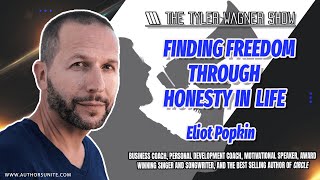
Eliot Popkin, a business coach and author, built his career from a traumatic childhood where writing and music were his escape. He founded the Ellie Fund nonprofit in his mother's memory and now coaches small-business owners on their biggest mistake: refusing to delegate. His memoir Circle explores finding freedom through honesty about his past.
Chapters
All right, everyone, welcome back to another episode. Today we have Elliot Popkin with us. So welcome to the show, man.
Thank you for having me. Pleasure to be here.
Grateful to have you on. And it's been a long time coming. I won't get into the whole story, but we can get into it. I don't want to.
We both have challenging schedules.
Yes.
Yes.
So, if you can though, start us off just a little bit more about you and what you do.
Sure. So, I am a business coach, bestselling author, thanks to this person, songwriter, and a motivational speaker.
So, here's where I like to start these a lot of times because I'm always curious. When you were younger, and when I mean younger, I mean like middle school or something like that, Did you think you'd be doing what you're doing now in any way, shape, or form? Or is it just completely, you know, like Mars, just so far off from what you had projected when you were a kid?
That's a great question. I, at that point, thought I would be a writer in some fashion. Certainly didn't know songwriter, but I always thought I was gonna write stuff. As far as being a business coach and a motivational speaker, I would never believe that. No.
Yeah, that makes sense. I, yeah, I guess when you're like 13, 14, you never think I'm gonna be a business guy.
No, no, I didn't, I didn't even know what that was.
Yeah. Right. And I think it kind of, that's more of a natural progression, right? Like once you have success in business, then that kind of percolates in your mind and you're like, oh, I could help others with this. But before that, you know, there would be no reason for you to think that because you hadn't had success yet. So, what was leading into that? What was the— oh, there's actually two questions there. All right. I want to come back to the writing, obviously, because this is, you know, we have a lot of authors watch the show. But on the business side, what were some of— did you have one business that ended up doing really well, multiple businesses, or what led you to becoming like a business coach?
No, the opposite. I had a business do very poorly. And then I learned a lot. And then the second business, I, um, the second business was a nonprofit. It's called the Ellie Fund. I started it with my brother in memory of our mom. And the really powerful thing about running a nonprofit— excuse me, that's my dog in the background— the powerful thing about running a nonprofit is, um, you have to ask for everything for free. So you get really good at communicating and negotiating because you have to. Um, not everything, by the way. Of course you pay vendors appropriately. But I really learned a lot of skills there. And then I moved to Los Angeles to, you know, to make it as a songwriter. And then when that didn't work out as planned, I, um, my first consulting job, I talked to business owners all over the country. So every day I would talk to like 8 or 10 business owners. And what I learned was when they were struggling, it didn't matter so much what industry, where in the country, no matter how many years they've been in business or even how big of a company, when they would struggle, they would make the exact same decisions. And that's when I realized, man, someone has to help these people.
Interesting. Now wait, can we go a little deeper into that? So when people struggle, they'd make the exact same decisions. What, obviously maybe it's a lot, but like what were some of those?
Gosh, how much time do we have? No, okay. So I go through like my top 10 things with people. One of the biggest things is if you think of a business like a pyramid where the owner's on top, if they're delegating properly, um, then every single person should know what they need to do on an ongoing basis and the owner's not overworking. Most of the times with small business owners that I see that are struggling, they are working 70, 80 hours a week. So they tell themselves, man, I'm doing it, I'm working harder than anyone I know. You are working harder than anyone you know. It's not necessarily working smarter or working the best for your business. If you go into any business, like a pizza shop at the counter, if there's someone there that works 14 hours a day, 6 days a week, do you really think when you walk in they're going to be like, "Hi, how are you? Do you want to hear about our calzone special today?" No, they're going to be exhausted. They're going to be like, "What's up? What do you want?" So if that person delegated properly and and hired the right people and gave them enough incentives to act like a shining example when that person's not there, and that's huge to train your and then incentivize your employees properly, then it starts to flow a lot better. So you're paying someone $20 an hour and offering them bonuses. So when you're not there, they're not gonna steal or wanna do that. They're not gonna give people discounts they don't deserve. They're gonna try to be a shining example and hit their goals for you so you can be proud of them. And that's when a business starts to work a tiny bit better. Just use a restaurant as an example.
100%.
Yeah.
And I think, you know, a lot of— what's that called? The entrepreneur's dilemma. I think like a lot of times entrepreneurs, right? Like, and it's kind of back to that theory or not theory, it's just literally what it is, is like what got you here won't get you there, right? Meaning that typically you can get to the 6, maybe low 7-figure range kind of on your own, even though I'd say mostly it's 7 is kind of hard to get on your own, but just saying you get there depending on the business. But if you want to get— and everything is relative, right? So, I'm not saying that 6 figures is not— it's all successful. Everything is great. But what I'm just saying is from my own perspective is like, it's like you have to let go, right? And you have to have these systems of like, yes, you were in complete control of everything at first. And you were doing everything and you were busy, right? And you made 6 figures, 7 figures. But if you wanna get to the 8, 9, and higher, it's actually the opposite process, right? Like you actually—
Yes.
—let go. And it's so hard to do.
That is so huge. I love how you said it. There's gonna be a ceiling for each person, whether it's a service-based thing or whatever you're doing. There's only so many hours in a day. So if I can get to $300,000 on my own or $900,000 on my own or $1.5 million, at some point I'm gonna need to hire an assistant. I'm gonna need to push all the marketing to someone who's way better at it than I am 'cause I don't know how to do everything great. Hiring the right people, it's just huge. And you're right, you just dial back and you dial back. You have someone take care of every single complaint, which for every business owner is wonderful when they finally get to hire someone to do that. But you keep dialing back and peeling back these layers of an onion and then all of a sudden, Every single time you have to elevate, it kind of stings a bit, like, oh, I don't want to have to let go of this. But you absolutely do if you want to get to those next levels.
100%. And I interviewed a guy named Dan Martell. He just came out with a book called Buy Back Your Time. And what he was saying, he's like, and I thought this was pretty brilliant. He's like, okay, so maybe you do it 100% correctly, right? So, me and you and our businesses, we do everything and not literally 100%, but let's say it's 95%, right? Because I've been running mine for 12 years. You've been running for 10, 20 years, whatever it is. But if you hire somebody, maybe they'll do it right 80% of the time. So, there's more errors. But if you have 10 people doing 80% success, it's better than one person doing it 95%, right? Like, all you need is two people. And it's just like realizing that because I think that's one of the biggest things. And, you know, there's that quote, if you want something done right, do it yourself. Right? That— but in business, that ain't right, dude. You're not gonna make it too far.
No, you literally remember— I had a client and there was a definitive moment for him. He was wake up stressed out because he'd had 6 employees at the time and everyone's like, hi, what do we do today? And what I explained to him is the first hour of your day, you delegate tasks to every single person so they're busy the whole day. And guess what, dude? You can go play golf if you really wanted to. Everyone would— will then have a moment But until you do that, because he was just, he couldn't let go of all the work. I was like, you can't do 42 hours of work today. You can't. But you have 6 people that each want to do 7 hours of work, but you got to tell them what to do every single day. And when he finally started putting that into practice, he was like, this is incredible. I was like, where are you now? You at the mall? What are you doing? And it literally frees up your life. It really does.
So I want to, uh, just to step back. So what was it in middle school? Because you said, um, because it's just really cool for me to hear that because obviously, like you said before, we had worked together in some aspect of your book. So what was it before in middle school that— how did you know you wanted to be a writer? Like, were you writing that young?
Yeah, I was writing creatively, like short stories and such. So to get a maybe a tiny bit into my story. So at that point, um, so my dad was an addict and he was physically abusive to me most of my childhood from ages about 6 to 15. So at that point I had already been— this is very common of children that have been abused, we disassociate. So in the moment, the pain of what we're going through is so challenging, we don't have the capacity to understand and process it. So we kind of just disassociate. So for me, the escape was I would spend as much time as I could outside of the house, and I would do a lot of writing.
Got it. Yeah, I, um, and obviously deeper or not deeper, as much as you want to go into that, but like, what— that was your— did you do anything else to disassociate, or that was like your core method?
I sang. I sang for hours every single day.
Yeah, it's so crazy to me because like, I know, uh, have you heard of Jordan Peterson, the psychologist? He's somewhat famous. He, he has some books out and he's a just well-known psychologist from Canada. And, um, from listening to a lot of his stuff, I've just come to realize that like, I had like a very good childhood. Like, I really— and when I look back at it, there's not much I I don't even know there's anything I would really change. So, but to have that, you know, you don't know what you have until, not necessarily until you lose it, but until, until you've gone through it and then you reflect back on it, right? Yes. And when stories like yours, I'm just like, the fact that you were able to like come out on the other side and be who you are now, you know, I can't, cuz when you're a kid, you just don't even know, like you don't know the difference. So like, I don't know. I just, yeah. Or I mean, I can't even, I can't, I don't even know exactly what it means, right? Like, because I think whatever you went through, right? Like, unless somebody else went through something similar, they could, but as much as you could tell me or the audience, if our childhood was like very good, then we just don't know, right? Like, it's so different. And a lot of the stuff he talks about, the psychologist, he's like, you know, everything before 7 is kind of a trajectory of like what you become when you're older. Right. And I can't verify all these facts that I don't know, but I'm just saying I've come to realize, I think how you're raised is so important. So when you're not raised in the best way, it is a struggle to come out and do something good in your life when you get older. So either way, kudos to you because that's just wild. Yeah. So, okay, so then, so writing, singing, First business fails, then we do a nonprofit and that— are you still running the nonprofit?
As of today? Today? Yeah. No. When I moved to Los Angeles, I did purposefully take a step back. Okay. It's still in operation today, though. Yeah. Oh, okay.
What was the reason for that step back? Were you finding that you were kind of too much in the business like you were talking about with your past Uh, no, that's a good question though.
I think for me, when I moved to Los Angeles, it was before I had the willingness to do all the personal work to kind of, you know, be honest about what I've been through and, and, and find the grace to heal from that. However, I felt like I just needed to go someplace where maybe I didn't know anyone where it was warm and I could just focus on music. I felt like I needed to go someplace where I could focus on me for the first time.
Yeah, got it. It's— well, it's just kind of the, the warm thing is just funny to me because I, when I was younger, I always, I would tell people I'm depressed 6 months out of the year and I'm happy the other 6. And that, you know, depression.
Yeah, like seasonal disorder or something.
Yeah, yeah. And it's real, at least for me. It was all— it was a real thing. Like when I moved, I lived in Encinitas. I think we had talked— I lived in Encinitas for 6 years, and then I moved to Miami, and I've been there for 7 years. I'm happy pretty much every day because I think the weather is directly—
yeah, dude, listen, I mean, I get it. So I, I live right by the water now in Redondo Beach, California. I play beach volleyball like 10 and a half months out of the year, and the few weeks that it's just, you know, last few weeks I was like, I'm not doing it, it's too cold. But here's my definition of cold: it's like 52 and cloudy But I, I would shovel my car out of snow growing up just to go have Chinese food with my friends. So, you know, when people in Southern California is like, oh my gosh, we're canceling the birthday party, it's so cold, it's like, no, it's not. This is not— come on, everyone drive in the rain and let's meet. Yeah, it's, uh, I admit I, I'm like that now.
So, dude, it's so true.
But I feel like my— I paid my dues with weather, so I'm allowed to be Yeah.
I was in Pennsylvania. Same thing, man. Oh, yes, yes, yes. So freaking cold. So, okay. So, tell us a little bit more because we haven't even said the title of your book. Tell us a little bit more about your book and then I want to dive into the music a little bit. But so, this particular book, obviously, and now we can plug at the end, but now if you want to say like, what's the title and like, where can people get it? We'll do a little mid plug.
I like that. Mint plug. So it's called Circle: Letters to My Younger Self. Uh, it's an autobiography. It's about my life. At the end of each chapter, I write a letter to that version of myself saying everything I would have wanted to hear at the time. Uh, right now it's available on my website, elliotpopkin.com, and it's also on Amazon if people want to do the, um, you know, the ebook route.
Got it, got it. And what were— I guess that was part of your healing based on everything you've said thus far. Did you choose to write that book more for healing purposes, like for yourself, and then you were like, oh, I can release this and help some other people with it, or what was the intention behind the book?
Yeah, I didn't know I was going to write a book. I was very frustrated. I was, um, I had gone through, I think, what you would call a rock bottom in life, like lost properties, car repos, sleeping in my car, sleeping on friends' couches, walking home from the bus stop. And I was like, God, I'm just afraid to make money again. I just think I'm going to make another mistake with it. And I heard myself say that, and I was like, that is such a cruel, limiting thing to say. And I went home and I just started writing. I didn't know I was going to write the book, but when I wrote the first letter, I was like, God, that felt so good to talk to the younger version of me. I mean, at the time, I think it was 41 when I was writing it. And you think, 35 years later, what's the point of that? How is that possibly going to help? And then I just kept writing, and I kept answering myself, writing the letters. And I wrote most of the book in 4 days, and it was the most healing thing I've ever done.
Wow. Yeah, that's— wait, 4 days? Hold on, that didn't register. Yeah, yeah.
I added the last, uh, no one knows this, but But I added the last 4 chapters maybe like a year later.
Wow. Okay. So let's dive into that a little bit because that's really interesting. In the— me being in the book space so much, there's kind of 2 ways I've seen people finish books. One is they do like the hour every morning, right? And it takes like years, right? Or months. And then the other— and actually I'm blanking on his name now, which is sad, but It was, he was one of my first, he was maybe like my 5th client. And I was like 20, 19 years old. I know his first name, his name was Steve. And he wrote these fiction novels and he would just crank them out in like a weekend. Like he would set a weekend and he would stay up like 48 hours and he would just crank them out. And like, they were good. And it's just so crazy. So you're, how did that occur? I'm like Steve. What did that 4 days look like?
Well, I mean, I— so I'm— I think each of us can be different writers. I'm that way in the music industry too. I think of songs like Photographs. I go in, I say what I want to say, I'm done in like an hour or two, and I don't really like to edit my songs, um, after I write them. Um, but the book was very simple. It just flowed. I didn't feel like I was— when we do things in life that we love, we don't ever feel like we're working. It didn't feel like a job. Yeah, I just felt like I was doing what I needed to do in the moment. And, and again, because this was such a healing thing, I didn't want to stop. And so, um, I did— yeah, most, almost all, 90% of the book, 4 days. That's so wild.
Yeah. I totally get what you mean, like when you hit, um, like a flow state, totally get that. But like 4 days, man, did you sleep at all? Or like—
no, no, I did. Yeah, yeah, I did. I didn't— no, that's way more dramatic. I didn't stay up, uh, 4 days in a row, but, but it really flowed. I just— yeah, I kept thinking like, I remember when I was 15 and this happened. I remember when I was 20. I remember, um I don't know if other people, um, feel this way about their lives, but there were so many definitive moments in my life that I do remember like it was yesterday. Unfortunately for me, some of those, especially with my childhood, a lot of those were very painful things. Um, but I— but my memory is so strong of those moments.
Wow. Yeah. Oh yeah, that's not common, right? Because a lot of times with like with childhood, and I'll just kind of using a blanket term here, but like, let's say childhood abuse or something like that. I think it's a common thing from what I've heard is that you kind of block it out, right? Like it's very grayed out because you don't want to remember it, right? So interesting.
Well, that, yeah, that's part of the process. And then you get into adulthood. And then what I started doing, because The physical abuse for me stopped at 15. There was a lot of verbal abuse after that. But, you know, as a young adult, and here I am, I moved across the country, and yet my life was still exhibiting signs of, as if I was still struggling a lot. I was struggling at that point. The decisions I was making were based on having the healthiest ideas or patterns of what I deserved. And so, That kept continuing until the point where I realized often in life, if something hurts so much, we just push it down and push it down. And we tell everyone else, I mentioned this in the book, I'm fine, I'm fine. I don't need anyone's help. I don't need any assistance. I can figure out everything on my own. And then it was obvious in life I couldn't because guess what? No one's supposed to. And this actually goes to what we were talking a moment ago about running a business. Like, I'm not supposed to do everything myself and I don't have to do everything in life myself. I don't have to go through life like this, just, yeah, trying my darndest. I really have to go through life like, like this, like arms completely wide open. And so that's when everything, you know, it hit the fan for me big time. Yeah.
Um, and then what was the, uh, what was the transition into music? Or did— were you always thinking that, or was it actually like— so it was like business, writing, and then music? Is that kind of how it worked itself out?
Uh, well, no. So if I think of it in terms of years, so I went to music school, I went to Berklee College of Music in Boston and graduated, uh, studied songwriting there. I released my first album when I still lived in Massachusetts and I toured New England. Then I moved to LA, um, to just make it as a songwriter. When I moved to LA, I, uh, well By the time I moved to LA, I had already failed the first business and started the nonprofit. So there was a bit of both business and music at the same time. And then when I came to LA, I would do consulting work, and then I released my second album, and I toured. So I kept like going back and forth.
Got it, got it. Okay. And how many albums do you have out now?
Or do you have— I have 2 studio albums, then I did a live album from on tour, and then I did like a spiritual compilation.
Okay, gotcha. And what does that, uh, like, look like, like, from a professional standpoint? So I'm like, I'm always curious, especially with musicians, because I feel like it takes a lot to like really succeed. And again, to be clear, when I say succeed too, it's all relative, meaning like, you know, there's the— for some reason Shania Twain's coming to my mind, I have no idea why. Okay, there's the Shania Twains, and then there's the like really famous But then there's like musicians that I think, like in Encinitas when I lived there, there was a guy named Dave Buddha and he would play at like all the local restaurants there and stuff and did, he did extremely well. Like he like lived completely off it. I guess the restaurants would pay him to perform and you could just tell that like, I don't even think he desired to do like billboards or anything. Like it was just like he just wanted to live this free, life and just enjoy being in Encinitas and playing music at all the restaurants. And it was amazing. For you, what is that, um, what does that look like? Like, do you have a studio? Are you renting studio time? Are you doing like concerts, restaurant, like, or, and then what's the kind of the goal with it? I'm curious.
Yeah, so for me, music has always been like the thing that I don't think I got it until just the last few years. So I think naturally I've always been like a James Taylor, Tracy Chapman, just folky, quiet guy. And I won't say the person's name, but the first 10 years in the music industry, every time I would send my songs to executives, A&R people, uh, publishing people, whomever, they would— this came up hundreds of times to the point where they would always say, you know, we just— you're so talented, obviously you're a great songwriter, we just wish you could be more like blank. And, um, it got to the point where— oh, do you want me to say who it was?
No, no, no. Oh, I mean like personally, like nobody, like as an author, like any artist, no one, no one, because we all want to hear you, right?
Thank you. So to the point where I was like, can't I just be the best Elliott I want to be? Like, I'm a, I'm a handsome guy, like my songs are fun. So, um, but it did mess with me, uh, to the point where, you know, they would just discuss not just songs but image. Why can't you look more like this person? Why can't you act more like this person? And in any industry, especially a creative one, it is challenging, I think, repeatedly when you hear, why can't you just be more like someone else? So you combine that with all the challenges that I had already, you know, had displayed themselves to me in life, and it just I think that's what— that's the main reason that kind of pushed me towards rock bottom. Um, and so now as a songwriter, I'm doing exactly what I want to do, which is exactly what I think I've always been destined to do. I'm just a smoky, nerdy kind of guy. And, um, 2 years ago I had the highest debut of my career. Yeah, well, all these years later. Yeah, so it's like Kind of a full circle moment.
Yeah. There's a deep lesson in there. And I think what it is, is that I forget when I posted this, but I was like, it was something like, in time you become yourself, right? Because, right? Like you, you grow up and stuff and there's all these like things people are like putting on you and like characterizing you, kind of branding you as like, this is who you are, Tyler or Elliot. And when you're a kid, you really take all those things on. And even as a young adult and Sometimes, I think forever, unfortunately, right? Like sometimes forever, but like at some point and right, the easiest way to describe it is like in business, right? And I think Gary Vee, if anybody listening is familiar with him, like he, and I'd say similar to myself too, and somewhat similar to you with what you were saying is in business, right? I don't do suit and tie. It's just not my thing. I don't even care if it would make me more money. I'd rather have less money and wear what I want to wear. Yeah, right.
I am literally the same about clothes. Yes, yes.
Yeah. Like, and I wear the same thing like every day. Black shirt, black suit. Yeah. Like, dude, who I am. And honestly, like, I will lose deals if they're like, hey, like, come and it's like you got to dress up or a conference that you have to wear a suit and tie. I'm like, I don't care enough. Like, I don't like— and it's not that I don't care. It's just more that like it's not me. Right. And when you're younger, I remember being in college, I would occasionally wear the suit and tie and try to like almost pretend or network or just because I was still figuring myself out. But at some point you really do, I think, just shed all the shit off and you're just like, yes, dude, this is who I am. And it's always been there, but it was just, there was so much stuff compiled on you over 20, 30 years. It's hard to get it all off. You know, it's a lot.
I definitely cannot say that better than you just did. Yeah, but it's like, at what point in life are you gonna let yourself be you? Yeah, like we each have these innate gifts. And I can look back at the earlier times in my music career. I think deep down inside, I always thought I was talented. God gave me some gifts. But you know, each business is a business and learning how to communicate and negotiate. And even what you just said about clothing, which I think is way deeper than most people realize. Like the moment you tell me, 'cause I had a consulting gig in Southern California in the summer where all we did is talk to people on the phone and they still made us wear shirts and ties. Why? Why can't I just wear flip-flops? Anyway. Yeah. But the moment you let yourself be you and focus on you, that's when life begins. I think that's when it becomes magical.
It does. And things actually perform better Just because I already know, and like you probably for yourself could say that company, whatever it is, they were probably thinking, oh, you know, you— and a lot of people that teach sales say this, like you want to dress the part even if it's a phone call so you like feel— yeah, but it's like, well, not really, because like if you don't feel like you, it's going to be kind of hard to sell. Because at least for me, it's literally very bad. Like if I'm in a suit and tie, I am uncomfortable to the utmost. Like, I hate it. I freaking hate it. And I can't act like how we're talking now. I would— this conversation would literally be different if I was in a suit and tie, and it would be a bad different. Like, it would be negative. I agree.
If I was in one, I wouldn't be answering questions like myself. I totally agree. No, that's why— because, you know, you do think, like, popular podcast, what should I wear? I'm wearing a hoodie. I love hoodies. I wear hoodies every day. So you're going to get me in a hoodie.
Yeah. And I wouldn't want it any other way. Thank you.
Thank you for wearing the hoodie. Thank you for wearing the t-shirt.
No problem. So I wanted to, before, and then I want you to tell like website and everything and social medias, but if there was one thing that you could say like about your book that like people reading it would get from it, like, what would you say? And then tell people, you know, where people can stay in contact with you as well.
Yeah, I think the book is an opportunity, as it was for me writing it. It was my first attempt at finding freedom through honesty in life. And from the people— I've had a lot of people now, because it's been out for a while, people that knew me growing up and didn't know I was going through this. You know, it touches a chord in people for anything that they might have in their lives where they might be struggling a bit, whether it's being honest about something they went through, or even what we were just touching on, honest about like, who— what's really my destiny? Like, why am I really here? Am I living my life's passion right now? Am I helping people in the capacity that I think I'm really supposed to? So I think it does ask of the reader a lot of those tough questions that people hopefully find inspiring. I love it.
And then where can, um, I know you said your website, Amazon, I think it's on Barnes Noble too. Um, and the reason I think that's right, I think we helped you get that.
You would know, that's why you're the man. You're right.
So, but yeah, tell, tell us the title again, your website, and is there a social media that you, uh, prefer, like Instagram or something?
Yeah, I would think social media. I'm probably the most active on Instagram and Facebook, and all the accounts are just my name, Elliot Popkin. E-L-I-O-T, it's one of everything. I've had to say that my whole life. And Popkin is P-O-P-K-I-N. My website is elliotpopkin.com, and the book, um, in addition on ebook, it's available on Amazon and Barnes Noble. Perfect, man.
Thank you again, uh, for coming on. This was fun. I think there was like— I'm thinking back on it now— there was probably like 3, maybe it was 2, but I think there was 3 like super core lessons in this. So, um, just so the audience knows, we're gonna clip those too and we're gonna push those out. Thank you again for coming on, man.
Oh, thanks for having me. Pleasure.
More from Tyler


Catherine Nikkel : THE STORY EVERYONE HAS BUT HASN'T TOLD : The Tyler Wagner Show #1120



Scott Ritzheimer: Bring Predictable Success to your Organization | The Tyler Wagner Show #1115


Fred Moskowitz: A GUIDE TO GETTING STARTED WITH IN MORTGAGE NOTES | The Tyler Wagner Show #1113

Mark Podolsky: From Land Investor to Full Time Success How I Made $90,000 Cash in Real Estate


Mark Podolsky: How to achieve a 300% return on investment my foolproof strategy

Mark Podolsky: How to make passive income selling raw land the irresistible pricing strategy