Founder and CEO of Independent Ear Music Group | The Authors Unite Show - Ryan Block
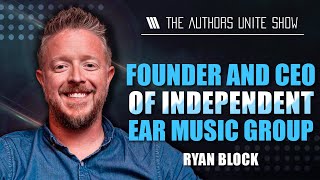
In this episode of The Authors Unite Show, host Tyler Wagner interviews Ryan Block, founder and CEO of Independent Ear Music Group. Block outlines his multi‑hyphenate business portfolio—including Independent Ear (a full‑service music label), Imprint Evolution (a label‑development service), We The Collective (a human‑first digital agency), and Catalyst Coaching (personal and brand coaching). He explains how he manages these ventures from home using tools like Trello, Slack, and Basecamp, and emphasizes a minimalist, relationship‑focused approach to business. Block shares his personal backstory: growing up in Rockford, Illinois, battling mental illness and suicide attempts in his teens, discovering punk rock, and eventually launching his first label at age 27. He critiques the music industry as broken and overly commodified, arguing that artists are “superheroes” whose art should be protected. Block discusses his legacy goals—raising his three children, creating lasting impact, and reshaping industry systems. He also reveals a mental‑health technology concept that would use voice and location data to deliver immediate, localized crisis resources, tying it to his podcast The Open Heart Collective and his advocacy with Hope for the Day. Throughout, Block stresses authenticity over social‑media metrics, the importance of partnerships, and a daily mantra of happiness, fun, work, and breathing.
Chapters
All right everyone, welcome back to another episode of the Authors Unite show. Uh, today we got Ryan Block with us. I'm going to give you a little introduction. Um, so the Influence Hustle magazine calls him a serial entrepreneur who prioritizes originality, and Disrupt magazine makes him a man able to create a business from scratch. But what both magazines have in common is highlighting his passion and him following his dreams until they come true. So welcome to the show, man.
Damn, I like that introduction, Tyler. Thanks for having me, man.
Yeah, that's a good intro right there. Pumped to have you.
I might like that. It's too long to make like my Instagram bio, but I kind of like it.
That would be sick. You have the biggest Instagram ever.
I'm gonna write them and say I want like 400 characters for my bio. Make it happen. They'll ignore me for 6 months. It'll be fine. And then they'll respond with, your update has not been processed. Thank you very much. Thanks, bro. And kindly, yeah. Fuck off. I didn't know if we could curse, and I forgot to ask again before we start the show.
Yeah, you can curse.
All right, fine.
Yeah, yeah.
Don't tell me to fuck off, but yeah.
Yeah, there we go. See, now the door's open. All right, so let's start from when you were younger Well, oh God, let's start here actually. Tell us about Independent Ear, which is your current business, and one of them—
one—
okay, so yeah, tell us about all the businesses, and then I want to know like how you got to this point.
All right, so currently, uh, I am the founder and CEO of Independent Ear Music Group. Uh, we are a multi-hyphenate music company, meaning we do everything from traditional label services to artist management development, as well as publishing and sync Sync Admin. And then over and above that, we added a new thing in the, the kind of the rebrand and progression of the company at the start of 2020, which was what we call Imprint Evolution, which is where we work with not only our artists under the label, but we also work with other labels who are looking to make a step in the right direction in doing the business the right way. Over and above that, I run a company called We The Collective. We're a human-first digital agency. Currently we have clients from fashion to cannabis and kind of a couple different places in between. Uh, over and above that, I do coaching and consulting, what I call catalyst coaching, uh, where it's somebody, an individual or a brand leader who has a concept or who's looking to elevate their brand beyond where they currently are, but are running into roadblocks along the way. I am also the host of a podcast called the Open Heart Collective, which in the coming weeks, from the time of this being recorded, will be making its reappearance because it's been on hiatus for the past couple months. And then, yeah, I also do marketing and media development for a 9-clinic podiatric practice here in Northern Illinois because I like to be busy.
Yeah, I can tell. So wait, how do you manage it all? Like, where's— you have a lot of energy.
I work from home.
Okay.
Yeah. I don't have to drive. It's all here. So, and honestly, all of it's the same thing.
Okay.
Right. We're all talking about how to really, it's business, right? And I feel business is easy. Us as humans complicate it because all business is and all business should be is giving value and receiving value. We add emotion, we add contract, we add all of those other things that muddy it up. Expectation. But really at the core of what business is, it's doing something and then getting something in return. So I try to bring it down to the lowest common denominator, which is that. And then I have a wonderful team on the label. I have a wonderful team at the agency. So I mean, I have finally a good group of people around me that are supportive of the journey and are kind of on the climb alongside.
Gotcha. So are you kind of like— so yeah, for me, I like to simplify everything. I'm very minimalistic. So like literally like a couple pairs of pants, 5 t-shirts.
No, I'm the closet full.
Really?
Yeah.
Are you? Dude, I respect that. See, I can't. It's too much thought. Like I just wear the same thing almost.
Well, and then top it off, I'm a father of 3, aspiring athlete.
You didn't say that. That's great.
I said podcast host too, right?
Yeah, you did.
Yeah. So I, yeah, I just don't know how to stop.
Well, I actually think that's good. I mean, when the momentum's going, I mean, why would you want to? My only thing, and obviously you haven't figured out, my only thing would be like maybe your eggs are too scattered, right? So like how, how are they scattered if they're in my house? No, no. So I mean, how is it managed is what I'm asking.
Very delicately, and it's taken a long time to get here.
Yeah, that's what I mean.
I mean, it, it, this is not something that I would recommend to everybody, honestly, because it— to— but, uh, and, and to kind of go back to what we were talking about before we hit record. Yeah, you said the book Think and Grow Rich, right? Yeah, they— every one of those key people, right? Robert Kiyosaki, Warren Buffett, all of those big money people, right? Even all the big entrepreneurs, Elon Musk, people that I look up to and idolize to a degree, all say you need to have multiple streams of income in order to become a millionaire. So why the fuck would I ever wanna have just one?
I agree, yeah, yeah.
So, I mean, the music company, we're in the midst of going after our Series A right now. The, um, the agency is growing, but it's— I also don't take on too much, right? We don't have 20,000 clients. Yeah, right. We have a manageable group that we can do with the team because we want to prove success and effectiveness, and then we can take on more because guess what? Those clients pay us more money.
Definitely. So is there like— do you use a certain type of like project? Like, what are your systems like behind the scenes? I'm curious.
Trello and Slack.
All right, yeah, I use Slack. Have you ever used Basecamp before?
My PR people use Basecamp, so I've had to use Basecamp.
Oh man, yo, I'm telling you, they probably—
I mean, I use Basecamp back when it was Basecamp 1. Okay, now it's Basecamp 3, so that tells you how long. I've also used Asana, um, I just have grown preferential of Trello. Gotcha. Um, it just works best for everybody involved.
Gotcha, that makes sense.
Yeah.
Um, so yeah, let's, let's go back now a second.
So when I rewind—
all right, well, when you were younger, did you think that this is what you know? Okay. Yeah, so tell us a little like that.
So to put it in the perspective, I'm 36 years old, so I'm not, as, as my grandmother would say, I'm not a spring chicken. Um, I don't know what makes them spring chickens younger than fall chickens, but, um, anyways, uh So I actually didn't start my quote-unquote entrepreneurship, entrepreneurial journey until I was 27. And really it didn't kick off until about 34. So put shit into perspective. But no, I grew up in the Midwest, born and raised in Rockford, Illinois. At the age of 13, my whole life changed when my parents got divorced. I struggled between the ages of 13 and 18 pretty heavily with mental illness. Attempted to take my own life 4 times. Thankfully, none of them I succeeded. Yeah. And then, you know, got passionate. I was always passionate about music. Music was just like always somewhere in the background. And I remember at a very young age being excited about not just the artists, not just the people who are creating the music, but also the people behind the music, right? Because the people behind the artists, that silent force you never really see, but they're on the liner notes somewhere, right? And, uh, so from there, that led me into playing a little bit of music because my grandparents always played. My dad mumbled, sang in the church choir, so therefore I started singing. Glad I stopped, although I kind of wish I would start back up again. That's a whole other story, but, um, and one we unfortunately don't have time for today, maybe another time. Uh, but, uh, from there we ended up going through and, um, became a punk rock kid. So I, I was raised very religious, you know, very, very proper Pentecostal. And, uh, or evangelical. Sorry, misrepresented my prior faith. But anyways, so, and then, and then I found punk rock music and I was like, my people. Yeah, so I instantly like changed how I dress. I started going like mohawk, dyeing my hair color, like my hair black, fingernails, you know, because that was really cool in like 2000, 2002.
Nice.
Until my dad slapped the shit out of me one day for doing that, and then I went to blue.
Yeah, my dad would never have gone for that.
And I went, and like, he didn't like black-sided blue, he liked some like sparkle pearl finish just to piss him off. But no, and then I found punk rock music, and then I started managing some bands that were like, you know, the basement punk, but the basement punk that never really leave their basement unless it's to go to play somebody else's basement. Type of punk. Everybody knows, they're like, "Uh-huh, I know that person." So then I did music between about 17 to 19 and managed a couple bands that again, I don't know what, is it really band management at that point? It's more like band corralling at that point. You gotta like make sure that they don't like do too many lines of coke or smoke too much weed. That's fine. I didn't do coke, did a little bit of weed, just being honest. But anyways, then we— What's that?
We accept everybody on this show.
Good, because it's legal here in Illinois now, so it's technically not a crime. Fuck. Anyways, so beyond that, you know, then I met a girl and then I had to become an adult, right? No, and then I— and then out of nowhere, but out of my charismatic ability, I landed a job as an investment advisor representative. Well, technically it was a financial services professional at first. I earned that other accreditation, but, um, and one of my colleagues at the time, like the whitest white-collar dude you can imagine, I would put toe to toe with anybody in the game in the hip-hop space, and I would be confident. He was that good. So I had known him for a couple years by this point in time, and we were coming back from meeting with a client one day, and he's like, I wanna show you some of this new stuff that I'm working on. I'm like, well, I've literally loved everything else you shared with me. He did this really cool version of, I'm blanking on the name, Really popular Nirvana song.
Come As You Are.
I'm blanking. I'm looking this shit up now.
Yeah, look it up. This is raw.
This is, um, yeah, I'm literally typing it up right now.
Nevermind, or is that— No, it was, it was, um, I used to listen to them a lot when I was younger.
Forward. There we go. Um, Heart-Shaped Box.
Oh yeah, dude, great.
And I loved it. And then he showed me— and then I was like— and then he did this really cool version of Where the Sidewalk Ends, the poem. Um, anyways, all great stuff. And then we're— so we're coming back from this meeting, and I remember this like it was yesterday. It was early spring, right? We were coming— we had his 2007 Chevy Impala, was blue. You know, the boxy ones, but they're still kind of cool because it's an Impala. And he's got this beat from this producer that he worked with over in the UK, and he had his lyrics on a notepad pretty similar to this one. Draw my pen. And so then he flips on the beat and he starts spitting the verses and does the whole song, and something inside of me just went click. And I looked at him and I said, I don't know what I need to do to become a part of whatever the hell it is that you're doing, but I'm going to figure it out. And then I walked into his office about a week later because he was one of those cool kids, you know, that had the corner offices, and I was the cool kid that was just outside of his door in the cubicle. Um, honesty, um, I never claimed to have one of those offices. I didn't want one of those offices. But anyways, and I shut the door behind me. I said, "I figured it out." Like, "The hell did you figure out?" I said, "Remember in your car, we were talking about the thing with the thing?" And he's like, "Yeah." I'm like, "I'm gonna start a record label." And then there was a brief second of silence followed by moments of laughter because the concept of starting a record label in a city like Rockford, Illinois, that's primarily known for manufacturing like screws, Aerospace, the Rockford Peaches, and Cheap Trick, right? They're not really known for music production companies. And the fact that I knew absolutely nothing about the industry, it was laughable. And I had no money, right? Broke kid, just, I was 27, 26, 27 at the time. Like didn't have it, like young family, I just didn't have it. But I'm like, I know two things. I mean, I knew a lot more than that, but about this specific thing in this specific moment, it was two. Number one is that the music business was fucked up. It's flawed, it's broken. You have artists suing artists, you have labels suing artists, you have labels suing labels, you have publishers suing publishers, you have artists suing publishers, you have DJs suing artists. Like, everybody, there's no trust in the industry anymore. It's broken. And then I watched the movie Architect, which is the film about Jared Leto's band 30 Seconds to Mars. Okay. And I'm like, it's really broken. And second to that was the fact that relationships had the power and potential to change the world. So I figured that maybe, just maybe, if I could create these world-altering, life-changing relationships, that somehow, some way, I'd be able to create a dent or an impact or a shift in an otherwise broken industry. And that was May 11, 2011. And now Independent Ear is now known as Independent Ear Music Group. All new corporate structure, all new people, new artists, new music, new production staff. Literally everything's new in 2020. We scrapped it all. We said the date is cool, I like the history that we can tie it to, but all of it was just training grounds for where we are now.
So where would you say Well, first I just want to harp on that for a second, because that's literally how I built my entire business— relationships. That's how everything— that was the vision. I, like, before I dropped out of school, one of the biggest decisions I ever made at the time. And the reason I was able to do it with confidence is because I knew by building relationships, somehow something would work out. I had no idea what I was going to do. Like, I didn't know I'd be running—
I always knew I wanted to be a builder. I didn't know what I was going to build.
Yeah, okay. So are you more of a builder, like actually building the products, or like kind of biz dev, like more—
I, I'm the man behind the screen. I'm the person that you really don't see.
Interesting. I would think you're like the people person.
Well, I am. Okay, but I also live life as an iceberg. Okay, right. Yeah, I— at any given time, you're only going to see about 10 to 20% of what I've actually got going on.
Okay, so wait, what you told us is only 10 to 20%. No, tell us 30%. I want to hear—
well, I mean, it's all of those things, but it's expanding on those things, right? So it's certain relationships that in certain places where my companies are at, where my brands are at, like that we're elevating beyond where they are. So for, for me, it's— I live as an iceberg because I'm not the one that needs to be seen.
For sure.
Yeah, right. That's why I'm not a big pariah on social media. Yeah, I could give a rat's ass if anybody likes any of my content.
Yeah, I'm similar to you there.
Yeah, and this is why I learned a very hard lesson a couple years ago. I spent all of this time, I know, like watching and listening to Gary Vee because like, oh yeah, I like Gary.
I do like Gary.
I like Gary, but he's kind of a dick. And trust me, I hope he hears this, that him and I can have a conversation about how much of a dick I think he is. Um, and I, and I say that with no disrespect, like I respect the hell out of what he's done, but he says the same shit all the time. He just changes the fucking background. And I connected to all of these top people on LinkedIn, a lot of top people on Instagram, And I hear from everybody saying they're tired of saying and doing and seeing the same shit, but guess what? They don't ever change. So what I did is like when he started vlogging, I started vlogging. I did 171 episodes of a vlog from my phone. You know, I'd set it up, I'd be in a meeting, be like, hold up. All right, go. Yeah, for what? 30 seconds of something that's gonna mean fuck-all to anybody else but other than people in the room. Yeah, that's not how it's supposed to be. So I dropped my vlog. I've done 171 episodes. I called it The Daily Block. Original, I know.
Yes.
Yeah, I'm putting myself on blast, right? Like, I followed that. I drank the Kool-Aid. I never drank the Tai Lopez Kool-Aid other than the fact that I don't have to read a book from COVID to cover. I can read a book for how I need it to be. Um, but I spent so much time emulating that shit.
Yeah.
And then I'm like, I need to be talking all this. I'm like, no, my audience is not the people in the comments section. My audience is the people who are the practitioners and out there doing shit. Which means they don't have time to be on their phone scrolling and hitting the button. They do it at 1 o'clock in the morning when their kids are asleep and their wife is passed out next to them. Yeah, they don't do it throughout the course of the day because they're too busy actually out there doing the thing that they say they're going to do. Those are the people that I talk to. Those are the people that I echo when I say I see you.
Yeah, I like that. That makes a lot of sense.
And it's fine. I could get 50 posts or likes, I could get 5,000, I could get 1, doesn't matter. And I'm the first person that will say that and actually fucking mean it. Yeah, because how many people be like, oh yeah, it doesn't really matter, and then you hear them at the bar or you hear them at Starbucks and like, fuck, I only got 2 likes on that photo archive.
Yeah, there's a lot of people like that. It's unfortunate.
Well, it's true.
Yeah, yeah, I like what you're saying. So I think there's two sides, right? So it's like some people, right, with their vlog, they actually end up becoming huge with their vlog, you know, and that's like their main thing maybe. But because I, I'm similar to you, like I tried all these things and then I just— what I realized is as simple as this: we service authors. There's other companies that service authors. Why don't I build relationships with the founders of all those other companies? And we work together. I barely post on social anymore. I did over 2,000 posts on Instagram and 13,000 followers, maybe got 3 clients over 8 years.
Like, no, I've gotten a lot of clients.
Oh, happy.
I've been about that.
I get from partnerships. That's where I get all my clients. I don't like—
I mean, I get clients because I'm authentic with people. Okay, what you see is what you get.
There's—
I mean, literally, this is the basement of my house.
It's a nice basement though.
I mean, this is a room I built. Yeah, my father-in-law and I built like this. This is not like, oh, some like, but like, no, this is literally my house. I can literally go upstairs and hug my kids. They could probably come down at any minute and go on my door. They won't because they know I'm working. Yeah, but, um, I mean, but that's the— it It's not anything complicated. As we talked about before, business is not complicated. We as the humans are the ones that complicate it. Yeah.
No, I completely, I couldn't agree more. So is your main passion, the main passion really stemmed from music? And then once the record label was built, that was, was that, that was your first business you built?
That was.
Yeah.
And then from there you kind of figured like, I guess that was kind of, well, Back when I was in finance, I was doing a lot of marketing even then.
Did you like that job or no?
I, let me say this emphatically and correctly.
Okay.
I love the job and my clients. I utterly despised the organization I did it for because they were doing it wrong. Okay. And I will put them on blast, MetLife.
Yeah, what were they doing wrong?
No, so this is the thing, right? In finance, Like a lot of other companies, right? They feed and they give all the stuff to the top producers, failing to realize that the top producers have a shelf life, right? So you're a top producer, you get all the best leads, you get all the best things, you go on the vacations, you do the things. But what happens when your ass dies or moves on. What happens to everybody that you service? They go, and they go into the cycle of having to deal with all this shit, right? So they didn't do that part right. They didn't train effectively. And I was left to fend for myself. Now, thankfully I'm a bit charismatic and I was able to rate, or I was able to generate. I think when I left and in the 4 years I was there, I built about a $15 million book of business in 4 years. Off of shit leads and a lot of hustle. Yeah, right. But it's all of those mistakes, all of those shitty jobs that I've had, because I've never been the person that's, oh man, I've had like out of, out of, out of like— hold on.
No, you're good.
My lawn's getting mowed.
All good.
Edit, clip, hold on. Sorry, my lawn was getting mowed, so I, I felt though I heard the lawnmower getting closer and I didn't really want it to interfere with the audio, so I just shut my office window. See, home. Yeah. Um, anyways, um, but no, so it's—
no, wait, you were talking about MetLife. Sorry, I blanked out there too.
No, you're good. Uh, so with MetLife, it was— I loved my clients. I still get clients that call, former clients that call me. 'What do you think about this?' I'm like, 'You realize I've been gone for 9 years now.' Yeah, they still on occasion call. It's not all the time, it's not very often, but it happens, um, because relationships are the key, right? Um, but at that time, social media was not a usable thing inside of the financial industry, right? Because you had FINRA, like FINRA and the SEC say tell you what you can and cannot say in written and digital publication, right? And everything, you have a whole backlog of things that you can put out there as appearing to be like what you can say, but everything's been scripted and written by somebody in corporate. So I was a part of a beta test group that, and I'll never get the credit for this, but it's gonna be in the byline of my inevitable book, that actually was the testing group for social media in developing business relationships? So I've been on Facebook since 2009, Instagram since they were a journaling app. So even before they were the Instagram that Instagram is now, and LinkedIn since 2009. Gotcha. Yeah.
So this is kind of a big question here, but it's kind of— It's funny, a little bit. I like it because Gary Vee says this, so it's funny. So I feel like in your, your mind you kind of already have this, could be wrong, but do you— what type of legacy do you want to leave behind? Because I feel like you have like a very clear north star of impact, and that is like a very driving force for you with all of these other things that are there, but there's one driving— sorry. What's the legacy?
My kids.
Gary Vee would say.
My kids.
Okay, so is that—
yeah, and not just them. I want them to see that no matter where they come from, no matter what's standing in front of them, no matter the obstacle, no matter the fear, no matter any of it, that they can go build it. It does— it, it's nothing more than that. It's not about vanity. It's not about, okay, I want, I want the Lambo, I want the jet, I want, I want I want all of that. It's like, I wanna leave something in this world that's bigger than me, that's bigger than any of the artists that I work with, that's bigger than any of my partners, that's bigger than any of it. I wanna, the impact is the legacy, right? The shift and the change and the inevitable, as you so described it, North Star, the inevitable end destination, Yeah, that's the legacy. That's the impact. Okay, it's changing it. It's forcing the systems in which we operate in to look at themselves and say, I'm fucking up. And right now, COVID was the best thing that's happened to my businesses. I've never been busier in any of my businesses. The label is doing well. Literally in January, we scrapped all of the artists. Burned off everybody's contracts, and we said, all right, we're doing it. You guys aren't doing it right. We're not making money. We looked at the hard facts and we said, we can't keep going like this because if we do it, we'll die. Yeah, I literally have been spent the last— since March, so 3 months— going back through 3 years of royalty statements: 2017, 2018, 2019, and literally sending back payments to every artist that I ever worked with in that time period. I'm literally the full amount, not taking a cent. Wow. Because we want to do it the right way. When I cement this legacy, I don't want this legacy to have marrings of like, oh, you didn't do this that one time, so fuck you. Yeah, literally, I— when I look back at this, I'm like, I did shit the right way. It took me 10 times longer than I wanted it to. Yeah, but I did it on my terms with my vision and the right team of people behind me. Not behind me, next to me.
Yeah, no, well, it's very long. I think that's the way to do it. So let me ask you that.
Yeah, go ahead.
No, so because this is what my initial gut reaction when people like 3 kids, right? I'm always like, wow, that must take a— but then the other side of me thinks I— by the way, I don't have any kids, so I don't know. But I feel like once I do have kids, I'll actually— Yeah, I feel like I'll work harder. Like, like I will, maybe I'll have less time because I want to be with my kids, but the time I am spending working will be—
You won't be distracted.
Yeah, dude.
Cause there's like, no, like you have no other choice.
Yeah. I feel like it's actually a big game changer for people's businesses, like in a good way. And most people think it's like, oh, I don't have time for kids. It's like, no, Kids will make you—
because for the first time ever, you have to think about somebody besides you.
Yeah. Mm-hmm.
It's, it's scary.
Yeah.
But I know that the work that I'm doing and the fight that I'm fighting— because I haven't even told you my crazy idea yet.
What is it?
It gets bigger and crazier, trust me. So like, the music industry is cool. Like, my, my north star is even more than that. My guiding force is even more than that. So, um, but yeah, it, it— they changed the whole game. Yeah, you're not truly a business person until you do business and you have kids.
Yeah, I get— hey, I'm good with that.
This guy, like, I, I— and I'm saying that because the minute that you do that, when the minute that you hold your little one for the first time your mind shifts. Yeah, you start looking and acting in an entirely different capacity because before you were acting self— selfishly. Yeah, not necessarily all the time, and I know there's a lot of selfless people that don't have to— or all that, I get it. And I'm probably putting a whole bunch of people on blast and I'm fine with it. Um, but then you start looking at your relationships differently, your interpersonal relationships to your business relationships to your fam— Everything is looked at under a different microscope.
Yeah.
And then you all of a sudden put yourself— you take yourself out of the equation because you're not the person that's in the equation. You're the one doing the math.
Yeah, that makes sense. Yeah, this guy— have you ever heard of Jordan Peterson? Yeah, he says you're not actually an adult until you have kids. That's what he says.
You're not.
Yeah, and he says a lot of times people who think— because when you're younger, a lot of people think they don't want to have kids, and he's like, that's one of the biggest mistakes you could ever make.
He's like, I love my kids, man.
Yeah, when you're older, you'll— I mean, yeah, I'm sure there's ups and downs here and there, but overall, great thing to do.
I mean, it, it's the best job that I could ever have. Yeah, and I— that's taking it from somebody who literally, I love everything that I do. Yeah, all of it. Even the shit of the businesses and running everything. Like, I love it.
Even sending back the world. Like, I—
yeah, no, like, that has been such a cathartic experience. Yeah, that I'm like, holy shit, why didn't I do this a year ago? Now, there were extenuating circumstances as to why I couldn't and all that kind of stuff, and, and now it's different because Like I was able to get access to information I couldn't have before. It was a whole, it was a whole big thing that other people's impediments were impeding my process, if that makes sense. Like I wanted to do it, but I didn't get access to the information that allowed me to do it effectively.
Yeah, so what's like the typical, uh, I do like to ask this. Yeah, because you do have a lot. So morning routine, do you have one or is it just get the, you you know, get to work?
I mean, I wanna say that I do, but I'd be a bit of a liar if I said that. I really, it kind of literally depends on the day. Like I don't get up at 5 o'clock in the morning, I'm not that kind of insane because like I don't go to bed until 2. So like it's hard to get up at 5 when you go to bed at 2 and have sleep because I'm a 36-year-old man, all right? I know my limitations. Like, I'm not 25 anymore and I can't go running around like I used to. Yeah, because I used to do that. I used to work until 2 o'clock in the morning and then wake up at 6 and be good to go. Not all the time anymore. I try— I value sleep a lot.
Yeah, but yeah, yeah, it's— is your, is your like week like very structured, meaning like, like I'm gonna spend this amount with my kids, or is it more kind of like Freedom in it, you know what I mean? Because it's a lot of freedom.
I try, I try to live by the schedule. Like, I've got calls and regular things that occur on a weekly and daily basis, but other than that, not really.
Gotcha.
Okay, it kind of depends because, because of the status of my world, I have to remain a certain level of fluid. Yeah, I can't be so between the 9 and the 5 and, and the line and the line, you know what I mean? Like, I can't sit on a grid. Because everything, everything could change and shift. The worlds that I live in, the clients that I serve, the people that I work with, all are dynamic individuals. Nothing ever remains static. So it's not the same time every day, it's not the same going to bed every time. It's literally so dynamic that it could change in the minute. Gotcha.
So, um, you said earlier too, one of the things you do, Catalyst Coach, I believe is what you called it. So can you speak on, like, you know, just based on the name, I think I kind of know what you do, but probably not fully at all. So the, like, a client experience, like, so somebody, maybe you can't name their name, but they came to you, maybe they were lost, and then through your, like, Catalyst coaching, they were able to come to the other side.
So it's typically a person who feels stuck. Maybe their business is going well, but could be better, or maybe they're a brand who's trying to shift their offerings and is running into trouble in effectively flipping it over, right? Catalyst. They're the key, they're the engine, I'm just the person that starts it. So I've done it for the music world. I do coaching and development with music, with musicians. I do it with entrepreneurs and other brand leaders. I've done it with other speakers, other podcast hosts, everything from insurance and kinesiology to energy work. I mean, it's basically if you're trying to do the same thing but feel like you're kind of going insane but want to step more, it's just that honest introspective look. I'm that guy that goes through and talks an hour a week with you and says, all right, this is what we do. This is what we can go through. These are the— what are the 5 things that you want to accomplish in this initial round? Let's make sure we accomplish those and hold each other accountable to the shit we got to do and go do it. Yeah, it's not some big emphatic program that like— it's not that because everybody's unique. You're not talking to the same person all the time.
Is it kind of about like asking the right questions to them? So it's kind of like they're solving their own problems, but you're asking the right questions.
That's a part of it.
Okay.
Um, because while that is a part of it, it's not the only picture. It's not the only part of the picture.
Got it. Okay.
Because everybody's in different circumstances. Like, I've got a client right now who's in the— who's in the insurance and financial services space, but he's also a kinesiologist. He does a lot of sports medicine and, and like that sort of thing. But he, um, he's trying to be both. He's trying to, okay, bring financial literacy into sports, bring financial literacy into the Black community, bring all these types of things. So his real pivotal thing, pivotal core functions that he was looking at was, okay, getting more effective as a leader in development, personal development into like solidifying who he is, because oftentimes the answer to the question is right in front of you, you're just failing to look at it that way. So I'm basically the optometrist Yeah, I like that, right? Like you're seeing it, but it's just a little hazy. You're stepping in the right direction, but because it's hazy, you're tripping, right? It's like, okay, 1 or 2, 2 or 3. It's that same stuff. It's a lot of fine-tuning. So it's like, I'll bring it back to music. It's like, all right, you've recorded your demo, you've brought it through I'm the mixing and mastering engineer. So, I'm the one that takes it and turns the knobs and the buttons and then says, all right, this is what you do now. Yeah, I gotcha.
So, I'm curious on this too. You said earlier the music industry is just full of kind of shit and suing and everything. How do you think, like, how did it become that way? Like, is the core structure of the business—
The business lost sight of the art. Okay, right. So if your product is an artist who creates the music and you care so much about your bottom line that you fail to see the artist in the equation, and then you control that creative— yeah, it doesn't work, right? So, and I've said this a lot in, in interviews and such, that I truly believe that musicians are the real superheroes of the world. Because they do something that 99% of the world can't, won't, or is too afraid to. They actually be themselves. They bleed who they are. They're honestly vulnerable in every moment. The true ones are. And that's something that none of us can do or won't or too afraid to because we've been programmed to think that, right? So a musician who writes his own music or her own music or their own music, Right. And then can perform that music and then can emphatically be who they are. Man, talk about being in the presence of somebody who's immensely powerful.
Yeah.
Right. Like, like that's sitting across the table from Sadhguru level of power. Yeah. Don't know it because we've been programmed to think about music as a commodity. When music is not a commodity, because a commodity also automatically attributes a certain level of financial value to it, and music is invaluable. Like, you cannot measure its power, right? How old are you, Tyler Wagner Wagner?
I'm 28.
28. You know, you'll kind of remember this. So I like to say that music causes time travel. Yeah, right, because we, we all remember the, the moment when we're that that awkward teenager that we're in the car with a person of the opposite sex and we're like, and we know that moment's coming when that first kiss happens, you know, and it's the first one ever. So we're always nervous and anxious and then like your heart's going, your palms are sweaty. And then like maybe your voice cracks a little bit because at least in us men, and then the song comes on that gives you or gives that other person the amount of internal courage that they needed to make that move. Right?
Yeah.
And then the moment is gone. Yeah, right. You break up, you go on, you grow up, they grow up, you move out of town, you— they go to one college, you go to a different college, they may unfortunately pass away, you may— like, whatever the reason.
Yeah, right.
But the moment comes and the moment leaves. But then 10 years later, all of a sudden you're listening to Spotify on your way to a meeting and that song comes on a playlist. You're not expecting it because you're listening to your daily drive playlist and all of a sudden it pops up. Or you're listening to the radio and the song pops up. All of a sudden your palms start to get sweaty, right? Heart starts going— And then your voice cracks when you're on the phone. And you're like, the fuck happened there? Right? That's called time travel, my friend. And that's the— music is the only art form that can do that because it attaches to you on a metaphysical level, something even beyond what we can think, smell, taste, touch, feel. That's what music does. That's what real artistry does. And that's why my job in that space is to protect them and grow them. Right, if we're wanting to wrap this up with the superhero, I'm the Professor X. Yeah, my team is the Professor X.
No, that's amazing.
I want you to see your power because when you can stand fully in it, there's nobody that can stand in your way. Not the industry, not Spotify's algorithms, nothing. And then all of the shit that everybody around you tells you that matters becomes just static in the background somewhere.
Yeah.
Are you ready for my crazy idea? Yeah.
Yeah, dude. That's—
that was— and I don't want to leave this on a cliffhanger, but I— but I— and I know you, you have to go in, in a matter of minutes, and as do I. Um, so as I mentioned, I'm a big mental health advocate, right? I run a podcast on the subject of mental health called The Open Heart Collective. My life's work is to end suicide. And I know how I'm going to do it. I have the plan. I have the technology concept. I've done some of the research and what I've talked about and what I'm planning on doesn't exist because those who are suffering with mental illness, let's say depression, and let's say you're in a major metropolitan area like Chicago or Miami and you type in I'm depressed and you get back 8 million or more search results. Guess what? When you're in a moment of crisis, you're not going to take action because the baseline of what you're dealing with is anxiety and 8 million choices is too many. So what if a technology existed that depending on what you were struggling with and where you are, where you were in the world, I provided you a list of 3 that you could call, message, or go to where they fucking are. Yeah. So when I was talking to a film television producer last year, he's like, all right, great. Make it bigger. I said, okay, well, what if I had it on? So every time I said, hey Alexa, and my Alexa lights up over here, that it started to track my vocal patterns, my speech, what I was searching for so that it could actually intervene ahead of a moment of crisis. Wow.
That's wild. Yeah. No, that's true too. The first thing you said too, I, I have not personally experienced that, but I can imagine that, especially with anxiety, you're not going to be looking through like 1,000 pages. That'll make your anxiety worse. That's—
and then, and then I know things like the number that Logic raps about, right? The suicide hotline, the mental illness hotline, all of those things are staffed by volunteers. Who they themselves are probably suffering with some level of mental illness because mental illness affects 3 out of 4 people, which honestly means it affects 4 out of 4 people because you may not be the person affected by it, but you know somebody who is, so you're indirectly affected. And mental health falls on a spectrum. I'm grateful to be a part of an organization called Hope for the Day that provides free mental health education. They're an amazing organization based here in Chicago, founded by Johnny, a guy by the name of Johnny Boucher. I always butcher his last name. It's B-L-U-C-H-E-R. I butcher it, so I apologize, Johnny, but I got connected to it through a colleague of mine named Joel, and it's just, it's an amazingly emphatic organization who does nothing but care and want to help. And yeah.
No, that's awesome, dude. Thanks. Our last thing, floor is yours. Anything you want to share? I don't know, webs, whatever you want.
So just Google Philip with two L's Ryan Block. I'm everywhere you can find me. On Instagram, Philip Ryan Block. Facebook, Philip Ryan Block. LinkedIn, Philip Ryan Block. Independent Your Music Group, We The Collective, all you can find. I can— you have the links, I believe you can probably just share them. But the thing that I want to leave you guys with, and this is something that I say in my own content a lot, It's kind of a multi-part thing, so bear with me, but it's my little mantra and I hope it can help you. Number 1 is to find happiness in every day, in every way, on your terms, right? Because you can't find happiness and you can't be happy in what you're doing, you're doing it wrong. Number 2 is have fun because again, life's too fucking short. If you wake up angry and you go to sleep angry, you're doing it wrong. Laugh. Even if it's at yourself, laugh. And thirdly, work, because anything and everything that's worth it in life takes a blood, sweat, and tears level of effort. And this has been a constant reminder for myself over the years, is to breathe. Even if you just say that word once a day, breathe, it does that really cool thing where it forces you to do the thing that you're saying. Yeah, um, yeah, that's it. That's all I got.
Awesome, man. Dude, thanks for coming on the show.
Thanks for having me, brother. I truly appreciate it.
More from Tyler


Catherine Nikkel : THE STORY EVERYONE HAS BUT HASN'T TOLD : The Tyler Wagner Show #1120



Scott Ritzheimer: Bring Predictable Success to your Organization | The Tyler Wagner Show #1115


Fred Moskowitz: A GUIDE TO GETTING STARTED WITH IN MORTGAGE NOTES | The Tyler Wagner Show #1113

Mark Podolsky: From Land Investor to Full Time Success How I Made $90,000 Cash in Real Estate


Mark Podolsky: How to achieve a 300% return on investment my foolproof strategy

Mark Podolsky: How to make passive income selling raw land the irresistible pricing strategy