Frank Bria: A Serial Entrepreneur And Analysis Junkie | The Authors Unite Show #939
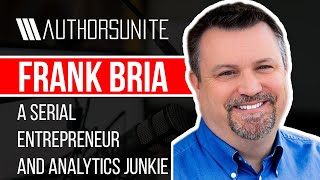
Frank Bria, a serial entrepreneur, explains how he transformed his consulting practice from travel-heavy to scalable by creating five modular service blocks: virtual training, masterminds, group coaching, done-for-you services, and live events. He shares how Kate Chiffey Gray's $11,000 program scaled to $2 million annually and stresses pricing around outcomes, not hours.
Chapters
All right, everyone, welcome back to another episode of the Authors Unite show. Today we have Frank Brea with us. So welcome to the show, man.
Hey, thanks, Tyler. Really appreciate you having me on.
Of course. Grateful to have you here. So can you kick us off and tell us a little bit more about you and what you do?
Yeah, absolutely. So I like to call myself a recovering consultant. I guess if there was a 12-step program for consultants, I would run one, I guess. You know, I started my career out in high-tech, did a couple of startups. We crashed a few, we sold a few. That's how that goes there. Yeah, yeah. But on the back end of that, I started a consulting career, got to know a lot of companies, and they, you brought me in to help out. And it took off. I was flying all over the world. I was the, hey, Frank, we need you in Johannesburg in 3 days guy.
Nice.
And it sounded amazing. I mean, it was amazing at the beginning, right? Like, it's what everyone sort of expects you would get when you do one of those. Yeah. If you start a consulting career. But it's got downsides, you know, you get exhausted. It's it's all about you. You know, if you take a break, the billings stop. You know, if you start to think about, yeah, I'm not really spending a lot of time with my family, that kind of stuff. And so, you know, a couple of things happened, which I was a slow learner, I guess. A couple of things happened which kind of got me to a place where it's like, you know, this probably isn't really what you thought you were creating. One time I was in Kiev and people had flown in. Actually, it was that same weekend that the Super Bowl had the power outage.
Okay. Yeah.
Remember that? So I was actually watching the Super Bowl at like 3 o'clock in the morning in Kiev. And like the power goes out and I don't know if it's me in Ukraine or if it's the whole world. Anyway, but so the next morning I had one of those meetings where, you know, everyone's flying in to hear me talk. And I get, like, as the meeting starts, I get this text message that, like, a member of my family has, like, driven themselves to the hospital and is going to have emergency surgery. And oh, by the way, there's no one home watching my kids. They're older, you know, they're not totally by themselves, but they had to get to school and feed themselves. And it clearly was going to go on for a couple of days. And so, you know, I had to do, like, the unthinkable, the thing you would never expect to do, is you stand up in a meeting and you go, I'm sorry, everybody, like, I have to leave. I have to get to the airport, like, right now. Cancel the meeting, you know. So, as you'd imagine, there's not a direct flight from Kiev to Phoenix.
Yeah, yeah.
So, it's like 3, you know, 3 days. It was like 36 hours of flying to, like, connect emergency back. And you get a lot of time to think about your choices. And I just realized that I had created for myself a job like this, and like the worst job ever, you know, with like no vacation days and like, and this wasn't a business, and if I were to get sick or injured or whatever, like it was gone. And so, I decided, hey, I gotta fix this. And so, like, after things kind of got stabilized, you know, with medical stuff, I like sent a note to all my clients that I'm like, I'm not going to be traveling anymore. Half of them dropped like instantly, you know. And so then I'm like, well, I got to build something online, right? So I guess I'll just watch all these gurus talk about how to build an online business, you know. And so I start selling PDFs for like $300 and the other half of my clients drop because they're like, what is this? You know, you're this consultant who's charging, you know, several hundred thousand dollars for an engagement. Something you're online selling you know, whatever. And clearly I was not aligned, right, to my audience. So, um, there was a tough row. Like, some, like, clientless now, you guys start over again. And I had to basically relearn how to provide value to my clients that wasn't just me, you know, wasn't just my time. And, uh, and it took some thinking. But the stupid thing was, again, like I said, I'm a slow learner, um, uh, with— I had been teaching my clients this very thing because my job was to help these generally software companies and analytics firms build up their services practices so that they were productized, you know? So I'm like basically doing that for them. And for some reason, and I guess this happens to a lot of us, you kind of think, well, it doesn't really apply to me. Like, that's not really, you know, sure it works for them, but it's not gonna work for me. But I realized that no, actually that's the answer is to start productizing services. And so I worked through this process of changing over, you know, instead of me just saying, hey, let me just come out and do an assessment and I'll come on site and I'll spend a few days with you and then we'll figure it out. I turned it into, okay, so I'm actually going to be providing like a survey of the space and, and basically, you know, creating a report and subscription and doing kind of a a group assessment for a number of these different analytics executives and tell them, okay, here's where you need to position your product based on what we're getting from the marketplace. You know, we're talking to their clients and asking them what they want and then producing it back to them. And now suddenly I can work with them in groups and I don't have to fly to Kiev or Moscow or, you know, India or wherever it was. You know, we could do it that way. So That's really how it all started. And a number of consultants would start asking me like, hey, how did you pivot like that? And I realized that we had a process. And so we bundled it together and started working with clients over the last, I would say, 5 years. And basically all of that work has kind of come together in this book that I just published. Yeah, that's the long-winded version.
No, no, this is perfect. There's a lot to work with there. Um, see, let's unpack it because I mean, I think a lot of coaches, consultants, like, they go through pretty much the same thing I went through when I first started my business. And what I actually decided to do is I got rid of consulting like altogether, and I just switched to done-for-you and courses. So, you know, we have like lower-level courses and then we have high-level done-for-you services. And for us, that's been very like, it's able to scale, right, without many issues. Obviously, on the done-for-you, you have to keep hiring more people to scale that. The courses, a little bit with like support, not as much. But the consulting, I couldn't figure out how to like almost like duplicate myself, and I couldn't figure out how to kind of hone it in where it wasn't like— and I'm trying to say this correctly— where like when you tell somebody like, hey, you know, 24/7 support, like reach out anytime, and then, you know, you get people hitting you up, like, I was just like, okay, this isn't gonna work. Coaching does not work. So, either way, you figured the way that you currently do it, it's actually a scalable consulting is what I read. So, you didn't get rid of consulting, it's just a different format.
We redefined it. I mean, you know, because consulting for a lot of people just says, oh, well, I've gotta show up in person and like do the thing. But that's not what consulting is. Consulting is, you know, getting your client to their endpoint, getting them to wherever they need to go. So what, what I realized when I was working with my clients and so we ended up, you know, creating a framework out of it and teaching it to others is that there really are building blocks. It's— there are 5 scalable building blocks. And if you stick to those, You're good. And you mentioned two of them. So we talk about virtual training, masterminds, group coaching, done-for-you services, and live events and workshops. That's it. They're like Legos. You put them together any way you want, and however you build it, you end up with something that's scalable. So that's really what you have to think about. So when you're— what a lot of people get stuck on is when they start working with corporations, they think, I can't do that. I can't do, I can't do a course. I can't do coaching. Like, you can't do any of that with a corporation. And so, they think they have to like switch their market. But the thing is, is that that's not true. I mean, you know, certifications and courses are all over corporations. They do it all the time, you know. And when we think about coaching executives, like, you know, you think, oh, I can't get them in a group. They don't want to be in a group. That's not true. They want to be with their peers, actually. I ran a, what we call them like networking circles, basically. It's kind of like you put the same executive in a group with the, with other folks and you basically facilitate the dialogue between them because that's what they do, what they want to talk to each other. So for a while I ran a networking circle for CIOs of the top 50 banks in the world, and we would get like 20 people there, and they came twice a year. We basically didn't talk to them between the two times, but they paid $20 grand a year to participate in that each, you know, because they wanted to be with their peers. They wanted to see what other CIOs of banks were going to do, and they wanted someone who could facilitate that dialogue, you know. And so this is one of those misnomers. We think, well, if I'm going to do something high level or if I'm going to do something corporations, it doesn't work that way. Now, there's a ton of stuff you can do to be scalable and add that as a component to what, you know, you're already doing.
Yeah, I love that you said that because that's what, and maybe it was just my laziness, I don't know, it just came to me that I was just like, me doing this for my clients and getting them to their desired result without all, and there's some other things like, we do book publishing and book marketing stuff, so like, As you know, because you just did a book, some of the things with like publishing, like for us to publish a book for you, we need your login credentials for all, right? So, and there's security, there's just all these little things that you don't think of until you start to scale and you're like, oh my God, I have over 1,000 people's like Amazon passwords and every time my team needs to get in, they need to send text to secure. I was like, no, this is just ridiculous.
Yeah.
So, um, Either way though, totally get it. So, question for you is, and then I want to come back to the content of the book, but for the actual writing of the book, because a lot of our listeners, hence, you know, the Authors Unite Show, they're authors and aspiring authors. So, what was that process like for writing the book?
Well, in this particular case, this is my fourth book.
Oh, okay.
Gotcha. So, I took a little bit of a different approach with this one because I had a book published back in 2015 called Scale. It was an Amazon bestseller and it did really well. But one of the pieces of feedback that I got from it was that it was a bit theoretical, you know, it's a bit conceptual. So you'd read it and you're like, oh yeah, I don't know what to do now. So this time around, we really wanted to solve that problem. And so what I did literally is take the content of the premier program that we take people through. Obviously, I can't do the coaching in the book and I can't do any of that, but we took the content and broke it down and said, okay, so if we were gonna take this content and write it in a book, how would we do that? So we took, it was a combination of taking literal audio transcripts of the training and then filtering it through Okay, so what's actually going to work in a book versus, okay, that doesn't really— that format or that style or whatever, it doesn't really work on the page. It only works, you know, when you're talking. And so, you know, we went through a fairly exhaustive editing process with that, but the starting point were basically audio transcripts of training. And then we added, you know, what we needed to, because when we went through the editing process, we're like, okay, well, we're missing a gap there. And Yeah, you know, we didn't really like tie that together very well. So, you know, I wrote some additional sections, um, for that, but you know, we started with something really tactical.
Yeah, I love— and one thing I wanted to, um, to, to mention to you because I'm just such a simplistic guy, I love like the names of all your things. So like you have like, like your show is The Six to Seven Figure Show and then your program is High Ticket Program, your book is like I don't know, it's just like a thing I have. I just love when something just tells me exactly what it is because I feel like a lot of companies, they get so wrapped up in like this complex like name or something and it's just like, look, you know, if you are at 6 figures and you want to get to 7, listen to this show.
Well, and a lot of that again is like, you know, that's a sign of skin knees, you know what I mean? Like, it's like mistakes made because for a long time I was like, And I think a lot of people when they are entrepreneurs are like this, well, I don't wanna scare anyone away. Like, maybe you're a beginner, but that's cool. Like, let's talk. And what I realized is that my skill set and my, what I have to offer, you know, you have to be a little bit further along to kind of apply it. There's other things that, and there's other people who are really good at that, you know?
For sure.
And so, I tell people like, hey, if you don't quite know what you wanna be when you grow up, I'm not your guy. Like, I'm not a life coach. There's other people who are really good at that. And I think it's important to know, you know, what you can do and what you're probably not great at and, you know, focus in on it.
So, before, and then I want to get to the 6 to 7 figures stuff, but before that, you know, you were being flown out multiple 6 figures for engagements. Like, how did you discover or how did you get to that point? Like, what was prior to that for you?
Well, That came from my tech background. So, you know, when I started off in high-tech software and really the very first company I started was an analytics company. And so, my background's data. I like, I, you know, have a math degree. I'm a total geek nerd, you know? So, that's how I started. And so, the first couple of startups, were all analytics. And then, kind of the big one that where we knocked it out of the park was a software company where we sold analytics solutions in the retail banking space. So, it was financial services. And that, you know, we sold to SAP. It was a huge, like, 9-figure exit. It was great. And so, from there, you kind of get your name out there, and I was speaking at different conferences and things like that. And you know, at the end of that, you again, you just kind of get your name out there and people are like, hey, let's bring you in. And the problem is, is that that's really hard to replicate. It really is like it's because people are like, hey, Frank, how do I like forget your scalable stuff? I just want to like get to that first stage. It's really hard. I don't have a lot of really good things to offer around that. It's hard to replicate, which is why it's not my ideal starting point. Like, I don't think I would, if I were my own coach and went back to, you know, coach myself, I don't know that I would tell myself to go do that as a way to get started. It's kind of like dumb luck, you know?
Yeah, that's what— yeah. So, if you're okay with it, I'd love to dive, you know, because that's a big exit. And like, most people, you know, never get to the— and even, I forget all the percentages, but even 7 figures, a lot of people don't get to. So, a 9-figure exit, like, what was that like? I'm more asking, like, just as an experience. And then also, was it a little bit of luck involved, do you think? Or like, how did it—
it's all— I mean, at that level, it's always luck. I'll tell you kind of—
oh, that's cool—
some of the things that were behind it. So first of all, uh, let's— how do I say it? Like, there's this old joke that says, like, how do you make love to a 500-pound gorilla? And the answer however the gorilla wants. And that's about how it is. Like, if you're a small startup and you've got like Oracle and SAP and these large companies like circling you, it's a little bit like dancing with a 500-pound gorilla, just to clean it up a little bit. You're kind of like doing whatever, you know. So you're out in Washington, like making presentations there. You're out in Germany, making presentations there. You're out in, you know, California, Southern California, you're like doing all of that to kind of just get them interested at all. And first of all, we obviously had something that was interesting, otherwise no one would be talking to us at all. That was a lot of hard work. I mean, we had two sections of the company, one that did analytics in the grocery space, you know, like Albertsons, actually retail in general. So like 7-Eleven, Lowe's, home improvement, stuff like that. And then we had a section that was just banking, and I led that section. I was in charge of the banking area. So, you know, we obviously had to add something that worked. You know, we ran a couple of pilots. I ran the first pilot of this technology in the United States of anybody. We did it with JPMorgan Chase, and we basically set their interest rates for indirect auto lending. So if you went into a dealer to get a loan and it was a Chase loan, we set those interest rates for a long time. And it's a complex problem. It doesn't seem like it would be a complicated problem, but there's like 9,000 different interest rates and they all have different rules associated with them and they all have to align. And what we are trying to do is make it so that, you know, if the interest rate's too high, then the bank's really profitable, but no one wants the loan, right? But if the interest rate's too low, everyone wants the loan, but the bank doesn't make any money. So, you got to find that sweet spot in the middle where you are making money, but enough people want it that it kind of, you kind of get this maximum, like this top of the hill. Well, do that 9,000 times and the rates have to like relate to each other, like the rate on a 60-month loan has to be lower than the rate on a 72-month loan and stuff like that. It gets complicated. There's a really big math problem. So we solved that math problem. I mean, I was part of the group that— there were some algorithms that I developed as part of that team that became part of that. So that's step one. And it's not a helpful step one. There's this old Saturday Night Live sketch. Like, I don't know, like a long time ago. I'm dating myself. Like Steve Martin.
You know, right?
So like there's a sketch where he's like, uh, how to, how to become a millionaire and pay no taxes, right? So, so he's like, I'm gonna teach you how to become a millionaire, pay no taxes. Step 1, get a million dollars. And it does feel a little bit like that, you know.
Yeah. Well, I will say, I mean, you guys solved, I mean, a very complex issue.
That's a very complex problem.
Most people's heads, like even over my head, I mean, I understand what you said, but Not 100%. So, like, but either way, I think, and I think that's the first thing though, um, and, you know, like you said, maybe you're not the best person for that part of the equation, but like, yeah, that the first thing is, you know, finding a problem and solving it kind of for yourself or for a few others, and then realizing like all these other people have this problem and then scaling it to that level.
Exactly right. And then the second half was dumb luck. It was really good timing. The last two bidders were Oracle and SAP, and SAP had lost the last three bids to Oracle, and so they were not gonna lose this one. So they came in with a very, very high number that no one was gonna beat, and we took it. And so that was dumb luck. Like, you know, you're not gonna get—
Yeah. And what was that? Was there like a huge, like, was there like a party or something after? Like, yeah. Yeah, okay. What was that like?
Multiple bottles of champagne for lots of people. Well, I mean, you know, we had a good team. We had a really good team and a lot of people were working hard on it for a long time. And, you know, it's when you get an exit like that, it is, it's a huge—
How many years was it that it was, you guys were working on it?
So, let's see, we sold in 2006. They started in, I want to say, 2001 or 2002. I joined the team just shortly after that. So, I wasn't one of the first people on the team.
Gotcha. But 5 years, that's incredible, dude. Oh my gosh.
Again, lucky timing. I mean, I don't think today, even with the exact same set of circumstances, I don't think we could have pulled it off in 5 years. The VC market is a lot more cynical today than they were back then. Yeah, you know, we— this is pre-financial crash, this is pre-COVID, you know. Uh, now the market is, it is trickier. That's definitely trickier.
Yeah, no, I've, I've come to realize like timing is like so important, like more— it's almost like sometimes more important than the actual service or product, like the timing of it. And that's why, to lead in now, like I think there's such a hunger for people to become consultants, freelancers, whatever you want to call it. Especially with everything that's going on in the world now. Everybody's kind of working from home that were working in, um, like in big offices. So, I think a lot of people are starting to think like, maybe I could start my own like, you know, side hustle and then, that could grow into my main thing. So, first question to lead it off is, what are some of the most common mistakes that you've seen from people that are at 6 figures trying to get to 7 and they can't reach that mark?
Yeah. So, the first thing is, Usually the problem is you're selling the wrong thing. So a consultant typically is selling, you know, there's this old thing, like you're selling your time. Yeah, blah, blah, blah. Like we all hear that, right? Like we all listen to the same webinars, you know what I mean? But the thing is, is that what's really behind that is, yeah, you're selling your time, but you're actually selling yourself as the product. You're kind of saying, hey, I'm a smart man or woman or whatever, and I can solve your problem for you. And that's usually how most people get into consulting. And the thing is, is that if you have a good network, it works the first few times, right? So, you know, the people who know you, they're like, yeah, Tyler is a smart guy, like, we're gonna totally hire him, like, he'll solve this problem like that. And you do that a few times until you run out of your, your Rolodex. And so then you think, well, I've just done all this great stuff and I've got these great stories about all these things that I've done. Now it's time for me to go to the cold market and start pitching the same thing. The problem is that they're not, they're not interested in that story. The story of you're a smart person and can solve these problems. They hear that all the time. They're not interested in it at all. And so the big mistake is you as a consultant have to sell the outcome that your client wants, not some process. So again, it's like, well, I've developed this amazing 3-step thing, which, you know, no one cares. Like, it's like you don't have a secret sauce. We all know it's just ketchup and mayonnaise mixed together.
You know what I mean?
Like, it's nothing special unless you start talking in the language of your client and what they actually want. That's what you have to do. So like in your case, right? Like people want published book, great. Published book. Like if you went out and tried to sell, oh, we've got it all down so that it's this efficient, like, you know, 93-step, no one cares, right? Like they want the book. The same thing is true in consulting. You know, you have to think I have to sell the outcome and what a lot of people just don't grasp that piece. They're like, well, I'm a social media consultant.
Yeah.
You know, too bad your client doesn't want social media. Like, they, I mean, they need social media to get what they want, but the, you know, the CEO is not waking up at 2 o'clock in the morning and going, if my Twitter feed were just better, you know, like, that's not what they're thinking, right?
Yeah, I think that's one of the biggest— social media consultant's a prime example of that because you see a lot of, at least I see this on Instagram and stuff, a lot of people like, I'll help you grow your following. And for me, at least, I don't care how many followers I have. What I care about is the type of followers I have, right, and the engagement and and like, who they are, and, you know, from a business standpoint, if they are actually qualified to work with us. Because, you know, so if I have a million followers but they're all like 10-year-olds, that means, you know what I mean? Like, I don't know, maybe that's—
or bots.
Yeah, yeah.
I mean, that's the thing. Exactly. I mean, I see that too on Instagram. Like, in fact, just this morning I was scrolling through and I saw someone go, hey, everyone's asking me, how'd you get 2 million followers? And I'm like, no, actually we aren't. We don't really care how you got 2 million followers. We kind of probably know how you got 2 million followers and we don't want to do that. Yeah, I mean, one of my clients, his offering is $250,000. He doesn't need 2 million followers, you know what I mean? He needs like 100 followers, a couple of really good. Yeah, and he's never gonna get 2 million because there aren't gonna be 2 million people who are in the market for a $250,000 $20,000 offer. So it's exactly as you said, there's this disconnect between vanity metrics and what actually people want. And the problem is that I, as the consultant, as the service provider, I have to give the client what they really desperately want in the end, which in the case of social media is more money. I mean, I'm sorry, like, I hate to, you know, distill it down, but that's kind of—
No, that's what it is. Yeah, yeah, I agree. So I'm curious, um, so with your process, or when you're teaching people this, are you helping them like build out their whole like a funnel and stuff? Like leads come in, go through a sales funnel, book a call. Is that part of it?
Is that, uh, yes and no. So, um, one of the things that I find is that consultants tend to build funnels too quickly.
Okay.
I think that funnels and marketing automation are great, but there's a place for that in your business and it's probably not at the beginning. So like if you're just launching a new consulting offering, which most of our clients do, because again, they come to us and they go, hey, I can book clients, but it's like my time. So I got to come up with basically a product. Right. So we call it a program because that's kind of the mix between product and service. Right. Yeah, something in the middle. So you got to do something new. And so we talk about, hey, validation. It's just go talk to people. You know, you don't need a big funnel for that. If you want to use like calendar automation, great. But frankly, I want you to talk to like 7 people. So how much automation do you really need to talk to 7 people? You know, and if you're pricing it appropriately and you're putting like 1 new client in a week, at, I don't know, $15,000 or something like that. This is amazing income and you don't need a lot of automation for that. Now, later on when you've maxed that piece out, and I don't mean you've maxed your time out, I mean you max the marketplace out and you have to expand what you do, then yeah, of course you're gonna offer something less expensive. I mean, we do, you know, we've grown to the point now where not everybody can get into our premium program or wants to. And so we have something that's less expensive for them to start with. And then yes, absolutely. You've got a funnel. So by the end of us working with them where they're getting kind of one new client in a month, we help them put like what we call a mini funnel together, you know? And so yes, it's, hey, give them some kind of video content that lets them know what it is you are and who and all that good stuff and let them book a call with you. And that's kind of it, you know, lead magnet, A little video, book a call. It doesn't have to be complicated, you know. For sure. Yeah, yeah.
No, I love that. And I love too what you said there with like validating, because I think a lot of people think there's this like this huge potential risk. And in the beginning, there doesn't really need to be. Like you said, like if you have an idea to solve a problem, you don't even have to put any money into the service, product, or anything. You can just go talk to people, and if they, uh, want the problem solved, you can be like, look, once this is fully built, it's, I'm going to charge $10K, you're one of the beta users, I'll give it to you for $2K, and your customers fund the building of the service.
Yeah, yeah, that's it. And that's exactly what we do, although I'll make one small adjustment to it. So, one of the things that I see a lot of people do when they roll out a beta is exactly what you just said, which is, hey, it's going to be $10K, I'm going to offer it to you for $2K because it's going to be in beta. Because you're doing a productized service, the way that I like to position it is to say, hey, listen, When this thing rolls out, it's going to be a very scalable automated model. In the beginning, it's gonna be very high touch. I'm gonna be personally involved. And so, I'm gonna give you all of that personal attention for the exact same price that later on they're gonna get all automated. So, that's $10K. Yeah.
I like that.
But you're just getting me now instead of later when I'm gonna, you know, obviously, I won't be able to do that. So, yeah, that's—
I like that better.
I'm not trying to like, you know, be a jerk. That's the one little thing. I do see people, we reduce price really fast. Like it's something we just—
yeah, yeah, no, I'm gonna— I like that way better. That's 8 more K in my pocket.
Right, exactly right.
Um, so, oh, so I wanted to ask this. So for, uh, the, the offering, how do you like coach your, your people? Like, is it just on like the outcome, or do you describe it all, like what's included?
Like, how does that Yeah, that's a really good question. So, and the tricky part is that the answer to that question depends on kind of where your prospect is in the process. Like, I view marketing as a process. All leads are not equal. OK, you know, people are going to be at different stages of engagement with you. And so at the very early stage, when you haven't sort of earned the right for a lot of attention, you have to be very snappy. I do this for this, like, yeah, kind of like you said, right? Consultants that go from 6 to 7 figures, like it's kind of like really obvious, right? Well, who we work with and what we do. Once you get past that point, then you really do have to talk about outcome and get people emotionally hooked. So in the offer design stage, we start with outcome because that's the most important thing. And so we have all of our folks, and in the book, it actually walks you through this process. Of creating what I call a customer journey map. So you need to be able to visualize and your prospect needs to be able to visualize what it's going to be like to work with you for the next 3 years. You know, long term, like let's build in really long term because we want lifetime customers. We don't want to just churn people through. It's, it's not a good business model and it's not profitable. Right. So what is the long term picture and get them hooked on it emotionally? Like, hey, it's kind of like you know, standing at the base of Mount Everest and like pointing to the top and you're like, we're gonna get there, we're gonna get up there. Now, obviously, we're not gonna do it today, you know, but we're gonna get there eventually. And so, here are the milestones that I'm gonna take you through that are gonna get you there. You know, first, we're gonna get in physical shape, we're gonna spend the next 12 weeks, blah, blah, blah, blah, blah, blah. And by 12 months from now, we're gonna get to base camp. And base camp, you know, and then, you know, then we're going to hit the, you know, the top. We're going to get there. And what that does is it gets people emotionally hooked into the outcome, but also it creates credibility for you. It establishes credibility. This isn't somebody who's just making promises like, hey, let's get rich online. You know, it's no, no, no, no. We got milestones and there's work to do to get there. But I want you to know, like, I got you through this process. And only then, only after your prospect is like, yeah, I'm totally in on that journey, then you've earned the right to go, okay, here's how it works. Here's the 5-step process. So you obviously have to have all of that stuff, but we tend to lead with it really early in the marketing process.
Yeah, no, I love that. It makes complete sense. And health is one of the best ways to just compare because it's like If you're here and you want to get here, yeah, then the, the person, I guess, you know, selling you on it would be like, look, we're going to get you here where you want. And like, and then the whole time you're working with them, whether it's months or years, that's literally all you're really visualizing, right? And, and same thing with consulting. So, if you're working with somebody that's at 6 to 7 figures, you're like, look, we're, we're going to help you get to 7 figures, but first we need to go here, here, and here. As long as that main target is being held I can see how that could emotionally really— it's like a magnet, like the person's always gonna— okay, that's good. I like that. So, one of the last questions I want to ask you here is, for the interviews that you've done on your show and with your clients, I'm sure some of them for personal reasons you might not be able to name names in some cases, but can you share a few stories of like, you know, people that were struggling at that six-figure mark and then you, you know, help them get to the seven?
Yeah, absolutely. So, so there's a couple. So let me pick one that I think is a lot of fun, actually. So, so Kate Chiffey Gray is an entrepreneur in Australia. And when I started working with her, she had a really good practice in doing basically, you know, for lack of a better term, kind of like journeys, microdosing journeys with entrepreneurs. Like, she'd do a retreat. And they would, you know, she'd work with these folks and kind of enlighten them, open their mind. And it's great, like, who doesn't want to buy, go into a retreat, right? The problem was, is that again, it's not very scalable. You have to like, you know, it's me, it's my time. I have to like do this whole retreat. And the price point associated with it was lower. I mean, people wanted to go, but you're not gonna pay like, you know, 50 grand to go for a couple of days to, Bali or something like that. So her problem was, is that she was running up against this, this block of, you know, there's demand, but the price point was low and it was taking a ton of her time. So we worked on, okay, so without changing really what she does, it's not like tomorrow she's going to be an IT consultant, you know, so we still have to like work in this area. She decided, okay, there she could identify, and this is really the first step for everybody, how she was solving a 6-figure problem for people. And that's the question you have to ask yourself, like, am I solving a 6-figure problem? So to get people to come to a retreat and just kind of relax and, you know, like have a great experience and a journey and kind of be led through it, is that really a 6-figure problem? I'm not really sure it's a 6-figure problem. But she started to say, okay, but if I can focus on entrepreneurs who this is going to— we're going to use this as a step along the way to get them to build a creative business and to be more creative in what they do. Now we're solving a 6-figure problem because business building by definition is almost always a 6-figure problem. So she started to focus very specifically on that group of people and that particular problem. And one of the things I like about Kate is that she's, she's got this huge visionary mind. And so like she said to me, for some reason, and I'm not smart enough to know why, but 11 is like a really special number. So for her, 11 was the big deal. And she said, I'm going to charge $11,000 and I'm going to sign up 11 people and we're going to work for 11 months. And I'm like, okay. Or no, 11 weeks. Sorry, 11 weeks, $11,000.
11, 11, 11, 11, 11, 11.
I'm like, great. I'm like, pull the slot machine, it comes up. I don't know. But so then she turned around with this new perspective and this new way of outlining what she was doing. So instead of selling this fuzzy emotional retreat where it's like, oh, it's cool, you know, she was like, no, this is for serious entrepreneurs who want to, who believe that this is the step they need to take. Right. So some psychographic targeting there, um, that are going to become really creative at it. She did it like seriously in like 60 days, I think 45 to 60 days. She had 11 people at $11,000 for an 11-week program. It's $121 grand in like 2 months. That was— then she could take that cash, and this is the important thing that we teach everybody. It's like, don't buy stuff you can't afford. Like, earn the money and then invest in it later, right? So she took that cash and she was able to invest it in a bunch of other stuff. And yes, she was like $2 million in revenue annually. Last time I checked in with her was a couple of months ago because she's now, you know, soaring and doing great. So like, that's an example of where you take something soft because again, a lot of consultants are like, yeah, my stuff's kind of soft skills, you know, whatever. No, she, she really focused it in tightly. Found the audience, found a match, and, and hey, again, I'm not smart enough for this, but she visualized it, you know, she had it in her head about how she was going to do it and made it happen.
Yeah, no, that's transformational. Well, and I think the biggest— I mean, I'm sure there was a lot of parts to it, but the biggest thing was the outcome was different, like, for the per— because the outcome from the first one was kind of like, I don't— I guess you'll leave the retreat with more of an open mind It wasn't the outcome.
It was, or it wasn't.
Yeah.
I mean, this happens to a lot of people who run retreats because for them they say, oh, you're gonna have an amazing experience. So they sell the experience. But again, the experience is not an outcome. Like, that's not an outcome. The biggest problem that most of— most people in the personal development space have is that they actually have not identified the outcome, or they're saying it in a way that is not going to resonate. And so I like to say Clarity is not an outcome. I can't tell you how many times I've talked to personal transformation coaches and consultants. And I say, what's the outcome you provide? When my client is done working with me, they will have clarity. And I'm immediately like, stop. And the buzzer goes off. It's like, you know, Gong Show or whatever. No, the moment you say clarity, understanding, these things are not outcomes. Clarity isn't a stopping point. It's a stepping stone. Your client takes clarity and does something with it. And if you're not there to help them do something with that clarity, then you're not really of value. You're not as valuable as you think you are.
How clear do you think like an outcome has to be for it to, to resonate? Like, does it have to be like specific of like from 6 to 7 figures, or could it be a little bit more vague of like you know, from hustling consultant to freedom, or, you know, it's like, like, how clear does it have to be?
Well, so it has to be clear, but it doesn't have to be numeric, I guess.
Okay.
Um, so for example, there's a couple of steps to this. First, you have to understand why people buy anything at all, right? There's really only 4 things people care about. They want to make money, save money, stay out of jail, or have a better life. That's kind of it. Like, those are the 4 things. And so you've got to align into one of those. And honestly, your audience is only buying you for one of them. I know a lot of people are like, no, wait a minute, I help people make money and have a better life. No, you don't. You're kind of one or the other. And the thing is that if you think about it, like, let's say I was a business coach and I said, I want you to make more money, and I'm going to help you make more money, and with it you're going to do some amazing things with it and have a great life. Okay, that's one business. Another business: I want you to have an amazing life and do what you want to do. In order to do that, we're going to have to fund it. We're going to need to make some money. You can already tell those are two different businesses with two different client bases. They're not the same. And so we first have to focus in there. The second thing, I like to call it the courtroom test. You got to kind of imagine you standing in front of a judge with a former client testifying against you in court. He didn't do, or she didn't do what she said she was going to do. Okay, like if you have a clear outcome, you'd be able to go through with the judge and go, nope, we said we're going to do this, we said we're going to do this, we did it, we did it, we did it. If you went in there and said, well, she, you know, invested in us to create clarity around her, you see what I'm going like? Yeah, the judge is going to laugh you out of court. So you, you do have to create some specificity, but it doesn't have to be numeric. I'll give you an example. So One of my clients, she started off as a work-life balance coach. OK, that's what she worked with, female executives, senior executives who wanted to get some work-life balance. Right. So the problem is that like everyone kind of understands this concept of work-life balance. But what's the value proposition of that? Like, what do you get in work-life balance? Like, are you just like working harder? Like, I don't know.
Yeah.
So instead, we work together to figure out, OK, what's her definition? And she said, I think the definition of work-life balance is that you are able to do something for yourself or achieve some big goal that you never were going to be able to before because everything else was getting in your way. Great. That's an outcome. So this is what she did. Instead of talking about work-life balance, she got these women together in a lunch, you know, like at a hotel or whatever. She'd give them lunch. She'd spend the entire lunchtime talking about visualize this goal for yourself, like this amazing goal. And she'd get them to write it down. And they'd stand up and they'd like read it out to everybody and everybody applauding and like getting all excited about this goal. Right. And then at the end of the lunch, she would go, OK, who wants to achieve this goal? Raise your hand. It was the easiest close ever, you know, because suddenly she was saying, I help female executives with a career and a family achieve one audacious goal in the next 12 months. And by the way, if it's reorganizing your pantry, I'm not your lady. Yeah, it was very, very specific. So not numeric, right? It's not numeric at all, but, but it was very clear about what— and it made her sales process so much easier.
Oh yeah, I'm sure.
That's awesome.
Um, well, look, man, I appreciate you coming on. If there's any— I want to, uh, the floor is yours if there's anything else you'd like to share. And then also, you know, the show, website, book, uh, where people can, you know, stay connected with you.
Yeah, I mean, the book's at scalableconsultingbook.com. And so you can get a digital download there. And the show is The Six to Seven Figure Show. You know, we're on YouTube and iTunes and all the good stuff. If you go to sixtoseven.com, you'll find us there.
That's a good domain. Yeah. Yeah.
Again, luck, dumb luck.
Like, yeah.
So Yeah, so that's probably the best place, you know. I'm on social media at frankborea.com. You can go to frankborea.com there and connect with me on social media. If you, you know, go to LinkedIn, you'll see my consulting profile still active because I'm an active consultant, right? So, that's where I do my marketing there. And, you know, if you're on Facebook or grab the book or whatever, you know, we can connect in wherever. So—
Perfect, man. Thank you again. I really appreciate it.
Hey, thanks so much for having me on.
More from Tyler


Catherine Nikkel : THE STORY EVERYONE HAS BUT HASN'T TOLD : The Tyler Wagner Show #1120



Scott Ritzheimer: Bring Predictable Success to your Organization | The Tyler Wagner Show #1115


Fred Moskowitz: A GUIDE TO GETTING STARTED WITH IN MORTGAGE NOTES | The Tyler Wagner Show #1113

Mark Podolsky: From Land Investor to Full Time Success How I Made $90,000 Cash in Real Estate


Mark Podolsky: How to achieve a 300% return on investment my foolproof strategy

Mark Podolsky: How to make passive income selling raw land the irresistible pricing strategy