Frank King: The Mental Health Comedian | The Authors Unite Show #980
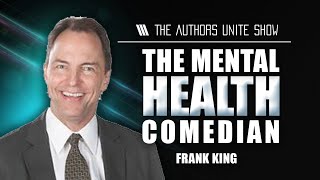
In this hour‑long interview, host Tyler Wagner talks with Frank King, a veteran stand‑up comedian turned TEDx coach and suicide‑prevention speaker. King walks through his life story—from early jokes in fourth grade, a seven‑year comedy road tour, a stint as a radio morning co‑host, corporate speaking, Chapter 7 bankruptcy, and the discovery of his family’s generational depression. He explains how he rebranded himself as a "mental‑health comedian" and leveraged his chronic suicidal ideation as a source of resilience. King shares the mechanics of landing TEDx talks: crafting counter‑intuitive titles, targeting niche audiences (dentists, vets, construction, etc.), persisting through dozens of applications, and positioning speakers as non‑commodities. He describes his creative morning routine, tagline generation, and how he helps clients develop memorable branding. The conversation then shifts to mental‑health education: defining chronic suicidal ideation, recognizing depression cues, practical steps for intervening (asking about plans, listening for hints, using crisis lines), and a personal anecdote about a life‑insurance policy that saved his life. King promotes his website thementalhealthcomedian.com, a four‑book men’s‑mental‑health series, and his TEDx coaching site yourtedxcoach.com, offering free PDFs and resources. Throughout, he blends humor, candid storytelling, and actionable advice for comedians, authors, and anyone interested in speaking or suicide‑prevention.
Chapters
All right everyone, welcome back to another episode of the Authors Unite show. Today we have Frank King, your TEDx coach. Welcome to the show, man.
Thank you very much.
Of course.
Delighted, delighted to be on here.
Yeah, grateful to have you on, man. So, to start off, obviously, you know, you help people land TEDx Talks, but I want to start, I kind of like to do a full timeline. So, from younger, like, not from conception, but from maybe, from like elementary school in a sense to now. So, when you were a kid, what did you think you would be doing? Is it anything of the sort that you are doing with helping people? Become a TEDx speaker?
Well, yes and no. I told my first joke in the 4th grade. The kids laughed, the teacher was hysterical, and I thought, I'm going to be a stand-up comedian. 12th grade, I did a talent show. Nobody had ever done stand-up before, and I won. Of course, you're competing with, you know, accordion players and folk dancers, so not really tough competition. And then my mom made me go to college, UNC Chapel Hill. I said, I want to be a comedian. She goes, I don't care what you do when you graduate, but you're going to have a college degree. You can be a goat herder for all I care, but you're going to be a goat herder with a degree. So I got a degree in political science and one in labor management relations, which are completely useless anyway. But you know, a good liberal arts education never hurt anybody. And they moved to San Diego with my high school, college girlfriend. And by chance, The Comedy Store had a branch there in La Jolla. And back then it was just the beginning of the comedy boom. They had 3 open mic nights a week. They had 2 shows on. Saturday, and it got to where there were like 3 shows on Friday. Just comedy was booming. This is, um, '84, um, early '85. And then end of '85, I said to my girlfriend, I got 10 weeks booked on the road in comedy clubs. I'm going on the road to be a stand-up comedian professionally. You want to come along? Figuring she'd go, oh, hell no. Uh, and she goes, yeah. So we We were on the road, I do— me doing comedy, she just along for the ride, for 2,629 nights in a row, nonstop, 7 years and change. Beer bars, pool halls, honky-tonks, comedy clubs as well, but a lot of horrible one-nighters, people screaming, tell us some jokes we can dance to.
Tell us some jokes we can dance to.
Yeah, here comes a slow one, you can slow dance. Anyway, so that came to an end when I got a job in radio in my old hometown of Raleigh, North Carolina. The local FM rock station. They were hiring comics back in the mid-'90s to be, you know, co-hosts on morning shows. So I got one of those gigs. I took a number 1 morning show, 18 months I drove it to number 6 and got fired, of course. Uh, a friend of mine goes, you didn't just drive that in the ground, you drove that son of a bitch into Middle Earth. Oh, um, and so after that was done, the comedy club thing was beginning to fade, and I thought, you know, I got a clean act, I bet I could do corporate, you know, after, after dinner, after lunch, if they conference. Sure enough, and it pays by a factor of 10 or 20 times better than doing club comedy. And so I made the jump to— and that was great till about 2008, height of the recession, business drops off 80%, lost everything in Chapter 7 bankruptcy. And that's when I learned what the barrel of my gun tasted like, literally. Uh, spoiler alert for the audience, I did not pull the trigger. Um, the, uh— I always get a nervous laugh though. Should we be laughing at that?
I know, I was like, I wasn't sure, but we've talked before. So I do want to dive into that then, but I'll let you— I'll let you keep going timeline.
So, um, when, when I went back to— when bookings began to crop up again, they said, Frank, Lou, we love you, we can't pay you just to be funny, you got to teach our audience something. So I thought, what the hell do I have to teach anybody? And then I began to look around. My family has something called generational depression and suicide runs in the family. And I mean, my entire mother's family is nuttier than a squirrel turd. So I thought, I've got the family history, I've got my personal history, I just need to learn something about suicide prevention. I can keynote on suicide prevention. And so when I thought, well, how the hell am I going to rebrand from a funny speaker to a speaker who's funny? And my wife goes, do a TEDx. I said, what's a TEDx? And just by chance, I got an invitation that week by email saying, hey, we'd like you to apply for the TEDx Vancouver, BC. I sent it in, they picked me. And so that was my first, and I came out on stage at age 56 in 2014. I'd never told anybody I was depressed and suicidal. And I came out on stage as depressed and suicidal. And I have something called chronic suicidal ideation, which means for me and people like me in my tribe, suicide's always an option on the menu, problems large and small as a solution. And when I say small, my car broke down a couple of years ago. I had 3 thoughts unbidden, get it fixed, buy a new one, just kill myself. Myself. That's chronic suicidal ideation, and it's sort of my superpower, actually. Um, because most suicides are not about wanting to die. Most suicides are about wanting to end the pain. And because I know I could end the pain at any moment, I can stand a great deal of it. So as somebody, a friend of mine with the same condition, said, you know, if it weren't for my chronic suicidal ideation, I'd have killed myself a long time ago. Ironic but true. Um, So, and I had some other speeches I was doing, keynotes. But 2018, January 1st, I looked around everybody in my town in the Chamber of Commerce who was really successful, and I thought, what do they have in common? And it hit me, they all do one thing extremely well. I thought, all right, screw it, I'm going to do, as they say in the speaking business, pick a lane— suicide prevention speaking. And that's all I'm going to market, the suicide prevention speaking. I'm going to become that guy. And then I picked several markets that have high rates of suicide— dentists, veterinarians, physicians, construction— and I only market to them. I don't market to everybody. I just market to those groups because they have meetings, they have money, they use outside speakers, and they really want to hear what I've got to say to bring the suicide rate down. So I've been able to triple my fee once I picked a lane, because, you know, picking the lane means you give up the other lanes. But it really worked out in my favor between the picking a lane and becoming the mental health comedian. I've bumped my fee 3 times, I think, since January 1st, 2018, um, because there are a whole lot— there aren't a whole lot of men, especially non-clinicians, who speak on suicide prevention and tell their story. Because, you know, guys, big boys don't cry. They don't whine. They don't planning. They don't share anything emotional. So yeah, I'm like a unicorn in the mental health business because I go in and I just bare it all. Matter of fact, I posted on YouTube or LinkedIn the other morning. I got a call from the speakers bureau in late December and they said, would you fly to Florida, which has no statewide mask mandate, in the middle of a pandemic to do a keynote? And I said to the guy, um, I'm suicidal, what the hell do I care? So I got on the plane, and last week, March 3rd, I did my keynote. I flew home, you know, I mean, I wore my mask. I got, I got some nice K95s for the plane because, you know, you're kind of close quarters. Um, but yeah, so it, it's, it's really what I tell my TEDx coaching clients is what you want is no longer to be a commodity. When they come looking for a suicide prevention speaker, I want them looking for me, not just any random suicide. And that's my goal for my clients, is when they come looking for whatever topic expert you are, that they don't just, you know, do a search and pick the first one that's got the best price. They come looking for you, so you're no longer a commodity. And I've been working very hard to, you know, to develop. And this morning I had a chat with a woman in Where was she? She works for a greeting card company. They just formed a parents group, sort of peer support, family-to-family support for the pandemic. Because all parents, pretty much all of them have the same set of problems. Kids are at home, maybe their grandparents are there, you know, when are they going back? And so they formed this support group and asked if I would speak. And I go, where'd you find me? She goes, well, I went out on the internet, you know, mental health, or what the heck, comedian. And bang, son of a gun, there you were. And so she— she— I'm the only one— she looked at a few other speakers, but between the TEDx talks and the comedy, and, and she liked sort of my philosophy, my speaking style, that's why she contacted me. We did a Zoom this morning to talk about the event, and I, I booked it. It's going to be March— no, May 20th, March 21st, I think it is coming right up. Uh, virtual, of course. Yeah. But again, people finally, every now and then somebody comes looking for me instead of just a random speaker. So that, that's the goal. I mean, I just booked my 6th TED Talk. It'll be in June.
Oh, amazing.
That, that doesn't hurt. And it also doesn't hurt when I'm, you know, clients are What qualifies you to teach TEDx Talks? Well, I've been chosen 8 times. I had to turn 2 down because I had a calendar conflict. I mean, let's fucking face it, I've turned down more TEDx Talks than most people get.
Yeah, yeah, that's a good way to put it right there.
Yeah, you gotta, you know, in business every now and then you gotta grow a set of balls and just, you know, just say it out. Yeah, somebody said to me, what qualifies you to speak on suicide prevention? I said, I know what the fucking barrel of my gun tastes like. And man, they step, they take a step back. Like it's somehow contagious. Um, and it runs in my family. And, you know, a comedian is a good choice because they call it comic relief for a reason. You know, we're talking about death and dying and morbidity and mortality, and at least I can lighten it up a little bit along with funny personal stories.
100%. So let me— a few questions there. So one, um, with the— I forget what you called it, but, uh, where suicide's always an option, like, what Is it, is it literally like ever, not everything, but is it always an option? Literally like you always are like, oh, I could do that, or is it kind of just like a fleeting thought? You know what I mean?
Anytime there's any stress or strange coping mechanism, you know, car broke down or something else happens, you know, my wife yells at me, well, screw it, I'll just fucking kill myself. Um, not a serious thought. It's— and the other thing I have is called major depressive disorder. And it, it's not situational. I've been most depressed at some of the best times in my life. What it is, is it's a cycle, like a wheel with a flat spot. Every now and then the flat spot hits the bottom and I go down for a day or so and then flatten out and then come back on the third day. By the fourth day, I'm, you know, back to pretty much flying level. Yeah. And I know that, um, for, for people who had that, it can last anywhere from 3 days to 3 weeks. I'm lucky it only lasts 3 days. Um, but yeah, there's nothing to do with— that situation could trigger it, but it's generally not situational, which is what worries me about the pandemic, is you got all these neuro-normal, neurotypical people who've never been depressed, and, and they got no idea how come they can't get out of bed in the morning. And you know what, it's probably because they're situationally depressed. They're depressed over the situation in the world, the uncertainty of it all.
Yeah.
So I do podcasts all the time teaching neuro-normal people The techniques that mentally ill people use to get out of bed in the morning, because for me and my tribe, every day is uncertain regardless of what's happening elsewhere in the world, pandemic or no. So you have to have systems in place. You have to control the things you can control, have to have a routine. Otherwise you wouldn't get out of bed, just lie in bed and binge watch, you know, The Queen's Gambit or whatever's kicking ass on Netflix. So that's, that's, that's what I do. And that's Then my business coach said to me— she wanted to do a TEDx and I wanted a business coach. She goes, I can't afford TEDx. And I said, I can't afford a business coach. So we coach each other. There you go. And she said, you know, Frank, I know you've been teaching people to do the TEDx for free and that's got to fucking stop. Um, you need a website and you start charging a lot of money for that because a lot of people want those things. And so I charge a healthy amount. And I've got 21, maybe 22 clients right now. If you are, let's say, an author and listening and you thought, I always want to do a TED Talk, now I believe is probably the best time, Tyler, to apply. And here's why. A lot of people I talk to don't think TEDx Talks are happening. I've got a list of a dozen and a half application links. Windows are open, they're waiting for applications. 2, the last 2 clients of mine that got TEDx, the TEDx event's only gonna have 7 speakers. Normally they have 12, which tells me they're having trouble finding 12 good ideas worth spreading. So I mean, if you're thinking about doing a TEDx, whether you hire me or not, get off your fanny and start applying for TEDx's all over the place because I have a feeling this may be the best time in history because the competition may be a lot slimmer than normal.
That makes sense. Now, what have you seen, um, let's, let's actually, yeah, let's talk about the TEDx and then we'll come back around. For TEDx, what, like, without giving all the secrets away, but like, what have you seen work, like, uh, for your clients? Like, what are some success stories that you, that you have?
Well, the average TEDx, non-pandemic times, we're getting 200 applications. TEDx Seattle got 600 applications. So whatever you put in those first boxes on that application damn well better be interesting. You know, you need to grab them by the lapels and not let them go till they've read most of your application. And for example, my 5th TEDx talk was called, um, hang on, somebody called in. My, for example, my 5th TEDx talk, the title was Mental Health and the Orgasm. Treat Your Depression Single-Handedly. Yeah, I applied 16 times. I knew not every— most every TEDx committee would go, no fucking way. But I also knew that anything that controversial, some TEDx committee, it'd be the best thing they ever heard. And sure enough, I got a phone call from number 16. They said, yeah, we'd like you to do the TEDx. I said, you mean audition? They go, no, fucking audition. You're coming, you got the gig. So that tells me that whatever you put on that application, it really needs to stand out. I've got a client who had an extremely aggressive form of breast cancer and she had a double mastectomy, 5 years clean of cancer right now, survived. And I was having dinner with her in Florida 'cause she didn't live far from where I was working, doing the speech. And she goes, yeah, In passing, she goes, you know, cancer saved my life. Okay, stop right there. That's the title of your TEDx pitch. Cancer saved my life. It's counterintuitive. If I see that sentence, I'm reading whatever comes next. I got to find out how that happened. How in the world could cancer— so I recommend that you make it the title, subtitle, or your answers, especially up, up high on the application. They're counterintuitive. They're, you know, maybe some humor. Um, they got something— got a client who has had, had several— had a bariatric— two bariatric surgeries, one banding and one bypass, I guess, because he got— he was overweight, had his stomach banded or whatever they do, lost the weight, put it back on, went back in and had the bypass. Um, and the premise of his talk is is nobody tells you anything about the mental impact or effects of the surgery. You lose the weight, but you need some serious, you know, mental work to keep the weight off because in your mind, you said you're still an overweight person who's had a, you know, a bypass or a banding. And I said, oh, I get it. With this sort of weight loss, They're looking at the wrong organ. It's not the stomach, it's the brain that you need to be concerned with because it's your mindset that gets you back. That's why you gain the weight back. So I think the title is going to be, and it's an old— it's a cliché— it's not what you eat, it's what's eating you. When it comes to weight loss surgery, they're looking at the wrong organ. It's the— it's not the stomach, it's the brain will be the subtitle. So it kind of explains it's not what you're eating, it's what's eating you, which is— no, it's a cliché, but people will recognize it. Hopefully they'll read on to find out. And so, yeah, so I try to make— I try to make that, you know, uh, as, as interesting as possible because, you know, if they got 200 applications— let's say you're on the committee, they got 200 applications and there are 4 of you on the committee. You got 50 applications to go through. If that application doesn't grab you out of the gate, you know, it's in the no pile and you're going on at number 49 because you're not looking— I tell my clients, you're not— they're not looking for a reason to give you an audition. They're looking for the first thing they could do to, you know, find on that application where you— they don't like it and throw you in the no pile because they got to go through all of them. So that's, you know, that's, that's where we've had success is in making it A friend of mine had another coach, paid more money, paid a grand more than I charge, and they gave her— they cobbled together the frequently, you know, most of the applications have the same questions, different order. Um, so they cobbled together frequently asked question answers that she could fill in the blank on these applications. She applied 80 times. 80. She called me crying. I I said, Amy, it's a great idea. You have a bestseller on Amazon by the same title on the same subject in a very difficult category. It's not some random category. Yeah, something's wrong. Send me the app, send me the stuff you're, you know, putting in the application. So I looked at it and I dotted T's crossed, but man, it was, it was like breathing ether. It was just, I kept waking up face down in a pool of my own saliva. So I said to her, yeah, can I tinker with it? She goes, yeah. So I tinkered with it, gave it a little, you know, creative spin, made it sticky. Within 5 applications, she got TEDx Beacon Street in Boston. So again, that tells me the linchpin in this is the creative element and continuing to apply and apply and apply and apply until somebody really likes, you know, I got my first one on my first try. Next 2 I got because people saw my first one. The third one took 5 tries. Uh, fourth one took 5 tries. Fifth one, as I mentioned, took 16 tries. So it's kind of a numbers game. Um, you just can't, you can't give up after a couple of applications. And you have to— I've never done one I could drive to. I've flown to all of them. Um, you know, because my clients want to do the, you know, they live in Denver. I want to do TEDx Mile High. Well, so do I, but You know, I don't know what's going to happen. Maybe doing, you know, Lake Manalapan, New Jersey, or somewhere.
So, so for the 6 that you've done, are they all like similar or are they different topics?
Uh, same topic, mental health.
Mental health. Okay. All of you.
Yeah. And I do some of my lived experience up front to give them an idea that I know what I'm talking about and why.
Yeah.
So that's the same, but from that point on Um, the third one was mental health. Let's see, Mental with Benefits: The Evolutionary Advantages of Mental Illness. Everybody I met who was not completely dysfunctional, who had a mental illness or two, had some superpower— good writer, singer, comedian, artist, athlete, politician. You know, they had these— they were very talented in other ways in addition to having OCD, dyslexia, you know, that kind of thing. And I thought, it can't be a coincidence. That was number 3. Number 4 was Suicide: The Secret of My Success. Counterintuitive. What? Uh, Dead Man Talking, a play on dead man walking. Something they recognize.
Nice, dude, you're good at that stuff. It's good. You are.
I'm telling you, title, subtitles, taglines are my thing. Yeah. So, um, again, they like the the idea and the title subtitle so much they called me and said, you're not auditioning, you're going to go on. So that drove home the point, okay, this is, this is the, this is the hurdle you have to get over to even get close. You've got to, it's got to be creative enough and interesting enough that they read a great deal of the application and offer you an audition. So, you know, 20 years writing for Leno, 35 years stand-up comedian and speaker, I, you know, I just— it's the way my brain works. It's my— one of my— I believe that even though I have depression and chronic suicidal ideation, that I'm not broken. I believe I was made this way because I believe my depression and suicidality is simply the flip side of the creativity and, you know, imagination and comic ability and timing. It's all part of the same package.
Yeah.
And so, so, I mean, I, I put it— I put Somebody says, I need a title for my, my, uh, what I do. It's a client of mine. He does, um, what they call soft skills, corporate meetings. He teaches emotional intelligence, communication, relationships. Those are soft. Yeah, soft skills. So I go, I'll, I'll have a tagline for you tomorrow morning. So I go to bed, I wake up, I lie in the dark for almost an hour every morning just thinking, and it hit me. Anthony Metten. Hang on.
Yeah, no, you're fine.
And it hit me. His name is Anthony Metton. Soft skills, concrete results. And I called him up and he goes, you thought of that in your fucking sleep? I said, yes, I did. As a matter of fact, I could do it in my sleep. So That's— it will help him. That has nothing to do with his TED, because when I'm coaching TED, I'm also helping him with speaker marketing. So that'll be his tagline on his website, his one-pager, you know, um, right next to his name. Soft skills, concrete results. Short, sweet, to the point. Um, so that's— that they get the benefit of— yeah, years of entertaining and and being on stage.
And so what caught me, one thing there was you said every more— did you say every morning for an hour?
Yeah.
You just— so is it right when you wake up, you take an hour and just think and like close your eyes?
Yeah. What I do is when I wake up, I have a double shot of espresso on the nightstand. I take the double shot, I lie back down, I put my eye shades back on, my earplugs back in, and I lie there in the dark and just see what my brain has to offer that morning. And it's sometimes half an hour, sometimes an hour. It's— I read an article online somewhere in Scandinavia. The author said we have lost the ability to do nothing. Yeah. And so I just lie there and do abs and don't— I don't force myself to think about something. I just wait and see what my brain— and sometimes it's, dude, you were supposed to call that guy yesterday. Oh, Oh shit, okay. You know, sometimes it's banal and just something, or you forgot to pick this up at the grocery store. It's like my brain overnight reordered, looked to see what I'd done. Oh look, he skipped the Zoom, he's gotta send an apology note, okay. But most often it's something, you know, something creative. If, you know, if I task my brain to it. It will run until it spits out a couple, three ideas. It's like, it's like I said, somebody— it's like the alien in the first Alien movie when the guy's chest— oh yeah, yep, yeah, yeah. When if I come up with an idea, it won't out, and it won't out fucking now. Yeah, I have to text, email, call, go, I got the idea, listen, you gotta listen. Um, so yeah, it's just part of my process, and And a psychiatrist said to me, the reason it works so well, Frank, is when you're lying down like that in the dark, in that half-awake state, the blood's moving back and forth between your hemispheres more easily of your brain than when you're standing up and walking around the daytime. He said they think Einstein was like that all the time. The blood was going back and forth rapidly even when he was wide awake and walking around. But that's what's happening is you're lying there and, you know, it's just kind of going back and forth easily. And then that halfway calf. Yeah, same reason when you're in the shower, you have a good idea because the hot water's hitting on the back of the neck, it's increasing circulation of the brain, and you're like, yeah, I could do that.
100%. That's because I was just gonna relate it to like, I do morning walks/runs, um, every morning, and like, that's kind of my meditation, if you will, of like, every time I walk— and this is what I tell people— it's like, if I ever am like trying to figure something out or I have like a a problem to solve, I'll just let it go and I'll just go on a walk and then it kind of like solves itself. Like it literally just— and I'm like, oh, that's all it was. So I no longer like, I don't know, like beat my fists against the ground or whatever. I'm just like, okay, I can't figure it out right now. Maybe I'm tired, maybe whatever. Let me just walk. And then literally the solutions just like fucking download into me.
Yeah, it's almost like taking dictation, like, okay, hold on. Yeah. Oh, okay, got it. Yeah, yeah, give that to me again. Um, yeah, one of my clients worked on Madison Avenue for 20 years in the ad business, and she's a speaker, an aspiring speaker, and she's got an online course on branding, a book called Brain-Friendly Branding. And it's all about how the, the brain, the human brain has not changed more than 2% in the last 200,000 years. The— what's changed is is the software. So what's happening is we're running iOS 14 on a Commodore 63. And so you need to appeal to those— the instincts of that Neanderthal. And they had one paramount instinct was survival. So if you're selling, you need to pitch to solve that survival problem. That's, that's her— going to be her TEDx. And everything I learned In Sales. Everything I Need to Know in Sales I Learned from a Caveman, I think is the title of it.
Oh, interesting.
Yeah, yeah, actually, probably it's probably the subtitle. It probably says Brain-Friendly Branding, which makes people go, what the hell is that? Then they got to read the subtitle. Everything I Need to Know About Advertising I Learned from a Caveman.
Yeah, it's kind of— it is very much, um, like kind of what you do. It's, it's obviously very unique, but it's, it's like copywriting, right? Like the— it's, it's the, the email, the headline, the only point of the headline is to have the person open the email, really. And then the only, the only point of the first sentence is to have them read the second sentence. So like, that's kind of what you're doing with the TEDx, it feels like, is you're at least, you're giving them a chance. Because the way people are typically filling it out, like you said, with 600 applicants, only 12 spots, they're looking for a reason to nullify you, basically throw you in the no pile.
And I understand comics same way. When I was When I was coaching comedians, I go, look, you send them a videotape— back then, VCR, you know, VHS— um, don't put anything on that videotape because they're not looking for the first reason to book you in the comedy club. They're looking for the first reason not to. So, you know, if you drop an F-bomb, uh, it will not get you a gig. One F-bomb, it'll keep you from getting a gig. So if you want to use it, you know, the word fuck Be the king of fucks. I mean, make it, you know, make— that's what you do. Um, and there were comics who could only work on cable and clubs, uh, really well-written filthy comedy, you know, hysterical filthy comedy. But, but they chose that lane. That's going to be my lane. I'm not going to worry about being a clean comic. I'm just going to be— I'm going to— and, you know, several friends of mine got a number of Showtime specials and things, but because that was their niche. They were hysterical and filthy. Just so— I think I mentioned this guy to you when we talked, um, um, Robert Schimmel. Okay, uh, nebbish little Jewish fellow. Most of his stuff was self-deprecating, filthy, filthy. Um, yeah, somebody said to him, would you fight Mike Tyson for a million dollars? And he goes, a million dollars? I would actually get in the ring and blow Mike Tyson in front of my parents for a million dollars. I mean, that was Bob, you know, it was just the way he was. Yeah. So, so, but he picked a lane, political comics. That's a very, that's a very distinct choice. Once you pick that lane, you've, you've alienated, you've eliminated, alienated 50% of the population because you're on one side of that divide or the other.
100%.
But if you, if you can be the best at that, like Lewis Black is amazing, then, you know, that— more power to you.
Yeah, I think that's, um, the author— I think his, I think his full name is Mark Manson. I think, I think it is. And he, he wrote The Subtle Art of Not Giving a Fuck. And then he has like a whole— have you heard, have you heard of that book or no?
Yes.
Yeah, yeah. So, and he has multiple— I think he has 3 books now. They all have the word fuck in the title. So that's like Like you said, it's like if you're gonna use it, then go all in. Like, that becomes like your kind of like your brand. Like, that's what it is.
Yeah, I worked in radio one summer when the cruise ships decided to stop using comedians. They changed their mind after the pastors rose up. But, uh, so I went to work because I'm a comedian, otherwise I'm just functionally unemployable. Um, so I thought, I've been on air, I'm sure I can sell radio ads because I'm in both chambers, I know a lot of people. And I can write and voice the ads. So I got the job, you know, as a radio guy. And there's a client who does bathroom and kitchen refinishing. And their thing was they don't take— they're not one of those 3-bid. The commercial I wrote was, okay, now you're getting— you don't have your kitchen remodeled, so you take your dad's advice. Okay, son, what you do is you get 3 bids, you throw out the high, you throw out the low, and you take the one in the middle. I go, is that really a good— I mean, if you were looking for a heart surgeon, would you get 3 bids, throw out the high, throw out the low, and take the guy in the middle? No, you want somebody who knows what the hell they're doing. And what we're doing there is we're eliminating people who have to have 3 bids. We do not want them to call. It's called a disqualifier. So Gary Vaynerchuk, because he is profane and doesn't give a fuck, You know, one of my speaker friends said he's losing business, and I said he doesn't care because the people that hate him hate him, but the people who love him are fanatic, and he's laughing all the way to the bank. You know, if you're offended by Vaynerchuk, you are not his audience, you are not his client. And so it's a disqualifier. You don't want to work with anybody who's— you know what I mean?
100%. So no, no, you're 100% right. I love Gary, and I think he even talks about that actually in some of his stuff. But, um, you know, as he would say, he doesn't give a fuck. No, that's right.
And you know, when you book him, you know what you're going to get. It's not like he is, you know, he's a stealth dirty, you know, speaker. You know, he's really clean and he comes in. That's what amazed me about Hollywood when they hire somebody like, um, the guy that created the Family Guy What's his name? To emcee one of the awards banks.
Oh yeah, I know who you're talking about. I don't know his name, but I know you're talking about—
yeah, and he comes in and he does what he does, and they're, they're surprised and offended. And he said, were they expecting me to change somehow after I got the engagement? I— because he, you know, he rips some people in the audience in pretty hard, and oh, oh, uh, you know, it's You have to, you know, buyer beware. I mean, if you're gonna book Grant or Chuck— when I worked in the comedy club, if Dice Clay— I was a doorman— if Dice Clay was headlining and an older couple walks up, I would say to them, you guys, um, coming here to see, um, Andrew Dice Clay? Who? So I said, well, you know, you might want to— I don't know, I mean, I don't want to discourage you from going, but I think you'd, you'd I think you'd enjoy another night, another comedian more so than Mr. Clay. Hickory dickory dock, she was down there sucking my— So I would warn them off if I thought perhaps, you know.
Yeah. You have any good— so like 30 years in comedy, right? About 30?
Yes.
So 30 years. What are some highlights there? And any wild, like, um, uh, what do they call it, uh, sticklers or whatever, or hecklers? They call it hecklers.
Oh yeah. Um, again, again, as part of my wiring, um, people ask me after I hammer a heckler really hard, hey, how'd you think up that heckler line? You know what, I didn't think it. When you heard it for the first time, I was hearing it for the first time. It just came screaming out of the back of my head. I have no idea where the fuck it came from. Um, I'm doing a club in Raleigh, North Carolina, Charlie Goodnight's, one of the places where I started. And there's a drunk woman down front. She finally got so obnoxious they were throwing her out. They're dragging her to the front door. Right before she goes out, she must have heard something sounded like her name because drunks are voice activated, and she turns back to me and she goes, fuck you. And I took a beat and I went, no, not even for practice. And the audience, standing ovation, guys coming up and high-fiving me. I have no idea where that line came from. I'm doing a Carnival ship, and Carnival, the late night show, they come for a verbal fist fight. They get drunk and they want to take the comedian down. I've got— I got comic friends who won't work San Pedro down to, you know, like Mexico and back because it's just— the late night shows are brutal. So I get on stage, I grab the microphone, the guy yells before I even said anything, 'You suck!' So you can't let that kind of thing go. So I waited, I waited a beat, and I go, yeah, and you fucking swallow. And again, standing ovation, high fives, uh, couldn't do any wrong after that. And it just left a smoking hole where he was sitting. So, and where'd that come from? I didn't think it before I said it, it just came screaming out of my mouth. Fortunately it landed right, everybody thought I was, you know, the king. So, but, but I think it's I tell people, I can teach you to write stand-up, which I've done. I can teach you to perform stand-up, which I've done. I cannot teach you to process the incoming information like that. I can't make it so that when you hear, um, you know, um, you suck, that the next thing out of your mouth is going to be, yeah, you fucking swallow. Um, yeah, and I never said that out loud in any show anywhere. It just can't— it just— whatever, you know, computer's in there just you know, looking through the files. What, uh, he said you suck. Hold on. Okay, go. Yeah, fuck it, swallow it. Yeah, so it's, it's— I, I believe it's, uh, that mental illness is actually a combination of mental illness and mental ableness. You just have to find the thing or things you do really well and embrace those. Treat the other, but embrace, you know, the things that you— and Google hires people on the spectrum. 30 Fortune 500 companies are now hiring people on the spectrum for their one very specific skill, and they're paying them handsomely.
Oh really? What's this about?
Yeah, well, you know, let's say it's a, it's a quality control thing and somebody's got to sit there and watch these things go by and look for one particular tab out of place. And some of these folks on the spectrum, that's a very comfortable situation for them. They can sit there for 8 hours watching stuff go by. You know, um, and whereas a neuro-normal person, how long it'll last staring at it?
Oh, maybe 5 minutes for me, maybe.
Yeah, for them it's just, you know, it's like, okay, I'm fine. And they— it's like dyslexics. Dyslexics have a better peripheral vision, and they also have the amazing anomaly— some strange reason— amazing ability, I'm sorry, to find the anomaly in anything. The joke I wrote for my TEDx was never play Where's Waldo for money with a dyslexic. You're going to lose because you're going to open the book and they're going to go, he's right there, you can't see that. So that's one of the things that comes with dyslexia is this better peripheral vision and the ability to pick up the anomaly. So why not make them a drone pilot flying over Afghanistan? Everything is one color of brown or another. And what looks like a rock to most people, you know, he may go, um, that's not a rock, that's the lid on a bunker, because if something about it drew his attention. So my idea is take kids like that and steer— if you got OCD, you know, steer them toward engineering, accounting, architecture, where they, they reward precision and attention to detail. And the kid is wired for it. He can't not have a, you know, an attention to detail because because that's the way he's wired. So that was the premise of the mental benefits. That was the point, is to reframe things for kids. Okay, yeah, you have a mental illness, but here's what adults never tell you. You also have a couple of mental ableness that your peers can't touch.
100%. I've actually thought— not, uh, that's interesting. I didn't think about it in that way, but, um, close. It like, when you're younger, I feel like kind of like the true you comes out a little bit easier because you're not, you know, you haven't been like, I don't know, what do you want to call it, fucked up from society? I don't know, whatever you want to call it. Like, yeah, so like the true you comes through. So it's like if the teachers were more trained from like not just like a textbook but a psychological thing, like maybe they would have picked up for you when you were younger that like, hey, this guy would be a good comedian because like maybe when you were younger you were very talkative in class or something, or very outgoing. Like, I don't know. So, and if the teacher kind of, you know, watched their students in a different way, not just like, did you get an A or B on the test, but like, okay, this person fucking loves math. This person is like always disrupting. Like, they're gonna be more of a people person. So, and they can start to like help steer so that by the time the kid's like 18, they don't get to that point and they're like, oh, I'm just going to college because that's what you do. Because by 18, you could kind of know, like, you could know a lot about yourself if adults paid attention to it.
Well, at the end of the TED Talk, I say to the audience, okay, Frank, that's really interesting. What are we supposed to do with that? I said, well, you know what you're supposed to do? You're supposed to make the IEP, the individual education plan, truly individual. If you've got a kid with dyslexia, he does not belong in the STEM program— science, technology, engineering, mathematics. That's just pages and pages of numbers and letters rolling around. Yeah, but you know, humanities, um, they're great at multi-level complex tasks. I mean, steer them toward the, you know, those sorts of things. Now, if a kid's got OCD, for God's sakes, put them in the STEM program. Every one of those, those disciplines, every problem there has one answer. That's perfect. There's just one right answer, which is perfect for somebody who, you know, is into precision. So a friend of mine on the ships, he traveled around and and rated the musicians on the ships, you know, for raises and stuff. He taught high school band, um, horns. And he said, my best students were the ones with ADD, ADHD. The problem was you strap them in a chair, first 10 minutes they get better, the next 40 minutes complete waste of time because they can't focus. So he said, on a whim, I bought an egg timer, and I said to the kid, okay, look, I'm gonna set the egg timer 10 minutes. You're going to practice your scales for 10 minutes. Then when the egg timer goes off, you're going to practice your breathing for 10 minutes. And then when the egg timer goes off, we're going to practice those 2 pieces you're doing at the concert this weekend. Then we'll start again. So it's in 10-minute bursts. And he said the improvement was amazing because the kid wasn't spending 80% of his energy trying to sit still and not say anything. He was, you know, he's focused for 10 minutes. He could focus for 10 minutes and 10 minutes. You know, he just stumbled on it. And but so I think not only the curriculum be, you know, individual, the teaching techniques, teach, you know, teach the way people want to learn. Each person learns best. Some are visual, some are auditory, some are, you know, so.
So really, last thing I want to ask, just because we only touched on a little bit, is like, how did you get through it? So, and I'm sure you talk about this in your TED Talk, but like, when you were considering suicide, how did you— what was it like? Paint the picture for us, and then how did you get through it? Just so if anybody listening, like, I'm assuming it would help them to kind of hear how you got through it.
Sure. It's not an unusual story, but it's— I had a million-dollar life insurance policy. Mm-hmm. And, and most people who are suicidal feel like they're a burden. It's called burdensomeness. You know, the world would be better off without me. And I was literally worth more dead than alive to my wife. We just lost everything. So she'd be brokenhearted after I was gone. She would not be broke. She could, you know, she could keep the farm, pay off all the bills. She's not going to be able to retire, but she's not going to have to worry about money for a long time. The catch was I didn't know how long I'd had the policy because I had a 2-year suicide clause. You kill yourself in the first 2 years, they don't pay anything. 2 years and a day, million bucks. So I call my insurance agent, he goes, yeah, you had it 22 months, and no, don't fucking do it. Because he'd had that conversation before. Somebody called up, is the insurance past the 2-year? Yes. Next thing you know, he's delivering, you know, the benefit check to the widow or widower. So he, you know, he said, Frank, you know, when you said that to me, I realized you weren't asking how long you had the policy, you're asking for permission to kill yourself. And he goes, and I didn't know what to say. So he said, I just said a quick prayer and thought, hopefully whatever I say next will have an impact. And I said, Graham, it did. You said don't fucking do it. Yeah. And I didn't. And, and 2 months passed by and I don't remember, I didn't mark it off on the calendar, you know, I killed myself in 15 days. Um, fortunately bankruptcy went through, phone calls stopped and things got better. And I don't even recall when my next thought of taking my own life from the insurance money was. Um, so that's, that's what saved me. The life insurance policy not being at the 2-year mark saved me. Otherwise we wouldn't be having this conversation.
Wow, dude. That's life insurance for real. That's the real life insurance.
Well, and here's the good news. Here's the good news in that story. 8 out of 10 people who are suicidal are ambivalent. I was not. I was in the 2. 9 out of 10 people who are suicidal give hints in the week leading up to an attempt. I was number 10. I wasn't going to give anybody a hint. I was just going to take my own life. But if 8 out of 10 are ambivalent, 9 out of 10 give hints, that means we can save the vast majority of people if we just know what to look and listen for and step in. Because what that tells me is they want you to step in and notice something and step in and interrupt. And so that's what I teach when I keynote. I teach signs, symptoms of depression and thoughts of suicide, what to do, what to say, how to find resources. So that way, because you hear people say this all the time, he killed himself, he never gave any indication, no hints, so we had no idea. Well, you know what, 9 out of 10 times somebody's going to give you a hint. You just have to know what you're looking for. For or listening for. So that's, that's why I do what I do is because, you know, it's, it's the most preventable cause of death on the planet. You, and you don't have to be a clinician to save somebody. You just have to care and know what to look for and step in.
What are some of the things that you look for?
Well, for depression, um, has trouble getting up in the morning, rallies in the afternoon. So let's say you've been doing Zooms in the morning and the guy's always late and you bumped it to 3 in the afternoon. And he's there waiting for you when you get there. Like, odd. It's always late in the morning, rallies in the afternoon. Um, eat too much, can't eat. Sleep too much, can't sleep. Here's one you can see on Zoom: they let their personal hygiene go. You know, there's COVID casual and then there's I'm depressed casual. Hair's a little dirty, clothes aren't quite so clean because maybe they can't get out of bed to run a load of wash and hit showers. That's something. So the question comes up, what do you say? Well, here's what you don't say. Pull yourself up by your bootstraps. Turn that frown upside down. Have you tried fish oil?
Yeah.
Yeah. Yeah. I can't tell you how many times.
So actually, what do you do though? Like, how would you, if you see the signs? Yeah. Like, what would be the best way to approach?
If it's depression, I would say, look, I'm here for you and I mean it. And I know you're not lazy, crazy, or self-absorbed. I know that depression is actually a mental illness. Here's the good news. With time and treatment, things will get better. And I'll take the time and I'll help you get the treatment. And here's the tough one. You have to ask them at this point, are you having thoughts of suicide? And if you can't ask them, you find somebody who can. And there's no wives' tale, you should never mention the S word, suicide, in front of somebody who's depressed. And I love this. It might give them the idea. Suicide? What a great idea! Why didn't I think of that? Trust me, it's crossed their mind.
Yeah.
So now let's say they're not forthcoming, um, with their thoughts of suicide. How would you know? Well, if you catch them talking about death and dying, or Googling death and dying, or death and dying appears as a theme in their artwork, their writing, their music, they're getting their affairs in order, they're giving away prized possessions. Because they want to make sure they go to the people they want them to go to when they're gone. And a really dangerous counterintuitive one is they've been depressed forever. And all of a sudden they are happy beyond measure for no apparent reason. And you're happy because thank God they're happy. Well, the reason may be they've chosen time, place, and method, and they know their pain is finite and they're happy because they know it's going to come to an end. So now let's say if they, if they say they are suicidal, you say, well, do you have a plan? And if they have a plan, tell me what your plan is. And if it's detailed, then you need to get them on the phone with the Suicide Prevention Lifeline. Or nowadays for younger people, they have a text line. You text the word HELP to 741741. There'll probably be somebody on the other end roughly the same age. But let's say the plan is not well formed. They just, you know, I'm going to kill myself, but I'm not sure how. My next question is, um, just again, flat out, well, are you going to kill yourself? And if they go no, I say, all right, tell me why not. Make them give voice to whatever's still keeping them here. My family, my friends, my pets, my siblings, whatever it is, make them give voice. To that. Now, you only call 911 when they're in immediate danger to themselves or somebody else. And I had a, a, uh, Zoom the other day with somebody who had— they had done that. They'd called the police, and man, the person they called the police on had to go in front of a judge. There was an involuntary detention order, 3 days lockdown in a psychiatric facility, and The woman hasn't spoken to any of those people again, but you know, she's still alive. So, you know, it's possible you're going to lose a friend. They may unfriend you on Facebook after you saved their life, but that's okay. Yeah, that's fine. I can live with it. That I can live with.
I can live with that.
Yeah.
No, that's incredible advice, man. Um, so I want to leave it to you. Like, uh, where can people stay in touch with you? I appreciate you coming on the show. Um, What's the best way?
There's The Mental Health Comedian, thementalhealthcomedian.com. And authors, I'm a co-author on a 4-book series on men's mental health, kind of a Chicken Soup for the Soul, 12 guys, 12 stories. Each one has, you know, it's like, first 500 words, things are great. Second 500 words, things go to hell. Third 500 words, here's how I'm coping. Men told us we want real stories, real men, real problems, and how they're coping. Really. So we— it's going to be one book, but it turned into 1,000 pages, so we decided to make 4. And we made it look like an automobile owner's manual so guys would pick it up. It's got a guy's head on the front, the top's off, and the guy's leaning in with a wrench and a flashlight. And it's got all kinds of car metaphors. You know, you need to have routine maintenance, have to have a pit crew in case the wheels come off for you. My favorite is, don't you wish the men in your life had had a mental check engine light. Light goes off, you go to the mental mechanic, they put you up on the lift and go, "Bob, no wonder you're depressed. You're 2 quarts low on serotonin." So it's that, you know, that car brain metaphor. First book is basic mechanics, second is advanced, you know, routine maintenance. Each one has a theme. Each one has 12 stories. And if you go to my website, thementalhealthcomedian.com, and put in an email address, you can download the first book. I recorded it for Audible, but I got them to make me an MP— I got an MP3 on there. It's free. It's me on a bridge for the first, you know, reading the first book out loud. So awesome. You're welcome. Welcome to go and download it. Yeah. And I'll eventually have all 4 up there as I record them.
Perfect. And then if somebody— if any of our listeners are interested in a TEDx, it's yourtedxcoach.com.
Yeah, if you go there and put an email address in, you get a free PDF that says these 6 things you could do to kill your chances of landing a TEDx Talk.
I like that.
Yeah, because everybody tells you what to do, but again, you and I've talked about they're not looking for all the good in the app, they're looking for the first bad thing. So it's 6 mistakes to avoid, 6 things you can do if you avoid them to make it easy for them to throw you in the no pile right away. Mm-hmm. So perfect.
Thank you again, man. I appreciate you coming on.
Hey, listen, uh, you got a lot of authors— people ask me, is it a good way as an author to— yeah, you know, especially if you want to speak behind the book, makes a great demo video. You can— what you can do is you can grab it off the end, grab it off their page and slice and dice it, make a sizzle reel. Um, you can't sell your book on the stage or back of the room, but you can talk about stuff in your book which would encourage people if they like what, you know, they learn from you in that 18 minutes, they may go out and buy the book. So it's, you know, it's, it's, you have to be very careful. Nothing commercial from the stage, but I help people frame that so that doesn't sound like they're pitching a book. They're just sharing the ideas in the book.
Got it. Yeah, no, that makes sense because I know with TED there, it, it is like pretty much just value, right? But if, like you said, if you say parts of the book, then people kind of get the point.
Yeah. And, you know, depending on the book, there may be some really good actionable information in the book. Yeah. And so normally what it is, first third, your story, second third is what you learned in all your troubles, and the third third is, now here's what I'm going to teach you. And you pick a half a dozen things from the book, action items, how-tos, able-tos, that they can walk right out and start doing. And you know, if they like what you've said, they might be willing to, you know, they Google you, find you, go to Amazon, you know, find your book. And that's the idea, is it maybe sell some more. Also, for an author, if you want to be a speaker, it's a great video demo to get speaking engagements. Oh yeah. And to raise your fee. My speakers all start off at $5,000 plus travel. That's kind of the entry level now. Yeah, because people figure, you know, if you're charging $5,000, you must know what the hell you're talking.
Yeah, no, 100%. Perfect, man. Thank you again.
Oh, my pleasure. Thanks for having me on, Tyler.
More from Tyler


Catherine Nikkel : THE STORY EVERYONE HAS BUT HASN'T TOLD : The Tyler Wagner Show #1120



Scott Ritzheimer: Bring Predictable Success to your Organization | The Tyler Wagner Show #1115


Fred Moskowitz: A GUIDE TO GETTING STARTED WITH IN MORTGAGE NOTES | The Tyler Wagner Show #1113

Mark Podolsky: From Land Investor to Full Time Success How I Made $90,000 Cash in Real Estate


Mark Podolsky: How to achieve a 300% return on investment my foolproof strategy

Mark Podolsky: How to make passive income selling raw land the irresistible pricing strategy