Fueling Growth Through Technology | The Authors Unite Show - Ryan Frederick
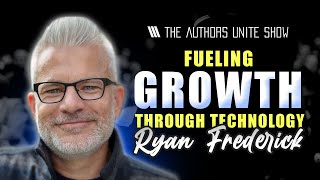
Ryan Frederick, principal at AWH and author of The Founder's Manual, discusses building custom software companies and leading as a developer-turned-product leader. He shares the "run to the fire" mindset for solving problems and why securing a small group of passionate customers matters more than scaling fast.
Chapters
All right everyone, welcome back to another episode of the Authors Unite show. Today I have Ryan Frederick with us. He is a principal at AWH, a software product and data consulting firm, a speaker, author, and investor who helps people build great products and companies. So welcome to the show, Tyler.
Thanks for having me.
Of course, grateful to have you on. So I always like to start off with this question, and it's basically like When you were younger, did you see yourself where you are now, or did your younger self have like a completely different idea in mind of what you would be doing?
I mean, in very sort of loose terms, yes. Specifics, no. So, you know, never thought that, you know, I would write a book, and I'm finalizing a second book now with the publisher, and So I never thought I would write a book and do things like that. But some, for some reason, when I was, when I was a youngster, I did think that I would do some independent entrepreneurial things. And I'm not sure why I thought that or believed that, but I can remember even as a kid thinking, working as a big company doesn't seem that interesting. And so I had an inkling that I would not be a big company person.
Got it, okay, yeah, yeah. I'm similar to you. I didn't know exactly what it would be, but I just knew I wouldn't be working in a big corporation. I knew that for sure.
Yeah, and when you're a kid, I don't know that you can know any more than that either, right? Yeah. Because you don't know what opportunities are gonna get presented to you and you don't really know what you enjoy. And, you know, you go through school and you go through guidance counselors trying to, you know, direct you and assist you and them telling you things that are, you know, that are, you know, mostly irrelevant and not very well aligned with who you are and sort of how you see the world. And so I think it— I was actually having this conversation with somebody a few years ago. To some degree, I've always been a little bit jealous of people that, like, from the age of 5 always knew they wanted to be a firefighter or an accountant right? Because their path is pretty well defined. And then there are people— and it sounds like, you know, we might be similar— then there are people like us that don't know what the path necessarily looks like. We just more have a compass of sort of heading in a direction, and then the picture comes clearer as we're sort of, you know, beating back the bushes to create the path.
Yeah, definitely. It's, it's interesting. Again, very similar is when I was younger, I was always kind of like jealous or envious, I guess, of my friends that their parents had businesses that they could just like, you know, kind of like take over. And I didn't really have that. Like, my dad's an accountant and then my mom's a stay-at-home mom. My dad works for Johnson Johnson, so it's not like I could like just like take over the family business. But in my area where I grew up, there's a lot of There's a lot of small family businesses. Um, but actually the funny thing then though, full circle, is now I'm kind of glad it wasn't that way because it made me find my own path. And although it's like easier to just take over your dad's business, it might not be what you actually enjoy doing at the end of the day.
So yeah, for sure. I think it becomes a little prescriptive. Yeah, when it becomes that prescriptive, then I'm not sure it's that fulfilling. Maybe it is, and for some people I'm sure that that's the case. But, you know, often when things are too prescriptive, they're also not that interesting and not that fulfilling. So, but it's an interesting dichotomy for sure.
Yeah. So what does AWH stand for?
It stands for Allen, Williams, and Hughes, which sounds like an accounting firm or a law firm, and we're neither of those. So we mostly go to market under the acronym of AWH so that we don't sound like an accounting firm or a law firm.
Okay, got it. That makes sense. It definitely does sound like that.
Yeah, it's not very sexy. It's not very marketing appeal driven, you know, to go to market with the names of 3 people that nobody's ever met and has no idea who they are. And the name is actually kind of funny. There's a funny story behind it. Yeah, it's the middle name of the 3 dudes that founded the firm. And they didn't use their first names or their last names because it sounded weird. And so Allen, Williams, and Hughes sounded better. And so that's what they went with. 2 of those dudes are still involved in the firm and are my 2 partners. And the other guy was the brother of one of my partners, and he hasn't been involved in a while. So it was— and, you know, I chastise them all the time on their lack of, you know, branding ability because the fact— although the firm was founded in '95, so, you know, it was back when maybe, you know, using 3 dudes' middle names seemed to brand appropriate. Yeah, you know, now it's like, um, probably could have made a better choice there, but we almost exclusively go to market as AWH for, you know, lots of obvious reasons now.
Yeah, no, I actually kind of like it. Kind of in a sense, it kind of promotes curiosity because you're like, what is AWH? Like, what does that mean? So it, uh, in that way it works. Um, so, and software product and data consulting firm, what exactly for me as well and Melissa, what exactly does that entail?
Yeah, so we build custom software products and digital products for a wide range of clients from startups through mid-market companies and nonprofits to enterprises. And then as part of building those software products and sometimes disconnected from building a startup, a digital product, we will help them solve the data challenge. 'Cause when you think about software, software is really plumbing for data. So we engage with clients specifically on some data projects to help them solve data challenges based upon the fact that we've been solving data challenges as part of building software products for 25 years now. And it's, and I'm a product guy at heart before I joined the firm. I've been a part of building products and starting companies based upon, you know, building net new products to solve problems. And so it was a good fit for me to join the firm as a partner because I enjoy solving products by building new software products to help solve those problems. And it's not a bad gig because software is eating the world, data is eating the world. It's ubiquitous at this point, right? I mean, our digital lives have sort of overtaken our lives. Oh, that's— some of that's not entirely awesome. I mean, we probably should spend— some people should spend less time making TikTok videos than they do. But, you know, you know, in the aggregate, I think it has really been beneficial and really helped advance society. And so we work on projects like that with clients, hoping to solve problems with digital products that help improve lives and, you you know, help companies operate better.
Got it. So you actually know how to like code and like build software?
Yeah, I went to school originally to be a developer. Was not an awesome developer. In fact, I was terrible at it. I was like, you know, the person who sat in the back so that, you know, I wouldn't get called on to show an example of my code. And so I transitioned, I realized that I was not an awesome developer, so I transitioned to the business side. And so as part of the companies that I've helped to launch, and now at AWH, I'm more involved in the business side than I am— and we've got a team of engineers that if I even attempted to write code on some of our products, they would just lock me in a room and not let me out for like 60 days. I can, I can recode and I can, I can dive in. And if somebody, you know, said, hey, do you think this is an appropriate architecture? And this is, is this an appropriate technical approach to this product that I can provide some feedback and guidance around? But if somebody then opened up, you know, a code repository and said, OK, this code isn't working. Tell me why it's not working. I haven't coded in so long that I would be grasping at straws to try to give them an answer.
Yeah, I understand. Well, I like that way. That's a better way to put it. When you're not good at something— I'm going to use that from now on. I'm not awesome at it.
Right. It's, you know, I probably could have gotten by. But it would not have been spectacular. And I wouldn't have been proud, you know, of the work product, you know, that I would have put out compared to what others could put out.
Yeah. So, and then, so you're writing your second book now, but you've already written your first?
Yeah, yeah. The first one's out. It's called The Founder's Manual. The site is thefoundersmanual.com, not coincidentally, and it's a book about my experience being part of building products, starting companies, now through AWH helping clients build products and some angel investing. And I started to a few years ago to think about are there some principles that if you knew what they were around building a new product and being a founder and starting a company on top of that product, what would they be? And then, and so I started to just sort of outline that and then eventually got to the point of getting in touch with a publisher and the publisher bit and said, yep, we'll do the book with you. And so it's out there now. And I enjoyed the writing process so much. I'm a very disciplined, intentional, and also, I guess, routine-oriented person.
Yeah.
That I— once that book was in the can, so to speak, I didn't write for probably 2 or 3 weeks, but then I realized that I missed it. I would wake up on, you know, a Saturday morning and think, okay, well, I don't have anything— I don't have anything to work on. So now what do I do? And so I had written down some other ideas for books. And then so after about 3 weeks, I just started working on the second book, had not yet talked to the publisher about it and didn't really care at that point whether they were going to work with me on the second book or whether I was going to self-publish or whether I was going to have to find a different publisher. I just enjoyed the writing process so much and the discipline that that brought to me. That I just wrote the second book and sent the first draft to the publisher, I guess, maybe 3 weeks ago. And they said, yep, we'll do it with you. And so now we're getting to the point now where we're starting to talk about titles and, you know, those sorts of things. Right. It's just one of those things that you don't know until you start doing something new of you know, whether it's meant for you and whether you gravitate, you know, toward it and whether, you know, there's some, there's some resonance there. And, and writing for me became one of those things that I really, really missed once the first book was in the can.
Yeah, that's incredible, man. That's actually, that's typically opposite. Um, like, for a lot of the authors that I speak to, like, they're so— well, I'm sure you still enjoy the feeling of like finishing a book But this is something like, do you, like, it seems to me you're gonna like write multiple books, like more than just two, like you'll probably continue.
Yeah, I've got another, I've got a list of another probably 3 to 5 books that I've got out there as ideas. I'll probably do a follow-up to the Founder's Manual. That'll probably be one of them because I couldn't, I couldn't fit everything in there that I wanted to ultimately write about. And some of the stuff— and this, I would be curious to know if you experience this, Ida, based upon your interactions with lots of other authors— is do they sometimes have— do ideas for chapters even and for content need some time to percolate, right, to get to the point of 'Cause you can have an idea for a chapter, right? And sort of a concept that you wanna work into a book, but the sort of depth and breadth doesn't immediately come. So it doesn't make it into the book because you haven't flushed the idea for that chapter and that thought out far enough to make it consequential to be in the book. And that's really what happened around some concepts as part of the Founder's Manual. They just weren't flushed out enough to make it into the book. But now that I've had time, and no pressure, right? Then I've been able to flush some of those concepts out. So I think there'll be a Founder's Manual 2 because I've had some time to think about some of those other concepts and begin to flesh them out a little bit more.
Yeah, no, that makes a lot of sense. And the thing is too, I feel like it's almost like a never-ending cycle of you feel like you got everything out and then once the book's like published, and it gets to the market, there's always a few things that I feel like the author's like, oh, I could— whether it's from like reviews or feedback, or it's just, it's just them like remembering something else they could have put in there. Um, that I feel like that never ends, you know what I mean? Like, that's, um, and if you love writing, I mean, that, that's perfect for it not to end, right? Um, I'm curious about like why. So do you consider yourself an introvert? Or extrovert?
Yeah, that's a great question. A hybrid. And I guess that's true of most people. I, I, but I guess my baseline is more introvert than extrovert based upon everything that I've, that I've read and been told about it. Yes, I recharge by myself.
German.
I'm an outdoor adventure enthusiast, so I like hiking and mountain biking and climbing and kayaking. And if it involves anything outside, I'm probably into it or would be into it if I haven't tried it yet. And one of the reasons that I value that time is it just gives you time to sort of decompress and, you know, to take some deep breaths, you know, as part of being outside and And I just know that that's the time that I value the most. And so I think that fundamentally means that I'm an introvert. With that said, I don't have any problem getting up on a stage and speaking, and I don't have any problem— I record a podcast for AWH, or I'm building podcasts, or I'm building products. I don't have any problem doing that. So, I mean, introvert baseline, but I don't have any problem being extroverted when I need to be to accomplish something that's important to me. Does that make sense?
Yeah, it does. And one thing you said too that is, I'm wondering how you do that from a routine standpoint, or even if you do, because what helped me, I'm actually on the side of like, I love podcasting. Like, I'm a big extrovert, people person. Like, writing my first book was one of the hardest things I ever did in my life, but I I do know what allowed me to like to do it was every morning I would run. And I still, to this day, I run probably like, it depends on how much time I have, but 6 to 10 miles, let's say around there. And that it's, and it's a run slash walk, but it just being out in nature and, and, and doing that first thing in the morning when I get back, it like the calmness feeling of after that allowed me to just sit and write and be by myself. Whereas otherwise, I find myself when I'm just by myself, like working on a walk or a run, it's different for some reason. I actually really enjoy that by myself time, but by myself, like writing or like, you know, it's just so hard. I feel like I'm like pulling at my skin trying to get somewhere else or something. And so it's just interesting, like, so my question is, do you have any routine that gets you into that state of like being able to write like this, or is it actually so that you just naturally love writing and you don't really need anything surrounding it to do it well?
Yeah, that's actually evolved over time. When I first started working on the Founder's Manual, it was laborious because I didn't yet know what the most conducive environment and conditions were for me to be an effective writer. Yeah, and so for the, for the first, you know, month or so after signing the, the contract to do the Founder's Manual, I was really, um, I was really sort of adrift because I would, I would try to write in the morning and I would try to write mid-morning and I would try to write every, at every time of the day and I would try to write with music on and I would try to write in complete silence and I would try to right? I take my Mac to a park bench. And then what I realized was my best writing for the Founder's Manual happened first thing in the morning at a coffee shop. And I needed the white noise of the coffee shop to help me focus on what I was writing. And for me to— it was— it almost acted like a funnel of taking my focus and my energy of acknowledging but ignoring what was happening at the coffee shops to then be able to write well. So, because even on the weekends, I would get up and the first thing I would do after, you know, I went for, you know, a little walk or a jog or a bike ride or something. So, you know, similarly, I also typically start every day with some sort of motion activity just to, you know, get the the blood pumping and the body moving. But then I would grab my Mac and I would go to a coffee shop. Now, what I've now discovered working on the second book is I don't need that level of specific environment as much now. I can now in the afternoon, if I've got an hour, 90 minutes, I can sit down and I can be relatively effective in writing. But it's also because the first book, The Founder's Manual, I didn't even know what good writing for me looked like, right? Because I'd never written a book before. And now I sort of have a sense in with the second book of what does a good chapter look like? What does it read like? What is it? What is the message, right? How does it flow? I sort of know that now after having done the first one. And so I just, I have a little bit of a better sort of benchmark of what is it, you know, what is good writing for Ryan. When I first started out writing the Founder's Manual, I didn't have any of that to rely on. So, you know, there was, you know, as many people talk about, you know, in writing a book, there were many chapters that just got wholeheartedly deleted, right? That I had written the whole chapter, went back and read through it, and it didn't make any sense to me. So if it didn't make any sense to me as the person that wrote it, it certainly wasn't going to make sense to anybody else. And that is pretty debilitating, right? Yes. You've now invested, you know, at least a couple of hours, if not more than that, right, in this chapter. Sometimes it's a couple of days, right, in this chapter. And then you read it and you realize this is not at all what I wanted to convey. This is not that valuable. It's not that interesting. And you delete the whole thing and start over. And that's, you know, that's, that's depressing and it's debilitating in the moment.
Yeah, no, that makes a lot of sense. And really, I tell a lot of people that too, with their— especially with their first book, like, because you really don't know. So you really, you should allow yourself to just write that first draft without really having expectations of it being good or bad, but just getting everything out of your head that you can possibly get out. And then I'm assuming you, you had an editor, I would imagine, right?
Yeah, the publisher provided a couple of editors, and it's actually funny. So my write— even though my writing has probably gotten better from a message and value perspective, my writing apparently has not gotten better from a grammatical and punctuation perspective.
Yeah, that's why you have editors though.
The publisher sent me an email today I guess it was on Friday and I responded today saying that the review of my second book was going slowly because they were having to correct something in virtually every paragraph. And I was like, oh geez, sorry for being so lame. And he came back and said, nope, it's actually really good. You know, we love the content, we love the the value, we think it's interesting, you know, et cetera. He was just like, you just don't pay that much attention to punctuation and grammar and stuff like that when you're writing it out. And I said, well, yes, you've obviously picked up on that. And to your point, I don't when I'm writing it, right? I'm just trying to get the essence of the idea out there, knowing that now this is especially for somebody who's gonna self-publish, maybe, you know, it should be more important to them. But given the fact that I know that the publisher has my back and what I send them, they can clean up and make it not look like a 5th grader wrote it, that sort of gives me license to just make sure that I get down on paper what I want the message to be and what I want the essence of the message to be, knowing that they can clean it up from a a grammatical and punctuation perspective.
Got it. Yeah, no, and it does— it— they really do— they really have the ability. I see— I don't know how people— I don't know how editors do it. I always talk to all my editors and ghostwriters at my company, and I'm like, I— like, we're just the opposite. Like, I could— it's hard enough writing my own book to actually imagine writing somebody else's or editing somebody else's. It's just— it's not even I would never want to do that.
Yeah, I'm not sure. Yeah, I'm not sure that I could do that.
And I'm not—
well, obviously because I'm terrible at grammar and punctuation. We've already established that. So one of the things I can pretty assuredly say moving forward is that I will not become an editor at any point because I can barely string sentences together that actually, you know, make sense.
Mm-hmm. Yeah, no, I'm literally the same as you with that. So let's, uh, let's dive into like the content of the book. Can you give like an overarching view of like, um, like the found— like what is the book all about? Obviously I get it from the title and stuff, but maybe a little bit deeper of detail of like what people will learn from reading it. And then, you know, obviously don't give away the whole book, but maybe a couple little like maybe your favorite few parts that you could share?
Yeah, I ultimately wrote the book to help people that are early in the state process or, you know, at some point in the future, you know, might think about and consider being a founder and building a product and starting a company. And it's really to help people increase the odds of success by identifying some principles that aren't taught talked about that much as part of the process. So I think one of my favorite chapters in the book and one of my favorite concepts is that if you're going to be an entrepreneur, you've got to be wired to what I call run to the fire, because I think by definition, an entrepreneur is a problem solver. Your initial hypothesis is I can solve this problem through my solution, my offering and my company. And then inside of trying to have a sustainable commercial enterprise and business around it, there's just an unending series of problems. Yeah. By nature, we're not wired to run toward problems. Right. We're not. And the reason I frame it as run to the fire, because it gives people a visual of The only people who are really wired to run to a fire are firefighters. And that's because they're trained to run to a fire and it's their job.
Yeah.
Most of us, right, when we see a fire, we want to observe it from a distance because we're curious. But we— but the thought never crosses our mind to run to the fire. Yet when you're an entrepreneur, if you don't have that mindset of whenever problems appear, that you're, you're gonna take on those problems head-on immediately, not procrastinate, not run away from them, not think that time is somehow gonna fix them and allow you to just ignore them, or that you can delegate that to somebody else, um, then you're just wrong, right? I mean, it— the, the most successful founders that turned into the best leaders are the ones that are the best problem solvers and that then get so good at solving problems, prioritizing them, knowing what to deal with that's, that's urgent and important. And then, and then being able to help their teams do that and develop those skills and that mentality and that, that culture. Those are the most successful companies ultimately. And those people become the most successful leaders. So it's one of the things that isn't talked enough about, right? That entrepreneurs are problem solvers, yet we're not really wired to run to problems. We're wired to really run away from them and sort of hope they go away.
Yeah, no, I love that. Gary, I follow Gary Vee pretty closely, and he even says that one of his videos, he literally says, I'm not an entrepreneur, I'm a firefighter. That's what he says. And I think the reason is because like, you know, we're definitely not wired to be that way, but you have to— there's like this, there's like, and I think it gets stronger as you grow as a founder. Like, I was talking to somebody recently and I was like, I'm at a point in my life where I'm not really worried about any problem coming my way because I feel like I'm, I feel like I'm capable of solving any problem. And when it comes to anything in my company, like, I always right away, like Like, I have people that will handle it, but if it escalates to me, um, it's just like I always do it as quick as possible, you know. Like, I, I don't— I'm not one of those types that'll like, oh man, that stinks, and I'll take a couple days to like think, you know. Like, no, I just, you know, let's just go towards it, get it done, and move on. But you can never avoid them completely, you know. And that's the thing is I feel like maybe, um, some business owners, they dream of this state of they're going to get bigger and then they'll never have to deal with anything. It's like the bigger you get, I think the more problems there can be of potential problems.
Yeah, for sure. And I think it's another important point because I think you're right. I think most, most founders think that at some point they're going to get— be able to get out of that problem-solving mode. And you don't and you can't. The problems become different. The problems become in some cases even more consequential. Because when you're, when your company's really new and it's really young, the, yes, the problems are often fatalistic in that if this problem doesn't get resolved and doesn't work out in a positive way, you know, the company may just be over at that point.
Yeah.
But the consequences of it are less, right? Because you're, you're still pretty, pretty young and there's less on the line. The more the company grows and succeeds, the problems that are then confronted with are more consequential because now you have something to lose. Because now you have a company that presumably is operating well and is producing some profit and is serving customers. And problems at that point actually become more consequential because now there's something to lose, you know, as part of those problems. Where in the early days, You know, if it doesn't work, you've lost some time and you've lost some money and maybe a little bit of personal, you know, ego and, you know, along the way. But it's not nearly as consequential as when you now have, you know, 200 employees and now you're running into problems that a 200, you know, employee company runs into versus when it was just you or it was just you and your co-founders trying to figure out whether you had anything here that was worth working on.
Yeah, way different for sure. The risk gets way bigger. Yeah.
Well, it's another thing I talk about in the book is that I think people, you know, can work on their risk muscle and their risk tolerance too, because I think people go into being an entrepreneur often never really having— have never having developed an understanding or an awareness or an appreciation for risk and their risk tolerance. And their reaction to risk. And there are lots of different risks, right? There's, there's, there's financial risk, there's physical risk, there is emotional risk, there's mental risk. And I think that if, if people don't go into it sort of understanding how they deal with, confront and process risk, then they're also going into it sort of with blinders on because they are gonna make a series of bets as part of starting a company that if you don't understand what your risk tolerance and your risk, your sort of reaction is, then it's gonna be hard for you to know which bets to make and not make based upon your makeup and your perspective around risk.
Mm-hmm, yeah, no, I couldn't agree more. And I love the one thing I saw on your site too is number 2, scale doesn't matter until a small number of customers love what you're doing. I think that's such a— it's a great point. I actually really learned this from, um, there's an article, I think the guy's name is Kevin Kelly, and it's like A Thousand True Fans. And I read it luckily early on when I started my company. And it, you know, really kind of just talks about like, instead of, you know, going after everybody, you know, just get 1,000 people to fall in love with you or with your business. And then kind of from there, you know, you should still do marketing and grow, but like those 1,000 people, if they're true fans, those people will tell like everybody in their network about you and your business kind of runs not fully on autopilot, but you know, it's more about, it's more about having one happy customer than like 100 decent customers, if that makes sense.
Yeah, for sure. And I think there have been lots of anecdotes around this over time and various people have sort of spoken about the fact that if you don't have If you, if 10 people don't love what you're doing, then you're never going to get to 100 and you're never going to get to 1,000, etc.
Yeah.
And I think that the struggle that a lot of people still have with it is that most of the conversations, you know, still is about scale and it's about how big can the company be, how big is the idea, how big is the problem, you know, what's your, a term that's become popular in the startup venture capital space now is TAM, T-A-M, which stands for total addressable market, which is, you know, how, what percent of the, you know, market is a potential actual customer/user for your product and your solution. And of course, everybody throws out these enormous numbers and, you know, that aren't based in any fact and are total bullshit. Right. Where, you know, the market, the total market is $3 billion and the total addressable market for us is, you know, $1.1 billion. And it's like, you're so far away from that. It doesn't even make any sense to be talking about it at this point. But we've trained entrepreneurs, you know, in part because of, you know, venture and investors, you know, leading down this path, you know, Shark Tank and those other things, you know, do in some cases, a bad service because they talk about, you know, well, it's too small for me to invest in, you know, and those kinds of things. And I just think that we get so wrapped up in scale on many levels, you know, that the product, you know, has to be technically scalable, right, to serve, you know, a million users. Well, if you don't have anybody using the product, you certainly don't have to worry about it being technically scalable for a million people to use it, the first focus needs to be how do you get one person to start using it? And so I just think that there is so much content and there's so many mixed messages in the startup entrepreneurial space that get people wound around, you know, the axle of what they should listen to, what they should value. And I think that scale is way overplayed, way overemphasized. And it should be de-emphasized. Scale does matter, but scale only matters at the point that you now have proven that you have a kernel that if heat is applied to it can pop and become something bigger than it is. But until you have that kernel, scale doesn't really matter.
Yeah, 100%. No, I completely agree with you. It's the whole kind of culture of businesses. It's always about growth, growth, growth, growth. And there, I think there's kind of like, there's a right way to grow and, and a sure way to grow that will break you. You know, so you got to kind of be, um, wary of both in a sense. So to kind of sum up, if there's anything else you want to share, the floor is yours. But then, you know, tell people your website and social media and where people can, um, get the book.
Yeah, so the book's site is thefoundersmanual.com. It's available on Amazon through the publisher's site, and it's available as a Kindle read. And then my site is ryanfrederick.biz. So if anybody listens to this and wants to reach out about, you know, speaking English or something like that, that's probably the best place. And then AWH's site is awh.net. If anybody listens to this and, you know, they think they've got a problem to solve through a software product or some data work, then you can reach me through that site. And then you can find me on, you know, Twitter and Instagram. I'm not a social media, you know, maven. You know, I think I've got 1,500 followers on Twitter or something like that. So It's not like anybody's going to go to one of my social media accounts and be wowed by my presence and my level of activity. They're probably— if actually, like on my Instagram account, I mostly post outdoor adventure, you know, pics, you know, trails and streams and stuff like that. So if they go there, they're going to probably be confused about, you know, whether it's the right person or not. I assure you it's the right person. I just tend to, you know, post more sort of outdoor stuff on Instagram than maybe I should.
Yeah, no, that's the place to do it. Thank you again for coming on the show.
Yeah, thanks for having me. Appreciate it.
More from Tyler


Catherine Nikkel : THE STORY EVERYONE HAS BUT HASN'T TOLD : The Tyler Wagner Show #1120



Scott Ritzheimer: Bring Predictable Success to your Organization | The Tyler Wagner Show #1115


Fred Moskowitz: A GUIDE TO GETTING STARTED WITH IN MORTGAGE NOTES | The Tyler Wagner Show #1113

Mark Podolsky: From Land Investor to Full Time Success How I Made $90,000 Cash in Real Estate


Mark Podolsky: How to achieve a 300% return on investment my foolproof strategy

Mark Podolsky: How to make passive income selling raw land the irresistible pricing strategy