Gaining a Life | The Authors Unite Show - Emily Formea
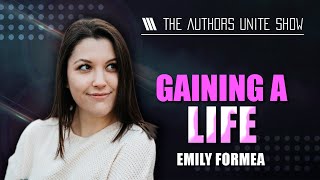
In this episode of the Authors Unite Show, host Tyler Wagner interviews mindset coach, author, and blogger Emily Formea about her decade‑long struggle with an eating disorder and her journey to recovery. Emily recounts her early life in southern Illinois, the pivotal moment when a doctor’s comment about her BMI sparked perfectionism‑driven dieting, leading to anorexia, binge‑eating cycles, and multiple hospitalizations. She explains how underlying psychological factors—fear of failure, over‑achievement, and family dynamics—fuelled the disorder, likening it to an addiction. Emily describes the turning points that made her choose recovery over the disorder, rejecting the “fairy‑tale” of thinness and embracing the painful but ultimately freeing path of self‑worth. She outlines her 3‑month coaching program for women, which focuses on rebuilding self‑certainty, identity work, and intentional eating rather than prescribing diets. The conversation covers her coaching style (weekly calls, text support, decision‑making exercises), client patterns (high‑achieving perfectionists, both restrictive and binge‑eating), and the importance of addressing the emotional roots of food struggles. Emily also shares details about her first book, Gaining a Life, her upcoming book Dear Normal Eater, a 6‑week online course, and how listeners can access her website and social media for further support.
Chapters
All right, everyone, welcome back to another episode of the Authors Unite show. Today I have Emily Formia with us. She is a mindset coach, author, and online blogger for women recovering from an eating disorder. So welcome to the show.
Thank you so much, Tyler. I'm so excited to be here.
Of course, I'm pumped to have you on. So I always like to start like from the beginning. So like, when you were younger, did you see yourself being where you are? Like, how did we get here?
Yeah, oh my gosh, I love that question. So I grew up always wanting to help people, but I never knew how. It's like kind of interesting because I like that question because it was something that always, I always had this desire to help people. And so I like went through high school and I was thinking about going into the medical field, but then I realized that I can't do needles or blood. So took that out very quickly and then went to college and I actually studied political science wanting to go into nonprofit work. And I graduated with political science. I worked in DC for about a year in the House of Representatives, which was like such an incredible opportunity. But I really just didn't feel connected to the work I was doing. Like it was kind of, I just always had that itch to give back and to work individually with other people. But I hadn't found kind of like where I fit in yet. And so when I left DC, actually, I started my blog, like just completely for fun. I had been through an eating disorder for almost 10 years of my life. I was going through my own personal recovery. And I was just documenting kind of things that I learned and things I wanted to share with others. And then it kind of all snowball affected to where I am now, doing what I always wanted to do, which is help people. But I think I really finally found my niche, so to speak, of like, where I could impact people the most and how I could do it on my own terms. Now being what I am, the coach for women who struggle with food. So yeah, kind of always had the itch, but I wasn't really sure where to go with it. But everything always kind of falls into place is what it's taught me.
Definitely, yeah, and I feel like it's kind of like you just keep kind of stumbling forward, and then from all your failures, you start to like go towards something that eventually succeeds. Even like Mark Cuban even says, he's like, "You only need one thing to win." Like that's it.
Yeah, and I think the failures, they do, they teach you what you don't want. Want to do. And that was pretty much what I told myself. I was like, okay, that's just like not what I want to do. It's good to know I can move on to the next thing. 100%.
100%. Okay, so the eating disorder thing. What— so when you— did you have an eating disorder?
I'm assuming. Yeah, I did.
Okay, so tell us about that if you can.
Yeah, so I— so if you can't tell, I have a slight accent. So I grew up in southern Illinois. I'm right across the river from St. Louis and grew up in like a loving family. I have a younger brother, both my parents. I was super good very good at sports. And around the age of 12 or so, I was an athlete. And so I was definitely a bigger kid. Like, I've always been a little bit taller for a girl. I was muscular. And I remember going to the doctor's office right around my 13th birthday, a few months prior. And my doctor weighed me and kind of showed me this chart. And I never blame my doctor. It's just kind of like my story of how things spiraled. And pretty much told me like, I need to lose weight. That I was higher up on the BMI charts, which now especially people are so against, like kind of ranking people like that. And I think it was the perfect storm. And I talk about this now, especially with what I do, where I was a perfectionist, like I was a perfectionistic kid. I was a very controlling type of kid. I was a Type A, like I love to organize. I love to like, I got straight A's. And so it was interesting because back then, especially, I really didn't fit the profile of someone that had an eating disorder yet. From my experience, I was like the perfect storm for someone to have one because I felt called out. Like I felt not good enough. I felt not perfect enough. And I thought, okay, then I'll just diet, like lose some weight and then I'll be perfect again. And so from there, I actually ended up in the hospital. My 13th birthday, I was hospitalized for anorexia, which is where you just kind of stop eating. I slowly started just cutting out more food, cutting out more food, working out more, working out more. And it landed me in inpatient. And looking back at my journey from there in 7th grade, I struggled all through high school and all through college with— I would just go through phases of not eating a lot. Then I started to develop binge eating where I would binge a lot. And this is something as well that I think isn't talked enough about online. It was just a way for me to cope. It was just a way for me to deal with feeling those feelings of insecurity and not good enough, etc. And so especially around college, my binge eating got really out of control and I would always start a new diet on Monday and by the weekend I was like binge eating everything in sight and then I would feel so guilty and so ashamed. I'd start a new diet and I cycled like that for years until I finally graduated college and realized that I just, I couldn't live my life anymore being controlled by food. And I've been to therapy, I've been to obviously inpatient and I never ever want to go against like medical professionals. I am not a medical professional. I make that very very clear to my clients, but it was always around like, just eat more, or like, just eat normally, or just eat naturally, and I just couldn't. I just felt so misunderstood. I felt like there was so much more going on in my psyche than just that I just wasn't eating food. And so I kind of had to go on my own recovery journey and learn what was really going on and do a lot of crying and do a lot of like healing, and, but it landed me with this opportunity of a lifetime where I can now kind of be that person who gets it because I did it, and now I can help other women do the same. When they feel sort of like they're just out of control and they can't not struggle with food.
Yeah, no, I feel you. And just so people can understand too, I'll share my story real quick about— because I didn't tell you this before we hopped on. I actually had gone to the hospital like 5 times, literally 5 times I went to the ER because— and it turns out sometimes when you have a gluten type of thing, it can cause panic attacks. And anxiety, like there's actually an association between those. So I, growing up, and as you might be able to tell, like I never had anxiety in my whole life. Like I'm a people person, so it was like very foreign to me. I was like, why does my heart feel like it's going to jump out? So I literally go to the hospital 5 times, and each time, you know, they take your blood, everything, and they're— I'm 28 years old, it was 27 when it was happening. So like, and they, they were just like You're fine. Like there's nothing. So that— so just like you, it was like, okay, well, it's like, yes, I do realize I'm like alive. So, okay, like that's good. But I'm trying to tell you that I keep having panic attacks and my stomach pain is so bad that like I feel like I'm just getting by every day. Like I can't thrive in this situation. So then I ended up— it was a lot of money, but I paid a doctor a side doctor that does not get covered by insurance. And then he discovered that and it changed everything. So the fact— I guess what I'm getting at here is the underinsured or the insurance hospital doctor, they're not always testing or looking at everything. I feel, and I'm not trying to put any of them down, I appreciate them. It's just like they're not— like the hospital would have never told, like, known that I had this allergy. So it's kind of like, so it's like, eat more. It's like, okay, well, like, maybe this is actually psychological. Like, there's a little bit more to this than just like, eat more.
Yeah, no, I love, I love that you had— yeah, it's a similar thing. And oh my gosh, the same, like, I adore medical professionals because I could never do it. I thought about it and was like, there's needles, no thanks. Um, but I completely agree in the sense of like, I think your relationship to life and your relationship to things is something that is starting to become more and more aware of because I, even when I am like, this is such an interesting point. Even when I was in college, I have had so many friends and so many people that knew me in real life reach out to me and say, oh my gosh, I had no idea. Like, you looked fine. Because by college I had definitely like put on a decent amount of weight and I needed to. And so if you saw me just walking around, always smiling, always happy, I looked perfect. Like I looked like a normal girl. Even at that time I got my period, like nothing seemed wrong. Yet in my mind, I just felt so broken. And like with you, there was something a little bit more physically wrong, but also the mental side of it of like, I'm having panic attacks, like something is off. I think it's not the medical professional world's fault at all. But for anyone listening, it's like, the way you feel is just as valid as how you look and the way that you think about things and the way you think about yourself. Like, For me, even when I was eating food better, I hated food. I had a terrible relationship to it. I would overthink. I would stress about it. I would count every single calorie. And even though I was eating, even though I was at a healthy weight, that's such an unhealthy relationship and it's such a struggle to live every day like that. And so, yeah, I love that you shared that because I get so many questions as well from girls who are like, how do I know if I have an eating disorder? And I always say, if you're questioning it, you probably have a poor food relationship. I'll never tell someone they have an eating disorder because I guess I'm not licensed to do so. But if you think about food all the time, if you worry about food all the time, if food has started to take over, right, like parts of your day, parts of your life, like that's a poor relationship to it whether you're eating it or not. And I want to help you kind of let go of that intense just stress and overwhelm from something as quote-unquote simple as food.
Yeah, it's so— so I want to dive deeper into this because it's like, I, I— so I'm— I run every morning, but really for the reason it's for my mental, but also because I love to eat. So I run like 6 to 8 miles every morning just so I don't have to think about what I want to eat. So I just, you know, and I, you know, we're talking like last weekend I had, um, like 3 filet mignons in one day. Like I eat a lot.
Live in the highlands, yeah.
Crazy stuff. I just like mentally, like what, so I know it started in the doctor, right? So you said you were overweight and was that like, that literally like struck you so hard that like, 'cause I don't even know, like how did, how does somebody even like not eat for that long? Like I just love food so much. Don't understand.
So no, I love— you're asking such a good question because I get like, I get asked a lot of the same questions and sometimes I just love getting like different ones. For me, like, I, I look back at the time when I really struggled with like especially anorexia and I like, not to trigger anyone listening, like I would not eat. I would physically, I would go all day. I would have like carrots for lunch. I would drink about 6 coffees. I would work out for an hour and then I would have like the smallest meal I could possibly possibly get away with at dinner, and I would start the day all over again. And when I think back to that, like, now I can't even miss lunch. Like, if I miss lunch, I'm like so hangry. I'm so aggressive. Like, I'm in a bad mood. And like, but I think about it all the time. I just was running on autopilot. There was no— and this is something that's interesting in the eating disorder community, and it happens with— I always talk about, I always say it happens with women because I solely coach women because I'm a woman. So I just want to say, like, I know men deal with eating disorders. I know all genders deal with eating disorders, like, but from my experience, I've talked to a lot of women as well who suffer from binge eating on the opposite side where they eat, they just gorge and gorge and gorge. You kind of black out. Like when I really struggled with food, I just, I don't even really remember a lot of my high school. And as sad as that sounds, it was because I just couldn't deal with the pain. Like I was going through such an emotional traumatic experience to a certain extent in like my mind and my subconscious mind. And me trying to perfect my diet and perfect my body and perfect my day was my way of trying to have control. And so I love that question because I don't know. I think that's what's so interesting about eating disorders is that— and I remember feeling this way, especially when I was in the hospital. I remember feeling like everyone thought I was stupid, like everyone thought I was weak, everyone thought that I was silly, like, and they didn't, but in my mind, like, I was, they were like, just eat more. I'm like, I don't understand. Like, I can't, like, I can't calm down. And I think there's this misconception that if you struggle with an eating disorder, you're kind of like, yeah, that silly, weak, kind of vulnerable person. And I think it's the opposite. I think you're so, so headstrong and so determined if you set a goal. And you are in a way, a miracle, like a very dark miracle. I'm not saying do this. I'm saying like, but it's so important to understand that you're actually all of these positive attributes that you've attributed to a negative goal, right? Like I'm a very driven person and I started my business, like all these things. And you can use your personality profile for good and you can use it for bad. Like it's the same thing as addiction people. Like I was addicted to my eating disorder and I have an addictive personality. And so I just like to empower people to understand that like you're not broken, you're not like silly. It's not a weak thing. If anything, you're extremely strong and we need to use that to help you recover. We need to stop just putting you down and being like, you don't know what's going on, you can't get it together, like eat more. It's like, you know, how do you feel? You probably feel like you just can't stop because that's how I felt.
Yeah, I could not agree more. I was literally just going to say that. I was like, in my mind, it seems like it's a strength because I'm sure you've heard like fasting. Yeah, fast. So like, I've, um, I have a friend in Miami. He's all about like keto and fasting. And so I've tried fasting, like, and I've done like 24 hours and stuff, but like, dude, like, that's strong. Like, I know, like, he, he's done like a week or some, like, and I'm like, dude, like, that is just so beyond what I've ever even thought of ever doing. Um, but like, so to be able to actually not, just like you said, it's kind of like using that that headstrong, that discipline. Yeah, because I— 3 meals a day. I mean, I just— if not, I just, like you said, I will start to be like, dude, I'm pissed. Like, I'm hungry.
Yeah. And I also think like, oh, I know. It's so funny now because I do. I think about it and like, it's such a gift now that I'm like, I'm hungry. I feel hungry. Because I think the second part of that, and I always say this too, it's the same if you struggle with really overeating or emotional eating, like you've created a disconnect between your body and your brain. And that happens like on a subconscious level when you start to to just really, really hate your body, you're like, "I hate my body. I hate my body. I hate how it looks," you're going to start to not listen to it. And so I will never forget when I was actually hospitalized, one of the nurses asked me like, "Does your stomach ever growl?" And I was like, "No, literally never." Like I don't even remember the last time it growled. Like I had just completely cut off ties between like living intentionally and intuitively and like checking in with my body. Like I was so tired and my body felt so just weak. And like, I'm not trying to be sad. It was just, it's interesting now to look back at it. I think when you live in a society of like, if you're sad, just like lose weight, like fix your body, that your emotions are somehow tied to like your physical body. I think in the moment that the doctor kind of hurt me, and I had that first moment of like feeling rejected, I felt rejected towards my body, which made me also hate my body. Like I was like, oh, like This is what's wrong. Like, this is what's wrong. This is the missing key or the missing piece of the puzzle. Like, I just need to fix my body. And then it creates just that spiral effect of you just don't listen to it anymore. You don't trust it. Like, you don't trust your body. If you're hungry, you're like, no, no, no, you're not hungry. And like, that's what dieting to a certain extent does. It throws off all of your natural, like, intuition. It's like, no, no, no, we're only gonna have 6 grapes, not 7, right? Like, it just makes it very, very disconnected. And I think that that was a huge part then in my recovery of like having to kind of quiet my brain and realizing that my brain doesn't get to dictate my body because my body doesn't dictate my brain. I think it's like a second piece to kind of people's relationships with food. If you're always against your body, you're gonna start to not listen to it. Yeah, that's what I did, and it spiraled me for years that way.
Yeah, it's definitely like The, the mental, right? Because I mean, I would imagine, I mean, even though I guess you didn't feel like your body was hungry, right? Like, but you mentally were not hungry. So it, it, like, they're definitely, they're connected, but it, but you do need to look at them separately to actually diagnose of like, is she not eating because she's not hungry or because like something psychologically is like off, right? And that's where the eat more is not a valid response because it's more up here. Like, it's not— it's like, yes, obviously I'm hospitalized. I need to eat more. I'm aware.
Yeah, I say that all the time. I'm like, I know, but I can't. Like, honestly, and that sounds so crazy to people, and I understand if people don't struggle with food. I'm actually working on a second book Which like is really cool to talk about this part. I'm working on a second book called Dear Normal Eater. And it's all about the misconceptions I think that people hold of eating disorders. And it's no one's fault. I can't relate to someone who has depression. I can sympathize with them and try to— I think that's the right word. I can try to make them feel better and I can listen to them, but I don't have it. And as someone who had an eating disorder, I think there's huge key points that would help people understand more if they know someone, if if they're dating someone, if their child is going through food struggles, what's actually going on? Because exactly, like I knew, I knew the whole time that I needed to eat more, that I couldn't keep dieting, that I couldn't, I just couldn't stop it because I wasn't being treated for the actual core problem of my situation.
Yeah. No, that makes sense. And what's your first book called?
So my first book is, it's available on Amazon. It's called Gaining a Life. It's the untold story of my eating disorder and recovery, which is pretty cool because that's pretty much what I've been talking to you about. So it goes— the first half of the book is my true vulnerable raw experience with my eating disorder because I think it was a blessing in disguise for sure. I struggled for about 10 years and I struggled in all the ways, which I think is sometimes not seen as much. Like I would go through just not eating and then I would go through spurts of just gorging and like emotionally eating. And then I would go through spurts of counting every calorie like So I share my like true journey with food and how I just always struggled with it. I just couldn't get over it. And then the second half of the book is how I did get over it and how you can too, and how it's not at the end of the day a struggle with food. It's a struggle with your sense of self. And that's what I preach. And that's like, yeah, that's the second half of it.
Gotcha. Okay. And now, so I guess, um, you've kind of stated, but how did, if you were to like say how you did, like how did you get over it? Like, was there like a moment or was it like you just literally physically were deteriorating and you were like, this has to be fixed now? Like, how did it get solved?
Yeah, I definitely had like two moments that I think, 'cause, and I'm sure people listening who've ever struggled, like I tried to recover before, that's the other part of it. Like, you know, you're sick, you know it's not serving you and you've tried, you've tried to get better. You've woken up the next day and been like, I'm never going to struggle with food again. And then the next day comes and you do. And like, so I had definitely tried before. I think the two major keys that made my recovery stick and I, I like giving this advice because I think it's for any sort of self-development, even if you don't struggle with food, like if you're struggling with something addiction-wise, I guess is a better way of saying it. One of the key points for me was realizing that like I had the choice to stay with my disorder and I had the choice to recover. And both of them almost looking at them like pathways. They were both really painful. Like I think there's this whole fairy tale that can come with eating disorders where it's like, oh, but you're gonna be beautiful and like all the guys will love you and you're gonna be so thin and like this, that and the other. And I had always chased that fairy tale and had to have a very like real and honest moment with myself of being like, and it never ends like that. Like it doesn't end. Like you've tried for years to like find this happiness and like once I fix X, then I'll be happy. And once I fix Y, then I'll be happy. And so I think I had to call out my fairy tale and just be honest saying that my disorder was extremely painful the whole time and it ended in pain. There was no like horizon or like rainbow at the end. It just always kept hurting me and letting me down and taking away my life. And then recovery was also painful though. And like, I'll never say that it's not. I always say like, it's scary. It's scary to change. It's scary to grow. It's scary to go through self-development. But I knew that recovery ended in pain-free. Like I knew I had to go through the pain and it was going to be scary and long, but I knew that my life was going to be better without my disorder. So I kind of had like two paths of pain is what I say, which sounds really depressing, but like I could choose. I knew they were both painful. So I needed to stop kind of idolizing my disorder of like, no, no, no, this is good. This is fun. Like this is fine. It was not. And then finally choosing the path of like, listen, this is also painful, you can do it, but it's going to end. I think that was one of the moments that really made me finally stick to my recovery. And then I think the second one was what I try to do now is like having more open and honest conversations with people about my disorder because it made it so much less scary. Like I always, I just did, I felt crazy. I felt like I don't understand how people can just go to a restaurant and order off the menu or like I don't understand. How, you know, people wake up and they don't just immediately like count their calories for the day. And like, I— so I think having like conversations with other people made it so much less scary and made me feel so much less alone and also made me realize that kind of my theory throughout my whole life was that it was so much deeper. Like I learned about the brain and about like childhood trauma and I learned about like my biggest insecurity as an individual is like being seen as a failure. Like I'm an overachiever. And so that's exactly what I did. I somehow created this goal in my mind of like losing weight was me achieving, and if I didn't lose more weight, I was failing. And I can change those metrics. I can work with that story. It was so much deeper than just eat more food. I think those were the two moments that I really like took control of my life again and just like refused to turn back, like just refused to go back to my disorder.
Yeah, it seems kind of similar, I would imagine, to like, like actually like a drug addiction, right? Because it's like Both paths are painful, right? But in the immediate, if you continue, you know, whatever drug it is, if you continue to use it, you feel good while you're on it, but you're— but it's, it's still painful, you know, the whole time. Or, you know, you go to recovery and it's like the next 30 days or whatever it is, is, you know, hell for sure. But then there's at least— there's something good at the end of that road.
And it's finding like, it's like finding what that, what your drug did for you. Like I say that all the time. It's just not being scared of it. Like when I look at my disorder, it gave me a sense of control. It gave me a sense of routine. It gave me like, it's asking yourself, I do this exercise with my clients is it's like, what is your disorder doing for you? Because in a very, very dark way, it's become your coping mechanism. And so what we need to do is find a new coping mechanism that feels fulfills those exact like qualifications as intensely. And so I think it's just not being afraid of it. Yeah, like the same thing with a drug addiction is like, okay, so do you use this drug to detach from reality, right? Like that's a huge one for emotional and binge eating. Like you use it to detach and to numb yourself. How can we work through why do you need to numb yourself in the first place? And what's going on that's causing you to numb? And how can we find other ways to quote unquote numb, right? Like it's, I just don't think that it's beneficial to go up to like a drug addict, for example, and go, "Just stop using." Everybody knows what they're supposed to do. Like I knew I was supposed to eat more or eat less or whatever I was like dealing with at the time. Like I know. Why was I undereating? Like why was I then emotionally eating? How can we stop, yeah, get at the wound instead of band-aiding it? It's, yeah, it's exactly like a drug addiction.
And like, yeah, discover the actual underlying like cause of it. So I'm curious, I'm sure you obviously can't probably name their names, but for the people that you've worked with, is there— can you share some stories without like revealing their identity? I'm assuming you probably wouldn't want to do that. Unless some of them might be open to it, I don't know, but it's pretty serious topic. But yeah, I'm just curious, like, what's the process like? And like, the results of it?
I definitely have a couple girls like on my website who have like given me testimonials, so they're comfortable with it. But I like to talk to talk about almost as like a whole, because it's been interesting to me to find that I think there's this huge, huge group of women who struggle with food but don't fit the profile of someone who struggles with food, because that was me. Like, I almost found that there were millions of women who were getting straight A's, like had a job, like were super friendly. People loved them. They were the overachiever, the perfectionist. They were always on top of their life and then they just could not calm down when it came to food. And because when I was hospitalized or when I was like much younger, I think there was this— because I even remember being hospitalized and the therapist telling me like, "You just don't fit the profile." Because I was happy. Like I was happy. I had friends. Like I was— and I'm so grateful for that. Like I wasn't just depressed and sad and quiet. Like I just was so high-strung. That's honestly— I was just so high-strung. And so I've found that I've worked with about 20 girls so far and I do 3-month coaching with them. So you get like an hour call with me every week. And so my favorite thing, I think, about being a coach and not like exactly a therapist is that they also get to like text me nonstop. So it's really cool to like be in those moments of like, I'm really struggling, I'm scared to eat, or like having an amazing day. And so I love what I do. I adore what I do. But more often than not, almost all the girls that I've worked with have struggled with food in different ways but for the same reason. And I think that's really cool. Like I've had— I think most of my girls definitely fall more on the anorexic side of the spectrum where they struggle to eat enough. They're used to kind of skipping meals or eating really small meals, especially if they feel stressed. Like it's their coping mechanism. But I've had women who I've coached who struggle with binge eating. And so they'll just, you know, have a good day, everything's fine. And then at night they eat like 4 boxes of cereal. And why are they doing that, right? Why is that happening? But when you dive into it and we have gone through the process of the first month is truly like I don't even talk about food. The first month of my coaching is pretty much like, who do you think you are and who do you think you have to be? Like I shared with my example, what are your biggest insecurities? Because mine is being a failure. So, if someone came up to me and said, you are a failure if you gain weight. That I'm going to go, okay, I can't gain weight. Right? Like, what are your metrics around who you are as a person? And most of it is tied to childhood, right? Like almost all of my girls are terrified of failing. They're terrified of letting go of control and they're terrified of being seen as not good enough. They're just overachievers. And then the second month is a little bit more like, okay, so how has this manifested into your relationship with food? Right? So what is this fulfilling? What's the story once again behind these actions that you're taking with food? And then the third month is how we change it. So I just think it's like, it's so funny to me because I don't, I never tell my clients how to eat. I never tell them what to eat. I never tell them. I had one girl, I'll give like an actual real example. I had one girl when she started working with me, she was eating about like one meal a day. And we started talking about like over the weeks we were talking about how like, you know, I want you to try to start eating maybe two meals a day. Like if you feel comfortable with it and this, that, and the other. And she came back to me one day and said like, like, I just couldn't do it. I couldn't have the second meal. Like, I was really freaking out. I was really anxious. And I said, that's okay, but you made the choice to not have that second meal. And then tomorrow you're going to make the choice to have it. And so I guess what I'm trying to say is it's so much more around like your sense of self-certainty, your sense of self-confidence. It's, it's so much more around your sense of self-worth. And you need to establish all of those grounds first before you start telling someone eat more. Eat less. Eat a balanced diet. Eat whatever. Like with her, I told her, I said, if you don't eat the second meal, fine, but you have to make the decision immediately. You can't let your brain spiral. You can't do the anxiety thing. Like, I want you to make the decision immediately. And that day she made the decision not to eat, but then all the days after, she could immediately say like, I'm having this meal. I don't care what's going on in my head. I don't care all the noise and all the voices. Gaining that sense of self-certainty allowed her to then just to just take action and take it like full-hearted, hands-on. Like, I just think what I do is so incredible because I really don't talk about food much. It's more just like building yourself up. I also didn't mean to sound like I'm so full of myself. I know it's so interesting to me. It's so interesting to me because that's what finally allowed me to recover was being like, I have to give a shit about myself. I have to speak up for myself. I have to not play victim to my disorder. I have to I don't have to just listen to the voices in my head. I can talk back to them. And that's what I coach way more than like, you should have a carb, a fat, and a protein. Like, blah, blah, blah. It's like your relationship to food.
Yeah, it makes sense. And I think, you know, obviously you already know what you're talking about, but as you work with more and more, you'll probably start to discover, as I feel like you've already have, some similarities, right? And that's where you could like, You know, it's helping somebody one-on-one, it's obviously very specific, but as you work with hundreds to thousands, you'll start to come to just realizations of like, okay, when she's like this, it typically historically has been proven it's because of this. So, you know, and then your diagnosis kind of will, I suppose, be like quicker in a sense. Like, I've dealt with this before. Like, I know what this is.
Yeah. Oh, even when I first started, I like had like my first like 4 4 clients, and I used to have like 2 calls on Sunday and like 2 calls on Monday, and it never failed. I don't know if it's like God, the universe, whatever, like it never failed that they were on the same schedule, but I'd never talked to them about each other, obviously. Like I never like went into the call being like, we just talked about blah, blah, blah, like let's talk about it. Like, but they were the same, they were the same. And the pattern throughout our months together were so similar and they would come to the same realizations and they had struggled with the same old stories. And yeah, I think there's this huge gap in eating disorders or in disorderly eating of women who just need to relax. Like I say that as like me, like that just need to relax and that just need to let go of the diet culture, the society fairy tale that life will be perfect once you're this size or whatever it tells you.
Yeah. And I think too, interestingly, like, and I'm not, I'm not a psychologist, so I don't know, but like it seems to me like childhood stuff is like just so it affects you when you're older, like, so unbelievably much. So, like, for your— you said fear, a fear of failure. Can you kind of trace back and note, like, why? What is this, like, overachieving? Like, is there something— is it the way you were raised? Like, or like, why do you think you are this way?
Yeah, so I think it's— I think food struggles are really cool because, yeah, we talked about kind of the personality profile of everyone. For me, when I was growing up, I definitely, like, my parents didn't have the best relationship to each other. I sound like such a hippie-dippy, but I love like psychology. I think it's so fascinating. And I've, I've done my own like psychoanalysis on myself, and I'm like, this is why I'm crazy. So my parents, my parents did not have a good marriage whatsoever. And I was the oldest sister and I had a younger brother. And now my parents are fantastic humans. They have treated my brother, I mean, they were incredible parents, but they shouldn't have been married. My parents should have gotten a divorce when I was very young. And I think growing up in that environment of feeling like the only way my parents had a moment of love between them was when they were proud of Brian or I. So, and Brian and I've actually talked about it before. I think we just grew up with this kind of pressure of if I overachieve, if I come home and I got an A+, if I got that internship, if I play perfect at my baseball game, then maybe it'll make them love each other for a second. And maybe it will somehow calm the tension between my parents in my household. So in a weird way, Brian and I kind of took on the role as like being a distraction. And it worked. Like it would work. Because if I had like a dinner for like an award I won, right, both my parents came and they were so proud of me. And they were like, So I think from a very young age, I was somewhat brainwashed, and it was partially my own doing. I think that's also like an important thing to note, because if you own it, it means you can change it. It was somewhat of my own doing that I had created this facade in my head of like, I'm only lovable if I'm achieving. And then I took that to be where, okay, now I'm going to achieve the perfect body. And the perfect body from absolutely everywhere that I looked was extremely thin. Everyone was on a diet. Everyone was not eating carbs, not eating fat, not eating whatever. And I was like, oh, okay, perfect. I can get even more perfect and people will love me even more and I can be validated even more by other people. And so yeah, I think for sure, like, everything, everything makes sense from childhood. It really does. Because when you're so young, you don't know how to protect yourself from pain. And so like, even at 12, when the doctor, I think, kind of hit that thorn in my heart, now I would have like left the thing and been like, that was rude, right? Like, or I would have been maybe upset for like a day and then I would be like, okay, like we can get over it. But when your psyche is not fully developed yet, like I just, I couldn't imagine that I had just been attacked in that way, in that emotional way. And I just held on to it and I was like, I'm never going to feel not good enough ever again because my whole identity is on being even better than good enough. And then yeah, it totally transpired to be like the 10 years of just just always being so terrified of being not good enough again or of not achieving something.
But yeah, you're like using that energy now obviously in the other direction, right? So yeah, I guess, you know, last thing I'll just, if there's anything else you want to share, you know, go for it. And then, you know, website, social media, book, like, you know, floor is yours. Red carpet.
Thank you, Tyler. Yeah. No, I've loved it. I think the final thing that I would say is, I guess it's like two parts, is one, if you have to, like I said before, but if you have to question your relationship to food, you deserve to have a better one. I think like the most heartbreaking thing that I ever experienced is when women will email me or DM me and ask me like, well, like I do this, this, and this, but I don't really know if it's like bad enough, or I don't really know if it's like an eating disorder. I don't really know if I deserve recovery. Like I've heard these messages and I'm like, Like if you even for a minute think that food is controlling you in any way or hurting you or altering your life in any way, you don't need permission from someone to go, yep, like you have an eating disorder, you need to get better. Like I just think that that is such a skewed mentality of like getting permission to validate your struggles. Like girl, like if you struggle, like then you deserve to get better. That's like the end of that one. So I would just say like to really, yeah, take inventory of your own relationship to food. And also on the opposite end of it, to not go crazy. So I think this would be like my final message, like kind of to lean on, is I also then sometimes get the message of like, well, what if people like are, you know, dieting to like lose weight to better their health? What if people like eating, you know, really clean? Like, what's the problem with that? And I am all about intentionality. If you love eating oatmeal for breakfast because it makes you feel amazing and it makes you kickstart your day, and I'm never gonna be like like, um, but like you should probably eat pancakes because like food freedom and like that. Like if you, if you, if your intentions behind, yeah, running in the morning is because it makes you feel good. Oh yeah, it's a perfect example. It makes you feel good. It keeps your body in a healthy balance and a functioning body. I never, I try not to say healthy, like in a functioning body at a functioning good weight, like so you can eat and enjoy life. Perfect. Like I'm just all about intentionality. I'm never going to sit here and be like, like, never eat an apple, always choose the chips. Like, take care of yourself. Take care of yourself. And when you do things like eat and work out and even sleep, like, just having the right intention of I love myself so much that I'm gonna make this decision. And sometimes loving yourself so much is getting ice cream with your boyfriend. So it's always about intentionality. I think like, that's my like last little spiel. But yeah, I have my website itself is probably the best place to go to find everything else. All of my socials are linked there as well as my book, email, and coaching applications. And that is www.sincerelyxoemily.com. And like I said, you can find my Instagram, I have a YouTube and podcast, as well as a course that's available. So even if you aren't really comfortable or financially ready to work with me one-on-one, I've created like a 6-week course to help you through your food struggles. But I just really appreciate it, Tyler. This is— I've never been asked a lot of those questions, and I really like those. So I really appreciate it.
Yeah, no, thanks for coming on. This was an awesome conversation. I think it's going to help a lot of people. So thanks again.
Awesome. Thank you.
More from Tyler


Catherine Nikkel : THE STORY EVERYONE HAS BUT HASN'T TOLD : The Tyler Wagner Show #1120



Scott Ritzheimer: Bring Predictable Success to your Organization | The Tyler Wagner Show #1115


Fred Moskowitz: A GUIDE TO GETTING STARTED WITH IN MORTGAGE NOTES | The Tyler Wagner Show #1113

Mark Podolsky: From Land Investor to Full Time Success How I Made $90,000 Cash in Real Estate


Mark Podolsky: How to achieve a 300% return on investment my foolproof strategy

Mark Podolsky: How to make passive income selling raw land the irresistible pricing strategy