Graham Lutz: FASCINATING SCIENCE AND HISTORY OF OUR BRAINS | The Tyler Wagner Show #1098
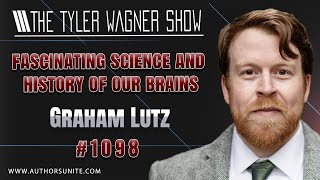
In this episode of The Tyler Wagner Show, host Tyler Wagner interviews Graham Lutz, a neuroscientist, Harvard psychology master’s student, author, speaker, and coach. Lutz shares his personal journey—from a teenage rock‑star dreamer and early entrepreneurship to a pivotal moment reading a neuroplasticity book that sparked his return to education. He explains core neuroscience concepts such as neuroplasticity, synaptic pruning, and dopamine’s role as an anticipatory reward signal, linking them to everyday challenges like language learning, motivation, and limiting beliefs. Lutz argues that limiting beliefs are the first domino that blocks dopamine‑driven action and that consciously removing them unlocks motivation and learning capacity. He illustrates these ideas with anecdotes about his family, his early music career, and his own struggles with finishing projects. The conversation also covers his upcoming book on the willingness to be wrong, a TEDx talk, a course on limiting beliefs, and his social‑media presence. Throughout, Lutz emphasizes that embracing the willingness to be wrong, training the brain to derive dopamine from effort, and re‑framing emotions are practical skills for personal growth and innovation.
Chapters
All right, everyone. Welcome back to another episode. Today we have Graham Lutz with us. So welcome to the show, man.
So happy to be here. I've been really excited about chatting again. We had a quick chat the other day, but really excited to dig in a little deeper.
No, me too, man. I think my audience is going to love this. So just to start, can you tell us a little bit more about you and what you got going on?
Sure. So let's see, kind of a lot of things. That's the ADHD bit. That's me always doing some new thing. Those currently include, I'm writing a book on exploring the willingness to be wrong and kind of the skills around that. I'm working on a master's in psychology at Harvard. I just got the invite this morning to give a TEDx talk in Boston at the end of the year, which I'm super pumped about. Working on a course around identifying limiting beliefs and a lot of the neuroscience and psychology that is kind of missing in the, you know, general discussion around limiting beliefs. And then of course, coaching, speaking, all that stuff.
I love it, man. Yeah. So I know from our last, we could probably do like 3 hours, so maybe we'll do a part 2.
Sure.
But just to start, I'm always curious on this. So when you were in, let's say like middle school, high school, did you foresee yourself doing any of this work that you're doing now? Or what, what was your trajectory that you thought was going to be?
No, I was going to be a rock star.
Oh, I love it. Well, that explains the guitar. There we go.
No doubt about it. I was going to be a rock star. At the time I played drums. I started playing drums. I then kind of got to where I can play everything. So it's not pictured here. Oh, you can see my saxophone here. I've got a guitar next to me right here. I've got piano. I've got ukuleles and all kinds of stuff. So I got— I was the kid who could play all of the things. So I was in all the bands, right? Anybody who needed somebody, I was the guy. So yeah, it was gonna be It was gonna be, it was gonna be rock star. In fact, uh, I played with Manchester Orchestra, if you are familiar. I played with Manchester Orchestra, um, back when we were playing in, uh, in Lauren's garage.
And there you go, Lauren, shout out! That's awesome. So you were— okay, so the plan was rock star, and then when, um, I guess when did that shift? Yeah, yeah.
Well, I got married young.
Okay, that could do it.
Yeah, I got married young, and, uh, right about the time the band was getting ready to go on tour. And this is not tour like they go on today in, you know, fancy tour bus, you know, uh, and, and done up really well. This was, you know, 5 guys sleeping in a 12-passenger van for a month or two. I wasn't going to bring my, my new wife on the road, that kind of thing, right? So anyway, so I left and I actually have a funny story. A few years later, I had just had my first kid. I was back in school. Life was rough. It was, this was like a tough spot in life. Money was tight and I was sitting on my on like just in a chair watching David Letterman and Manchester Orchestra comes on. And I'm sitting here and I have my brand new son, he's a few months old, like sleeping on my chest. And I just remember thinking like, oh man, like I would definitely not trade this to be on David Letterman playing the music, you know?
Yeah, yeah, for sure.
Yeah, I still kick myself every now and again when I go see him at the Fox Theatre.
But yeah, no, but yeah, I mean, dude, that's what's interesting. I'm— well, we don't need to go that deep into that, but I'm very— I'm excited to have kids. I've actually heard it's interesting when you would think that you would like have less time to work or you work less. But I've heard once you have kids, there's like something— there's like an extra motivator that kind of kicks in and your work actually— you become super productive. Right? Because you have something that is unbelievably amazing to look forward to always. Like, so maybe the work time is less, but the productivity is 10x.
Because if I'm going to be sitting here at my desk, not playing with my baby, I'm going to be focused and I'm going to get shit done while I'm here so I can, so I can get out.
Yeah, like it's got to be worth it. You know what I mean? Like, and so that I'm excited for that stage. That'll be cool.
Yeah.
Okay. So, so you have a family and then so, and now you're in Harvard. So was there college there at all or did college come later? Like how did—
College came later. Okay. So graduated high school. And when I got outta high school, like at that moment, that was the last time I was ever gonna read a book. I hated school.
I had never—
I was done. Right. And, you know, I was the kid that all the teachers said, you know, if you just apply yourself. It's like, well, I am applying myself. I can play the drums, I can play the guitar, right? I have this lawn mowing company, I make all this money. Like, I apply myself, just not to, you know, this book you want me to read. Sorry, right? Um, so yeah, so, uh, when I was done with high school, no interest. And it wasn't until, let's see, about 7 years later, I had done you know, a number of different entrepreneurial things. The one that, the one to talk about here is I had a manufacturer's rep company. So connecting consumer electronics suppliers with kind of the big distributors. It was going well, sales were trending up, and then October 2008 happened. And it was just a disaster. You know, I, I ended up having to refund like tons of money over the next few months because people were canceling orders. It was, it was really, really rough. And so here I was, 24 years old, no college degree, out looking for jobs, competing against 40-year-olds with an MBA and 15 years of sales experience. For the same, like, $50,000 a year job, right? Like, there was no way I was getting one of those jobs, right? Anyway, about that same time, I read this book called The Mind and the Brain: Neuroplasticity and the Power of Mental Force. And like this, literally the first book that I had read in a long time. I have no idea why I picked this one up. If there is If there is an intelligence, the intelligence was involved in having me pick this book up because it changed things for me a lot. So this is just about the idea of neuroplasticity, right? This was in the early 2000s. This was relatively new and kind of emerging understanding that, hold on, we, we can actually change our brains with, you know, intentional practice. And so the, the story from the book that really stuck with me and has till this day is a study that was done on, on a group of monkeys, actually at this primate research place in Lawrenceville, which is not too far from me here. So they map these monkeys' brains and identify kind of 5 individual locations that correspond to motor control of individual fingers. They then tied the monkeys' hands together such that they only had 3 fingers, right? These 2 fingers tied together, these 2 fingers tied together, and then left them that way for a while. So they were eating, they were going about their business like this. Months later, they mapped the brains again, and the brains of these monkeys have gone from 5 individual locations to 3 individual locations. That control finger movement. And so these two fingers were, as far as the monkey's brain was concerned, one thing. And then what's even crazier is that they untied the monkey's fingers, gave them this whole set of exercises to do, like, uh, getting a treat out of a tube that required just a single finger, right? Their two fingers couldn't fit. They did all that stuff. So they started using their fingers independently. Map their brain again, and they're back to 5 individual locations that control the movement of their fingers. And at the time of this study, like, this was groundbreaking, right? The understanding at the time was that brains, you know, add connections and prune connections up until you're about 5 years old, and then you're more or less set, and it just kind of grows and expands. And this really turned that on its head such that, you know, hey, no, no, we can actively change our brains. And so that right there became this big foundational thing for me. So I read that book in literally a couple of days, start to finish. And as soon as I finished it, I applied to Georgia State, got accepted. And like a month later, I was in an intro chemistry class. Um, that's wild. That's awesome. The beginning of a neuroscience degree, uh, that I got at Georgia State. Yeah.
That's so interesting. So that was, cuz yeah, I've heard, and I think I've heard more this from like psychologists that I've, like Jordan Peterson and stuff. They say it's like up until 7 years old, like those are the most, um, like kind of important years, right? And then from there it's really hard to kind of like change the way, like say if your parents are super loving to you up until 7, like it's more likely that you're going to be a happier person throughout your life rather than vice versa. So something in those like brain molding years, I guess you could call it, even though your brain's not technically fully developed till 25, right?
Right. Yeah. So there's different things that have kind of these, these different benchmarks, uh, in terms of age. Right. And so, Language learning. It's like literally up until 3 or 4 years old, like kids can learn language like it's their job. It's super easy, right? So kids who grow up in a bilingual household just speak both languages with no effort. They don't try to learn two languages.
I'm so glad you said this because I feel like I remember, I mean, I don't remember obviously, but it must be much easier then, right? Because now I'm trying to learn Spanish right now and it is so freaking hard.
Yeah.
So I wish I would, you know, that's something good though for people to know. It's like, even if you don't speak the languages, and tell me if I'm wrong on this, but maybe it's a good idea to have your kids early, like very young, learn as many languages as they can because it's 100%. It's the best time to do it.
If I could do one thing differently, well, one of the things I would do differently as a dad.
Everything else was perfect.
One of the things I would do differently as a dad. Is that I would have exposed my kids to another language early on because literally at that, at that age, it's effectively effortless for them, for them to learn. And then there's a number of different ones leading up to— you mentioned 25. The 25 age is when kind of the executive function in the prefrontal cortex is really finalized. Right? Like, they can fully utilize kind of the functional capacity of a human brain at that point.
Now, quick question. Do you know why is it that it's so much easier to learn the languages from like 0 to 4? Do you know why that is?
So, not specifically, I guess, but I, you know, given my neuroscience and psychology education, like, I can make some educated guesses here that there's an evolutionary advantage.
Yeah.
Right? That, you know, once we as a species got to the point where we were communicating with language, the children who could easily pick up that language were just gonna do better than the ones who struggled with it until later in life. Right? So I wouldn't be surprised if there just was some evolutionary pressure that made it that way. That's one thing. I think the other is that, is that like the, the neurochemistry of a 2-year-old brain and the neurochemistry of a 40-year-old brain are just very different, right? You know, and, you know, there's things that a 2-year-old brain needs, neuroplasticity being a big one. So there's just a lot more neuroplasticity, right? So I mentioned earlier that there was this idea that there's lots of neuroplasticity young and then that stops, right? We've, while we've updated that belief, there definitely is a reduction in neuroplasticity from childhood into adulthood, right? And so there's things that we can take advantage of, but we just don't have access to the kind of neuroplasticity that a baby has. And part of that is, is that our brains are very good at learning. Like, learning is the thing, is the reason we are different from other animals. One of the reasons we are different from other animals, right, is that we can learn and that we can create concepts. And that, and our brain does all of this stuff, filters things, and like, builds constructs for us below the level of our conscious awareness. And babies need to collect enough context to utilize a bunch of these things that we all take for granted, right? Like for us, we can just, you know, look at stairs and understand with zero effort that the shadows and the differences in color mean that there's a step and that this step is further away and further down than that step, right? No effort is required. But for a baby who's just starting to move around the world, the mechanisms in here that, that deal with that have to be developed, right? They have to learn that this thing that I am seeing, you know, is, is not just a two-dimensional change in colors.
Right? Yeah.
Yeah. So like having, having that kind of experience and the ability to turn that into, uh, uh, turn that into effective interactions with the environment is, you know, one of the reasons babies need to be able to do all of this kind of stuff early on.
Got it. Yeah, it's, it's super interesting. Um, Cause I, I, I don't know. And, and obviously I, it's not my, uh, field of expertise by any means, but just from like a logical standpoint, right? You would think that, you know, once you're older, it would be easier to learn something, right? But when it comes to languages, it's the complete opposite. So it's interesting.
So, so if, if I can, I'll dive into that a little bit. Um, so. One of the things that allows babies to learn, or kids to learn much more easily, is this idea of synaptic pruning. Right? So like, you know, you've got connections that are made. And one of the things babies can do is like, oh, hold on, this connection that, you know, to use the example of the stairs, this connection that had me take a step off this stair and fall down the stairs, ooh, that's not working out for me. Let's prune that connection and let's build a new concept of this thing, right? And so then, and they need to be able to do that over and over and over and over with every experience they have in life for, you know, years and years, right? And so then we've gotten to the point where, again, looking at it from kind of an evolutionary standpoint, We've had enough experiences up till this point that those things, uh, that, that were going to kill us haven't, right? And so we, we did what we needed to in terms of interaction with the environment and building the pathways that allow us to survive up till this point. So we, there's not a whole lot of value, uh, again, from an evolutionary standpoint. In, in that synaptic pruning now. Right? And so that is why we get stuck in these patterns we get stuck in. Right? That is why we have limiting beliefs. Right? Is because this thing that protected us from, from pain or discomfort or something as a child, brain was like, ooh, this worked for us. This protected us from this thing that was, that felt threatening. Right? And so then that we bring with us and it becomes a very hard thing to deal with, um, as adults to kind of identify what are these, what are these patterns and beliefs that are, that are keeping me from achieving more or holding me back or, or have bad outcomes for me now in relationships and business. And that kind of stuff. So you have to be really intentional about that stuff.
Yeah. So maybe it's like, you know, just for the example of learning a language, it's like in middle school and high school, I took like 6, 7 years of Spanish, but I didn't retain any of it. Like, I couldn't tell you anything of it. And I think because, you know, at that time, and even now when I reflect on it, it does seem like, you know, in my mind I'm like, okay, that was painful. Like, going to that class was painful, very hard. Like I'm never gonna be able to learn this. Like all these beliefs stacked up.
Yeah.
And now I'm still carrying them. So when I, when I go to learn Spanish, I'm like going into it with that belief. Whereas when you're 2 years old, I mean, you don't know what's hard or easy then you're just like, oh, you know, what is this? You know?
Right. Yeah. Yeah. Let's just give it to you. I'm a sponge. Right.
So maybe could you, I mean, I guess then the, Next question would be, are there, and I, I'm assuming the answer would be yes, but like, are there ways that you could, when going into an environment, when you wanna learn something like Spanish, that you could train your brain or change your perception in a way of becoming the sponge again, in a sense, you know, like that would be—
Absolutely. Yeah, absolutely. Okay. So listen, so I think there's two things that maybe we'll touch on. Um, there's some limiting beliefs in there. And then there is a discussion about dopamine and its relation to motivation and learning. And it's connected to limiting beliefs as well. But maybe we'll start with dopamine. So dopamine is this really— God, dopamine is so cool. All the things that it is involved in is so interesting and so fun to think about and talk about. So I'm going to start. This discussion with some rats.
Okay.
So there was a study done on, with some genetically modified rats. These things could not make their own dopamine. All right. And so the public discourse around dopamine has you understanding that dopamine is a reward chemical or a feel-good chemical, right? I'm sure you've heard that.
Yeah.
Yeah. But I think a more accurate description as it relates to reward is that dopamine is an anticipation of reward chemical. So it shows up and, and, and gives you motivation. It shows up and spurs action when you think that that action is going to lead to some kind of reward. Okay. So these rats couldn't make dopamine and literally they laid there and would starve to death. They wouldn't drink water. They wouldn't eat food. They wouldn't seek out sexual partners. They wouldn't play. They wouldn't forage. They wouldn't do any of the rat shit that rats do. Right? And it's because they didn't have this, like, really fundamental piece of neurochemistry in their brain that spurs them to action. Right? Then these rats were supplemented with something called L-dopa, which is now a Parkinson's disease medication. But this is a precursor to, like, the— in the metabolic process or metabolic pathway of dopamine creation. So now these rats could make dopamine. And sure enough, once they got this, their Up looking for food, they're up looking for mates, they're foraging, they're drinking water, you know, all the rat shit.
Motivation begins.
They've got this stuff again. And so when it comes to, when it comes to, you know, again, let's use, let's use language learning as an example. This is a, you know, objectively hard thing to do, right? Like, I don't care who you are. Learning a new language and going from beginner to fluent is a hard project to undertake, right? And so, and so you, it's going to require a lot of action, which means it's going to require a lot of neurochemical states that allow you to take that action. Right? So some of the beliefs that you have going into it is, oh, this is painful. This hurts. I'm bad at this. I don't want to do this. Like, that, you know, it effectively blunts your anticipation of reward. Right? So you're going into learning with all of these, all of these patterns playing and those patterns, you know, go into the calculus your brain does. Hey, do we squirt dopamine here to make action happen or not? Right? And beliefs are a big piece of that. Right? So kind of identifying, identifying those, identifying and kind of removing and replacing those beliefs is one of the things that I talk about as a first domino. Right? So there's a number of things like this that if you deal with this, all this subsequent action gets easier. Right? Knock over that limiting beliefs domino. And you start, you know, the Rube Goldberg machine of action and growth and achievement, right? And yeah, so dealing with those limiting beliefs is huge. And then the other one I think is way easier, but it's this idea of purposefully getting your dopamine from effort. And so there's another cool study about this. Where they had these kids who were painting in school and they did it just because they loved it. Then they started rewarding kids with little rewards for painting and they then painted less because they started—
Sorry, I had to register that for a second. Right. Once they got rewards, they painted less.
Right. Because they weren't They weren't intrinsically motivated to do the painting.
Ah, I see.
Right? So the brain's calculus of whether or not we're going to do this thing shifted from I'm getting the dopamine from doing— I'm getting the value from the painting. I'm enjoying myself. I'm expressing myself, whatever the case may be, right? And shifted to if I paint, I get a, you know, a little monetary reward, but the kid didn't care about the monetary reward.
Yeah.
Right. And so, and so we can take that same kind of thing and apply it to, you know, whatever. Right. And this is a thing that I do often. Um, when I am working on, you know, I'm getting to like near the end of some project and I'm tired and I'm worn out and my motivation's waning, I literally just say to myself, hell yeah, dude, you're doing the hard thing. This is it. This is what's cool. This is what gets you what you want. And literally like magic, oof, I've got 30 more minutes of solid effort that I can put into this thing now. Um, and so training your brain to get reward, to get the dopamine from effort instead of the dopamine from the outcome is easy and incredibly effective.
This is actually like really transformational stuff because, you know, I'm gonna try to articulate this. So it's like in the self-help world, right? Like I'm sure you've heard, and in a lot of books they're like, remove limiting beliefs. And like, you hear that a lot.
Yep.
But there's nothing really behind it most of the time, right? It's just like you need to remove your limiting beliefs and it's like, okay, I get that. I hear you, you know, but this is actually putting it in a way that it's like, it's, it's, it's making sense out of the re— like reasoning why to remove them, if that makes it like, it's, it's like a way to help yourself learn things easier. Like, there's all these added benefits to the way you're describing it, and it seems like it's, it's like a way to hack dopamine in a sense.
Absolutely. And to bring it all back around, right, all everything you hear about limiting beliefs, you got to remove limiting beliefs, but you don't have any anticipation of reward for removing the limiting belief.
Yeah.
So it's like, sure, that's good. Okay, I got it. Right? But when we, when we couch it this way, that the limiting belief is this first domino and you do this and all of a sudden you have access to all of these neurochemicals to do all the things you want, right? Like this is how you build the life you want to have is that you identify your limiting beliefs and you remove them.
Yeah, this way is way more appealing, uh, is what I would say.
Yeah.
But then on the other side, I think, you know, the lesson in that is like, and it's again, not, not to be like cliché, but it's like you got to make sure that you are doing something that you are getting enjoyment out of the actual doing, right? Because based on what you just said, and I guess, I mean, look, when you're older, you could, you know, work for money. But if based on what you described there though, is that basically saying that you, you necessarily, like, you wouldn't be doing as well as you could if it was just for the reward. Like, your dopamine centers are not producing at the level they could if the work you were doing was something you were actually interested in, in itself.
Totally. And I mean, look at, you look at high achievers of any kind, uh, sports, business, whatever. Um, look at a high-level athlete, like They are all in on the training, right? This is it. Sure. The, the gold medal is the ultimate goal, but I am here, right? I am in this moment. I am focused on the effort, right? And you hear that kind of thing over and over and over. And I think this is, this is kind of the basis of that, right? Um, yeah, that they are, they are, they are getting the neurochemicals necessary to do the thing. Right.
And, and you don't wait for dopamine. You can create it with the effort.
Yeah.
Right. So that's the other kind of big thing there too, is it's like people all the time are like, I'm not motivated. Okay. And it's like, well, maybe you need to, like, based on what you're saying is like the first step is potentially forcing the effort and then the motivation actually comes after.
Totally. And that's again, another thing that you hear often in the self-help personal development world is that like motivation follows action. And this is why, right? This is why, like do the action no matter what, because you know it's the right thing to do. The motivation comes afterwards, right?
Yeah.
And yeah, this is why.
Um, cool. We're going to have a lot of clips for this podcast. So I like that. This is good. Um, so what was the, um, motivation for the book? Like, when did you decide to write a book? What's the core motivator?
Yeah. Okay. So without getting too deep into it, I grew up super conservative Christian, very much in a bubble. When I got to Georgia State and I'm in downtown Atlanta, super diverse, and I'm learning science. Like, I had to come to terms very quick— quickly with, like, the question, am I willing to engage honestly with this stuff, right? Or am I going to protect this whole set of beliefs I've always had about the age of the Earth and those kinds of things, right? Um, and so I remember very clearly, like, asking myself, are you willing to be wrong? About these things? And that, you know, it sounds like a moment, but it was really like 3 and a half years of struggle with that question before I, you know, more or less came out on the other side of, hell yeah, I'm willing to be wrong. Like, this is absolutely the way I want to live my life is willing to be wrong. Right? And so I've taken that with me now for a decade and a half. And that willingness to be wrong has shown up all over the place, right? So, you know, everything from really little things to really big things. So like, for instance, I've always been a dude who wasn't going to deal with his hair. Has to be low maintenance.
And yeah, me too. Yeah.
Yeah. So like, that's always been me. And so Mostly it's been like, okay, you know, buzz my head and then don't touch it for 3 years, right? My hair down to here, then I'd buzz my head again, right? But this literally happened just recently, this haircut. I went to get my haircut and I told the new lady who was cutting my hair the same thing. Listen, I got to be able to wake up in the morning and not even think about it. I got to be able to get out of the shower and just go, I don't do my hair. Right?
Yeah.
Well, she put some stuff in it and it looked great leaving. I woke up the next morning and it was fucking terrible. Like, I had to do something with it, right?
Yeah.
So, you know, I worked out, I took a shower, and then I spent, I don't know, 18 seconds putting some stuff on my hands and putting it in my hair.
Yeah.
And it's like, oh shit, I, I could do that. Right? Like, am I— it's little, but hey, am I willing to be wrong about this thing that I've always believed about myself my whole life? Sure.
Yeah.
Right? And so that's something little. A slightly bigger thing that happened was that my— I've got 4 kids. After dinner, they do the dishes. It's happened. It's been years of this. No one should be surprised that it's dish time after dinner, right? My oldest son was nowhere to be found. So I went to go look for him and he's in the basement, you know, scrolling on his phone. This was last year. He was a freshman, had just started his freshman year of high school. So anyway, he's scrolling. I'm like, dude, come on, man. It's, you know, we got to do dishes. And he just basically ignores me. And like, it's, you know, like, Link, come on. It's dishes time. And he's arguing and stuff. And I was like, okay, fine. Listen, you can go do the dishes. Or I can take your phone and you can get it back tomorrow. That kid looked me dead in the eyes and said, Dad, you're not taking my cell phone. Right? You can imagine what's happening in here. Like, okay, it's time to exert authority. Like, I am right. You do what I say. Right? But this whole thing is of the willingness to be wrong is what showed up. And I asked myself, listen, are you willing to approach this differently than the reaction that your brain initially suggested you do?
Yeah.
And so instead of snatching the phone out of his hand and sending him to bed, I said, dude, what's going on, man? And we ended up chatting for 30 or 40 minutes. About, you know, the girl who stopped texting him and the teacher who was giving him shit for the late paper and, you know, all that kind of stuff. And it turned into this really cool experience, really cool bonding experience that had I not had that willingness to be wrong, instead it would have been potentially the beginning of the destruction of a relationship, right? 14 is when things can start to go very poorly, uh, for a dad and his son, you know? For sure. So like, that's a bigger one. And then the biggest one is the fact that I'm sitting here talking to you. Um, so I had this limiting belief my whole life of, I don't finish things. I start things and I lose interest and I quit. Um, I, I just have, I've done it with, I just have this laundry list of things. I have this laundry list of failures that I can even point to where the only reason I failed is because I saw that it was about to be hard and I was like, well, I'm not this guy. And I quit. Right. And so, so a couple years ago, I had similar experience. And, and asked myself, hey, are you willing to be wrong about this thing that you've always believed about yourself? And, you know, as always, I said, hell yeah, let's, let's do it. And it was, it was, it has been a struggle. Right? I mean, it was in there for many, many, many years. And for a while, it was really hard to get past that. And like, a lot of these things that I coach people and teach people is the reason that I am here today, right? Is the reason that I've got this book coming out. It's the reason that I've got a TEDx talk coming up, right? Is because I was able, because I was willing to be wrong, and I was able to utilize this knowledge to identify, remove, and replace these limiting beliefs that held me back from doing all this stuff I want to do, from having the impact in the world that I want to have, you know?
Yeah.
Yeah.
No, dude, that's amazing. And I think like probably, I mean, 99.9% of people, if not 100%, can relate. And I actually think even in that particular thing that you just said of not finishing things, I think that happens to a lot of people and it's, it's, I think sometimes it's because of the fear of like the judgment of what others will think of the thing, even though, you know, it'll be great. You're still like, you're like almost afraid of the greatness. You know what I mean? It's like the fear of public speaking. They, uh, there's a stat on that. It's like people are more afraid of public speaking than they are of death. Like it's literally that scary. And, but why, why are they afraid of it? You know, like you're invited to a TEDx talk, which is incredible. I mean, that's like one of the highest speaking engagements you could ever receive.
Yeah.
But then, and you know, you're worthy of it. You know, you have like, you earned it. Everything's in place, but, and maybe you're not now. I don't know. But like, I would say probably some people are still nervous of getting on that stage. Right. I mean, absolutely.
Oh, I'm nervous. Why, why are we nervous? Or I guess, why are we nervous?
Right. I mean, it's, okay. Okay. But like, why?
Great question, man. Um, okay. So, all right. We feel like emotions that we have are, uh, are us. Hmm. Right? We feel like they are kind of this objective response to a situation. Okay, so I'm about to go on this stage. I'm scared. You're right. Like that feels just like this objective thing.
Yeah.
But what's interesting about emotions is that they are actually just a guess that our brain is making about the situation. Right? So, uh, so without getting too deep into the neuroscience of hierarchical predictive coding, uh, and the integrated theory of perception and that kind of stuff, um, what I can say is that is that we have, we have all of these little, little neurological building blocks, little neurological mechanisms that are responsible for really specific things, right? So with visual perception, there's a set of neurons responsible for detecting horizontal lines. And that's separate from the neurons who are responsible for vertical lines, right? Still separate from the ones who are responsible for depth perception and brightness of light and color and those kinds of things. And so then when it comes to emotions, a lot of the same, we've got a lot of the same kind of little building blocks. And so when your brain is constructing an emotion, it takes all of this information, right? So your current experience, which is I'm about to go walk on out on this stage, there's hundreds of people there, there's a spotlight, I'm the center of attention, mixed with, ooh, this thing my dad said to me when I was 7 years old, and all of these beliefs. And then interoception, all of the stuff that's going on inside your body, right? So your blood sugar levels, your heart rate and your blood pressure, and all of this stuff is data that gets put into this really complicated calculation. That your brain does. It then delivers the output of that calculation to your conscious awareness, right? So you don't, you don't know all of that that's happening.
Yeah, yeah, right.
All you, you just are given nervousness. You're just given fear, right? When I was talking to my son on his phone, I was just given anger.
Right?
I didn't like, I didn't like decide to have it. Like that was just the guess my brain made about what's the appropriate thing in this situation. And it was wrong. Right?
So interesting.
And so you may have heard this idea that fear is a breath away from excitement.
Something similar I've heard. Yeah, something similar. Yes.
So the idea there is that If you were to just, you know, more or less look at the data that makes up the calculation of fear versus excitement, it's very similar, right? High heart rate, raised blood pressure. My hands are a little bit clammy, right? I've got just a tiny little bit of sweat coming, coming out the top of my lip, right? All of these things, those are the same things, whether it's fear or excitement, right? And so a lot, so the way we can interact with this is with that knowledge, right? And so leading up to this conversation, I was very excited about it, but every now and again in the, I don't know, 30 minutes leading up to it, like the heart would start going and the anxiety would start, oh God, what if I fuck this up, right?
Hold on, hold on, hold on, hold on.
That's, but what if I have a great time? And I make a good friend and I crush it and people get to hear this thing that I think is so powerful. You know what I mean? Just being able to shift from one to the other is, is, is a skill that I've developed that anybody can develop that has been just incredibly valuable for me.
Yeah, I think it, it takes awareness really is what it comes down to, right? Is being able to not just react on the feelings and emotions, but think why they're coming or, you know, why they're, yeah, coming to you.
Yeah.
And then think about it and shift it. Right. So, and you know, for a lot of people it is something you need to like train yourself on. Right. Because most people I think are more reactive. Like they, they feel the nervousness and then it sticks with them and then they get on the stage and they just are, they're trembling. Right. But if you feel it 30 minutes before and you have that 30 minutes of time to become aware and shift, then the whole outcome can be completely different, right? Yeah. And I love how you explain that too. It's so interesting how most things we are unaware of, like the whole process of how the nervousness comes, we're not aware of any of that. We're just aware of the thing when it hits. So that's like 99% of things we are unaware of, basically.
And that's, that's, that is the point, right? That's the point. And so again, when I talk about the first dominoes, it's how do we interact with those things that are happening down here, right? Below that level of conscious awareness. How do we interact with that stuff? And, and that is what neuroscience and psychology has been going hard on for the last decade. And it is so fascinating. And I am so thrilled to be able to talk about this stuff. Because I really do think like the willingness to be wrong encompasses a lot of this stuff. And I feel like that the skill of being wrong well is going to be this foundational skill needed in kind of the coming decades that is going to, for a lot of people, be like the thing that makes the difference.
I agree, man. And think about just like all the technological innovation, like everything, anything that you're innovating, you're going to be wrong so many times on the way to getting to that one right innovation at the end. So this is like a, just a found— it's almost like a foundational way to live life in a better way, I guess, is a way to word it. Yeah.
Yeah.
It's, yeah. And I think the difference with, I'm, I'm really excited for your book is that, you're the way that, and we talked about earlier, is like the way you couched it or the way you're giving the reasons why behind it, right? And that is, it's interesting how, because I even noticed it with me as I was listening to you, I was like, oh, this gives me a reason to eliminate these limiting beliefs. Like there's a reason. It's not just do it. It's like, oh, this will enhance my dopamine, or this will make learning that language easier. And that's way more motivating. Right.
And it just being uncomfortable.
Yeah. Yeah. It's like, I gotta eliminate another belief. Shit. I don't feel like doing that. But now it's like, now I feel like doing it. And that is kind of the point.
Yeah. And I see it like, like the way I like to look at it is just the same way that you look at any other hurdle on, on your way to something that you really want. Right? Like, we are all able to kind of identify, you know, the financial issues that we have to deal with in order to do this thing we want, whether it's build a business, go on the trip, pay off the house, whatever. Right? Here's the hurdles that we've got. And if we get over these hurdles, we can pay off the house. If we get over these hurdles, we're profitable. Right? Whatever. And so those, these external hurdles, it's very easy to say, ooh, yeah, yeah, that's in my way. Right. And I have to remove it in order to get where I want. And so I am looking at limiting beliefs very much that same way that it's not the thing you're supposed to do. No, no, no. This is a thing that is literally in your way and is blocking your brain's ability to do the things you actually want to do.
Yeah, dude. That's awesome. Yeah, that's cool. It really, it makes it like a physical, uh, like a real thing. Yeah. So I think, and I'm just assuming that you'll do it, but maybe you'll say no. I think we gotta do a part 2 and maybe that's when the book comes out. Maybe that's a perfect time to do it. But until then, I want to leave the floor to you. If there's anything we didn't cover, please do. And then let people know how to stay in touch with you because I would imagine most people are gonna want to do that, especially you got your book coming out. And again, thanks for coming on, dude. This was actually very shifting for me. It's a new outlook on things. It's very nice.
Awesome. So glad to hear that, man. I just absolutely love talking about this stuff and can do so all day long. I'm pretty active on LinkedIn. I've got a big TikTok following, although I don't necessarily talk about all of this stuff here. I often just tell like wild historical stories about, you know, like syphilis eating the noses off of rich people in 17th century England and like that kind of stuff. So anyway, you might be into that. But yeah, so, so LinkedIn is where I'm most active with this kind of thing. I am working right now on the course on limiting beliefs. Right. So it is a lot of the stuff that we talked about today. Right. Today we talked about basically the what and the why. And so the course that I have goes into the how, right? What are the actual step-by-step actions you have to take to identify the beliefs, the specific beliefs that are holding you back from this specific thing you want, right? And then how do you go about removing those and replacing them? And there really is this whole step-by-step process that just works and puts you in this really cool place. So that's the course that I've got. Coming out. And I've got a newsletter that I do mostly weekly. Sometimes it's every other week, but it's GrahamLutz.com/newsletter. You can get on that and that's where you're going to get information about the course when it comes out.
That's awesome. And yeah, so it's funny because I didn't— I was so encapsulated with everything we were talking about, we didn't get into the how. So that'll be part 2. Obviously not everything, but we got to leave some mystery for the course. But I think that would be a good place to start for part 2. So, but yeah, man, thank you for coming on. I appreciate it.
Thank you, Tyler. So thrilled to be here. Really looking forward to doing it again.
More from Tyler


Catherine Nikkel : THE STORY EVERYONE HAS BUT HASN'T TOLD : The Tyler Wagner Show #1120



Scott Ritzheimer: Bring Predictable Success to your Organization | The Tyler Wagner Show #1115


Fred Moskowitz: A GUIDE TO GETTING STARTED WITH IN MORTGAGE NOTES | The Tyler Wagner Show #1113

Mark Podolsky: From Land Investor to Full Time Success How I Made $90,000 Cash in Real Estate


Mark Podolsky: How to achieve a 300% return on investment my foolproof strategy

Mark Podolsky: How to make passive income selling raw land the irresistible pricing strategy