Grant H Brenner : MAKING YOUR CRAZY WORK FOR YOU | The Tyler Wagner Show #1088
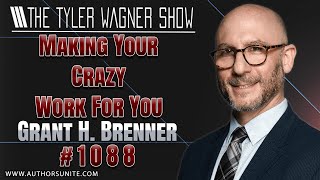
Dr. Grant H. Brenner, a psychiatrist and psychoanalyst, discusses how to harness your quirks and neuroses productively. He covers depression's breadth beyond diagnosis, generational trauma, climate anxiety, and practical stress resilience. Brenner draws on personality frameworks and his books Making Your Crazy Work for You and Relationship Sanity.
Chapters
All right everyone, welcome back to another episode. Today we have Dr. Grant Brenner with us, so welcome to the show, man.
Hey, thanks for having me, Tyler Wagner Wagner. How you doing today?
Very good. How are you?
Oh, it's, it's been an interesting day. My, my days are always a little different and I do a lot of different things, um, so it keeps my my brain mushy.
What, what made today interesting? And then we'll get into your intro, but let's start there. We'll keep the people on their toes.
Okay, let me take a look at my calendar. Um, what did I do today? Um, so I almost every day I do some, uh, clinical work myself, which, uh, pretty much is, is, is more therapy, though I do treat some people just for medications as a psychiatrist. I am trained as a psychoanalyst and do a lot of therapy. And so I had some really interesting meetings today that I learned a lot from. I'm not, you know, I can't talk about, you know, clinical cases. And I did a whole bunch of things with a company that acquired a company that I started, and now I'm their medical director in New York, Sol Mental Health, like the sun. And I was working with some new clinicians we brought on with our care manager team. You know, it's just an exciting— it was an exciting day from that point of view. And I spoke with my own podcast co-host today about our next episode on intrusive thoughts. I guess I'll say the name later. And then I'm like super happy to be ending the day talking with you before heading home to the fam.
Oh, that's awesome, man. That actually sounds like a very fulfilling day. And I think at the end you'll be fulfilled and tired. So that's perfect. That's what we're looking for. So now let's actually dial back a little bit. Tell the people a little bit more about you and what you do. I know you kind of did there, but it just more of like a, I guess, normal introduction.
Yeah. Yeah, I'll do my best. I'm not the master of the elevator pitch when it comes to self-promotion, but my name is Grant Brenner. I'm trained as a physician, so I went to medical school. I did general surgery for 2 years and then switched professions to go into psychiatry. I'm a psychiatrist. However, I wanted to be a psychoanalyst when I was a little kid. Surgery was a little bit of a really valuable and interesting side experience, but I went back into psychiatry. I did my training at Mount Sinai in New York City. After my psychiatry training, I also trained psychoanalytically at the William Alanson White Institute, which is a relational psychoanalytic institute, interpersonal, relational, not the conventional blank screen. I've done a lot of things. That was back in the early 2000s. I got involved in disaster response around that time. I volunteered in the year 2000 with a group called Disaster Psychiatry Outreach and have deployed on many different disasters, both personally and overseeing them. DPO, Disaster Psychiatry Outreach, became a program where I'm on the board now of Vibrant Emotional Health, which is maybe familiar because they run the 988 line for suicide prevention. But I co-chair an advisory for the Crisis Emotional Care Team. Along a similar line, I'm also the co-chair of a Disaster Trauma and Global Health Committee for the group, Global Mental Health Committee for for the Group for the Advancement of Psychiatry, which is a think tank. And we've done things like working on textbooks and a current model to transform disaster response landscape called the Chronic Cyclical Disasters Model, which I'm actually presenting on last week at a National Volunteer Organizations Active in Disasters conference. And then this coming weekend in San Francisco at the American Psychiatric Association, and then at Vibrant's own disaster symposium in DC. So On top of that, I also started a company called Neighborhood Psychiatry, which has become a part of Sol Mental Health, and now I work for them in a clinical capacity. And then I've done some interesting research recently on Gen Z in the workplace attachment theory with a guy named Santer Nishizaki and James Delaneve, who they might be interesting for you because they wrote a book called Gen Z in the Workplace. I'm doing some follow-up research projects with that group. Then I've co-authored some books on relationships and personal growth and development, which I think is the end of the professional path. Along the way, I've also learned interventional psychiatry and have done transcranial magnetic stimulation, which uses high-strength magnetic fields to treat depression and You know, my interest in neuroscience definitely got fed through that. And then, you know, I have a family. I live in the East Village of Manhattan, which is a really interesting neighborhood. And I have a creative side, which right now has to do with photography, largely street photography and some landscape or artistic photography.
Wow.
Yeah, I got most of it.
I don't, I don't think there's anything to talk about here.
Uh, all the time.
Yeah, no, no, no, no, I meant as far as like you do a lot of things. Um, so, but no, I'm joking, obviously it's the opposite. Um, so, okay, um, let's actually start from— I actually want to— let's start kind of not all the way from the beginning, but a little bit earlier on, and then work our way to where we are today. So When you were younger, like middle school days, did you foresee yourself doing anything that you're doing today, or was your vision of your career as an adult completely different?
You know, the first thing I wanted to be, if you asked me in 6th grade, I would say a scientist. And I think I am a scientist. And now I'm actually doing some research. So I'm not like your traditional career academic. Though that, that path was offered to me, you know, doing research in biological psychiatry, I opted to, you know, be a clinician. And then I think around the age of 11, I was at a mall in New Jersey. A lot of, probably a lot of stories start that way. And in the bookstore, I picked up a couple of books on psychoanalysis. And I read like an introductory text on Freud and an introductory text on Carl Jung. Yeah. And there was a fair amount of psychology and a fair amount of physical illness in my family, cancer and loss. And I was just always very interested in kind of psychology, spirituality, human experience. I was an avid reader, and I had a sense of wonder like about the world, some kind of essential optimism, which I think if I didn't have that quality just in my personality, it— things would have been rough. And, and growing up also, I experienced a fair amount of sort of bullying and teasing. You know, I wasn't your, uh, average kid, and I didn't always fit in, though I did have friends. And so I think that also got me really interested in kind of sociology and psychology and, uh, trauma and, you know, all those things— power dynamics and social justice as well as my cultural and religious background, which really taught me like not to stand by when terrible things are happening, but to try to do something.
Gotcha. Okay. So yeah, you've always— I think a good predictor of success is like if we could measure— I think everybody has some curiosity in them, obviously, but some people are like more curious than others. And it seems to me like The more curious you are, the more successful you become. It's not direct, but it's like, I think there is some sort of correlation there. And you seem like a very curious individual, which I guess any scientist would be a curious individual. But, okay, so then it leads you— what was like your first profession then?
Well, my first job was working in a hi-fi store, and then I sold women's shoes.
Okay.
But my first profession is really physician. A medical doctor. Yeah. Yeah.
Now, I— and obviously, if you can't share any details, then that's fine. But I— so a lot of times people are able to share, like, details, but without mentioning the names and obviously without sharing key components that would potentially reveal the individual. So, you know, through your profession and the people you've helped, Can you share any stories without, you know, outing who they are, of, you know, who they are, like what they were going through when they came to you, how you assessed them and how to help them, and then how you actually helped them, and then how they kind of popped out the other side?
Well, I could speak more hypothetically because, okay, you know, I don't really share stories like that. And in order to do that, I would need to get consent from from people and actually have talked about it because of TikTok and stuff like that. And there have been people who hear a story, even if it's not about them, and it does some kind of, you know, harm to them. But if you have like kind of ideas, we can talk about it. And I'll think about things as well. You know, definitely in our books, we've used sort of stories that are drawn on clinical experience, though not typically from my practice as much or our personal lives, right?
What about, like, let's start with, like, depression. Like, what would you say? And I guess, you know, my guess with this would be that there are some, there are some reasons why people become depressed that are kind of, like, similar with everybody. And then maybe, you know, obviously everybody's different though, in a sense. So there's differences too. But if somebody was depressed, I guess, would you have a some sort of pathway of attempting to help that person, generally speaking?
Oh, yeah, sure. Well, you know, the term depression is, is so broad. Even clinically, right? Even clinically.
Yeah. Sorry.
No, tell me what I wanted.
I just, I love this stuff. Like, no, it wasn't like an actual, like laughing at some more of like an exciting. Yeah.
What tickled your fancy?
I, I, um, basically, like, I read a lot of Nietzsche, Carl Jung. Like, I am avid reader. Yeah, I work in the book space and stuff. So I just, I find these topics just super interesting and how, like, I can ask a question and then, um, and then I realized that there's a deeper thing, right? So, like, depression— and before you said what you said there, I kind of thought of depression as just, you know, something of that people go through that's negative. But then the way you responded to that kind of made me open up to realize that, well, okay, but depression, there's like so many different, I guess, types of depression. It's like, it's really not a basic thing. It's actually like, who knows, like you could go down like 50 different rabbit holes with that. So that's what that was about. But go ahead, I'll let you talk.
Right. You were like, uh-oh, I shouldn't ask that. Yeah, like 3 hours later. No, that's what I— and that's what I think. Um, well, so what do people mean when they say they're depressed? A lot of times there's something else, though there is a con— there is something that is sort of defined in psychiatry as being clinical depression, which is major depressive disorder, and you have to have a certain number of symptoms within a given period of time that causes a functional disturbance and And within the psychiatric definition of depression, there's some subtypes of depression as well. Whether someone is like more activated or more sleepy, whether they can't get up and move at all, or whether they can't stop pacing, you know, whether they stop eating and lose a ton of weight or whether they tend to eat more carbohydrates. What I see though is it's very unusual. I think that someone who has depression really only has clinical depression. The psychiatric model, unlike the psychoanalytic model, psychiatric diagnosis doesn't have anything really to do with developmental history, their childhood, or what they experienced. In a lot of cases, people who come in and say they're depressed are really struggling with some significant personal difficulties, unresolved issues from the past, distress, adversity. I try not to use the word trauma too much except in everything I write. But sometimes trauma is also a little overused. But a lot of times depression really refers, I think, to what you're saying is kind of a way of being in the world which isn't working somehow. And people often feel out of touch with who they are, what's purposeful. And yeah, those are symptoms of depression. But I also think it's societal and generational, you know, kind of angst. And, you know, I don't know, our species is, is kind of facing an existential crisis right now, which, which comes up very often. I'd say I don't mind sharing that in my clinical work because it comes up all the time.
Got it, got it. Um, so like, I guess, uh, and not to jump around here, but just based like to go, um, well, before I go there, actually, let's go to the trauma. So like generational trauma, because this is something that I actually am not I guess I haven't done enough. Well, obviously I haven't done enough research on it, but to me, I could see how some people would be like, okay, if say, if like your ancestor, like, or like your great-great-grandmother went through something and you never met that person, how does that— because I'm assuming that's what you mean when you say generational trauma, like, how does that get passed through? Like, how would you explain that to somebody?
I see. So when I said generational trauma, I meant like the gener— our generation is going through a lot.
Okay, got it, got it.
Okay, but, but you're asking— you're bringing up— and that was confusing, sorry, I should have put it clear. Intergenerational trauma is passed along through, um, sort of biological as well as social channels. So it can be passed along through the way genes are like translated, so stress genes can be altered. That's called epigenetics. And there's animal models where they've actually, like, they do something to like a grandfather rat and then the grandson rat shows those changes in its genes, in its brain and its behavioral behavior. It's as if it remembers what happened to its grandfather.
Wow. That's interesting. Okay. That makes actually like logical sense to me. Like it's a genetic passing down. It's kind of like how they say, tell me if I'm way off on this, but like, this is how I'm translating that. Is they say like when you eat meat, right? So if the chicken or the cow or whatever, a deer that you eat, if it's killed and it's like in shock when it's killed, then that meat actually has like stress hormones in it and it's not as good for you. Whereas if somehow that animal is killed and they don't have that like tense up stress right before the death, then that meat is actually like better for you because there's no bad, like stress hormones pass through. Does that make any sense to you?
Well, I, I always thought the story was that it tasted worse.
Oh, if it, but it just tastes, I thought it was actually better for you. I could be wrong. You might be right.
I, I don't, I have, I really have no idea about the relative health merits of eating animals based on how they were killed.
Yes.
But it's a funny idea. Yeah. How, however, it would make sense to me cuz if the muscles are tensed up, you know, it, you know, there's gonna be sort of a different effect physiologically. I don't, I don't know if you, if you eat meat with lots of cortisol, I doubt it really makes its way into your bloodstream. But people say stuff like that about like oysters having aphrodisiac property. And there are definitely some foods that you know, have a biological impact.
Okay, got it.
I don't know about the hunting. I don't know about the hunting one though, Tyler.
Yeah, no, no, I don't know. I've done, uh, here's the thing, it's, I, I kind of, uh, it's funny, I, maybe Joe Rogan goes through something somewhere, but I've done about 2,500 podcasts now, so I literally, all the stories and stuff all blend together. I think I've, uh, maybe blended like 3 different shows into one and I've misinterpreted something.
Maybe I have this idea that, you know, we live in an environment where information is very hard to know. You know, there's a lot of fake news and there's a lot of— yeah, there's a lot of bad info on TikTok. There was a study of attention deficit hyperactivity disorder, ADHD, and they looked at TikTok. They found that only 21% of the videos talking about ADHD this was at the end of 2022, had credible information. And I would imagine you've heard so much over the time, even 2,500 episodes is amazing.
Yeah.
Congratulations. I call it the ambient gaslighting of everyday life. We live in an environment where it's really hard to know what's what. And this is part of that generational existential crisis. AI is, we're in the process of seeing that turned inside out. 'Cause AI is just blurring the lines between fantasy and reality in a way that nothing, I think, ever has, right? You love reading, you know, it's sort of like fiction come to life, right?
No, totally. So, and that's actually, I did want to go back to that and I guess the AI, I do think is like a huge concern. I mean, I've already seen stuff actually on TikTok specifically where they are, and you really, like, if you look at it, And it's going to obviously continuously improve. So I'm sure you won't be able to tell a difference soon, but if you just scroll, you already can't tell the difference. Like I've seen stuff with Joe Rogan and Elon Musk, like promoting supplements and it's not actually them promoting supplements, but they've like dubbed the mouth and then made it. And then, you know, that's with their voice and it's speaking. It's like, yeah, this supplement changed my life. And it like looks real and sounds real. So that is going to be a whole crazy— I think about that in so many different ways of like, it'll be so wild. Like, I don't know how we're going to overcome that. Like, especially like you think politics, like if you could make a politician say something like completely vulgar and it looks real, it could totally like change the whole— you know what I'm saying? Like, what do you think about that stuff?
It's just nuts. Well, actually, there was a politician. I don't remember his name, but a senator. You know, spoke to Congress or the House, I forget, you know, but it was the, it was the U.S. government. And he used a computer simulated of his own voice, but the computer had, you know, sampled his voice. And the computers can sample your voice and copy it with a high degree of fidelity after only like a couple of seconds at this point. And it had simulated his ideas. And so he played it in front of Congress. You know, they're talking about being careful about letting the genie out of the bottle. I think it's a scary thought. I think it strikes a deep Jungian chord. Like the idea that— you know that movie Revenge of the Body Snatchers?
No, I don't.
This is like an old— it was remade, but the idea is that aliens come down from the Earth. And this movie terrified me as a little kid, the original is black and white. They grow in giant— look like pea pods, and then they replace the people in your life. And this kid discovers all these people growing in pods. It just still gives me the heebie-jeebies. And in psychiatry, there's something called Capgras syndrome where you think delusionally that everyone in your life has been replaced by imposters. Or there's the idea from mythology where elves might steal a child and replace them with an elf, like a changeling. So there's all kinds of deep horrifying things that AI stirs up and then adds on top of it. This idea of deepfakes is one of them. And then the ability to kind of just twist reality or even just put plausible doubt for a criminal proceeding, right? So we need ways to detect what is artificial.
Yeah, I agree. And I think that on the way of detection, it's gonna be a bumpy, it's gonna be a bumpy path. So a question and then move on to some other stuff, but I did wanna go back real quick to the generational trauma, just speaking about like this generation, besides what you already mentioned with the TikTok stuff, like in ADD, I think you mentioned, like what do you think? And the reason I'm asking this just to get the full picture is like, I think in a lot of ways it's never been easier. Like it's never been better and it's never been easier for people to like succeed, I guess, because of the internet and everything. And like, everything's kind of at your fingertips, not everywhere in the world, but you know, and let's just say the United States for now. So, but what do you think has become like harder for today? Like when you say the generational trauma for this generation, like what, what are those kind of top points that you think is causing the trauma?
Well, I think First and foremost, there's a heightened sense of threat from whether you agree or not, from the idea of extinction or destruction of the planet. You know, the nuclear threat has been around a long time and, you know, kind of people grew up with that, but we have things like climate change. AI is also considered to be a potential extinction threat, you know, by a lot of people. Um, and then this kind of ambiguity as to what is real, uh, and I think meaning and identity has really become very slippery. There's so many different cultures, so many different religions, so many different worldviews. There was a time when your society would give you a way of being in the world, and now, like you said, so much is at your fingertips. It's like, how do you How do you develop a stable sense of reality and a stable sense of self so that you can navigate the massive uncertainty of what the world actually is and what the brain can do? So I think it's just unbelievable. 7 billion people, information technology, this huge promise of technology, and then this huge risk. I just think it's like standing out, looking out over— you think you've lived in a little village your whole life. Excuse me. You think you've grown up in a little village your whole life, and one day you wander right to the top of the hill and you look out and there's a world full of cities and landscapes that you just couldn't even have imagined existed. I just, I don't think it's even really hit us yet. I think we're just starting to realize that. That's, I don't know if that's clear. I don't mean to, and I think there's huge optimism. I want to say we've always done better and better and better. Steve Pinker, the, like the, I think Harvard psychologist, he wrote a book called like The Angels of Our Nature, I think. And he points out that over the centuries, things have just gotten better and better and better. Fewer people die of disease and violence, you know, wars, you know, end up with less destruction, etc. So there's reason to be hopeful.
Yeah, yeah. Interesting. And then as far as like the— not to just jump so quickly, but I did want to cover this, like with the Gen Z, because I saw here Gen Z in the Workplace, and you had mentioned that earlier. But the subtitle here is Why Are Gen Z Quietly Quitting? What are your overall thoughts on that? Or like, what's the premise of that book? Um, well, like, like that. Yeah, I guess answering the why, I guess, is the question.
I, I think it's not so clear why people should work super, super hard when they're young, because number one, it's not clear what the future will hold. Um, you know, it may be that things get really, really good so that, you know, you can have an amazing life and you know, you don't really have to work. Hopefully that's what'll happen with artificial intelligence and robotics and tech. Like, people can really devote themselves to things that they love and are passionate about. However, I don't know that everyone feels that sense of passion, actually. And so if we take away work, what's going to happen?
You know, wait, what do you mean? That— I want to go down that rabbit hole. That's interesting. So when you say you don't think everybody feels that sense of passion, Do you mean like, um, you're, you're like not saying like everybody could find a specific passion, but you're more saying like within each individual, some people are passionate and others are not? Is that what you mean?
I think it goes, yeah, I think it goes back to what you said about curiosity. Um, and there's research that shows that openness to new experience is a personality trait associated with being gifted. So I think a lot of people kind of— the way we're wired, it's not like critical, but I think, I think a lot of people, if they haven't been raised to be kind of entrepreneurs and have an open mind, you know, people need something to do. Um, not everyone, you know, wants to pick up a paintbrush or write a novel, you know.
Yeah, that's where it may be entertainment comes in, but yeah, to, to an extent, right? Because I think like I actually did not know that was like a personality trait. That's interesting.
There's 5 or 6.
5 or 6 what?
Personality traits.
Oh, okay. Can you share them? I actually, I'm not aware of like 5 or 6 core personality traits.
Yeah, there's a few different models. Okay.
Yeah, I'm curious about this.
OCEAN is a good mnemonic. That's one of them. So openness to new experience. Conscientiousness, extroversion, agreeableness, and neuroticism. That's called the Five Factor Model. And it, you know, it's easy to remember because ocean.
Got it. I think I've heard Jordan Peterson talk about that, actually, now that I'm—
yeah.
Got it. Okay. So another— and I think I'll skip over this one, but maybe we come back to that. I think let's talk about stress a little bit because I know this is one of your talking points in there. And I think like stress is I don't know, I think everybody could be less stressed, you know, like, so what are, and I'm not asking you like go step by step, like, like so much like that, but just overall points on like, how would you help somebody regulate stress or how can they help themselves rather?
Yeah. So I, I think, yeah, I'll try not to go down the rabbit hole too much. I think being, being aware, Being aware of stress is the first thing, right? A lot of people just act tough and kind of deny that their stress is there. And then it's good to have tools for coping with stress. There's a million different ones, but, you know, people can find ones that work and it's good to practice them like when you're not stressed. So it's a routine and that builds resilience. So building resilience is also a good way to protect against stress. There's a bunch of things that go into resilience, self-care, social connection, spirituality, meaningfulness. Cultivating mental flexibility and optimism and things of that nature. So, I think if you're resilient, you know, that helps a lot with stress. And I think practices like meditation and yoga or sports, you know, exercise, there's all kinds of different things that help there. But the main thing is really to be first aware of it.
Got it. And you think that— I guess what you're saying is, would you say like most people that have stress— and actually, I think I, I was probably one of those people because I remember the first time I got like my blood drawn and I started to like really take my health really seriously. And I, I basically get blood work every few months, and the first thing that my doctor said is I had like— I think he called it extreme like adrenal fatigue.
Yeah.
And I, I think that comes primarily from stress. Yeah. And he was like, are you, he like asked me like, are you stressed? And I was like, honestly, I don't feel stressed. Like everything is going well. Like I'm not stressed. So it's like somehow though my body was stressed without me knowing. So I don't, that's actually kind of interesting. I don't know.
Yeah. Well, you talked about like the stress hormones in an, in an animal that's sort of scared. And I think the idea of adrenal fatigue is that that we're under chronic stress and then, you know, it's a little bit like driving a car and redlining it a little bit all the time. You know, it may seem like the car's running pretty well, right? But if you look at the oil, it's probably looking pretty dirty. Maybe there's some wear on the pistons and you can do that for a while, but at some point, like, you know, you hit more of a wall. Whereas if you're managing stress, then, you know, it becomes more sustainable. And people become numb to their feelings, right? So there's plenty of people who, you know, will go, myself included, will go for hours without feeling hunger. I haven't eaten since dinner yesterday and I don't feel hungry, you know? Part of that is because I did surgery for 2 years where we would stand there for 21 hours, you know, without eating or drinking, or we would, you know, so it's not necessarily a good thing, but, but we also like act like it's cool to be tough. Which it is.
And I guess, and again, it's kind of jumping, but there's just, we only have so much time and I'm like, really want to pick your brain on some of this stuff. So I know one of your books that I saw, like Making Your Crazy Work for You. Yeah. Like it, I think, and I think the subtitle, although I just, I lost it because I have a bunch of notes, I can't find it now, but the, oh, here it is, like Step-by-Step Program for Self-Understanding and Catalyzing Change.
So the subtitle is, is From Trauma and Isolation to Self-Acceptance and Love.
Ah, got it. In the description here, it's— I guess that's not the subtitle, but it's like part of it.
That's their— that's— yeah, that's their blurb.
Gotcha. Gotcha.
The blurb.
So for the, the self-understanding part, I'd like to go a little deeper in there because I think kind of connecting to not knowing, like, we have stress. So I think a lot of people like do not understand themselves and they do not have like a method or a practice of, of knowing how to even attempt to do so. So can you speak on that a little bit?
Yeah, I think, um, well, some of, some of the body work that we mentioned make you more aware. Um, things like yoga, and then meditation, you know, the mind and the body, they allow you to slow down and become more aware. And then you start to notice what you're really feeling and how your body really feels instead of maintaining a kind of a sort of a work-oriented stoicism or sort of toughness. And I think a lot of times people function, you know, because anxiety is a good motivator and a moderate level of anxiety with breaks is probably the best recipe. But our society, I think, really does encourage us to kind of push. And I think it goes back to the generation question is I think younger people like yourself, right, maybe tend to be smarter. And I'm checking my labs every 4 months. Like, I don't want to burn myself out the way I saw my parents do that. And they were never around. I want work-life balance now. And what I hear all the time in the business world is like, all the time, is that— and, and I don't feel judgmental— is that younger employees want to have their reward now, and the older generation is like, I worked for it, right? Um, but I actually think it's smart to want life to be better now, um, actually. That would be better for all of us, I think, if everyone kind of had that epiphany, right? And we all said like, hold on, let's, you know, let's make the world better instead of doing what we're doing.
Yeah, no, I agree. And I think that interesting, like, and I think this kind of connects is like, I think one of the biggest differences that with, I'm 31, so I don't know, am I, I forget, am I a millennial then?
31? Probably.
Okay, so, well, millennial and younger, let's say, or what, 30 and younger, around my age and younger. I, and I got this from the book The 4-Hour Workweek. There's a part in there that talks about, like, instead of working towards, like, instead of, like, working your ass off for 40 years and then retiring at the end, what he recommends is, you know, you put in, like, you, you work hard, but you have many retirements, and you don't really have a goal of, like, like this full retirement, because a lot of times, and this kind of goes back to what we were talking about earlier, is when you do it, when you do get to the end of that road, you have that full entire retirement, it's not always actually the happiest moment. In fact, you don't know, you have all this time on your hand, you have no idea what to do, probably leads to depression in a lot of cases. So what he recommends is he's like, work your ass off for like 4 months and then, you know, go to Portugal for a month or something, right? Mini retirement, come back, And that's kind of like, it's all like the retirements are many and blended into the entirety of your life.
Yeah, that makes sense. That makes sense to me. I think there's an idea like you might rediscover yourself over and over again in making your crazy work for you. We really start with self-compassion. And so, self-awareness, you know, you know, can often be criticism, but if you cultivate that compassion and curiosity and listen to yourself, then you sort of not just discover, but you also sort of create the best version of yourself. Um, for me, that idea of mini retirements is more like I've made significant career changes every 5 to 10 years. Um, as a physician, it's not so easy just to take off for a few months unless you do gig work, but I like the longer-term work, but I still think it's a great idea.
Yeah, I do like that too, how you worded that, like the constantly rediscovering yourself. So yeah, man, look, I want to— I feel like we covered a lot of different topics and I didn't do the best job of, I guess, blending them from— I kind of bounced around, but it was because there were so many different things that you do. I was like, I want to get his feedback on all these things. So I guess my last question for you here is, if there's anything we didn't cover, I'd love for you to share it. Like, if there's anything that you wanted to cover that we didn't, please do. And then let people know, like social media, website, like how can people stay in contact, get your books and stuff like that?
Yeah, right. I'm, I'm supposed to be here to, to, you know, make you want to buy Making Your Crazy Work for You: From Trauma and Isolation to Self-Acceptance and Love. And it has two sequels, one for couples called Relationship Sanity. Creating and Maintaining Healthy Relationships. And then our kind of original manifesto on the whole concept, which is called Irrational Relationships, like irrational spelled that way, Irrational Relationships: How We Use Dysfunctional Relationships to Hide from Intimacy. So I would love it if people would read it. Our books, and particularly Making Your Crazy Work for You, is— it really is a step-by-step guide to especially repairing developmentally adverse experiences, helping with trauma. We start with self-compassion, with curiosity, a lot of education about how the mind works, this personality stuff. And then it goes into tools for communicating with yourself, and then a stepwise sequence for understanding different patterns of dysfunction in childhood. Simple, not like me, but simple and easy to understand. And the dream sequence, which is kind of the therapeutic pathway, which is discovery, repair, empowerment, alternatives, meaning choices, and greater mutuality. But it all starts with compassionate empathy for oneself. That's my very quick book plug. Um, you can find me at Grant H. Brenner, MD on Twitter and Instagram. I'm on LinkedIn. Uh, my Psychology Today blog has had over 12 million views. It covers a range of topics. It's called Experimentations with a capital M, lol. And I would love it if people would look up a new film festival that I'm co-launching called the Urban Dreams Mental Health Film Festival. It's on Film Freeway, and I would love to get this sort of healing out to people through art and film as well.
Those—
that's what I— thank you for allowing me to say that, Tyler. My website is granthbrennermd.com.
Perfect, man. Thank you again for coming on the show.
It's been a pleasure. I'd love to follow up.
More from Tyler


Catherine Nikkel : THE STORY EVERYONE HAS BUT HASN'T TOLD : The Tyler Wagner Show #1120



Scott Ritzheimer: Bring Predictable Success to your Organization | The Tyler Wagner Show #1115


Fred Moskowitz: A GUIDE TO GETTING STARTED WITH IN MORTGAGE NOTES | The Tyler Wagner Show #1113

Mark Podolsky: From Land Investor to Full Time Success How I Made $90,000 Cash in Real Estate


Mark Podolsky: How to achieve a 300% return on investment my foolproof strategy

Mark Podolsky: How to make passive income selling raw land the irresistible pricing strategy