Heather Monahan: Creating Confidence In Yourself | The Tyler Wagner Show #1009
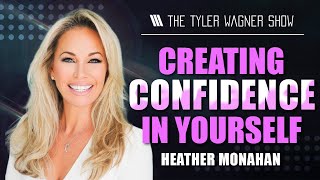
Heather Monahan was fired from a C-suite media job after 14 years, posted about it on LinkedIn, and the viral response led to a book deal. Her self-published Confidence Creator briefly outsold Trump on Amazon's business list. She built a speaking business, taught at Harvard, and now has a deal with HarperCollins for her second book, Overcome Your Villains.
Chapters
All right everyone, welcome back to another episode. I have, uh, I guess you could say a neighbor almost, uh, Heather Monahan. So welcome to the show.
Thanks for having me, Tyler. I'm excited to be here.
Of course, thanks for coming on. If you want to kick us off, just tell us a little bit about you, like what you do, who you are, a little background.
Yeah, so I was formerly a C-suite executive in media until I was unexpectedly fired 2 weeks after I was named one of the most influential women in radio in Q4 2017. The CEO that I worked for for 14 years became ill. He elevated his daughter to replace him and she fired me immediately. Which, that was a tough moment. But I'll tell you, I took that opportunity, reframe, and I wrote and self-published my first book, Confidence Creator, which trumped Donald Trump for number 1 on the business biography list on Amazon. And yes, I have the screenshot to prove that one. And then I Googled, how do you sell books? And it said speak. And I've been speaking for 20 years in corporate America. So I just started cold calling companies and, you know, turning up at all these companies speaking to sell my books. And then finally one day someone asked me what my speaker fee was. So that led me to researching speaker fees. And then that led to my TEDx Talk and launching my speaking business, which once I saw the money in speaking, I said, forget the books, I'm going all in on speaking. And then the pandemic hit. And so speaking disappeared because live events disappeared. And so I started teaching for Harvard. I was teaching professional selling and sales leadership. And then I signed a deal with HarperCollins leadership for my new book coming out, Overcome Your Villains.
Yes. All right. We have a lot to talk about. We have a lot to unpack here. Let's start with, well, as much as you're willing to talk about, is there anything off limits here or can we?
No.
Okay, cool. So with that, when you got fired, like what, why did she fire you or why do you think she fired you? This seems like an interesting story here I'd like to hear about.
Well, I don't know. I don't know what your thoughts are on women in the workplace. But sadly, my experience, you know, in corporate America was most women didn't support and truly encourage other women. Unfortunately, it was usually men that would be my advocates or mentors, or, you know, the CEO I worked for 14 years promoted me 3 different times and was always advocating for me. But, you know, some women and not all, in my opinion, are a bit insecure, they see other women as a threat potentially. And that, again, this is my opinion, but that's sort of how, that was a feeling I always got. The woman that I'm talking about, she was the CFO. I was the CRO. So I was in charge of revenue generation and operations. She was in charge of finances. So we were always on, you know, polar opposite sides. I want to spend money and take care of my clients and throw events. And she wants to you know, pinch every penny that we were creating. So we never saw eye to eye. And as soon as she was empowered to, she was real happy to get me out of there.
Got it. So do you, as you said, opportunity. So at the time, I'm sure it was like a bit of a surprise and very difficult because, you know, at that level in corporate, I mean, I'm sure you had a great salary and everything. And then was there, did they at least like ease you out or did it just go from like, 6, 7 figures a year to zero? Like what was—
Oh yeah, Tyler, it went from 90 miles an hour to zero. So it was, and this is why I believe it was a highly emotional decision, right? Because if this had been something more thought out, it would've been one of those conversations that you just alluded to. Listen, obviously it's not working out. How can we kind of unwind this in a civil fashion? But no, she reported my phone stolen, right? Because the company paid for my phone. She, you know, She tried to make this a really hostile environment for me. And she did try to get me to sign a non-disparaging agreement, non-disclosure agreement, which was sort of, that was her last shot at, okay, I'm gonna give her a big check, basically holding money out over my head if I sign a gag order, which would mean I'd never speak about the things that happened at that company. And I was so sick of this woman trying to passive-aggressively bully me But even though I wanted that check so bad, you know, I'm a single mom and I've got major expenses, you know where I live, right? So it was scary, but I was just so sick of her bullying and treating me so poorly that I just, I declined the deal that she offered me and I just walked out.
Oh wow. That's badass. Okay. I like that though. So then, um, the moments before, obviously you are where you are now, like second book already. So things are obviously on the up and up, but Like in that period, what was going through there like emotionally and how did you, I guess, pick yourself up and write that first book? Like what in the gap I'm talking about, what was going on in the gap?
A lot of crying, a lot of Chardonnay and a lot of weighted blankets, right? I mean, I was freaking out. I'm an overachiever my whole life and no one's firing me, right? This whole idea was crazy. I just, I really, I lost it. I lost my, I mean, I was having massive anxiety attacks. I was really losing it. And finally, I remember it was about 24 hours later this had happened. And I thought, no one's even calling me. I've been in this industry for 2 decades. Not one person's calling me. And that's when I had this idea. She's not telling anyone she fired me. She's trying to keep it a secret because it would look, what kind of, what woman would just fire the, you know, one of the most influential women in radio who's an overachiever and doing a great job. So I thought, okay, wait a minute, I'm going to announce it. And so I went to social media and luckily I had been investing in myself for a little over a year building a personal brand. Anyone listening right now, the best investment you'll ever make is within you. You know, go to social media, invest in yourself, have a presence. And because I had done that, I had a community following me on LinkedIn specifically. And I posted, today's been a rough day after 14 years of continuous advancement. I was just told that I have been fired. If I've ever helped you over the last couple of decades, I need to hear from you today. Tyler, that post went viral. And so many people said to me, take it down. That's embarrassing that you got fired. But to me, I thought, it's not, I didn't do anything wrong. I didn't steal from the company or kill someone, right? A lady hated me because of who I am. That's not, I didn't do anything wrong. I thought, reframe getting fired. Oprah's been fired. Steve Jobs has been fired. J.K. Rowling's been fired. And you know what? So has Heather Monaghan. I'm in good company and I'm going to put it out there. And that post just opened the floodgates for me to so much opportunity.
Got it. Okay. And then from, or before we go to the next step there, were you always an overachiever or was that something that like you like learned, or can you remember when you were younger that it was just like always in you?
Yeah, I grew up poor. So if you, you know, I don't know how you grew up, but anyone that's grown up poor, you typically go one of two ways, right? You lean really hard into outwork everybody, overachieve everything and find success, or you think, wait a minute, this is just my lot in life and I'm gonna stay here. I went that really aggressive route where I just would outwork everyone, work 7 days a week, always wanna be the best at anything. And so that from a really young age had been ingrained in me. And that's also why it was such a hard pill for me to swallow getting fired.
Yeah, that makes sense. And then, okay, so then the tears and the Chardonnay, then when— so was it that post that actually was the click into the, like, I guess, less tears and a better direction?
I guess the real tipping point, yeah, was I put the post up and one of the people that tweeted at me immediately was Froggy from the Elvis Duran Show. And he tweeted, hey, if there's anything I can do, I'm all in to help. And one of the things that I've learned in business is if somebody extends an opportunity to you, convert in the moment. Don't hesitate. Don't wait for 2 weeks later to circle back because the opportunity will be gone. So I tweeted right back at him, get me on the show. I didn't know what I was going to talk about, Tyler, but I knew if I could reach a new and larger audience, maybe I could reach a new and better opportunity. So I flew to New York, I went on the Elvis Duran Show. And halfway through that interview, And Elvis looked at me and he said, "Well, obviously you're writing a book." But I wasn't writing a book. But because he believed so strongly and confidently in me, I accepted that gift that he gave me. And I said, "Well, obviously I am." And I committed on the air in front of his 10 million viewers that I was writing a book and it would be out within the year. And so I left there that day with this mission that I'm writing a book and nothing's going to stop me.
Yeah, there's so many good things about what you just said there because first thing is like if you want to get a book done, that's probably the best way to do it. Like talk about accountability.
Yes.
You're not going to not write that book at that point. Okay. So that's cool. So then you leave New York and then— so you leave New York and then were you— then you started the book right away?
Yeah. I Googled on the flight on the way home, how do you write a book? And so often people want to overthink things and, you know, slow themselves down. I am not that person. I'm an action. I'll rather— done is always better than perfect to me. So I just thought, figure out how to write it and just start writing. You'll figure it out along the way. When you Google, how do you write a book? It truly says, be disciplined, sit down and write every day. And I thought, perfect. I got fired. I have nothing to do anyways. Why don't I do that right now? So I sat down and wrote and wrote At first, I started writing how much I hated the lady that fired me. But over a couple of days, that morphed into, wait a minute, I remember being in a really low moment when I got divorced. I remember the '08/'09 recession and we had to lay off a third of our employees and people were bankrupting my building and I didn't know if I'd have somewhere to live. I started remembering multiple low moments in my life where I felt similar to how I felt when I was, you know, getting fired. And I thought, wait a minute, I'm going to write a blueprint on how to bounce back from these different challenges because it's really rooted in losing your confidence and having to rebuild it again.
Got it. And then that's when you self-published your first book. And so tell us a little bit more about the first book. Like, so it's about confidence and then like what can someone expect to, you know, obviously confidence, but a little bit in more detail?
Yeah. It's a— Confidence Creator is my first book. And that's a compilation of my lowest moments in my life and how I leveraged each of them to create confidence and how the reader can too.
All right, that's awesome. Let's dive deeper into these low moments. I love talking low moments.
They're fun.
Let's, uh, yeah, let's highlight some low moments. What are your favorite low moments that then turned into, you know, obviously something better?
Yes, there's one that comes to mind instantly when I hear you say that. And you know, when I, um, graduated college, I went to work for the Gala Winery as a salesperson. Did really well there, but I ended up getting sexually harassed by my boss. Not a great moment, right? Not something you think is going to turn out well or positive for you. However, this is why I challenge people during tough times, don't get caught up in that moment because in the future, you'll be able to look back and see how all these dots connected to get you to the right place. You can't see it looking forward. You can only see it looking back. So in that moment, I was devastated. I was heartbroken. And then I met somebody in the radio business. He hired me immediately. I thought, okay, I'll go sell radio. I had no idea what I was doing. And then right then, my boyfriend who I lived with cheated on me. So I had like this series of really negative events in a row in my very early 20s, you know, 22 years old. However, what's super interesting is I would have never left that guy. I would have never left that relationship. And I would have never left that job had I not been harassed. But because of those things happening, my boss at the time who had taken me under his wing and was mentoring me in radio, and I was doing really well for him, he said, you just don't seem yourself. I explained to him what happened. My boyfriend just cheated on me. He said, you know what? You should move from here. And I thought, oh yeah, I'd love to move from here and get away from this person and this situation. He said, well, why don't you get on a plane? You can't ask where you're going, but if you move only for your career and only for money, I will make you a very wealthy person. I'll make you my partner. And so in my very early my early 20s, I jumped on a plane having no idea where I was going only because that person cheated on me and I wanted to get away from them. And it ended up being this huge blessing because I stepped into unknown. I stepped into risk. I took a massive risk. We bought a $25 million company. And in under 3 years, I had turned that company into a $55 million property and I netted us $30 million.
That's amazing. That is amazing. Yo, see, that's how that stuff happens. That really is. And there's a common theme already I'm noticing in this interview is that you, you know, you're going to be able to do it. So it's like, I feel like in your world, the word try doesn't really exist. It's like either you're going to do it or not do it. So when these big opportunities have come, like to be on that show and then, uh, to move into partner in this business, you didn't really know what, like how you were going to do it exactly, but you just said yes and figured it out along the way. And that's—
That's one of the most important things for people to understand is successful people don't know the how, but they bet on themselves to figure it out along the way. And for when I was younger, I didn't understand that. I thought, oh, certain people just know how to do certain things that I don't know. That's not true. That's what society, that's what wealthy people want you to believe. It's not real. The real success comes from stepping into the unknown, taking the risk, and figuring it out along the way.
No, 100%. And actually, uh, Richard Branson has a quote on that. I can't recall exactly what it is. Like, if somebody asks you to do something, you don't know how to do it, tell them you do and then figure it out on the way or something like that.
Exactly.
Um, so then with this first book, um, because a lot of my audience, as you would expect, they're authors and aspiring authors, what were like all the opportunities? Like, what did that look like, uh, with the first book, the story around it? Did you end up public speaking? I guess what were the biggest benefits, just kind of the whole origin of that first book and what you learned from the experience?
Here's what I would share other people who want to write a book or in book writing. It's interesting. My whole career, my expertise is in sales, right? So why would I think I could write a book? However, what I learned is there's lots of great authors. There's not a lot of authors who know how to sell. And that's a big disconnect I find in the book, in the author business, right? So there are so many talented and writers. There's so many, you know, millions of amazing books that never get seen the light of day because they don't know how to market themselves or sell themselves. So the hard part for me was writing the book. But once I had a product to sell, that's what I know how to do. And so again, I was new to the industry. So I wasn't an expert in selling books, but I knew how to sell. So I said, I can put something together. I'll start testing and trying and figuring out what's getting me a better or stronger ROI, what's not, and then gravitate towards what's working better. So for the first book, and again, totally different time than my second book, right, because a pandemic has changed our whole world massively. But back then, I was doing a lot of in-person speaking engagements, a ton of in-person media, right? So I was really— book signings on site, like a lot of just on site, you know, kissing babies and thanking people and, you know, signing books, really just touching everything and trying to be everywhere, which is exhausting, right? It's definitely a high burnout, short window of time, but it works, right? It pushes you up on the rankings and then it's on you to market yourself. And so I would take a lot of screenshots of when the book would hit number 1 on this or that. And then I started leveraging every time when I got that screenshot of the book beating Donald Trump, he was president at the time. I took that screenshot. Oh yeah, it was, it was so good. Right. And so it was one of those lucky moments where I took the screenshot and I sent it to Harry Walker Speaker Agency, which is one of the biggest speaker bureaus in the country. And I sent it to the president of the company and I pitched him on adding me to his bureau. And he's got all the presidents, right? He's got all the biggest speakers in the world. And so I sent him this note. I said, hey, I'm a former C-suite executive, a lot of expertise around sales and sales leadership, got a new book out, book Trump, Donald Trump for number one on the business biography list. I checked your roster and you don't have any speakers on your roster who have done that. And he responded back, you're right, you're unique, you're different. Okay. And so he added me. And then I took that screenshot of me on his page and sent it to APB speakers and then GDA speakers and then big speakers. And I just kept multiplying and building and building and building so that I would start forming some level of credibility in the speaker bureau world so I could take bigger stages and go for bigger opportunities and sell more books.
Okay. So this is another key I think here is like I feel like a lot of people that have businesses or books that aren't growing, it's because they're one of the— it's not easy, but it's almost like a numbers game. There is strategy to it, but at the same time, it's like you can't be afraid to reach out to people. And I feel like so many people are, like, for like the podcast, for my business, like I do reach outs. Like, I forget, I forget, like, who was it? It's like Jennifer Aniston. Just for fun, like I just messaged her on Instagram. You know, like why not? Like, who knows? Like, so maybe she'll never respond, but like if she does, then I get, you know, then Jennifer Aniston's on the show. And it's like, there's nothing wrong with reaching out. And like you said, things snowball, right? Like that's how things occur. So it's like, you got this one speaking bureau or if you get this one major media hit, what I always tell people is then all you do is just leverage that hit to get another hit.
Yeah. And so often in those instances, you don't know what's gonna happen next. So for example, Jesse Itzler was someone I wanted to have on my podcast, right? And so I kept trying to DM, DM, nothing. I'm getting crickets back. So I find a friend that knows a friend of his. He connects me to the friend and they say to me, Heather, just so you know, he's not gonna do it. He's so busy. You have no chance. I said, great, just give me the phone call. I love having no chance, perfect. So I get on the phone with his partner who's his business partner. And we're talking and he's like, listen, it's great that you reached out. He's really busy. It's not going to work. I'm like, well, tell me about you. And so the guy starts telling me all about him. He starts telling me about a project he's working on. And immediately I thought, oh my gosh, I have a solution for this guy. I knew someone in the business he was trying to get into who was already a lot further ahead than he was, who had some of these connections. I said, would it help you if I connected you to my friend? He said, Oh my gosh, yes, Heather. I said, I'm happy to. I'm happy to help. He said, oh my gosh, thank you so much. He said, all right, listen, I didn't know you at the beginning of this call. Here you are helping me out. I'm going to go ahead and get you scheduled with Jessie. I said, oh, thank you so much. I didn't know if that was going to happen, right? I was just willing to help. And anytime you're putting good out there, I truly believe in some way it comes back. He gets me set up with Jessie. I say I want an in-person interview because as you know, when you're in person with people, then they're giving you their cell phone number. They want to be friends. But when you're on Zoom, it just gets shut down. Right after. So I said, no, I'm flying to Atlanta to interview him. No, no, no, no. The assistant says he doesn't do in-person. He only does Zoom. Okay. I'll take the Zoom. We get on the Zoom and the assistant had told Jessie she really wanted to come here, but I told her no. He says, yeah, Zoom's fine. We get on Zoom. His internet crashes at his house. Billionaire has no internet. So embarrassed and so mortified that he has the assistant give my number to him. And he texts me because the Zoom's down. And he says, Heather, this is Jesse. I'm super embarrassed. Our internet's down. I have no idea what's going on. I heard you would want to come here. I'll let you come here if you want sometime, because I really feel that I've wasted your time today. You know, just, he felt badly about it. And I said, great. My best friend lives in Atlanta. I'm in Miami. It's super easy. Tell me the day and I'll be there. So the next week I got on a plane. I flew to Atlanta. I went to his house. I hung out with Jesse for a couple of hours with his assistant, got to meet some of the people on their team at their home. It was an amazing opportunity. We hit it off. He gave me his cell and he said, if anything I can ever help you, you know, you're great, whatever. So I send him a gift after I leave to say thank you, which I do for any of, you know, my big guests that I'm grateful that they gave me time. He sent me a super nice note back. All is well. I move on in my life. Wouldn't you know, a couple months passed. And a friend of mine calls me and said, Heather, they're looking for someone to moderate a big sales and marketing conference in Boston. And two of the keynote speakers are Jesse Itzler and Sarah Blakely. I'm going to throw your name in. Do you think you could reach out to him and say, hey, can you help me to get this? So my friend submitted me to the company. I sent Jesse a note. He was like, sure. He said, I know her, you know, she'll do a great job. They end up hiring me and I end up interviewing him and his wife. Live on stage in front of thousands of people. And none of that would have happened if I had just taken the no back when my friend said, oh, you're never going to get an interview with him.
Yeah. Oh, there's, there's too many gems. I can't keep up with them because like literally, you know, giving without any expectations. So you were just giving to the person that I guess his assistant or whoever you were in contact with, and then it all just comes full circle there. And also it's just so interesting to me how Sometimes, like you have no idea what one connection, you know, like Russell Brunson says, one funnel away. Like with one of my businesses, it's like how to, it teaches you how to grow a business online. And in my head, it's like you're one partner away. 'Cause you know, in my business, like publishers refer to me for book marketing stuff. And it's like one connection could like literally open doors that you never even could even imagine. Like, and who knows, like Jesse and you, your connection could turn into something else. Like, and it probably has.
You never know what opportunity can be created, and that's why you always have to show up and just put yourself out there. And yeah, plenty of times it doesn't work out, but that's okay too. I'd rather be the person that went for it and found out that it worked or didn't than the person that stayed home and never knew.
100%. And I have a very quick similar story to you with Gary Vaynerchuk, actually. So the same exact thing, not the internet crashing, but I was gonna do a 15-minute Skype. This was like Oh no, it wasn't before Zoom, but I didn't even use Zoom then. This was a few years ago. And then my buddy was like, dude, you gotta meet him in person. You gotta go to that office in New York. So I hit up his assistant. I'm like, his name was Tyler too.
Tyler's not his assistant anymore. Tyler got promoted. Oh really? Oh, you know Tyler? Yeah.
Oh, okay.
Yeah.
So, you know, um, yeah, I think last Renault or Renault or so.
Yeah.
Um, I reach out and He was just like, I forget his response exactly, but it was like, it's only 15 minutes, but like, sure, if you want to come. And I was like, dude, I'll fly for 15 minutes. I got friends in New York. So, so yeah, it worked out. And if I, and I honestly, because of how short the interview was, I was not going to ask, right? Because I just thought it was like, but if I hadn't, I never would have met him in person. Like I met DRock, like the full Gary Vee experience, you know, which I'm a big Gary Vee fan if you can't tell. So either way, just asking that one extra thing didn't hurt. And they all all they had to do is say no if they want it. So it's all perfect. So I know that the picture behind you is your new book. What's the title of it? So—
Overcome Your Villains.
Okay. So before we dive into that, so you have HarperCollins. How did that occur? Because a lot of our listeners are interested in traditional publishing as well.
Okay. So in 2019, my book had been out, my first book had been out for a year. And I thought, okay, I think it's time to write another book because people are asking, "When's your next book coming out?" And I didn't know. I'm like, "I'm a rookie author. I don't know." So I thought, "Okay, I tried one book doing it myself. Maybe I should try doing a book with experts and that would be even better." You know, I didn't know. I thought, "Let's try it and see." And so I thought, go big or go home. One of the biggest-selling authors in nonfiction for females was Rachel Hollis in 2019, Girl, Wash Your Face. So I Googled Rachel Hollis and I Googled who is Rachel Hollis's agent. I found her. And so I went to her website and had a contact us page. And so I sent a pitch that basically, you know, anytime I'm pitching someone, I put myself in their shoes. Right. And I thought to myself, this woman has the blueprint for success for female nonfiction. She's already got it. She doesn't need to reinvent it. She owns it. She knows what to do. I have to show that I'm not competitive to her, her queen, Rachel Hollis, right? I'm not competing. I'm adding value. I'm adding a new revenue stream, but I won't chip away at the business you have with your star author. So I wrote an email to that end and the woman responded and said, wow, super interesting. And the crux of it was Rachel's very much religious and about being a stay-at-home mom. I'm all about business and I don't get into religion. There's no competitive nature. However, we're both out there to empower people and advance them. She said, Heather, I love religion. However, my partner at the agency loves business. Why don't I connect you with my partner and maybe you're a good fit for her? She connected me with Jill. Jill and I got on a call and I told Jill my whole pitch, my concept. She said, I love this. Send me the book proposal. And I said, well, what's a book proposal? And she said, this is where our phone call ends. And I said, hang on, one last question. If you had a family member that wanted to write a book proposal and didn't know how, who would you send them to? And she said, Peter Economy. And I said, Jill, you'll hear from me soon. And I hung up. Peter's amazing.
That's awesome.
So I Google Peter Economy, you know, he's with Inc Magazine, he's huge. And I tweet at him, hey, Jill just told me that you and I need to work together. He tweets right back, you know, DM me, I'll get on the call. We get on the call, I hire him. I make a big investment in him. We write a book proposal. 14 times she told me no. And finally, on the 15th time, I got a yes. And then the pandemic hit, and then it was— the timing was awful. We sent out 15 different pitches, and we got a number. Half of them came back yes, half of them came back no, and we ended up signing with HarperCollins leadership.
Okay, got it. So basically, it was, you know, obviously hiring the right person that had already kind of known the process, a solid book proposal, And then it was 15 pitches and half said yes, half said no. And then you picked the best one. That's big. Got it. And then, so if somebody wanted to land a traditional deal, well, maybe, hey, hit up Peter, I guess maybe, right?
Like, yeah, but no, I wouldn't hit up Peter. And I tell people this all the time when they say, well, how do I get an agent? Google and find out. There's a roster of agents out there. Find out who's the right fit for you, why you're going to add value to them, how you're going to make them wealthy, how you're going to make them famous, whatever it is that's of interest to them. And sell them on you. That's the whole key.
Yeah, I love how you like Googled and hit up the contact form because that's what I tell people too. It like, it doesn't always have to be through social media. Like, that's— I actually think when you're trying to get a hold of someone, a contact form might literally be the best way because it is so unlikely that anyone is doing it that when some— like, if you get an email, because most of those, what happens is like reroutes into the person's email inbox. When they see that somebody actually took the time to fill out the contact form, first of all, it's like shocking, you know. They're like, because it's— I'm not talking about like the normal opt-in, right, like on a home page. Like, that gets filled out all the time. But if you go to like the bottom right of a website, Contact Us, that form is so not filled out often that when it is, you stand out. And it's like, that doesn't— there's no advertising money you need to spend for that. It took time, right? But you could hire virtual assistants if you wanted to, if you want to do it at mass scale. And you just reach out with a genuine message. It's free. All you got to do is Google. Like, I don't know. So I just mean like you can get ahold of a lot of people that way. So, okay. So Overcome Your Villains. What, besides I guess the obvious of overcome your villains, so I get the title, but how did you come up with the concept and what is it about?
So I believe that data doesn't lie, right? And so one of the ways that I test what I'm going to speak about in my keynotes or what I'm going to write about in my new book is through social media posts. And you'll see certain posts will do incredibly well, and I'll start to study and research why are these doing well versus these. And I want to start gravitating towards these topics. Then when I'll give a keynote, I'll incorporate those topics. And then I ask for feedback from my audience. Right? So I'm constantly in a research loop with whatever I'm doing in business or my podcast, which ones are getting downloaded most and why, and what does the feedback say? What do the reviews say? So it takes time, right? But basically through that work, I started realizing that certain things were coming up. People were faced with adversity. People are faced with haters. People are faced with themselves being their own biggest villain and biggest holdback. And I just thought to myself, wait a minute, in my first book, I had a chapter called Leapfrogging Villains. And it was just one chapter, but that chapter was brought up to me all of the time, right? There was something in it that resonated with people. And I just thought, what if I create a whole book around the concept, really about not only overcoming adversity, not only overcoming villains, but overcoming any challenge that you face at work and in life. And so that's where I came up with the concept of Overcome Your Villains. The name changed a few times. And we tested, we went to market and tested a few different times to make sure we got the best one that resonated with most people. And then I really distilled it down to a specific 3-step process, a proven powerful 3-step process that can empower anyone to overcome any challenge.
Okay. So I love all of it. So yeah, the testing, like, because most people just kind of go like, oh, I like this. And it's like, okay, well, what does the market like? Like that If you really want to get your message out there and make the biggest impact, you got to test. So your social media is obviously big enough where you can post things and really get enough feedback. Same with your podcast. So obviously, next natural question, what are the 3 steps without giving the whole book away?
But yeah, yeah, no, for sure. So the whole process is my B.A.K. process, which is B.A.K. It's around your beliefs, the actions that you take, and the knowledge you surround yourself with. And at a high level, it's really about dismantling the belief because typically most of us, when we take it down and dismantle the belief to only fact, and you have to challenge yourself to really just look at the fact, you could be thinking, you know, you're making, this could happen, or, but none of that's factually based. It's just thoughts that you have. So you have to push that information out and only distill it down to the actual fact and the belief and take that as your one truth. And for most of our beliefs, you'll see there's nothing left there. Most of it is not factually based. So once you're able to deconstruct a belief to the actual fact that it is, or it's nothing, right? It disappears. Then to take some type of action, doesn't have to be massive action, but some type of action to move you forward in this quest. So let's make it up. You get fired, right? So for me, I got fired. Let's dismantle the belief. At first I'm thinking I'm never going to get another job. I'll never make money again. Right? You go to the worst play scenario in your mind. When you dismantle that belief, is that true? Well, I don't know because I haven't tested it yet. So I can't say that's my truth, right? There's no fact to that. I've been employed before. I probably could get employed again, right? You start looking what the actual fact is and taking that non-existent belief and getting rid of it. Then you take action. You put a post up on social media and you say, I've just been fired, right? You take some form of action to move you forward and through the moment of the challenge. As you've gotten rid of the belief that isn't true, now you're taking action to see what's gonna happen from that. And then ultimately you wanna surround yourself with knowledge that's gonna support you. So, you know, I got rid of the negative belief, I took action and put the post up, and then I started surrounding myself with people like Elvis Duran, with podcasts that support me, that were helping me to figure out, okay, to move forward on this journey, am I the only person that's done this? No, other people believe in me. Like, this is something I can do. And keep curating that knowledge to make sure you're being very strategic about the knowledge that you keep supporting yourself with and pushing away the knowledge that isn't empowering you.
All right, so this is actually— this is one of the most impactful things I think for people to really take in, because for me, it, um, like my story kind of using this method, but I guess unknowingly almost, was when I was in college, I was 19, I decided to drop out and write my first book That decision of dropping out at that point in my life is exactly what you're like, all these irrational, like we're humans, we're very irrational. In fact, there's a book called Predictably Irrational. It's a good read and you realize like how just like our minds take us places that are just not even close to reality. So like dropping out of school to me literally felt like the biggest decision of my entire life. Like if I fail I will lose all my friends. I will be homeless. Like all these crazy things. And like, I did what you did kind of. And I realized, uh, my upbringing, my parents, like my dad worked for Johnson Johnson, pretty good upbringing. So I was, it was almost like a Billy Madison type thing. So I was just like, my worst case scenario is I end up at a pool, um, you know, drinking a beer or something. I was like, that's not bad. I was like, that's it. So I was like, I think I'm going to take this risk because I knew I never wanted to be in corporate. I'm just, uh, it's hard to even to get me wear a collared shirt anywhere. So I was like, that's not gonna work. But either way, once I broke it down, the decision was so easy. But leading up to it, before breaking it down, it was the most anxious, overwhelming decision of my entire life. So you really need to step back and break it down and realize that your brain is going on this tangent that is just not rational. Um, so yeah, I love that you said that because I think it stops people from making actually kind of easy decisions.
It—
once it's broken down, I don't know if it's easy, but it's simple. Yeah, exactly. It's not easy to actually like make that step physically, but in your head you can actually rationalize it. Then you're like, okay, if I fail, I'm at my parents' and, and then I'll try again. Not that bad. I'm not gonna die, so it's okay, right?
Just like me when I finally figure out Wait a minute, I'm not unemployable. The past shows me I am, right? So you start realizing that wasn't fact-based, but the more you sit in that belief when it's spinning out of control, the more trouble you're in.
100%. And I love too how earlier in the interview, like, you flipped it to like opportunity. Um, actually, one of, um, the women that work for me in my company, she always— she reframes it whenever— because, you know, with work, you don't love every part of the job, right? Like So there's like little things you got to do that you don't like. And she, she'll never say, I have to do this. She'll always say, I get to do it. And like, I still laugh because it just sounds funny to me, but like, it is good. It's a way better framing.
Yes, totally. Yeah.
And I tell, I think it's amazing. Um, so see, I want to, I want to leave the floor to you. If there's anything else we did not cover that you want to, please do. And then, um, let people know like website, podcast, socials, and when the book's coming out, where they can get it. You know, all that stuff.
So HarperCollins gave me a big number. They wanted me to pre-sell 7,000 books. And so I thought to myself, if I want someone to do something, I want them to take action and purchase something, but they don't get it today. I need to give them something else today in lieu of this. So I put together a $500 bonus bundle that anyone and everyone can get if they preorder the book ahead of time, which is now. And that includes my $299 confidence course, my 30-day email accountability program, my Overcome Your Villains workbook, and the first chapter of the book in advance before anyone else can get it, you go to OvercomeYourVillains.com, enter in your preorder number, and you get that download immediately.
Oh, that's perfect. Okay. That is awesome. I will be doing that today.
Oh, thank you.
Of course. Yeah. And when is it set to release?
The actual go-live date is November 9th.
Oh, it's coming up. All right. We got, from this recording, we got like 2 2 months about. So very nice. Um, so yeah, I appreciate you coming on the show. It was awesome having you on.
Thanks for having me, Tyler.
More from Tyler


Catherine Nikkel : THE STORY EVERYONE HAS BUT HASN'T TOLD : The Tyler Wagner Show #1120



Scott Ritzheimer: Bring Predictable Success to your Organization | The Tyler Wagner Show #1115


Fred Moskowitz: A GUIDE TO GETTING STARTED WITH IN MORTGAGE NOTES | The Tyler Wagner Show #1113

Mark Podolsky: From Land Investor to Full Time Success How I Made $90,000 Cash in Real Estate


Mark Podolsky: How to achieve a 300% return on investment my foolproof strategy

Mark Podolsky: How to make passive income selling raw land the irresistible pricing strategy