Henry Shukman: Zen, Koans, Midnfulness and Awakening To Original Love | The Tyler Wagner Show #1060
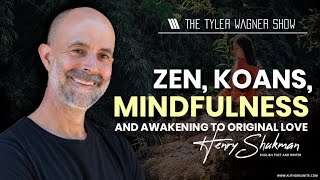
In this long‑form interview, host Tyler Wagner talks with writer‑poet and meditation teacher Henry Shukman about the intertwined paths of his literary career and Zen practice. Shukman describes his early life in Britain, the pivotal encounter with a wandering "tramp" who taught him the value of stillness, and his subsequent immersion in Beat poetry and Zen training that led to his first book at 19. He recounts a profound awakening on a beach at age 19, the nature of Zen koans, and how meditation cultivates a continual awareness of thoughts rather than trying to suppress them. The conversation moves into the role of healing: Shukman shares his childhood trauma, various therapeutic modalities (somatic release, dream work, CBT, Gestalt) and how they complement a daily meditation practice. They debate free will versus determinism, referencing Sam Harris and Jordan Peterson, and explore the paradoxical feeling of being both a distinct individual and inseparable from the Earth and cosmos, echoing Alan Watts. Shukman also details his writing process—spontaneous drafting, later structuring, the importance of mind‑mapping, and the value of a good editor—using his memoir "One Blade of Grass" as an example. Finally, he promotes his meditation center (Mountain Cloud Zen Center), the Original Love program, upcoming courses, and his contributions to the Waking Up app, offering listeners concrete resources to explore meditation and spiritual awakening.
Chapters
All right everyone, welcome back to another episode. Today we have Henry Schuchman, so welcome to the show, man.
Hey, thanks for having me, Tyler. Great to be with you.
Grateful to have you on. Um, so if you can just start us off, just a little bit about you and what you do.
Yeah, okay, so I'm, um, I'm a Brit by origin. I'm a dual citizen now, US and UK. I, um, Basically, these days what I do is I teach meditation primarily. I trained for a long time in Zen and then somewhat in other traditions and styles of meditation as well. I've been a writer since I was in my teens, actually. I wrote my first book when I was 19. And that's been between the writing, which is poetry and fiction and some nonfiction, between that and then now meditation, those are the most sort of prominent things that I do in the world, so to speak, you know, for by way of profession. I've been a, I was a full-time writer for 25 years and, um, I've done some teaching of, of, uh, poetry as well and other things in colleges and universities. That's it. Uh, there's a center I run called the Santa, the, the Mountain Cloud Zen Center in Santa Fe, New Mexico. Although I grew up in Britain, I moved to Santa Fe or New Mexico Many moons ago, never looked back.
So, so as you were talking, because right before we hopped on, um, you were, uh, saying like what had caught my interest. So it was, um, if I remember correctly, because I watch a lot of Tim Ferriss, um, Joe Rogan, and Lex Fridman— those are like my top 3. So I think, um, when you said meditation, that triggered, uh, the complete memory. So I, um, on Faris. I believe I had seen you on Faris, uh, or heard you on first, and you were talking about meditation. And then I'd done a little bit of research on you and found out how long you'd been writing as well. So it was the meditation and writing were the two things that caught my interest the most. One, uh, I'm a big Alan Watts fan. Not that he was like the, um, meditation person per se, but I lived in Encinitas in California for 6 years and I lived right next to a Self-Realization Fellowship and that's when I was introduced to Alan Watts. I went down that rabbit hole, then I went down the Yogananda rabbit hole and then my company Authors Unite, we help people write, publish, market books. So I wanted to learn more about, you know, 25 years of writing. That's way— well, I've been like 12 years. So I'm just curious overall on writing. So That is how this came to be.
So, that's two key interests we share. And also, actually, Encinitas, I've been there a lot. I used to go and lead a little Zen group actually down in Encinitas and quite near the Self-Realization Fellowship. And we often used to go, quite a number of the people in the group were surfers and they'd sort of try to get me surfing. I mean, they'd take me and I wasn't very, you know, I was hopeless at it, but I had such a good time. Of Swamis, you know, that right, that break right below the fellowship. Yeah, yeah, Yogananda, what, what a great guy, man. I, I'd still— one of my favorite spiritual books is his, uh, Autobiography of a Yoga Yogi.
Yeah, no, and that's actually— so one of the things I always try to do is when I find someone that, uh, is like, like I really like, or is like instrumental in my life, like Alan Watts, I started going down a path of like, who did he learn from? And it turns out that Yogananda was one of the people that— I don't know what the right word would be. I don't want to say respected. He probably respected him, but I think he just learned a lot from Yogananda from my readings. And I think I learned that because his biography or autobiography, it's called In My Own Way, Alan Watts's, I think it is.
Okay.
I'd read that and he talks about it there. And then I— but I don't know who Yogananda's influence was.
So I haven't— he had a guru back in India whose name I can't now remember. They had a pretty serious long relationship with him. But, you know, Alan Watts is— I mean, I'd say the biggest influence on him is probably Zen. You know, he's like a— he was crazy about Zen. He was one of the great sort of, uh, what's the word, like promoters or speakers on Zen in the West. You know, he was, he was so cool. He was just incredible. He— they always say he wasn't really a Zen teacher, and I think that's, that's true, but he, man, he was good at articulating it and, yeah, exciting people about it, you know.
Articulating, yeah, one of the best speakers. Like, I could, I could listen to him, and I have actually. I probably, I probably listened to over 1,000 hours of his stuff, and some of it's like the same stuff, um, but like, I just never get sick of his voice. He has one of the best voices ever. It's just amazing.
I, I quite agree. He's, he's, he's— yeah, I mean, and he, you know, and then when he laughs, you know, that sort of terrible evil smoker's hack he has, it's just fantastic. But also, I know what you mean, because I, I often find I'm listening to him and I start thinking, because there's a, you know, there's access now to various people like Sam Harris has got this whole archive of animus, other people too, I think. But, you know, sometimes I think No, wait a minute, I've heard this one before. Oh, oh no, no, no, he's just revisiting that same material. I often get that sense with him, you know.
Oh, 100%. And yeah, the way— because he's like kind of funny too, like you're saying with that laugh. Like one of the questions, um, if I'm remembering correctly, uh, he would be like— people ask him, uh, what it's like after you die, and then he's like, well, what was it like before you were born? And then he starts, and then he just starts laughing and like doesn't really fully answer it, but like kind of leaves a profound like just back and then on to the next.
That's right. That's it. Well, that's like classic Zen, you know. He then— Zen has a lot of what they call koans, which are these little imponderable sayings, or they sound like little riddles or paradoxes, you know, like what is the sound of one hand? But just what you were just saying was sort of classic Like Zen, what was it like before you were born?
Yeah, he's one of my favorites. Um, so how I kind of like to start these, uh, typically is like I always like to learn people's like foundation, uh, first. So before, you know, you started writing, um, started getting into meditation and things of that nature, when you were younger, did you have any foresight at all that you would be doing any anything like this, or was your plan as a kid, you know, plan, uh, was it completely different? Just—
yeah, I totally did, actually. I, when I was about 13, I met this, um, what we used to call a tramp in the UK, you know. It was, it was like a hobo kind of thing, the, the British version of a hobo. But they would— I mean, there were no— they wouldn't hop on trains or anything. It was like they're just wandering the hedgerows, like, you know, the little back back roads in the country, you know, and it was a real phenomenon that had been going on maybe 100 years or more in the UK, you know, and there was one guy, Speedy, who was called, he used to come to the, this little valley where we would spend our summers, you know, my, we had this tumble-down old house there and Speedy would come and spend like from, I don't know, April till October or something in the valley. And we got to know him a little bit. I did, and my— some friends of mine, and, and we— I was just captivated by this guy. He, he, you know, he, he lived sort of— you could say he lived nowhere. He didn't have a home, but on the other hand, he lived everywhere, you know. He lived in the whole land. He just— and he had these two dogs that were very good hunters of different kinds. One was a terrier, the other was a lurcher, so they what they call poaching, you know, like getting wild game. And he fished and he smoked fish and he was just this ingenious guy who knew how to live without a house. And I just found that captivating. And he also, he said he would do this thing of just, he said every day he would sit still. Said, if you don't stop still, he used to say, you've got to stop still. If you don't stop still, you don't learn nothing. You know, you've got to be still. That's how you'll learn. I didn't really know what he meant, but I liked the sound of it. So I started just trying it, just being still for 5 minutes, you know. And then gradually, actually around that time, I got into I got into poetry, you know, actually, funny enough, like, not exactly Alan Watts, but others of the Beats, you know, like Jack Kerouac, um, and Gary Snyder. And so, and, you know, and, and, you know, uh, sorry, the names are just escaping me, but, you know, Allen Ginsberg, you know, that whole crew. And they, they were, they were a bit like this guy Speedy, and that they wondered They didn't stay still. They traveled, you know, they lived out of a backpack. They wanted to be in the wilds and they wrote poems. And then I found out that they were inspired by these old Chinese poets, you know, from the 500, you know, 500 CE or whatever, you know, 1,500 years ago, whatever, who would wander around the hills and mountains and gorges and write poems. So I just started, I got into poetry. You know, I got into reading it and writing it and wondering and meditating, you know, wandering, wandering, you know, with an A, like moving around, roaming as much as I could in my holidays. You know, we used to sleep outside actually with, we'd take a backpack and wander through the hills for, you know, a few days and then come home and replenish our stocks and go out again. That's just that way of life, like traveling light, meditating, writing poems, getting to falling in love with the world, you know, that just totally turned me on. And in fact, I, so when I was, as soon as I could, like I had a gap year between college and university, between school and college, and I went and worked in Argentina actually for several months and then I backpacked and While I was backpacking, I wrote my first book and that, you know, that started my, it took a few years actually for me to really, you know, finish it. I thought you write a book, you're done. No, no, no. I had to redraft it and a lot of work on it, but eventually that got published a few years later. And from there on, I was writing, I picked up meditation in my early 20s and I was kind of a, I was starting to do it.
That is awesome. So it kind of reminded me a little bit of that book, like The Monk Who Sold His Ferrari, in a sense of, if I remember correctly, it's like, you know, the guy, he works at a job so he can go somewhere in South America on vacation and then to go fishing, right? And then the monk that's down there, Um, or not that, but the other guy's down there, he's just like, oh, I, I just fish. Like, because I— the guy who worked, he saved up all this money just so he could do that for a week. And then the actual fisherman down there is like, or you could just fish, you know, like you don't need— so it's kind of an interesting thing. I, I actually think about that a lot. It's, it's kind of like two extremes. Meaning like, like, I, I work a lot and I love what I do, and, you know, I think about money, right? But at the same time, I think like, if I didn't have any, there is some sort of freedom in that, in a sense. There is something there.
I don't know. Well, there can be. I think if you're, you know, if your basic needs are met, yeah. As long as you're basically by a radical shift in priorities, it is, and I think that's part of what all the great sort of spiritual traditions have offered is paths to finding a real liberation, a real freedom from the things that we mostly get sort of hung up on and caught by. Money would be one of them, you know, because actually, you know, honestly, you can't be happier than a totally liberated, spiritually liberated person is. That's almost the definition of spiritual liberation is that is totally happy, you know, and free and responsive and kind of needing nothing. You know, that's— and of course, everybody needs food and warmth, of course, but But, um, but nothing more than that, you know. It's, it's an incredible freedom to aspire to.
I think it, it is. And, um, I can see, yeah, a lot of people can get trapped in that, in that cycle. But there's actually been studies, and I can say from experience too, like, once your basic needs are met, the money above that, your happiness level does not really do like a big jump or anything. Um, so, and another thing I just thought of, the book The Presence Process That helped me a lot with that. That was one of those pivotal, pivotal books because it taught me— and this was what happened with me in Encinitas— is I remember being— it was like after a Sunday session at the Self-Realization Fellowship, the meditation gardens, you know, where there's like orange fish and stuff.
I love that.
Yeah, it's incredible. I went up on those cliffs, sat at the bench, just looked out at the Pacific Ocean, and I remember just kind of like losing a sense of time. And I was completely sober and just feeling like giddy and like just laughing all by myself. And like hours just went by and I just sat there. And it— but it felt like it was like that. And it was one of those things where my question, the reason I'm actually bringing this up is I have found like I don't necessarily know how to tap into that. It was more like It was more like the moment had me, kind of like a Sam Harris thing. It was almost as if that was predestined, right? Like I didn't mean to do that. It was just like, oh, great session at the Self-Realization Fellowship. Let me look at the waves for a couple minutes. And it turned into 3 hours of like pure bliss.
So— Right, right, right.
Are there— I know there are, but what are strategies to like tap into that And then the bigger question is, how do you meditate, right? But what are your thoughts on that?
Well, first of all, it's great that you had a taste of that kind of timeless, spaceless, utter freedom and joy that is actually always here. And I'd say, I mean, a tradition like Zen, and of course it's obviously not the only one, but it's the one that I know best. Zen is basically, it's exactly learning how to either tap into that more or get over some kind of hump, some sort of shift where something changes and we just know that that reality that you tasted then is always present. It's always here. It's not like the reality is like First, it seems like sometimes we, who knows how, but we suddenly drop into this sort of other way of experiencing where basically there's much less sense of self and there's no time and everything's one. I mean, I don't know exactly what, Tyler Wagner, what you've found in that 3-hour period or whatever it was that happened to you. But some of the features of— by the way, I'm just going to close the door so that barking dog— okay, just give me a sec.
No problem. No problem.
Okay, let's see. She may bark a bit less now. And can you hear her now or not?
No, I can't hear, but it's all good either way.
Okay, she can join in. So, so basically, um, you know, let's say, I mean, you know, there's this term awakening, and awakening is— and it, of course, it can mean different things in different contexts and different traditions. And but in the, in usually in the sort of meditative spiritual realm, awakening means a radical sudden shift in how things seem, how they are, how we are experiencing. And the characteristics of it are often that there's a sense that somehow we're just totally part of everything. There's like one whole and we are, we're not observers of it, we're part of it. We're just inseparable from it. And that brings an indescribable relief and peace and joy and wellbeing. I mean, beyond anything we can get any other way, I would say. And, but also, you know, it can show us that the self we normally think we are, you know, is illusory. And that's just such a huge relief as well. All my ordinary strategies and efforts and things I think I gotta, work out, and it's all made up. We're actually, we're just, we're just, there's only now and it's totally okay. Now, now the thing about, and that's true, and we find that that is real. The thing of course is that that doesn't mean there's not a whole lot of suffering in the world. And in fact, we'll tend to I think bona fide awakening will make us more compassionate and feel more the suffering in the world and want to do what we can to help relieve it. So, to say everything's okay doesn't actually mean— it's not a prescription for apathy and not caring about the world, it's the opposite. And so, it sounds like you had a taste of that. So, sorry, this is a roundabout answer to what can you do? What can we do? But I'd say like, you know, if it's, most of the meditation traditions are about, are precisely about how to get, either get closer to that or to get more stably connected to it or to, yeah, like I was saying, there's some sort of hump that we can go over, like turning a corner where it's not so, we just stop feeling that there's such a difference between, our sort of ordinary way of feeling and that awakened way of feeling, the difference between the two somehow goes away. And we wouldn't believe that could happen until it does happen. And that's what the meditation training, at least in Zen, and I bet in SRF as well, I think that's probably what it's really for, is to, is to find that that peace and joy you're talking about can be— actually, not can be, is in fact here all the time, you know.
Yeah, so it's more about like dropping into it rather than, uh, like trying to create it because it's already there.
Precisely, precisely.
And that's a huge shift in itself. And to reference another Alan Watts thing I thought of as you were talking, is, um, one of the things he says. I think it's in one of these YouTube videos. I saw it where it's called You're It, which is actually a book of his too, I believe. And, um, regardless though, it's somebody says that like they, they hate rocks or something, and he's like, you are the rock. He's like, what are you gonna stand on? And it's so interesting. It's like when you, you definitely, when you come to this realization that you are inseparable from everything, the way you move about the world is very different. Uh, and he talks about that a lot. Like, it's like a lot of people feel like they're a stranger here, like they came, um, to Earth. And I think the way he views it is like we came out of Earth.
Like, it's like we are exactly— we're made of exactly the same stuff as the world, you know. That's all we are. We're Earth moving and talking. That's what we are, you know, and exactly. And he, and he would, he's, I think he's sort of, I remember hearing him be, he's sort of critical of the, um, the Western inherited view of sort of there being where what we actually are is this disembodied thing called a soul that gets implanted in a body. I mean, rubbish, you know, where, where Earth itself being conscious of itself I mean, obviously, you know, we're just— there's no— the molecules, you know, the atoms, whatever, in my body and in the table I'm sitting at, you know, they've got a lot in common with each other. They're kind of the same, the same stuff. It's just in the case of this body, there's 37 trillion cells that find a way to collaborate, coordinate in multiple levels so that they can talk and think and see and be aware. They can even be aware of being aware. Which is kind of cool, you know? Yeah.
Okay, so I want to talk about that because that— okay, that's super interesting. So, but real quick, another Alan Watts thing is he says the ocean waves like the universe peoples, right? Yeah, I think that's why a lot of people feel that stranger type feel, because here's what's funny is like we feel like, or we could feel like we're detached because we're not literally like connected to the ground like a tree. But in fact, we are connected because when you jump, you still come back down. So yes, we can separate, but we always come back. So it's just a different connection. Yes, but it's still connected.
Absolutely. But also just not forgetting that we're totally made of the same fabric, you know. Yes, as the mountains, the trees, the air. We, we don't have an independent existence. We just think we do because we can think, because we can walk, because we can talk and move. We think we're therefore independent, and it's total rubbish, you know, and because we're just all, we're just moving bits of earth, you know, that's what animals are actually, you know, they, we animals, I forget when they, when animals first evolved, maybe it was 2 billion years ago or something. I can't exactly remember, you know, first there were the the— you— what are they called? The eukaryotic— I can't remember the words now, but I think they're called the eukaryotes, or the first living organisms, a single cell. And then, you know, maybe by 2— that 400— that was probably 4 billion years ago. And then by 2 billion years ago, you start to get, um, you start to get animals, multicellular animals. And they— that's— they move. That's, that's the— that's basically, you know, their distinctive feature. They Yeah, you know, well, I'm sure there's more to it, but you know what I mean? It's like, it's like, but so I think when we have an awakening experience, we realize through personal experience that we are just inseparable from this whole Earth. And this whole Earth is obviously inseparable from the whole cosmos. And when we, when we get into, onto that level of it, of existing, there's no space and there's no time because it's all one down there, so to speak. And so we've, you know, if you have a powerful one of these experiences, you find that you're— there's no distance. Like, this happened. I, I have, like you, I was, I mean, I was 19 years old. I was just, you know, not interested in any of this stuff actually. And I was just standing on a beach and suddenly boom, I dropped into that, you know, I would say I dropped away, and that was revealed. And I felt like the furthest reaches of the universe were right at the end of my nose. And I never— I wasn't, you know, I honestly, in spite of that, what I was saying earlier about all the meditation and the poetry stuff, I wasn't interested in that, in that kind of cosmic stuff. I liked poetry because it was a way of loving the world, you know, where this was, this was outside my, my interests, you know, what happened to me out of the blue, stone cold sober, like you, boom, just bam, there was, I was, I was, I was part of the whole universe. Yeah. Or I was the whole universe in some sense, or there was a level where I wasn't separate from the whole universe.
Yeah, it's, um, see, I love having conversations like this. So, um, what— okay, there's two things in my mind. So like the first thing is, so we have the thoughts that we— that like naturally occur, and then we have the thing that thinks about those thoughts. So like what, um, what is actually— I don't even know what the question really is there, but it's like who's in control, right? Because it's like There's something that— and, um, in meditation, I've, I've heard this from, uh, various people where it's like you don't try to quiet your mind because the fact that you're even trying to do that prevents it from happening. So more what it is is you let your thoughts kind of just be what they are, like they just kind of pass by, and you don't try to stop them or like focus too heavily on them. You just let them be whatever. But then there is the, I guess, the other, the thinker on top of the thoughts. So what is the— or I guess my question to you is like, how else would you word it? Like, who is the thinker? Who is the thoughts? They're both you. Is there a better way to present this information? Or is there significance?
Yeah. Well, here's another way to think about it or that we can experience it. I would say it's like, the first thing is what actually is a thought? To get clear on what thinking is. And I mean, people might disagree with this, but if they really check it out, they'll find it's true. A thought is basically either an image in the mind, like a picture, like, or a video in the mind, or it's talk in the mind, like a radio. If we just sit still, we'll will find like just little sort of packets of speech, little bulletins of speech just get broadcast in the mind. Where did that come from? I don't know. They just arise. The mind does it, you know. And what happens is if there's enough awareness and, you know, what some people call mindfulness, if there's enough mindful awareness, it's possible to hear the speech in the mind and/or see the images in the mind and not get caught up in it. You see, mostly the speech and the images in the mind come up and we just get wrapped up in the story they're telling and we don't even know it. And suddenly 30 seconds or 5 minutes have gone by and we've been lost in thought, what we call lost in thought, meaning we haven't been aware of being present here now. Because we've been sort of entranced by the thoughts and got wrapped up in it, right? So in meditation, that's going to happen. But what we're for sure, we're not going to try to stop that happening. And we're certainly not going to try to stop the speech and the images arising in the mind. But over time, we get better at having a a kind of like a wider awareness that gives room, gives space for them just to arise, be around a little bit, and pass away without getting wrapped up in them. You know, that's the thing. So it's not, you're absolutely right, it's not like, hey, don't have thoughts. No, no, no, no rubbish. You know, not at all. Over time, we learn to be more aware of them. Because we're tapping into a, you know, it's part of, we all come with this on board. It's not something special, but we're tapping into, you could call it a broader awareness that can just sit and be aware of thoughts when they come and go, of feelings when they come and go, of sounds, of body sensation, you know, and even of seeing. And so we can, we just stay aware even while all these experiences are happening. And the awareness is really peaceful and alive. It's a great place to hang out. It's sort of, it's alive, it's aware, it's awake. It's that peace, you know. So that's, I say in some ways that's a path of meditation is to getting more stable in that kind of awareness. But that's not the same as these big powerful experiences like you describe, you know, that's another level to have those. Yeah.
So, uh, not, not off topic, but I want to make sure I ask you this, is, um, because we had talked about Sam Harris a little bit, do you— what do you more— I guess it would be a belief because I guess there's really no way to know for sure. But do you believe more in his thinking of— and I don't mean to like put words in his mouth, but I think from interviews I've watched with him and Jordan Peterson, um, like he, he thinks like everything is like predestined, right? Like there is no— is— I, I believe he thinks that. So anybody listening, don't take that like a grain of salt, but I think that he thinks that. So what are your thoughts on that? Do you think that that's the case, or do you— and I think Jordan Peterson, because I watched them, they had like debates or conversations. And Jordan Peterson, I think, thinks the opposite, where we create our own reality all the time. And he thinks it's— and Sam Harris thinks it's already all mapped out, and we think we're in control because of like our thoughts, but in reality it's already all happened in a sense.
Do you have any take on that? Yeah, you know, I— it's a— it's— I've got to admit, it's an area I'm not very clear on myself because I think Sam Harris believes that free will is an illusion. And, and I haven't actually— he's got a book on it called Free Will. And so that's the place to go to get clear on exactly what he thinks. And I don't want to hazard, you know, representing him or misrepresenting, especially as I, you know, I do, I do a lot on his app, Waking Up. So I definitely don't want to misrepresent him. But I think basically he's absolutely right to question the notion of free will. But on the other hand, I have this thing that I can't quite accept that whether somebody chooses to practice or not just isn't down to them. You know, I would think that in a certain sense, the whole premise of spiritual practice, Buddhist practice, whatever, SRF practice, is that, you know, you can do this thing. And if you say, well, no, you either do it or you don't, and it's not up to you, I don't know, I somehow that I don't like to believe that. You know, I, I, you know, who knows, honestly.
But yeah, yeah, you could never know. Um, I feel maybe it's like a hybrid. Like, for example— oh, here you go. All right, ready? So let's see how this lands. So it's like those thoughts, right, that like— so you have the thoughts and then the person or the thing that realizes or is aware of the thoughts. So the, the thing that's aware of the thoughts, that I feel we have control over, right? Whereas the actual thoughts that are just passing by, or the images, or the, the words, that I feel we really don't. But in a sense we do, in, in a sense, because wherever we physically are, like, our environment affects us pretty dramatically. So it's like, say if you decide, like the thinker decides to like go to, um, a beach, you're gonna have those thoughts that you're not in control of will be different than if you, you know, are naked in a blizzard, right? So even though you can't literally control the passing by things, your environment affects it, and you choose your environment, which in turn would mean that you do choose those thoughts in a sense, or you give them a direction. Does that make any sense?
Yeah, yeah. Well, I mean, look, I think that, um, I think it's, it's true that, um, by and large, you know, thoughts just keep coming up and they're kind of random. And yeah, I mean, of course I agree certain circumstances might might make certain kinds of thoughts come up at certain times. But even then, there'd still be this random mix. They say— who is it? I can't remember who it is. Metzinger? Is that what he's called? Thomas Metzinger? I think he says that thoughts are like a sort of— it's like a sea of little thoughts all saying, think me, think me, think me. They're all trying to get thought. Lots of little thoughts. He puts it like that. And whichever, which ones managed to get airtime, who knows? You know, there's lots of them trying to get airtime, meaning come into consciousness, you know, and who knows which do and which don't. And then you're right, really, I think what we do about a thought that arises, we seem to have some power to develop control. Like, Somebody might get a thought, you know, I want an ice cream, you know, and just go and get one. And before they know it, they're at the freezer opening it up. Somebody else might get the thought, I want an ice cream, you know, and they've done some practice and they, you know, they just like, they can put a little pause, they can hit pause and say, not so fast. Just because I thought of it doesn't mean I have to have it. And often, I mean, just pursuing that example, there might actually be some kind of discomfort, psychological or emotional discomfort behind the thought, I want an ice cream. And actually a person is wanting some little hit of taste that will be pleasurable to distract them. From some kind of emotional discomfort. And so if we're developing an awareness, we wouldn't stop at just, oh, I see the thought, I want an ice cream. We then feel, oh, there's this yucky little feeling in my chest. And that's what is the real issue. It's not about an ice cream, it's about this discomfort in here by the experience of the deliciousness of the ice cream. I'm gonna tend it, I'm gonna open my heart and allow myself to feel this difficult thing. And oh boy, it's really uncomfortable. Whoa, let me soothe it. Let me be with it. Let me give it the love it needs. And so, you know, that's part of the path of growth and development as well. And, you know, I'm bringing this up actually because I hadn't really said what a critical thing for me it was to, and still is, to be on a path of healing, not just awakening. Because I, you know, I had a lot of trauma in my early childhood with a very severe skin condition and difficult, you know, household and domestic situation, parental situation and stuff. And I was pretty sort of emotionally illiterate, you know, I didn't really understand emotions. I didn't understand when I was having a difficult feeling what was actually going on. I just knew, oh my God, I gotta change, I got to change life in some way, you know, immediately or longer term, medium term, short term, whatever. I just got to change it. And it was actually when I started meditating in my early 20s, that was when I started to recognize, whoa, I don't feel good all the time, you know. And in fact, I feel quite uneasy quite a lot of the time. And I started— that started me on a you know, it's kind of a joint journey, I think, of healing, you know, as well as I really wanted to pursue what, what on earth had happened to me on that beach when I was 19. I, I, you know, I had, I had no idea except that it seemed to be the answer to everything. So I was on a kind of parallel journey of what was that thing and you know, that I found paths that knew about it. And, you know, like, like meditation, like Zen. But also, along the way, oh man, I got healing to do. So I sort of— my path has been two in one, healing and awakening, not just awakening, and actually not just healing either, you know, so I believe in— I mean, for me, the reality of developing to whatever extent I've managed to so far, you know, which may not be very much, you know, it's been the two things: healing and awakening. Yeah.
What, um, so with healing, do you— one of the things I listen to a lot of Jordan Peterson, and he talks about, he's like, with a lot of times we bury, bury things down, right? So whatever happens in— it doesn't have to be childhood, but we'll just use that example. So say the skin thing or with your parents, you know, we bury it down so much, but it never actually— it's still like energetically there, right? So, and the only way to have it surpass is to not avoid it, but you have to go through it. So what were some practices, or maybe it was meditation, like what did you do to heal?
Yeah, thanks for asking. I mean, yeah, I think meditation in itself is— can open the door. And for me, what I really need to do was some therapy. You know, I've done over the years, I've done, I've done quite a bit of different kinds of therapy. I've done somatic release therapy where, you know, you really You feel in your body these things and you really let them feel the way they feel. And there's practices you can do to do that. And you can release it through certain techniques. And so some of that, I've done a whole lot of dream work. Dreams wanna heal us, I believe, you know? Yeah. And yeah, they really, they can confront us with things we don't wanna look at and you know, And then I'd done cognitive behavior therapy. I'd done some Gestalt therapy. I'd done various kinds of therapy over the years. And all, I think having, for me, it was important to at the same time have this path of meditation going on all the time. So the therapy was great, but I had this, deep, simple path as well, if you know what I mean. You know, because the meditation is so simple. You're just sitting quietly a little bit every day and asking— I sometimes will, will think we gotta be this way or that way, but really in meditation you're not asking anything of yourself. You're just sitting there, just being. And to have that if you do it every day, it's a path, you know, really becomes a path in life. And having that path that I totally trusted— I didn't always feel great, often it was really uncomfortable, but I trusted it. And so having that path, then on the, on the side kind of thing, having various kinds of therapy— I mean, they didn't feel on the side, but they didn't stop me being on that main path, the quiet, long trail through life of meditation, you know. So I found it was critical somehow for me to have both. And that's my prescription for humans. If you're anything like me, with some kind of wish to sort of explore life and and know more what it is to be alive, but at the same time you're dealing with emotional difficulty and psychological difficulty. I mean, not, I'm not talking about, you know, major psychosis or something, but just kind of everyday psychological difficulty. I think it's a workable prescription to do the meditation, and also do whatever therapy you're drawn to if you need it. How does that land with you, Tyler? Is that making sense, or what do you feel?
Yeah, no, it makes sense. I think, you know, what I've come to find— and I actually learned this at an event in, uh, well, I don't know if it's something learned, but this woman said this at an event in Boulder, uh, Colorado when I think I was like 24 and she said, "Everything is a paradox," meaning we're all the same, but we're all different at the same time. That's just one. And then she went off, I wish I could remember, but she went off on like a tangent and she named like 12 paradoxes. And I remember at the time, my mind was just blown back and forth because it was just like funny that like a lot of times things are as similar as we are, like the path you went through of healing could work, uh, probably for anyone. Um, but at the same time, in some people it might be a different pathway, right?
So it's 100%, 100%. Yeah, everybody would have their own, their own, their own particular way. Yeah, but, but there's— I, I think, uh, the path of meditation is very broadly applicable for a lot of us. You know, there's a reason, like, you know, now it's 100 million people or something have tried meditation in America, you know, in the US. And that's unthinkable 50 years ago. It was a real fringe, weird thing to do, you know.
Yeah, you know, it's interesting too, is I remember when I moved, because I grew up in Philadelphia area, actually Bucks County, technically. It's like an hour north of Philadelphia. Have you heard of the area?
Yeah, I used to— I used to go to Wilmington, Delaware, which is not too far from there, right? Yeah, yeah.
Okay, so that's— most people don't know because it's pretty small town, but like Doylestown was the town. And I remember when I went from there and then college, dropped out of college, went to San Diego, and that's when I started like meditating because that's when Alan Watts like came into my life and the peop— all the people around me were doing it and environment does shape us a lot. And I can tell you, I don't know this for sure, but if I had to guess, Philadelphia probably has the least amount of meditators. Or maybe— I don't know if that's true. I think they definitely have less meditators than San Diego, I would say.
That's for sure. So, well, hey, hey, hey, hey, I'd say, I'd say it's particularly Encinitas. That's a high concentration.
True, true. Yeah, yeah, it was, um, maybe it's, um, I'm not taking all the data points necessary to make that statement, but, um, it was just funny though, and I'm still great friends. Actually, next week, um, one of my friends, it's, it's their wedding from, uh, high school, one of my best friends still, but like, they're just not into it. Like, they're just not, um, I would say they're not even open to it. They just have no desire that it just doesn't— I always want to say it just doesn't even make sense to them, but I also want to say that, like, I'm not even saying that's right or wrong.
No, no, no, no, no, no, absolutely. I couldn't agree more with that. Yeah, I don't— I don't actually— maybe it sounded like I was saying everybody should meditate or something. Oh no, no, I don't feel that. I really don't feel that.
I don't think you do. I, I just remember I was actually going back to when I remember when I first went through it and the feeling was so amazing, like that moment up on the cliffs, that I wanted them all to feel it too. So I actually remember, and I think this does happen to people a lot, when they first have that awakening, they want to like almost like prescribe it to everyone. So at first I thought all my Philadelphia friends were like a little crazy. I was like, why are you not trying this? Like, but You know, and then I removed myself from it and I was like, you know what, like, if they're happy— like, for in my life journey, I felt a need to do it. Like, there was something in my life, and in their life journey, they don't feel a need.
Yes, that is what it is.
And so I don't know.
Yeah, but I'll tell you, I actually— I was— oh my God, when I started doing therapy, I, I became such a pain in the ass about therapy. I thought everybody ought to be. Everybody's in denial. Nobody realizes what they're really feeling. They should all be doing therapy. I became a terrible, you know, I don't know what you call it, like proselytizer or whatever, or basically a real bore about therapy. All my friends and family, though, you're all fucked up, why aren't you doing therapy? You know, but actually I have to say, when I really got somewhere in my therapy, when I suddenly found Oh man, I don't need to be making myself so stressed and miserable all the time. I just don't need to. Whoa, it was so surprising. After that, I stopped trying to persuade everybody to do therapy, you know, because it was really working. So I sort of— I didn't need to, if you see what I mean. It was kind of like, uh, it had been part of the therapy not really getting into me deeply enough that I still wanted others to do it. But when it really landed, it was like Ah, so it's none of my business if they do or not, you know?
100%. Um, I, I want to make sure, just in our time, I want to make sure we cover this because a lot of our audience, um, because of my core business, they are aspiring authors or already authors. So obviously, you know, you've not only had, you know, success as far as like, you know, the books like selling well and stuff, but 25 years of writing is a long time. So I wanted to ask you too, is like, do you have like, um, and I think poetry might be a little different, but at least from your, uh, memoir One Blade of Grass, I think that's your latest book, is, um, what was your like process? Like, can you give us a little behind the scenes of like how you came up with the topics, how you— and obviously I know it's, you know, it's based on your life, but meaning like how did you formulate the whole thing and then how'd you write it and what was that process like?
Yeah, hey, thanks for asking. I mean, I would say, um, I've been a pretty— I don't think I'm a great model as far as how to write goes, because I've been, I've been really sort of, uh, like I said, I started really young, and I, and I just, I would just, you know, get an idea and grab a pen and paper and start writing, you know. And then I'd go on, I'd find this is really flowing, and I started Well, hold on a minute. Wait, wait, wait, wait, wait. I've gotta back up. You know, how do I structure this thing? So I'd start, I'd sort of always dive in and then start trying to figure out the structure as I was going along. And I could have saved myself a lot of time if I'd really learned to actually map out the book the best you can. And of course, if it's fiction, it's, it's a little different. It's a little tricky cuz there's gotta be some discovery as you go, but you still need some bare bones, I think. And the more you have— you have to find the right amount for you, but just diving in isn't— I mean, it can be to get the juices flowing and to get inspired on paper, or, you know, that's pretty— don't go too far without it, I would say. And, um, And I, so with that one, I pieced, you know, actually that was, that book came to me after I'd more or less stopped writing. I'd been doing it all those years. And then I had a really, I had a real different kind of awakening experience that really changed my priorities in such a fundamental way that for the first time I can remember, I didn't need to write. I didn't even wanna write. I started just, helping out with hospice work and going into the local prison and the local jail to talk with inmates to help them learn to meditate if they wanted, you know, and I just really started leading a really different life. And I've been doing that for maybe 2 or 3 years or something. And then I've been invited to become the teacher at this meditation center that I mentioned, Mountain Cloud, Zen Center in Santa Fe, New Mexico. And after a few years of doing this, I just found all these, these, you know, these, these little episodes from my life started coming and coming to me and wanting to be written down. And I, I just started doing it. And then I realized, oh, right, right. This is actually describing how I found the path of meditation and what it was like to follow it. And all the associated things around that, you know. And so I just kind of let it happen. I didn't really feel— it's just going back to the free will thing. I didn't feel totally in control of it. It was like it just wanted to happen and I sort of let it happen. And then gradually I started putting it in the pieces in the right places and it kind of held together. And I thought, oh no, I'm becoming a writer again. Damn.
Because I thought I was trying to avoid that.
Yeah, exactly. And I, and you know, at a certain point then I thought, well, shit, I got like 50,000 words and it seems to work. And ah, I better show it to someone. So I showed it to a friend who was an editor, you know, like a freelance editor, and said, Henry, this is, this is, this is really strong. Damn, you should get an agent. And an agent wanted to do it. And I mean, I kept going and I basically finished it and the agent sold it. And I think so the whole thing was, you know, it had this feeling of being non-deliberate actually. Yeah. Again, on the— but I mean, so I don't think it's a really good example of how to do it. At all. It just— well, that's how that—
I, I will say, first of all, I love the title. Uh, I think the title is— I don't know what— I just think it's sick. Like, just one blade of grass. It's just— I'm like a minimalist, and like, just, I love like the most simplicity. To me is like, I'm like beautiful. Like, I just like to take something that's complex and just boil it into the most simplistic thing you can. So I just feel, you know, One Blade of Grass, it's about as simplistic as you can get, but it like gets the point across clearly from my view of it. But what I'll say, because I always tell people this with writing a book, and this is where I think it might be more common actually, because when I tell people like how to write a book, it's more like, you know, something comes to you or like whatever you're naturally inspired about. You know, pick something like that. Because as you know, writing a book, I guess it's kind of like another paradox again where it's like, it could— it's like the most joyous thing ever, but it also sucks, uh, in my— just to be— I think so, I don't know. Um, so it's kind of like one of those things, like when you start it, it's so fun, and then maybe for you it's like 50,000 words in and then you're like, oh shit, I actually got to do this thing now. Like, I actually got it.
Yes.
There's some parts of that that are not the funnest things in the world. So regardless though, when you, there's so much going on in your head. So what I tell people is you gotta get it all out. You do like a mind map or something, just like get everything out. Once it's all out and like all a mess, then at least you can organize it and then chip away that what doesn't need to be there. But what a lot of people do is they try to like write their first draft like it's their last draft, so they like edit as they go. And I don't think that's the way it should be. I, I think it's more like an understanding of like, oh, my first draft is probably not going to be that great, uh, as far as like the, the type of writing. The story will be there, but just letting go of the editing, the spelling, whatever. And it's so hard for people to do that because people want to perfect the process rather than complete it. And you need to complete it. Yeah, so I, I—
that's fantastic advice. I totally agree. And I, I do that as well. I just plow. I just go with the flow and knowing, trusting that later I'll, I'll, I'll figure out— I'll figure it out later where, what's, what's, you know, this mess. But I'm gonna, I'm gonna trust it. But, but I think it's— I still think that there's, there's something to be— like you said, the mind map. I, I totally agree with that as well. Like, let it get it out. I think you're absolutely right. Get it out. It's because it is. And yeah, it's, it's, I mean, I'm just trying to think about what you're saying about the exactly about like the thinking the first draft has to be the last draft. Absolutely right on. You can, you can tidy it up later. You know, it's like that movie. I don't know how— I don't think it was very popular over here. There was a movie that was a big hit in Europe called Betty Blue. Did you ever see that?
I haven't. No, I haven't seen that.
It's kind of a sort of a cult film, I guess. God, way back 25 years ago or something. I can't even remember. And I don't even know if it's, if it's held up very well. But it was, it had a real sort of cult following in, in Europe. It was actually a French film. And in it, there's this guy who's kind of a, there's a couple living on a beach who They're making a living like painting houses locally, you know, house painters. And he's writing a novel, or maybe he's even written one. And, and, um, and it's sort of a part of the story, you know, and he's got all these notebooks filled with this, all this writing. And, and, and, and it takes her a while to persuade him to let her read them, and she does, and she gets really caught up in it and loves it. And she says, you got to do something with this. And he said, nah, nah, it's not worth it. And she said, no, you got to. And so she learns to type, and she starts typing it up. And then she shows him, you know, I don't know, the first chunk that she's typed. And he starts reading and says, oh no. And he starts editing it and changing it. I thought, that's exactly what it's like, you know, And so then they make a second draft and it's better, and they make a third draft and it's better. But he got it all out, like you're saying, he did get it out first in all those notebooks.
The other thing is too, is once you experience a good editor, you feel a lot more comfortable because, at least I'll speak for myself, like when I wrote my first book, I think it was like a 2 out of 10. And then I had a good editor come in and she took it to like, a 9 out of 10, like pretty quickly. Like, it was that dramatic because I think the job of the author most of the time— and, you know, there's different scenarios, but most time it's like, it's all about the story, right? So the story, and then the job of the editor is to make sure that— well, there's different types of editors, but developmental— to make sure the story is cohesive. And then you have the proofreading and stuff, but the author's job really isn't grammar or spelling or anything, and that's what a lot of, uh, all authors or new authors focus on. Um, yeah, you let that go. Editors are editors, and they're amazing at it if you find a good one.
Um, yes.
So I, I want to say this, uh, because I think we could honestly do a part 2 at some point because I feel we like only scratched the surface on meditation. But that's good because that'll, uh, be more reason for people to look more into you. Um, so I want to leave the floor to you. If there's anything we didn't cover that you want to share, please do. And then how can people stay connected in like website, book, all that stuff?
Yeah, hey, thanks so much, Tyler. I'd love to do another one, actually. I feel it's very, it's very, it's really fun talking with you. Um, so, okay, let's see. So there's a mountaincloud.org, mountaincloud.org, new meditation program I've developed that is just a really, I think it's a great program, introduction to meditation and beyond. And it's called Original Love. So that is originallove.org. You can find everything there. We got 6-week courses. We got a new one coming on October 9th, which will be a fantastic one. It's on awakening, actually, just titled like, What Happened to You? And what happened to me. It's sort of, it's a, it's, it's telling people, sharing, guiding people into maybe having tasted that, or at least being more aware of it as a possibility for them. And, uh, and that's, that, that's going to be a great course actually. It's Sunday mornings, uh, for 2 hours for 6 Sundays. And man, this has been a great thing for us actually through the pandemic. We started doing these, um, courses and they just, they've really just taken off. You know, we've got people all around the world, you know, hundreds and hundreds of people joining, and it's really, it's really powerful. And so that's something I would encourage anybody who's curious about this kind of stuff to— you don't need to have meditated before, and if you could have done 40 years of meditation and you'll still learn something new. Um, what else, what else? Yeah, that my book One Blade of Grass, uh, there's been— it's already in its fourth printing actually. It's been going quite well and Nice.
That's awesome.
People are finding it really helpful and inspiring as a— for the— for their own spiritual lives, you know. Um, I think that there's— I've got a lot of stuff on the Waking Up app, Sam Harris's fabulous wake meditation app. It's really— it's really, really good. Um, that's about— that's all I can think of right now.
No, that's perfect, man. And, um, I actually got to try that Waking Up app. I don't have it, and I am— I'm a big fan of, uh, Sam Harris because it It started with Jordan Peterson, and then I saw them talking. And so I'm sure if you're on there, and then it's Sam Harris's, and then what does he just like brings like different experts on? Is that kind of what it is?
Yeah, there's a number of teachers. I don't know the number. It's not very many, but who have guided meditations on it. And I'm one of them. I've actually got two courses of guided meditations. Then in addition to that, I got a couple of conversations with him. And, um, typically he— what he does is he just has conversations with people, like, like on his podcast, but the ones that are relevant for how to live a good life and for meditation, those will go on to the app as well, if you see what I mean.
Yeah, totally. And I— so, and see, that's why we have to do a part 2, because guided meditation, that's how I like to do it. Like, I I know like pure silence is, I guess, kind of the preferred way, but guided to me just makes it easier and more enjoyable.
Yeah, you know, I totally— I mean, I was brought up on whatever total silence, you're on your own kind of thing. But now I don't do it. I just— I mean, yeah, I think that that's cool, it's got its place. But I think for people trying to get into it, It's just so much richer if you start with guided meditation. And you'll find a time will come when you want more silence. So you have, you know, you do less of the guided ones and you use them when you want to. But man, it's— I love it. I love it. You know?
Well, dude, thank you so much again. I really enjoyed it. I appreciate you coming on.
Tyler, thanks a lot for having me.
More from Tyler


Catherine Nikkel : THE STORY EVERYONE HAS BUT HASN'T TOLD : The Tyler Wagner Show #1120



Scott Ritzheimer: Bring Predictable Success to your Organization | The Tyler Wagner Show #1115


Fred Moskowitz: A GUIDE TO GETTING STARTED WITH IN MORTGAGE NOTES | The Tyler Wagner Show #1113

Mark Podolsky: From Land Investor to Full Time Success How I Made $90,000 Cash in Real Estate


Mark Podolsky: How to achieve a 300% return on investment my foolproof strategy

Mark Podolsky: How to make passive income selling raw land the irresistible pricing strategy