How Do You Wanna Be In The World | The Authors Unite Show - Stephanie Raffelock
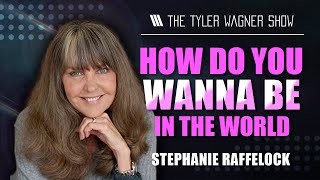
Stephanie Raffelock writes daily for 2-4 hours and spent years pitching A Delightful Little Book on Aging to 35 publishers before turning to hybrid publishing. Her book weaves grief, reclamation, and humor into a guide for mid-life women pushing back against ageist stereotypes.
Chapters
All right everyone, welcome back to another episode of the Authors Unite show. Today I have Stephanie Rafalock with us. She is the author of a delightful little book on aging. She's the co-host of radio's Yak About Today, which airs on WCZR in Florida and can also be found as a podcast wherever you get your podcasts. And she's a lover of dogs and lives in Austin, Texas. So welcome to the show.
Hey, thanks.
Of course. Grateful to have you on. So I always, I like to start off with like the beginning. So you wrote a book, it's called A Delightful Little Book on Aging. When you were younger, did you foresee yourself here in this moment having written this book?
Well, I didn't foresee myself in this moment with you exactly.
You didn't visualize me when you were 6?
You know, I didn't, but I'm glad to be here. I did think about writing when I was a kid. When I kind of traced back the arc of my life, I wrote cartoons when I was about 5 or 6. And I loved the whole idea of cartoons and comic books. And then later on, my favorite— I was a terrible student, terrible student, but I loved my English classes. And the reason I loved my English classes was because I could write. I could make stuff up. Later on in life, I worked in Los Angeles in the entertainment industry, television production specifically. I worked for a show called The Midnight Special. And whenever I worked for any production house, Midnight Special or otherwise, I always was in love with the writers. I thought they walked on water. But I didn't own that part of myself that felt smart enough or capable enough to do that. I was still the bad student. You know, those are jobs for somebody not like me. Yeah. And then as I got older, I began to claim that part of myself that truly was an artist, that truly wanted to write. And not just for the sake of writing, although I love the process of writing, but because of what writing is, which is a doorway into the examined life. Writing is part of my process as much as someone that has a meditation practice. I have a writing practice. It's revealed to me over the years, who I am, who I want to be, and where I've been.
So let's talk about, let's talk more about that. So you, you love writing, right? So how often do you write? Is it like every morning or?
I write every day.
Every day, like how, like a couple hours or?
Anywhere from 2 to 4 hours. It depends on the day. Some days you have more juice than others, you know.
Oh yeah, yeah. See, I, you know, oddly enough, and I literally run a publishing company, but I'm always honest about this. I don't— I find writing is so interesting. The beginning of writing is so hard. Once you hit that like flow, then I love it because you just lose track of time. But getting to the point of the flow is very difficult for me. So, um, either— I'm curi— like, what's your— like, before you write, is there any sort of like thing you're doing, like a habit to get yourself in the mental state to be able to do that?
I find that caffeination really helps.
We're gonna have the best interview ever.
You know, that's what keeps it going is like, you know, 3 big mugs of black tea and it's like, okay, I'm ready to write.
No, I agree. I, for me, I wrote my first book 8 years ago, so I was 20 years old, just dropped out of school. And what I had to do, in all honesty, I would run every morning And then I would actually— I was on Adderall and all that's what I— now I don't take it anymore, thank God. It's— I think it's a terrible thing personally, but, um, without it I didn't have like the just ability to just like be by myself and just like let it, you know, pour out of me. So I understand. Okay, so caffeine, but then when you are writing, is— do you have any like strategies? Do you just like let— let like just type and then edit later, or are you very like concise about it in the beginning?
Whether I'm writing a manuscript or I'm writing a blog post or I'm writing an article, I'm always asking the question, what is it that you really want to say? What deserves to be said? What's the message?
Yeah.
How do you want to be listened to? Because somebody else is going to read you. It's not, you know, it's not all about you, the writer. It's about what you convey to somebody that's going to pick it up and read it and hopefully be affected by it in some way. So mostly just that question, what do you want to say?
Yeah, I— and that actually is kind of freeing in a sense, the way you said that, because it's like it's not about you as the writer, it's about like what you're trying to say or help. And obviously this is more— we're talking more about a non-fictional type of thing. Because fiction's different. I mean, you're going on like a wild journey. I don't even understand how people write fiction. But for this, I get what you're saying. So you're kind of like, who do I want to help? What do I want to say? And then that's your foundation. And then you go from there.
Right.
Gotcha. And are you usually handwriting or is it all like all typing?
I go back and forth. I do handwriting sometimes because I do think it uses a different part of your brain.
But It's actually been psychologically proven.
Yeah. And, you know, and I love Natalie Goldberg. And I read Natalie Goldberg 25, 30 years ago when her book Writing Down the Bones came out. And, you know, she's big on handwriting. The thing is that I'm not a real patient person. So I can do a little bit of handwriting, but mostly I want my fingers to, you know, fly across the keyboard.
Yeah.
And then, you know, I've become very familiar with the delete key. which is something, it's very hard to tell any rookie this, I'm still learning it, but you have to make friends with your delete key. It's either good or it isn't, and you know.
Yeah, 100%. Well, I always say too, like, and obviously books and blog posts, they're a little bit different, but either way, you probably are at least editing them. Like, when I write, I just like let it be bad at first.
Like, yeah.
Values there, but the actual writing is probably pretty poor. And then an editor can come in and take it from like a 2 out of 10 to like a 9 out of 10. Like, it is dramatic what good editing can do.
And I think it is dramatic.
It is like crazy. Like, what you wrote will be so unbelievably different at the end of editing. It's crazy. Um, gotcha. So then now your actual book though, A Delightful Little Book on Aging, Why did you write it?
I wrote it in response to the amount of rejection that I had gotten from a group of publishers. I garnered an agent fairly early on, on my serious writing journey. And I was writing novels, which you're right, is a totally different animal. And I ceremoniously was turned down by 35 different publishers, and some of them with absolutely fabulous reviews. We love the character. We love the psychological insight. We're gonna pass. And it's like, what do you do with that? And so I was afraid to stop writing for fear that I would just lose momentum. And I said to a coach at the time, I said, really, all I want to do right now is I just want to do a compilation piece of articles and blog posts. I just want to write like a delightful little book on aging. And she said, oh, that's a great title. So, that's the title we went with. A Delightful Little Book on Aging is a compilation of posts and articles that I had written over a period of years where I was learning about the positive aging movement, which is a mindset of midlife people and beyond. But I'm going to say midlife women most especially who really deal with the toxic stereotype of age, I think, more so than men do. I learned a lot from writing these posts and getting feedback from these women who said, "I'm not ready to go gentle into that good night. I hate the word retirement. I don't feel retiring." I talked to women that wanted to start encore careers and enterprises at 50, 60, 70 years old. And I began to see that to live life well, you have to live your dream right up to the edge, right to the very end. So I feel that the book serves a purpose in that regard to say you're going to live life right up to the very end, to the very edge. So why not make the best of it?
I agree. Do you think that discrepancy is because of the physicalities of like man and woman? Meaning like, it's weird. I've heard actually like women say this. I can't speak to this. I don't know. But women say like, as a guy gets older, And for some women, it's like a guy actually starts to become more attractive the older he gets. Right? Whereas a woman, it seems to go the opposite direction. So is that why you think that is, or part of it?
Well, I think part of it is the way that we perceive other people to be. We perceive women as, you know, the old archetypes of maiden and mother. And so when you no longer look like a maiden or a mother, And you know what's left in the category is crone, and that's a word that makes most women, including myself, bristle. And so we are in a time right now where I think women are reinventing themselves at midlife to say, you know what, I'm not insignificant, I'm not used up, I'm not desexualized or defeminized. Those are stereotypes that have to go. So some of it has to do with Yes, the physicality of it, but it's really our perception of the physicality of it. You can look at a guy with lines on his face and go, wow, how distinguished. But you look at a woman with lines on her face and you go, well, you know, she's over the hill.
Yeah, it's so crazy to me.
It is crazy.
And when you are like, you know, it depends what and who you're attracted to, but for me, just to be completely raw and honest, The fact, like, because I, you know, I started losing my hair at a young age, and like the fact that a girl like finds this attractive to me is like beyond me. I'm like, what the heck do you like about that? But some girls like love it, like they're— or, and some don't. But so I'm just like, we are just so different. Like, it's just, it's crazy.
Yeah, I'm married to someone, by the way, who has your haircut.
Okay, so I know, like, some, some girls literally prefer it, and I was like I started to find that out. Like I live down in Miami. It's, I don't know, we're getting too detailed, maybe. But it's like, they literally, a lot of, from South America, there's a lot of girls that like, or people that migrated to Miami and they seem, 'cause it's kind of like that pit bull look, you know?
They got it.
And I'm like, dude, I'll take it.
I mean, hey, take it, you know, whatever works for you.
Okay, gotcha. So, now, this book though, I guess, can you tell a little bit more about like what does it fully encompass? Like what are you writing about?
It encompasses how aging begins in grief, that aging, all aging, whether you're 10 years old or you're 90 years old, happens against a backdrop of loss. And we need to learn better in this culture that we live in to embrace loss and grief because grief is one of the great transformative forces in life. So I cover the subject of grief, reclamation, meaning that as you get older, you'll find that there are certain things that you cast aside because, you know, marriage and a mortgage and raising kids became more important. And you get to a certain point in life where things open up and you can reclaim some of those things. My husband went into the sciences, but he recently started playing the bass again. So every night after dinner, he goes upstairs and he plays the bass. And he said, "Hey, what's a 37-year-old absence from playing the bass?" But it's like he reclaimed this musician in him, and it's very heartening to see. Then I write about vision, that we need a new vision at every single decade of our lives. And if You remember, maybe HR has changed, but when I was a young woman, HR always used to say, "Well, where do you see yourself in 5 years?" or "Where do you see yourself in 10 years?" And that question is more relevant as we age because time is limited. You know, it's like the life that I've already lived is much longer than the life I have left to live. So I create a vision for, well, then how, if this is like the last chapter, is this, this is like the the finale and the transformation of the story, how do I want to live my life? That's a really valuable question to ask oneself on a daily basis. How do you want to be in the world? Who do you want to be in the world? And finally, the last thing that I deal with in the book is having a sense of humor, that laughter gets us through a lot of bad times, a lot of rough times. And laughter, not just a good belly laugh, but, you know, the laughter of delight. The laughter of, you know, the kids that— the kids on my block have had so many water balloon fights this year, and it never fails to make me laugh. I go out and I stand on the front porch and watch them. I've gotten doused a couple of times. Don't douse the nice old lady who lives on the corner. Bad. Anyway, but we need that laughter. So that's what the book covers. It's a series of personal essays. There's this kind of new genre that's taking form that is a memoiresque/self-help kind of genre. Yeah. And I think a guy who did it especially well that I love is a guy named Derek Sivers, who wrote this little book called Anything You Want, which is about creating CD Baby. And some of your listeners may be too young and they go, "What's a CD?" But it was for a long time. See? I'm glad you know. But there was a time when that was the only place that you could get indie music was on CDbaby.com. You couldn't get indie music anywhere else. So he did a great service.
Gotcha. Interesting. So yes, it's more about maybe like the psychologicalness of aging and not like, eat this, don't eat that.
Yeah, it's like the psychology, the philosophy, and the spirituality of aging. Although I have to say, I do mention that I think, you know, good diet is crucial. I do think that, you know, you should never stop exercising. You should never stop moving. You don't want to lose momentum. You know, in, in dance, there are two movements. There's either contraction or there's expansion. And if you contract for too long, metaphorically, in your body, the heart and the mind follow. So you always want to be expanding, and the way that you do that is you keep moving.
Yeah, that's why. So I That's why I run every morning. Like, I—
exactly.
Well, there's multiple reasons. I also run every morning so I can eat whatever I want during the day.
Also a very good reason.
Yeah, I mean, but I always tell people, like, it's interesting how when you— it's like a house in a sense. Like, when you're building yourself, I literally have come to the realization that if I don't run for like 3 days straight I will start to get anxiety. Like I will feel very off. So it's like, if I just remove that one part, then I as a person am completely different. Like I'm shattered. So running is like, for my mental, like I physically, I mean, you know, whatever, but it's more, I run because I feel good after I do it.
Like, yeah. So that's a good reason though.
Yeah, yeah, right. It's, it's really nothing about the physical at all for me with it. But, um, gotcha. Okay, so then A Delightful Little Book on Aging. How long did it take you to write this?
Oh, I, I did it over a period of like 7 or 8 months before I went into like the copy edit and the proofing and the polish and all of that.
Gotcha. Okay. And now, so you said, because it's actually very much like, um, Oh, come on, I'm blanking on his name. The Chicken Soup for the Soul guy.
Oh yeah, yeah, Jack Canfield.
Yeah, thank you. I don't know why.
Yeah, that guy.
He got rejected like 30 times or something.
Right, right.
So what did you end up doing, self-publish? Or how?
I hybrid published through a company called She Writes Press, which is primarily a women's company. And And I'm very happy with them.
Nice. So what was that? Honestly, because there's just a lot of, there's a lot of aspiring authors and authors that listen to this show. So the process, even though you didn't land a traditional deal, hybrid's still great. I have, I'm friends with a lot of hybrid, uh, founders of hybrid publishers. Um, so being rejected that many times, did you have a literary agent? Like what was the entire process there?
I had a literary agent for my novel and when I was rejected, she said, well, let's "Let's build on the rejection," meaning let's build on, you know, the good comments that you got. So we kind of came up with an idea of what to write next. And I did 2 passes at 2 manuscripts, and she didn't like either one. And it was very frustrating for me. And I don't know if she didn't like either one or she just felt like, "Well, you were rejected so many times, now we can't sell you." I mean, I— We hold agents out to be the holy grail of the literary experience, and we forget that they don't really know who's buying what.
Yeah.
They don't really know what the trend is. I mean, none of us know that. So maybe it was the timing. For me, it was a wake-up call that I could do another type of writing that I didn't believe I could. And yet, I had this whole backlog of blog posts and working for a newspaper and doing interviews for the newspaper. So it translated quite well. The process with She Writes Press was I still had to submit a manuscript and be approved, be accepted. So She Writes Press doesn't accept every manuscript that they get. It's not like a company for hire. So once I was accepted, then I went through a, um, you know, another copy edit process. Um, and one of the things I like about She Writes Press is that they really have a strong educational component to what they do. A lot of the seminars that you get from them are about the publishing process. I understand much more about the publishing process now. I understand how Ingram Publishing Services actually works as opposed to just Ingram, which, well, everybody's with Ingram. But Ingram Publishing Services is actually the company that sells your book to the people that are going to buy it. Barnes Noble or whatnot. So that was interesting. And like I said, I just had a good experience. There's a network of women. We have a private Facebook group. It's like each generation of authors supports the next generation that, you know, has books coming out this spring or this fall. And there's a lot of support and encouragement. It's all very positive. So, yeah.
Yeah, so anybody, well, for any, do they, they only publish girls, I'm assuming?
Well, She Writes Press only publishes girls.
Yeah.
And, and they're known for publishing women too. And Sparks Press, which is their, their, their co-company, Sparks Press also publishes guys.
Oh, cool. Okay, gotcha.
Yeah.
Yeah, just because you've had a good experience. So for all the listeners, You know, hey, check out She Writes Press or Spark Publishing, you said?
Sparks Press.
Sparks Press. Gotcha. And just to sidestep, just because I love dogs, tell me a little bit about the dogs. You love dogs? You have multiple dogs?
I didn't know what to write for the introduction. It's like, introduce yourself. Well, I'm a woman who lives in Austin and I love dogs. I do love dogs. And I'll tell you, I had this very sad thing that happened. Our dog of 13 years died on June 1st of this year. And it was just an— June was the most anguishing month. We missed this dog so much. Best trainer I ever had gets me out on the trail or, you know, the sidewalk every single day. And now we have put down a deposit for a new puppy. We looked in all the shelters in Austin. By looked, I mean, you know, we made phone calls. You can't adopt a dog right now. Because so many people, because they're at home, you know, kind of working from home or whatnot, have gotten dogs. So nobody has a dog that you can adopt.
Really? That's crazy.
We ended up going to a breeder because it was like, nope, we gotta get a dog. You gotta— it's like it left this big empty hole. And we did this kind of crazy thing of, you know, asking our lab, whose name was Jeter after the great Derek Jeter. Regardless of whether or not you like the Yankees, you've got to admit Derek Jeter was one of the all-time great ballplayers ever.
I respect it. I'm a Phillies fan, but I respect it.
Yeah, exactly. You can respect it. So, um, so now we have, uh, money down on a new puppy, and we've already named the new puppy. And the new puppy's name— you'll like this then— is Mickey, after the great Mantle.
Yeah, that's great.
I know, I love dogs. They're great trainers. They love you unconditionally. My dogs have always made me a better person. They don't judge. And they've got wicked bad senses of humor. Just watch them how they are with other dogs. So yeah, I am a dog lover.
Me too. I literally— so this morning I had another interview and Oddly enough, this woman just lost her dog like a week ago.
Wow.
What she had said, because I just find it interesting, people have different views on this, but if you're a dog lover, you personally, to me, it's almost equivalent to a human. It just is like, yeah, pretty much is like right there. It's pretty close. Yeah. Like, so I don't know. It's like she had said, I know some people think, oh, it's just a dog. And I was like, I think it's just, you gotta realize, like, cause you said 13 years, I think that's a lot of time that that dog probably maybe was with you more than like any human.
Absolutely.
By your side all the time. Like if you work at home. So it's like, dude, that's a big piece of you.
Well, in the last few years that my, my husband and I actually went to an office, the dog went to the office with us.
Oh, wow. See, yeah.
So the dog went to the office, the dog was out on the trail. I mean, I have hiked everywhere with this dog in Colorado, in Oregon. And of course, in Texas.
Yeah.
So yeah, dog was with us 24/7.
I mean, I'm like, yeah, just the dog. This is like a serious thing. So now Texas, I've been a few times. I love it there. What are your— do you go to like Barton Springs and stuff?
Barton Springs isn't too far from me. You know, Texas is a place where you're supposed to change planes. People don't, you're not supposed to move to Texas. You change planes in Houston, that's it. That's how I thought of Texas. Years ago, when I was working on The Midnight Special, I met a singer-songwriter who was on the show named Kinky Friedman. Kinky Friedman and his Texas Jew Boys. It was, you know, standards and practices, it was questionable whether or not we were going to use that on air, but He was, uh, he was a— that really wrote in a venue of like social justice with a sense of humor. And I thought he was absolutely brilliant. So I knew that he was from Texas. So whenever I thought of Texas, I thought of Kinky Friedman, who actually has an animal preserve in San Antonio, which isn't that far from here, where he takes in like, you know, dogs and horses and everything. And kind of gives them a place to live. The other thing I learned about Kinky Friedman that really blew my mind when I moved here is Kinky Friedman is a novelist in his own right. He's written about 30 books and they're all cozies. You know, cozies being the mystery that doesn't have a lot of gut and gore to it. So that's what I know about Texas. And I live in Austin, which is like this bubble in Texas of green rolling hills and tons of water.
Yeah.
Which is not what you think of when you think of Texas at all.
Yeah, no, Austin's amazing. I've actually, I've never been to Houston or any other parts, or Dallas, I suppose, but Austin's amazing. It's actually, I lived, you know, obviously I live in Miami now, but I lived in San Diego. And once, I forget what it was, but something with like taxes and just like the price increasing in California just started to get crazy. And a lot of my friends from California moved to Austin, Texas, and that's why I ended up going. And it's actually become kind of like a tech hub, like Facebook, the Bumble dating app, Dell. Yeah, like it's huge.
I mean, right, right. Indeed.
Yeah. And it's awesome. Like downtown Austin, Texas, there's a lot of cool parts. There's one part that's like, um, I, I forget what it's even called. It almost looks like a fraternity row or something. It's like all these different bars and stuff. It's 6th Street, I feel like, or something. It's a cool area. I don't know. I just think people should go.
Well, the great thing about Austin is you've got kind of the slick, new downtown Austin, which is a fun place to go, you know, great restaurants, fun place to go, good music. And then you've got kind of like the fringes of the old cowboy boot.
Yeah.
Where you can get great Tex-Mex, and some of the old-fashioned honky-tonks are still around that I don't know if they're gonna make it through, you know, COVID. It's like, so the music venues here have been so hard hit. But it's that, that kind of fringe element that's always appealing to me. I like things a little edgy. So that exists in Austin too, and it's It's great. It's a great— it's just a great city.
It's so cool. And I remember too, obviously bats right now are not too liked, but, um, oh yeah, minor technicality. But the bridge, whatever it's called, the bridge where the bats— is really cool.
I, I like where they fly out. Yeah, but see, in Austin we don't eat our bats.
Yes, that's just—
so, you know, they're just bats. We don't look at them as dinner.
Hey, this is why I'm loving this right now, because it's like, I know it's a serious thing out there, but like, to be able to laugh, you gotta—
oh God, you know, if you look at this stuff every day, it will depress you. And I'm not saying don't stick your head in the sand, don't call it a hoax, all of it is real. But God, take some time to like lighten up a little bit for the sake of your own mental health for the sake of your heart, you know, and don't eat any bats. Hey honey, what's for dinner?
Oh yeah, I wanted to ask you this because I'm curious. How did you get the radio gig? Like, what was the process to become like a radio host?
I started out podcasting.
Okay.
I loved the little podcast I had. I only did 2 seasons. And I did a show with a guy in Florida. He called me one day and he said, "Would you consider co-hosting my show?" And then after we had started putting together our shows, I think we've only done 8 right now, he said, "Oh, you're not going to believe this. iHeartRadio changed everything." "and we don't, I don't know if we have a station." And I thought, "Oh, great." Turns out that what happened was our reach went from this small area around Vero Beach, all the way from Melbourne down to West Palm Beach, as, you know, as radio listeners. So we went from about, you know, a reach of 40,000 to a reach of a million something.
Yeah.
Now, not all million people tune in at the same time, but it still gives you a broader thing. So it was one of those kind of pure dumb luck things. Yeah, I fell into it. I like the Zig Ziglar definition of luck, which is luck is where preparation and opportunity meet. So this was the opportunity, and the preparation was that I had done my own podcast. And I'd kind of painted myself into a corner because I started each podcast by reading an essay of mine because it's kind of my wheelhouse, is essay. And, you know, you can run out of essays pretty fast when you're, you know, building on seasons. So I thought, what am I going to do now? And I was doing interviews, which was fine. I loved when I was doing newspaper interviews. So I, you know, like interviewing people. But this is just a show with the two of us talking about the times and what's going on and, you know, kind of reminiscing about years past. And it's a lot of fun.
Yeah, I agree. It's, it's like, um, because— so it's a relationship. So obviously you were prepared because the podcast, but yes, you had a relationship, and that— I, I just view the whole world through relationships. I really do. It just— to me, obviously you need to be able to do the job, but any— I feel like any, like, thing that you get, it's always like because you were, like, close to that person, or like something a relationship is always involved.
Like, no, I agree with you. I think that good business is about good relationships. Yeah. And so then, you know, if you step back from that a little bit, you go, well, it's not only is it about good relations, but it's about then good communication. Then it's about kind communication and how you connect with people with good communication and kind communication. I think that's what, you know, Creates opportunity.
Yeah, no, communication's everything. I, um, I couldn't agree more. I feel like it's this paradox of like the more you avoid something, the more it shows up in your life. So it's like with communication, I feel there's this thing where, um, a lot of people do it unknowingly where they will, they avoid conflict. So, so they won't, but, but when you do that, it, you, you never get through it. It's You're— it's just all these things that just build up. So even though sometimes with business you need to have tough conversations, overcommunication is always the key, um, because undercommunication can lead to a lot of problems.
So yeah, yeah, I think that— I think you're right. I think you have to be forthright. Yeah, you know what I would call forthright? Just tell it like it is.
Yeah, and it's tough in the moment, but in the long term it's It's much easier that way.
Yeah.
So yeah, I don't know. I mean, I want to, I kind of want to give you the floor. Like, is there anything else that you'd like to share? If so, you know, please do. And then website, where the book is, like anything people can connect with you.
I guess the other thing I would share is since your listeners are fellow writers and publishers and whatnot, is that I would say to writers, write everything. If you have a dream of being a writer, do yourself a favor and write everything. That means try your hand at scripts, try your hand at short story, try your hand at nonfiction, at fiction, at novels, you know, just work it. Because a lot of times we think we want one thing, but we don't really know what we're good at until we are in the thick of it. So, and also know that every bit of writing that you do will serve kind of the main wheelhouse that you land in. So the years that I spent writing novels, that kind of prose writing definitely contributes to the nonfiction writing that I'm doing now. Writing newspapers, interviews. I used to write for the lifestyle section at a little newspaper in Oregon called the Rogue Valley Messenger. And just coming up with interview questions, that changed me as a writer. You know, and hearing how people give answers to the intimate details of their life. Once I interviewed the number one burlesque dancer in the Rogue Valley. And hearing about like, well, how did you become a burlesque dancer? It changed my life. She said one line to me that every writer in the world will appreciate. She said, well, she said, what really helped me the most was I was adopted by a group of drag queens and they showed me everything. And I went, oh my God, like, that's— there's such a story in that sentence. So that would be the one last thing that I would share with your listeners is write everything and don't give up on anything.
Yeah, no, I agree. I love that.
Okay. And my book can be gotten just about anywhere because one of the cool things about hybrid publishing is you get a hybrid publisher because they have the same distribution as Random House, Simon Schuster, or anyone else. So you can get my book anywhere online. Barnes Noble. I like to send people to IndieBound.org just because I like to support independent publishing. Amazon. Any of those places you can go to to get my book. And my website is something that you probably can't spell. So I'll spell it for you anyway. It's Stephanie with a P-H, E-P-H-A-N-I-E, Raffelock, R-A-F-F-E-L-O-C-K. I had to think about that for a minute..com, stephanieraffelock.com. And then there's all kinds of information where you can find me on social media and whatnot. And like that. Yeah.
I appreciate you coming on. I really enjoyed the conversation.
It was very, very fun. Thank you.
More from Tyler


Catherine Nikkel : THE STORY EVERYONE HAS BUT HASN'T TOLD : The Tyler Wagner Show #1120



Scott Ritzheimer: Bring Predictable Success to your Organization | The Tyler Wagner Show #1115


Fred Moskowitz: A GUIDE TO GETTING STARTED WITH IN MORTGAGE NOTES | The Tyler Wagner Show #1113

Mark Podolsky: From Land Investor to Full Time Success How I Made $90,000 Cash in Real Estate


Mark Podolsky: How to achieve a 300% return on investment my foolproof strategy

Mark Podolsky: How to make passive income selling raw land the irresistible pricing strategy