How To Be Up In Down Times With Mitzi Perdue (The Authors Unite Show)
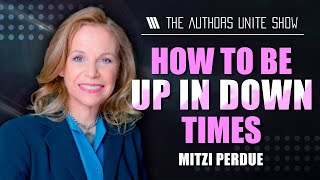
Mitzi Perdue, who has written 22 books, shares habits from her prolific writing career and her family's business empires: daily diary practice, treating rejection letters as badges of honor, and a hiring method called 5+5 referrals that helped scale companies to over 20,000 employees. She also discusses the "Barclay Parameter," addressing grievances within 60 seconds, and offers practical tips for thriving during downturns.
Chapters
All right everyone, welcome back to another episode of the Authors Unite show. Today I have Mitzi Perdue with us, so welcome to the show.
What a joy to be with you again because I was on— how long ago? More than a year at least.
Yeah, I think it was like a year and a half and it was called the Business Blast podcast then, so it's changed a little bit. Um, but yeah, so if you want to start, tell us a little bit more about you and what you do.
Okay, well, I am an author, but I figure that you shouldn't be an author unless you've got something to talk about. And I have 3 subjects that I talk about, and the first is my late father, Ernest Henderson, was the co-founder along with my uncle of the entire Sheraton Hotel chain. And I love to write about the success tips that he had, which are just totally timeless. I mean, they can help everybody because His view is that attitude is everything and that one good idea can change your life. So I loved it. Oh, and he was an author. My late husband, Frank Perdue, the chicken guy, he had a story that was somewhat similar to my late father's. And that is Frank Perdue also had some huge obstacles to overcome along the way to success. And for myself, I've now written, I think it's 22 books. And if, uh, if you think Authors Unite would, would enjoy hearing some of the stories that I have of what my routines are, how I get stuff out, I'd love to share that.
Yeah, that sounds great. Let's start with— yeah, because the 22 books, that is perfect for this show. That's awesome. So let's start there, and then I would love to hear the success tips, uh, as well from your father and late husband. So, um, the 22 books, how— that's a lot of writing. So what— yeah, tell us a little bit more about your routine and how you were able to like create that much content.
Okay. And, um, it— I almost wonder if it's genetic or something because my family, and we've been in business since 1840, we have a rule that the time— by the time you're 60, you have to write your autobiography. Which is a fabulous tool, by the way, for keeping the family together, because when you know what your great-grandfather or great-grandmother thought about things, I mean, it's just really cool for your own identity. But it also means I grew up with the idea that writing's a really good thing. However, getting published is a whole different story. I've, I've always been something of a writer because I had the idea, I think I got it maybe around age 10 or 11 or 12, that if I kept a diary and that I just made myself write something every day describing what was happening and so forth, my hope was that it would be like if you're a pianist, you've got to practice. Well, it occurred to me that being a writer, if you want to be fluent and have the words come easily, that you've probably got to practice the same way a pianist needs to practice scales. And so That, you know, that was a big help for my future career as a writer, just to write something every single day. But then, I never had anything published until I think I was around age 34. And the thing that kept me back, and I wonder how many of our audience and listeners or viewers have the same issue, which is, although I wanted to be a writer, I was so afraid of rejection slips. It took a great big cataclysmic event in my life to change me over from thinking I want to be published to actually getting published. And, uh, shall I share the great big event that made me reframe rejection letters?
Yeah, definitely.
Okay, because I think one of the magic keys to success as a writer is to get over the fear of rejection. And I got over the fear of rejection, it was partly by redefining it. There came a moment in my life where I decided that a rejection letter was a badge of honor because it meant that I had tried. But I came to this, to this conclusion because I was living in California when I was 34 years old and I had a tenant farmer for my rice farms, and this man had an unusual story. He had an IQ of over 200, and you know, they're— that's like one in a million.
Yeah.
And he had always expected that, you know, he knew he had been given this great big wonderful gift of more intelligence than most of us could even imagine, and to repay the debt that he felt for having been given this gift, he wanted to write a great book. And so for pretty much all his life, he was collecting articles and writing his thoughts and whatever. And the book that he was going to be— that he was going to give back to humanity was called Life: An Owner's Manual. I mean, that's pretty ambitious and pretty great, right?
Yeah.
But the thing is, at age 68, and this man's working for me, He told me that he had a fatal disease. He had heart disease so severe that they couldn't keep him alive long enough to do a quadruple bypass surgery, and that, you know, this was curtains. And, you know, if you've had a diagnosis of death, you know, what could be worse? But there's one thing worse, and that is in Peter Smith's case— I'm not— I'm disguising his name— In Peter Smith's case, it meant that the whole purpose of his life was never going to be achieved because he, he had never written the book. He'd always just been preparing, preparing, preparing. But then a miracle intervened. He went to the Pritikin Clinic in California, which has a fabulous record of, of helping heart patients. And while he was there, you know, a really strict diet, lots of exercise, lots of mental attitude, lots of spirituality. And when he came back a month later, he was able to walk 5 miles without pain. He had lost 15 pounds. He'd gotten his life back. And I'm so excited for him. And I say, "Peter, write your book." And he tells me, "Yes, I just have to do a little more research and I'll be ready." And that told me, at that moment, I knew he never would write his book. And by the way, he lived until his 90s, and he never wrote the book. But I realized that if he was always putting it off and waiting for it to be perfect, uh, he had two strikes against him. One is, if you're always waiting for to be ready, you'll never be ready. And second, uh, I was pretty sure, knowing him pretty well, that was holding him back was fear of failure. He was afraid that if he wrote the great— if he submitted the great book and it was a failure, it would be the end of his, you know, his— the whole purpose of his life. But I, listening to him to say— saying that he was just about to write the book and realizing that he never would, it became totally clear to me that I'd been held back by fear of rejection slips and that I needed to redefine failure. And because watching him, I realized he had done the only thing that's absolutely guaranteed to create failure, and that's not to try. And so I told myself, okay, it's going to be part of paying my dues to have a whole collection of rejection slips that, except for extraordinarily talented people, of which I was not one, uh, Success doesn't drop in your lap. You have to put yourself out there, and each time you've tried, maybe— well, you're going to be farther along the road to success as an author because, you know, you've tried, you've probably learned things from your mistakes, you've probably read books on writing, maybe you've attended courses, but you just bit by bit get farther along the road to success. And, you know, maybe success happens in maybe it happens in years, but that you've got to put yourself forward, go out on a limb, risk the rejections. And okay, I don't know how to make a rejection not sting, but you have to get past it because, because you're paying your dues.
Yeah, no, there's so many lessons in there. I think that's one of the biggest things with the first thing that you said is that people, I think they, they think They are either good writers or bad writers. And it's like this thing that like you're— and hey, some of us are definitely born with, you know, we're better at some things than others naturally. That's true. But if you want to become good at writing, you know, write every day. And I feel like a lot of people don't think about that. They're just like, no, I'm not a good writer. I'm like, well, try writing every day for a year. You know, maybe you'll be a good writer after that, like possibly.
So I think I can almost guarantee that you'll develop a fluency. You'll realize how to make transitions. Or how to organize it or how— practice is, how about completely 100% essential. I mean, I'm not willing to believe that there's a single person who can get there without a lot of practice.
Yeah, agreed. And, um, like you were saying too, is the perfection thing. I find that with a lot of first-time authors that I work with, they are so nervous, uh, like right before the publish, like they're, they're very like cool, calm, and collected the whole way through. And then Once the project is finished and we're about to hit publish, that's when, you know, they get really scared because they're worried like what's the first book review going to be or like what's— and you have to really let that go, I think. So I like how you kind of spun it because look, you're going to get some bad reviews. Not every review is going to be good. And actually, in my opinion, that's kind of a sign that your book is reaching a lot of people when you do get your first like 1-star review on Amazon. I remember mine and I was like, I was like, yeah, I was like, this is— I wasn't hurt by it. I was like, oh, Okay, like this is starting to actually, uh, you know, maybe kind of tick some people off. This is cool.
But you know, that makes me think of a lecture I heard.
Yeah.
From a guy called Willie Jolly, who's an absolute star in the National Speakers Association. Uh, he's about as high as you can get in an organization. I think it's got somewhere in the range of 5,000 members and he's just right at the top. And the lecture that he gave was, or that I heard, was you have to realize as a speaker that in any audience you ever address, large or small, even if you've been doing, doing it for 40 years and you're a star, there are going to be people in the audience who hate what you have to say. It just comes with the territory. He said it is completely mathematically impossible to please everybody because people are so different. One person likes one thing, one likes another. And so when I get a bad review, After I recover from wanting to jump off a bridge, which I can do quite quickly, uh, that is recover, not jump off the bridge. Um, I think of Willy Jolly, and that even if somebody as eminent as him is going to get feedback that they hated everything about him, well, who am I to complain?
Yeah, no, definitely. Like, I remember too, the review said, because my first book was short The review said this is not even, uh, good enough to use as like a doorstop. That's what you said. And I was like, yeah, this is actually funny. Like, I actually appreciate it. Um, so either way, um, I do want to touch on, because I don't want to forget, like, family-owned businesses. Because I think there's, you know, I grew up in a small town, uh, Bucks County, Pennsylvania. It's Doylestown is the name. So that, that's where I grew up. A lot of family-owned businesses, you know, small towns. So like What's— how do you have a successful family business? I feel like the dynamic is so hard, you know, because it's— you have this relationship, like, let's say I have a younger brother and we already have this kind of like older-younger brother dynamic, and then to have him like work for me or with— it's, it's a tough adjustment, you know. So I'm curious your thoughts on that.
Okay, my overall thought is that a family business at its best is one of the most joyous things in the world. At its worst, and I've been studying this for at least 15 years and talking with countless family businesses, when it's going wrong, I'll give you a direct quote from something one woman told me. The pain of not getting along with my sister in the family business permeates every hour of every day. I mean, so at its worst, it's horrendous. I know of a woman who was so angry at her brother that she told me, if I attend my brother's funeral, which I don't think I will, but if I do, it will be so I can jump on his grave. So, all right, so I mean, I'm telling you those two examples because that's an example that, you know, it's either the most— it's not either or, but it can be the most joyous thing in the world or the most painful thing in the world. So it's really important to get it right. And I have a theory that I write about and talk about, and that is that every family that exists has a culture. And by culture, I mean, this is the way we do things. We don't have to examine and think about it. This is just, you know, it's in our repertoire. This is how we respond. But the thing is, the families that last put a lot of effort into their culture. The ones who don't last just let it happen by accident. And I think it takes a lot of really sustained effort and thought and cooperation to develop a culture that learns how to get past problems. Because I also believe there's no such thing as a family that doesn't have conflict. No such thing. That's— we're human beings. There is conflict. But like in the Henderson family and also in the Purdue family, In both families, we have an agreement. And let me remember— remind you that for the Henderson family, it's been in business for 180 years. One of our rules is if there's conflict, get it out in the open, discuss it, deal with it. But the big rule is you keep the quarrel within the family, because the moment a family becomes public, the moment you have like adversarial lawyers representing different parts of the family, or the moment you've gone to the press, it's almost impossible to put the quarrel back together again. I mean, by the time— it's a bridge too far. And I've talked with family business consultants, how about dozens and dozens of them, who've told me that they won't even take clients if it's gotten to the point where the quarrel's gone public. Because they say— I mean, I've had one man, he told me, in my life I've had 2,500 clients, I've never had one who was able to pull back from, from the abyss if they've gone public. That the family that's gone public with a quarrel, that, that family is going to fall apart.
Yeah.
Well, the Purdue— the Hendersons phrase it as, we don't wash our dirty linen in public. And, and the Perdus, they, they have exactly the same notion, but it's called the covenant. And the covenant is argue, argue, argue if you need to, you know, and, you know, hypothetically, if you— I'm being really hypothetical now, but if you needed to throw things or scream, that would be okay and better than keeping it bottled up. So the rule is express it, deal with it, and when a decision is made, you're not supposed to look back. But in any case, you do not go public.
And I think that's huge. And I think the big thing there too is like, because resentment can build up, right? If you don't address the problem like immediately, it becomes very passive-aggressive. Yep.
Yeah.
And yo, it does not go away. In fact, it just builds and builds until there's like a big snap or something. So it's better. It's so weird how problems work like that, where a small problem today that you hold inside could build into a huge catastrophe like 6 months later. So yeah, address it immediately. I think that's right.
In fact, can I share a thought that guides at least the Henderson family? And I've been telling my family by marriage about this. It's— are you ready for the wisdom of the ages? Because here it comes. And it's on dealing with conflict. It's called the Barkley Parameter. Now, nobody who doesn't know me has probably ever heard of the Barkley parameter, but here it is. My beloved brother Barkley, I think he's been married to my Japanese sister-in-law for, I think it's getting on 58 years. He met her in Tokyo, so she came to this country. I guess we're talking like in the 1960s sometime. And when they were married, when they were first married, It turned out to be a difficult adjustment, but not for the reason you'd immediately think, because Minako loved America. The couple loved each other. So what was the conflict? The conflict, or the, the dynamics of the conflict, were when Barclay would see something that he didn't like, he was thinking, oh, it's cultural, I shouldn't, you know, I should just bite my tongue and go along with it, and But it's eating at him. And yeah, the first couple of days he's thinking, oh, I shouldn't complain. The next thing, why would she do this to me? And by, you know, by 4 or 5 days later, this thing has been eating at him. And so Mendako does something completely different. Maybe the toast is too dark, or I don't know what, but just something teeny and tiny and irrelevant. It becomes a Vesuvius because he's had all this stuffing in anger and resentment that just built and built. And so he came up with the idea that he would time how long between he was irritated at something and he'd address it, you know, he'd bring it up. And he discovered that the shorter the time, the less the problem. So the Barclay parameter, which we all try, at least in Henderson's, all try to act on, is if something's bothering us, it's okay to wait 60 seconds, but beyond that, the clock is ticking. Deal with it just right off. And the ending of this story, they've been married 58 years. And I asked Barclay a couple of years ago, I said, you've been married all this time, in a different culture, how would you rate your success? And he told me, I cannot imagine living a single day without Minako. So, so this, this, the Barclay parameter really works. If you've got, you know, every, every two people at least are going to have points of friction. So deal with it immediately, and then you can be free to love each other.
Yeah, I couldn't agree more. So I think it's, it's very good for families, but it's great for pretty much, you know, any— I think for any two people, like you said, because that's what happens is it builds and builds and then it becomes something way more than it needed to be. Um, so let's, uh, let's talk about some of the success principles, um, of your father. You said 180 years in business?
The Henderson Estate Company has been in business since 1840. And we've had family reunions. The family reunions began in 1890 and we've never missed any. And this year we're planning our Zoom reunion.
Oh, Zoom reunion. There you go.
But it'll be our 130th reunion. And, you know, I mentioned earlier that at its best, family, a high-functioning family is just one of the biggest sources of joy in the world. And I regularly, because I'm right now, I have the position of being the assistant matriarch. That is, I'm the second oldest. And as assistant matriarch, there usually will be 70 or so family members who will show up at a reunion. And I make it a point to ask them, how important is the family to you? And how about the universal reply is, this is one of the most important parts of my life. It's my safety net, it's my identity, it's something to look forward to each year. It's, you know, to come to, to have a reunion where you, you see your little cousins who you knew since age 5, and now they're in their 70s and 80s. It's just such a big part of identity that it is a joy-generating machine.
Yeah.
But that's family at its best. And as I've mentioned, not all families are at their best.
Yeah, no, definitely not. And I, I agree, I'm very close with my family, and like, it's— I can't imagine not having the close-knit family. And that's why it's interesting, like, the psychologists talk about this. I don't know if you could speak on it, but it's like the— how you grow up as a child, it has so much to do with like who you become when you're older. So I'm curious, like, what was your kind of childhood like? Like, what was your upbringing like?
Well, first of all, I thought— I think I really had a joyous childhood. I mean, I don't know how I got so lucky. But, you know, one of the things that we were taught just from infancy, you know, I mentioned that we don't wash our dirty linen in public. But, you know, there was another thing that we learned that I think is— actually, dozens of things, but the one that's in my mind right now is you can't always be right. If there's an argument, one of the things that we were never supposed to do was— and this will sound jarring, but hear me through— we don't approve of standing on principle. And yet you would think, but of course you should stand on principle. And our answer would be, no, of course you shouldn't, because the moment you're standing on principle means that you're closing your mind to the other side. And, and we disapprove of closing your mind to the other side because, you know, how are you ever going to get a resolution unless you honestly, sincerely, with an open mind and an open heart, listen to the other side?
Yeah.
It's a recipe for disaster if you think I'm right and you're wrong.
Yeah.
You're not going to get to joyous harmony if one of you is standing on principle and won't listen to the other.
Yeah, I think dialogue and debate is, you know, that one of the biggest things we have, you know, like that's how we solve problems. And like you were saying, you were being hypothetical, like, hey, look, if you need to get in the boxing ring, go ahead. If not, usually, you know, just some words and actually listening. And I think that's right.
Yeah, you get closer to people that way.
Yeah.
In fact, because of the Parkland parameter, I'm very into, like, airing whatever it is you're feeling. But in the process, you say who you are, you get to know the people better. It's, I mean, it's, what I had, what I feel was just a really blissful marriage to Frank. Because I always knew where I stood with him. He was, You know, and he always knew where he stood with me. And I think you can love a person much more if you know who they are and they know who you are.
Yeah, no, I agree. And that's relationships too, like that, that's a big thing where you, you just address things immediately because if not, then again, the resentment can build up. Um, so that's— I'm glad to hear that. And what were some of, um, So, oh man, there's so many questions. So there's your father and then Frank. So which one? I'll let you decide which, but I would love to hear some of like the core lessons that each of them, you know, had. And you wrote about both of them, I'm assuming, in the 22 books. So true.
Yeah.
Yeah. So I'd love whichever one you'd like to start with.
Okay. But first, a little plug for writing and why it's a good idea, because, oh, it deepens your knowledge of things that you care about so much because in writing a book about Frank, Tough Man, Tender Chicken, I interviewed 143 people. And it was just— this was after he had passed. And it was just the best exercise in the world for me to learn from other people how he impacted them. I mean, I certainly interviewed his entire management team, board of directors, family members. So, you know, writing a book Yeah, we hope it benefits others, but I guarantee it will benefit us.
And I'm glad you brought that up. It really helps you articulate your thoughts. Like, writing is very, very useful, not just for a book, but just writing in general. Very good psychologically. It's good for you.
It's good for you. Okay, but to answer your question about, uh, what I could learn from my father, what I learned from my late husband. Among the things that I learned from my father, he had, he had a saying: one good idea can change your life, and many good ideas can bring you farther along the road to success than you ever dreamed. And he used to put enormous effort into research. He was forever reading books, uh, taking courses, attending conferences. I mean, he put himself in the way of good ideas. And as an example of that, I remember once, I was probably 10 or 12 or something, we were living in Boston, Massachusetts, and he went to attend a conference that meant a 10-hour drive to northern New Hampshire. And this is in the 1950s. And if you're trying to do math in your head of how old I am, I'm 79. But okay, so we're in the 1950s, and yeah, by this time I know he employed close to 20,000 people. He was a captain of industry. Time magazine used to write about him. Uh, what was so important that he'd, yeah, just to hear a lecture in some, in northern New Hampshire? And he told me, uh, it was on some management principle, and I said, oh, 'Who else was there?' And I was expecting to hear, you know, about his famous peers, maybe the head of General Motors was there or something. But no, he told me that the people who were there, one was a gas station owner, one owned a mom-and-pop grocery store, and there were like 10 people there, and they were all at that level, and they were all absolutely astonished to see Ernest Henderson, head of the Sheraton Hotels, at this little tiny conference. And I said, you know, why would you do that? Was it worth it? And he said, yes, it was worth it because the topic was one that interested me and that I felt that would give me a leg up from knowing it. And yeah, I'll go wherever you can find the good ideas, go for them.
Isn't that a great lesson? Oh, I love that lesson. And that's, it's one of the things I think too, it's really helpful for people Like for me, I'll read like, or I do audiobook. I do like one audiobook a week at least, like sometimes more. And like, it's not just about like comprehending the book or like comprehending, it's more like the more you, and it never ends, the more knowledge you bring into your life. For me, reading actually gives me ideas, you know? Like it's not, I don't really read sometimes, I don't like read to comprehend. I more just listen to it while I'm on a long walk And I'll be listening to somebody else's experience, the author, and then I'll get my own ideas because I'm like comparing the author to where I am in my life. And I'm telling you, and it— but that's the thing is it never ends. And be— oh, and you got to be open to all of the, the knowledge. And I think sometimes people, what happens is they, they get so deep in one niche that they'll stop, you know, taking on like personal development knowledge or other business knowledge. And it's, it's like, it's never-ending. And actually, it should be fun. You know, a lot of people think reading, at least when you're younger, I think that's kind of the schools, but reading is like kind of not fun. I find it to be so much fun. I love to learn. Like, that's why I do these interviews, because I'm like fully in, present, and I'm just, I'm wanting to learn from you, you know. This is awesome.
So, but that, that's a compliment for all of our listeners or viewers because they share our view that, well, I I'm going to use my late father's way of formulating it, but one good idea can change your life. Many good ideas can put you farther along the road to success than you ever dreamed.
Yeah.
And so, so that is a compliment to everybody in our audience right now. They are putting themselves in the way of good ideas. And I also do believe that creativity is when you put one idea together with something that somebody else hasn't done before. And how are you going to get all those good ideas to put them together unless you are absolutely flooding yourself with, with new knowledge? And what you and I have in common, among other things, Tyler, is, uh, I also have a huge audible.com bill because I try for a book a week also.
Yes, that's awesome. Oh yeah, my Audible library is crazy.
And I'm also a big believer in, as this is again repeating or underlining something that you said, but I observed in my father and my husband that their reading habits were not narrow and constricted. Like Frank Perdue, oh good Lord, uh, well, he did have a favorite topic that, that he'd delve into because he loved to read about the Founding Fathers. He loved military history. He loved whatever the Harvard Business Review was saying. I remember just being fascinated watching him talk with somebody in the morning about baseball statistics, and in the afternoon talking with the Librarian of Congress about an empress of Russia and the latest book on her. I mean, he just had such a broad array of things to draw on. It always amazed me. In fact, a quick story about Frank. Yeah. He got fascinated, uh, actually by many characters, but among them, uh, Hamilton, the, uh, Secretary of the Treasury, founder, founding father, got so interested in him that we actually tried, traveled to the island of Nevis, uh, to see his birthplace. And there was a museum there. We go into the museum, there's, uh, There's a woman who shows people around, a docent, and, you know, Frank's just fascinated by it, by all the relics and pieces of history there. And, uh, you know, he's explaining some of it to me, and then I noticed that the docent is starting to ask him questions. And as we go through the entire museum, I swear he knew more about every single one than she did, and she was just like, like a student in the presence of the professor, because he knew so gosh darn much about Hamilton.
Yeah, no, that's awesome. And you put yourself like in the environment, which is cool too. Yeah. Whether you're spiritual or not, like energetically, I think that's really cool.
Well, you know, another one that he admired was Carnegie. And I think I'm talking Andrew Carnegie, not Dale Carnegie, although he admired Dale Carnegie also. But Andrew Carnegie, he went to, I think it's called Dumfirth, just to kind of absorb whatever he could about Andrew Carnegie. Frank was a deep diver. If he got interested in something, you know, he'd just make his business to dive into it.
Yeah, I love that. I think that's a pretty common, like, quality of successful people. Like, would you kind of say he was, like, kind of extreme? Like, if it was something, meaning not in a bad way, but in a way of, like, if he wanted to learn something about a topic, he would go all in on it. Like, there's no chance that it's not happening. Like, he's—
I mean, we could almost say obsessive, except I wouldn't describe him in general as obsessive, but when he wanted to know more about Hamilton, read everything you can, even go there. So yeah, he was very much into deep dives, but on the other hand, if he wanted to know about constructing a grain elevator, he'd put the same kind of of effort into it. Like, like he might, he might telephone 50 different people throughout the United States or the world, for all I know, who had grain elevators and ask, you know, what do you do about this? What do you do about that? What's the tensile strength of the steel that holds the thing in? What's the angle of repose that the grain would be at if it weren't constrained? I mean, the degree of technical stuff that he'd get into before he'd build a grain elevator, it was It was staggering. It was amazing. It was a privilege to see somebody who did such deep dives into whatever interested him.
Yeah. No, I love that too. And how many— so your father's business, 20,000 employees, and how many employees does Purdue have?
Right now, I think it has over 20,000. At the time of Frank's passing, it was exactly 20,000. And I'm almost getting superstitious. How does it happen that I'm associated with two two men who each started with no employees and ended up, each of them separately in different businesses, employing 20,000 people.
Yeah, 2020. That's wild.
2020, I never thought of that, but yeah.
So I'm curious, like, and maybe they both did it differently, but 20,000 employees is like a lot of employees. So I'm curious, do you have any, I'm sure you do, do you have any insights on like how to scale something to that level? Because it seems almost almost like not fathomable. You know, even 100 employees seems like a lot, you know.
Well, I would love to have them read my book, Tough Man, Tender Chicken, because, oh yes, that's, that's unthinkably a lot. And also, the Perdue family has been in business for 100 years, and only 1 in 1,000 businesses make it that, that long. So, you know, not only was it long, but it's big.
And I think it's long-term thinking probably too then is a lot of it, right? Because you guys, both these businesses are trying, like, this is forever, hopefully, right?
Like, so by the way, uh, we did, we did sell the Sheraton Hotels because that was just one of the things that the Henderson Estate Company is in. So when my father died, even though he founded it, we did sell it, but we invested it in other investments which have, yeah, been a good thing. Yeah, uh, but, but back to how it— what it takes to scale.
Yeah, like that, I guess. Do you remember— do you know what the first employees like were, like what their roles were? And then kind of—
I interviewed them.
Oh, great. Okay. Yeah, because that's, that's where I think a lot of people struggle is they're like, let's say they're a solopreneur and then they start to make some money and they're like, who should I hire first? And then like, how do I build out the structure? And then $20,000, I mean, you're talking, that's a whole other thing. But like to start, you know, what would you recommend there?
To start? Well, both men independently told me that the secret of their success was the people they worked with. Frank put extraordinary effort into into selecting people. In fact, one of his— here's one of the things that he did that might be useful to others. It's very typical, I'm told, with human resources people to ask for 5 people you could interview. 5, uh, what's the word I'm looking for?
Uh, oh, uh, referrals.
Referrals, yeah. Or testimonials, or— well, we all know what I'm talking about.
Yeah, I know. I'm blanking on it. That's all right.
There are geniuses who are listening who've instantly got it. They get to feel good and we get to feel dumb, but that's okay.
We need that 200 IQ guy.
Yeah, yeah. Okay, well, back, back to things that, that, that human resources people do. They'll check the 5 referrals, but Frank took a different tact. After interviewing the 5 referrals, he'd ask each of the 5 people to tell— give him the names of 1 or 2 other people who knew this guy or woman. Because he said the problem with referrals is they've all been set up like myna birds. I mean, like they copy what they've been told to say, and you're not going to get the real story from somebody who is a referral. I still think we haven't got the right word for it, but Yeah, but we know what I'm talking about.
Yeah.
And, and, and in a second it'll come to us. But nevertheless, so he would check the 5 referrals, and then he'd check another 5. And I think throughout his life, with the sole exception of me, uh, if he was going to be associated with somebody long-term, uh, it would be 10 referrals that he would check into. Because he— I mean, I think his motto— I'm putting words in his mouth— but slow to hire, quick to fire.
Yeah, I love that. This is really big because I think a lot of people overlook that or like don't understand the importance of that. And to hear that both of them separately said that their success is due to the people they work with. So it's, it's not necessarily about Like, it was more about just being very selective with their, like, initial inner circle, and then kind of building a culture where those initial inner circle people also understood that they have to be selective in the next circle. And I'm just using circles as, like, an analogy because I can't— 20,000 people, that's the only way I can visualize it. It's like circles. So, like, the first 10, then the, you know, something like that.
Well, one of the things that was responsible for each of them being able to grow was they were superb at human relations. There was a saying both at Sheraton and at Purdue that if— well, let's start with my father— that if you started working for my father, you stayed with him for life. And pretty much the same with Purdue. The saying there was, if you lasted 5 years at Purdue, if you, if you, if If you were there for 5 years, we had you for life.
That's amazing.
So yeah, but, but, but Father had something that kind of explains it to my mind. He said people have a compulsion to live up to or down to your expectations. So I think that he was very good at putting high expectations on people, and I'd love to share a quick story about it.
Oh, I'd love to hear it. Yeah.
Okay, this comes from the 1930s, and yet I think it so applies to today. Back in the 1930s, which is when the Sheraton Hotel chain got its start, it was a time that has many things in common with today, the 2020s, which is depression, discouragement, people running away from real estate. Hotels were— people assumed that you could never make money from a hotel again, and people were dumping hotels as fast as they could. And that meant that Father, his first hotel, he would, you know, he was getting it for pennies on the dollar because nobody would bid against him. Well, how was he able to turn a whole industry around that everybody was running away from? And I asked him this as a child, so I have it straight from the horse's mouth. He said that whenever he'd take over a hotel, the first thing he'd do the day he took possession, he'd assemble maybe 400 employees, could be 800, in the hotel's ballroom. And he knew that everybody there was demoralized because, you know, the hotel was teetering on bankruptcy, nobody wanted it, it had gone to seed, and this was a period when there was 25% unemployment. And Father knew that on their minds was, "If I lose my job, it's the breadline. I'll never get it, I won't get another job because nobody's hiring anybody." Yeah. So he has, let's say it's 400 people in his audience, and he stands up there in front of them, and the first words out of his mouth are, "I want every one of you to stay and keep your job." And that's what he said to begin with, because he knew enough psychology to know that they're probably not even listening to him if they're so busy worrying, you know, What's he going to say? Am I going to keep my job? So he just clears the deck with that. And then he tells them why he wants them to keep their job. He said, because I believe in you. I know that nobody knows your job in this hotel. Nobody in the world knows your job better than you do. And my job is to give you the resources and the encouragement to show the world just how good you are, because together We're going to turn this hotel around. You'll see in a few months, it's going to be the most popular hotel in the city. It's going to be the best served, the most financially stable. We are going to be an example to the whole city that things can turn around. Well, you know, obviously people are, you know, they've gone from the depths of despair to feeling on top of the world. But then the next day, which is the more important part of the story, The next day, they'd see, the employees would see all sorts of work people like plumbers, electricians, decorators were coming in to refurbish the hotel, but they didn't go to the areas that the paying public would see. No, they're going to the employee kitchens, the employee dining rooms, the employee lockers, showers, the rickety old elevators. They're All the money that Father would initially spend in every hotel that he ever took over was in the areas that the employees would see and that the paying public wouldn't. So I asked him, why did you do that? And he said because he wanted to communicate to the employees how important they were, and this was a tangible, visible way of showing them that he believed in them. And I also asked him, why did you assure everybody that they could keep their job? Why didn't you sort of hold back and make them earn it? And his answer was that if you want people to do what you want them to do, there are 3 approaches to doing this, and 2 are pretty much rotten and 1 is excellent. And the first one— the first 2, by the way, are the rotten ones. The first one is, he said, I could stand up there in front of everybody and I could tell them, 'Shape up or you're fired.' And he said, 'That's intimidation. You probably could get some compliance, but it's grudging. They, they do the absolute minimum not to lose their jobs.' Second possibility, he said, 'I could have stood up there in front of them and said, do a really good job and there's a raise in it.' for you, do a really good job, and their bonuses. But he said that those aren't good either, because that's bribery. And the problem with bribery is you have to keep increasing the bribe. And the other thing is it's too transactional. People are working for the bribe, not for the overall good of the hotel. He said the third way, and the one that he endorses, was Inspire, don't require. And, you know, so of course I'm asking him what he means by that. And he said, the person who's waiting on table or tending bar or making beds, they could just think, my job is waiting on table, tending bar, making beds, or they could think, I'm part of a team that's going to make this the best hotel in the whole city. We're going to be an inspiration to everybody else. We're a team and we're working together and we're going to accomplish accomplished fabulous things. He said, when you inspire and don't require, people will go the extra mile. They own it. They're proud of it. They're part of a team. And so, you know, to repeat, intimidation, bribery, bad. Inspiration, great. And look where it got him, 20,000 employees who stayed with him for life.
Yeah, that, that was life-changing for me right there. That's huge. Really? Um, cause now it does 20,000, still a lot of people. So that's no easy task, but well, I see how it was possible in a, you know what I mean? Like I see that because it was the culture, like he, like the culture of the business was like, it was a huge unit. And like people loved, they probably liked going to work. You know, like it wasn't a hassle. It was like, I'm part of making a difference.
Because they knew that Father appreciated them. He— I think I've said this 3 times by now, but that his view that people live up to or down to your expectations. So show that you expect wonderful things, inspirational things from them, and look at the payoff.
Yeah, and also probably Show, like, show them that you're willing to, like, do the work too, maybe, like, in that, in the same way. Because I think that's what happens too, is sometimes, just to, you know, say on the other side, sometimes bosses, or let's say bosses, they get a little cocky, right? They're like, I won't do that anymore, you know. And it's like, that's not a good way to run a business. Like, you have to be willing to do, you know, all the way to, you know, whatever, the person cleaning the bathrooms. You know, like that's still part of the hotel, a very important part in fact, because without it, well, how about maybe nothing's more important than that? Yeah, maybe that's the most important actually. Now that I thought about that, that's it, that's the president of the company. Um, no, but that, I really appreciate you sharing that story. Um, so man, that, that was really good. Um, if you, I want to kind of leave it to you, uh, we have a few minutes here, so if you want to share anything else, the floor is yours. And then I know, uh books coming out. So tell us, like, the website, the book, anything else you'd like to share.
Okay, well, I would love to share this. Uh, it's— since, since this is for Authors Unite, I had one of the best experiences humanly possible. It has to do with one of your previous guests, Mark Victor Hansen. I was interviewed for one of his books, and we kind of hit it off enough so that I dared ask him if he'd work with me on something that would help people during downtimes. And I had an idea for a book. It was going to be, and actually ended up being, 40 tips to help people be up during downtimes. And oh my gosh, I got to— I mean, I'm a writer, that's what I've done all my life. I love writing, but oh, the chance to see a real master at work. This book We got it out in— it probably took about 3 weeks from conception to sending it into Amazon for their, for their print on demand.
Yeah.
And it's been enough of a success that just in the last couple of days, I've gotten an order for 200 books from the country of Taiwan.
That's awesome.
There's somebody in Taiwan who really loves it and wants to to give it to all their friends, including to the president of the country. Ah!
That's awesome. Yeah, that's so cool. And I mean, very perfect timing. Like, this is what I think we need. If you would like, what's one of the tips from the book?
Well, OK, there's one that's really relevant to you and me exactly right now. And that is, I have been a writer all my life. And I worked for Scripps Howard. My column went to 420 newspapers. I was a science writer. I also was a health writer. I wrote for— I wrote the blog for the Academy of Women's Health. I wrote for Genetic Engineering and Biotechnology, et cetera, et cetera. So I have a fairly large— how about 40 years— background in science. And I will share something that's just so relevant to you and me right now. I've made up this term, but then I'll explain what it means: pandemic brain. And what pandemic brain means is— the background of it is I interviewed one of the world's greatest experts on memory at Johns Hopkins University, or medical school, I guess. And this guy told me that when you're in a state of stress, I mean, maybe the lion's running after you, you're not going to solve a calculus problem. No, your higher brain functions, particularly memory, close down and everything is focused on fight or flight. Well, the pandemic and, you know, other societal problems that, that are going on actually mean probably more stress than you even give yourself credit for. There are people who studied this who say that they're pretty sure there's going to be PTSD when this is all over because The stress of, you know, you've got a relative who's ill, you're not sure about your finances. Yeah, there's just so many things that we're up against. And it's not— you know, if a lion's chasing after you, that's brief, and you recover from it. But, but this is long-term continuous stress. I mean, I'll just personally— I have a sister who's 92, who— she's recovered now, but she had COVID 19. And you know, when you've— when there are people that you love who are ill, oh my gosh, what does it do to your memory? Well, this is, this is the tip that I— it's one of the 40 tips. If you can't remember a name or a fact or a statistic or do some calculation that normally would just be easy for you, you might be tempted to think, oh my gosh, Alzheimer's, it's begun. Nope. The odds are just extraordinarily high that when you can't remember what you expect to, it's because of the cortisol, the adrenaline, the stress hormones that are low-key and in the background, and they're just degrading your ability to have the higher mental functions. When the stress goes away, experience shows that it will all come back.
Wow, that's amazing.
Or at least the odds are. I mean, I can't tell for every single case, but for the person who's thinking, "It's begun, I'm about to get Alzheimer's," almost certainly that's not the case.
Yeah. No, I appreciate that.
Or there's a very benign explanation for why your memory isn't as good and sharp as it normally is, and it's the cortisol, it's the stress hormones.
Yeah, you know, one of the interesting things about is like you kind of want that to be the case, right? Like if I have an issue and I don't know and it's not me, like there's not something I can do about it, then that's not— that's difficult. Like that stinks. But if I can do something about it with stress, I mean, I think, you know, everybody's in different situations, but you can manage your own stress with different sorts of activities. So that's hopeful in my opinion.
You know, well, and I have lots of advice on that.
Yeah.
And like, one of the pieces of advice— oh, there are a whole lot of experts who agree with this, but I'm going to take it down to, uh, a niece of mine who runs a nursing home. And she quotes the following statistic, and it's not unique to her, so I totally believe it, that a third of long-term caregivers— you know, if you're at home taking care of a loved one A third of people in that situation are going to pass before the person that they're caring for, because, because caring for somebody is a super, super stressful thing. And so the advice from my, my beloved niece, Roberta Henderson, is one of the most essential things you can do for everybody else is to take care of yourself. Give yourself at least minimum, minimum, minimum an hour where you just take yourself away from all the horrible things going on. And as an example, I'll tell you what I do.
Yeah, I'd love to hear it.
Well, YouTube and watching like Monty Python or some comedian or Saturday Night Live, or if it's bad enough, I'll just start watching baby elephants being rescued and having— or baby koala bears being— because it's, it's It puts your mind in something that's more soothing. And then another little piece of advice that I'm not going to give it to everybody, but if it applies to you, this is the advice. Put yourself on a news diet. If the news is seriously upsetting to you, weigh, is it worth it? Or would you be better off not? I mean, I think everybody should watch 15 minutes a day, or whatever is appropriate for you. You want to know what's going on in the world, but don't wallow in it if it's interfering with your mental health. I mean, give yourself permission to say, no, this is, this is really not in my long-term interest to, to get more and more upset.
Yeah, no, I couldn't agree more.
Do we have time for a quick, uh, story about, about television?
Yeah, please do. I'd love to hear it.
Okay, I was, I was in television for 8 years, and I worked for the CBS affiliate in Sacramento, and I did have a syndicated show. But one of the things that I learned is, why does television— why do you see so many things that are really upsetting and just, like, tear you apart? You know, why? Why? And here's the answer. Because there were studies, I mean, I think somebody spent a million dollars in the study I'm about to describe. If you are hooked up to like a lie detector test that detects stress, like your palms are sweating, your blood pressure goes up, your heart rate advances or gets faster.
Yeah.
You may hate what you're watching, but if it has that impact on you, that stress response, it's almost impossible for you to change the channel. So if you're, if you're a news director, or if you're a station manager, you really want the things that will create stress, because even if people hate what they're watching, they don't turn the channel and your ad revenue goes up.
Mm.
So, so know what you're up against. There are people who absolutely would like you to feel stressed because you keep watching. Defeat them. Don't do it.
For real. Yeah, it is unfortunate that it's that, you know, it'd be— if there was just a news channel out there that it was really just about the news and not about ad revenue, but it's a business, so it's tough. But that's interesting. I didn't know it was, um, I didn't know that's like the psychology behind it. That's an interesting study.
Well, I've got to add a little caveat, which is the information I just gave you, it's I know that this study is about 35 years old. Whether it still applies, I can't know, but it sure looks as if it does.
I think it does. Yeah, I do, because I mean, if you watch the news in the morning, it's— I don't know, at least I do the first 15, 20 minutes and then I'm online, but it's 90% of it is usually pretty negative. It's not like happy news, you know?
Yeah.
But so, um, but yeah, thank, thank you so much for coming on the show. I really enjoyed the conversation with you.
Well, I've loved it, loved it, loved it. Thank you so much. Uh, it's, you know, having a chance to talk with somebody who's, who's, who's so into it and so responsive, it's pure joy. Thank you.
Thank you so much. That means a lot to me.
More from Tyler


Catherine Nikkel : THE STORY EVERYONE HAS BUT HASN'T TOLD : The Tyler Wagner Show #1120



Scott Ritzheimer: Bring Predictable Success to your Organization | The Tyler Wagner Show #1115


Fred Moskowitz: A GUIDE TO GETTING STARTED WITH IN MORTGAGE NOTES | The Tyler Wagner Show #1113

Mark Podolsky: From Land Investor to Full Time Success How I Made $90,000 Cash in Real Estate


Mark Podolsky: How to achieve a 300% return on investment my foolproof strategy

Mark Podolsky: How to make passive income selling raw land the irresistible pricing strategy