How To Market A Book with New York Times Bestselling Author Mark Victor Hansen And Preston Weekes
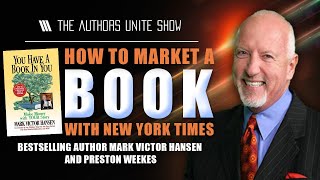
In this episode of Authors Unite, host Tyler Wagner interviews bestselling author Mark Victor Hansen (co‑creator of Chicken Soup for the Soul) and entrepreneur Preston Weeks. They unpack the full‑stack approach to turning a book into a business, covering the importance of a compelling story, cause‑related partnerships (e.g., Coca‑Cola/Diet Coke, Boys & Girls Clubs, Red Cross), innovative distribution tactics (survival‑kit inserts, chiropractic networks, charity tie‑ins), relentless media outreach (multiple daily podcast appearances, daily media placements, summit promotion), and the mindset required for sustained effort. They also detail their new course that walks authors from idea to bestseller, the upcoming “Your Finest Hour” summit, and practical habits for creativity (meditation, exercise, scheduled breaks). Throughout, they stress that marketing is a multivariable, numbers‑driven game, that authors must be bold, ask for help, and leverage multiple intellectual‑property streams to build lasting wealth.
Chapters
All right everyone, welcome back to another episode of the Authors Unite show. I'm really pumped for this one. We're going to talk about book marketing, um, and really how to like grow a business with a book. So we have Mark Victor Hansen and Preston Weeks with us. So welcome to the show.
We're honored to be here. Thank you very much for having us both.
Thank you. Yeah, it's a pleasure to be here.
So I say let's start off with, uh, with, with you, Mark. You have 59 New York Times bestsellers, which is still still just, you know, I can't really fathom it all, but it's real and it's there. So like, tell us a little bit more about the bestseller list. Like, what's really the potential there?
Okay, first of all, you know, I've been very blessed thanks to Jack Canfield. Dr. Canfield and I created Chicken Soup for the Soul. That's 254 books, and right now there's a major movie coming out, which is another way to market, and documentary is another way to market, which we'll talk about. And I've been 59 times number 1, like you said, but we've sold a half billion books. And I'm obviously number 1 in China because I've been to China for 22 years. We've sold 374 million books just in China. And the pass-along values of the book. Now you gotta understand though that China's, and I'm not pushing China right now 'cause I'm a little, I love Chinese people, I just hate communism. I'm really a flaming free enterpriser, which is what we're gonna talk about from a marketing point of view. Because I don't like socialism and I don't like communism. That's that issue. But the Chinese people have been lovely to me. They've rolled out the red carpet repetitively. We've done beyond phenomenal in China and, uh, you know, and in Asia and in Vietnam. I mean, we've done podcasts all over. So how I market different than anyone else— in other words, yes, we did the radio shows, but what I did is, look, when you write a great book, you're 10% done. But it's got to be a great book. It's got to be excellent. It's got to be extraordinary. It's got to you know, touch feel. You've got to do feedback. We had 7 discernments in Chicken Soup. Like, first of all, it had to be heart-touching, soul-penetrating. Second, it had to cause instantaneous behavioral change. Third, we believed that feedback is the breakfast of champions. So like when we did Chicken Soup for the Teenage Soul, Tyler Wagner, our publisher, said, I got teenagers and you guys have got it wrong this time. My teenagers buy CDs, concert tickets, and clothes, and they're not going to buy your damn little book. And beyond that, my daughters go down to the mall with $50 and they come back and say, what happened to the $50? And they said, the mall ate it, Dad. And he said, we're not going to make it. And I said, no, no, it's got— look, so what we did is at the time, Time Warner was trying to buy our book. And I love Larry Kirschbaum, who was one of the giants in our business, right? Time Warner was great. And Larry and I became great friends. We traveled to Europe. Book fair everywhere together, literally. And I helped him get out of New York when 9/11 happened. That's how close we became. But he said, look, my daughter runs Nickelodeon. I go, oh my God, this is what you got to do. You got to listen with your inner ear because there's marketing possibilities that people will tell you and that most of them go— you got to think book marketing. And Press is a master of this. He's our strategic partner on this, and he'll expand on this. But When we got— and I had teenage daughters at the time that wanted to get— I don't know, do you have any kids, Tyler Wagner Wagner?
No, no, I don't.
Not yet. Did you ever watch Nickelodeon? They slime people.
Oh yeah, I've seen that.
My daughters say, oh dad, you're gonna go and you're gonna be on this show with 2 to 4 million people, you gotta let us get slimed. I go, you know, that's dirty and you're not gonna like it, you're gonna have to take a shower. Hey, we did all that, but we sent out 12,000— it was a front end of electronic email and internet We sent out 12,000 letters with— Jack and I had found 254 stories that we thought rocked. To our minds, they were a 10. But the question is, we're not the market. We're not teenagers. So we had them read it, and we said, look, on a scale of 1 to 10, if it's a 10, we're going to get the book. If it's 10 plus plus plus, it's so extraordinary that you got to tell your friend. You got to get on the phone and call up your best friend and say, Tyler, you got to hear this. This story is beyond— I can't. I'm crying, Tyler. I don't know why. Anyway, we had 12,000 kids read it. That book went right to 19,000, uh, 19 million, sorry, 19 million sales. Nobody has ever seen a book in one year go from zero to 19 million except us, as far as I know. Now, by the way, if there's somebody else got better records than me, I'm all for listening because I'll learn. Look, I, I paid homage. You asked to talk about marketing, and if I'm vamping too much, I'll stop after this one. But I interviewed the 101 'cause I'm the marketing guy, and sales. I interviewed the 101 bestselling fiction and nonfiction authors. Everybody from James Michener, and he gave me brilliant ideas, to Jack went to Harvard with Scott Peck, who was a guy who wrote Road Less Traveled, and Scott said, look, Mark, you gotta do one media thing every day no matter what. Now you could do 20 in a day, and then pretty much you covered your month, and we started trying to do that, and it's tough. To do media every day. And today, let's transition in today. Yesterday we did 5 podcasts. We did them at 2 in America, 1 in Canada, 1 in Ireland, and then we finished at 5 PM our time, which was 7 in the morning in Vietnam, to a guy with 10 million people. And you go, nobody works that hard. No, no, you got— if you're going to have a big dream, like when we set our goal, we wanted to sell 1.5 million in a year and a half, we sold 1.3 million. Then we said we'd sell 5 million, and our publisher goes Get out of here, nobody can do that. And then I said, no, no, nobody's marketed like that. And then I said, we'll sell 10 million and ended it, and then 15 million a year. And we were 3 times Guinness Book of World Record holder because we, unlike USA Today, we had 15 of the top 50 books. Nobody's ever done that. I just— wow, yesterday I'm looking for something else, I was looking for a tape recorder that I needed, and I found all my Guinness Book of Records. I went, wow, I got these plaques. I You know, you get them and you keep moving because they hand it to you. Thank you. Wow, that's amazing. And then you got to keep doing stuff. Did I talk too much?
No, no, this is good. I'm just taking it up. So it's kind of— it seems to me, although, you know, 10% of it is the actual book, is it— it kind of comes down to traffic and then word of mouth though. So if the book doesn't have that word of mouth, like that emotional pull that you're talking about, then it doesn't— I guess, does it not really spread? Like that? Is that, is that kind of what you're saying? Why Chicken Soups? Because people were literally calling other people like, yo, this story really touched me, you know? So without that—
yeah. And then how do you create traffic? Well, we did, we did 3 things no one's ever done before. Like, we're on the side of— you say, well, who— and Presta is going to talk about this video we've done. The last chapter, that number 12, is Brand to Command. Is it What's the biggest brand in the world? Well, Coca-Cola, it was at the time. So we go to Coca-Cola and we get to them and we got in backwards. We did it through the charity because I've tithed on every book. I even wrote a book everyone can have free if they write us a reception of Mark Victor Hansen called The Miracle of Tithing. Businessmen say, what's the miracle of tithing? I said, you haven't been tithing enough lately. So Coca-Cola, we go there, you know, they're in Atlanta and all that. And they say, look, We did, we tested because we, we do Boys and Girls Clubs, we want you to help us, but Coca-Cola drinkers do not read books. I went, holy cow, basically. But Diet Coke people read books. So we do 50 million Diet Coke cases a month. So for 6 months we're on the side of, it's called real estate, right? Diet Coke, Diet Coke, Diet Coke. But here it says 2 books you can buy: Chicken Soup for the Romantic Soul, which we were number 1 58 weeks because of that, and next to us who's our friend Nora Roberts, who's a great writer, God bless her. I mean, she writes 55,000 words and she does it all longhand. She will not even touch a computer per week. So she finishes half a book every week. She has to write under 4 pseudonyms like J.D. Robb and stuff like that. And Nora never graduated high school. I mean, she's a piece of work. So some of you out there that say, well, I don't have what it takes to write, if you'll listen to the course that Presslite put together, the video course, I promise you, you're going to have your biceps and triceps metaphorically, mentally, are going to be strong, resilient, do it. Anyhow, so we're on that and, you know, we raised so much money tithing just 10% of that back to Coca-Cola. We got 15,000 kids into Boys and Girls Clubs, plus everyone at the Boys and Girls Clubs got one of our books. Like, here's my new book called Ask: The Bridge from Your Dreams to Your Destiny. Because if you're going to do something, one of the marketing tricks I've done is I've tithed in every book, but we tithed before we even do it. I mean, like, It touches my heart that we help that many kids in Boys and Girls Clubs. I mean, you know, we're friends with Denzel Washington, who's the spokesperson for it, and he's a brilliant, wonderful close-up actor, but he said, "I wouldn't have made it without people like Boys and Girls Clubs." Does that make sense?
Yeah, it does.
It touches the heart emotionally in a— here's my new language. I'm just thinking this through 'cause you asked so well. You articulated the ask. 'Cause you gotta have a multivariable approach. It can't be, I'm just gonna do radio, I'm just gonna do this. You gotta do all the stuff you can think of and then new stuff.
Exactly, yeah, exactly. And sorry, go ahead, Preston.
Yeah, no, so to add to that, and basically kind of what Mark was summarizing at the end is, you know, there's not one solution, there's not one perfect path that will get you there to have a successful book. You need to be open-minded, you need to be creative, you need to take every single opportunity that you can to have It takes work, it takes effort, but you've got to bring that all together and use all these avenues that you can come up with. Make an impactful book, tell a great story, use your resources, get it connected, use social media, get everything out there, do partnership branding. And so you have a comprehensive approach. And the more comprehensive approach you can create, which Mark's been a pro at in all of his— and what's driven a lot of his success is to, you know, not be closed off and to think, okay, what can I create as possibilities? What can I create, you know, to be out there? Who can I reach? What markets can I reach? And how can I get to those people? So that's kind of one of the key, you know, components to creating a successful book. And we, you know, bring that in together with ideas in our course that people can check out to guide them.
Yeah. So tell us a little bit more about the course, and then I want to dive in deeper to like kind of how, how you're getting the media attention. Because like, that's a lot. Like, if, if you can get one media per day, and like, I like the idea of doing 20 in one day, like batching it, because that's probably the best way to maximize your productivity. But if you can have one piece of media release every day, I mean, that, that's crazy. That's huge. So I want to know kind of more like how you're doing that. It seems to me it's because you're connecting a, you know, something that really means something. It's more than just what's in the book, but it's actually going to Boys and Girls Club, like you said, things like that. But I guess, so what's the course entail? That was like a bunch of questions.
I'll let Press do the course in just one second. Let me just add, Press said we got to do innovation because there's only two parts to business. One is marketing and the other is innovation. So currently, as I said, we got a brand new book out. My wife and I wrote it. I think it's the best book I've ever done called Ask: The Bridge from Your Dreams to Your Destiny. So I'm talking to a guy who's trying to solve the hand washing. This— he's one of the big soap guys in the world. He owns Ultra Soap. He's my friend Harry Singer, known him forever. He said soap stopped selling, and then all of a sudden he said, wait a second, I'll do survival soap. I've got 70,000 square foot building and I know how to help people, and every hospital needs it, every old people's homes need it, Walmart, everybody's out of soap, so I'll just start making disinfectant soap. And then they said, well, wait a second, there's water, but we want alcohol. So he said, I started doing alcohol outside my buildings with my 7,000 employees, and then I did it inside and I melted it in And I said, hey, Harry, Harry, you and I are best friends in the world. We travel together, we've been down to Necker Island with Branson, we've done really cool stuff. What I want is, 'cause you are in the book and we love you, I need you, I will write a one-page sales thing, you put it in every one of the things, I'll tell you how to sell more disinfectant soap than you've ever thought of, 'cause you gotta help your client, 'cause they don't know how to market either. Nobody, listen, ladies and gentlemen, and writers, Most people don't know how to market. So in addition to being an author, you gotta master marketing and innovation, which Bress and I are masters at, thank God. And he's our strategic innovative marketing champion. I said, "Harry, we're gonna put in every one of those survival kits." Well, he sells 50,000 a week. I got 50,000 sheets going out. And then Harry said, "Well, would you mind doing publicity?" Just like I'm doing now. I don't mind. He's selling whatever I give you is wrong. When you open up something that says your survival kit and whatever comes out, the only thing that comes out is an ad for Mark's book, Mark and Crystal's book, what are you gonna do? You're gonna read it and go, okay, yeah, I gotta wash my hands. This has nothing to do with washing hands, but it says how to ask to keep your head, right? What Kipling said, one of my favorite authors, keep your head about you whilst all others are losing theirs. And we sell thousands of books. We got the fastest selling book 'cause we're doing something sideways. You say, well, wait a second, soap has nothing to do with books. No, I'm trying to clean up your mind. And I tell you, yeah, see, and that's the end of it.
So it's partnership and very innovative because most people— so, so, so, Preston, tell us about the course. And then I'd love, if possible, like for— and we can use this as an example, the book Ask, like what, what is the, the actual plan, like from a day to week to month basis? Like, because I'm sure you have it all mapped out. I would, you know, because— so, but sorry, go ahead.
Yeah, yeah, I know. So the course guides you through all the parts of basically writing a book up to marketing a book, how to position it, how to come up with the approach, and how to go beyond that and create it into a bestseller, to make it into a brand, to make it into an empire, to make it into a brand that commands. And so you do that, and, and some of the, you know, backstory to that is to your approach. And if you look at, you know, the world today, there's so much information out there. There's, you know, we get pop-ups, we get social media, we get hundreds of posts that are scrolling through our phones. And so how do you differentiate yourself between all the other people out there trying to give a value option? How do you differentiate yourself between other companies? And you do that through your story. So you do that through telling your story. And that's one of the greatest parts of being able to write a book is because you can put it down, you can make that concrete and tell your story and people know what you stand for, what you believe in, what your expertise is in. So it can differentiate you and make you an expert in what that is. So if you take it from a business perspective and you go, okay, if you look at a company, a company always has a story or they should have a story if they don't. And that story might be called a mission statement, it might be called a vision, it might be called, you know, those things that we brand into our story, a purpose. So what drives you? What makes you do this? What makes you do your podcast today? What makes you go to work every day and do what you do and do what you love? And if you can create that and put that into a story, people can read that and they resonate with it and they connect with it. And that brings depth to your customers, it brings connection with your customer base, and it brings loyalty into your company and into what you're doing. So it's not just work, it's not just a service. You're different than everyone else because it's, it's a service with a story, a service with a connection. And so, you know, creating that to bring it full circle, you know, is the way to do it. And, you know, we say, you know, in one of our lessons is called Start at the End. So we give you, you know, the keys to be able to position that and do it with intention and, you know, be able to bring that story to your customer, your audience, or yourself, and build yourself as a brand or a platform that you can take a story and tell what you know, tell what you're good at, and teach people and help people and uplift them and use that to elevate yourself. Because then the people that read that and connect with that know and understand you, and they go, okay, you know, I want, I want to listen to this podcast, I want to go to this company, I want to have this guy as a speaker, I want to read this story, you know. And So we can do those things to create and connect those pieces. And that's to get to your question earlier about how you get to these markets is you go, okay, you can't just go and say, hey, I'm this guy, you know, let me into your advertising, let me into your company. Oh, I wanna be on the news today. I wanna be on this radio station today. You can't do that unless you have a story or a purpose or a mission. So if you clarify that and you write your story and you write your purpose and you connect your mission to what you're doing, And then you seek out those people that want that story. Then it's solidified because you've got a book. They know what you stand for, and you can bring that into their organization. And in the end, it's all to provide value. So you provide value to the people you work with. If you're not providing value to people that follow you, if you're not providing value to your friends, your family, your workers, your coworkers, your clients, your associates, then you're useless, you're pointless in life. And so when you bring all those people— well, when we bring all those things together in one package, it makes your package and your offering so much stronger and so much better, so much more valuable. So that's what our goal is to do, you know, in this course. So you have bestseller in your course is to help people, to teach them to, you know, be able to, you know, build that, build it successfully, and then connect that into the dots and the pieces that they love to do and explore and so they can go on and help create solutions for more people.
I think what I love about the strategy almost the most is that I think it should be really helpful for people unless I'm missing something, is it doesn't seem like paid advertising is really a part of the point. Like, 'cause I think people think they need this huge marketing budget to really make a splash. 'Cause you know, Facebook ads, all these different things are getting pushed down our throats all the time. This to me is just like, it doesn't cost any money. It's time, hard work, and like effort, But anybody can really put forth that. So it's a good story and then getting it in front of like partnerships and media outlets that also have an audience that would, you know, you could add value to.
And that's it. Yeah. To add to that, you know, if you're doing advertising, if you're doing paid advertising, you know, it's a lot weaker, you know, if you're not connecting your story and your mission and your value option and your purpose to that advertising. So like, like we talked about, again, those can go hand in hand. But yeah, you don't need it once you have a purpose. People want you to join their cause. People want to have you be a part of what they're doing because they understand what you stand for and what you do.
And maybe that's another thing too, is it's like a lot of people are afraid to stand for something almost, you know, because they, they kind of stay in the middle. So because no matter what, even if it's a good cause, right, you stand, you're always going to have some sort of haters, right, or whatever you want to call it. Right, so, but you got to make a stance.
I've got a lot of critics because whenever you're big, you've got, you've got a big target on your back and they aim at you. And so I'm aimed at, just like Elon Musk today is being aimed at. But let me go back to your question about marketing. What we've done is we've gone from the book, the course starts with all the reasons to write a book, 101 reasons to write a book, which no one ever thinks about. Then we say, look, how do you write a title that gets everybody to look at the book. Like Chicken Soup for the Soul, everybody knows what that means. And we talk about 18 different ways to do a title, but Chicken Soup is a quoculism. You know what Chicken Soup is. Your mother and your grandmother— you were sick, oh Tyler, are you sick? We're gonna give you some chicken soup, we're gonna make you all better.
And with Jack and I—
isn't that true?
Yeah, it makes you feel a certain way, it really does.
And what Jack and I discerned was that we thought the soul of America was in trouble. What we didn't know is the world's in trouble. Just like I didn't know that Ask was going to be the most prominent book. And I'm going somewhere with all this so everybody can do the same thing. You said, do you have to pay for it? I'm asking you to pay zero for advertising. That's not the way to go today. Today, the right way to go in America today, this minute, there are 800,000 podcasts. And out of those podcasts, every day 157 million Americans are listening, and the average American per week is listening to 7 hours.
Why?
They are tired of all the negative news. They're tired of the crisis news network, all the worst, the baddest, how fast you're going to die with something that's a hoax and bogus. I mean, I don't know that some of your listeners are going to go, he doesn't know the science. I do know the science. Look, I got a doctorate I was with the smartest guy on the planet, Buckminster Fuller. I know science. He was Einstein's best student, so I can argue that I know what I'm talking about. But the point is, we now know that there's a lot of ways to get out of it. Let's not go there, but let's say, hey look, 800,000 podcasts, none of us can do all of them. All of them are available to some of us. All of us have some specialty. And I'll just give the quickest example. Preston and I just wrote a book called, which is free. If you go to my website, markvictorhansen.com, it's free. It's called 'How to Be Up in Down Times.' What could be a better title? And Preston and I wrote it with the chicken lady, Mitzi Perdue, who goes by Aunt Mitzi, but she's 84, graduated Harvard 1963, is a genius, but she sounds 20 on the phone. And she and Frank created this thing that sells 22 million chickens a week. If you ever bought Costco chicken, they're antibiotic-free, they're grange, you know, all the right stuff. She's doing the right stuff and trying to keep the food chain going. So when Preston and I write the book, what is she? She is president of the agricultural growers in America. Now there's a whole nother thing. One of the chapters we did is you can write it alone, great. You could write it as a co-author, and I think everyone ought to. Look, I got more co-authors than anybody's ever had, and part of them have been my co-author, Jack. I mean, I got people that we made famous and rich because of that. Or you could hire a ghost. But the point is very few people know how to market and things. Think that through. And my book, our course teaches exactly how do you market at levels no one ever thought to market before, because we're trying to help all the farmers because I want the farm. I love farming. I grew up in farm country. Everybody ought to be able to keep having food. And the trouble in America today is one of my— I'm not on my pedestal. You ask a little kid, where does food come from? Come on, Tyler Wagner, everyone knows a refrigerator. Okay, Dad, it comes from the grocery store. No, no, no, no, no. And I'm glad you're having fun with this, and I'm going too far, I apologize, but—
No, I love making fun of you.
There are so many markets, and I wanna give you two more just so you got the example before I stop and shut up and get off my pedestal, but all you gotta do is look at somebody that's got a problem, and there's never been more problems than now. First I'll do the poem and then I'll tell you my two solutions, but the Danish poet laureate, a Nobel Prize winner, Dr. Pet Hein, Pat says what the world needs now is problem solvers galore, because each problem we solve creates 10 problems more. So ladies and gentlemen, there's stuff that Press and I and Tyler Wagner believe you can write to and fix and make a fortune, because there's no better way to make a fortune than the software in your brain. But let me just give you two quick examples. I meet with Elizabeth Dole when she's head of the Red Cross. I'm now friends with the head of the Red Cross because she's part of Horatio Alger. I'm a Horatio a G.E.W.A.R.D. winner means I came from rags to riches and I've been excessively philanthropic. But I meet Elizabeth Dole and she says, hey Mark, here's the problem. People in America are dying. This is long ago, 20 years ago. No blood. There's no such thing as false blood. You've got to have human blood to human blood. There's no such thing as pseudo blood, whatever you call it. We don't have our— we can't reactivate it like in Star Trek yet. Maybe we can someday, but we can't today. So she said, I'm out of blood. I said, well, let's go to the medical doctors. I'll talk to them for you. And she said They won't give it, I've already tried that. She said, have you got another idea? 'Cause you're an idea guy. You and I as authors, ladies and gentlemen, have an obligation ethically, morally to outthink, outwork, outsell, go over, under, round, or through to get to the other side 'cause nobody else is thinking. We're the 15% of society that keeps it glued and Shakespeare did it, Socrates did it through Plato. Aristotle, you know, I can go through all the boys. Mark Twain did it. Harriet Beecher Stowe wrote Uncle Tom's Cabin, and because of that, Abe Lincoln said, holy cow, I'm gonna write the Emancipation Proclamation. Black people shouldn't be slaves. And today, we're, Preston and I are working with Candace Owens. She's just written Blackout to get rid of Black slavery and socialism. So we're in a very interesting time. Back to my thing. Elizabeth says, look, we're out of blood, what are you gonna do? I said, look, I work with all the chiropractors. I teach them how to write high-volume practices, do really well. There's 70, 7,000 chiropractors, they see 25 million patients a week. Some people don't believe in chiropractic, that's their problem, not mine. You know, everybody's subluxated, you know, nobody else can fix it. And I did some tapes on that, and I'll tell you, that's the second or third seminar we did is how to interview your way rich with books. I'll do that in one second. But she said, I'm out of blood, what are you gonna do? I said, all the chiropractors are my friends. I've got 3 honorary doctorates in chiropractic. I understand their philosophy, I believe in them, I love that naturopaths will write them and we'll get their 25 million patients, the ones that are inactive, come in, give a pint of blood. I had all the doctors call 800-GIVE-LIFE and they got one of the free books from us, but we gave out 1.5 million books in a week. That just skyrocketed, like 8 million more books sold. It was just, it was a great idea, but we got the blood, we got enough blood that America had cryogenically frozen blood for a year and a half. And Elizabeth— I got a big award in Washington, D.C. at the headquarters and all that, but that isn't the point. The point is there are a lot of problems like charities. It's called cause-related charity. You go help some charity, they'll sell your book, they'll do it. They've got big mailing lists, they've got stuff that you can't get to. And that's why if you look at my vita, when you go to my website at markvictorhansen.com, it shows I've raised money for the Boy Scouts, which breaks my heart. They've been ruined, you know, but the Red Cross, the March of Dimes, I did it with, um, you know, Melanie Griffith and I did it, raised all this stuff. Anyhow, you know, right now I'm co-chairman with my wife of Childhelp, right? It's helped 10.5 million kids get out of abuse and neglect and sex trafficking. I mean, we're in an exciting world. Even when you're cloistered, you can write. This is a beautiful time to write us out of the problem.
No, 100%. I'm curious, this is kind of like a big question, but how do you— do you like schedule time to like think? Like, how do you think? Like, how— because these, these are like big ideas, right, that you hit, and execution is a whole nother thing. But to even think of some of these ideas, I don't think most people are even, you know, doing that because they're just like, how do I get one book sale? Or like, how do I get in front of But you're thinking like, all right, there's 77,000 chiropractors, you know, like that's very— so I don't know, do you have like a routine?
So I'm going to do it, then Chris will make it— I do the macro, he'll do the micro on this. But my wife and I, Crystal, who's beautiful and wonderful and brilliant beyond brilliant, we pray and meditate every morning for an hour, and we decide what we're going to talk about, what we're going to think about, what we're going to do to help change the world and make it better. Because Most people say, well, the world's the way the world is, you're— Yeah, well, no, it's not the way it is. It is— we're better than we've ever been. America's never been better off. Now, temporarily we're shut down, but a lot of good things happen in shutdown. Every recession and depression in America has had breakthroughs. 1898, you know, we had a guy write us out named Wallace Wattles, The Science of Getting Rich. Well, what did we have? We had the airplane where the Wright brothers came out of it. We had the little automobile come out of it. We had the telephone come out of it with Mr. Bell. We had a little thing called electricity with Mr. Edison. Fast forward to the last depression, the guy that rode us out is Napoleon Hill. He wrote all the fireside chats for FDR, and I know his whole story about 500 interviews, which we'll talk about in a minute, but I gotta let the press talk here. But what did we do? We got the jet, we got the airplane, we got television. When you get, if you do a spiritual point of view, you say, wait a second, if there is a God, and I totally believe in God, then what is God doing? He's shutting us down so we rethink, we repivot, we reinvent, we re-entrepreneur, we reboot, we go in a new direction. It's better for each and every one of us. So if the writer's right, we can write ourselves out of this. And I'm saying to 30 million people that are unemployed, Those of us that think that intellectual IP, intellectual property for the world can vent us. Chris, would you add to that?
Yeah, and so just to add that, if you look at it like a professional athlete, like a sports athlete, like someone that's training for the Olympics or someone that competes at a high level, you work hard, you train hard, you try harder than anyone. Well, we do that in our businesses. We do that as entrepreneurs, we do that as CEOs, You work hard, you train hard, you work, work, work, and you think. But also too, at the same time, you need to recover. And you need to take that time to take a break and to clear your mind and to be intentional about it. Sometimes I have to be intentional about it because I can become a workaholic. You know, and I get crazy and I'm happy in my workspace. I can work all day, all night, and keep going, going, going. So, I actually have to sit down and schedule my break times and schedule my family times and time with my kids and those times so that I can actually pull away and let my mind reset. And then in those times where we reset, we can be creative and we can think about things, and it lets us open our minds and expand and, you know, take a step back from your work environment and just, you know, release. And, you know, I go hiking or I go do biking or I go do these other things. And also too, another thing I'd like to say is too, in a creativity space We create limits, and the limits that we create are the biggest things that stop and hinder our creativity. We can tell ourselves 100 million reasons no, why we shouldn't do this, why we shouldn't do that. And so the most simple way to put that is that I like to say is to be childlike. You know, if you can be childlike, act like, you know, my 5-year-old twins and my 8-year-old son, and explore possibilities that maybe aren't quite possible. And, you know, look at all of them and open up your creativity and go, you know, well, you know, that, that is, you know, what I originally thought was maybe not possible, but, you know, if I push that down the road a little bit further and take that 2 or 3 steps beyond what my initial thought was, maybe it opens me up to a whole new avenue. Maybe it opens me up to a whole new idea, a whole new thought process, a whole new realm of possibility.
Yeah, no, 100%. Yeah, I agree. For me, like running every morning without that, I don't— that's what I do. That keeps everything working properly.
So you need to exercise, you need to exercise aerobically, anaerobically, and you need to exercise to sweat, right? Exactly.
Yeah. And actually like scheduling in that time, and I think that's— most people don't think about like scheduling in free time for thought.
You know, they're just like, oh, when I have free time.
Well, it's like just like you, I'm similar, like I will work all day because I love what I do. So I'll just do this and then I'm like, dude, you haven't taken a break in like a month.
What are you doing? Like, you need to like think.
And that's how you, you know, become innovative. So I'm curious, my really kind of last, and we could go on forever, but I want to talk about the current book, Ask. So like, just because it's fresh and it's happening right now, so like what is the launch plan And after launch, like, what are you guys doing on a weekly basis to like, you know, grow that right now? Maybe we could talk about that.
I'll go there. I want to do the macro and then I'll go to that specifically. But yeah, the macro is— and it breaks my heart— is that I've been blessed. I mean, I got so— I've sold more books than anyone. And like, we did the One Minute Millionaire and all that with Random House, and Random House is now laying off something like 8,000 people because they can't figure out how to do it because the bookstores aren't open. And the bookstores aren't open because the government's imposed it. And it breaks my heart because I, look, my parents were illiterate Danish people and we didn't have books in my house when I was a kid. But luckily I got enrolled in a high school class where I was really smart, I guess. And I don't know that I was, but I'll say I was. And then I had a great inspiring teacher and he had books everywhere in his house. And when my little brother and I and friends would go over to see Mr. Reinhardt and his wife, his wife said, "Hell, he'd have books in the ceiling if they would only hold it." Because he loved, so he got me addicted. I got addicted to reading and it broke me out. Not that my parents weren't smart, they just didn't have the shot coming from a socialist Denmark. Anyhow, so that's that. And we gotta open up the country again to free enterprise and entrepreneurship 'cause we can't, otherwise we'll die, we'll starve to death. And unfortunately right now books are considered a nonessential even by Amazon, which started with books, which, you know, so people are buying my book, Ask is out, but it's being delivered slowly and people are now taking pictures of it and saying, oh my God, I've never read a book like this. This story on Michaela is just changing my life. This is the story on Jim Stovall is just— I can't believe it. He got through his blindness. I can do that story at the end. So what we're doing is, like I said to you, we're doing 4 or 5 podcasts a day because there's 800,000. And then we've got some big ideas that go way beyond that. Like we're doing a summit next week on the 21st and the 22nd of May. When are you going to air this, Tyler?
This may be Uh, this will be by end of next week, so right around the 21st.
Okay, so some of you that are watching, if you go to my website, you'll see how we're doing it, or you go to Facebook. We're doing stuff with some of the biggest names ever, like the world's top leadership guy for the last 50 years is a Horatio Alger Award winner and my friend for a long time, done a lot of seminars together, Dr. John Maxwell, right? He's sort of the godfather of it, right? And then the, the top entrepreneur in America you ought to have on your show is Jeff Hoffman. He's worth $60 million. He created a little Priceline because here's a software engineer, he was in an office and the guy said, if you don't stay here late, Jeff, I'm going to fire your ass. And Jeff said, how do you know if I'm here late or not? He says, I'll know your car's in the parking lot. So Jeff's a wiseass. He said, I'll buy two cars, I'll leave one in the parking lot. Because Jeff's thinking, all right. So that day he gets fired, right? He goes to the airport, There's a long line and he misses his plane because they're giving one ticket out at a time and the people aren't incentivized to move. There's like 100 people in line trying to get on this plane. They all miss the plane because this lady doesn't know how to do it. So he turns to this group of 100 people and he says, remember I said all you got to do as an author or a problem solver or an entrepreneur is fix a problem that needs fixing. He saw, well, there's a problem. He said, how many of you would like it if I could print your tickets that fast for you? They said, I'll give you $5, I'll give you $10. One lawyer says, I'm worth $600 an hour, I'll give you $600 right now, get my ass out of here. He said, I can't do it right now. And he said, holy God, there's a market. And he created Priceline, he grabbed YouBid, and now he has 150,000 entrepreneurs in 193 countries working for him. And now we're doing this summit with him because when, if you go online and look at YouTube and watch Jeff Hoffman, H-O-F-F-M-A-N, you go, holy cow, he makes it feel like everyone should be a billionaire. Not that money is that important because it's not money important to him at all because he's got it. But the point is, he's saying, look, everybody can have an entrepreneurial idea, and you can have it instantly. You have 50,000 ideas a day, just pick one and then be disciplined, which means you got to be consistent. And then, you know, one of the great authors of our time, my buddy Art Martel, said this week, the reason you're the best-selling author is you're the only guy that's consistent. You've never had a day when you haven't done media somehow, whether it's a podcast or whether it's radio. And I'm saying there's no radio available, there's no TV, they only do politics now, which is At a lot of levels, when I'm in Europe, they say, "We watch it for entertainment 'cause you guys can't really believe all that crap." I said, "You can." So everybody's just gotta limit themselves to 15 minutes of TV a day and then they can either create their own podcast, go on podcasts, which is free and all you gotta do is ask. Somebody is doing a podcast that wants to have you on it because new beginning neophyte podcasters, you say, "Well, they only got 500 people." If you stood live in front of an audience of 500 people, most people get, you know, their body would stand up and their mind would sit down and go, right? And like the podcast before yours, we're on just now with 400 people. We were on yesterday, last night, in Vietnam with 10 million people. The point is they're available, and all you got to do is start. You can look at them up online. It says who's the podcasters. There's somebody for everybody. There's One of the things we teach in the course is, look, pick a little niche. I picked the niche when I was speaking of life insurance, and, you know, it's an endless niche. There are 18,000 life insurance companies and hundreds of thousands of life agents. I was training them for a while, but— and then you bounce from one niche to a bigger niche. And then I did chiropractic, then I did all the big mega churches, and then pretty soon you're doing the biggest groups. And now we're doing summits, and we're doing summits with giant name people because I think we got to turn the ship of state around back to what you said when you started this thing. Mindset creates money set, thinking set, life set, hopeful set. And we— I want to give hope back to everybody. And one of the ways to be hopeful is everybody's got to write their own book. And if you're going to write a book, why not write a bestseller? You're going to think, think big. I did a set date, try to think bigger than you ever thought you could think.
Yeah, so it's like thinking big, and it's also just with your, you know, most recent book here I think a lot of people are just kind of afraid to ask. Like, I do. Like, they're— because you're saying there's 800,000 podcasts, you know, you're telling me you can't get on one per— that's 365. Like, when you put it in that perspective, it seems like—
here's the big number and here's your little number.
Yeah, yeah. Like, I mean, yeah, I mean, come on, that's just a numbers game at that point.
Like, sales is always a numbers game. I mean, how many talks could I do? How many churches could I do? And you know, I used to go to churches and they asked, when we came out with Chicken Soup, when we got 144 rejections, everyone said, well, how'd you do that? Your spouses were complaining, they were. And you know, you had pink slips. And I thought about it yesterday, pink slips are the nicest way they can tell you to go to hell. You know, the boss says, here, I'm gonna give you something pink. You won't feel bad because it looks like it's love, but it's really telling you, get outta here, this book sucks. And they were all wrong, but I knew that it would work. And I'm at a giant church in Kansas City. This guy wrote us, we put it in our book, asked Charlie Green, who's now a dear friend, but he said, you stood in front of that audience, you wowed them, and you got them alive. And then you had the guts to say, here's my new manuscript, nobody's willing to buy it, but what I want you to do is I want you to pray that we're going to sell this book called Chicken Soup for the Soul. And more than that, I've got a little order form in every pew. Tied to the church, so don't take it out of your tithes, but I want you to order the book because when Jack and I finally get this published, I want to send it to you. And 100% of 5,000 people in the audience filled out the order form. It was amazing. You gotta be bold. You gotta ask. And of course I want everyone to read our book Ask because it's gonna launch you, because every author needs to know how to ask. Every author needs to go to our course, and I'll let Press talk to that. But because if you want to know how to do it, I said I'd do one more thing and I apologize for a lot of press talk. Interviews. Every one of you can make a fortune with interviews. When we finally got a little publisher, we went to the ABA, 60,000 people, everybody had said no. A little publishing house, one guy said, I read your book at HCI, Health Communication, and I cried over myself. If you guys will sell 20,000 copies from platform at $6 each and pay us in advance— I didn't know they're going bankrupt at the time. We saved their butt and made them rich. But they said, "We'll publish it in a year and a half." And we wanted distribution, so we, "Okay, we'll do it." And we signed the little deal. And the point is, I had a year and a half with no money and it was gonna cost us $120,000. $6 times $20,000, $120,000. So I said, "Well, I'm working with chiropractors. They're in deep doo-doo right now because President Clinton and his team have shut down insurance payments to chiropractors." So I got a negative, they got a negative in math. Negative times a negative equals a positive. So I said, that's it, I'll solve it. I'll interview the best chiropractors that make a million dollars in what's called a cash practice. In other words, you come to me if I'm your doctor. I'm not a DC, a doctor of cause or create, any of them. Is that you come to me, you got to pay cash, $50, $25, $75, whatever the doctor charges, right? And it was amazing. I got the top guy, one of the guys in Neck and Towel. He said, I sell everybody in with a rubber band. I put a rubber band around my finger, my index finger, What color will it turn, Tyler Wagner?
Red.
And then what?
Oh, blue.
And then what? Black, and then it'll fall off. Yeah. If you go to a medical doctor, can he get rid of it or she get rid of it? No. If you go to a pt, a physical therapist, no. A massage therapist. One doctor, a chiropractor, can get your spine back in line with the divine. They like to do the cliché. So the point is, I did the tapes, interviewed the 21 best guys. Took me 1 week to do it. I did it just like you and I are doing this interview right now, and then I transcribed it. And obviously I'm a great editor. Forgive me for self-aggrandizing here, but I'm pretty good at editing. And we did it as a set date. I sold $3 million worth the next year. So I had a problem. I didn't have any money. The book wasn't getting published for a year and a half, even though today a publisher can publish it in a week if they want to get off their butt and work. But some of them aren't. I'm telling you, the industry is contracting. So the new way to do it is some of them, We teach self-publishing, vanity publishing. We teach all the 12 ways of authorship in our course, just because it, you know, you've got to think different than you've ever thought. And a lot of stuff's got to go electronic. A lot of stuff from now on, Press and I are going to teach, and he'll talk in a second. It's got to be video-centric and it's got to be smartphone-centric. I won't give anybody any ads. Press?
Yeah, well, you know, just, I mean, first of all, the book asks, you know people have a huge problem asking. And if you have any challenge or any problem in asking in any realm in your life, go read the book. Go check it out. Go read the book because it covers all those points. It covers all those things that stop you. The stops, you know, they cover I think 7 different topics and it can get you past your fear. It can get you past your challenges so that you can be open to ask and open to do that. And, you know, also too, you know, looking at this and looking at creating, you know, what comes out of this, a lot of that is going back to what we're doing in our summit. The topic of our summit is Your Finest Hour. You can go to yourfinesthoursummit.com if this is up by the 21st or 22nd. It's 2 days, Thursday, Friday. But, uh, and, and the subtitle is Turning Crisis into Opportunity. So crisis creates opportunity. And so if you look out there at what's hard, what's challenging, what's causing problems, and provide a solution for those things, then you can— you'll have an opportunity. You'll create an opportunity. And that might fit into what you do. That might fit into your expertise. And that's where we've got— you have bestseller new course, is you can go in and navigate that and say, okay, what, what crisis, you know, can I solve? What crisis can I you know, overcome, you know, how can I get this and put this into a book and ask people for that so I can create, you know, solutions and make it actionable and palatable for people to go after and do.
And, and what is the, uh, website for the, the book course?
Markvictorhansen.com. If you go—
okay, that—
yeah, it's real simple. M-A-R-K-V-I-C-T-O-R H-A-N-S-E-N dot com. And I'm not pompous, it's just Denmark. Every Hanson names their kid Mark. In Orange County where I used to live, there are 423 Mark Hansons at Nordstrom's. There's a mine.
Oh no, then yeah, you need the middle.
Yeah, I love Victor because I want everyone to have a victory in their life. I want everyone to have a success. And most people have on their bucket list a book. And what we're saying is we teach all the ways to write it. If you Do 20 minutes a day, 90 days, you'll be at least through most of it, right? And you could finish it. And today you've got more time because you're— there's so many states that were locked down still that we gotta, we gotta release people. And one of the first places you gotta release is in your mind.
Yeah, no, 100%. So I want to— I'll leave the floor to you both if there's anything else you want to share. But I think, you know, everybody listening, markvictorhansen.com for the book. Course and then the summit, because this should be out like a day or two before. I can't remember the domain for the summit, but you want to say—
yeah, we took your finest hour. Winston Churchill was arguably one of the greatest orators, and he had 400 jets of planes coming in from Germany, and he had one plane for every 400. And he says, we'll fight him on the shores, we'll fight, and we'll give him blood, sweat, and tears. And it's the finest hour. We said Wait a second, right now Americans are feeling beat up, pulverized, depressed, despondent, disconsolate, and we got to make it our finest hour. And I don't care who the political people are, we have got to turn it around on an individual level. And we're— and Preston and I and Jeff Hoffman and the people I've talked to, the world's greatest leadership trainer, coach, the biggest, you know, author of all such things as John Maxwell, we put it— I said, I called him and I said, hey, look, you owe me nothing. We're doing this free, you know. And I'm asking everyone out there to do some stuff like this. I'm asking you, do your own summit to start turning people's thinking around, because— and it'll sell some books for you. But it also— we got to get people thinking again and out of the— forgive me, I'm going to use a tough word— constipated life, because we're watching TV People watching the news, the news, the news. The news will crush you. It made me bankrupt in 1974 because the New York Times had all the news fit to print. Hell, it's all the bad news fit to print. And I was despondent, disconsolate, depressed, and lost $2 million in one day plugging in the wrong stuff. The minute I started listening to audio tapes, reading positive books, self-help action industry, which I'm deep in, I went straight up. Yeah, let me talk to that real quick. The first book we came out with, which I was doing a little insurance meetings, we show it in the video, Stand Up Speak On Win. We were printing them ourselves, no one would take me, so we paid a dollar for them back then and we sold them for 10. I sold 20,000 copies from the platform. That's what got me launched. I made $200,000. I thought, hey, I am somebody, baby.
Yeah, and so just to clarify too, on the website for the summit, it's yourfinesthour.com. And you can go to operationsx.com, operations with a plural X, because we multiply your business. That's my company, and you can find the link there as well, or check me out at Preston Weeks, W-E-E-K-E-S Preston Weeks, on LinkedIn and follow me and see all the exciting things we've got coming. You know, we've got a ton of different products and solutions to make people's lives better and to change people, uplift people, and to help them to get out of this crisis, get out of this crisis that, you know, the world has gone into. And so, you know, we're a solutions company, we're a solutions-oriented group. Everything we do together collaboratively, everything I do, everything Mark does, even by ourselves, we do to make people's lives better. We do to improve people's businesses, lives, and just make people better off than they were before. So yeah, check it out. Check out operationsx.com too.
Tyler, let me just have you do— Press does one other thing. He's done it for us. We've done trailers for our movie, and he can do a trailer for everybody's book, which is one of the other things you asked about marketing. And I'm sorry I didn't give Press more time in it. Press, could you run that by real quick, the trailers, what you're doing?
Well, yeah, you know, everything is so video-oriented today as well. So if you want to create your message and get it out there really quickly, we can help with If you need help with that, reach out to us at Operations X, and we've got solutions. We can throw 1 to 3 minute trailers together for your company or your book or your product. They're impactful, they make a difference, that connect with your audience, that connect with your people so that you can up your sales. You can put it on your website, you put on your social media, you can put it on any other platforms, and you can use that and share with your friends to share around to get your product or your person or your company out there. And make it relevant and make it impactful and connect your story into that.
So Tyler, you asked me to finish with one idea. Here's the idea. I wrote a lot of stuff with Bob Proctor, who's one of the giants in speaking in the world and a genius, and he's 87 and working harder than ever, and he'll do a billion-dollar company this year. But Bobby and I came up, he flew to Malaysia and he called me back and said, hey, look, we want to make everyone a millionaire. We had owned two companies, got like million-dollar form. What we said is Everybody that gets rich has got to have MSIs, multiple sources of income. What you've heard us say throughout this hour is you got to have multiple intellectual property to have multiple income. And your best idea is not the last one. Your best idea is the ones you keep going, and every one should sell all the rest. In other words, even on another course my wife and I are finishing right now, I'm starting to list all the books and inter-sell them. Publishers up until now haven't been willing to do that. But now, even in the front of all my books like this one on Ask, what we've done is I saw it on somebody else's book and I said, I will not do a book with you unless I list every one of the books I've written. They said, well, they're not with our publishing house. I said, that's irrelevant. Other people are going to be publishing my books. You need to be telling all my books or I'm not doing it. They said, oh, and they backed down because they said, well, we don't do that. I said, You either do it or you don't get me. And every author needs to list all their books because why shouldn't all my books be sold? Because I, I've read everything that Clive Cussler in novels. I've read, you know, you can't read all Nora Roberts, but I've read a lot of Nora. You know, there are certain people that I've read everything. I've read everything Napoleon Hill wrote in the business, some of it multiple times. I've read every Andrew Carnegie. I've read, glanced at, and got a library of 50,000 books in another room here. It just— the point is, if you got to read a lot, think a lot, write a lot, and then you gotta fix something that needs fixing and decide to get paid substantially for it because you love doing it. And we— I think you can feel the love, the enthusiasm, the joy that Press, I, and our Hansen family of companies try to do to make the world better, because the world's in deep doo-doo right now, and I want to bring it out of the quagmire and use the doo-doo to grow the plants.
Yes, guys, thank you so much for coming on. And, um, yeah, I think— thanks again.
I think we're good.
Thank you, guys.
Tyler Wagner. Yep, thanks for having us.
More from Tyler


Catherine Nikkel : THE STORY EVERYONE HAS BUT HASN'T TOLD : The Tyler Wagner Show #1120



Scott Ritzheimer: Bring Predictable Success to your Organization | The Tyler Wagner Show #1115


Fred Moskowitz: A GUIDE TO GETTING STARTED WITH IN MORTGAGE NOTES | The Tyler Wagner Show #1113

Mark Podolsky: From Land Investor to Full Time Success How I Made $90,000 Cash in Real Estate


Mark Podolsky: How to achieve a 300% return on investment my foolproof strategy

Mark Podolsky: How to make passive income selling raw land the irresistible pricing strategy