How To Use Storytelling In Business To Fuel Growth | The Authors Unite Show - Lubna Forzley
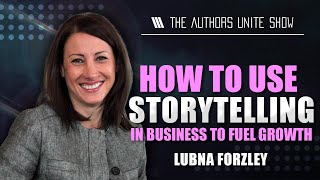
In this episode of the Authors Unite Show, host (Speaker A) interviews Lubna Forzley, founder of Stories, a consultancy that helps corporations develop purpose‑driven narratives, culture, and mindset. Lubna explains her 3‑6‑month engagement model, which begins with a comprehensive audit of a company’s purpose, business plan, and team structure, followed by 360‑degree interviews, a new storytelling strategy, team restructuring, and hands‑on execution of a key project. She emphasizes that a compelling story must stem from a clear "why," align with culture, and be reinforced by values, rewards, and consequences. Lubna shares her personal journey: 15 years in corporate branding (including Coca‑Cola), founding Stories at age 40 while having a third child and moving to Dubai. She discusses balancing motherhood with entrepreneurship through prioritization and managing guilt. Client acquisition is driven almost entirely by referrals; she stresses deep research, building personal rapport (often around motherhood), and focusing on a few high‑quality clients. Looking ahead, Lubna plans to build her personal brand, create LinkedIn content, and position herself as a speaker and author while continuing consulting work. The conversation ends with a prompt for listeners to connect via her website and social channels.
Chapters
All right everyone, welcome back to another episode of the Authors Unite show. Today I got a good friend Lubna with us. Welcome to the show.
Thank you so much. Hi everyone.
Yes, and we got the video on. This is exciting. So, so yeah, kick us off. Tell us a little bit more about you and what you do.
So I'm— my name is Lubna and I'm a proud mom first and foremost. I have two 3 kids, and I always say that I'm a mom of 4 because I have a business as well, and that's almost like managing a kid, to be honest. So I'm a proud mother. My business is called Stories, and I focus on working with corporates only. And what I try to do is I help them create stronger stories, or stories worth sharing, as I call it. And I do long-term sort of partnerships with different businesses. I go into a business for 3 to 6 months usually, because that's the kind of time I feel it takes to actually transform a business's story. I sit there with them for a long period of time and with their teams, I do a new plan and new strategy and new story, and then I exit.
Awesome.
More or less.
So, so this is amazing. The first question that pops into my mind is, And it's probably, it's a big question, but what is that process? So like from like, you know, start to finish, say you walk into a corporation and you got to create their story. What's like the first kind of things that you do and then how does it build out from there over the 4 to 6 months?
So the first thing that I do is that I start with an audit. I work with the CEO directly usually and with the marketing communications teams. I look at the teams, the team structure, I look at their plans if they have any. I look at the business plan, what they're trying to achieve, because I really believe that the communication marketing plan has to mirror a business plan, and the story of the business has to mirror the why of the business. And so I look at, you know, I do an audit of all of that. I see if they have a why statement, if they have a purpose. I see how they communicate that online and offline. I try to understand the capacity of the team. And then from there, I try to do a lot of interviews. I think it's so important to interview the leadership teams, understand where they're heading, understand what their priorities are. And after I do interviews with all stakeholders, like I do a 360-degree, more or less, audit, I come up with a new strategy and a new plan and a new team structure. And I make sure that the team that they have is able to accommodate the plans that they want to achieve. And if they don't, I try to train the team or upskill the team or hire a new team. And then usually along throughout this process, the company has, you know, a really important project. So I try to help them execute that important project. Project, because I really think, you know, I don't want to go into a business and just help them with the strategy and the plan. I also want to help them see results. And so I try to do that. I've done that before with one or two businesses. So that's more or less the process for 3 to 6 months.
Got it.
Yeah.
Well, and the story is so important, and it amazes me how far a business can go without having that story to begin with, because the story is like the foundation, right? So it's like You know, without that, like, the story kind of drives everything, like the culture of the company, right? So I think what you're doing is kind of in line with like helping with corporate culture because, you know, that's how to like kind of lead the people like of the, uh, corporation into one direction. So the story's not there or it's not aligned, it's kind of where's the compass, you know? There's no compass.
Absolutely, absolutely. I was gonna say that It all starts with the company's purpose and why, and some companies, you know, know how to articulate that, some companies have that, some companies don't, and I think it's really, really important to start with that. I didn't mention that because I was kind of more or less referring to a company that already has a why and a purpose and just needs a team restructure and a new strategy and plan in order to align with their why, but there are companies that I've worked with that don't have a why, So what I do is I actually start with the founder, and I try to use whatever I've learned from Simon Sinek. I've also taken a lot, and I've done a lot of research and taken every single course on the face of this earth that teaches you how to find your why as an individual and as a business. So I try to apply all the different principles to help a founder articulate their why, but I also work with not only the founder, but the entire team to help articulate the why of the company, and then that drives everything. And you're right, you know, when you look at my website, you'll notice that I cluster it into 3 different areas. The first one is transforming the story. The second one is transforming the culture, because everything starts with culture. You need to transform from the inside out. I've seen a lot of companies make the mistake of, you know, rebranding and sharing new campaigns and new stories, and it fails because their culture can't accommodate you know, that rebrand, or they're not walking the talk, right? And so it all starts from the inside out. And it's also important that a company has the right culture in place, and has the right values in place, and that they're using these values to hire, promote, and fire. And so many companies don't do that. And I think that's the biggest failure I've spotted in different companies. They don't have rewards and consequences. And that's why, you know, you see toxic cultures. That's why you see unhappy employees, unengaged employees, because companies don't live their values, and they don't have clear rewards and consequences. So I think it's important that, you know, we start from there. And then the last pillar is transforming the mindset. So once you have the right culture, and the right story, it's so, so important that you— everybody has the right mindset so that they can live that on a day-to-day basis.
Got it. Yeah, beautifully.
I should have started with that. We can re-engineer when you edit, re-engineer and start with the end in mind.
Um, so, all right, so my question— my next question is like, how'd you get into this? Like, what did you— when you were younger, did you think like, I'm gonna help corporations you know, build their whys and their stories and their culture and such, or what, you know, what's like before this?
Yeah, so not at all. I think, you know, it— I've spent my entire life working with corporates, with some of the best brand names in the world. And one specifically was really like going into an MBA, Coca-Cola. When I worked at Coke, it was like almost like going to university. Because you learn, you know, the best branding principles at Coke and the best storytelling principles. And so I think that formed the foundation of, you know, my marketing and communication journey. And then I went on from there and worked for many different companies. And then I got to a stage after working for many different companies for 15 years, where I wanted to go in and start my own thing, or at least try my own thing. And yeah, it just happened. I mean, we can talk about that later, but at some point in my life, I was about to turn 40. I'll tell you a small story since I'm in the field of storytelling. Story time. Story time. I was almost turning 40 and I wanted to make sure that there's nothing on my bucket list by the age of 40. And I said to my husband, I have 3 things that I want to achieve by that day, by the actual birthday. And they were big things. Yeah, I feel, I feel sorry for my husband sometimes because he has to put up with this. But the first one was to have a third child. And I wanted that by my birthday. The second one was to just try starting on my own, and I really, really wanted to call my company Stories because I always say that on our deathbed, the only thing that matters is the story we leave behind, because I grew up during the war, and I've seen that and lived that, and so I really believe that that's the only thing that matters. The third thing, that I wanted to do was to move to Dubai. I've always been fascinated by Dubai, and I really wanted to move to Dubai. And I had 2 kids at the time, and so it was kind of crazy to actually just pack up everything and have the support of my husband and just go start in a new country with 2 kids and start my own company and just do all of that. And I did it by the— on my actual birthday, my 40th birthday, I was in the hospital having a C-section with my third child, and I had the business registered called Stories, and I was doing all of that in Dubai. So I really believe in a person achieving their dreams, and I really believe in a story, and for me, that, that is one of my many stories, and I wanted to just make that happen, and, you know, I never planned, you know, that I wanted to be like a super corporate super nanny, and I never planned exactly what the business model was. I just wanted to just kind of live that, live that experience and try something on my own, and I really, really wanted to call it Stories. So that's how this whole thing happened. It wasn't something that I dreamt about when I was a child. It just happened.
Yeah, no, I'm glad that you said that because I think that's how it happens a lot of times, and I think what you just shared is actually really helpful. For everybody listening, especially for people that like want to start a business but they haven't made that leap yet because they think they, they have to have it so perfectly planned out. And that's like, even with, you know, my company, it didn't, didn't happen that way either. You know, like it wasn't planned. It was just like I kept taking action and doing things and then kind of kept iterating and then figured out what I enjoyed the most, and then I built upon that, and then it turned into a company. But it wasn't like, I'm going to start this company, you know, that at least for me, that's not how it was. So it's cool to hear that, you know, you're helping huge corporations and it wasn't necessarily planned. It just like kind of happened from you doing things, you know.
Absolutely.
Yeah.
And I think a lot of entrepreneurs, uh, you know, pivot their business after they start, you know, they have this dream or this idea, but many of them actually like, you know, change things along the way. They change the business model or they change the idea, and that's perfectly okay. It's, it's perfectly—
yeah, agreed. Absolutely. I've changed things, I don't even know how many times. Um, so now I want to talk about the kids, right? So what's it like balancing both? Like, how much time do you have? Like a time balance? Like, how do you do that? Because that's— to me, that just seems like I couldn't do that. 3 kids, like there's just no way I could do both.
I think where there's a will, there's a way. And, you know, I balance by prioritizing. I think it's so important to prioritize. I think it's important to manage your feelings and manage your guilt, because as a mom, you always feel guilty when you're working, you feel guilty for not working. And when you're not working, you feel guilty for, you know, you're always feeling guilty. And I think you learn with time to manage that guilt and accept that, you know, there are times when I'm gonna work a lot and I'm gonna see the kids less, and there are times when I'm gonna, you know, work less and see the kids more, and you just make choices, you know? Like, I finished my last project before I came on vacation in the mid-July, and I really wanted to let the kids have a, you know, a long summer with me, 'cause, last summer, I worked for most of it. So I just didn't take an extra project. And that means that I'm gonna lose income for a month and a half, and I was okay with that. And I think you just make choices along the way. And you learn to live with the choices that you make along the way. And so I did that, and I came here and, you know, I wanted to make sure that the kids have a summer that they remember and that I do some things for myself while I was here. And and that's it, and I'll go back, and the minute they get on that bus next week, I rebalance, I focus, you know, more on my business, but I also want to tell you that I also work really, really hard. I put the kids to bed every day at 8, and then I stay working from 8 till 11, 12 at times, and then I wake up the second morning at 5, 6, because I want to make sure that I take care of the kids before they get on that bus, And so you just find a way to, to balance by working really, really hard and just staying determined, I say. Yeah.
Yeah. You, you make it work at the end.
You make it work.
Yeah. Yeah. Cause I just know by 8 o'clock at night, I am tired, man.
You're gone, man. Just have another coffee and you just take off again for another few hours. It just becomes normal.
Yeah. Yeah. You get used to it. Um, so I'm curious to, as to this, well, because these, like, I think most of our listeners, right, they're B2C, right? Um, so B2B is, is obviously more what you are. So like, how do you, what's your process for getting a corporation to become a client? Like, how do you get most of your leads, or how do you get your most of your business?
I'm not sure I'm going to be able to teach your listeners much, but about this, because all of my clients have come through referrals. All of them. And so I didn't have a process. I'm being honest. But I have worked hard on, you know, building a network. And I think people have seen me in action. They know that when I'm in there, I'm in there to make impact. And so I think that has helped me. So I've been doing this for around 2.5 years and all of, more or less all of my business has come through referrals. There is one specific client, though, without mentioning their name. And I want to tell you a little bit about them. I, that client I had in my mind and in my vision for some time, and I knew somebody that knew that client. And so I asked that somebody to connect me with that client. And before I went into that meeting, I did a lot of research. And so that's what I would advise your your listeners, that focus on less but more. So I focus on less clients, like I don't need to have 100 clients, I just need to have 1 or 2 or 3 that are really, really good. And so that's what I did. I focused on that specific client, and before I went into that meeting, I did a lot of research. I've watched every interview that client had done, every interview, every YouTube, every, everything. And I went into the meeting, and that specific client was a mom as well. And I went into the meeting, and I started the meeting by talking about motherhood, by just building a connection and building rapport. And I really think that that works. And I really think that, you know, your audience could benefit from that. You know, that people, again, as Simon Sinek says, people don't buy what you do, they buy why you do it. And they buy, you know, who you are as a person, and that worked with that specific client. I went in and I talked about being a mom, I talked about my vision, and I, because I had done a lot of research on that specific client and understood their challenges inside out, I went in and I went in with a lot of recommendations to help them solve their challenges. So if I was to come up with a process, I'd say research, I'd say build a connection, and I'd say provide a solution to a challenge. And when you do that, I think you're pretty much in the door.
Yeah.
And focus on less. Like, again, one good client is better than a million clients that pay less.
Oh, yeah, I agree with that. I'm 100% with you there. And I think you make— it's cool to hear that, though, too, because it's kind of like, you know, LinkedIn, for example, which is you know, kind of how like we met, right? Like with LinkedIn, you wrote who— if you see something that, or somebody or a company that you want to serve that you know you could help, then you could look on LinkedIn, see who's like a connection with them that's also a connection with you, and build that relationship. Like it's not always so like black and white with just like cost per click, cost per acquisition. Like it also is like a nurturing thing where you just speak to people and connect and you know, whatever it might be. And then something sometimes comes out of it, sometimes it doesn't, you know. So I, yeah, I love what you said there. It doesn't have to be like a perfect— it's just conversation.
Yeah, absolutely. I've never really— I mean, I make myself of service to people. I believe that with all my heart. I live my life like that. And I've never ever used LinkedIn to develop business. I know maybe I should in the future, but I'm new to LinkedIn content creation. I only started I've had the LinkedIn account for a long time, and I've only started content creation in Feb, and I just grew like really fast because I started putting out content and connecting with the right people. But I'm new to all of that. And so maybe I'll use LinkedIn in the future for business development, but I haven't done that now. And so I've been focusing all my effort and energy on, you know, building business offline. Got it.
Well, beautiful. What's next? Tell us what's coming up for you. What do you got going on?
Um, so from a personal level, I think, you know, the biggest thing that I have in the next 2 to 3 months is to focus on my, um, on my name online. Uh, and again, because I tell you that I'm new to that, and I'd say that this would be, this is my biggest failure in life. I spent all of my life helping big corporations, whether they're clients or whether I was employed there. And I never really worked on my personal brand, although people who know me and know, you know, the kind of work that I did or the connections I had, I could have easily done that, but I didn't. I've always believed in a life offline rather than online. And I made that switch inside this year, and I hope that it will be irreversible. But, you know, I really want to continue on that path. I want to continue to also use my voice as much as possible to change lives and help people and impact lives. And that's also new for me. I'm trying to, you know, position myself as a speaker and as an author and as a, you know, continue working obviously on my consulting. Um, but, but more importantly, for the next 2 to 3 months, focus a lot on my personal brand.
Yeah, absolutely. I love it. And I know it'll all come together. You're amazing.
Um, thank you.
Last question is, where can people connect? Well, 2 things. Where can people connect with you, like socially? Like, where's your, like, best social channel? And then 2, website. Where's the best place if they're interested in what you got going on in that way?
So people can connect with me through my personal website, which is just my name, lubnafoysli.com, or my business website, stories.co.ae. But they, the best place to connect with me would be on LinkedIn, because that's where I'm most active. And, you know, I use it every day to share personal stories, but also business stories. I have an Instagram account, but I'm not very active there. But they can, you know, I think the best place to connect with me would be on LinkedIn. Perfect.
More from Tyler


Catherine Nikkel : THE STORY EVERYONE HAS BUT HASN'T TOLD : The Tyler Wagner Show #1120



Scott Ritzheimer: Bring Predictable Success to your Organization | The Tyler Wagner Show #1115


Fred Moskowitz: A GUIDE TO GETTING STARTED WITH IN MORTGAGE NOTES | The Tyler Wagner Show #1113

Mark Podolsky: From Land Investor to Full Time Success How I Made $90,000 Cash in Real Estate


Mark Podolsky: How to achieve a 300% return on investment my foolproof strategy

Mark Podolsky: How to make passive income selling raw land the irresistible pricing strategy