How Virtual Reality Depends on Volumetric Video | The Authors Unite Show - Ollie Rankin
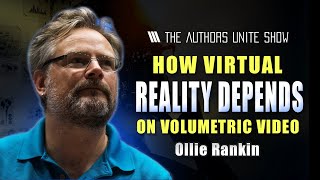
Ollie Rankin, a VFX pioneer who worked on Lord of the Rings and The Matrix, built Lost Horizon, a virtual music festival on Sansar that drew 10,000 attendees and millions of streams. He discusses how AR/VR is shifting from consumer hype to real productivity, AI's role as a creative tool, and why mind-uploading might be essential for human survival.
Chapters
All right everyone, welcome back to another episode of the Authors Unite show. Today I have Oli Rankin with us. He is a visual effects and virtual reality pioneer who splits his time between the cutting edge of immersive tech and advocating for diversity, fairness, and sustainability. So welcome to the show, man.
Hey, thanks Tyler. Great to be here.
Grateful to have you on. So where do we— I always like to start here because you like AI, virtual reality, all that stuff. It's a little over my head. So I'm going to learn with the audience while we're interviewing you. Did you think when you were younger you'd be doing anything like this? Like, was this always something you were interested in?
Yeah, very much so. You know, I grew up reading a bunch of crazy science fiction, cyberpunk novels and yeah. From a very young age, I was ready for virtual reality and AI to be something. I didn't really know what it was going to be besides this kind of cool cyberspace thing where you could put on a headset and go into a virtual world. But yeah, obviously the industry didn't exist in an appreciable sense when I was growing up, when I was at at college, but it was definitely something I've had my sights set on since I was a kid.
Got it. And then what path— because like, you know, obviously people learn this stuff, but it's so out of my realm. So like, what did you do to— because you can actually build these things, right? Like AI, like virtual— like you built the tech behind it. Yeah.
So I started out, you know, back in the I grew up in the '80s, and I started probably in the late '80s teaching myself how to program on a hand-me-down computer. It was one of those Atari 800XLs. It was a system that you'd plug into your TV. It had a— might have had the games saved on a tape recorder sort of thing. So yeah, that was my first step, was sort of teaching myself to program. And at that point, I was very interested in games and figuring out how to program simple games. And then that just sort of led to, by the time I got to college, studying computer science. AI was, you know, it was a very new sort of discipline in academia at the time, but I sort of picked it up. My college had a pretty good computer science faculty for AI. So I sort of studied that. But it wasn't really until I was graduating and not really sure what I wanted to be when I grew up. But at that, at that moment, Peter Jackson announced he was making Lord of the Rings. And I had this sudden sort of eureka moment of, oh, okay, I think I know what I want to do here. And not having any idea that AI was relevant to the filmmaking process. I didn't even mention that I'd studied AI when I was applying to work on Lord of the Rings. And it was just this sort of a crazy series of social coincidences that led to me getting a job using a form of AI to build brains for orcs and elves and choreographing the battle sequences in the Lord of the Rings trilogy.
That's amazing.
Yeah.
Oh man, I love those movies too. You've done, I was, cause I was doing some research and Matrix. You've done the Matrix, right?
That's right. Just the last one. But yeah, that was awesome.
Yeah. I love those movies. They're awesome. X-Men, Transformers, even Alice in Wonderland. What was that one like? That's cool.
Yeah. Yeah. I think it's funny when you look back over the movies that I've worked on, there's often this theme of, you know, sort of alternate worlds and, and sort of virtual universes.
And yeah, was there a favorite or just all kind of equally cool projects?
I mean, you know, you can't go wrong with the Lord of the Rings and Matrix trilogies. I used to joke that my career has gone downhill steadily ever since that starting point.
That's tough to compete with.
But then sometimes the sort of the dumbest movies that you work on end up being the most fun. Like I worked on a movie, Fred Claus, which I don't recommend anybody watches if they haven't already seen it. But it was actually an enormous amount of fun to work on because we were motion capturing a small troupe of, small in multiple meanings, a small troupe of Russian circus midgets to act as Santa's little helpers in the North Pole. And Awesome.
Maybe I'll check it. It's funny, sometimes, like, I never go by like Rotten Tomatoes or like the reviews on like Amazon Prime or anything because I've seen movies that are like 2 out of 5 stars and I really like it. So it all depends on your taste, I guess, and like your level of goofiness that you're willing to, I guess, allow the movie to be because there's some really like— some movies are like bad acting but they're so bad acting that they're funny. And I'll sometimes like those ones a lot. So it depends. Cool, I got it.
It's also surprising how much your appreciation of a movie is affected by your expectations going into it. So if all your friends tell you, oh my God, this is an amazing movie, and then you go to it and you're like, it's not as good as I thought. But if all your friends tell you this is a pile of shit and you go to it and you're like, Actually, that's not as bad as everyone said.
You're right. I think expectations do have a lot to do with that. And maybe that's actually why, because whether it's actually true or not, that a second or third movie— you know how they say usually like the first one's the best? That might be kind of subconsciously because our expectations are so much higher for the second and third.
Totally.
That could be it. I never thought about that. Interesting. Maybe that's it. So I wanted to ask you, like, where do you— I'm kind of associating what you do a little bit with Elon Musk type of stuff, so I might be off on this, but like with like the brain chip and stuff that he's— I don't know, right? Like, where is this AI stuff going? Like, is it going to be like— can you visualize the next like 5, 10 years? Is it going to be very extreme then, or is it more like 20, 30 years out?
I think the sort of that neural interface stuff is still probably in the 20 plus years out because, I mean, you know, it's amazing what they're talking about doing with Elon Musk's company. But, you know, it's just hard to imagine that we've figured out the brain enough to be able to, you know, make it a realistic sort of a workable computer interface by plugging wires into your brain. But that's definitely the future. You know, I look at the trajectory of technology over my lifetime and grew up with no computers being in the household. And then people had computers at home. Then the internet came along, and that sort of gave you access to all of human knowledge at your fingertips on your computer at home. Then our smartphones came along, and we have all that human knowledge accessible in our pockets now. It seems like a sort of logical trajectory that in the next however long, we won't need to pull out a device to have access to all human knowledge, but we'll be able to tap into it either through smart glasses or our personal digital assistants or the combination of smart glasses, smartwatches, smart earpods. All of these things are getting closer and closer to being inside of our brains.
Yeah, I find that pretty exciting. Like, I was pumped for Google Glass, I think it was called. I maybe know why it didn't, or it just didn't take hold, I guess, because I don't even know if they sell them anymore.
So actually, yeah, that's actually a really interesting topic because, yeah, that obviously was an example of something that a lot of people were sort of ready for technologically, but then it was, it really bombed. There was that sort of the backlash against the glassholes, as they were called, the people that were walking around with those headsets on. But actually, in secret right now— and it's not even secret, it's just not being publicized— there's a bunch of companies that are using the next generation of Google Glass in sort of enterprise work situations. So people on factory floors who have them on, and they're getting readouts of the machines that they're working with in real time, which is a great example of a use case where that's that, you know, it saves a lot of time and energy to be able to have that information in your field of view. It's obviously something that, you know, the Microsoft HoloLens and Magic Leap has also sort of pivoted towards that enterprise use case for augmented reality. So yeah, I think, you know, there's a lot of progress going on in that sphere and And the ability for somebody with no training at all to be able to put on some kind of headset and be able to do a job or have the training in real time as they're kind of on the job, you know, it's obvious that that's going to be able to save a lot of money and time and mistakes.
And yeah, yeah, no, I was because so I'm giving movies. I'm sure you're kind of on the cutting edge of everything. So, you know, I can't think of a movie offhand, but you know, in movies where instead of a computer, it'll be like a hologram or something comes up and you can talk and drag it. Is that— does that already exist?
It does.
Yeah.
So that's sort of Minority Report.
I want that. Yeah.
So for instance, just about a week or 10 days ago, a new app came out on the Oculus Quest. It's called Immersed, and it allows you to put on the VR headset and connect to your computer. And so even if you've only got one monitor on your computer, with your VR headset you can have multiple monitors and you can interact with those monitors and with your computer through those monitors. And then the crazy thing is that you can teleport into somebody else's computer. So I'm working on this VR project with a friend at the moment, and he's doing He lives sort of 10 miles from me and he's doing some work building the 3D sort of worlds that it's going to take place in. And I'm able to put on my VR headset and we Zoom, we do like a Zoom call, but we're both in this sort of virtual non-existent world looking at virtual representations of screens that he doesn't even have on his computer in the real world.
Yeah, that's crazy. I bet it makes work more fun though. That's the thing I thought of, like, just all the little— I mean, computers are great, so I'm not saying anything bad about them, but there's definitely things I noticed that I do more than once, whereas if I could just, like, you know, speak to a hologram or be in that virtual reality, it would save me a lot of time. And I would imagine you would kind of lose track of time because you'd be just very present in that other world. It would just make things more fun and more productive. So it's like, why would we not? Move toward that.
Absolutely. And you brought up, you brought up AI before and again just now. And I think that's, that's a really good point that we're not really thinking about enough. And I know that, you know, I know that the big tech companies like the Apples, the Googles, the Facebooks, Microsoft, Amazon, what they're doing that is sort of behind the scenes. And obviously Amazon have been doing it from the very beginning is sort of learning what we like. Learning what we do, what we like. They're collecting data from absolutely every single thing we do when we're on their websites, when we're in their apps. We are training their AIs to learn more about us. So the point that you made just then about things being able to be more efficient as the AI learns. So if the AI knows that on Mondays in the morning, I get up and I go for a run, that your devices can all be primed for that. And so you don't need to choose a playlist because it can automatically, you know, kick in the playlist that you want to listen to while you're working out. Or, you know, that's just a really simple example, but we're getting to the point as, as we bring these computers closer and closer into our sphere of experience, we're going to get to the point where rather than having to tell a computer what to do, or, you know, having a more streamlined interface to tell the computer what we want it to do, it's going to start guessing. It's going to be, it's going to be more like an AI collaborator than it is going to be a tool.
Is there something out there right now that like, because I forget where it was, I read something that like businesses that do not integrate AI within, you know, maybe The time frames are difficult to predict, but let's say 10 years. Just the mere fact that in your niche there will be other companies that do have AI, like, you, you will just inevitably go out of business because you, you won't be able to keep up. Yeah, because even little things like that, if you add it up over time, you know, that, that maybe saves you months. Just, you know, and it's just a real quick go to Spotify, click the playlist. That's like 10, 20 seconds, but every day, 3, 4 times a day, you know, if you have AI that just knows like, hey, 10 AM, this guy's running with this song, you know, it does, it adds up actually.
Absolutely. Absolutely. And the similar sort of parallel, I guess, is, you know, back in the '90s when the internet was sort of first starting out, there was this notion of internet companies and traditional companies. And there were a lot of companies that were like, well, no, we have our brick and mortar business. We're not an internet company, so we don't need a website. But then by the 2000s, if you didn't have a website, you didn't exist as a company anymore in the realm of where people were actually looking to find you. And the same sort of thing, obviously in a different way, but AI very much is going to— yeah, it allows— computers to do things for us in a much more efficient and customized and optimized way.
Got it. And so is there an actual, like, is there anything out there right now, like, for a small business owner that I guess, what would you do? Would you like download an app and then it learns about you and then starts, or is it only really, you know, you got to be—
Yeah, I mean, there aren't these sort of general artificial intelligences yet. And I think we're another generation away before we have these sort of— before the digital assistants become so sophisticated that they can learn sort of our general behaviors and become useful collaborators in that sense. But I think at the moment, it's a lot of sort of specific use cases. So if you need something to help you scheduling your time, or you need, you know, you can actually, you can now have an AI personal assistant that will do all of your meeting scheduling for you, and, you know, will even make phone calls for you and order things for you. So yeah, there are quite sort of specific use cases that have, that have been already rolled up into AI. But, um, yeah, got it.
Okay, so I want to, uh, I want to ask this question, and this is about as deep as you can go really, and then we'll dial back because I want to learn more about your company and what you're up to. So Elon said there's a higher chance that we are in a virtual reality right now than not. What are your thoughts on that?
Yeah, I think, I think there's a— there is a pretty high chance that we are in a simulation. Um, because it's inevitable as we watch ourselves kind of learning more and more about AI and, you know, creating simulations that are becoming more and more sophisticated. Um, yeah, the, the, the chances are that, you know, with the universe being, well, who knows how old the universe is? Maybe our simulated universe is, is as old as we think the universe is. It's— I don't know that we'll ever be able to figure it out though. You know, I don't think we'll ever be able to prove definitively that we are in a simulation or we aren't.
Okay. Cause yeah, I guess what it just is like, you just keep going into deeper layers. So then, and I guess maybe by— well, I don't know if it would work that way. The deeper layer you can get to, maybe as a reflection, we could maybe discover the beginning. In a sense, but like maybe, or maybe we're just going the wrong direction to discover that. I don't know. Depends how you look at it.
Yeah. It's crazy that the further we get into, you know, into quantum physics, the more complexity we keep on finding. You, you know, you kind of hope as you drill down into things that you'll eventually find the most simplistic, most basic kind of building block of everything. But every layer that we peel off, it seems to open up more dimensions and more.
Yeah, exactly. Yeah. So when we find the, uh, I don't know what it would look like, but maybe it's just a black hole. It's like, oh, okay. We were shot from there. Um, so your, your main company is Pan Sensory Interactive, right?
That's right. Yeah. And at the moment I'm sort of, yeah, I'm splitting my time between Pan Sensory, um, a group VR Jam that I'm with. Um, and, and, uh, at an organization that VR Jam has recently created in collaboration with some partners at the Shangri-La Glastonbury team. Okay. So we organized this big virtual music festival a couple of weeks ago called Lost Horizon. And that was actually the world's first multi-day, multi-stage, entirely virtual music and arts festival.
That's good. Tell me more about that.
What was that like? Yeah, so that was really kind of the culmination, I guess, of a lifetime of fantasy about the sort of virtual reality world where we actually managed to pull off this incredible cyber festival. We managed to pull together a bunch of, you know, huge-name DJs like Carl Cox, Fatboy Slim, Pete Tong, all of these kind of luminaries in the electronic music scene. And we built replicas of the stages from the Glastonbury Music Festival in the UK. And so we had 4 different stages. We had 75 DJs and bands and art from dozens of international artists. And we used the platform Sansar SANSAR is kind of an offshoot of Second Life. I'm sure you've come across that.
I think I have, yeah.
It's one of these massively multiplayer online role-playing social spaces. SANSAR is an offshoot of that that is specifically designed for live events. And so you can attach, you can connect to it using a VR headset or your PC. There's also a smartphone app. And then crazy thing is that inside this virtual music festival, we also had virtual camera operators so that we were live streaming from multiple different camera positions and from moving, like roaming camera operators within the virtual world. So we were streaming out via Beatport to Twitch, YouTube, and Facebook. So we just, you know, it was like a real music festival with everything that you would have, all of the live acts, all of the kind of random conversations, all of the, you know, the sort of craziness, everybody in wacky outfits.
That's awesome. So what was it like? Like, what was the feedback from the people? And the business side of it too. So do people like pay for tickets, I suppose, and then they got in?
So because, yeah, because this was a first and because all of us that are behind it are very sort of socially minded, we all want to make the world a better place. So, you know, we decided to do this first one for charity. So we were raising money for Amnesty International and for The Big Issue, which is an organization in the UK and a couple of other countries that makes a newspaper by and for the homeless. So we were raising money for those two organizations. And yeah, people would need to download one of the Sands Hour apps, whether on their PC, VR, or a smartphone, or you can just tune in to any of the streams. And I think we had something like 4.5 million stream views over the course of the weekend.
That's amazing. That's a good first festival. That ain't bad.
We had about 10,000 people attending between VR, PC, and smartphone app. And the awesome thing was, because I was working during the course of the festival, but I also got to take some time out and attend it. And, you know, I'd always known how transportive it would be to have a VR headset on and go to this festival. And it really was like you were there. And one of the things about the Sansar platform is that it is a— it's quite a realistic kind of rendering style. So it sort of feels like you're in this real place, sort of gritty and dirty and like muddy on the ground, just like a music festival would be. But then, you know, but then the person next to you is this giant tarantula with a papier-mâché Bernie Sanders mask on. And then there are these sort of cartoon turtles dancing with the DJ. So yeah, so I absolutely knew that the virtual reality experience would be transportive and you'd feel like you were there. But the thing that really blew my mind was that even without the VR headset, when you're just using your keyboard and mouse, you're playing a third-person video game, being there. And you know, you've got your avatar represented on the screen and you download a bunch of dance moves. They call them emotes and you hit the number keys so that you can kind of make your avatar do these sequence dance moves. And then I had friends from around the world there with their avatars. And even though their avatars didn't look anything like them, because they had made the creative decisions to choose what items of clothing they were wearing, you could kind of project your vision of that person's personality onto their avatar. And as they were dancing, and so we had like, you know, 5 of us standing around in a circle from tuned in from different places around the world. And it actually felt like we were there together on a dance floor.
That is incredible.
It was amazing.
When is the next one? I want to go.
Oh yeah. We're talking about doing the next one in October. October, but we're lining up to do sort of a series of quarterly tentpole events on the sort of similar scale to what we did in early July. And then we're also going to be doing sort of monthly events with a bunch of different musical styles and different brand activations as well.
All right. Well, yeah, keep us posted on that because I don't think, um, in-person concerts might not be back for a little while.
Absolutely.
And I'm curious whether they were or weren't. This is actually, you know, curious enough to me that I'd still want to do it. But it's kind of, um, yeah, this by default actually is really your only option for a concert now.
So absolutely. Yeah, I mean, you know, one of these things that you do when you're, when you're looking at the work that you're doing in your life and, you know, trying to decide how much of your energy to put into it. You know, I've worked on all these movies and, you know, we sort of kill ourselves in the final weeks before a deadline. And we always have to remind ourselves, you know what, we're not saving anybody's lives here. We're not doing anything, you know, we do need to sort of still maintain a work-life balance. There's a very real sense now when you're creating these virtual events, maybe you are saving somebody's life because maybe somebody's gonna go to your virtual event instead of going to a real life event and catching COVID 100%, yeah.
And I think on a like mental kind of like illness or, you know, just because it's definitely put a, I don't know how to word it. It's just, it's made people's life way different than what it was before. So mentally, even if it's— you're not literally physically there, if it feels like it, and you know, you got 5 friends, you know, on a dance floor, like it could— it probably helps you mentally, I would imagine.
Definitely, definitely. And I'm— what I'm not going to be able to sort of compare is, you know, because I had that first experience when I was starving for social interaction, you know, maybe the fact that I was starving for social interaction is why I was able to find it so so compelling, maybe. But that's the reality. That's where we are now. And yeah, I think, yeah, we are being able to address that sort of that need to be around other human beings in a way that's entirely safe.
Yeah, definitely. Yeah, it's— yeah, when you think about all the angles, this is awesome work and very timely. So you brought up the movie again. I remembered another question I wanted to ask you. So with movies, because I've always wondered this, if it's one of two ways, is it like you all go into this area and I assume it's multiple areas, it's very strict deadlines and it's just like straight to business, or is it kind of like, you know, like a movie, like even Lord of the Rings, right? Because that was in New Zealand, right?
That's right.
Yeah, it's like a beautiful area there. So it— or, or is it kind of like, hey, we got 6 months, this is all the cast and everything, let's have a few parties and like we'll film this day Like, which way is it more like, or maybe in the middle?
No, when you have a big budget movie, they're very, very sort of strict about how that money gets spent. So, you know, when you're talking budgets of hundreds of millions of dollars, the studio wants to know that every penny of that is gonna end up on the screen.
Okay.
So, yeah, you know, when I worked on Lord of the Rings, I started on the same day that they started filming. 'cause they filmed all 3 movies back to back. And the idea was that, you know, they would save some money by doing that. But that meant that we were filming and we were doing sort of R&D for the visual effects because, you know, a lot of the stuff that we'd done or that we did had never been done before. So we had to, you know, we were developing the software, we were developing the techniques for using that software. In real time, like we were laying out the track for the train as the train was getting up to speed. And so we got about a year and a half almost of sort of R&D. You could call it R&D playtime. It was sort of trying to figure out how to do this stuff. Now, I don't know how well you remember the movies, but the first The movie begins with this kind of prologue telling the story of how the ring got cut off Sauron's—
I remember that. It's been a while, but yeah.
So there was this whole sort of, yeah, this prologue sequence. It's, I don't know, like a 10 or 15 minute sequence of the movie of just like huge epic battle scenes. And about a year out from the movie coming out, Peter Jackson had decided that our technology wasn't ready yet to include that in the first movie. They didn't want to, you know, to sort of shoot the load early and have it look rubbish. So they rewrote the first two movies to put that whole sort of prologue sequence into the second movie to give us more time to get ready to do it. And then about three months out from the deadline, we kind of had this eureka moment where we showed Peter some test shots that we were working on that just looked amazing and blew everybody's mind. And he said, "That's it, that's what we need. This is— we're going back to the original plan." So we had to do that whole prologue sequence from scratch in 3 months. So, you know, we were working sort of 20 hours a day by the end of it to get it all done.
But yeah, that's kind of an example of how They literally rewrote the whole thing and then went back. So that was like, well, not wasted money, it was part of the process. Part of the—
Exactly, exactly. But it's, you know, you kind of always have to hedge your bets, you know, because you can't afford to fail when you've got this much money on the line. So, you know, you always have to have these contingency plans in place.
That makes sense. And then, because I'm trying to visualize it, it's just been a while, but for like big battle scenes like that, is it, is it, is it more like digitized, or is it actual like thousands of people running at each other?
Yeah, so it's, it's never more than, you know, max maybe a couple of hundred people in, in reality. And then whenever there's more than a couple of hundred people on screen, and sometimes we were up into, you know, a quarter million orcs and elves and mythical creatures, those shots would be fully CG. So if somebody's face is right in front of the camera, back in those days, you definitely, apart from Gollum, you couldn't really do a human face with that fidelity. But yeah, so it was always a mixture. You would cut back and forth between shots that were real people up close And then sort of mid-shots and wide and extra wide shots where it would be fully digital.
Got it. I always wondered that. Okay. So I want to, you know, near the end of this interview, I want to talk about From the Trees to the Stars. So can you tell us a little bit about that?
Yeah, absolutely. So again, back while I was working on a motion capture shoot for, I think it was the Chronicles of Narnia: Prince Caspian, I was binge-watching, sort of in between night shoots, I was binge-watching a bunch of documentary series. And I just had this sort of revelation that, yeah, and I would actually recommend either reading the book Guns, Germs, and Steel or watching the documentary series of it. That was something that gave me a lot of insight into how the sort of the progress of human civilization has been a lot to do with luck, right? When you think about it, that there are certain parts of the world where there are plants and animals that allowed people to domesticate and, you know, set up agriculture, and that was what's needed to be able to not spend your whole day gathering food And when you're not gathering food all day, then you can do things like science and arts and philosophy. And so, you know, in, in countries and in places like Papua New Guinea, for instance, where they don't have those domesticable plants and animals, there's still, there are still people living these kind of primitive Stone Age hunter-gatherer lifestyles. Whereas in places where they did, like the cradle of civilization, they had these grains, they had these you know, animals that they could eat and use to drag plows, they were able to sort of get civilization going on a faster pace. And, you know, I got to thinking about how, you know, we say, well, are there other alien civilizations out there? Maybe there is intelligent life has evolved on other planets, but they don't have the circumstances on those planets to be able to kickstart civilization because they're still hunter-gatherers a million years later. Um, or maybe there are other planets where, you know, where they've been able to accelerate that a great deal faster. So there's this, this idea called, um, Fermi's paradox, which says in a universe as big as the one that we're in, um, that's been around for as long as it has, there are so many other planets that are probably habitable. Why haven't we encountered other alien species? And the answer to that is this thing called the Great Filter, which says that somewhere in the evolutionary and technological path between the development of intelligent life and interstellar travel, somewhere along that sort of the steps that you need to take to get to interstellar travel, there's a step that is so incredibly hard to overcome that nobody else has ever overcome it. Um, and we don't know whether we've already overcome it or whether we're still stuck, um, on this side of that great filter, they call it. Um, and, and I looking at the, at the place that we are as a, as a species and as a civilization, as a culture, and I feel like we are actually at that great filter point right now. We are at the point of needing to overcome the same kind of selfish individualistic tendencies that allowed us to become the dominant species on the planet. You know, we, um, we are really good at exploiting resources and, um, and at exploiting each other. And these things have allowed us to tame the planet and to develop technology and to, you know, to bring our civilization up to the level that it's at. But those same tendencies are now sort of stopping us from going to the next level. You know, our infighting, our petty individualistic selfish instincts are stopping us all working together to figure out how to solve the coronavirus, how to solve the climate crisis, how to solve wealth inequality, and how to give every human being the same opportunity to contribute to and to participate in this amazing experience of life. So From the Trees to the Stars is my attempt to sort of help us get over that hurdle, to break through that Great Filter. And it comes from this little phrase that I came up with, which is that competition got us down from the trees, but only cooperation can take us to the stars.
Yeah, that's awesome. I think one great takeaway from this that I've noticed because as I was doing research on you and now having spoken to you, is, you know, you seem to love what you do with the VR, AI type of stuff, but then there's, there's a social impact that's like behind it. And can— and if you can— and really the VR concerts kind of has, has both applied to them. Um, so as an, as an individual, if you can discover you know, what you love doing, and maybe it's work that's for money, and then another thing that's kind of behind it that is more for social impact and helping others. And sometimes they intertwine, sometimes the money from this can fund this other thing. But either way, I think having both is probably— it's better than only having one. It's probably a very good thing to have both of them.
Yeah, absolutely. So, I recommend it.
Yeah. So, well, yeah, thanks again for coming on. I guess, you know, last question, I kind of want to leave the floor to you. If there's anything else that we didn't cover that you would like to share, you can share it. And then like social media, website, or anywhere people can kind of stay in touch with what you're doing.
Yeah, totally. Yeah, I realized that you asked about pensensory right from, right early on in the interview, and I totally forgot to So let me give you a little bit of a rundown of what we're doing at Pansensory. We, you know, so Pansensory Interactive was a company that I founded in 2012 to develop smartphone games. But then finally, not long after that, the VR revolution started. And so I pivoted the company into VR technology research and content creation. Because what I've always dreamed about since I was a kid was telling these virtual reality stories where you get to be a character in the story. So Downloaded is an example of that. It's an interactive— think of it like a less bleak Black Mirror starring you. So at the end of every episode of Black Mirror, the end of every episode of Black Mirror, you come away thinking, shit, we're doomed. Humanity is inevitably on this trajectory towards some kind of, you know, apocalyptic, you know, dystopia. But what I want to do is for people to come away from an episode of Downloaded thinking, huh, if we do this, we're headed towards dystopia, but maybe if we did this, we could, you know, steer more towards some sort of utopia. So Downloaded is a, it's, it's a, it's a story series based on the idea that you can digitize human consciousness and download it to a computer. And the idea is that, you know, obviously we're going to get to that point at some point. But imagine if instead of it being Facebook or Google that invented that technology, it was a bunch of hackers in their home labs. So in Downloaded, You and another fellow hacker, the two of you have built this machine called an atomizerator, and you're testing it out with you as the guinea pig, and it works. So Lisa, your collaborator, she pushes the button, you're inside the machine, you kind of get digitized, and then now you find yourself trapped inside the computer. You're looking out through the screen of the computer. You can see her news feed on the screen. And then you're looking out into her, at her in the real world while you're surrounded by this kind of digital virtual cyberspace. And then you have to figure out how to communicate with her, how to collaborate with her to reverse the polarity of the machine and print yourself back out into the real world.
That is wild. Okay. So that, I want to do that too. But so a question I forgot to ask, cause I'm curious if you would do it. So Along the same lines of what you're saying, it's a little different, but you know, as we get older and our body decays and, you know, we all die, but if by that time there is an option, which it seems like there's going to be, um, that you can, you know, maybe it's like a robot and you can put your consciousness or something like into the robot, would, would you do that to live forever through that or no?
I don't think so. It's a thing. Because I think that human progress needs renewal. And I think that old people sticking around forever is going to prevent humanity from progressing to the next level. And as much as selfishly I might want to stick around and see that—
I know, that's my debacle with it is I'm like, I like it here. And I've, you know, I don't— nobody really knows exactly what happens after, but, you know, I could imagine maybe it's incredible or maybe it's like pretty nothing, you know, I don't know. So, but I know that I like it here, so I'm like, I might do that. But I know what you mean though, because eventually, I guess, unless we really, you know, the Mars thing and like all these other planets, like if there was just, you know, hundreds of millions of robots running around. I feel like at some point we will run out of room, at least on Earth. So we gotta—
I don't know.
And I guess at 1,000 years old, you might be like, okay, I've been to Africa 30 times this year. I mean, I've been everywhere.
Um, yeah, I think, I think actually the flip side though is that with virtual reality, we'll be able to experience a lot more in a lot less time and with a lot less impact. So you could fit into the space of a normal human life the opportunity to visit every single country on the planet in VR without having an environmental impact, without harming the wildlife there.
And it will be like close enough to real, you're saying? Like it'll be like close. Yeah, that's— I can't wait for that. That's one of my goals is to visit each place. So if I can do it while I'm lounging on the couch, that's cool. I'm down with that. I don't like flying either. It gives me anxiety. So, uh, oh yes. What's the website?
Um, so yeah, so pansensory.com, um, is where to find that. Um, From the Trees to the Stars is mostly on Facebook as a Facebook community. Um, and otherwise people should look me up on LinkedIn. I'm also on Twitter, but not, not particularly active there. LinkedIn is probably the best place for people to reach me.
Okay, perfect, man. Thank you again. This was a fun conversation. I really enjoyed it.
Yeah, likewise, Tyler. Thanks a lot.
More from Tyler


Catherine Nikkel : THE STORY EVERYONE HAS BUT HASN'T TOLD : The Tyler Wagner Show #1120



Scott Ritzheimer: Bring Predictable Success to your Organization | The Tyler Wagner Show #1115


Fred Moskowitz: A GUIDE TO GETTING STARTED WITH IN MORTGAGE NOTES | The Tyler Wagner Show #1113

Mark Podolsky: From Land Investor to Full Time Success How I Made $90,000 Cash in Real Estate


Mark Podolsky: How to achieve a 300% return on investment my foolproof strategy

Mark Podolsky: How to make passive income selling raw land the irresistible pricing strategy