Howie Zales: How To Create A Successful Entertainment Career | The Tyler Wagner Show #1017
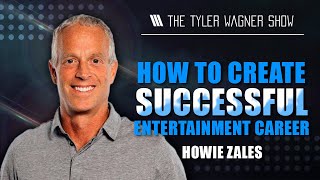
Howie Zales built a 20-year career shooting sports for NBC, WWE, and the Olympics, then launched two production companies during and after COVID. He livestreamed March Madness with Jim Nantz and Charles Barkley, and now runs a white-label platform letting influencers host their own videos and keep the ad revenue.
Chapters
All right everyone, welcome back to another episode. Today we have Howie Zales with us, so welcome to the show, man.
Hey, how you doing, Tyler? Nice to see you.
Very good, grateful to have you on. Um, so if you can start us off and tell us a little bit more about you and what you do.
Yeah, so, um, I've spent the better part of 20 years in the television broadcast industry, mainly sports and entertainment. I started out as a camera operator, uh, doing, you know, Yankees, Mets, Islanders, Devils, Rangers games in the New York metro area. And then I slowly kind of made my way to more of the national level where I was doing, um, Notre Dame football. I did Sunday Night Football, all different types of events for NBC Sports. Olympics, Super Bowls, and simultaneously also with the World Wrestling Entertainment as a camera person, camera operator backstage. And while I was doing that, I also had a company on the side where I was hiring TV crews for clients of mine that needed camera people, audio people, replay people, anyone that it took to do a TV show.
Got it. And then that's how kind of, um, so how do you— is it Verity Entertainment?
So Verity Entertainment Services is our second company. HJZ Productions, our first company, is the hiring company that we do TV crews for. We started out really small, just in the New York area. As time went by, uh, we, we kind of, uh, got contracts, union contracts, in all cities across the country. So we, we focus in the New York, New Jersey, Connecticut area, but we do hire TV crews, uh, in many cities across the country. The Veriditie was born because of the pandemic. Uh, all of our work, just like so many other people in the entertainment business, ended March 11th. Uh, and we needed a way to pivot to make an income. And, um, I knew this live streaming thing was out there. Technology was there, but the use of it was 5 years down the road. And it was, you know, that's kind of how— there's a really cool story of how our second company Verity was born.
Okay, got it. Yeah, yeah, I'd love to hear more about it. And just so I can distinguish, so the first one, just so I'm understanding, so if somebody wanted to like hire a film crew for an event or something, like instead of trying to piece together all the pieces or whatever, they they can just hit you up and you're like, okay, I know what you need. You need these 4 cameras, these 4 types of individuals, and then they're set.
Exactly. Exactly.
Okay. Got it. And then the second one. So what was that? Can you go a little more in detail? Like what was that transitional period in like, not going into specific numbers, but like how hard, I guess, like was the hit and that, did you see it coming kind of when the lockdown started happening or How did you move? Was it—
Great question. Um, so the lockdown, I think was March 11th, was our last show. And, um, we— so we hired crews, we invoice for them, and then we payroll them. So typically we payroll before we get paid. So I bring that up because the lockdown happened and we still— we had literally paid everyone that we owed money to but we were owed a few hundred thousand dollars. So for 3 months during the lockdown, thankfully we had money coming in that was ours because we already had paid our vendors. So that was a little cushion to fall back on. But the uncertainty of the sports and entertainment business, we, you know, I did a lot of research during that time period. And our company was chosen by West Point to, in June of the, that year, to produce and hire the entire crew for the West Point graduation because the parents of the cadets weren't allowed to attend. So we hired the director, the producer, everybody. And when I was talking to the director, he said, I need to have my technical director. The technical director is the one that pushes the buttons when the director says camera 1, camera 2, camera 3. And meanwhile I had 10 technical directors that have been sitting home for 3 months not working, but my director wanted his person. I was going to put up a fight, but something in my gut said, you know, just follow, follow your instinct, just go with what he wants. And long story short, I met this guy Jamie, who turns out to be one of my closest friends now. We work on so many projects together. We collaborated on a lot of livestream productions, and he really taught me a lot about what I know about the livestream business. And we, the temple where I belong, needed help with their services in September of that year. So together, Jamie and I put together a plan on how we were going to transition the temple from in-person services to livestream services. And that was like the beginning of the company, because I figured there's got to be a way to monetize this whole thing. And lo and behold, it kind of just happened.
And then what are, um, just so people can see the differences, because I've read through your website, like, what are the main, I guess, differences, if you will, from like, say, like what we're recording? Well, so Zoom I don't think does live stream, but maybe like StreamYard. These are just the things that are coming. I don't even know if they're close to even relevant.
Yeah, no, no, StreamYard is more of a prosumer, um, um, piece of software that, uh, people can use. We use a professional software called vMix and And we do all— it's a Windows-based software. And basically we do all of our production in an AWS, Amazon Web Services cloud. So, and we have a lot of redundancy built in. So typically on most of our productions, we have 3 or 4 people. Everyone is remote in their home. And so if the power goes out in my house, the stream continues to happen because it's still emanating from the cloud. And everyone else on the team knows how to do everyone else's job. So if someone per— someone goes down because of power, internet, computer, someone could just jump— another person can jump right in and kind of take over.
Got it. Okay, that makes— so there's really no chance of it going like all the way down?
I don't know, you want to say that likely.
And if that happens, then we probably have bigger problems.
If Amazon AWS goes down, then we go Netflix. Netflix and the whole world has got huge issues.
Um, that's funny. Um, so I'm curious, I always like to look at like biggest successes and biggest failures because I think a lot of times, as I'm sure you're aware, on like social media all you see is like the highlights, right? So in your, you know, entrepreneurial career, and maybe it was a specific event that your crew or one of your crews got hired for, like what was the biggest like failure that occurred and then what did you learn from it? And then what do you think was like your biggest success in either of the businesses? Doesn't have to be first or second, but—
Yeah, we had a failure just in the HJZ, my first production company, just like 3 or about a week ago. The client needed an audio person to sit at the mixing console and mix the game and the soccer game. And although he was qualified and, you know, came highly recommended to us, I had never worked with him before, but I trusted the recommendation of someone and he tanked and the client was super upset and the announcers on the soccer game were super upset that they couldn't hear what they were supposed to hear. The people on the ground couldn't fix it. The person I hired who I'm speaking about couldn't fix it. And we had to, you know, we still have to pay him for showing up and doing the work, but we can't bill our client for it because they weren't happy. So those are like monetary, you know, hits and things we learned from. Maybe I should have vetted him better. Uh, but he's— he did come highly recommended from someone, but you know, things, things happen for sure.
Okay, I got you now. And maybe there's a way— I don't know if this is right or wrong, but like, if it's, if it's definitely their fault, like, because sometimes it could be the tech, right? Like, I don't think—
absolutely, absolutely.
But, um, maybe that should be in the contract or something of like, if you are the reason that the whole thing blows up You know, then we should talk, you know.
Yeah, yeah. No, and we— I learned something every, every time there's a mistake, we learn from it, right? We, we are— another big failure was, and we even had a contract with this company. They— we had a contract, they were going to pay us within 30 days. And that was April, they still owe us Tens of thousands of dollars. So the mistake there was new client, get my money up front next time.
Totally.
Even though I had a contract with them that they signed that said they were gonna pay me within 30 days, next time, anytime I have a new client, they're gonna pay us in full up front.
Yeah. You know what's it? So in my business, I normally do, it's mostly all up front, but like the way that I feel we are so connected now, I feel like the validity of contracts are less and less because— and then there's more like handshake deals because not that— and I wouldn't want you to do this, but like that company, whoever they are, that person, like that can get out and ruin a reputation so quickly now. Like my agreements with my clients are literally— and people laugh at me, they're like half a page, like 5 sentences, because it's like, dude, You know, like, I know we know the same people. Like, yeah.
And we actually, because of that client, we added something to our agreement which means— which says, like, just because you don't get paid doesn't mean you don't pay us.
Yeah.
So, and we learn, you know, from all, all these different types of misfortunes, if you want to call it.
So, and then up to this point, like, what would you say? Maybe it was Well, I'll go two directions. One would be like biggest success, and then did you have a project that was like the funnest one that you worked on?
Yeah, one of the— so two really cool events with our livestream business. One was we did five livestreams for our client around March Madness, and the fifth one was right before or led into the beginning of the final game, and it was with Jim Nance and Charles Barkley Jim Nantz for CBS and Charles Barkley, and they were just talking about the game. And halfway through or three-quarters of the way through, we had a surprise guest for Charles Barkley, and it was Magic Johnson. Everyone knew, everyone on the production and our team knew that Magic was going to be there, but Charles had no idea. And it was super stressful because we kept having to refer to Magic Johnson and his camera as we had a code name for it because we didn't want to be responsible for giving it away, because Charles had no idea. And because we had to fax his tech, his technology out and make sure everything was working. And he was sitting there watching the whole show until we brought him on. And every time we spoke to Magic Johnson in his ear, we had to make sure that everyone couldn't hear who we were talking to and what we were saying. So it was super stressful, but super exciting because Charles had no idea and the expression on his face was priceless. And the client loved it. And they were super happy. So that is a total success.
Dude, Charles is, he's fun to watch.
Yeah, he, and Magic, and you know, I grew up watching Magic Johnson play basketball and Charles. So talking to those guys was like, for me, it was amazing, you know?
Yeah, of course. Yeah, I think Charles, I mean, he's kind of acting it out in a sports arena, but he was a comedian in a different way.
Oh, totally, totally.
So I don't know, but basketball was obviously a good choice as well.
And another cool event we did last fall, we did a home run derby contest for Little League baseball and softball. And we had 10 boys one night and 2 nights later, 10 girls and a Major League player with the boys and a softball professional softball player with the girls. And we handed out the home run derby championship to one of the kids. So watching them go through the whole show, watching the videos of them hitting home runs and they had no idea who was going to win. And, uh, it was— that was a pretty rewarding experience. Yeah, yeah.
These events that you get to do, that's, uh, my little brother, he actually does video and photography too for, um, uh, like local spots here, like the restaurants and nightclubs and stuff. Like, gets into all, you know, Miami area. And like, it's fun. Like, it's a fun job. Like, I don't know. So I think it's, uh, it's a good idea if you're interested, if you're creative and like into that stuff. I can see how it'd be a very passionate, like, living that you'd get to, uh, absolutely. Um, so also one of the things I like to talk about on the show too is like kind of behind the scenes of, um, the work, right? So what is your— what is like your day-to-day look like from a work standpoint? And then how do you like balance it out, family, working out? Like, what does that look like on like a weekly basis?
Yeah, no, awesome question. So when I was working as a camera operator, I was traveling 4 to 5 times a week. So my schedule was all over the charts. Um, but I since kind of given that up and I strictly run the businesses now. So my, uh, day starts the night before with my to-do list for the morning, uh, 2 or 3 things I want to get done. I wake up at 5 in the morning, I do those 2 or 3 things. I do an hour workout every day, and then, uh, by 9 AM I'm like showered, eaten 2 meals, worked out, done what I needed to do early in the morning, and I'm ready to go for the day. Um, and just, uh, I have, uh, 2 people that run one business and one person that runs the other business, and we kind of just oversee all. And, um, got it.
And then do you have like kids and stuff, or no?
We have, um, so this is a second marriage for my wife and I, so she has 2 boys that live with us. Uh, one of them is in college, and I have 2 boys of my own. They don't live with us, but I see them, uh, okay.
Okay, got it. So that, as they say, what is it? They're out, they're out of the nest.
Yeah, some of them are out of it. Yeah, yeah, yeah, yeah.
I haven't had kids yet, so I'm still learning. Maybe one day we'll see.
But it's the, you know, working from home now is so much better with the work-life balance. Oh, for sure.
Now, how— I'm curious on that. How do you— have you found different techniques to like stay focused? Because I, I, I've actually never worked like like for a corporation, right? I've always kind of had my own thing. And what I've discovered for myself was I can do podcast— like, I'm in my home right now. I can do podcasts because it's interactive, right? I have to do like focus, quiet work. It's very hard for me to do it in my home because it's just kind of like, oh, my bedroom's 3 doors down, I could take a nap. The kitchen's 1 door down, you know, I could eat something. So I like have to get a separate area like outside of my home. But Have you had anything like that?
Or— I have an office in our house. And I tried to do my work in there. And then like 5, 6 o'clock comes or whatever, I kind of just shut the door, walk away from it, and try not to do any work during like the family time or time with my wife in the evening, because it's easy to get like sucked into that. And actually, my wife worked from home before I did. And she kind of taught me how to do that. You know, once her day was she would shut the door to the office and, you know, wouldn't look back. So we try to do a lot of that.
Yeah, I think too, by the time— because we're actually pretty similar, I think, our clocks. There's actually a book, and I've been trying to think of it as we were communicating. If I think of it afterward, I'll send it to you. But there's a book that talks about the four— there's like four different types of people that— and it has to do with like when they wake up and when they go to bed. And so, for instance, like, based on the reading, I would be like a lion because I get up anywhere from like 4 to 6. I'm like— and that's when I'm most alert. Like, I only drink coffee to really— it's just I enjoy it, but I don't even need coffee. Like, in all reality, I— but then 5 or 6, just like you are kind of saying, my brain is already kind of off by that point because I've been up for, you know, shit, like 13 hours.
Oh yeah.
Yeah, but I'll have all my like important stuff, my workout, my breakfast and lunch, and like all my hard like work stuff done by like noon.
Yeah.
And the rest of the day is just like kind of like, like, I don't know, reading, or it'll be doing some work, but it's not— it's already mostly done by noon. And I know other people that are like the opposite, like they get up at noon, right? And like, I can't even imagine, dude, like if I'm awake past 11 PM is, you know, call me because I need help.
I've eaten 4 times by noon. Yeah, yeah. And there's no way I'm awake at 11, 11 PM unless I'm going to the bathroom.
That's the only— fair enough. Yeah, I agree. And, and do you even— see, for me, I don't even need an alarm clock either for the morning. Like, it's, it's almost like some day, like weekends, or the weekends are when I wish I could sleep in. Like during the week, I feel like it's a superpower because like, I don't know, just 4 to 6 every morning I'm up. Doesn't matter. It just happens.
I totally— I set the alarm, but 9 times out of 10, I wound up turning it off because I'm up.
Exactly.
Yeah.
But yeah. And then, but then the weekend it's like Saturday morning and I'm like, really? 4 o'clock?
Like, come on.
Like, I can't do anything tonight now. I'm not going to make it. Like, I'll try to go out with my friends because it is Miami. Like stuff doesn't really— The parties don't even start till midnight. So I'm like, yeah guys, at 5 AM I'm like, yeah, I'll be there, I'll be there. And then like, no way, clock rolls around, I'm like, guys, I can't get off the couch. So yeah, I don't know, I'm trying to get better at that. But, um, so as far as— because you said— I'm just curious, I'm kind of like into health a lot. So are— what are the— you said like 4 meals by then? I don't know if you were Exaggerating.
No, like, uh, I usually start the day off. Um, I have coffee, like when I wake up I'll do, um, maybe like a hard-boiled egg. Then, uh, right before my workout I'll do, I eat, um, the Oikos triple zero yogurt. It's high in protein.
Oh yeah.
And then, uh, then I'll, I'll work out. Then I'll either, as soon as my workout's done, I'll either have a protein shake, um, with almond milk Or I'll do like an egg white omelet with like some vegetables. I'll mix it up.
Yeah.
If I don't have the shake after the workout, I'll have my shake like midday as like a snack. Then lunch, I'll do, you know, a salad with some sort of protein in it. So yeah, by like 1:00, I've eaten 3 to 4 times.
Now, have you ever tried fasting?
I did try fasting and it was difficult.
Yeah, I agree.
Yeah, so I stopped torturing myself.
Yeah, dude, it's kind of like the, um, there's— it's weird to me how there's like different things and how they affect you. Meaning, so I, I've tried a lot of the biohacking stuff. Okay, so, um, I don't know why the ice bath I can actually do pretty easily.
Like, I've always wanted to try that.
Okay, so I think it's pretty easy because essentially what happens is like you, you get in and you literally feel like you're gonna die. So you're like, you're your natural reaction is to want to jump right out. But once you like lay down and the water's up to your neck, essentially, like, if you just focus on your breathing, it's almost like, um, I don't even know what to call it, almost like an out-of-body experience. Like, every— you're like numb almost. All of your senses are kind of weird. And if you just focus on your breathing, it's all slowed down. And I don't know, it's just easy. Whereas a cold shower to me is like literally like bullets just hitting me over and over again. And people that do that every morning, okay, that is something that would keep me in bed after 6:00 because if that's what I'm going to, like, that's one of the first things for me in the morning is getting shot with cold pellets. Like, I'm not doing it.
Thank you.
I don't want to. Thank you. So, and then the fasting, I actually did like lasted like, it was 4 to 6 months. I want to say I did like full keto, really, uh, fasting. Yeah, like I was just eating like, um, like bacon. I was cooking with like bacon fat. I was, it was hardcore. And I will tell you, it did, there's a lot of science too on the carnivore diet. Um, it's, and I think everybody's different, right? I don't know, but it seemed to work. Like I actually lost a lot of weight. My energy was up, but I was also It was just that beginning that was the hardest. Like, I'm sure I felt very nauseous for the first, like, month of, like, not eating for 16 hours in a day. And then I extended to 20, and then I actually did 24 hours a couple times. And I remember I would try to, like, wake up in the morning to do my workout while on that 24-hour fast, and there was a few times, like, I almost fainted.
Like, I was—
yeah. And then my doctor, he's like, dude, you know, the thing about it is, like, you need a certain amount of protein So if you don't get the protein in a 24-hour period, then I forget, I don't know the terminology, but you're not doing any good for your muscles either. Yeah. Yeah. And you can, so I don't know, it got to a point where just like maybe like you, I was just like, is, are the benefits outweighing my life being, you know, you'd go to a restaurant, everybody's ordering like all these appetizers, all this stuff. And you're just like, uh, I'll just do a grass-fed steak with butter. That is it.
Like nothing else.
Um, and it was cool for a little, and then I was like, I need the, you know, I gotta have my salad.
Right, right.
So, but you know, it's fun to try 'em out. So one of my last questions for you that I wanna ask is like, for what's the future look like? So you got two main companies.
Yeah.
You just focused on these two. Is there another one on the horizon?
No, we have another one we just started.
Oh wow, okay.
So we bought a content delivery network or CDN. Yeah, and it basically, you know, people like influencers or people that post on LinkedIn, Instagram, Facebook, TikTok, all those, right? If your, your followers are owned by those platforms, if the algorithms change, your followers won't see your content, right? So we're saying is we'll design you your own platform, your own website, with your own white-labeled player, Right? So when you click on YouTube or Vimeo, it looks— and the player comes up, it looks like YouTube or Vimeo. We'll white label the player so it looks like your color scheme, your logo, and we house all your content. And instead of YouTube deciding which advertisements go before, in the middle, or after your content, you can decide. We can place those ads anywhere you want us to, and then you have total control. You can still post on those platforms driving followers to your website, but basically we're creating TV networks for, for, uh, you know, influencers now.
Okay, that's awesome. And I will say, um, and we could actually go a little deeper into that because like anybody listening, I will tell you, I know because I've been doing online stuff for 10 years, the algorithm— it's not like if they'll change, they will change.
It's when.
And it will not be in your favor, right? Because that's the way I always tell people with Facebook. The best example, 10 years ago, is when I wrote my first book, and I remember posting about it, and organically, I think I got— it was like 500 comments, and it was like 1,000 likes or something. This was an organic just post celebrating my book launch, right? 10 years later, that same post, if I were to do, I, I feel like it would get 30 likes and like 5 comments. And it's not even like, you know, maybe it's myself, some is to blame. I haven't kept up with the platform. But at the same time, it's just they turn down the organic because they want you to pay.
They want you to buy the ads.
They want you to buy the ads. So it's like no matter what you're doing, and TikTok, that's kind of the reason. And again, there's variables here. It's not just saying like we're all shadowbanned.
That's not right.
But TikTok, it's interesting though to see like some people that have like millions of followers, some of their videos, some of them will have millions of views, others could have like literally like 2,000 views, right? And that's TikTok. What, for whatever reason, everything's different, but some, they're just like, they pull the lever and they're like, nah, we're not showing on this one.
Yeah.
So inevitably, all I'm getting at is what you're building, no matter if it's with you guys or it's your own website, however you do it, you always wanna be pointing traffic back and building your own internally, because that's the only thing that you're gonna—
you own it. You own it, and there's no copyright, you know, issues. Um, and it's yours. You can do— and you can, if you want to advertise on your site, right, then you control it.
Exactly. And that the other— we do books, so like what I always tell people with a book is when people purchase stuff on Amazon from you, you don't get the info. Like You don't know who purchases your Amazon stuff, right? You know, Amazon does. So you want to put in there like links inside of your— it doesn't— I just know books because that's what we do, but could be anything. Give your customer a way to get in contact with you directly.
Exactly.
Um, because Amazon ain't gonna give you a spreadsheet, you know, that's not how that works.
You don't get a monthly distribution of who bought what.
Yeah, and that would be pretty convenient for a lot of reasons, but Um, so cool, man. I, I want to leave the floor to you. Uh, anything else, uh, you want to share that we didn't cover, please do. And then let people know, like, websites, socials, like how they can stay in contact with you.
Sure. Our website is, uh, viridityentertainment.com. That's v-i-r-i-d-i-t-y-entertainment.com. Um, on LinkedIn, @howardzales. Instagram, Facebook, @howiezales. And, uh, Yeah, we have a special running right now. Your first production with us gets 10% off, so you can head over to our website, viridityentertainment.com.
Perfect, man. Thank you again for coming on the show.
Thank you, Tyler. Had a blast.
More from Tyler


Catherine Nikkel : THE STORY EVERYONE HAS BUT HASN'T TOLD : The Tyler Wagner Show #1120



Scott Ritzheimer: Bring Predictable Success to your Organization | The Tyler Wagner Show #1115


Fred Moskowitz: A GUIDE TO GETTING STARTED WITH IN MORTGAGE NOTES | The Tyler Wagner Show #1113

Mark Podolsky: From Land Investor to Full Time Success How I Made $90,000 Cash in Real Estate


Mark Podolsky: How to achieve a 300% return on investment my foolproof strategy

Mark Podolsky: How to make passive income selling raw land the irresistible pricing strategy