James Burstall : THE FLEXIBLE METHOD | The Tyler Wagner Show #1106
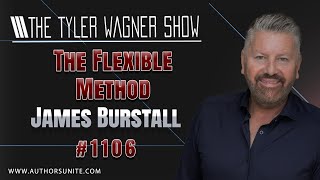
In this episode of The Tyler Wagner Show, host Tyler Wagner interviews UK‑based TV and film producer James Burstall, CEO of an independent production group with offices in London, Liverpool, Glasgow, New York, Los Angeles and Oklahoma. Burstall recounts his unconventional career trajectory—from teenage theatre enthusiast, to a low‑paid internship at a Paris‑based magazine, to editorial assistant roles at Condé Nast (Vogue, Vanity Fair, Traveler), to a stint at the Daily Mail, and finally to TV production. He explains how he pivoted into television after an executive offered him a reduced salary to move to Manchester, emphasizing the importance of hustle and learning on the job. The conversation moves to the breadth of his company’s output (reality, documentary, lifestyle, scripted drama, science & technology) and highlights flagship formats such as The Masked Singer, House Hunters International, and the UK version of Cash in the Attic. He shares a major failure – a costly, talent‑starved reality series in Washington, DC – and a major success – the globally‑aired House Hunters International and a children’s AI‑drama that spawned award‑winning seasons. Burstall then delves into his crisis‑management framework, the “Flexible Method,” which he codified in the bestseller The Flexible Method: Prepare to Prosper in the Next Global Crisis. He describes how the 2009 credit‑crunch forced him to protect staff, re‑skill employees, and seek unconventional revenue (e.g., CBBC children’s drama). He outlines the 16 lesson structure of the book, citing interviews with 20 leaders across sectors, and tells the story of Oklahoma City Mayor David Holt’s decisive, data‑driven COVID response as a case study. The interview also touches on media bias, with Burstall noting that most outlets serve vested interests and urging consumers to seek multiple sources. He offers practical advice for aspiring creators and authors: hustle, accumulate diverse experience, build an “arsenal” of skills, be authentic, and treat a business as a collective of people. Finally, he walks through the book‑writing process—initial concept, agent outreach, multiple revisions, publisher selection (Hachette vs. academic press), and the logistical challenges of simultaneous UK/US releases—providing concrete takeaways for anyone looking to publish. Overall, the episode blends personal narrative, industry insight, crisis‑leadership theory, and actionable guidance for media professionals and entrepreneurs.
Chapters
All right, everyone, welcome back to another episode. Today we have James Burstall with us. So welcome to the show, man.
Hey, it's great to be with you, Tyler.
I know that you are in, I think it's South America, right? Yes.
Yeah, down in Colombia.
And I'm in London.
So it's great to be conversing with you. It's 10 PM over here.
And I think it's like early, early evening for you.
But I love the fact that we now live on Zoom and it's possible to have these incredible conversations about ideas and about creativity all across the planet. There is a real connectivity that's kind of kicked off in the last— it's kind of COVID that's kind of forced us to jump 10 years into the future. So I'm delighted to be here with you, Tyler Wagner.
No, I'm grateful to have you here, man. I couldn't agree more. And I always tell people the podcast, because I have many different businesses and stuff, but the podcast is something where I'm like, when I'm 80, I could see myself still doing this. And what's cool is by that time it'll be like, you know, with VR and every— it'll actually feel like we're in— I think that's actually already possible. It's just not out to the public yet, but we could be in the same room almost. That's what it'll feel like. So we'll do another one when technology catches up. But just to start us off, if you can just tell us a little bit more about you and what you do.
So my name is James Bercow and I'm chief executive of an independent production group. We make TV and movies and we are based in London and we have an office in Liverpool and in Glasgow in the UK and an office in New York and another one in Oklahoma. And our American hub is in Los Angeles and we produce shows across all the genres. So everything from documentary to reality to lifestyle, We do quite a lot of science and technology programming, some adventure programs, and also scripted drama. So we do some big scripted thrillers and more family entertainment and a whole variety. And the big show we've got on air right now in the UK is called The Masked Singer. There's a big version of it on Fox in the US, which is a big shiny floor entertainment show with crazy celebs wearing outrageous costumes, and you have to try and guess who they are. So, so I love the fact that, you know, we are a very diversified group. We are 50% US, 50% UK, but actually we sell our shows to 167 countries all around the world. You know, the media is a truly globalized business now.
Of course. Well, I get— you probably get this a lot, but I'm just super curious. My first question for you, like, how did you get in? Because it's like so much accomplishment and like I would say probably one of the hardest industries to get into. So like, what was the start of all— like, I guess my question, let's actually start a little earlier and then we'll get there. So middle school, did you foresee yourself doing any of this? And then after that, what were you doing before this? And then how did you get it? So 3 questions in there. We'll start it off the top.
Yeah. Okay. When I was a teenager, I did not think I was going to do this at all. I did think I was going to be a— probably a theater director because I was really into drama. So I took a bunch of theater shows both at school and then later on when I went to university to all sorts of festivals. There's a huge show, a huge festival called the Edinburgh Festival in the UK, which has got like, you know, thousands of, you know, hungry, ambitious drama students trying to get their break. So I did a whole bunch of that and then I got to the end of my college years, you know, age 20, 21. And I thought, you know what, I'm not going to make a career out of Working in the theater, it's very tantalizing, but it's really tough to make a living. And I thought then maybe I'd go into journalism. So I did what I always do, and I always recommend people, and you know, we're going to be talking about books later. If you don't ask, you don't get. You have to hustle, hustle, hustle. So there I was in my last year at university, and I wrote to everybody to try and get into journalism. And, um, I've always had a very strong connection between the US and the UK. My, my big sister lives in New York. I've got 3 nephews and nieces in New York. I've got family in America. And, uh, one of the places I wrote to was this publication called Passion, uh, which was an American magazine based in Paris. It's a bit like Time Out, which you might know now. And they said, well, yes, we can offer you basically, you know, a job to come and make coffee for like, you know, no money. But, you know, you'll break your teeth. And I was like, well, hell, you know, why not move to Paris? So I moved to Paris and the day I arrived in Paris, the editor came out and said, look, it's great that you've arrived.
There's me with hope in my heart, right? I've just left college. It's my first job. He said, look, I'm really sorry, but we're going bankrupt. Basically, all the senior editors are leaving. But we don't want to give up. So there were like a handful of interns and some of them actually have gone on to become quite successful people. And they said, look, can you help us put this magazine together?
It's a weekly publication.
We're like, well, of course. Can you take the photographs? Can you find the stories? Can you interview the celebrities?
Can you do the layout?
Can you do the press? Can you send the publication to the printer? I haven't got a clue how to do any of that stuff. But I'm game. So I did that for a few months and earned next to nothing, but I was doing other bar jobs and stuff on the side like you do when you're trying to make a, get your break.
And then Condé Nast Publications, Vogue, Vanity Fair, Traveler, they were opening an office in Paris and they wanted, you know, basically a young type like me who spoke, you know, some foreign languages. I do speak French, German, And they said, you know, do you want a job as an editorial assistant? So I was like, well, of course. So I in fact then went to work for these incredible publications out of New York, but based in Paris still. So I worked for Anna Wintour, you know, incredible powerhouse, Tina Brown, you know, Vanity Fair, the absolute goddess of journalism in New York at that time. This is in the late '80s, early '90s. And, um, and Harold Evans, again, another absolute godfather of journalism, who was launching Condé Nast Traveler, which has now become obviously, you know, the definitive go-to travel magazine on the planet. So, um, I went and I worked for those guys for a few years, um, and it was amazing, you know, learning curve, because, you know, you work for those people who probably had absolutely no idea who I was. I was this junior, you know, editorial assistant in Paris, but I was doing very interesting work, everything from, you know, researching a story about Gorbachev through to doing a photo shoot with Helmut Newton and everything else in between. So, you know, you're like when you're in your early 20s, you're willing to try everything and anything. So I did that for a little while and then I thought, actually, I can't stay in Paris. I don't want to be on the end of the telephone just kind of submitting copy that somebody else edits over which I have no control. I need to be in head office. So I applied for a bunch of jobs in New York and a bunch of jobs in London, and I happened to get one in London. So I came back to London, worked again in magazines and then newspapers, daily newspapers, where I learned to write 1,000 words a day. I actually worked for a pretty not a very nice tabloid newspaper called the Daily Mail, which is pretty, pretty right-wing and actually quite racist. But they taught me to write 1,000 words a day and paid me good money. And then I did that for a while and then I got a bit fed up of doing black on white. And then I looked again, you know, if you don't ask, you don't get, looked around for maybe getting to TV, which could be more, you know, audiovisual and light and sound and music and working in a team.
And this very kind of crazy woman executive producer who had quite a kind of an eye for talent said, look, I'll cut your salary in three, I'll pay you one third, move to Manchester, which is a really cool, it's a sort of Baltimore of UK, so like a real cool artsy scene, but a little bit rough around the edges, and I'll chop your salary in three, will you come and move into TV?
Anyway, the rest is history. So here I am years later running a TV production company. So it was a long and winding road at the beginning, but hey, you know, if you don't ask, you don't get, and you You got to hustle, hustle, hustle, hustle.
Of course. Yeah. No, I mean, it sounds— it reminds me of— I mean, I'm 32 now, but it reminds me of when I was in my younger 20s, like, just very similar. And I think just one thing I want to highlight here for the listeners is that a lot of people, I think they— when they get out of college or even if they don't go to college, they're more focused on the money than the learning in beginning. And I think the learning is actually the most valuable. And like, even though that that company that was going, your first one you said that was going bankrupt, that was actually probably a blessing for you because you then, like, they literally gave you all the jobs that all these executives maybe would be doing or like all these specialists and then you were doing it all. So even though the company was going bankrupt, so maybe not really a future there, you learned so much and, you know, that's just, it's so valuable. So I don't know.
You know the expression, you know the expression, a watched pot never boils. You know the expression?
No, no, I don't.
It's probably sort of medieval English or something.
But anyway, the concept is, if there's a pot on the stove and you're glued to it, it will never boil.
What you must do is turn away and go do something completely different.
And lo and behold, you'll come back a minute or three later and there it will be bubbling away. So to your point, if you focus on the money, In my opinion, the money will not come. Yeah, what you need to do is go and focus on— and for me, it's going to focus on the creative. And I'm doing this now, you know, I'm in my 50s. I've been doing— running a production company now for 20 years, 30 years nearly. And here we are again, coming through COVID and prior to that, credit crunch. And then, you know, challenges now with inflation and interest rates going through the roof and there's, you know, the terrible strikes in our industry and actors and writers, which has basically held up everything for the last year. And I've been saying to my team, you know, we're planning 2024 now and we're all in agreement. If we focus on the money, we won't make money. What we have to do is what we are really good at is focus on the creative, be innovative, make sure that the A-list talent in the world know that they want to come and work with us, come up with great ideas, be imaginative, think outside the box, come up with something that no one else has thought of, and then deliver something really exceptional. And you know what? We've done that for many, many years. And when you do that and you're really passionate and you put your heart and soul into something that you really believe in, the money will follow.
100%. That is how it works from my experience as well. So here, I'm curious on this. So what has so far with your company, and maybe we can stick to TV shows, what has been your biggest failure with a show that maybe obviously everyone you start you would think would be a success? What's been the biggest? And maybe failure is not the right, but just maybe it didn't work out. And then what's been the biggest success? Just curious on both sides of there.
Well, one of our biggest successes is House Hunters International, which is on TV every pretty much every night on HGTV in the US. It's a smaller channel, but it's much loved and millions of people watch it every day, not only in the US but all around the world. And I'm very proud of that show for a number of reasons. One, because it is an appointment to view, you know, pretty much every night. It makes people feel good. It's very aspirational because it's about imagining yourself going on a trip and going and living in some different part of the planet. And also it is very highly regarded, that show, because it's very diverse. We work really hard to make sure that in that show we represent the whole of American society. Whether it's, you know, people from the Midwest or mixed-race couples or, you know, single parents or gay couples or trans people, whatever it is, we cast it in a way to reflect American society and we never make a deal of it. You know, it's completely irrelevant whether it's a lesbian couple or a single father or just somebody who doesn't want to marry at all.
You know, all of these things are, you know, options of American society, right?
So I love the fact that that show is a very, very entertaining lifestyle show and it's very aspirational. And it also truly reflects the American society that, you know, we live in in the world right now. It doesn't make a big deal out of it, which for me is, you know, a cool way of doing things. So I'm very proud of that. I'm very proud of that show. I mean, listen, over the years, of course, we've had, you know, some challenges. I think one of the most difficult shows was when we were first— we, you know, we broke out in the UK. That's when we got our first big break back in 2001. And fairly shortly afterwards, we were commissioned to make a show in the US and we were told to go and produce this. It's a long-running reality show in Washington, DC, which is a wonderful city. But actually, Washington, DC is in my industry, TV and film, is famous for politics and natural history. For sure, it does not have producers that make reality TV. And we would agree. We were green, we didn't know that. And we took the gig and it was a 50-episode series. And as soon as we got to DC, we realized that there was no production talent on the ground. This was admittedly in the mid-'00s, like 2005. So we had to fly everybody in from New York and LA and it cost an absolute arm and a leg.
Oh wow, yeah.
So, you know, the will was there.
We wanted to produce this show. For our clients who wanted it to come out of DC, which, as I say, I really love as a city. But actually, the talent was not there. It was all in New York and LA. So actually, when we, when we finished that project, my next show was a show called Cash in the Attic, which was a big hit on the BBC. And HGTV, who were quite a small network at that time in Tennessee, commissioned it and said, listen, you know, HGTV really wants to evolve as a network. We want to become more diverse. We want to more truly reflect the American society, etc. Would you consider doing it out of the Tri-State? Area in New York, and you can cast it in a way so that it's more, you know, people of different colors and different backgrounds and give just a little bit more of an edge. Didn't want to go too crazy, but just make it a little bit more, bit more real, if you like. So on the back of that, we moved our entire outfit to New York and it was probably the best thing we ever did, frankly, because we now have a very successful, long-running business in New York.
So I have so many questions. I'm trying to order them in my mind. So I want to talk about your book, but just before that, two different angles to this is if somebody wanted to create a successful TV show or, or even like pitch an idea, like what is the process I guess you would go through? And then so just like a lens for, I guess like a person But then if you are an author, is there a specific way of going about that? Or like, what, what do you recommend to become successful in the industry? Because I think it's like, I just think it's so difficult. And now I guess, you know, you have YouTube, so if you want to try to do it on your own without the help and getting on like these major networks, but if you did want to go the route on the major networks, you know, what would that look like? Because they get so many pitches, I bet, you know, it's just like, it's got to be really hard.
Yeah, it is. It is a complete myth to imagine that you can just come up with a great idea and be an overnight success, even on TikTok. And, you know, one of our major stars who works in my group is called Aaron Hines. He is a major star on TikTok, but he didn't— one, he didn't do it from nothing. He did come up with an original great idea, but he is a complete grafter. He is a workhorse. He puts in the detail and the hours. And all the big stars, you know, do you— do we honestly think that someone like Madonna has not put in millions of hours to becoming a huge hit? People say, you know, Posh and David Beckham, you know, oh, you know, they just kind of swan in and swan out and they just you know, go around looking glamorous, drinking champagne and paid millions.
Those people, you know, they work really, really hard.
So to your point, to get a TV show away, you can't just walk in a room and sell it. You need to get your chops. You need to get your expertise. You need to get your training, your stripes. You know, I put in, I put in the hours. That magazine at the beginning, you know, making tea on a reception and then learning how to write and then learning how to put a story together and then learning how to make films and making mistakes along the way. And I worked for 10 different production companies, including Discovery and ITV, a big international network based out of London, and the BBC. I worked for 10 different companies in my— from my, you know, mid-20s to my early 30s. And each of those experiences was incredibly useful. I learned a lot and I learned how to do business from many of those because they all had strengths. And I also learned how not to do business because it's very easy to think, oh, I've got all the, you know, I'm the big I am, I can do this. But actually, business is about people. It requires a lot of emotional intelligence. It's not a profit and loss. The money is important, of course, and we're not charities. We're doing it because we want to make money. But actually, it's about people and it's about strategic steps. And I'm a big advocate for training. I do a lot of training on myself. I just recently just finished a course at MIT about AI. I think, you know, you want to be constantly learning. You want to be constantly building up your resume, constantly building up your weapons, your armory, if you like. Because the world is now so competitive and the people that make it, there might be the odd one that breaks through, that just comes up with something crazy and gets paid a few million. They won't last. The ones that last have got real depth. They've got history, they've got roots, and they've got something to fall back on. Because in certainly, you know, my expertise is obviously TV and film. But it is an ocean full of sharks and we are constantly putting out battles and dealing with difficult things and talent that is freaking out. And then, you know, a hurricane strikes or war in Ukraine, you know, terrible things happen all the time. How do we navigate through that? Well, you need experience. And, you know, of course you build experience the older you get. So there are many advantages to becoming more experienced. But even early on in your 20s and in your early 30s, I really, really believe that the people who will make it in life are the people that are detail-oriented and make sure that they build up a big arsenal of weapons on their back. So they've got lots of materials, lots of tools to use when difficult things happen, and then you can find a way.
Absolutely. And okay, this is something I was kind of afraid to ask. So if you don't want to answer this, you don't have to. That's probably a funny preface. But the— and we don't have to go deeper into that specific situation, but I just feel like you might have some insight on this. So the thing that you had mentioned with the Daily Mail about the right wing and that stuff, I'm just curious on your thoughts on like how companies or these media outlets become like skewed in certain ways, you know what I mean? Like it's like a lot of these companies in my mind, I would think like, let's just say CNN, Fox, Daily Mail or whatever it is. You know, they start out with like one or a few people and they're just trying to share the news, I guess. And maybe I'm wrong on this thinking, but and then as it grows, do you think it's like the founders or the boards that are like coming from above and like having all the reporters and stuff skew everything to a political right or like, I don't know, I'm just— do you have any insight on like how that happens? Because it's so obvious that some channels are one way and some are the other, even though they all say We're not biased, we're just giving the news. So I don't know, I figured maybe you have insight on like—
Yeah, I, of course, quite a lot of the media is very skewed. And there is a lot of money at stake in the world. And there are vested interests, you know, whether it's vested interests in the fossil fuel industry, or vested interests in the UK in Brexit and getting out of the European Union. And there are very many people who have huge amounts of money. Some of it is stashed away in tax havens in the Caribbean and the Cayman Islands and elsewhere around the planet and Panama. And the establishment wants to protect that money. Well, how do you do that? You make sure you put messaging out that promotes a certain political agenda. And how best to do that? Well, you own a TV network or you own a newspaper or you own a digital platform. So yeah, I mean, I know from experience, I am a journalist by training and I've got a few, you know, years under my belt. I know that of course much of the media is profoundly skewed because it's promoting a specific agenda for people with money.
Yeah, it's so unfortunate because when you— when I think about it, uh, because I'm— I feel like I'm a very curious person. It's part of the reason I do the podcast. I've done over 2,000 interviews now, and it's like my favorite thing to do. So I think about somebody who goes into journalism, they're probably, you know, pretty curious person. They want to learn and just discover things. And then I guess it's like you start out, it's all in just in that fun, curious spirit, But then from the top, you discover maybe a year or two down the road that everything you're reporting on, maybe not everything, but some, is always coming with an agenda or an angle. So it's got to be weird. And you may be better off—
You have to pick and choose. You have to pick and choose very carefully what your news outlets. And to be honest, I subscribe to multiple different news outlets. I regularly read the Washington Post, the New York Times, the LA Times. I listen and watch CNN, Sky News in the UK, Channel 4 in the UK, and then a variety of other publications and digital platforms, because actually none of them is necessarily certain about the truth. You know, what is the truth, especially now in this kind of post-truth world that we're supposed to live in? So as, you know, as a sentient adult who, you know, I have got a strong social conscience, I try to do my best in life. I want to get a range of views in order to be able to try and find in the middle ground, where do I, where do I really think the truth sits? And where do I, you know, where do I want to place my confidence? And you can't rely on any one platform to give you that information, because they are all skewed.
Yeah, uh, so I want to talk about your book now. Just one last thing, because it just popped in my head. One thing I heard Denzel— and I don't know if this was his original quote— but Denzel Washington, I heard him say, he's like, you're either misinformed or uninformed.
That's what he said.
And I was like, ah, that's kind of a sad truth, kind of.
Yes, I would add to that, you can inform yourself by having a broad range and listening carefully.
No, I agree. I think that is the best way to do it. So, so then when we— when COVID happened, I think you said that's when— I think this was before we hit record, but that's when you had decided to write your book. Is that— that's accurate? It's called The Flexible Method.
Yes, the book is called— I'll give it a little plug. It's available on Amazon. It's a bestseller, actually, on Amazon UK and US. The Flexible Method. And the subtitle is Prepare to Prosper in the Next Global Crisis. So it's actually a very optimistic book. I'm no doom monger, quite the opposite. I'm a very optimistic man. So my group, we actually started this methodology, the flexible method, at the time of the credit crunch, when, you know, back in 2009, we were confronted with this kind of existential threat. Advertising revenues collapsed. It looked like the whole of capitalism was about to collapse, let alone my little production company. And we had to think very, very carefully, well, how are we going to get through a period of potentially 6 or 12 months of no commissioning, no, no work in my industry? Because when advertising revenues collapse, the commercial channels, you know, most of the networks in the US are commercial, many of them in the UK are as well. When they have no income from advertising, they have no money to commission programs. So we're not going to work. So Hence, we were like, goodness me, what are we going to do to survive? So what I did back in 2009 is I brought my people into a room and I'd read a very interesting article that Richard Branson, the entrepreneur, had written, you know, Virgin Atlantic entrepreneur. He had said, is in a crisis, the first thing to do is do not let your people go. You may need to temporarily renegotiate contracts. People might need to go part-time, or they might even need to sort of temporarily change doing one job to do a different job, whatever is required. But do not let your people go. And I took that to heart, and I called 40 of my people in a room on like the 1st of January 2009, I think it was. And I said, listen, we are going to protect your jobs. We're not going to let you go. But what we will not do for the next few months is bring in any freelancers. So it was painful for freelancers, but the people who were in full-time employment, we like, we are going to ask you to do two things. We're going to ask you to step down a notch. So if you're a showrunner, we're going to ask you to be a producer. If you're a producer, we might ask you to go out in the field and become a director in the field, or we might ask you to go in the edit and edit programs because we had some long-running shows which were continuing. And we're also going to ask you to roll up your sleeves and be 25% more creative. So we've got to come up with new ideas. We've got to find new clients. There are some clients out there who do have money and we're going to have to think laterally outside the box and come up with unexpected revenue streams. And you know what? Because one, I'd call people into the room and I was being authentic and they knew that I cared for them. And two, I was being honest and saying we haven't got all the solutions. But we have got your back and we want you to stay with us even in these terrible times. We want you to stay with us. People were like, you know what, I'll get out there in the field, I'll get back in the edit, I'll do whatever is required because I know that the company cares for me. You know, what is a company? A company is a collective of people. And they did roll up their sleeves and they came up with incredible ideas. And for example, CBBC is the children's part of BBC, and we'd always been quite snobby about making kids programs. We're like, well, that's not really what we do. We do grown-up primetime stuff. But actually CBBC, because it's not a commercial channel, it's funded by the government, not by advertising. They did have money. So we went to them and said, look, can we come up with some drama, some scripted ideas aimed at kids? And they were like, that's not really what you do. It's like, no, it isn't. So we came up with a few ideas. We went back in and said, here are 3 ideas, and they rejected them all.
Because they said, no, that's really not going to work. So, okay, back to the drawing board.
So we went back to the drawing board and then we came up with another idea. One of my team producer, brilliant guy, came up with this idea about an artificial intelligence girl who is born with no history in the middle of a suburban town, and she's born into a family and she's 13 years old. So she's entering puberty as a young adolescent, but she has no history because she's an artificial intelligence. And it became a huge hit and it went on to win multiple awards and it turned into multiple seasons. And in fact, the actor Poppy has become a big star. And on the back of that, we started developing reality shows for kids and arguably The Masked Singer. You know, it's a big family entertainment show which kids absolutely love. We were one of the first to spot that show when it came out in South Korea and we brought it back to the UK. And, you know, we had credentials making shows for families, including children. So arguably that very big decision in 2009 that was totally out of our comfort zone has now, you know, 14 years later led to a very, very successful new revenue stream.
That is awesome. I couldn't agree with that. I agree with everything you just like. I think a lot of times people don't realize, like, they just view a business as a business. But like you said, what is a business? It's a collective of people. And you got to remember that, like, there's people behind the business or in the business, however you want to look at it. So two different angles here. So one is, so I think you said to before you interviewed, how many people did you interview for the book?
It's about 20.
20. And then they each share— is it in this way that they each share their stories of how they got through these times? Okay, gotcha. Maybe just for fun, is there one of the stories in the book— and I'm sure they all have equal value to you, so anybody of the authors that's listening to this, he loves you all the same— but is there any that like stands out to you that you would wouldn't mind sharing on the podcast?
Sure. I mean, the book is broken down into 16 lessons, uh, which are very clear and they're all tried and tested. We did them all over a number of different occasions, the credit crunch and COVID and also the wildfires in California and, um, Hurricane Sandy and recessions and even way back to 9/11. Um, so they, you know, we cover many different crises. The lessons are very clear-cut. They are all tried and tested, and they are not easy. Some of them are really quite painful and difficult, but they do work. And I wanted to put it in writing so that people could have a manual. So when the next crisis comes, and they're kind of coming thick and fast all the time, I hope people will just have this book available, and it's there, and there's stuff in there that people I hope will find practical and useful. I wanted it to be— I mean, I've used my, my company, obviously, which is TV and film, as a particular template because actually the independent production sector is— it's very lean and mean. We are used to running on tight margins. We are very good at pivoting. When something doesn't work, we drop it and we move on. And that kind of— that flexible mindset is absolutely critical. You've got to be willing to try different things. And if something doesn't work, move on, move on quick. And I do think some bigger companies would be well advised to, to build a culture of that flexible mindset. And I talk about that in the book. I also have interviewed 20 different leaders from different industries because I wanted the book to be as broad as possible. Yeah, there's some stories about media, some of them which are quite fun, my, my business, my industry, but I also wanted to include politics and hospitality and gyms and finance and law and medicine and farming even, because all sectors have been hit by crises in different ways. And there are very inspiring leaders in each. And if I had to pick one, I mean, there is one incredible man who is, he's just 40, and he is the first Native American mayor in the US. And he is called David Holt, and he's in Oklahoma City. And one of my chapters is communicate, communicate, communicate, because it's very important in a crisis that as a leader you speak with authenticity and you must speak regularly, not too much. I do not believe in oversharing. You do have to hold a position. You have to give people faith and confidence, but at the same time, boosterism and saying, oh, it's all going to be fine, don't worry about it. That doesn't work either. You can very quickly lose credibility. And, you know, society will collapse if you give the bullshit. Excuse my language. No, no. So David Holt holds this very important position in Oklahoma City, which is a very interesting, new, burgeoning American city. It's really growing fast. There are some very exciting tech entrepreneurs moving there from the coasts. There's a whole bunch of different industries and it's very, very diverse mix of people. And it's quite young. It's getting younger, actually. David felt very strongly that despite the fact that he was in the state of Oklahoma, where the governor denied that COVID basically even existed, he felt strongly that his particular population in Oklahoma City was going to be vulnerable. And that it was his responsibility for people who had money and people who didn't have money to do lockdowns, to shut down bars, shut down clubs, enforce lockdown, enforce the 2-meter rule, shelter from home, put some pretty stringent measures in place, which was totally contrary to what the state was doing. And he started from day one talking in a very authentic way, saying, I've got your back. I don't have all the answers. I'm listening carefully to the science. I've got my team around me. We're talking on a regular basis. And little by little, we will come up with solutions for you, which we hope will benefit you all and us all and help get us all through this. And that built, just through action, a very strong sense of community and belonging and that the leadership were protecting their people. And it's a terrible way to evaluate success, but it's compelling. The death rate, the fatality rate in Oklahoma City, because of those lockdowns and those stringent measures and that very, very clear messaging from the top, the fatality rate was one of the lowest in the US. He protected his people. And the first job of our politicians is to protect the lives of our people. That's why we put them there. So I was really compelled by this man who stood up in the face of— he's a Republican, by the way, I forgot to mention that he's a Republican. So he stood up in the face of his leadership, both on a national level and in a local state level. And he thought, I've got to do what my heart says because I've got to protect my people. That's my job. And he acted with impunity and with conviction and moderation, and he saved thousands and thousands of lives. Now that, for me, that says everything. I love that story and that, you know, that man, you know, respect.
Yeah, that's incredible.
Wow.
Um, okay, that's awesome. So yeah, that's, that's only 2% of the book or 1%. So that's definitely— that's awesome. I guess one of the last questions I have for you is on the— because a lot of our listeners are aspiring authors. For you, like, what was the process like on the creating of the book, like writing of the book, the publishing, and then I guess marketing? Obviously you're doing some podcasts and stuff, but just that process, because I know it would be helpful for our audience.
I'd just like to go back super briefly to the beginning of my writing career. I mean, I told you about me doing journalism. I did sort of dabble in fiction in my 20s. I was working as a freelancer and, you know, I love fiction. So I gave it a shot and I wrote my first book in my mid-20s and I sent it to an agent who really liked it. And we got interest from Curtis Brown, who are a big agent, a big publishing house. And they said to me, listen, we like the book, you know, you can clearly write. But there's a, there was a, there was a magical element in the book which they did not like. And it was kind of magical fiction, if you like. And I was in love with that element. And I was hotheaded and 25 or something. And I was like, what do they know? I'm not going to change it.
I love that. So I didn't get published, but I sort of hung up that thought. And then I went off and I became a TV producer and forgot about it for a long time.
And then my sister, you know, 10 years ago when she was, I guess, in her mid-30s, she similarly wrote fiction and took it to Random House. Big publishing house. And they said, look, we, you know, we know you've done a nice job and you can definitely write, but we're not going to make any commitments to you. And actually, there's one main character missing throughout the whole book. You need to introduce this character and basically rewrite the whole thing, and we're going to give you no guarantees. And I have to say, hats off, because with no guarantees, she went away and she spent nearly a year rewriting the entire book book on a wing and a prayer. And she introduced a new character and obviously changed every single scene and every single chapter. And I mean, it's a huge amount of work with no obligation from anybody to do anything with it. And you know what? They came back and they said, we love it and we're going to give you a 3-book deal.
Wow, that's so cool.
So that said to me, I mean, I need to learn the hard way. And then I listened to, you know, someone close to me and what they And, and, you know, trust the editors, trust the publishers. They know what they're talking about. And I did have a similar experience. So when, when I came around to writing this book, a friend of mine was coming out of COVID back in 20— end of 2020. He said to me, look, why don't you put down your learning? Because it's pretty impressive what you and your team have been doing. I was like, okay, well, that might be useful. So I did, um, start to map out what these 16 chapters might look like. And I wrote 3— I did write 3 sample chapters, which is a lot of work, completely on spec, no guarantees. Um, and then I thought, right, I've got to find an agent. So I did a lot of ringing around trying to find a decent agent and spoke to quite a few. Um, and then this one agent who I really respected came back and said, um, you need to broaden the book out and you need to write another chapter which has got nothing to do with COVID whatsoever. So a fourth chapter, I was like, oh my God, really? Gotta write another bloody chapter and I've still got no commitment from anybody and I've gotta broaden it out. So I went away and I thought about it.
I thought, actually, I'm not gonna do the, I'm not gonna do what James did before and, you know, rubbish this man who's getting on my nerves and giving me grief. So I was like, oh, okay.
So I took myself off and I spent a couple of months thinking more broadly. And I wrote the fourth chapter. And then the agent said, okay, right now I'm ready to take it out. We took it out, we got two book offers. And on the back of that, I did another interesting experience. I spoke to this amazing professor I worked with at the business school at Oxford, because we had one offer from a publishing house in Oxford, which is slightly obviously very academic. And another, which is Hachette, which is much more broad, you know, big scale, it's like top 3 in the world, da da da. And this professor said to me, well, James, you know, what kind of author do you want to be? What does, where does, where does your voice sit? Do you want to be writing a book for, you know, 1,000 academics? Or do you want to be writing a book for many thousands of ordinary folk? I was like, well, you know, I wish the academics well, but that's really not my thing. I don't want to be an academic myself. I'm not interested in academia, but I do want to write a book that is useful to the broadest possible audience. I mean, that's my job. I'm a broadcaster in TV. I try and make shows for millions of people. That's, that's where, you know, that's my job. So we went with Hachette and I really liked the publisher there. She really connected with me. She had some really good ideas again, which I put into action. And then I'll tell you one extraordinary experience because it was going to be published UK and US. I, well, initially it was going to be simultaneously. This is weird about the book industry because, you know, I work where in a world of media where everything is like that, and, you know, you, you, you launch a movie in Hollywood, you know, 9:00 AM, and then it's immediate at 5:00 PM in London on the same day. Well, something drops on Netflix the same day all across the planet, whether you're in India or Australia or Oklahoma. But in book publishing, it's not the same. So they said to me, listen, you know, we're going to give you 4 months to write the book, James. It's like, really? 4 months? That it? And then we want 9 months to put it on the page. So my agent was like, really? What, 9 months put it on the page? And then we're going to launch it in the UK in March 2023, and then we need another 4 months before we can launch in the US. I was like, well, how can that be? 'Cause of course half my, half my world is in the US and it's like, well, you know, we basically have to put, they print it in, it's all written in American English. 'Cause you know, we do, we have a U in color, unlike you guys.
We understand each other, right? But there's a U somewhere in the mix.
Um, they, you know, they print all these books and then they put them on a ship and then they send them off all across the US into Amazon warehouses, and that takes another 4 months. It's like, this is antediluvian. It's like something in the Dark Ages. So of course, when the book launched in London on March 30th, all my American colleagues and friends were saying, come on, I want to read the book. So, well, you can, you can download the, the, the Audible or the podcast, uh, you know, the audiobook, but unfortunately, you know, the print book's not going to be arriving in the US for another 4 months. So I think, you know, there were thousands of books sitting on a you know, an ocean, you know, cargo ship somewhere in the middle of the Atlantic.
I mean, obviously it's like something out of the last century.
Eventually they did all arrive in the US and they were shipped off on trains, I guess, across the country, uh, into, um, Amazon warehouses. Because of course when people book them, they want to know they're going to get them next day, right? So it was distribution. And we launched July 18th in the US. I felt better then, though.
It's like, okay, thank goodness, right? So Now finally, the UK and the US have caught up with each other and we can get this one book out in the way it was always meant to be out, you know, cross-based countries at the same time.
No, dude, that's so funny. Yeah, no, the book world, it is interesting. And also with like printing and stuff, I know during COVID printing, there was a lot of issues that were going on. So yeah, it's an interesting industry. Well, hey, man, look, I absolutely loved this interview.
I—
the last thing I guess I want to say is if there's anything else you want to share that we didn't cover, please do. And then let people know everywhere they can stay in touch with you. The book, website, TV shows, you know, everything.
Well, thanks very much. I've really enjoyed that conversation too. Yeah, I hope you've got a feel. You know, I'm very collaborative. My work is all about collaboration, and I wrote the book to be purposeful. I wanted it to be out there in the big wide world so people could reach for it and find, I hope, some useful things in there. And it's also a two-way street. It's a dialogue. So I'm very active on LinkedIn. I love it when people write to me and I like to respond. And I, you know, I went also with Hachette because they want the book to have longevity and we need to keep updating it. They're going to be, you know, lots of people with bigger, better, more innovative ideas than I've covered in the book. And I want to hear about them. And I'd love to have that dialogue. So I would really invite invite your listeners to reach out to me on LinkedIn and share. I want to hear feedback and also new ideas so that we can keep updating. We're all in this together.
Of course. No, that sounds great. And LinkedIn. So it's just James Burstall.
I got in there early.
Perfect.
No, I love it, man. And thank you again for coming on. I really appreciate it.
Thank you very much for your time.
More from Tyler


Catherine Nikkel : THE STORY EVERYONE HAS BUT HASN'T TOLD : The Tyler Wagner Show #1120



Scott Ritzheimer: Bring Predictable Success to your Organization | The Tyler Wagner Show #1115


Fred Moskowitz: A GUIDE TO GETTING STARTED WITH IN MORTGAGE NOTES | The Tyler Wagner Show #1113

Mark Podolsky: From Land Investor to Full Time Success How I Made $90,000 Cash in Real Estate


Mark Podolsky: How to achieve a 300% return on investment my foolproof strategy

Mark Podolsky: How to make passive income selling raw land the irresistible pricing strategy