Jeff Lerner: The Millionaire Shortcut | The Authors Unite Show #966
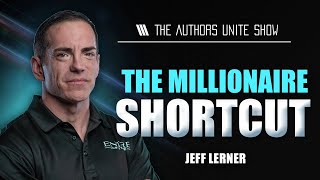
In this episode of the Authors Unite Show, host Tyler Wagner interviews entrepreneur Jeff Lerner. Lerner recounts his unconventional path: dropping out of high school at 16, becoming a gigging pianist, and learning that disciplined practice and marketable skills can replace traditional employment. He describes a series of early business experiments, culminating in a disastrous franchise restaurant venture that left him $495,000 in debt during the 2008 recession. Locked in his ex‑wife’s parents’ house, he turned to affiliate marketing, focusing on high‑ticket and subscription products rather than low‑ticket ClickBank offers, and paid off his debt in 18 months while scaling ad spend from $0 to $70,000 per month. Leveraging those skills, he built a digital agency that serviced over 10,000 small‑business clients, generated $30 million in sales, and was sold for multiple seven figures in 2018. He then founded the ENTRE Institute, a hybrid online education platform that blends university‑level structure with the “guru” model, offering a value‑ladder of courses, coaching, and accountability tools to over 60,000 students (projected 250,000). Lerner explains the Institute’s emphasis on automation, personal advisors, and rigorous tracking to ensure student execution. He shares his daily routine—waking at 3:30 am, gym, piano, family time, meetings—and his leadership philosophy of discipline, physical/personal/professional balance, and a mission to overhaul modern education. The conversation also touches on his upcoming book “The Millionaire Shortcut,” his view that wealth comes from monetizing skills rather than time, and promotional details for his Millionaire Secrets platform.
Chapters
All right everyone, welcome back to another episode of the Authors Unite show. Today we have Jeff Lerner. So welcome to the show, man.
So glad to be here, Tyler. Thanks for having me.
Of course, grateful to have you on. Um, so if you can start us off, just tell us a little bit more about you and what you do.
Sure. You want the 1-minute version or the 5-minute version?
5 minutes.
5 minutes. Oh, wow. You're giving me a lot of room to maneuver here. Cool. So yeah, then I'll dig a little deeper. So I would say what you need to know about me goes back to my teens. When I was 16, I had my one summer job like you do when you're in high school. And it was, you know, it was super productive and valuable because it only took 3 weeks to get myself fired and teach myself that I have no stomach for job, like traditional employment, like a job where you show up, clock in, get told what to do, get told what to wear, get told how to be, and generally get told those things by someone who doesn't really seem to deserve their authority position. And, you know, and I've softened a little bit as I've gotten older, but I took a very like, you know, fundamental view of employment at that time. I was like, this sucks. I don't ever want to do that again. So what am I going to do? And I basically came up with this idea that, you know, because all teenagers are geniuses, right? So I had this genius idea that, oh, well, I should drop out of school and I should learn to play the piano because I know that I'm a decent musician. I used to play some guitar. I always been interested in the piano and pianists make the most money out of any working musician because they can play a gig by themselves. They don't have to split the money with like, they don't have to have a band. Especially if I learned to sing. So, that's what I did. I dropped out of high school. I told my parents, listen, school is training for jobs. I don't want a job so I don't want school. And you know, they probably tried to persuade me otherwise but in the end, they gave up and we're pretty cool about it. And they actually bought me a piano to practice on. So, I spent the next, better part of the next 4 years practicing piano like 10 hours a day and starting to get gigs. And you know, at first, it was gigging for food and then it was gigging for tips. And then it was actually, oh, somebody will pay me $100 to come play for 4 hours and kind of worked my way up from there. And that was really, it was really great because I learned 2 things. And these are 2 things that I'll share, you know, as a perspective that anybody can apply at any point in their life. One is if you sit down and just do the damn work really consistently for a long period of time, you can learn to master a very difficult thing. Piano is hard. Playing 88 keys in billions of permutations to make sound that speaks to people is not an easy thing to learn. And I got really, really good at it such that I was able to have a really good career as a professional pianist all through my 20s. The other thing I realized is that if you have skills, people will pay you for the skills rather than needing to lock you into traditional employment. And I learned both those lessons, you know, by the time I was 20. And that really teed up everything that I've done since. All through my 20s, I played, I was a gigging musician. And then in my early 20s, I started playing really high-end society gigs is what they called it. Basically means rich people having parties. And you know, I played in the homes of multiple billionaires and centimillionaires and CEOs of Fortune 500 companies. Houston, Texas, where I'm from is a It's called the energy capital of the world. So like everything from Enron to Exxon, Royal Dutch Petroleum's US headquarters, British Petroleum's US headquarters are all in Houston. And so all these super rich energy executives, they have parties and I would get hired to play. And so I started like cornering these super rich people at their own parties and being like, yeah, I know I'm just a piano player, but I have bigger dreams and I don't like being poor. What'd you do? How'd you make all this money? And I figured out, they're virtually all entrepreneurs. Even the, you know, let's say the CFO at Enron whose house I played at, which is a bad example because he screwed up pretty bad. You know, he came out of an entrepreneurial background. And I just realized that the common denominator for all these people that had these extraordinary lives is they were entrepreneurs. So I decided, okay, I'm going to be a— I'm already kind of an entrepreneur as a musician. I create every day. I play jazz. I literally make it up as I go. So I could do that in business too, right? And I started a series of, I'll call them learning experiments. A lot of people around me called them failures. And I went through about 10 of them in my 20s. By the time I was in my late 20s, I had my biggest failure or my most, also my most valuable learning experience, which was I was able to borrow several hundred thousand dollars to open a couple of franchise restaurants. And this was right at 2007, so the Great Recession as they call it, the world collapsed, the bubble burst, and my restaurants folded along with everything else. And so at 29 years old in 2008, I was $495,000 in debt as a 20, you know, 29-year-old musician who could not go make more than $40,000 or $50,000 a year playing gigs. So I really had to figure out something, something different. And you know, on top of that, my wife at the time, she was fed up. She was done. She basically was leaving me. I got booted out of my apartment. And so it all kind of came to a head in late 2008. I was, I was actually living in my, I was still married at the time, but we were kind of in the process of splitting. I was living at her parents' house and I locked myself in a room. I was kind of embarrassed and I didn't really want to go see anyone. I didn't even want to go out and see her parents. So I literally just locked myself in the spare bedroom. And I started, you know, I spent what little money I had left to buy some online courses. And I started with affiliate marketing. And, you know, long story short, I was able to pay off $495,000 in debt in about 18 months with affiliate marketing. And that was, you know, as it turned out, that was a good start, but there was a lot more to be done and a lot more money to be made and a lot more to be accomplished. So I did that for 5 years. 2012, I decided to shift my focus and take these skills that I had developed in online lead generation and online sales funnels and building, you know, building list management and direct response copywriting, all the stuff that I'd learned to do. And I was like, let me go service businesses because they need all this stuff too. By 2012, 2013, you had all these small businesses who were like freaking out because their Yellow Pages ads didn't work anymore. They used to just run ads in the Yellow Pages, but now people are starting to do these like Google Map searches. And at the time they called it, now it's Google My Business. Before that it was Google Places. I think at one point it was just Google. I don't even remember what it's called, Google Local. And so these businesses were like clueless about how to deal with this new digital world. And so I took the skills and I started selling it to local businesses. And from 2013 to 2018, I built a team, a sales team, and we ended up signing up over 10,000 small business clients for various marketing services, including we had about 2,000, almost 2,500 businesses on some sort of subscription. So that was a great business. You know, we did about $30 million in sales in a little over 5 years. I got nominated or named twice to the Inc. 5000 and also learned about how to build an organization. A team. When I'd been affiliate marketer, I was kind of a one-man band. But from that, I really changed my life. I mean, everything changed. By the time 2018 came, I was able to sell my agency, sold it for multiple 7 figures. And I was 39 years old. And I was like, I can basically retire. You know, like I don't need that much. And I was like, what do I want to do? And I kind of looked back over the last 10 years of my life, you know, $10 million in affiliate marketing commissions, $30 million in digital agency sales. I had a few other businesses in between e-commerce stores and so forth. I was like, man, this internet, this digital economy is really powerful. If it could take a broke jazz musician and do that for him, it could do a lot for a lot of people. And so in 2018, I, like I said, I sold the agency and I started putting out content And I basically, it grew into a company that's now called ENTRE Institute. And we basically teach modern entrepreneurship to people that want to come learn how the new economy works and start their own business. And we had, frankly, it's blown up. We had 60,000 students last year and we're projecting to do about a quarter million students this year. For some perspective, we are enrolling students faster than every university in the state of California put together.
Good. Yeah, I'm glad to hear that.
Yeah, so it's, it's been a hell of a ride, man. And, and now I, I do shows and I get the message out and, and I'm super blessed. So here we are.
Oh, that's awesome. So the, um, and then I want to go to the affiliate marketing, but just for the ENTRE Institute, what does that look like? Like if a student enrolls, like how does it work?
Um, so, you know, we practice what we preach really well. It's, it's one of the nice things about ENTRE is you don't have to wonder if we know what we're doing because we've, in 2 years, we've grown one of the biggest and certainly the fastest-growing private education companies in the world. Like, we're good marketers, and our own company is proof of that. As far as what it looks like for students, you know, we use an ascent, a funnel model, a sales funnel model. We use what they call a value ladder, a product stack, ascension model, all the stuff that we teach. And so, people come in and we give them kind of trial courses where they can get their feet wet and decide if they like the culture and if they like me and they like the material. And so, you know, for $100 or less, somebody can kind of get started and get a taste of, you know, what I call the new economy marketing. It's not just internet marketing because like we'll also talk about modern ways to do real estate and there's more than just internet, but it's all new economy best practices, things that didn't exist 20 years ago. And so for less than $100, somebody can kind of get a taste and then people might invest in more advanced courses. They might invest in hands-on, you know, one-on-one coaching programs. We have an elite mastermind where people can work directly with me and it's, you know, it's not like high pressure selling or anything. It's a lot more like going to university and they say, okay, do you want to take a course? Do you want to get a bachelor's? Do Do you want to go all the way to a PhD? What do you want to focus on? Do you want to do engineering? Do you want to do medicine? Only, we only teach things that people can actually use to go make money and get control of their income. Because that's what I see is the biggest problem in this world is that you just, people don't have control of their income, which ultimately means they don't have control of their life. I'm a broke jazz musician. I dropped out of high school. But I want for nothing. Why? Because I have the skills that allow me to control my income.
So let's go to the affiliate marketing. I'm just curious because it seems like it clicked for you like pretty quickly. So like what, like what type of stuff were you selling? Like, or like how did, how did that work? Or were you using, uh, ClickBank?
No, I was not. And, and I have a lot of friends at ClickBank. I mean, the VP of business development at ClickBank is a guy that was on my show 6 months ago. And I had Robby Blanchard, who's the number one ClickBank marketer in the world, on my show a month ago. So like I have a lot of friends and a lot of love for ClickBank, but that just wasn't the direction that I went. I, the thing is I had, I'll call it the benefit at the time. It felt like the stress of major pressure and urgency. So I was $500,000 in debt and it was 2008. Where the banks were foreclosing on all this real estate. And there were people that were defaulting on their mortgages and getting foreclosure notices, but the bank wouldn't even come kick them out of their house for like a year because the banks were so backed up on bad debt, right? And so I knew that I had a window of time. Like in a normal circumstance, everything's going to collections. The lawyers are calling my house. And the bulk of the debt was actually to the United States Treasury because it was an SBA federally guaranteed loan. So effectively it was like It was the same as if I owed $300,000 worth of taxes, which is like a really bad deal, right? But because there was so much debt default happening in the country, I knew that I had more than the typical 90 days. And so I set myself a timeline of like 2 years. I figured if I can dig out of this in 2 years, I'll probably get out of it somewhat unscathed. So it was a kind of a unique scenario to say, okay, broke musician, internet marketing, half a million dollar, not even just a goal, but like a necessity and a 2-year timeline. Go. And so looking at that model and that set of circumstances, I just didn't see how I was going to be able to do that with ClickBank products. And you know, in general with like lower ticket, lower price point products that obviously pay smaller commissions. So I focused exclusively on either products that had some kind of a, you know, a value ladder up to the 4 or 5-figure price points where you could theoretically generate at least many hundreds, if not several thousand dollars worth of commissions off of individual transactions or individual customers. Or I looked at continuity subscription affiliate programs like either software or tools where I could build up a base of, you know, $1,000 or $2,000 a month in recurring income that could, you know, trail out for years. And those are the only two things that I marketed. And as far as the niches, you know, I gravitated specifically toward marketing education, a lot of education, marketing education and finance education. You know, if you're selling financial education products, you're typically selling to people who have money. And they have enough upside in the value of good financial information that it's worth it for them to spend a lot of money to get access to that. So, I was selling tickets to these like high net worth financial information education conferences where, you know, I could make several thousand dollars on a single ticket sale. But you think about it, for a guy that's got $10 million and he's looking for the best investment information, that conference might produce a return for him of a million dollars. So it's a, it's an easy customer to satisfy as long as you're promoting good products, and you can make a lot of money doing it. So that was my, my radar was finely tuned for those types of programs.
Gotcha. Okay, now how were you, how were you marketing them? Were you like reach— because you didn't really have an ad budget, did you?
Well, I did once I started making sales.
Okay, yeah, once you started.
Yeah, the first, so my income Pretty much tells the story. Like the first month I was putting out YouTube videos, I was writing blog posts. There was this thing back then called Squidoo. Oh yeah, I think I remember Squidoo, which is a Seth Godin actually created Squidoo.
Oh yeah, that's how I've— okay, got it. That's—
I knew I was making— and they call them Squidoo lenses. So I was making Squidoo lenses because they ranked really well. I was doing Ezine articles. Like it was a— there were some different things you did back then. I was even going into—
It was more organic then.
Yeah, and I would even go into like forums and I would make comments and I would leave my link in the signature and people, they had a different definition then of what spam is because it wasn't so saturated. If you did that then, it was like no big deal, but now you have 5,000 people all leaving their links in the comments and so they just don't let you do it anymore. But the strategy is the same, you just find where the gaps are and you go, you know, move into them. So I was doing all that stuff in the first month. I made like $110 and the second month I made like $1,100 and the third month I made like 2 grand, but then the fourth month I made like 8 grand and then, and now I have an ad budget, right? So then I go start running, I build a bridge page. I built my own, you know, self-liquidating offer kind of thing, or even just a free giveaway offer. I tested different things. And now I can go spend $3,000 or $4,000 a month on ads. So it went from $8,000 to like $20,000 to like $40,000 to like $70,000. And I remember in my 7th full month, I made $70,000 and was like, I can do this, man. I see the light. And I might've spent $20,000 on ads, but still I made $50,000. Like you can pay off $500,000 in debt in 2 years. As it turned out, I paid it off in 18 months. But I just, you know, I was working, you know, a lot of people, they hear this story and they want to go replicate it. Listen, like I was working 14 hours a day. I did not eat. I did not even put on normal clothes. I was in a bathrobe and wool slippers 14 hours a day. I showered once a week. I mean, my wife was already leaving me. What the hell did I care? I was, I was like the, I was like the Unabomber of affiliate marketing.
That's insane, man. And you're in her parents' house too, right? Yeah.
Yeah. They're like, what's that smell coming from the spare bedroom? Oh, that's just Jeff making money.
Dude, that's the best story ever, honestly. That's, uh, so, so I'm assuming obviously like you and her parents had at least a decent relationship.
Like, you know, there's, there's the surface relationship and there's the under the surface relationship. Her mom and I got along really well. Her dad and I, we were copacetic, but when I finally got to the point where I had actually made enough money, I'd paid off my debt, I could afford to live somewhere, and I was getting ready to move out, and he really let me have it. You know, he was like, because I was basically saying, I was like, you know, Mr. Whatever, I don't want to name names, but I'm like, you know, do you think there's any way you could like help me? Look, I fixed the problem, like I put out the fire, Maybe we could try again and like restore some harmony with my wife and like we could make this work. And like, would you be willing to help? And he looked at me and he's like, and by the way, this is one of the best things that ever happened to me because I've never forgot it and I've never stopped proving him so fucking wrong. He looked at me and he goes, you know, you want my help, but it's not my fault you were so arrogant that you thought you could just start businesses instead of getting a job. Okay. Now I know how you really feel. Go F yourself. I'll see you at the top of the mountain and I'll be waving down to you at the bottom. And I have never forgotten that.
Wow. Okay. And then I'm assuming too, you, this is now your ex-wife or—
Oh yeah. Yeah.
I was going to say.
We've been divorced for over a decade.
If that worked out now, like damn, that's incredible.
Oh yeah. I'm remarried now. I have 4 beautiful children. I have an amazing life and It's funny, the little things that fuel you. You know, I watched The Last Dance with Michael Jordan where— I don't know if you saw that documentary.
I haven't seen it, but I've heard of it.
Yeah. I mean, Jordan was a master at taking these little slights and turning them into fuel. And that, you know, that was just one. I don't tend to dwell on the negative, but for some reason that one's always lodged in my brain. Like, honestly, I hope you hear this.
We'll make sure to share it with him.
And I hope you hear how grateful I am that you gave me that fuel because I have— I've been proving been you wrong ever since.
So, you have, I was doing a little research on you prior to hopping on this interview with you and you give away this book like the fastest way to become a millionaire, The Millionaire Shortcut. So, what's that about? Because obviously, for people that want that, it's pretty appealing, I would say.
Yeah, it is. First of all, what it is, is a great piece of copywriting because I didn't promise you speed, I didn't promise you a result, I just said it's the fastest. I could say it's the fastest way to walk to Mars. It doesn't mean you'll be at Mars in 2 hours. Like it's still really hard. But what I'm giving you is my playbook for, you know, I have 12 years of experience now in the digital economy. I have 25 years experience as an entrepreneur. I dropped out and became self-sufficient at 16 years old. I'm 41. So that's a pretty good base of experience. And I've distilled from that, here truly are the pieces that get you the furthest, the fastest toward ultimately your financial goals. Now I tell people all the time, a million dollars, a million, you know, like $10 million is the new million dollars. Really? Like honestly, becoming a millionaire basically means you probably need to keep working and you can be more comfortably middle-class than you were before. Like you probably need 5 depending on where you live. Maybe 10, or you could argue to like really be good. I honestly think if you want to be like bulletproof, you need 50, but they haven't come up with a word for that. So I still just use the word millionaire. Yeah.
Yeah. No, no, I agree. I think, yeah, 50 to 100, I think is where you can kind of not think as much as long as your money's in the correct investment vehicles. Yeah. Um, but yeah, no, like I live down in Miami and Yeah, it's, it's nice, but it doesn't do it.
I mean, it's a great supplement if you have a million-dollar net worth and it's producing returns at 8%, that's roughly $6,500 a month in extra income. That certainly is a nice pad, but it doesn't mean you're free, and it certainly doesn't mean you're going to be able to leave a legacy to insulate your kids and your grandkids and from the crazy world that they're going to inherit.
So what is like the millionaire, I guess, without giving the whole thing away. So people still opt in for it, but what is kind of the shortcut in your mind?
I mean, the shortcut is don't try to get paid for a job. Don't try to get paid for time, try to get paid for skills. And you have to learn the right skills and the right skills are out there. And frankly, you don't need me to teach them to you. What you probably do need me for is to curate them and cut through all the noise. Because if you just go on YouTube and type in skills to become a millionaire, you know, have fun wading through that. Yeah, I actually know.
Yeah. So I want to, I want to talk about Onshore Institute, more of like the, the inner workings of it. So how many people did you say are working in it?
Uh, well, our team, we have about 100 and close to 150 Oh, okay.
We don't know that then. I thought you had said the amount of students, that's what you—
Yeah, 60,000 students we enrolled last year and we will more than quadruple that this year.
So, the 150, like, I guess, did you kind of, you modeled it kind of after a college in the sense of the structure, but it's online. Is that kind of accurate?
Yeah, yeah. I would say it's a hybrid of, you know, a traditional educational institution, a college, a university, coupled with more of the— and I hate this term, but as a business archetype, it's useful— like the online guru education model, more of like the Tai Lopez or the Dan Henry or the Sam Ovens, kind of, you know, Frank Kern. So, you take pieces of what they do, but we apply a university-level academic standard to it where it's not just like, oh, here's a course. There's a million online courses and there's a a landfill littered of bodies that have taken online courses and not gotten anywhere with it. So we wanted to uplevel it to more of a rigorous standardized kind of university type experience with support, advising, mentorship, a progressive track toward a goal. We measure competency along the way. We don't just make it a do-it-yourself free-for-all. So you take the guru education model, the university model, and you couple it with like a software and tools model where we don't just tell you all the stuff to do, we give you a ton of integrated tools that you can use to get results a lot faster. Stuff that I wish it had existed 12 years ago, it would have saved me, you know, 80% of my learning curve.
And is there kind of like accountability embedded in it? Like, is that—
we are— we have a ridiculous amount of accountability. That's pretty much the number one reason that we get results that nobody else does. Is because like you're just never alone.
Yeah. So how, and when you say that though, what is it like? Is there like trackers in there where people are actually like, you're forcing them to do the work or is it?
Yeah. So we have automation. We have like a pretty insane level of automation. And here's the thing, as I described this, people might think like, oh, this Jeff guy is really smart. Jeff was smart enough to do one thing. When I had this crazy vision, I went out and partnered with a brilliant operational, you know, integrative genius who's helped me develop a lot of this stuff. So I'm not, I'm telling you how awesome it is, but I'm not trying to take credit for all the awesomeness. But we have a really robust amount of automated support that's systematized and software-driven. So it's like reminders and like you said, trackers and notices like, hey, you haven't logged back in in 24 hours. What's the holdup? Is there a question? Here's a link, you know, blah, blah, blah. But then you also, every single student that comes into our ecosystem, even if they only spend like $39 is like our lowest point of entry, you still get assigned an advisor. Works with you to not only properly consume and assimilate the material that you're going through, but also if you wish to craft a plan of how you're going to progress through our curriculum moving forward, or frankly, how you're going to progress through any curriculum moving forward. Like if you want to become a professional video marketer, a professional affiliate marketer, a professional blogger, or a professional guy who runs Facebook ads, or a professional guy who creates your own courses, or whatever. We have an advisor that will help you structure the plan on how to do that for every single student. So that means we advised 60,000 students last year.
Yeah, see, that's— I think that's the main difference, and the accountability, because yeah, a lot of courses out there, you know, you buy the course and then it's like, all right, well Good luck with the course. Yeah.
I mean, I learned that way. I learned in a community of 40,000 people. And in 6 months, I was number 3 out of 40,000 partly because I am very good at self-directed learning. I learned how to do that with the piano. I know how to spend hours at a keyboard teaching myself because I learned that at the piano. It was a different type of keyboard. Partly because I'm just sort of uniquely whacked out in the brain and I know how to focus like that, partly because I was desperate and I was half a million dollars in debt and all my boats had already been burned, not by my own choice. Like there were a number of factors why I was the exception to the rule. But even from my very first experience in a community of 40,000 people where I was in the top 5 pretty quickly, I got to see the wreckage of the people that didn't make it.
So, where like future, I guess, and, you know, so like ENTRE Institute to me is like you're trying to kind of build the biggest entrepreneurial institute in the world. Is that kind of the goal?
I'll substitute best for biggest, although best may include being the biggest.
Oh yeah, yeah, yeah. That's fair. Okay. Gotcha.
Yeah. I mean, here's my vision is that someday, an 18-year-old kid finishes high school and they go to their parents with an acceptance letter from Harvard. Says, "Hey, I got into Harvard on a scholarship to study engineering. But you know, I just, in my heart of hearts, I just don't feel like that's for me. I think I want to go attend this ENTRE Institute thing instead." And the parents go, "Son or daughter, they're equally good opportunities. You go whichever way you want." That's sick.
Yeah, it should be that way, and it's really not out there. I mean, now it is because you have it, but like, it's the alternative for school before me learning about this, kind of what I would tell people is just YouTube, you know what I mean?
Like, like pretty much YouTube and a lot of figure it out yourself on your own.
Yeah, yeah, on your own, and it's completely different like paradigm, but Um, got it. Okay, so I guess as far as, um, other stuff outside of Entrepreneur Institute, like with that many people, 150 people, what is your— I always like to talk about routines and stuff. So how do you— how do routines and systems— so morning routine, what's that look like? And then also, how are you able to manage these 150 people? Like, how do you— how does that whole ecosystem work?
So It's interesting you say outside of ENTRE. There really is kind of no such thing. And I don't mean that I'm a workaholic and I work all the time, although I do work a lot. What I mean is culturally, emotionally, behaviorally, psychologically, I have done a lot more with ENTRE than just put great education. I have attempted in my heart of hearts to suffuse it with my belief system, my value set, and my habits. I am, call me neurotic, call me what you will. I have a, honestly, I might be slightly on the spectrum. Like I wouldn't deny it. I love my process. I love my routine. I get up at 3:30 in the morning. I prep my meals. I prep my vitamins. About half of them are gone, but here's the remainder of the little baggie. I'd get my meals prepped for the day. I get my coffee, I do my pre-workout, I do my branched-chain amino acids. I go to the gym for an hour. I jog to the office. I play piano for an hour. I jog back to the gym. I get in my car, I go home. I take my daughter to school. I come back home. I get my other daughter up out of bed. I spend 45 minutes with her. I get on calls or meetings. I start at 8 o'clock. I have my meetings in the mornings. I do my creative work or interviews in the afternoons. I get to the end of the day. I go home. I have my 2-hour block with my family, my wife, and my other kids, and like repeat every day. And hell, Hell upon you if you try to disrupt that agenda against my will. And people say, Jeff, how do you do it in 2 years? I mean, I started putting out free content in September 2018. I didn't sell my first course until June of 2019. In a year and a half, we were, again, I believe probably the fastest growing and maybe the biggest private education company in the world. This year, our budget, our targets are to do $100 million in sales. We have a vision of how to grow to a billion-dollar company. I will not be stopped. I will not be daunted. It will be done. Bet against me if you're a fool. Like, how do you do it, Jeff? Because I live the process. I do not budge on the process. Friends are kind of overrated to me. I have amazing relationships in my life. They're the people that I work with and my family. Like friends, distractions, poker night, bowling league, all of it, not interesting to me because changing the world is a lot more interesting than just entertaining myself. And so I've tried to bake into ENTRE this vision of what's possible for your life. Not when you learn some skills and make some money, blah, that's just not that interesting. That only serves one person. But when you establish your value in the world based on the service and the contribution that you have to others and your conviction and your discipline of how to live that out through a process that produces a compounding result over a longer period of time than in my experience most people are willing to sustain, Now we're talking about some cool shit. And that is the ethos of ENTRE. So when you come into ENTRE, the very first lesson is called the 3 P's of Excellence. And it goes physical, then personal, then professional. And I very unapologetically say that if you do not have your physical house in order, if you are not tending to the fuel cell that is your body, the one that you were issued in this world, and then your personal house in order, which are the relationships that you directly impact, where you have direct connection to people, that means your friends, your neighbors, your community, your parents, your kids, your family. If you don't have all that dialed in, what the hell right do you have to go say, I want to make $1 million? You're not even tending to the things in your own backyard and you want to go have a positive impact in the world that makes you rich. You're getting it backwards, man. Physical, then personal, then professional, filtered through discipline, routine, habit, consistent values, clarity of mission. That's like all the stuff we talk about. I don't even really care. You want to learn how to run a Facebook ad? Great. Like you said, go watch a YouTube video. You don't need me to tell you that. But what we do is we create an environment that promotes success and that calibrates the mind to actually receive the information and then do what most people don't do, which is properly go out and implement it strategically. And that's how we steer people toward a result. So, it's a lot more like the Navy SEALs than it is like college. College is a bunch of people running around in an environment that has a lot of great information and a lot of terrible habits. And that's why people get out of college and they don't know what to do with their lives. I'd rather focus on the environment. And that's kind of what makes ENTRE special. So, about the schedule and your routine, have you always kind of been, obviously you haven't always had that exact schedule, but have you been like that always or was there something that I would say that I've ebbed and flowed in my life, and the periods of my life that I feel really moved me forward and then I'm really proud of and that really have built a lot of confidence and self-worth are those periods when I was very rigorously disciplined. You know, Jocko Willink says it like freedom through discipline. And that's the time when I feel most free is the time when I'm most dialed in. And then I've had these periods of my life where I let it go and I I fall back. But what I found is, this is why I'm so emphatic about this. When I was just trying to do it for myself, because I thought it would make me a better, cooler, richer, handsomer person or whatever, I was inconsistent. But I have found a new level of drive in the last 3 years since I started ENTRE that a lot of people kind of marvel at, but it doesn't feel hard for me. Because I'm not really doing it for myself. I'm doing it because I recognize it as this is how you make the deposits into the account that compounds over time to equal massive impact in the world. And I think we have a giant problem in this world. I think we have an educational system. You know, I've done a ton of research on it. I have videos on my YouTube channel about the origins of the Western education system and factory-style education. And we are wrecking generation after generation after generation. And there is a schism in the world right now where culture and information and technology and the market, you know, how business works is going this way, but how we're educating children is going even further this way. We're trying to create little machines to go operate in a world that has less and less rules. Machines need rules. We're not teaching them how to think. We're just teaching them how to do. And so I think that we have a cataclysmic, like civilizational level crisis on our hands of how education is setting us up for failure. You look at all the existential problems in the world. People have, you know, think of all the good guiding influences that people have lost in the last 100 years. We've lost tradition. We've lost a lot of emphasis on culture. We've lost you know, certain, just, I have a whole list. I have a, I've literally wrote an article about this, but like, as human beings, we're in the most like existentially confounded place we've ever been. And what ENTRE is trying to do is restore values and standards that become predictive of success rather than like guaranteeing anything, which is what the rest of the internet does, which is give people some stupid guarantee that like this marketing method will produce this result on this platform. Like that's dumb. That's not how the world works. And even if it was true today, It wouldn't be true in 6 months. You have to teach people how to be, not just tell them what to do. So I'm, since I decided, you know, for whatever reason, I'm going to be the guy who's going to go try to take on education. I don't struggle to get up early in the morning.
Yeah, no, it makes sense to me actually. Gary Vee actually kind of talks about how, what he discovered is like outside forces are what like kind of holds him accountable. And this is at a way more micro level than what you're talking about, but just like going to the gym, like once he got a trainer, because he won't let the trainer down and not make it. So, it's like for you, and again, that's like the smallest scale compared to what you're saying, but—
It's totally true. It's totally true. Only I've upped the ante to where it's like, I won't let civilization down.
Exactly. Yeah, that's the thing. And that isn't your—
Maybe I sound like a monomaniac. I don't care. It works. It works. Don't judge me on the results, not on the, like, what gets me up in the morning. People, oh, he's egomaniacal. Like, or am I a servant leader or am I a demagogue? Like, who the hell cares? Am I doing good work in the world? And does it work for me? So far, yes. And my advice to most people is don't knock what I'm doing. You know, just look in the mirror. You're the one who can't get up early. You're the one who can't consistently maintain your workouts. You're the one who flakes out on your New Year's resolution by mid-February. Don't criticize my methods. Yeah, why don't you try it on for a day?
Yeah, I agree. Um, so look, I want to, I want to leave it to you. Um, if there's anything else you want to share, give the website and, and wherever people can stay in contact with you.
Yeah, yeah, for sure. And I really, I'm, first of all, I'm just, I'm grateful for the opportunity to come share with your audience. You know, no, nobody does it alone. And I, I do really believe in my mission. I think sometimes I get a little, frankly, a little carried away with my my passion.
I think it's good, man. I'm getting fired up over it.
But it only works insofar as I'm able to access channels for getting the message out there. And so, I appreciate you allowing me to do that here. The best place to go would just be go to— so, I have a show called Millionaire Secrets. And relevant apropos for you, I have a book coming out next year. I know you work with a lot of book facilitating books for people. I am actually doing my own book that's coming out next year called Millionaire Secrets. So we went ahead and bought the domain. If somebody goes to millionairesecrets.com/TylerWagner, we put a landing page together just for this episode. So from there, that way we know like they came from Tyler basically. We'll send you a gift basket or something. And they can do 3 things on that page. They can subscribe to my YouTube channel. They can subscribe to my podcast and they can get that book that you talked about, The Millionaire Shortcut, which is free.
Perfect. And that's a heck of a domain, dude. I'm sure that wasn't too cheap. It was not. It was not. That's awesome. Well, yeah, check out millionairesecrets.com and yeah, thanks again for coming on.
Yeah, this has been wonderful. Thank you so much for having me, man.
More from Tyler


Catherine Nikkel : THE STORY EVERYONE HAS BUT HASN'T TOLD : The Tyler Wagner Show #1120



Scott Ritzheimer: Bring Predictable Success to your Organization | The Tyler Wagner Show #1115


Fred Moskowitz: A GUIDE TO GETTING STARTED WITH IN MORTGAGE NOTES | The Tyler Wagner Show #1113

Mark Podolsky: From Land Investor to Full Time Success How I Made $90,000 Cash in Real Estate


Mark Podolsky: How to achieve a 300% return on investment my foolproof strategy

Mark Podolsky: How to make passive income selling raw land the irresistible pricing strategy