Jeremy Habour: Investor, Author, Business Expert and Speaker | The Authors Unite Podcast #13
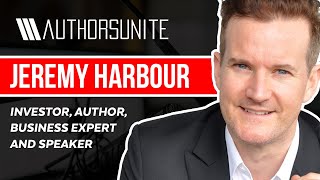
In this episode of the Authors Unite Podcast, host Trey Lockerbie interviews entrepreneur and author Jeremy Harbour. Harbour recounts his early entrepreneurial instincts, shaped by childhood ventures and the trauma of losing his brother and other family members, which fueled his drive. He critiques formal education as inefficient and shares how he left school at 15 to pursue business. His first post‑school venture—a watch and jewelry stall—evolved into a coin‑operated arcade business that ultimately failed, teaching him humility and the importance of rapid failure. He then discovered vendor/seller financing in the late‑1990s telecom sector, acquiring a small telecom firm with a deferred‑payment deal, which sparked a series of acquisitions that grew his revenue from £1 million to £13.5 million and staff from 20 to 135 in 18 months. Harbour emphasizes that true wealth is generated by selling businesses, not operating them, and that capital events from sales enable passive income and lifestyle transformation. He advises against using brokers, advocating direct outreach and networking to find acquisition targets, and explains his “never buy a business that’s for sale” mantra as a critique of broker‑driven listings. Harbour describes his current model of helping $1‑$10 million profit private companies go public on the Frankfurt Xetra, using the public vehicle to acquire competitors via stock and bond issuances—a structure he calls “agglomeration.” He outlines his virtual, multi‑country daily routine (Singapore, Ukraine, Mallorca) and his reliance on Zoom for deal work. His investment approach focuses on traditional assets—bonds, stocks, REITs—and private‑wealth banking, leveraging institutional‑grade funds, low‑interest borrowing, and fixed‑coupon notes to generate high passive yields. Harbour discusses his five books (Go Do, Agglomerate, Never Buy a Business That’s for Sale, Go Do Deals, and the upcoming Democratizing Wealth) and his mission to democratize wealth to reduce inequality of opportunity, believing that empowering entrepreneurs financially will enable them to solve societal problems. The interview concludes with promotion of his website, social media, and the pre‑order portal for his new book.
Chapters
Alright everyone, welcome back to another episode of the Authors Unite show. Today we have Jeremy Harbour with us. He helps entrepreneurs buy and sell companies without banks, brokers, lawyers, or leverage. So welcome to the show, man.
Hi, thank you for having me.
Of course, grateful to have you on. So, let's, I always like to start off these interviews from just like the beginning. So, when you were younger, you know, I was going through doing some research on you. I think you have, from what I can tell, 5 or 6 books, you know, tons of success. But when you were younger, were you as entrepreneurial as you are now or did you kind of like see this vision of yourself that you are now?
Yeah. No, I think I grew up with it kind of in my veins or in my DNA, you know. So, one of my earliest memories was my mum had like a little beauty salon and I cut down all the flowers from the garden, was selling them in jam jars outside the salon when I was about 7 years old. So my parents had this, you know, do they chastise me for decimating the garden or do they encourage my kind of entrepreneurial behavior? You know, it was one of those kind of things. But, you know, I had business cards when I was 12. There's a picture of me in a suit next to a garden shed with my logo on the shed when I was about 13. So yeah, I was always, yeah, always up to something.
Gotcha. Gotcha. And then I, you know, I'm sure it's obviously a sensitive topic, but I think it's important for people to know when I was doing research on you, you lost your brother at 14 years old. And from what I could, from what I read, like that was a very big impact on your, I guess, like drive in entrepreneurship.
Yeah. I guess it was in hindsight. I mean, yeah, I was 10. I was 10. He was 14. Of course. Yeah, and of course, there's like, you know, we're brothers. And when you're 10 and 14, all you've done with your brother your whole life is fight with them. You know, it's really so. So you have this horrible kind of all your memories, you know, are not necessarily the memories you would have wanted to have when they're no longer around, you know, which is pretty tough. But actually, I grew up with quite a lot. It sounds really morbid. I grew up with a lot of death. My grandmother was one of 14 kids and she was the youngest. So I had all these uncles who we used to go visit and then I'd be going to their funeral, you know, and there was a kid at school that committed suicide and another kid that died of cancer in my year of school. And for me, I guess it was like, I figured it was like normal. And I used to have quite a bit of anxiety around this. You know, I used to think about it pretty much every night before going to bed, you know, am I going to wake up tomorrow kind of thing. And it was only when I got older, I realized that that was really unusual. You know, I'd meet 30-year-old people that hadn't had anybody close to them die yet. And I was like, oh, okay. I had quite an unusual kind of set of circumstances. And I guess it did drive me. I left school when I was 15 because I kind of didn't want to wait. I looked at the next bit of education as really just an entrance to college, not necessarily— it didn't serve any purpose in its own right. You know, when you finish high school, there's like the extra bit of education you have to do before college. And it's kind of like, well, it only serves the purpose of getting you into college. And I couldn't really see why why do that extra 2 years? I figured, you know, if I started a business, even if it went wrong, which actually it did, even if it went wrong, I'd learn a load more. And sure enough, I'd been in business for like 10 years by the time my friends were finishing college. So. Yeah.
No, I can completely— that was something that like struck me when I was 2 years into college. I was just like, it seems to me that this whole grade system, it's just to get this diploma. And I was like, but then even after you get the diploma, you still have to put in work to get a job.
All the way through my education, I used to think this is— excuse my French—
pointless.
This is really fucking pointless. We've just sat through a year's worth of shit they could have taught us in 2 months flat. If they'd just done it really intensively, we could have learned this in such a short time. I now have kids, and I get it. It's not education. It's childcare. It's how you get the kids out the house. It suddenly It all falls into place now. Makes sense. You know, I now understand why we have the education system we have. It's so you can actually get shit done in a day.
Totally.
Yeah.
And I think it's more like social learning, you know? And like, my dad always said that— I think— I forget what grade exactly. He's like, after third grade, it's pointless. Like, after they teach you how to read, write, and some basic math, like, everything after that is like— doesn't matter. Yeah.
Well, I guess it's like when you get a new dog, you've got to get it to— you've got to get it used to hanging out with other dogs or it turns into an asshole, you know? I guess that's the same with Or German.
That's really what it is about. So let's talk about your, so your first business that, well, I guess your first business was like 7 or so, but the one out of college that failed, which one was that?
Yeah. So, well, I guess like most businesses you pivot, you know, frequently. So it started out as me supplying watches and jewelry to market stalls. And then I started, and I ran my own market stall as well selling watches and jewelry. And really it kind of morphed into selling anything, buying and selling. It was like a trading business. One of the things I started trading was video games, but like the coin-operated ones, the great big machines. Then I realized actually you could put them into pubs and takeaways and bars and things like this, and people go play them, you split the takings with the owner, you leverage other people's heat and light and electricity. It's quite a nice business model. I expanded that and I had 28 machines sited all over the county where I'm from in the UK. Then I decided, and by the way, at this point in my career, most things I touched had worked. I think I was a bit of an arrogant little ass at this point. I decided to buy an amusement arcade, like a premises where you could put all of these machines. I bought this premises, and that was the business that went bust. It was that next level of expansion that basically fell over. Suddenly, I was using other people, from going from using other people's rent and heat, lights, and electricity. I went to my own rent and heat and light and electricity. And also you have to attract the customers to come there. They're a very different kind of customer. They're kind of the people that are really into their gaming and gambling versus the people that might go to a bar and casually play on a thing that's flashing in the corner. So yeah, it was a massive learning curve and I fell flat on my face. And I think that was really useful because it was a good dose of humility. At that precise moment in my life. Because like I say, I think before that, most things I tried had kind of worked. And that's, you know, in business, what I found out is most things you try kind of don't work. And that was quite a valuable lesson.
For sure, man. I think that's like, people need to, I think, go towards the failure quicker because like, as you said, it was a big lesson and we prolong it so long. And it's like, if you could just get it done now.
Yeah, exactly. You know, and what I was, I was 18 when it happened. And of course, you know, emotionally I was destroyed. You know, I was like, I remember I had moved away from my parents when I was 17. I lived in my own apartment when I was 17 years old. I had to move back with my parents, you know, tail between my legs. They didn't even have a spare room for me anymore because I've had a brother who was born since then. You know, and yeah, so it was all kind of like a big, yeah, a big kind of deal. But then I realized, you know, literally after 2 to 3 months of wallowing in my own self-pity and kind of licking my wounds at home, you realize, well, hang on a my arms and legs. Nothing actually really changed. The days before you go bust are horrible. I remember having anxiety about the phone ringing. The phone would ring, I'd actually sweat. I'd actually come out in a cold sweat, because when I picked it up, there was somebody on the other end of it shouting at me and calling me horrible things. It was not nice. Then after you go bust, it's like all of that goes away and you have the best night's sleep of your life and you're pissed off and miserable because you failed, but actually, nothing really broke. And so I think the lesson I got from that was that this, you know, it feels like you're walking a tightrope, but the tightrope's only 6 inches off the ground, you know? So you lose sight of the fact that if you fall off, actually, it's not that big a deal. You can get back on again. And if you know the tightrope's only 6 inches off the ground, why not instead of tiptoeing across it, why not take a fucking run at it next time? Because what's the worst that can happen?
No, 100%. And that just goes to show, I remember learning this. I read The 4-Hour Workweek when I was 20 years old. And that's what really like allowed me to mentally be able to drop out of school. And one of the things he talks about is like worst-case scenario, right? And our imaginations go way further than like what it really is. And like, so my worst case was just like dropping out. What if I fail? Like all, and then I realized, I was like, worst-case scenario, I end up back at my parents' house with a nice pool in the backyard. Like, it's really not that bad. Like, yeah, you know, when you really think about that, it kind of alleviates the the risk that you feel that you're taking because it's not as big as you think it is.
Yeah. No, for sure.
So it's interesting.
No, it's interesting. That book came into my life as well, but much later on. So I mean, I'm a bit older than you, I think. So the— well, definitely. So in my day, it was The E-Myth was the big transformational book. Oh yeah. Great book as well. Yeah. Really took me forward when I was probably like 16, 17. And I think 4-Hour Workweek probably came on a little bit after I just sold my first company. It was about 2000— It's about 2006 or something. It'd be interesting to see when The 4-Hour Workweek came out because it was somewhere around that period.
Yeah, that would make sense. Yeah. Because 2010, yeah, was when I read it.
And the thing I really took away from it, you know, this mini retirements thing he talks about. Well, I just sold a company and I had a kind of a mini capital event, I guess. And that really got me thinking into how instead of the kind of traditional focus of build a business to a huge size and sell it for a gazillion dollars, why not just sell businesses often for a few hundred thousand or a million and a bit dollars, and actually transform your lifestyle with that money, deploy that into passive income that has a massive impact on your lifestyle? Because as entrepreneurs, you live hand to mouth, and you can live hand to mouth for 10 years, 20 years, 30 years if you're not careful. Whereas you can create capital events every year or every couple of years that would have a transformational impact on your lifestyle and, you know, take you further. So that was a moment where I pivoted to that kind of model, was after reading that book.
Let's talk about that more because I don't think a lot of people are really even thinking like that. So, you know, first thing, even in your introduction, so are you— when you first started out, you were obviously running your own companies, you built up some capital, but now you more so are looking to like buy companies that are already working, not with your own money but with the bank's money? And then—
No, just— Yeah. Well, so look, I guess it comes down to the epiphanies at different points in my journey. So I guess the first one was this idea, I always thought to be successful, you had to start a business and run, work really hard. And then when I— the business I started after the one I just described to you failed was a telecoms company. And telecoms at that time, this was the late 1990s, was incredibly acquisitive. It was very fragmented. There were hundreds of thousands of small operators. It was very acquisitive. Everybody was trying to buy everybody else because it was a quick way to scale your business. You could add a million of extra revenue just by acquiring somebody with a million of revenue. Consequently, my weeks were punctuated with these meetings with these companies that were trying to buy me. The interesting thing is all their deal structures were no money down. They weren't going to put any of their own cash in. They were going to— it was money over time or various other structures. I basically just in my mind went, okay, hang on a second, I haven't got any money either. Why don't I be the buyer instead of the seller? I ran around a bunch of telecoms companies and pitched them ideas about how we could join forces, merge together, I could acquire them, pay them out later, they'd be worth more by joining me, et cetera, et cetera, et cetera. Mostly not getting it right. I was very young, very green. Then I found one that was motivated. He was one that literally the building he was in was about to be demolished and he had to move out and he didn't really want want the expense of moving to a new premises because it was a small business, but he had 1,000 customers and we were connecting 1,000 customers a year. So this was a year's worth of revenue for us, a year's worth of customers. And so anyway, I put my offer on the table for, you know, just literally paying him over a period of time after buying it, a purely deferred payment plan, vendor finance, they sometimes call it, or seller finance. And he rejected that, but as the clock got, you know, the clock was ticking and it got closer and closer to kind of demolition day. And the other offers that he was talking to kind of didn't materialize, which is often the case. There aren't that many buyers of small businesses out there. I ended up getting the deal by default and that was lucky, you know, so I had some luck, but then I put myself in luck's way. So I guess that's how I got lucky. And, but it was an epiphany because we grew by a year's worth of sales in an afternoon. I didn't take any risk of investing in marketing or doing any sales or anything like that. We just added these customers to our customer base. It was entirely self-financing. And it just taught me that that was possible, even though it was nothing like a deal I would do now, but it taught me that you could do a deal like that. And that was a real game changer for me, because it was like, you don't have to run the marathon, you can just run the last 10 yards and you still get the medal. You don't have to do this. All the blood, sweat, and years I'd been investing in businesses. So after that, I went on a rampage. 2 weeks later, I bought an IT company using a very similar kind of deal structure. Yeah. And because it was kind of like, it was like breaking your virginity, you know, once you've done it, like, fuck, can I do this again? You know, how do I do that? That was awesome. How do I do that again? So I went and did another one and we grew that business like crazy over the next over the next 18 months. In fact, went from 1 company to 12 companies, went from £1 million revenue to £13.5 million revenue, went from like 20 staff to 135 staff, all in 18 months. And that sounds really impressive because I've used all those great highlight numbers. It was actually fucking chaos. It was so hard. I often say to people, the only thing worse than running one shit business is running 12 shit businesses. It was really, really tough, really hand-to-mouth. I often described it as robbing Peter not always paying Paul, trying to juggle 50 things at the same time. And as the CEO, as the guy at the top, you tend to only deal with the worst, shittiest, most unsolvable problems that everybody else has. So it filters through all the various different departments and finally when it lands on your desk, it's almost impossible to solve. And you get a few of those every day. So it really keeps you interested. So anyway, Then I sold one of them. One of them went bust. That was a massive lesson for me, because the one that went bust was one that I thought was just a keeper because it had a 3-year contract with the world's largest insurance company. The world's largest insurance company was AIG, and they themselves went bust in 2008. We had too much exposure to one client, which is rookie error. Nonetheless, the one that I thought was the cash cow and the keeper wasn't, The big lesson in that period of time was you don't make money running businesses, you make money when you sell them. What I'd done is I bought all of these companies is take more and more income from them. What I realized is the income is just what you spend, so your lifestyle expands into your income, and you don't really end up with anything left over. But when you sell a company, you have this capital event that can really change your life, because you can deploy that and create passive income that can have a transformational impact on you. So I learned two things really, which is that you make money when you sell and the right time to sell is now because, you know, something, you know, you have a pandemic for Christ's sake, or you can have a global financial crisis or Google could do it for free or Amazon could get into your line of business or whatever, you know, so.
Oh yeah, Amazon does that a lot. This product's going well, let me replicate that.
Exactly.
So with this, that one that scaled that fast, like what were, and I guess it would be different depending on the company, but what were those like first hires that allowed it to scale that? Like was it salespeople?
No, it was all acquisitions. So we literally, we bought a telecoms company down the road that bolted into the telecoms company. We bought an IT company because telecoms and IT were getting more and more converged. So it was a really nice fit. We bought a call center business called, you know, contact center. A call center is basically IT and telecoms at its core. And yeah, we just kept bolting more and more businesses into the group that had synergies or that we could figure out how to work with. We hired a recruitment company because, or we bought a recruitment company because we were spending so much on recruitment. We bought the training company that was doing the training for the call center staff. So yeah.
Gotcha.
Just basically kept bolting these companies in.
Now, how do you, and I guess, you know, it could be just as easy as you find buyers, but is there like a platform that you use or is it just networking? Like how do you find people to buy?
Yeah. So there's Yeah, those original ones were just networking. So I used to go to those breakfast meetings, you know, the one where you stand up for a minute and talk about your business. Yes, I used to go to one of those every week because telecoms is a great thing to sell at networking because everybody uses a phone, you know, so it was relatively easy to get customers. But you turn up to one of those meetings and you say that you're an investor or you're looking to buy businesses and suddenly you're more interesting. It kind of shifted the conversation from hunter to like from hunter to someone really interesting that everybody wanted to talk to. And that opened tons and tons of doors. But I later kind of found out some outreach things you can do. So I mean, never use brokers, never Google businesses for sale. That's like a rabbit hole you can get lost down for weeks on end. It's a complete waste of time. If you want to buy air conditioning companies in Kentucky, make a list of all the air conditioning companies in Kentucky and just go speak to them. Find out what their ambitions are, find out what they're planning on doing with the business. And you'd just be amazed after half a dozen conversations, how many link-ups and synergies and opportunities you find just from within those businesses. So yeah, never go through intermediaries, just go straight to the principal, was the big lesson I learned very early.
And is it kind of just my obvious, just what I'm thinking, because I read that about in your kind of bio, You said like never buy a company that's for sale. Is it because like if it is for sale, then maybe like something's wrong or something?
No, it's not as much that actually. It's the brokers and intermediaries. They just make life really, really difficult, unnecessarily difficult. And one of the primary ways they do that, you see, a lot of the broker business model is around charging a fee to the seller. And the fee that they charge the seller, it's like an upfront fee, basically keeps the lights on, pays the secretary, you know, does all all that stuff. So actually their business model is more about signing up new people for sale than it is about actually selling the businesses. They might sell one by accident, but their primary business is listings. And so to get people listed, they give them an artificial sense of what they might make from it. You imagine if you went to a realtor with your house and one says it's worth 150 grand, the other says it's worth 200 grand, you put it with the 200 grand guy. And so with businesses, they just tell you, ah, $3 million, $5 million, they make up numbers. Then what they do is to support the crazy valuation, they take your accounts and they manipulate them so that the numbers fit the price that they are trying to charge. They call it adjusted accounts, but by adjusted, it is basically accounting fraud. Adjusted. Yeah, the Enron school of bookkeeping, I think.
So I'm curious, like, right now I'm reading this other book. It's called Poor Charlie's Accolade and it's about Charlie Munger. And one of the things he said from like watching Warren Buffett all the time was that Warren Buffett pretty much does two things all day long. He reads and then he like has conversations with like his top relationships. So I'm curious on your end, like, what is your, not just like the typical morning routine, although you can speak on that, but Like what do your days look like now to continue to grow this?
Yeah. So what's interesting, like we're in this pandemic at the moment for anybody that's listening. So everything kind of got changed for a lot of people. But actually, we changed our business model to Zoom in 2016. So we moved everything virtual in 2016 and 2017. And we still retain one small office with 3 people in it that are doing due diligence, but they don't even go into that office most of the time. They only go there when they're sharing, you know, sharing physical paperwork that they have to stick out on the table and discuss. So, yeah, it's— so we were kind of already virtual, but my— so my typical day, I live between 3 different countries.
Okay.
So I'm either in Singapore, in Ukraine, or in Spain, in Mallorca. And so each country I kind of have different routines because, well, there's different things around me, there's different time zones I'm working on as well. So in Singapore, what I tend to find is I have the whole morning is mine. So the morning will be me going to the gym, doing all that kind of stuff will be like the morning and in the afternoon I kind of start working. So midday onwards I'll work and sometimes my last call could be like midnight or 1 AM because I'll be dealing with people in the US or in Europe. Right now I'm in Ukraine and so it's kind of the other way around. A really, really busy morning when I first wake up. It's kind of taking the kids to school, lots of Zoom calls, all of that kind of stuff. Then I have this big gap in the middle of the day, which is my kind of me time where I can run around and do all the things that I would like to do. And then, yeah, the odd thing in the late afternoon like this. Yeah. You guys over in the US.
And are most of your calls like internal now or are you still like doing a lot of relationships?
Yeah. So my core business right now is I help small to medium private companies. So these are typically companies doing between kind of $1 to $10 million of profit. And I help them go public and then use the public company as a vehicle to do more acquisitions. So if you have a company and you have an ambition to grow by acquiring your competitors, I help those companies go public and then use the public company to go and acquire their competitors. And so I probably speak to like 3 or 4 of those a day. Companies that fit that profile. And then the rest of the time is speaking to other stakeholders around that business, whether, and they could be internal or external or finance related, lawyers, bankers, those kind of people. But it's, yeah, I probably spend about 3, 4 hours, 3 hours to 4 hours a day at my computer on Zoom. And the rest of the time, I'm pretty free.
So at $1 to $10 million, and when you say, is that public in the US or is it in other, could it be—
No. So the last company we listed was, it's a UK PLC. Okay. It's listed on the Frankfurt Xetra, which is the main market in Germany. Okay. And actually, so we listed that right at the end of 2018. In 2019, it was the third fastest growing company in Europe, the third fastest growing startup in Europe, according to Financial Times. And it was actually the fastest growing small cap that issued a dividend in 2019. So yeah, it's been— it started off as one company, obviously, and it's now a group of— I think it's 19 in there as of today. So 19 acquisitions in less than 2 years is quite prolific. Yeah.
[Speaker:TREY_LOCKERBIE] So just so I can understand, and I think it would be helpful for the listeners, so like, how does that— so First off, there's a process to get it to go public. So like, however that works. But then once it is public, are you like leveraging, I guess, the people that are invested? Like the company's value goes up and then you can—
Yeah. So, so yeah, I mean, obviously there's a big arbitrage between the value of a private company and the value of its larger public company. And so that arbitrage effectively, when, when, when you, when a new company comes to join you, increases the whole pie quite considerably. Yeah. The big advantage is with a public company, obviously you have the credibility because it's completely transparent. People can look at the accounts, they can see all the companies that are involved in it. That transparency gives you a lot of credibility. It's easier to go out and win customers, it's easier to go and do M&A deals. The first thing is the credibility it gives you when you go into discussions. The other one is you can issue financial instruments that are tradable. So you can issue your stock, which is a currency effectively. And as we do as well in this company MBH, we can also issue bonds. And bonds are like a debt instrument. Now, historically, when you've used bonds in mergers and acquisitions, what people tend to do is sell them to the market, raise cash, and then use the cash to do acquisitions. What we do is we will target a company where we will give the owners of that company some stock in the holding company and some bonds in the holding company. So effectively, they— from the bonds, they get some income. And after a period of time, they get their capital back. On the stock, they obviously get the upside in the growth going forward. They get to join part of the growth curve. Then for the general investors, they get the benefit of these profitable, well-run companies coming to join this group and constantly adding more revenue, more profit to the whole pie. We think it fills an important space out there because there's not much opportunity for small to medium-sized companies. You can either sell or not sell. You can't really go public. And this provides a framework or an umbrella that allows small to medium-sized companies to get the benefit of being a public company without going through the shitty bit of the process effectively.
Yeah, no, I didn't even know you could at $1 to $10 million go public. So that's huge right there.
I didn't even know that's possible. Yeah, it's a small cap. Yeah. So, I mean, we call the structure agglomeration. Okay. Yeah. There's lots about it online. Gotcha.
Okay.
It's all government structure.
So, I want to talk about some of your books, you know, as this is the Authors Unite Show, a lot of our listeners. So, can you speak, how many do you have? 5 or 6?
Yeah. If I go through them, then I'll probably figure out how many I've done. So, back in 2012, Capstone, which is the largest publisher of of business books, as you know, approached me to write my story. I said, sure, yeah, but what I really want to talk about is how you buy and sell companies. They said, can you focus more on startup? I said, yeah, but I'm always on stage telling people don't do startups, buy companies instead. They said, yeah, but we really want a book about startups. I went, okay. I wrote this book called Go Do, which is my life story plus ideas on how to start businesses, what to do to start businesses. It did the Amazon bestseller thing and all that stuff back in 2012. After that, in 2016, I wrote a book called Agglomerate. Agglomerate was all about this governance structure that I was just talking about, which is how you take companies public and how you do that stuff. I co-wrote that with a business partner, Callum Lang. I then wrote a book called Never Buy a Business That's for Sale, or Why You Should Never Buy a Business That's for Sale. That's just an ebook on Amazon. And then I have a new book coming out called Go Do Deals. And Go Do Deals was the book I wanted to write back in 2012 when Capstone first approached me. And it's basically how you source, acquire, fix, and sell owner-managed businesses. Yeah, it's the kind of— yeah, the one I've had in me for quite a long time. And that comes out in December. Oh, nice. Yeah. So we're doing preorders at the moment. We've got— we managed to get the URL godoo.deals, which is awesome. Nice. On godoo.deals, we do this preorder thing and you can get like a 21-day free email course that we're bundling with it at the moment to try and encourage people to preorder. So yeah, it helps our sales figures when we launch.
Perfect. So, so now with the writing, did you have some like assistants? Did you write these yourself? Like, how did that work out?
Yeah, so I wrote the guts of it myself and then we had some fairly heavy editing. Yeah. So we all need it. Yeah. My writing style is how I talk. And so there's a lot of slang in there and particularly for the American audience, The British slang is quite hard to grasp. And it can be a bit shouty. So they need to tone it down sometimes. Yeah. In terms of being a bit nicer to people.
So I'm curious too, to actually dial back before we start talking about the books. You had said, so selling businesses is where, you know, you make the money and then, but also passive. So what have you, like, what have you seen to be the best, like, passive income investments that you like? Is it real estate or is it continuing to just do active?
Yeah. So I use really boring traditional investments. So bonds and stocks. Oh, okay. And REITs. But what you'll find is that when you reach a certain level of wealth, you can get into private wealth banking. And when you get into private wealth banking, there are ways that you can play the bond, stock, and REIT market that basically generate way, way more income than retail investors have access to. I talk about this quite a bit. I've got some videos on this. I talk about escape velocity investing, which is where you basically calculate what your annual spending requirement is, and then your first target is obviously to get enough invested to generate that income passively so that then effectively everything you earn is unencumbered. You can invest 100% of it, and that really starts to snowball your wealth. But that gets much easier. So private wealth banking kicks in at about $10 million net worth and about $3 million of cash. That's the kind of when you can open one of those accounts. And you get things like, you know, if you look at all the mutual funds and investment funds that everyone says there's no point investing in because the fees are too high. Well, the fees are high if you're a retail investor, but if you're in private wealth banking, you can get what's called the institutional version of the same fund. So all of those funds, you get an institutional version, which has basically a fee structure more like an ETF. Um, but it's, it's managed and you get, you know, much better, um, upside. So some of these funds perform really, really well and have a very, very low, um, fee structure. Um, and, uh, plus you can use a bit of leverage on them, which basically, uh, gives you huge returns. So when you have private wealth banking, You can borrow money against your own portfolio at 0.7% a year interest. So if you want to take that money out and go buy a house, you can. So you can invest in a portfolio that's generating your income and still take cash out and go and do other things with it. In fact, I posted a video last year on YouTube about— we came to Europe for the summer and we bought a Maserati Levante, kept it for the summer and then sold it. And I showed how the capital cost of that car for 5 months was €180,000. $180 for a Maserati for 5 months. So it basically, yeah, it's crazy. It just literally gives you stupid cheap money. Like yeah. And of course, you can use that for investments. You can use that for all sorts of things that also generate income.
Got it. So have you mostly done, is it like, so obviously first goal is get to $10 million so that you get access to this because that's awesome.
Yeah, yeah, yeah.
I think it was like 6 months ago, I finished this. It's a very short book, The Little Common Sense Guide to Investing. And the author just kind of talks about how index funds have outperformed. So I've been just doing a monthly, like, into index funds. It's like Vanguard Admiral 500 or something, I think it's called.
Yeah.
So either way, though, is your investments in the stocks, when you say kind of more boring, are you— you're not really taking the profits out? Are you— this is like long-term?
Yeah. So I do take the income, so I live off the income. I mean, again, with stocks. So when again, it's a private wealth banking thing, they have something called fixed coupon notes. So fixed coupon notes are like an option agreement that you can use, but it's over a longer term. Normally options expire every month. This is like an option agreement you do over a longer term based on a basket of stocks. So you'd make your list of all the things that you want to own, and they can include ETFs like You then, instead of buying them directly, you take these fixed coupon notes against these different stocks. Effectively, what they say is that if it drops by 20%, you buy it. If it doesn't drop by 20%, you get paid to wait. Basically, it's like build your portfolio every time there's a massive dip in the market. The rest of the time, you're being paid to wait, but the amount you get paid to wait is quite high. I literally, I'm just doing one that will execute tomorrow. And I mean, one of them pays 13% a year and the other one pays 10% per year while I'm waiting to own these stocks that I will own if they go down by a significant amount. And so it's quite— yeah, it's quite nice income generator. Yeah. And you very rarely end up owning the underlying stocks.
Gotcha.
Yeah. So, yeah, it's an interesting game. It's a huge education in its own right. I mean, once you think you've figured out business and you never really, you know, if you understand 4% of business, you understand 3% more than everybody else. And then you figure out M&A. And again, if you know, once you understand 10% of M&A, you understand 9% more than everybody else. Then you've got to learn about wealth. And, you know, I mean, most entrepreneurs don't actually get to that. Stage, you know, where you actually have to learn, you know, how you manage money and how you look after all of this kind of stuff. And it's a whole new, like, area. It's massive. Yeah.
No, I feel like in life it kind of like forces you to do it. I happen to be lucky enough to have a dad that's an accountant. And either way, you know, it was a few years ago when I started to pay what I think to be, you know, a lot in taxes. And you just, it like gets you right in the gut and you're like, I gotta figure out, okay, I figured out how to make money, but now I need to figure out what the heck to do with it because I'm giving it all. So like, that's why I started reading all these finance books like Robert Kiyosaki. I started going down this whole rabbit hole because, you know, either way it just like forces you because you're like, whoa, what could I have done with all that tax money? Probably like, I don't know, something extravagant. I don't know. Yeah.
I bought a plane or something.
Yeah, yeah. I'm not there yet but, you know.
Need a good tax write-off.
Yeah. So this is a big question but I feel like just based on the success you've had and all the impact you're having, I feel like you've probably thought of this. So we've talked about some numbers and gotten pretty analytical but like how do you want to be remembered? Have you like thought about like your legacy, like what you want to leave behind?
Yeah, so look, I think about this, or I've been thinking about this for many, many years in terms of the impact I could have on the world, because there are so many things you see when you look around you that are broken and need fixing and things that shouldn't really be tolerable in a modern society. And my skill set is pretty narrow. This M&A thing I'm extremely good at. You ask me a question about marketing and I'll just look at you like, "Dumb." I really have a sort of an area of competence that I spend a lot of time on. Everything else I'm pretty ignorant of. And so I look at it as how can I apply the skills that I've got for the maximum impact? And what I realized is that entrepreneurs are change agents. When you make entrepreneurs wealthy, they then tend to go on and solve the problems that have affected them in their life. So Larry Ellison lost people close to him to cancer. And so he's invested huge amounts in cancer research. Now, because he's an entrepreneur and he's smart, that money is really targeted around things that will have a positive impact and actually solve the problem. Same thing with Sean Parker at Napster. He put $250 million into an open-source system that allows all the cancer research laboratories to share their data. And they reckon that that's shaved 50 years off of cancer research because he's smart, he knows how to target it, it's his area of expertise, and he can have a massive impact with that. I believe that you make entrepreneurs rich, they then go and solve whether it is homelessness, cancer, whatever it is, I think they will then go on and fix that problem. My big bugbear is inequality, and mainly inequality of opportunity, the difference that exists for different people to get started in the first place. If you at least give everyone the same chance at the beginning, I think then we have a much fairer society. What people then do with that opportunity is entirely up to them, and they can live or die by those decisions. At the moment, they've got too many— there's too many excuses around where you've come from or what background you have or what opportunities you had when you were young. And I was very fortunate with the opportunities I had and the parents I had. And so, yeah, I see that as being a huge advantage in my own life, and I'd like that playing field leveled in that respect. The way I see to do that with what I'm doing is basically helping entrepreneurs become wealthy through business, because I think automatically that doesn't happen. What tends to happen is people work for 20, 30 years. As I say, their income increases, but their lifestyle just increases to fit that income. If I can educate people on how to buy companies to make their business bigger, how to sell companies to create capital events so they create wealth for themselves, and put together these groups of public companies, which effectively empower tons of entrepreneurs with lots and lots of wealth, then we have this chance of reconnecting entrepreneurship with money because it's kind of got a bit detached in the last 20, 30 years where you don't necessarily have a pot of gold at the end of the rainbow. So yeah, if we can show entrepreneurs how to become wealthy, I think make enough entrepreneurs wealthy, they then go on and solve some of the world's biggest problems. So that's my mission. And I have a book about it. It's called Democratizing Wealth as an author's channel. I've written the first— I've written the skeleton of it. Well, I've written most of it actually, but we need that brutal edit next. So I reckon that one's probably 2021 at some point. Democratizing Wealth will come out. And yeah, there's some ideas in there around how we Yeah, fix inequality and how we, yeah, make everything fairer.
Awesome, man. Well, definitely, if you, when that one comes out too, if you want to come back on, I'm happy to discuss that one with you.
Fantastic.
I appreciate you coming on. Incredible interview. I kind of want to leave the floor to you. If there's anything else you want to share, you can. And then also, website for the recent book and then just main website or social medias Wherever people can stay in contact.
Yeah. Fantastic. So yeah, obviously godude.deals is the URL for the new book. And if you preorder there, we give you this 21-day email course while you're waiting because you have to wait all the way until December. So, but if you preorder every day for 21 days, you'll get an email that will take you through the ideas that we talk about in the book, basically how you source businesses, how you acquire them without using cash or using banks or lawyers or anything like that or brokers. And then how you fix them, how you sell them, how you create these capital events, how to create wealth for yourself. The other thing is obviously my website, jeremyharbour.com. I'm British, so we spell harbour with a U in it, H-A-R-B-O-U-R, but jeremyharbour.com for all the other stuff. I'm quite active on Twitter and Instagram and YouTube. The YouTube channel is The Harbour Club. Have a look on there. There's a few hundred videos of ideas around this topic of buying and selling businesses. So yeah, we're always putting tons of content out there to try and help people understand that this path exists for them. Perfect, man.
Well, thank you again for coming on the show.
Thank you very much.
More from Tyler


Catherine Nikkel : THE STORY EVERYONE HAS BUT HASN'T TOLD : The Tyler Wagner Show #1120



Scott Ritzheimer: Bring Predictable Success to your Organization | The Tyler Wagner Show #1115


Fred Moskowitz: A GUIDE TO GETTING STARTED WITH IN MORTGAGE NOTES | The Tyler Wagner Show #1113

Mark Podolsky: From Land Investor to Full Time Success How I Made $90,000 Cash in Real Estate


Mark Podolsky: How to achieve a 300% return on investment my foolproof strategy

Mark Podolsky: How to make passive income selling raw land the irresistible pricing strategy