Jessie Krieger: Publisher for the Passionate | The Authors Unite Show #976
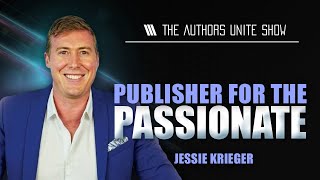
In this episode of the Authors Unite Show, host Tyler Wagner interviews Jesse Krieger, founder and publisher of Lifestyle Entrepreneurs Press, a hybrid publishing house he calls the "publisher for the passionate." Krieger explains how his company blends traditional distribution (via an Ingram partnership) with a hands‑on, author‑centric approach, offering 50% net royalties. He details innovative launch tactics, especially the summit‑to‑book model where pre‑order bundles (e.g., three copies for summit access) generate large retail orders before a book’s release, and how these summits can be turned evergreen to keep sales flowing. The conversation covers author selection—focused on entrepreneurship, health & wellness, and spirituality—long‑term multi‑book relationships, and the importance of referrals. Krieger shares his day‑to‑day workflow (25 appointments weekly, 10‑15 author calls, media appearances) and his philosophy of scaling responsibly while avoiding burnout. He describes the "Publishing Palace," a three‑acre property used for author gatherings and Airbnb rentals, and recounts his 2016 ayahuasca and San Pedro experience in Peru, which deepened his perspective on personal growth, leadership, and publishing. The interview also touches on strategic bundling of high‑ticket offers with books, growth goals (moving from 5,000 to 50,000 print runs), and the value of selective partnership expansion.
Chapters
Alright everyone, welcome back to another episode of the Authors Unite show. Today we got Jesse Krieger with us, so welcome to the show, man. What's up?
Good to see you, Tyler. Good to be here, back in the hot seat all these years later.
Yes. We were just talking about that. It's been, it's not a full decade, but 7 years or something, let's say. If you can start us off for the people that don't know, just a little bit more about you and what you do.
Sure. I'm the founder and publisher of Lifestyle Entrepreneurs Press. We call ourselves the publisher for the passionate. Our goal is to be the gold standard of independent book publishing. We've got the same distribution reach as a traditional but with a much more hands-on approach with our authors, focusing mainly on business entrepreneurship titles, health and wellness, and spirituality self-help.
Awesome. Yeah. And how is it, you know, because when we first met, I think, well, I was definitely early on in my book publishing career. I'm not sure how many years you had been in it prior, but how have you kind of evolved your business from when we first connected till now?
Yeah, it's a great question. I mean, I think when we first met, my own book Lifestyle Entrepreneur had just come out or was coming out.
Yeah.
And so, you know, I came into book publishing through being an author that worked with two different publishers, and I kind of put my entrepreneurial hat on and thought, wow, if I was running these companies, I'd do it so different. And it's not a judgment call on like publishing companies or anything, but rather I saw an opportunity to support authors through the entire life cycle and ideally through their author career, so multiple books, but really as creating a business asset, like a strategic tool that positions them just right. So from the early stages, it was advising other authors how to do like a bestseller launch on Amazon and like kind of glorified self-publishing. And then we got our first distribution deal in 2017. Almost tanked the company because now we had to like invest thousands or tens of thousands of dollars in inventory before we could even sell.
Oh yeah.
Oh my God. Managed through all that and then partnered with Ingram and have been with Ingram since late 2018. And that's been a great partnership. They've been world-class. So I'd say it's evolved that way in terms of like distribution and retail sales. But I still love working directly with authors and a few dozen a year to see their book all the way through and position it within their business as part of a bigger launch or just helping them pivot to the next stage of their career with the book.
Gotcha. So how would you classify, would you classify your publishing house as like a hybrid? Now?
Yeah.
A hybrid? Okay. And then, just so people know, right? So, there's 3. There's service, hybrid, and traditional. So, basically, hybrid is kind of like the best of both worlds, right? So, you have the same distribution as traditional but the royalty, what is that? Like a 50-50 type thing or?
Yeah, exactly. We do 50% net royalties.
Okay, gotcha. Yeah. Whereas, traditional is normally they're taking what, 80, 90% or something? Yeah, I think. Yeah. Yeah. Which is a lot for, I don't know. I feel like that's tough, man. When you're an author to like give away that much. I don't know. That's wild. But sometimes it still works out for them either way. Yeah.
I mean, my, my thought just simply on traditional is like, it's like venture capital for books.
Yeah.
It's a different approach than partnering with a publisher like us, like with traditional, you need probably a literary agent, maybe a lawyer. You're trying to get an advance, and then your job is to earn enough through book sales to pay that advance back plus more. So it's a different working dynamic, whereas like, I'm really looking for the right fit, and is this person doing it for the right motivations, and so forth. And then it's like a partnership instead of a power difference, which is kind of how I perceive some traditional, although it's right for some authors.
Oh, 100%. Yeah, I think any of the 3 options can definitely be good. It just depends on what your goals are, what you're really trying to do with it. So, I'd love to talk about some like recent examples because I know, well, wait, I won't say that because I don't know if it's out yet but I know we were talking about a book from one of your, he runs like a shipping company. We were talking about this. This was like 6 months ago.
Oh, was it? It's like the wind from the founder of DHL.
Yes, that's what it is. Okay. So like, what are, what are some recent projects? I'm just— and like, how's everything going with this kind of evolvement in the, in the new model?
Yeah, I'd love to share that. I mean, that's a, that's an exciting topic for me. What we've been pioneering the last 6 months with and getting success with is, see, 2 things. One is a summit to book launch model. Like, we had an author named Emily Pereira. She had a book called The Quest, and it's about finding love and sort of female awakening. So we did this summit called the Quest for Love Summit about 2 months before the release date, and typical summit model brought together like 25 speakers, many of them promoted. But the call to action on the summit was preorder 3 copies of The Quest to get lifetime access to all the recordings plus bonuses. So now people are coming into this summit, pre-ordering 3 copies at a time, and there's lots of incentives for them to do that. It's like, you know, $50, $60 investment. But what that did on the retail and the book side is our sales team was in conversation mostly with Amazon saying, look at the amount of orders coming in. You guys should order way more, way more. So we ended up shipping like 4 or 5 times the amount of books that were driven as sales through the summit by the time the actual release came around. In other words, we started to pioneer ways of driving and indicating enough demand to retail before a release where we get much bigger orders. And even if some of those come back as returns down the road, I'm finding consistently we're getting a 2 to 3x bump over if somebody was just put their book up self-publishing and sold it, you'd sell whatever copies you sell. But as a publisher, we're trying to add value by like doubling and tripling up the amount of presales that an author can drive and that we can support them in driving.
Now, why, what is the benefit of, of that transaction? Just so the listeners understand, like, is it because if you can get them to order more, does that lower your, your costs as well? Or is it like a potential issue that because in this model it's not print on demand, right? So if they, if they don't print enough, then it could be like all this traffic could come and then it's out of stock.
Well, think of it, imagine you're Amazon for a second and you see that there's a book with a release date in first week of November. And in September and October, you start seeing dozens of book orders a week and then 100+ coming in a week. If you're at Amazon, you're thinking, okay, we need to order at least the amount of books that people have already pre-ordered because we got to fulfill those. How many more should we order to keep up with what looks like this demand? So we're kind of manufacturing that scenario to get them to place a bigger and bigger order. And then of course we need to keep up the book marketing so it doesn't just fall off a cliff after they place that order. But that's how we're doing the, uh, that's how we're getting those multiples.
Got it.
Yeah.
Is it always the, so is the summit thing pretty normal now for you? Is that what you do with a lot of the launches?
The summit is one approach, but it's part of the, the general strategy is come up with some pre-order campaign that bundles up the book with their other primary business offerings. So if we can say preorder 10 copies of my book and you'll get my online training course, preorder 25 copies of my book and you'll get a one-on-one consultation and personal strategy session. And we've taken that up to 250 copies of the book for a keynote or like a corporate engagement type of thing. And that's, that's the approach overall is bundling up their business offerings or positioning book sales as a mechanism to access something else that the author does. And this is what we're starting to see good results with because it's more than a book at a time, you know?
Yeah, 100%.
And I think, I mean, I know you play with that.
Yeah, yeah.
Like I'm on your show, but I know you do this with the bestseller launches and stuff like that. Isn't it a mix of corporate or like individual sales and bulk sales?
Yeah, yeah. So we were just a part of a New York Times launch. It hit like 2 or 3 weeks ago. And that was a very intense, like, pre-order campaign. And there was, like, bundle— one of the main offers was basically this guy had a bunch of courses that was valued at about $10,000. And so he was like, you know, pre-order the book and then you get all these courses for free. So it's kind of like a, like a no-brainer type of offer. And then it's also a lot of collaborative, like, efforts, like having your friends or business partners, whatever you want to call, mail out for you. And because there's a backend, you can affiliate track because obviously affiliate tracking on book sales is like, you know, you're not going to make much probably.
But you spoke to exactly like with the summit example, the people that promoted the summit, they weren't getting a cut of those 3 book sales. But after the summit, the author did a $5,000 course. Offer, and then they affiliated on that. So yeah, 360 degrees, it's like getting the partner to promote the book or the book offers and then finding what's the win for them to do so.
Now, have you ever, 'cause I've been a part of a lot of summits, I've never actually, I'm trying to, I've put on kind of like a mini summit. I've never like gone all out and like put together like a huge summit. Have you ever turned one on like evergreen? So like after it went really well and you were like, let's just keep this puppy rolling.
Yeah, we can even link it up. BestsellerSummitOnline.com. I ran that like 3 years ago. I think you were on it.
Yeah, yeah, there you go. I was like, I've been on a bunch of these.
It's been evergreen ever since.
Oh, that's awesome. Okay.
So I think that's just a good strategy generally. I think that's what we're doing now with the Quest, now that it's been a month or two since the book launch. Will turn that summit evergreen and keep that preorder 2 or 3 copies of the book. And now it's an ongoing market crank, or rather just order 2 copies of the book instead of preorder.
Yeah, no, and it's way better too, because when you send somebody, as you know, that's always the biggest thing. Like when you send somebody to buy a book directly to the store, you're not getting the customer data. So ultimately, for the author's benefit, pretty much any traffic the author's sending should be be through their website or something where they can catch the actual information.
And just to, yeah, I mean, to get one layer deeper on the strategy, we have them forward the receipt if they're buying 10 or 25 or whatever, so that then the author can tag in their own customer relationship, in their own email client or whatever, that this person bought this bundle, that this, so yeah, we're capturing and segmenting that. Buyer data while running these campaigns with the author.
100%.
And then that's important.
That $5,000 offer is like— and again, depends on the goals, right? So bestseller list is one thing, their strategy for that, but business growth from a book as a whole, completely other thing. So that's awesome that you'll turn that. And now when it's evergreen, how does that— not to get so technical, but is it still— do you have like the timers and everything, or like, is it just like open? How does that work?
On and I had the timers and everything running on my summit when it was evergreen. At some point I turned the timers off just because it seemed like overkill or maybe I didn't want to pay for Deadline Funnel every month.
But yeah, that's what I was trying to say.
You could actually literally pace people through the same timed experience as when the summit was running.
Yeah.
Which is cool.
But I agree.
Yeah.
Gotcha.
But I find with the summits, just since we're on the topic, having the one-time offer right after they opt in, we saw, I think, 70% of our all-access pass sales were right after people opted in as opposed to after the whole summit and now access is gonna go away was the other call to action.
Got it, that makes sense. And so I wanted to ask you too, 'cause you, and there's some people that I've talked about actually, do you call your place the Publishing Palace? Okay, cool. So tell me, what is at the Publishing Palace? Tell me, I've never—
I'm in the Publishing Palace.
Yeah, I thought so. I was like, I think you're in it right now.
It's also my home.
Okay.
But I got this place, it's on a third acre. There's a garden, a pool. Uh, there's had big events in the backyard. I host dinner parties here every month with 25 to 30 authors and entrepreneurs.
That's awesome.
And I used to rent it out on Airbnb, not so much these days, but I listed it as the Publishing Palace and take a book once you, you know, once you've rented the place.
That's cool.
It's kind of for fun. And also, you may know Angela who runs Author Incubator had the Author Castle.
Yeah.
She bought a castle. So I was like, you know what? She's got a castle. I need a palace. And yeah, I told her that and we had a laugh about it.
But Very nice. All right, well, I gotta— I'll get a bungalow or something.
Or a bungalow.
The book bungalow house. That's awesome.
You get the beachfront bungalow.
Yeah, that's what we'll do. It in Miami. That's per— because she's in, uh, DC, I think. So, so yeah, we'll get Washington, Vegas, Miami. All right, we're coming.
Yeah.
Um, I was gonna ask too, so a few dozen authors every year is what you do now. Is it with that, uh, I feel like it's, so it's maybe less than what you were doing before, but it's like way more integrated and, and in a sense more, um, uh, I'm just, I'm losing the right word, but choosy, right? Like, it's actually, you're making sure like very good fit and it's a long-term type of, so that's why I was thinking with the Publishing Palace, like, and I don't know if you integrate all your clients into it, but I, I just feel like if somebody publishes with you guys, you're on their team forever is how it seems to me.
That's how I look at it. Although forever can be a scary word for people. So I say for the life of the book, which is forever.
Yeah.
But yeah, that's kind of the idea. I mean, I guess I really decided around 2017 or so, I was like, I could keep doing bestseller launches on Amazon and glorified self-publishing support. Or build, you know, for the long term. And that was kind of the decision going into distribution. But with some of our authors, we're on books number 3, even book number 4. So that is, that's a multi-year relationship. And, and I just find I enjoy that at this stage of my life and career. I like having a, it's now a growing family, but, you know, a few dozen authors where we're in some stage of partnership or tuning into a marketing strategy. And just the— I like that more than every customer is a new customer and like, and everybody's meeting me for the first time in that context. So, we really get to unpack like over months and years, which I guess I enjoy it. I do enjoy it.
Yeah, it's more rewarding. And I actually think it's an easier business model because it's something, it's a little bit different than us, but to relate to it is like how we've grown our businesses through partnerships, like just hand handling the marketing for like publishers, ghostwriters, editors, and then they refer to us and we go like, we've gone really hard with that. Like I have full sales team, we're talking like hundreds of calls with these types of individuals every week. But what I started to notice, right? So I did, this was like 2 years ago, I looked through my CRM, looked at all of our partners, and it came out to be there's like 30 of them that made up like 80% of the revenue out of over 3,000 conversations that we had had. And then I was like, Okay, what if I just like be, you know, like I'm already really close with these 30 people, but like what if I like pay more attention, right? And not keep trying to add on top, but rather build like only add a couple more big partners every year or something like that and kind of grow more like that. And it's just an easier model, I feel. I don't know.
Yeah, I mean, that's respect on what you've built. It's super impressive to just see all the big launches and stuff you're involved in. I can only imagine what goes on behind the scenes to, to get that tempo rolling. You know, from my point of view, it's kind of interesting. I've been thinking about this one lately. I can comfortably work with 35, 40 authors a year, and I've— I have to come to a place with myself to be like, am I cool with that instead of 100 or 250? But what I've come to is if it's 35 to 45 authors a year and each one of those has the potential to sell thousands or tens of thousands of books, then that is the game I want to play. And so that's that longer-term support is that doesn't happen overnight. But with time, we can kind of reliably start to generate thousands and thousands of book sales through some strategy and finding what the right fit is. So I guess that's how I've been looking at it now. But I've always loved and appreciated partners. Now authors are one of our biggest source of referrals.
Yeah.
And just being out there like this, I'm an open book to talk about anything.
Yeah.
Any plot on any platform.
Okay.
Awesome.
All right. I'll start asking the dangerous questions now. Now, what is the I guess if somebody wanted to publish with you, what kind of, like, what's your guys' criteria, or how do you determine if it is a good fit?
Yeah, we're looking mostly at entrepreneurship and practical how-to as, okay, type of books. Um, healthy lifestyles, health and wellness, and that can be something like, we've got a book Thrive State on peak performance, but we've also got topic-specific stuff like the Concussion Repair Manual. New Hope for Sciatica, holistic health approaches. I love those and love doctors as authors. And then spirituality, self-help, living your best life, awakening, topics like that. Those 3 buckets, that's— those are the categories where we're going to be the best fit. Okay, what about— you're asking?
Yeah, kind of. So is it like So those are the topics, but then does it, is it similar in a sense of traditional where the author has to have like a following or do you look at that at all? Or is it more like you check out the content and you're like, all right, look, you don't have a following yet, but we believe in this content. Like, let's, let's do this. Yeah.
Yeah. That's a great question. I think there's two different approach vectors. There's either someone that has a large following and a platform, but either may not have monetized it or just hasn't done a book yet. So they could have, you know, 100,000, hundreds of thousands of people on social or podcast downloads, but maybe they haven't really made offers or haven't monetized. Or there's somebody coming at it like that wants to build their audience and build their, their list, so to speak, in the course of doing the book. And I think they're both valid, although it's obviously easier to work with someone that has a platform. But if someone has a good business but just doesn't have a big presence, The book publishing is kind of the bridge into being a more public figure and building their audience and building partnerships in that process. But yeah, what I'm looking for is either— it's two things really. It's the platform and it's their motivation. Like, is this the right fit? Is this the right time? Are they the right person? And why are they— why do they want to do this? So I'll always ask, what's a big win for you? You know, to go through this whole process. And I'd listen intently to what they say, because if it's, if the motivation, if there's an expectation, like I'm going to make so much just from book royalties, I don't even have a backend offer and it's all going to come from book sales, then that tells me we need to have a deeper conversation about expectation. But if someone's like, I really just see this book as an act of service, I want to get it into as many people's hands as possible. And for a select few, I've got a high-end offer. Then that's a good motivation because it just wants to get a broad distribution instead of like, I'm going to make all my money from selling the books.
Totally.
And that's just an illustration, but I'm thinking, I'm seeing how they're thinking about it and contrasting that with if I think it's a good opportunity with their topic and title.
Yeah, no, I think it's similar approach with us in a sense where it's just expectations for us. Like, when we hop on a call, whether it's me or one of our members of our sales team, we just, I'm just like, hey, just find out like what they want. And if it aligns with us and we can like, if we can get them there, then we should do business together. If we can't, then, you know, then it's not a good fit because just like you said, some people And I don't know why it is this way. It's just people aren't— they haven't done a book before. They do come into it and like on sales calls, I've had people like crunch numbers with me. They're like, all right, so this is how much it's going to cost. And then we're going to sell the book at this price. And then I'll make like $500,000 in the first year. So I'm like, on book sales alone? It's like, probably not. So but there is still that like misconception that like once you hit bestseller, then it's like it's done. Then you're like set, move to Miami and you just, you know, you've showed us the way, Tyler, or you move to Vegas, wherever you want to go. But it's a fun— it's, it's, well, I don't know if it's funny, but it's just, it's a, it's mistaken is really what it is. It's a mistake.
Yeah. Publishing is a black box. Like this isn't something that's taught in school. So I relish in the opportunity to just have the publishing conversation, as I now call it, I do it multiple times a day, you know, sometimes a dozen or more a week. And just by being in that conversation, it's fun to see how I can compress a 9 to 12 month experience into like a 30, 40 minute call. And I think of that as kind of the way I'm approaching it in, in those calls with an author is we're mapping out what the next year of their life or an aspect of a year of their life is going to look like. And if they're excited and on board and like motivated by that, then that's a huge signal to me, a positive one, as opposed to like, hey, I've got this thing, I need to get it out in the next 3 months. And like, you know, I'm only halfway through writing it. We need to back up a little and unpack that one, right?
Yeah. So I wanted to ask you, now that you said that, so what is your— I did this for myself. A few days ago, so that's why I'm curious for you. Um, it— what's your current, like, day-to-day? And then contrast it from, like, what, what's your, like, dream life scenario? Like, if you were to plan out your dream week, um, or maybe you're already literally— maybe you're already living it, I'm not sure. Um, but yeah, it's a big question.
I'll start with, um, my current week, and yeah, it's at least partially my dream week. I feel like that's I love what I do. It's very fortunate. But I would say I have maybe 25 scheduled appointments in a week. I let my authors drive the train. I just give them a link and say, plug into my calendar when we want to. So we just have a pulse. So I'm pulsing with maybe 10 to 15 authors a week, wherever they're at in the publishing process. And the other calls are either partners with Ingram, our distributor, just doing planning and logistics. Coordination and podcasts and media is maybe 10% of my time. Like, I think I'm on 1 to 2 shows a week sometimes. Okay. So it's a mix of that. I usually start work around 9:30 or 10 and knock off by 4, sometimes 5. And I try and maintain balance. Like, I've gotten close to burning out enough times to know that there's no glory in working 10 or 12 hour days. Like back to back to back. If I need to get it done at some time, then I'll make the time. But I try and be super focused and really intentional when I'm sitting in this chair and working on publishing, and then take real time off and counterbalance and do something else. And within that flow, it's pretty enjoyable. Um, so if there was, if there was a difference with my dream week, I'd say just a larger, adding a zero to everything. Like instead of talking about how we're getting ready to print and ship 5,000 books, maybe it's 50,000 books. Right. So similar approach, but we're, it's just scaling up responsibly, I think is the fun part. It would be fun to travel a little more, but you know, that's like everybody the last year.
Yeah.
Yeah.
World's a little different now. Um, So, I want to talk about that too. You said burnout there. So, like, did you— I can't remember what face— because I've seen some of your Facebook posts. I think, was there a time where, like, you know, so, your book comes out, your publishing company's going really well, and then, was there just like an awakening moment or something where you just like felt maybe you got trapped in the hustle and then, you like kind of stepped back and then, because of that, you built this kind of new direction for the company?
Yeah, it's a really great question. Um, I feel like it happens every 12 to 18 months.
Oh, okay.
Um, not that everything changes, but every 1 to 2 years, um, really every year, I guess I try something new intentionally. Like last year we operated Publishizer.com, the crowdfunding platform. Or authors.
Yeah, yeah, big fan of that. That's awesome.
But then the end of last year, I gave it back and we're not operating it anymore.
Okay.
But now we're doing, now we're doing crowdfunding, uh, launches to start our publishing partnerships. So that was like, I'll like try something and may not continue in that exact form forever, but then adapt it or try something else new. So I find like that cycle works on a 1 to 2 year basis. But in terms of like, I try and be very conscious of not working to the point where I'm fatigued, um, just because I don't think it's healthy. I know it's not. And I've seen friends like burn out and get adrenal fatigue or have health issues. And yeah, it's just not worth it. So I, I've tried to get better at monitoring like, where's my energy level really? And how much do I want, want to schedule and commit to? So I don't put myself in the place where now I don't enjoy having calls. Now I don't look forward to the next meeting. I need to be able to show up and have an enthusiasm and passion for what we do. And if that starts to go away, that's a huge indicator that I'm out of balance somewhere.
Totally. Yeah. I don't know if it's intuition or what. I just, I feel like you've kind of, you've always had a, since I've known you, you've kind of had a pulse on that. So, that's why I was curious too. And another question, I have no idea about this, I'm just curious, like, do you have any, how should I say, any like spiritual adventurous stories for us that you've gone through?
Sure, I mean—
Okay, cool.
Yeah, in 2016, I accepted an invitation, the Entrepreneur's Awakening Journey to Peru.
Oh yes, this is what I meant. All right, tell. Yeah.
I spent 2 weeks in the Andes, drinking ayahuasca and San Pedro.
It's awesome.
Indigenous plant medicines. And well, two things. In 2016, that was like 2 years or so into the business, and that was the first time I really truly delegated to my team because I was going to be offline in the mountains. So that would— that itself shifted something. But, um, the, the medicine person, Javier, that we visited, ended up in a publishing partnership where we've now published Ayahuasca: Soul Medicine of the Amazon Jungle, San Pedro Huachuma, The Towe Detera Diaries, A Gift of Love Poetry and Art Book. He became our most prolific author from this little hermitage in the Andes in Peru, like the most not social media type of person you can imagine. So it catalyzed an amazing chapter of my publishing work where you know, I didn't even charge him anything. It's just I felt so moved by my own experience that I let myself be guided to help share the plant medicine and, and those type of modalities through publishing. And so that's one example. And, and since then, I've attracted in— I've appeared in people's dreams and taught them how to write their book. I've had people have visions of me, unexplainable. I don't understand the entirety of it, but what I'm tuned into more than ever is I'm meant to meet the right people. I'm meant to connect with certain people at the stage in their life where they're coming into this publishing journey, and I'm positioned to be a real resource and ally and support for them. So like that awareness has been heightened through plant medicine, through responsible use of psychedelics, and just expanding my consciousness overall. Which, I'm not the guy that gets out there and tells anybody that you should do any of those things, but if you feel called to, then we're a resource of quality information and experience to help guide people's journey through healing and You know, we could have a whole episode itself just on the amazing stories of PTSD being cured after sitting in ceremony with ayahuasca. Our other author, Dr. Dan, who wrote the Concussion Repair Manual, has worked with people addicted to opioids and others. One plant medicine experience and they're broken free from addiction. There's so many amazing things that are taking place that are facilitated by stuff that's still largely not misunderstood. It's not mainstream, but it's very powerful in terms of the ability to heal the body, the spirit, naturally without pharmaceuticals, without Western medicine approach. So if there's, if there's another strand in there, we publish. I'm always interested in people working on topics in that space.
Got it.
And I could be a good partner for people that are kind of fringe when it comes to what it is that they're really an expert in. Totally.
No, that, that's awesome. And, um, the reason I ask is, uh, well, multiple reasons. I was just curious too, but is like, what was your actual— those 2 weeks, like, give us a little more detail, like your experience, like the ups, downs. Overall, I think you, you would say it was positive, obviously, based on what you just said, but the actual in it, was there, was it a little bit up and down or was it just like straight up?
Oh no, no, hugely volatile experience. Like there was 4 weeks or so of prep before Peru. So I'm on a diet, limiting media, journaling, being very conscious of the environment and no alcohol, you know, no salt, no pork. Dietary restrictions and things like that. But then going to Peru and actually arriving like in a different place in the world, that separation from surroundings was one part of it. And then actually sitting in ceremony and drinking, whether it's San Pedro, which was like a 12 to 14 hour experience outside in silence, laying down or walking around barefoot in Javier's garden looking at the Andes. And just having an experience of self, ultimately of self-love and self-acceptance, which was— is always profound, but was especially profound for me at that time. As if I'm honest, I had looked for external sources of validation and love, traveling around the world, starting businesses in different industries, doing adventurous stuff. And, and I kind of came home to anything I ever need is already inside of me. And so, you know, if you talk about the actual experience, that was a huge aha moment that blew my mind. And then how that unpacked— it shifted my family dynamic, it shifted my relationship dynamics. Eventually it shifted how I run this publishing company, although that took a little longer to unpack. And, and I would honestly say I still feel like I'm harvesting lessons and making new connections as a result of saying yes and going down that medicine path that, that still show up to this day, like 4 years later.
Wow, that is awesome. It's pretty wild.
And like, the final thing I'd say is that was a group of 10 guys. It was a men's trip. So Entrepreneurs Awakening, 10 entrepreneurs, Proven Andes, 2 weeks plant medicine. In those 2 weeks, I got closer with those guys than most other people, like. And so there's something about the shared experience and the people that you meet, like, going into something like an ayahuasca journey that, uh, that can form amazing relationships. I ended up publishing 4 other people's books that were on that trip in addition to Javier's 4 books, so That's awesome. Couldn't have seen that one coming in advance.
Yeah. Is, um, is ayahuasca like a little bit less time? Like, is that like 4 to 6 hours?
Yeah, that is more like 4 to 6, maybe more like 6 to 8. Okay. The ayahuasca is at night, um, basically through the, through the evening, and at some point close to sunrise, everything's winding down and you can go to bed.
Okay.
But, um, ayahuasca means the vine of death. I mean—
oh, I didn't know that. Okay.
Yeah, maybe some people don't. I felt like I had this awareness and I was super trepidatious about drinking something that simulates the dying experience.
Yeah.
But there's something amazing in surrendering control and then emerging stronger having done so. And I think that's— that is the experience of— I experienced dying and being reborn. It's kind of fantastical to just say it, but yeah, no, that's awesome. From the firsthand experience, yeah, it's pretty, pretty wild stuff.
Well, I would imagine, because I've It doesn't seem that crazy to me, right? When you, when you were saying the stories of like, you know, somebody PTSD or like opioid addiction, because when I feel like that's one of our biggest issues is that we want to be so in control. And then that wanting of control maybe gives anxiety. And then when you have anxiety, you choose a drug or drink or something to numb the anxiety for a short period. But then that you know, hurts your body. And then that gives you more anxiety. And it's like this— it's not funny, really, at all. It's just a never-ending cycle. So this, the letting go and actually feeling as if you experienced death, I don't know, I feel like that could actually make a lifelong change.
Yeah, I can give one specific example if you want of how this played out. Like, this is on topic with book publishing too. From a young age, it's probably why I'm in book publishing. My dad has been 2 weeks away from finishing a book that's going to change the world, and I'm going to be the one to bring it out. So like, my dad's been working on a book for over 20 years, and when I was in my teens, you know, I was getting these lectures, and then now I'm an adult, and then, then I became an author, and then I actually started a publishing company Somewhere in that dynamic was like, hey dad, look, now I run a publishing company, now we can get your book out. And yet it still was never done, still was never done. So when I went to Peru, it helped shift that dynamic because there had been a dynamic like with my father of, hey, when's your book going to be done? And then him being like, it's almost done, it's going to be amazing. And then that just going on forever. This experience, among other things, shifted that whole narrative that was running in my head. And it's funny because now— that was 2016— 4 or 5 years later, his book's still not out, but I'm not sitting here thinking like, oh, you're so bad for not finishing your book. Look, look what everything I did to make it so easy for you to get your book out. Yeah, I'm not running that story anymore. And like, if it's ever ready or whenever he wants my support, I'm more than happy to. But it like, it unwound bonds like that, of patterns, family patterns. And you could get really deep, you know, with this stuff, and it is pretty deep stuff. But, but that was the result of, you know, the weeks and months that followed it. It wasn't like, drank ayahuasca, woke up the next day, everything's better.
No, that makes sense. Okay. Yeah, I, um, because yeah, I've heard stories like all over the board, but it seems like, at least from what I've heard, the end result seems to always be good. Um, at least so far I haven't heard of a negative, but I have heard of like during, it can get— well, I mean, I guess like you said, I mean, you literally die. Not literally, but like almost, or it feels like it. So that's probably not the best feeling ever during the happening of it. No, no, no, it's not. So I don't know, I still haven't done it, but I, um, I am, I'm curious about it. And some of the people I've talked to, they're like, they kind of just say, you'll know when you want to, when it's time. Like, it just—
well, I'm happy, I'll get you a free copy of Ayahuasca, the book, if you want one.
Okay.
The thing we didn't talk about is I was invited on that trip for the 2 years prior to 2016. And 2014, hey Jesse, want to come to Peru? No. I knew it was a no. 2015, hey, we're getting another group for Peru, you want to come? No. 2016, hey Jesse, yes, I'm in. And that time it was a yes. So I can relate that like when it was time or when I was ready, it was apparent, whereas before it didn't seem like a good idea and I didn't want to force it.
Now, why? Just to dive a little deeper into that, like, what awareness did you have there to like know? Was it kind of— was it just like you felt ready in that moment, or as leading up to it, did you know they were going to ask you again that year and you were kind of feeling into it like, I think I'm ready this year, just based on like other elements or whatever?
It's a good question. Um, yeah, I would say I was at a point where I was ready for change and I knew I needed something that I couldn't think of just intellectually. Like there was something that I knew needed to happen, but I couldn't figure out just what it was. Um, at that point the company had like doubled from the year I started it. I was starting to have a team. And I was like, if I keep going this direction, I need to uplevel myself or else this thing's going to get away from me. And you know how it is, like with entrepreneurship. So I saw it like, okay, I need to level up myself and my own leadership and that. And also I was like, what is this dynamic with my father was one, my dating and love life was another dynamic. I just wanted some new clarity on. I felt like I was in a pattern that had been continuing for a while, and there wasn't an easy way to change it. And so I guess those are some of the— that's some of where I was in 2016. But I also saw Michael, who runs these— Michael Castoros, who runs these trips— like, ayahuasca was becoming a little more popular. Like, when we went, he had been featured in Rolling Stone. Fast Company sent a video crew down to video document part of our trip. So I was like, this isn't just me wanting to go like have an experience in the mountains. This is like part of a consciousness movement for entrepreneurs. So I guess I was attracted to that too.
Yeah. But, and no, it makes sense too. And if you kind of feel, you know, besides the other stuff, but if you kind of feel like you're in a pattern that you can't break out of, I mean, that's definitely one way to break out of it, you know, like that, that would work. Yeah. So. That's awesome.
And like, you know, my book Lifestyle Entrepreneur is about traveling the world and having fun adventures. I found that that was one way to change up whatever's going on in life is change geography, like go to another country, go have an experience somewhere else. But I'd gotten away from that a little as I was building the business and living in Vegas and less of a wild, wild ass.
Yeah.
Like, how do I become a little more domesticated.
That's awesome. Um, well, cool. So I want to— I guess I want to leave it to you. Um, if there's anything else you want to share, please do. But then also, uh, like website where people can stay in touch with you. Um, and yeah, I'm really— I'm glad we got to kind of talk about, you know, book stuff, but also I got a little bit more deeper into, into who Jesse is. So that was cool.
Yeah, thanks, man. It's great, great conversation. And so in terms of anything else to cover, um, I think we covered quite a bit. Hopefully you get an idea of just the, the experience of publishing and the publishing journey and what it's like to have a real partner in your author journey. Of course, self-publishing has never been easier, and traditionals are still signing deals. But if you took away from this that there's a third way of partnership and support and strategic guidance. That's the game that we're playing. And that resonates with you. You could find us at lifestyleentrepreneurspress.com. You can Google me, Jesse Krieger. There's a bunch of results. And hope to connect with y'all somewhere soon.
Perfect, man. Thanks again for coming on.
Thanks so much.
More from Tyler


Catherine Nikkel : THE STORY EVERYONE HAS BUT HASN'T TOLD : The Tyler Wagner Show #1120



Scott Ritzheimer: Bring Predictable Success to your Organization | The Tyler Wagner Show #1115


Fred Moskowitz: A GUIDE TO GETTING STARTED WITH IN MORTGAGE NOTES | The Tyler Wagner Show #1113

Mark Podolsky: From Land Investor to Full Time Success How I Made $90,000 Cash in Real Estate


Mark Podolsky: How to achieve a 300% return on investment my foolproof strategy

Mark Podolsky: How to make passive income selling raw land the irresistible pricing strategy