Joe Desena: Joe Builds Unbreakable Humans | The Tyler Wagner Show #1058
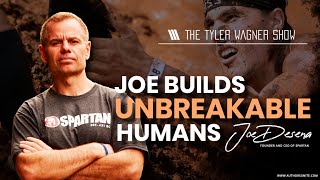
In this episode of The Tyler Wagner Show, host Tyler Wagner interviews Joe De Sena, founder and CEO of Spartan, about his personal background, the creation and evolution of Spartan’s portfolio of hard‑core endurance and obstacle‑race brands (Spartan, Tough Mudder, La Ruta, M2O, DEKA, etc.), and the psychology that drives people to commit to challenging events. De Sena recounts growing up in Queens, a transformative family health‑food experience, early exposure to ultra‑endurance races, and the realization that scheduled races act as powerful accountability tools. He explains how Spartan shifted from 300‑mile ultra races to more accessible 3‑13‑mile obstacle formats in 2009, leveraging social pressure, the rise of CrossFit, and economic downturns to fuel rapid growth to 1.5 million participants across 45 countries. The conversation covers the impact of COVID‑19 (a $50 million loss), the launch of a $3,000 Global Pass granting unlimited race access for nine years, and plans for a monument in Sparta, Greece. De Sena shares transformational participant stories, including a veteran who averted suicide, and acknowledges the inherent risks of large‑scale events. He also discusses his writing process, multiple New York Times best‑selling books, a concise health guide, and daily habits such as early sleep, hydration, cold exposure, and sauna use. The interview ends with ideas for expanding community engagement through podcast collaborations and future events.
Chapters
All right everyone, welcome back to another episode. Today we have Joe De Sena, so welcome to the show, man.
Thanks for having me. That was a hell of an introduction.
Yeah, um, well, no, so, so we leave that to our guests. So to start off, uh, can you, uh, tell us a little bit more about you and what you do?
Sure, um, I am a founder CEO of a company called Spartan. We are— I don't know if you guys know LVMH. LVMH is a house of brands, really cool brands, right? Luxury brands. We are a house of really hard, challenging brands. So Spartan, Tough Mudder, Spartan Trail, DEKA, La Ruta, M2O. If it's hard, if it wants you to quit and makes you cry, we probably own it. Awesome.
Okay, so you probably get this question a lot, but before we dive into more specifics, I, I always like to know like what the root is. So meaning, what were you like, how did you come up with these ideas? Like, what were you doing before that led to this?
Years ago, I grew up in Queens, New York. Um, my, you know, if you saw the movie Goodfellas, I grew up ground zero for Goodfellas. So right across the street where the a family called the Varios. Kennedy Airport was a quarter mile away. And if it was able to be stolen, it was probably stolen out of Kennedy Airport. People were going to jail. The food of choice was, you know, pizza, raviolis, eggplant parm, chicken parm, cannolis, unhealthy environment, mentally and physically. Right. Lots of cigars, lots of alcohol, fat folks. And my mom, whose mother, my grandmother, was dying of cancer, my mom walks into probably the only health food store in the early '70s on the East Coast. They got incense burning. It was like an old school, you know, health food store. This is way before there was Yoga Journals or Lululemon or anything. And she meets a yogi and the yogi starts telling her about a different way to live. You know, you don't have to eat raviolis. You don't have to kill people. You can do yoga. You can meditate. You could be a vegan. And she goes, she goes 360, you know, completely changes her life. And my parents get divorced. My mom moves my sister and I to Ithaca, New York. And during that whole process, one of the things that this guru she met put on, believe it or not, was a 3,100-mile running race around a 1-mile loop in Queens, New York. And, oh, hang on, I got a drink coming because—
Yeah, that works.
A 3,100-mile running race around a 1-mile loop that still exists today. It's called the Transcendence Run. And I'm young and I see this race and I start I started thinking, oh my God, the human mind is unbelievable what it's capable of, right? So fast forward 20-something years to the mid-'90s and I stumble upon adventure racing. Never, never heard of an adventure race, but it was basically a point-to-point race, 350 miles, self-supported. I'm climbing mountains. I'm finding food, I'm freezing, I'm tired, usually with a team. And I understood what my mom was talking about all these years. I felt alive. I started roping people into it. I built better relationships. I became more resilient. I felt, you know, like, like life was all of a sudden purposeful and I couldn't get enough of it. Any race anywhere in the world, the harder it was, I had to do it. I found that when I had a race on my calendar, I did the work. I went to bed early. I woke up early. I didn't, you know, I didn't have the extra drink or the extra dessert, right? I had to get ready for that, just like a boxer gets ready for the fight. So that was my way of holding myself accountable, of being a peak performer. Around the early 2000s, 2000 to be exact, I said, oh my God, this could be a business. I could actually put on crazy events. So 22 years ago, I bought the URL peak.com, P-E-A-K.com. And I attempted to put on events all over the world. And so, you know, 22 years later, here we are. 45 countries, uh, a bunch of really cool brands. And, you know, I made it sound easier than I— I went through COVID, lots of challenges along the way, but, but that's how we got here.
Wow, dude, that's— so I'm curious on, um, because like, what, what do you think the psychology of that is? Is why, like, knowing that you had the race come up, why did that enable you to like commit more? Because like, I've realized with myself for me, it's like other people, like I'll let myself down sometimes, but I'll never let somebody else down. So if it's like going to the gym or something, if I'm meeting someone there, I'll never be late. I'll never miss it. But if I have it on my calendar and it's just me, then I'm like, eh, I don't really, like maybe I'll go, maybe I won't. So what is it? Is that what it is? Like the other people in the race or what do you think it was?
Yeah. When you actually write the check or swipe the credit card. And it's very rare you're going to an event alone. Yeah. And you've got friends going to do it with you and there's going to be 8,000 other people there and you've told your family about it. And by the way, when your family wanted you at home, you were training for the thing you said you were doing on that date. You're going to do it. Yeah. And so 650 podcasts later, we're You know, I have a podcast and where I've spoken to like the scientists and the biologists and the psychiatrists, right? The reason that is, is because the number one motivator for a human being is the avoidance of discomfort. We will avoid discomfort at all costs. It's more motivating to us than drugs, alcohol, sex. The reason that is, the reason that is, is our brain requires so much energy It doesn't want us expending any extra energy. It doesn't want us to go out and freeze in the cold or melt in the heat or fall off a cliff. So it's constantly protecting us. It's kept us alive on the planet for a million years. Right. And we've got to convince that brain, that monkey brain, that no, we're going to do something hard. It's We're not living, you know, 20,000 years ago. We're living in a world that's pretty easy. We've got Uber Eats, we've got hot water. Everything is like not a threat. Matter of fact, it's so easy, it's a threat. That's the— yes, right.
I was literally thinking that. Yeah, it's—
Instagram is a threat. Netflix is a threat. Popcorn's a threat. The microwave is a threat. So, so, um, The best way, because people email me all the time, Joe, how do you stay motivated? The best way to stay motivated, to stay healthy, is to have a date on your calendar. Yes, have friends that are doing it with you. Scream from the rooftops that you have that date on the calendar. If you don't believe me, think about school. Imagine a school where there were no tests. Would you study? Probably not. And you could go through a bunch of examples like that in your life. You're not like the 1%, the 0.1% of people are going to do the work, but everybody else is not going to do the work.
Yeah, no, that makes sense. What is— so out of all those different brands you mentioned, what's the hardest race out of all of them?
Depends on the discipline. You know, the way you have to think about our brand, imagine you and I owned a giant Olympic swimming pool. And in one of the lanes we had freestyle swimming, in another lane we had breaststroke, in another lane we had butterfly. So really it's just, it depends on the discipline. But if you, if you're a mountain biker, the hardest mountain bike race in the world, the first mountain bike race in the world is a race called La Ruta in Costa Rica. We own that race. Lance Armstrong said hands down toughest bike race he's ever done, period. End of story. Yeah, yeah, when you're ready, we're signing you up for La Ruta. Matter of fact, anybody listening should go to Project 7 Spartan, and it's the 7 toughest races in the world, 7 different disciplines all around the world. So I would love it if you challenged you and your audience to do all 7 of those someday.
Dude, that would be sick. Yeah, that would be awesome.
It's on me if you wanted— if anybody wants to do it. Okay, so, um, so anyway, uh, if you were looking for a paddleboard race, well, we got M2O. It's the toughest paddleboard race in the world. It's in Hawaii. If you're looking for an obstacle race, probably our Ultra Beast World Championship 24 Hours, hopefully next weekend in Tahoe, although the California fires are threatening, um, the cancellation of the event. We'll see how that, how that turns out. Uh, Tough Mudder, World's Toughest Mudder 24 Hours of Hell. You've heard it, you've heard it.
Yeah, I've heard of Tough Mudder for sure. Yeah, is that the most well-known one, Tough Mudder?
It's funny, um, in the I now know your economic background, like the white collar, maybe played a sport in high school or college, tends to know Tough Mudder. Everybody else knows Spartan. So it really just depends on where you're from.
Okay, got it, got it.
That's fine. It's pretty funny. It's all over the world. So we've got a hiking business called Highlander Adventure. That's like 3 days of hiking. You camp out. It's pretty awesome. We've got a fitness brand called Deka, D-E-K-A, which is really appealing to the gym crowd. So we got a bunch of them. They all suck. They all make you cry, but they will motivate you.
Dude, the paddleboarding one, I, like I was telling you before, I live down here in Miami. I go paddleboarding a lot out here. So I don't know that. How long is that one?
Um, it's a 16-mile and a 32-mile.
Dude, I think you want a six-pack, do that. I think that's how you get it.
You are officially signed up for the M2O now.
All right, dude, I'm in. I would love to do that one. That's sick. Okay, um, and that— this is recorded, so I have to do it now. All right, I'm in. Um, uh, oh, what I want to ask you next is So out of all these, um, uh, races and stuff, what is like the best story you've heard of like a transformational moment for someone? And then has anything like really bad happened too? Like, uh, I don't know, maybe you don't want to mention the bad thing.
I'm just saying the transformational stories are by the million, literally by the millions. Um, I had a guy in Citi Field come up to me and say, Joe, I just want to shake your hand. He was teary-eyed. He said, I'm a veteran. I'm now a fire department. I work for fire department, firefighter. I want to tell you, I had a gun to my head. I was about to pull the trigger. And I remembered I had a Spartan race the next week. And so I put down the gun. And he got teary-eyed and I got teary-eyed. And I said, listen, you're now racing for free for the rest of your life on me. Like, I'm never going to let you not have a date on the calendar. And, you know, I would, I would feel terrible if something happened to this guy, right?
Yeah.
Oh, anyway, so many stories like that. I mean, look, people do die when you're running races at the scale we're running races across 45 countries, 1.5 million participants a year. Somebody is going to die. If you and I put 1.5 million people in a room, somebody is going to die. For sure. You know, when we get those phone calls, it sucks because that's the— I mean, the goal is to help people and lift people up and make them more resilient and build community. But it comes with the territory. For sure.
How, from the beginning, because to me, like, marketing is kind of my main thing. So I can see very easily how this would spread because it's like, it's a group type thing, right? So if you do it, then you ask your friends. So That makes sense to me, but from the very beginning, like, how did you get it to spread from there? Or was it like very small the first couple races?
Or— Well, from 2000, from the year 2000 to 2009, I, the most I got like 100 people to a race. And the races I was putting on were all very long distance. They were the wrong form, you know, 300 miles. Who's gonna sign up for a 300-mile race? But that's my mindset. That's where I was. I would lie to people and tell them it was a barbecue, and then like, I would literally just to try to make stuff happen. Yeah, hold on one second. You hold on one second.
Yeah, no, you're good.
That was my son's coach, my son's wrestling coach. Somehow the same way I'm able to get people to do things that they otherwise don't want to do, when the coach calls, I answer. I don't know, I jump to attention with him. He's got power over me, this guy.
Well, for sure. No, it makes sense though, because he's with your kid, right? So I would pick it up.
Me too. So Those early years, those first 9 years, impossible to get people. 2009, I changed the format. We changed the format. We made it 3 miles, 8 miles, 13 miles. We made it more of a military-inspired obstacle race. It was doable. That was around the same time Facebook was coming into a big existence. CrossFit was coming into a big existence. Tons of military coming back from the Middle East. So it was a conflict. But and the other thing, let's not forget, this is big. The other thing was we were going into like a full-blown depression. And that's good for us. Like whenever, whenever markets are tanking and folks are not feeling that rich and they're feeling sorry for themselves, they're not going to Disney and having a Slurpee. They're coming to us. And they're doing rope climbs and burpees and they're— and so all around the world, whenever a country's having trouble, we're thriving.
Yeah, interesting.
Yeah, I'm the only guy praying for depression every day.
Hey, well, you're in a good spot, uh, now. I mean, that's like, uh, what a lot of people— I don't know, a lot of business people that I watch on like YouTube and stuff, they're saying it's, it's coming. Well, Well, we're already in a recession right now, aren't we? Something like that.
A little bit.
So, okay. So it was 2009 and then that was kind of the— and you would say that it was because of the structure. So the 300-mile thing, and then once you changed up the structure, that's what got more people interested?
Yeah, I changed the product. I mean, imagine if Elon Musk's first car didn't have an engine or didn't have a battery, it had pedals, he probably wouldn't sell so many.
Yeah.
And then, and then the second version had a battery that only went 10 miles, he wouldn't sell so many. And so when he finally got the product right, um, and when I finally got our product right, um, plus, plus there's got to be charging stations out there for the, for the car to work, you know what I mean? Everything was just, yeah, it was just the perfect storm.
Got it. So, so, but then it was like, although it wasn't overnight, when did you get to the like million and a half participants per year? And is it— is that kind of been steady then for a while? Or— and then tell, tell with COVID like, what was that? Did you have to take a break from things?
Or a break—
well, meaning like with the restrictions. And you don't have to— we can go as deep into that as you want.
No, no, no, no, no. So first race under the new format, late 2009, early 2010, gets 700 participants.
Okay.
That grows to 1,500 to 2,500. Before you know it, we got 10,000 people at an event.
Got it.
Yeah, 6 or 7 events going on. Before you know it, we're up to 20 events, 50 events, 100 events, then 350 events. And so it just, it just took time. By 2019, we're top of our game. We bought out our competitor, Tough Mudder. We added some other brands. We're high-fiving each other. We finally made it, right? All these years of building this thing, 19 years, it was all worth it. And then COVID hit. COVID shut us down globally. We lost $50 million. We lost more money than we ever made in the 20, 20 years we were in existence. We lost. Completely upside down, furloughed a bunch of people, hung on for dear life, and now we're just coming out of it. It's been the hardest 2.5 years of my life, hands down. Yeah, it'll be— it'll make an amazing documentary on how the hell I am standing here doing a podcast. You have no idea what this has been like.
Yeah, no, that's why I'm like, if you can see my face, I'm like, you seem actually very like calm right now.
Like, I'm so punch drunk that, um, and so beaten and battered that I'm just rolling with it, you know?
Got it. Yeah, I think, um, like you said with the documentary, and yeah, whether you're religious or not, you know, God works in mysterious ways, I think. So in the end, I think somehow it will be— I don't, I don't know. I don't want to say it's like a good thing, but I think it'll, it'll, it'll work itself out. Because if anything, uh, from what I've seen being down in Miami, it's so open down here compared to other places. I think people are seeking these things more than ever. So you'll probably see like an even like a multiplier.
I think next year is going to be our year. I just launched something big. You're going to love this. Yeah. To help us dig ourselves out of this hole. I said, you know what we're going to do? We're going to launch a global pass for the first time. You're going to be able to buy a pass for $3,000. You could race any race, any brand, anywhere in the world for 9 years. $3,000, you can do anything you want for 9— I'm going to fill your calendar for the next decade.
Yeah.
And then because we're building this awesome monument in Sparta, you'll be able to have a stone associated— your name associated with it in Sparta, where you could, um, put your ashes after you're dead. Put your— so now imagine this big statue of this Spartan helmet, the 300 tombstones around it, and then you and I are buried next to them for eternity. Yeah. So a decade of events and a stone to remember you in Sparta, Greece.
I love that idea, especially because with the amount of races you have for only $3,000. Like, what's a, um, what does a typical like one race normally cost? Like, like $100?
About $125. So, oh, if you did 10 races a year, yeah, and you calculate— I mean, this thing should trade for $5,000 or $6,000.
Definitely.
You know, so, and then we're going to do one special event every year just for the pass holders.
Nice. Okay. Got it. Yeah, man. That's awesome. Because I know I've never done these, but how I heard of Tough Mudder is my friend. I have a lot of friends that did it. Like you said, you know, my economic status or something like that, how you said is, and they are, they love it. Like they'll do it probably for the rest of their life. So I think when people start this, That's probably the biggest thing is like getting people to do the first one. But once they do it, they're probably bought in for life.
They're bought in for life. So you're in Miami. When we hang up, I want you to look up or shoot me an email. Anybody can email me, joe@spartan.com. Shoot me an email and I'm going to hook you up. I want you to round up 299 other people. It's free, no charge.
Okay.
I want you to do one of our events in Florida. And, um, it's gonna— you're gonna energize your entire community. It's gonna be unbelievable, you guys. It's like going to war. It's like going to war together, dude.
Yeah, that would be so fun to do in Miami too. I'm actually— I'm looking at the, the beach right now, so that'd be sick. Um, I wanted to ask you too, because I just want to make sure we don't skip over this. Our, um, like part of our main audience, because of the business I run, it's called Authors Unite. And so a lot of our audience are people that want to be authors or are already authors. So I saw one of your books or both of them are New York Times bestsellers. So what was, um, a couple questions there. What was like the process of writing your first book? Like how did you, what was your like method for doing it?
The book has been, it was being written in my head. For a long time. And I think somebody came up to me at one of the races and said, you know, you should do a book. And I already had this in my head. So I just, I got somebody to help me and I vomited up like on a recording. Yeah, all my thoughts. And this gentleman helped clean it all up for me. And I went back and forth 20 times and kept editing. And a friend of mine who reads like 5 books a week said, listen, you could be editing this thing forever. It never— at some point you got to just put a stake in the sand and say, let's go. And we said, let's go. We had a big, rabid community. We were lucky. Most authors don't have that already, right? We had the business first and I don't know, New York Times bestseller, whatever. But it worked and it was very, very popular and it got translated tons of countries and languages. It's a big deal. I don't think anybody in my family's read it. I don't think they recognize that I'm an author in my house, but people like it. And then I started getting asked to write other books or whatever. I'm always writing books. I'm always 2 or 3 books ahead. I've got 3 books in the hopper right now that— Oh, that's awesome. Yeah. And what I do I'm sure the authors listening, this will make no sense at all. What I do is I'm always working on a book. I'm always polishing it. I meet somebody and I'm like, hey, can you help me with it? And I keep iterating and iterating it. And then all of a sudden, the universe will just put somebody in front of me that says, hey, you should do this book on this or that or whatever. And I'm like, oh, I got one. And it just happens. And that's happened. I think I just did, I think I just published my 1, 2, I don't know if I've done 4, I think 4 books.
Yeah, I was looking at it. I'm looking through on Amazon right now. You actually have a lot.
Yeah, I think I just did my 4th book, "10 Rules for Resilience." And so I have 3 more in the hopper.
Dude, that's incredible. And I think what you just said, basically that's when it's like preparation and luck meet each other, right? So you're, you're like prepared, you're always ready for that moment to happen when that person, uh, comes, especially. So those three are— so you're actually like writing three simultaneously, or you have three ideas and you're doing one by one?
One of them— one, one, let's go through the three. One of them is a fiction— it's the only fiction book, um, I've done, and I started working on it, um, in 2015. 15 in my head and I couldn't get it out of my head. And so then one day I said, you know what I'm going to do? I'm just going to spit out on a piece of paper like bullets about this book and the characters. And, and I, and I created like 2 or 3 pages of just bullets with no writing other than like single sentences. This character, where he's from, where the opening scene takes place, whatever was popping into my head. Yeah, it's fiction. And, and then I asked somebody to help me just flush it out a little bit, turn it into 5 pages, give me a little more meat on the bone, you know? Mm-hmm. Didn't really get very far. And then I was in an ultra run and I wasn't in great shape. It was a 50-mile run. And I heard that at mile, you know, 18, we had to be there by a certain time. And if we didn't make it there in time, we were cut. I wasn't really in good shape, and I'm embarrassed to say that. I was like, I was hoping I got cut. I was like, I do not feel like going past mile 18. Yeah. And I was like at mile, let's say, 13 or 14. It wasn't look like— and I was— it didn't look like I was going to make it. And this woman fell on the trail in front of me. She was, she was having the same issue. She was racing. And I helped her up and she said, hey, I just got, um, I just found out I got breast cancer. I had to get my breast removed and she landed on her breast like. And so, you know, I helped her up and I was like, listen, we got to make this 18-mile cutoff now. If you're going through that, like, we're making the 18-mile cut. I got inspired.
Yeah.
And we hustled and we got to mile 18 in time and we were like, oh, we made the cutoff. And they were like, what? There's no cutoff. And so there wasn't even a cutoff, right? But it got us going. So for the next, you know, 32 miles, her and I flushed out this book. Like, we just talked. I was— and she was like, oh, well, what if this character did this? And what if that? And it just— it helped us get through the next 32 miles because we were just— we were just talking, you know? Yeah. So when I got back to a computer, I was able to vomit a bunch of that up in this fiction book. And then I found like a writer that writes this way because because I don't. Yeah. And he helped. And so I would say now it's at— a book is ready for publishing with me when it gets to level 10. That book is at level 7.
Got it.
Right. And I know I'm going to bump into somebody that's from Hollywood because I want this— that book to be a full feature film.
Yeah.
I'll meet somebody from Hollywood, wherever, and the stars will align. And I'll hand that book over and then it'll take its journey. The other book that I wrote, I wrote during COVID and it's 12 Ancient Truths About Being Healthy. Just 12 simple things that I wish everybody did, like brushing your teeth, going to bed early, you know, putting your phone on airplane mode. Anyway, I got 12 things in there. It's a tiny little pamphlet, and my dream would be that that book would sit at checkout counters the same way 5-Hour Energy sits at checkout counters. That little thin pamphlet would sit at checkout counters. It would be 50 cents, and every truck driver, every person that's going in to grab some really sugary drink and a bar would grab it, and maybe it would change their life. I don't want to make any money with that book. I just want it in everybody's hand.
Yeah.
And then the third book, you know, Ben Askren, he's a fighter in the UFC. Oh, yeah. You know, Ben, Ben and I met serendipitously, I don't know, a year or two ago. And he said, hey, I want to work on this book. I got this idea. And I said, well, maybe I could help. And so, so him and I have been working on a book and I would say that's at level 5, that book. And he was just bugging me the other day and said, what are we going to do? And I said, just, just bear with me. It's, it's, it's got to go to the next level. I don't know what's going to happen in the universe. Just bear with me.
Yeah. No. Wow. That— so on the second one, what are— not asking for all 12, but what are like a couple that you would mention that like are like easy? It seems like it's a book that it's— they're like things that maybe are commonly overlooked, but they have a big impact on your health. So like, what are a couple?
Super, super simple, but people don't want to do them. Yeah. And the book is called Ready for Anything, and you could find it in the Spartan digital ecosystem. You could download a PDF. And, um, but I also have tons of— I printed because I'm an idiot. I printed a bunch of copies of it too, uh, just in case I ran into somebody that owned a bunch of 7-Elevens that I could So number 1, go to bed earlier. Yeah, obvious. Number 2, if your job allows it, most people, you know, you can wake up early, go to bed early, wake up early. Number 3, drink a ton of water when you wake up, like almost a liter, room temperature, maybe a little apple cider vinegar and a little bit of lemon. And I give all the reasons why. Yeah. Number 4, get a sweat on. You got to earn your breakfast. You're sweating before you eat. You got to go hunt an animal or go forage for food. Next, you're jumping in an ice cold shower. It's going to suck every day. It sucks. Tons of benefits from that. You're not eating breakfast till 9 a.m. I mean, these are just simple things that if you did change your whole life.
Yeah, I, I was actually, I was just talking to my girlfriend about this. Um, we were traveling in Vegas, um, we got back last night and because the time changed, my sleep schedule was all messed up. So I was getting up and I normally get up at 5 or 6, but in there I was getting up at 2 or 3. And there's something about, and I know that's probably not as early as you meant, but when you, when you get up at 2 or 3 in the morning, like my productivity from like 2:00 AM to like 7:00 AM, it's unmatched. Like I just crush work. And I think it's, there's no distraction. Like nobody is awake. So I don't know if you're trying to get something done, that works the best for me rather than trying to stay up late. I'd rather go to bed at like 7:00 PM or 8:00 PM, get 6 hours, wake up at 2:00 and just crush it. So I don't know, that works for me. And then I'm actually about to buy this. It's called Edge Theory Labs. It's like a, have you heard of it? It's an ice bath that, you can actually travel with. So it's like 15 minutes to set it up and then it has, it like fits in a backpack and it, yeah, it's really cool. So, 'cause that I tried an ice bath down here in Boca. One of my friends has one and dude, that is life-changing. 3 minutes, you feel good for like 6 hours after that.
It's— 1,000%. Sucks getting in, but it's great getting out.
I have to say though, like, 'cause I've tried, I can't do the cold. I mean, I can, but the cold shower, it's like fricking like cold bullets just hitting you. That sucks. The ice bath sucks too. But after about 10, 20 seconds and you find your breathing, you can kind of zone out. Like, it's the cold shower is just— that's hell. I think that's how I do it.
I do it every day. I used to do it as a kid because I was— everybody in my neighborhood was going to jail and I was just wondering, was I tough enough? And I'm just so crazy that I was like, I guess I got to test myself. And I started those cold showers when I was a kid.
Damn, that's wild. And what are— so I know it like increases, I think, because I've read some stuff. So it's like 200% dopamine increase and then inflammation.
What are some of the— the vagal nerve, the connection between the brain and the body, increasing circulation, boosting immunity. Like, it's just off the charts. So many benefits. Yeah.
And it's like free. It's so crazy. Most people still don't do it, but it's so significant. And actually, I know Rogan, he does that and then he goes sauna and he goes back and forth. So I think there's other benefits too if you like—
Old news. The folks in Sweden and cold Russia, they've been doing that forever, back and forth, cold, hot, cold, hot.
Dude, yeah, there's people that go viral on TikTok. I think they're Russian and they just go out back and they just jump in, they— Do a circle and just jump in it.
The Eskimos will take the babies, a young kid, put them in ice cold— cut a hole in the ice, put them in ice cold water when they're young. Really? Wow.
Yeah, I didn't know that. That's crazy. Um, so I, uh, just curious, um, because I, I actually, I help people do this. So I'm just curious, you had already built a community, which is different. Like a lot of times authors like they have a business, but the book is kind of in the forefront, and then that's like leads to build the community. So for you, like, did you have like a marketing plan behind it, or you literally like— there was just so many books bought and then it ended up hitting?
Yeah, there was just so many books bought because we were lucky we had that community already.
That is amazing. Give me one sec, somebody's at my door. This is a funny interview in the sense of the phone call and then— but we can edit. It's not a big deal.
So we're gonna, we're gonna take you to a race. Yeah. You got it. You got to hit up my friend Jen Cohen. She's got a book coming out. She could use your help. Yeah, Google her, look her up. She was the Strong is the New Skinny or something she wrote years ago. She's got some new book coming out.
Okay.
And then, and then, oh, I, we got it. We got it. You and I got to start a hashtag, bury me in Sparta. We're gonna do something fun there.
Okay, yeah, I'm down.
And what else could we do, dude?
I definitely want to, um, I mean, I don't know if I— well, that's a limiting belief. I think I could get 300 people, but it seems a little wild. But the Miami idea down here, that sounds like a blast. Like, if we could create a route or something, or would we do it not in the city probably, or could we?
I don't know. I'm gonna, I'm gonna take you to a Florida race. You're gonna have to travel a little bit from Miami, but it'll be okay.
Cool, cool. All right, yeah, that's fine.
You're committed, you're on the hook.
All right, yeah, keep me on the hook, man. And I wanted the paddleboard one, I definitely want to do that.
So you're going to Hawaii. All right, where— I might— we might do something, it'd be kind of cool if we bring a bunch of podcast hosts out, they each have to bring 300 people, no charge. Yeah. And we, and we rank who the toughest podcast audience is.
Oh. Well, that's definitely mine. So no, I don't know. But no, that would be a lot of fun. Um, that actually would be— that's a great idea for a lot of different reasons. Um, so yeah, let's do that. And, um, and my parents have been wanting to go to Hawaii, so that's an excuse for me to take them to Hawaii to do that.
Um, I got it. Any, any last questions?
No, no, we're good. This will be live in about a week, and then I'll follow up with you after that.
You're awesome.
Sí, bro.
More from Tyler


Catherine Nikkel : THE STORY EVERYONE HAS BUT HASN'T TOLD : The Tyler Wagner Show #1120



Scott Ritzheimer: Bring Predictable Success to your Organization | The Tyler Wagner Show #1115


Fred Moskowitz: A GUIDE TO GETTING STARTED WITH IN MORTGAGE NOTES | The Tyler Wagner Show #1113

Mark Podolsky: From Land Investor to Full Time Success How I Made $90,000 Cash in Real Estate


Mark Podolsky: How to achieve a 300% return on investment my foolproof strategy

Mark Podolsky: How to make passive income selling raw land the irresistible pricing strategy