Joel Primus: Getting Naked | The Authors Unite Show #990
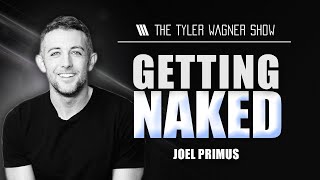
In this hour‑long interview on the Authors Unite Show, host Tyler Wagner talks with entrepreneur, former elite runner, and author Joel Primus. Primus recounts his early life as a competitive long‑distance runner, the injuries and eating disorder that forced him off the sport, and how those experiences shaped his mindset. He then details his entrepreneurial journey: founding the underwear brand Naked Underwear, scaling it from a kitchen‑table startup to a public company on junior markets, uplisting to NASDAQ, and eventually selling it to Bendon Lingerie. He explains the lessons learned about cash‑flow, public‑company costs, and the importance of aligning personal delight with market need – a theme that underpins his new book Getting Naked: The Bare Necessities of Entrepreneurship and Startups. The book is presented as a step‑by‑step guide for turning ideas into funded, scalable businesses while maintaining personal balance. The conversation shifts to health and performance. Primus describes his running routine, the flow state he experiences while running, and the 80/20 principle of effort versus results. He shares his biohacking practices—intermittent fasting, ice baths, rotating supplements, prioritising sleep, and occasional use of testosterone replacement therapy (TRT). Tyler adds his own regimen of vitamin IV drips, TRT, and ketamine infusions, and both discuss psychedelic experiences (psilocybin, LSD, ayahuasca) and their role in personal insight and trauma processing. Throughout, they emphasize the need to drop habits that become crutches, to listen to the body, and to let problems resolve themselves rather than over‑trying. The interview closes with Primus promoting his website, Instagram, upcoming speaking engagement, and the release of his book.
Chapters
All right everyone, welcome back to another episode of the Authors Unite show. Uh, today we have Joel Primus with us, so welcome to the show, man.
Thanks for having me, Tyler.
Of course, grateful to have you on. Um, if you can start us off a little bit more about you and what you do.
Yeah, man, I, I think I, I was reading my buddy's book. He actually lives down in Miami.
Oh, no way.
Uh, what's the— I know I'm kind of digressing right away, but the— I can't remember the name. It's like that one road that's got 3 islands on it and it connects Miami to Miami Beach.
Uh, Venetian.
Yeah, he lives, he lives on there.
Oh, cool. He's racing. I'm at South Point Park, so I'm literally like 17 blocks south of him. And then, you know, obviously on the water a little bit.
Do you ever see a restaurant there called Soul Tavern?
Uh, yes, I know.
That was his place. I've eaten there. He's like, he's like my, my mentor, friend, uh, just an amazing human being. So I was reading, he was talking about how when your greatest delight, the thing that gives you the greatest delight meets the world's calling, like what the world needs, where those two things match, what gives you the greatest delight, where the world needs you, that's like where you should be. And I'm not 100% sure I'm there yet, but historically on my way there, I have been a competitive long-distance runner, and I've started a bunch of businesses, um, filmed a movie, a documentary about, about travel, and recently, uh, wrote a book called Getting Naked about my sort of first real startup. You know, you do the little, the little ones to try and get a flavor for it that all you kind of shut down in a few months or whatever, and, and this one was called Naked Underwear. And that was a company that we took from, you know, kitchen table to our version of Shark Tank called Dragon's Den, to every major department store in the US, to the NASDAQ, and divested it. And so the book is, it's a how-to startup guide from inception, idea to sale. And it's also a book about the importance of balance and finding yourself. Sort of the double entendre of getting naked along that journey. So that's what I do.
All right. A lot of synergy here. So I don't know where I want to start. I just want to close the loop on the Soul Tavern real quick. I wouldn't know about it, but my ex-girlfriend was vegan because that was a vegan place, wasn't it?
Yeah.
Or vegetarian or something. So that— I've eaten there many times. No longer with her, but I appreciate her for introducing me.
Yeah, it was like vegan and it had— he's actually shut it No, sold it or shut it down. I'm not sure. But they used Chinese medicine principles of like color palette and hot and cold alongside the vegan and also the mixology to try and have like the super healing meal. Yeah, I'm selling something that might not be available now.
So if you're in Miami, don't look for it. And then, uh, running. So I, I run about 6 miles every morning. So I'm curious, like, let's actually dive into that and then, and then we'll go, um, into your journey kind of starting out. But for running, um, just this is me just being selfish. I'm just curious, like, when did you kind of start and how have you seen it impact your life and career? Like, is it a big part of your life still?
Uh, it will be again. So fitness is a big part of my life. Running long, at this moment in time, uh, it isn't. And, and there's sort of a reason for that. So when I was— do you know a moment, I'm sure you and everybody in this podcast knows, when you're in high school and you're like, damn, I'm like, this is the thing I'm good at, so I guess I'll do that. But in— before, it's like, I'm on the football team, I'm on the basketball team, I'm on the whatever team. And then it's like, but I'm actually the best at running and I'm small and I'm not going to get any bigger. So I'm just going to run. Um, and so from like the time I was 13, maybe 14, I was running like maybe 50 miles a week then to like 80 miles a week by the time I was a senior, working out, not partying, biohacking before biohacking was a thing. And then I went to the world championships and I kind of, I got dusted, man. Like the Kenyans just rocked me so bad, man. And so I'm like standing on the starting line and like, I'm 123 pounds, 5'8". And I'm looking at these guys and I'm like, I'm fat. I'm overweight, right? And so I actually become anorexic. And, you know, to the extent I ate, but I ate probably 2,000 less calories a day than I was burning. And I dropped to like 115, 117 pounds. And I'm a freshman in college now down in North Carolina. And I can't stop getting injured. And because I'm sick, I'm physically sick, I'm mentally sick. And it just got to the point where I couldn't run anymore. I tore my Achilles mentally. The sport had beaten me down. I'd sacrificed all the fun and spontaneity of my youngest, younger years in this discipline. And so it took a while to come back. And the things that came back, which I'm sure you can relate with, are just that feeling of you're running through a trail and feeling like a wild animal. Or I don't run with a watch anymore. And so just, it's not about that. It's about my breath. It's about nature. It's about feeling powerful and alive. But my body's still pretty sensitive. So I can't pound out the miles like I used to.
Got it. How long are we talking? Like, how long distance?
Back in the day?
Yeah.
Well, I would just compete. I would run, like, you know, I'd run a half marathon on Sundays, and I'd run, uh, on top of already having run 40— or sorry, 60 miles that week, right? Um, and then, you know, and I'd run 16 miles on a Wednesday, you know, and sometimes I'd run as far as 20 miles. Um, but now it's like anything over 7 miles, 8 miles, my legs, my ankles, my knees, every— my everything just starts to not happy with me. So I keep it shorter now than I used to. Do a lot of hill repeats.
Okay, got it. Yeah, I was just curious too because like I, um like 6 miles in the morning seems to be my sweet spot. But I was curious, and maybe because your body's changed a little bit as you've gotten older— not that you're like older, you know, it happens— yeah, so, but, or at least when you were running the 20 miles, did you ever notice that there was kind of like a time where you felt like you couldn't go through, and then it was always at like mile 9 or 10 where It was almost like the endorphins would just take over and then next thing you know you're finished. Because I feel like I'm just at that point, right? Like 6 miles, I feel like I could actually go way further. Yeah, just stop myself due to like time. I'm like, well, I have other things to do, right?
Yeah, that's the, uh, that's the curse. Like all my, uh, all my friends who are sort of in their mid-40s, early 50s They're, they're like working out like 2, 3 hours a day, like whether that's on the bike or whether that's running or swimming or, you know, a lot of these guys do triathlon training.
Yeah.
I don't feel like I have that time anymore as much as I, I feel like the same thing. It's like, oh man, like I got stuff to do. I'm trying to hustle and make it. But, um, yeah, man, that, that experience, I think the zone, the flow It's, it's, it's almost second to none in running. And, and I've had it in races, which is the best, because then it's like, you know, it's like some races are incredibly hard and you, you feel like you're gonna die, literally gonna die, because your body doesn't want to take another step. And some races you feel like you're invincible. And I always found that at night was my— if I was running at night on racing around a track, something about the limited vision, I think, and just like the air being a little bit more oxidized, I could get into that state far more. Um, but on a long run, yeah, like definitely 45 minutes in, your body is still adjusting into, into its state. You're not even in— you're not even into, you know, your true endurance zones, your true aerobic zones. Um, where your, your capillarization of your blood is really happening until after an hour, after 70 minutes, right? Like that's when the shape, the state shifts. And so for me, I would always definitely, I would definitely find that never on a run less than 6 miles ever, period. It would have to be somewhere on that longer stretch.
Got it.
Now you can just, you can just flow. And I think it's one of the best. Teachers of meditation is because it's so much harder to get in that state meditating with the noise of our, you know, your monkey mind. But when you're running and it just happens, it shows you that it can happen. It's like, oh, it actually can happen because it just did happen. It might be hard to get back there, but it's proof. It's proof you can get there.
Yeah, no, I, I couldn't agree more. What I, I always tell people this too, where it's like any problem I'm trying to solve or something, instead of like, like trying to solve it, what I will do is go for a run or a walk and literally whatever's going on with the mental part of that run, like the runner's high as they call it, or whatever it is, it's as if like my problems just solve themselves. Like, I'm like, oh, that's what I need to do. Like, that's what it is.
Yeah, man, dude. Like, that's one of the challenges, I think, with the way that our work is structured, especially if you work for somebody or even just this idea of like, this idea of trying is so misunderstood. Right. There's this, um, to continue on the running example, do you know Galen Rupp? Galen Rupp is the American, the best, the best runner in America for long distances. He's, he's an Olympic silver medalist in the 10,000, bronze medalist in the marathon. I mean, this is a, this is a white dude, like, right. Uh, trains out of Oregon and there's this picture from the— I think it was the Rio Olympic trials, maybe it was after. He's sitting there on the starting line, and he's sitting on the starting line because there, I think there was maybe a 5-minute delay, or there was a countdown like 5 minutes till the gun goes off, whatever. And all the other runners are like, you know, slapping their legs and like doing sprints and strides out, and just tense, just tenseness on their face. And he's chill. He knows he's the best. And he's like, I got 42 kilometers to run, 26 miles to run here. I don't need to do a bunch of strides, you know, and tense up my body. And he taking that relaxation, he just sat down. Of course he won that race. Right. And, and there's this thing, it's like the 80/20 rule that is in so many things. 80% effort can actually produce a better result than 100% effort, because 100% effort is, is you're tensing, you're trying so, so, so hard that the body just loses that, that natural ability to, um, and, but we think we need to try 100%. We're told to try 100%, but it's really when we do what you did, and so to to kind of divest back or digress back into what you said, it's like, we think that the problem gets solved by just like trying harder and sitting in it and like working it through. But what you do, it's the way smarter approach. Take a step back, pause, you know, let it come and not think that the world's gonna like crash if we don't.
Yeah, exactly. Kind of like let it solve itself is really what ends up happening. And then also, so I'm curious, do you still do— I know then when you were running the 20 Miles Plus, the biohacking, because I'm actually like very— like, probably my biggest expense besides rent down here is my doctor. Like, I have like a— like, out of insurance and just like an amazing doctor every 2 months, blood work. Like, I do it all and it's life-changing. So like, what do you— do you still do biohacking at all or?
I have been flow. When biohacking consumes me, it's when I have to— I stop biohacking personally.
I see.
Yeah, right. Because— and that's just me because, like, again, we go back to like this 80/20 thing, this idea of like letting something solve itself, which you said so well, is like, if I'm thinking, ah, I didn't get to this thing, I didn't get to this hack, and then my mind's like spiraling on that, then it's not, it's not actually helping me. It's hindering me, right? It's become, it's become a crutch.
Yeah.
And, you know, because ultimately I, and I do, I do believe in biohacking and I'd love to hear some of the things that you do. But, you know, I always say we don't add our way. I shouldn't say I always say, I say it, but it's not my saying. We don't add our way to enlightenment, right? We don't add our way to mastery. We actually edit. We actually take out the things that consume us as we, as we, as we ascend. And I think that, and so when I, when something consumes me in a way that is unhelpful, I kind of go back to that saying that it's become a negative, not a positive. But, but to your question, yeah, you know, I try to fast 14 hours a day, maybe, maybe 13. I try to eat either at 1 or 2, or if I'm able to get a workout in at 2 or 1 or 2, then 3. So I fasted a good chunk of the day. You know, there's a palette of supplements that I take, but I take them on and off, right? Like, I try not to do the same thing month in, month out, month in, month out. I try and break it up. I jump in ice baths. I've been doing that since I was 13. But I think Tim Ferriss kind of said it right. Like, the thing I've noticed in the last year is like sleep is the ultimate biohack. Like, and, uh, I have not historically slept well in my life, so I'm trying to figure that out. But what about you, dude? What are you— what are you doing?
What's your routine? Um, so yeah, it's funny you mentioned Tim Ferriss. Like, The 4-Hour Workweek was the book that changed my entire life. I feel like there's a lot of entrepreneurs that have a similar story to that, but, um, What ended up happening with me is like 3 years ago, my stomach was just like killing me all the time. Like, and I go to the— finally, I went to the hospital 5 times for this.
Wow.
And they would do blood work and everything and like X-rays, all this stuff. And they'd be like, you're a healthy— what was this? You're a healthy 25, 26-year-old. And I'm like, thanks, but I want to die because my stomach hurts so bad. So I'm glad I could still be here, but I don't feel well. Either way, I go to this doctor and he does my blood work and he's like, basically, I'm gluten intolerant, so that was messing with me. Then I think that trickled into all these other negatives, like my testosterone was super low, like my whole body just wasn't functioning properly, maybe due to that. Either way, I do 2 IVs once Monday and Friday. They're just vitamin IVs.
Every week?
Yeah, yeah, every Monday and Friday every week.
Legend.
Yeah, yeah, I noticed a big difference there.
Are you peeing like— I did my first one a month ago and I was like, I pissed neon. Are you pissing neon right now? Okay. Yeah, neon. I was like, did it all just like come out of me or did like any of that stay in me? Like—
I think it's so some— I think what that neon color is is actually B vitamins. Yeah, because apparently, at least from my understanding with my doctor, is like B vitamins you can't really ever OD on. Like somehow your body can— like other vitamins you actually can, I think, like vitamin K, you don't want too much of that. So either way, though, 2 of those per week and then TRT I do once a week. So that's testosterone replacement therapy. That obviously you notice a very big difference.
That's the one I've been wanting to try. You do that through IV?
No, no. So, uh, the IV is like hydration, detox, and, um, he throws some other stuff in there, but more just like, uh, vitamins. Um, and then the TRT, it's actually a butt shot. Yeah, a shot in your— one of your butt cheeks once a week. And that, like, if— I don't know what your situation is, but if you're feeling like, uh, groggy often or whatever it might be, or It could be testosterone. That is pretty dramatic how different you feel as a guy when you boost that up. Then the last thing that's actually surprising is for the mental, have you ever heard of people doing ketamine treatments?
Yeah.
Okay. I just started that with him. The best way for me to describe it, it's so strange. He does an IV and it's a 2-hour, very slow drip. And the last time I did it was a few weeks ago, and I felt like I kind of like exited my body and I was looking inside my own brain and I was rearranging compartments. Like, it was kind of trippy.
So is it— does ketamine normally have that kind of out-of-body effect, or is that, is that something you just had?
No, I think it does. Like, he kind of said that's what it would be like. So it's like, like a Yeah, um, kind of, yeah, there was some visuals, but not like a full— like, not like the giggles or anything like mushrooms would do. Yeah, but, um, more like my whole body was completely numb. Like, what was funny is because it's an IV, I actually kept checking, which would interrupt the experience because I, I couldn't tell Literally, he was like, if I chopped your arm off right now, you literally would not know. Like, that's how— like, and I kept— I couldn't tell that the IV was in or not in. So, um, but for men, so it's— I don't know, that's the mental, and then the vitamins, hydration, detox, and then, um, the testosterone is obviously energy and, you know, whatever else.
So, so you're feeling freaking great. That's good work. Yeah, yeah.
There's, you know, there's some other things like you at home with supplements. There's this thing, Ultimate Shrooms. It's like a mix of these different mushrooms that seems to be good for energy and the lion's mane and stuff. Yeah, yeah, extended energy, not the jitters like caffeine does.
So this is— I'm drinking Four Sigmatic with MCT oil, so there you go.
I, um, I've used Four Sigmatic before, and, uh, the MCT oil, Dave Asprey stuff.
So he's pretty good. Dave's got some good products. Um, 100% expensive, but yeah, yeah, that's the ketamine one is interesting. I mean, I've, I've dosed, I've microdosed psilocybin. Um, I've microdosed LSD. I didn't, and I've also journeyed full dose psilocybin, full dose LSD, full dose ayahuasca.
Oh, I haven't done that one yet.
Yeah. I mean, I don't necessarily think that's hacking. I, The microdosing, I don't know if I've got it right yet on those. I've never done it consistently, but like to the experience that you had with your ketamine, I did not have that on my microdose of those things. But I can say for certain that the shamanic journeying with psilocybin and ayahuasca, which for the disclaimer is a Class A illegal drug, I'm not like endorsing it or saying you should do it. When I did it, um, it was beyond life-changing, you know, beyond, uh, the, the unpacking of— we go back to like, why, why did I become anorexic? What was the driving factor that allowed me to believe I wasn't good enough? I was too fat. I was this, I was that. It allowed me to learn how to get back into that. But I didn't just do it on my own. There's somebody there. Before we did, we did like counseling before my wife and I actually did it together. And then after integrating this thing, there's a whole process of like unpacking what's happening and how to do it. Like when you talk about you're rearranging things, like the pre-stuff allowed me to be prepared because sometimes when people take, you know, take some, some drugs, some plant medicine, they can't handle it, right? They're not ready to handle the emotion. They're not ready to handle that feeling of that ego just ripping from you, right? And they become terrified. And you don't get any work done when you're terrified. Or you mentioned the giggles. I remember when I was— had the first time we, we did a journey with psilocybin, and I was like laughing, and I was like staring at this beautiful tree. And my shaman came over and she's like, stop that. Like, really? You're here to do work. Like, and she said, I know you're a funny man. I know you want to block with humor what's going down right now, but I'm not going to let you do that. We're going to the pain. We're going to the source here. And And that's the difference, right? Um, but I got, I got kids and, and it's— and between COVID, it's just been so hard to do any of that stuff for a long— over a year now. So I haven't.
Yeah, I feel you.
I—
there's a guy down here, I've never done like the microdosing, but I'm very curious about it because like, you know, just for me, I'm one of those types of people, like anything to enhance the experience of working. Like, I'm like, I'll try it, you know. Um, but he apparently has it down pretty much to a science. Um, but yeah, I've only done the full dose, and that's actually why I haven't tried ayahuasca yet, because I don't know if I am ready. Um, I know it's different than mushrooms or acid, but those two things have— I had great times, I had bad times, and those bad times were bad enough that I'm like, I don't know if I need to try down this journey again.
Right. It's, it's wild. It's all about, it's all about the preparation, I think, man. Like, I noticed if I fasted, if I've ate clean, if I've prepped, if I've gone off electronics before the journey, I mean, I'm much clearer and the medicine is much more impactful in smaller doses than if I like, you know, drank a bottle of wine the night before, two nights before with my wife. It doesn't, it's not, it doesn't feel quite as good. There's, you've added layers of toxicity into your body that you haven't flushed yet. And it's like, cause they say, and I don't know how true this is, but in, you know, your shaman in Peru or Colombia or wherever, you know, they just take a little bit of like a finger of the ayahuasca and they're already in this connected state, whereas I'm taking like 2 shots of the thing before I'm even remotely close to letting go of my ego because I'm just so much, right? There's so much there. Whereas they don't have all that. They're not—
interesting. Yeah.
Whether that's true, I don't know, but no.
Yeah, yeah, it would make sense. Um, and yeah, that's, um, I, I think for me too, it's— I, I've just heard of like, don't you kind of— you go through, it's kind of like a cycle. Like, even though— even the good experience with it, like, you come out on the other side having, you know, learned a lot about— it's, it's life transforming. I don't know anybody that's done it that didn't kind of say something similar that you said. But it is painful, right? Like, it's work. It is work.
It's scary. My wife and I had very different experiences. They actually separated us so that we weren't projecting and interfering with each other. You know, it was because we— whatever your intention is going in, Like, if I'm wondering why she's crying, you know, because most people are crying when they're taking ayahuasca, right? They're just purging. And that's partly because they might be recalling something sad, but they're just purging, throwing up, crying, shivers. It's your body just purging all this, all this pent-up energy and negativity and emotion, and it's just letting it go because we don't know how to do it, right? Like, Animals, they like, you know, they flap their wings after a fight. Like when my roosters— I got chickens— when my two roosters butt heads because they were pissed off about who made it what hen, you know, they, um, they, they have a little, they have a little tussle. And then what you see them both do is they both flap their wings and they're just, they're just letting it go, right? They're just— that, that moment's gone. They're not thinking about it after that. And you see animals do this all the time. But us, we just like, nope, I'm going to store that in here and think about it for like the next forever. Right. Whatever negative thing happened that we— somebody said something, we got in a bad situation. We take it on as trauma so quickly. And, and part of this experience is letting that go. And it does scare me too, the same way, you know, you mentioned, because again, to go back to Tim Ferriss, he had, um, oh, what's his name, the founder of Tom's, Blake, uh, Blake something, um, I think Blake something. He, he had two, and one was very positive, and the other one, the other experience on ayahuasca he, he had He like had a trip that freaked him out for like years. Like he would wake up and he would say, he would say to his wife or his girlfriend or whoever, he'd be like, is this real? Like, and I'm not saying on the journey, I'm saying after, like he would wake up months later and be like, am I in the real world or am I not? Because he had had, I guess, I don't want to do a disservice to it, but he had had this idea that like the world wasn't real, like it was a simulation. And like he had jokingly said that in his simulation it was crystal clear that sharks being mean was a mistake. They were never supposed to be mean. But he couldn't shake that. And that scares me a little, if I'm being honest, like the thought of having that kind of trip where you're carrying this, like, am I in a simulation or am I— you know? So it's, it's no joke. These things are no joke, right?
Definitely. I'm actually glad. Yeah, I think I'm on the right path. I, I don't feel— what a few people have told me about is they're like, you'll know when you like should do it. Like, if you want to do it then you'll know, right? So it's like, if you're not feeling called to like do it, then I don't recommend. And I'm like, I'm happy where I'm currently at. And it's not that you always need to do it when you're like not okay with how things are. Maybe you're very okay with how things are and you want to expand even further. That's fine. But, um, but yeah, I thought that was helpful. They were just like, look, if you don't feel called, then don't do it. There's no pressure to do it. Yeah. Um, But yeah, I've heard very cool experiences with it. Um, this is why I love this show. Um, but so let's talk about the book a little bit and kind of like it, that your background. So, and correct me if I'm wrong, but you said what was kind of the start of your entrepreneurial, um, uh, start? Like you, you took a company public and what happened? So that wasn't the start obviously, but What's that journey?
It was actually almost the start. Oh, really? I mean, like, I'll explain in a second. But the— like, my first business was a boot camp. And then I tried to start a magazine and then I ended up selling— not selling. I didn't— I had this magazine from a small town and I like try and sell it to the newspaper of the small town. And they're like, no, but we'll give you a job because obviously, you know, you're a, you're a guy with gusto or whatever, you know, you're trying to sell, hawk us a magazine. And that like didn't, I think that was the last job I ever had, early 20s, maybe 22. And I think I lasted 6 months. And I got fired. And I think I got fired because I kept trying to— I'd started the underwear company and I kept trying to get the people I was selling newspaper ads to, I was trying to get them to invest in my underwear company so I didn't have to work. And I might have like told the wrong guy that I was doing that. And then he probably told my boss. But funny story about that, which I share in the intro of the book, is that my boss, after he fired me, He invested $100 grand into my company. So it was like a week later, he's like, listen, I needed to give it like a week, but I want you to come over and pitch me on, on your company that I hear so much about. I was like, sweet. So that's an idea of like, or an example of how you just kind of got to roll with the process and let things unfold. But so I started this company and it was like a year and a half in and I'd taken some money like his money. And but it's so hard in apparel because when you're buying inventory and you're developing something, you're, you're, you're, you're, you're cash-out lead times are so far ahead of your revenue cycle. You're talking like 4 months if you're fast, 6 months normally. So I make— I design a pair of underwear, I order it, I put down 50% of the deposit, and in 6 months I have that product. But inside that 6 months, I theoretically need to have ordered the next 6 months. So I'm 2 production cycles out of cash out the door before I'm like any real revenue in. Which is why it's so hard to get investment for because the risk is so, so top-heavy, right? That I'm like, I'm bumbling around. Yeah, I've got a few department stores, et cetera, but I just can't get ahead of this thing. And so these guys say like pretty early on, we'll take you public and we'll invest in you on the junior market. So not the NASDAQ, like the, it's like the OTC, the in Canada, the TSXV or the CSE. These are very junior markets. These are like sub— a lot of these companies are sub-$100 million in revenue, right? Nano, nano cap. And the trade, the benefit, the pro and the con is like, the pro is that there's a lot more access to capital because there's liquidity. If your stock trades, then an investor doesn't think they have to sit on it for 10 years, right? If they don't like what's going on, they can get out. Assuming there's liquidity in your, in your market. And there's more mechanisms to finance than just a straight up, you give me a check, you own a piece of my company. There's, there's just so many different ways to finance on via a public company. So that's the benefit. The downside is you're a public company and you have massive increase in cost. And you have, if your stock isn't performing, then it's just an increase in cost and no benefit of your liquidity. And so you can get yourself into a really tricky situation. I had no idea going in about any of it, right? I had to learn it all on the fly. So I was— I like, Naked had like $179,000 in revenue when it went public. Like, it was so tiny. And they took us public and Then it just became school of hard knocks. I think 3 years later, we uplisted it onto the NASDAQ, raised like $7 million. Then 2 years after that or 3 years after that, we divested it to Naked. Sorry, Naked to a company called Bendon Lingerie out of Australia, which was like a $100 million company. Recently, I don't— Naked was actually just part of that GameStop thing. I'm sure you—
oh, really?
So Naked was one of the stocks. I wasn't involved, but it has this like meteoric run-up to like $500 million in valuation. They raised $270 million. It's like, it goes to show you the company was on the ropes, gonna die because of no liquidity. Liquidity driven by this, you know, the short squeeze. Yeah, save their ass, save their life, right? And so Yeah, that's sort of a way of answering your question, I guess.
But yeah, so where are— so unless I missed something there, are you— you're not with the company anymore?
No, I got another company now. It's called Co-San Travel. I exited in 2018, I think, of Naked. But I still felt like that, I still felt like that run, I felt like it was still kind of, you know, it's like your baby. It's like even though it had nothing to do with me whatsoever, I'm just like, sweet, look what I did. Yeah, without you it would have never happened, so I agree with some strange way, right?
So, so tell me about the new company and then also What does, after the new company, then like kind of what the book outlines and what people can learn from it?
Yeah, the new company, you ever been to Bangkok?
I haven't, but I did. That's Thailand, right?
Yeah, that's Thailand.
Yeah, I have a bunch of friends in Thailand. I want to go soon.
So it's a, it's a, it's a special place. I don't know what it's like now. Last time I was there was 2006. Imagine, imagine it's the same because I think like its glory days were like the '90s when it was like still an untouched gem and now it's just like chaos, but beautiful chaos.
Yeah.
Anyway, there's this famous road there called Khao San Road and it's like this traveler street, right? It's like when you get to Bangkok, you go to Khao San Road. When you come back from the islands, you go to Khao San Road. You know, whether you're going to go to Cambodia or Vietnam, you're probably going from a bus leaving somewhere else. Somebody sold you a ticket on Khao San Road. So it's like one of the most iconic travel streets in the world. And we, we named Khao San Travel, the apparel company we started, after that road. And the, the vision of the company is to, no matter where you're going in the world, you can come to our, our site and we'll have like the clothing, the bag, um, the gear you need for that trip, whether it's Buenos Aires or Bangkok or, um, you know, Ethiopia or Tanzania, whatever, right? Like, we'll— it'll be customized for all those places so we can really— with really cool stuff. But before we, you know, before we get there, where we found a niche is travel dresses. We did $1 million on a Kickstarter in travel dresses. So we're unexpectedly a travel dress company right now, which is awesome. And the pandemic, we kind of heard us, we kind of paused for a year, 6 months, maybe a little bit of the year, but we're just starting it up again now. And the book, to that question, you know, there's like, you know this, you told me before we were starting like this, you, when you were just reaching out to people and how you spent 6 months in Kitchener because you had this like idea in your head that you needed to do something, right? And that something was reach out to coordinators of conferences, right? Well, I was— everybody has a great idea like that. Like everybody has, I think, a million-dollar idea once in their life or twice, but most people won't do anything with it. Right. For, and they, and there's a whole host of good reasons and bad reasons, bad reasons being they're your mental blocks. They're the things that you, uh, you're, you're, you're limiting beliefs, your negative patterns that stop you from achieving that, that end. And then the good reasons are, well, you just don't wanna make the investment. You're not a risk taker. That's fine, right? Like, or you don't like the idea of 12-hour days or 100-hour weeks or whatever. Okay. Totally fine. But the book starts from the, when that idea lands on you, like lands in your heart, lands in your mind, what do you do with it? How do you take those first steps of Okay, I got an idea. How can I test that idea? Okay, now I've tested that idea. I think I still want to do it. How do I launch it? How do I raise money for it? How do I build a team around it? How do I stay focused? How do I scale it? How do I transition out of it? You know, I, I went through the experience of being the CEO of my company to not being the CEO of my own company. I didn't handle it very well, to, to the sale of it. And so from a fundamental practical standpoint, it's, it's like a, it's like a how-to guide that that I say helps you ask all the right questions from start to sale. It does have like a consumer product good, it leans towards consumer product goods, but I think some of the, it's pretty just fundamental for all businesses. And I weave in all the stories of my own company to, so that there's sort of this, this, start to finish. You're right there with me, you know, along the way to see what it was like for me mentally, spiritually, physically. I ended up in hospital with stomach pain similar to you.
Oh, wow.
Yeah, like twice on that journey. So, you know, how do you—
was it like something actually going on or was it like kind of mental stress?
Mental?
Yeah. Yeah. That's so weird how that works.
Yeah, I don't know why I haven't had it since because I've had plenty of stress since. But like, you know, it was many times I ended up in hospital 3 times, twice because of stomach, but just exhaustion. And my friend passing away who was an investor in the company and somebody I traveled to Thailand with and the 2 young girls like me, it was like that was the wake-up call to, uh, this isn't working, you know. I still want to do the company, but the way I'm doing it isn't working. And it is, you know, it's a bit messy. And change is not always— change is not easy. Change is very messy. Change is very hard. Um, and so it was like 5 years when I made that decision to today, right? Where I'm starting to feel, going back to the very beginning, where I'm getting clearer on how I want to live, how I want to work, what delights me the most, and how does that fill a need in this world, right?
So yeah, man, no, I, uh, well, I honestly, what's interesting is I feel like we could talk, we could do a full Joe Rogan Show, man.
Yeah.
Um, just for time's sake, what I'll do is I want to leave it to you. Um, if there is anything else you want to share, please do, and then let people know like your website and where they can stay in contact with you.
No, I'm just, just grateful for the time with you, brother. And, and, um, and, uh, you can check me out at, uh, joelprimus.com. The book's only on Amazon, Getting Naked: The Bare Necessities of Entrepreneurship and Startups. It will be on other sites sometime in the next month or two. I'm not sure when that launches, like Barnes Noble and stuff like that. I'm on Instagram, @joelprimus. Speaking at the World Work Travel Summit. That's a virtual summit. I think June 9th to 12th. There's a conference there for people who try to be nomadic and, and trying to run businesses at the same time. Right. So Excited to be part of that.
Very nice.
Not sure when this will air, so I'm not sure if that's going to be historical or about like a week from the recording.
Okay, so it'll be soon. Yeah, but yeah, man, thank you again for coming on the show. I appreciate it.
My pleasure, brother. Do it again.
More from Tyler


Catherine Nikkel : THE STORY EVERYONE HAS BUT HASN'T TOLD : The Tyler Wagner Show #1120



Scott Ritzheimer: Bring Predictable Success to your Organization | The Tyler Wagner Show #1115


Fred Moskowitz: A GUIDE TO GETTING STARTED WITH IN MORTGAGE NOTES | The Tyler Wagner Show #1113

Mark Podolsky: From Land Investor to Full Time Success How I Made $90,000 Cash in Real Estate


Mark Podolsky: How to achieve a 300% return on investment my foolproof strategy

Mark Podolsky: How to make passive income selling raw land the irresistible pricing strategy