John Malott: Entrepreneur, Speaker and Author | The Authors Unite Podcast #15
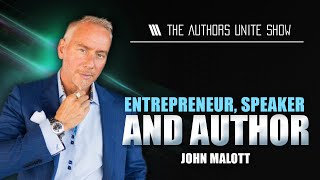
In this episode of The Authors Unite Podcast, host Tyler Wagner interviews entrepreneur, speaker, and author John Malott. Malott recounts a turbulent upbringing in a steel‑town neighborhood, including a felony at age 15, a heart attack at 17, and multiple arrests that landed him in juvenile detention and later jail. A pivotal moment came during a drug‑rehab stint where a former outlaw‑motorcycle‑gang member introduced him to personal‑development literature, notably How to Win Friends and Influence People, sparking a lifelong commitment to self‑improvement. He describes his first foray into business with the analog satellite network‑marketing venture TPN/PrimeStar, learning to pivot from selling personal‑development content to profitable HBO packages. The venture’s acquisition by LegalShield (formerly Prepaid Legal) generated massive residual income, which was later stripped away, prompting Malott to launch a successful skincare company that quickly reached $1 million in its first year and expanded to eight countries. He then co‑founded Build Your Empire, an initiative aimed at mentoring young entrepreneurs, though the model struggled after COVID‑19 and internal missteps. Malott shares his philosophy on money, legacy, and impact investing, emphasizing that true wealth is about leaving an inheritance of knowledge and positive change for future generations. He discusses his mentorship approach—requiring reciprocity and honesty—and his belief that entrepreneurs, not politicians, will solve society’s biggest problems, citing Ayn Rand’s Atlas Shrugged as essential reading. The conversation ends with practical details on how listeners can connect with Malott via Instagram and stay tuned for his upcoming health‑and‑wellness venture.
Chapters
Alright everyone, welcome back to another episode. Today we got John Malott with us. Welcome to the show, man.
Hey man, welcome. I'm glad to be here.
Yeah, pumped to have you on. Um, so to start us off, can you tell us a little bit more about you and what you do?
Are you sure you want to start?
Yeah.
Yeah, they're gonna tune out real fast. No, no, lose all your audience.
We're gonna go to the beginning then real quick.
Yeah, man, you know, I'm, uh, I, I'm your unlikely entrepreneur. Maybe not nowadays, things have changed, but, uh, back in the day it was always like, you know, go to school, get a good education, then get a good job. Or, you know, go to Harvard and then you become, you know, you drop out of Harvard, then you become like Bill Gates or somebody. So yeah, I, uh You know, I didn't have all the things that society said you're supposed to have to be successful. So, you know, I don't have a college degree. I don't have a high school diploma. My first felony arrest, I was 15 years old. And then that led to about 18 months locked in a juvenile detention facility. I get out of there. What we now know is called the crack epidemic. Now, we didn't call it crack during that period. You know, when we first started, we were freebasing cocaine. Okay. Basically smoking cocaine.
Yeah.
And that almost took me out. 17 years old, had a heart attack. So this was kind of like the setup for me to be this, you know, entrepreneur.
Yeah.
Because it really was out of necessity. Nobody would hire me, you know, so nobody wanted to hire a felon, high school dropout, drug addict, you know, like, this dude is, you know, he's going nowhere. And plus, you don't want to give me the keys to the building. Sure. Back then.
It's good. We can laugh about it.
Yeah. Now you can laugh. Wasn't, you know, funny now.
Yeah.
Not funny. So, but that's really, you know, that, that's how things started for me. That's what put me on like this entrepreneurial path.
Okay.
More by accident, not by design, for sure. And, uh, and it just, it just sucked, you know, trying to, trying to make ends meet, you know.
So, so before 15, like what was going on before 15 that led to that felony?
You know, it just, it was, I was in a, in a place, uh, in a neighborhood where this is just what we did. We just acted up, you know. It wasn't unusual. You know, I grew up in an environment, my mom had left pretty early. My dad was a steelworker and, you know, he went to work and then he went to the bar basically. So my brother and I ran wild in the streets and then my dad, I think I was 13 or 14, my dad got crushed by a steel press. This thing, he would feed steel into this big machine and the thing malfunctioned and caught him from behind. Flight for Life picked him up. He was in intensive care for a year, you know, almost lost his life. So this whole time there was just nobody. There was just zero supervision in the house.
Yeah.
So my brother and I just, you know, what are you gonna do when you're 13, 14 years old and, you know, you just act stupid?
Yeah.
And that's what we did. And, uh, and, you know, my brother has been in and out of prison his entire life. Um, my sister died from a heroin overdose at 21 years old. So it was just, it was just a messed up environment. For sure, you know, coming up. Okay, that's all we knew, man. So, you know, it didn't seem that messed up until, you know, the drugs really, you know, took hold of the house pretty bad. That was, that was the biggest challenge.
Got it. Okay. And then, so then 15, hit with a felony, 18 months, you said?
Yeah, 18 months in, uh, detention.
Okay, so what, like, mentally, I guess, going in, did it kind of feel hopeless at that point, or were you like, or did you feel like you could survive the 18 months? Like, I'll get through this.
During that, that part, it just— that was just what we did. It was interesting because detention center was filled with my friends, so it was okay. I hate to even say it, it was like kind of a social deal without any girls. That's, that was the worst part of the whole deal. I don't like this part, especially with a teenager. Um, so that's, that sucked. Um, but it just— that was kind of the path, you know what I mean? So it wasn't until the drug problem. It wasn't until 17.
Yeah.
And I would say it was the blessing and the curse. Worst thing ever happened to me and the best thing ever happened to me because I end up in this drug rehab. I was locked in this facility because there were some circumstances, you know, that were around that particular incident.
Okay.
And, uh, I met a, a former outlaw motorcycle gang member who was the counselor there. It was the first time that someone looked like me, acted like me, uh, but, but had, had knowledge. Like, he wasn't preaching to me like, you got to do this, you got— you know what I mean? Everyone's always talking. Like, back then it seemed like grown-ups were just a bunch of dickheads. Yeah. And this was the first guy who was like, like me. And I was like, okay, I'll listen to this dude. And he was the one who turned me on to personal development. And he was like— because I'm like, okay, how do you get out? I don't know how you get out of this mess. And he said, well, let me tell you. He said, business. And I'm like, business? I'm not, you know, I'm not a business guy. And he was the guy who gave me the book How to Win Friends influence people.
Oh yeah.
And that was the beginning for me. And, and I wasn't quite there, of course, but that seed was planted there that I could be more than what I was.
Okay.
That there really was another route for me.
Gotcha.
So that's when things started to go into motion.
And then, so after you read that book, because it was— that was one of the first books I read too, and it was that one, Think and Grow Rich, and Four Hour Work Week. Like, those were the first three, and then I just went on a rampage of reading everything. So was it similar for you, like after that one?
Very similar. You know, it was, uh, yeah, How to Win Friends and Influence People was the foundation. And there, of course, Think— I read Think and Grow Rich back then, but I didn't get it. Yeah, you know, that, that book you got to be in, you got to be ready for. And I've read it now probably 30 times. So like, you know, like the whole— I just read it. Did you really?
I was telling them that too, like there's a lot of people that they— that's like their yearly read. Yeah, like they read it once a year. I know a lot of people that do that.
You know, it's like you ever go to a movie for the second time and there's like something that you didn't see the first time, but obviously was there, but somehow you didn't catch it. Same thing in that book. And when I would go back to it, like even the chapter on like sexual transmutation.
Yeah, that's like—
I didn't get that at first, but then I was like, oh, now I'm getting this, now I'm getting it. The one I started catching on because of that chapter, I could be really freaking successful. Yeah, that was— so it was— it just took time, but it was always, you know, uh, personal development became my thing. You know, I'm, I'm one foot in the hood and I'm one foot in the personal development book. Yeah, you know, I'm one foot robbing your house, the next day I'm trying to figure out how do I get to a seminar. Yeah, it was just weird, man. I knew I had to get out of that environment.
Okay.
And then having, you know, my last felony arrest was I was, uh, 24 years old.
Oh, okay.
And that was, that for me, that was the beginning of the end. If you ever hear me on stage, I just start my talks talking about that last arrest, you know, when the police have surrounded my house. And okay, you know, this was the new chapter.
All right. So I want to talk about both arrests.
And so there's tears to my eyes. Oh, really? We're gonna talk about pods now.
I was like, we could steer it a different way if you want. So, so I want to talk about those. But so 17, though, you have a heart attack. So like, just, I mean, is it— is that something that when it had— like, do you even remember what it felt like? Or like, Did you just wake up in the hospital?
Yeah, I don't remember all of it. Here's what I do remember. I went back to my dad's house, which I haven't been to at that point in quite a while, and it was all night. We used to get hotel rooms and we would pass the pipe around, you know. There'd be a lot of times there'd be 8, 9 of us all, you know, wired and geeking in that room, and then This particular night there was only about 4 of us, which was unusual, and so the pipe was hitting coming around a lot more than I was used to. And so by about 6 in the morning, I knew something was bad wrong. You know, this was an all-night thing, started at like 9 o'clock at night.
Okay.
You know, my girlfriend, I said, you gotta come, you gotta take me somewhere. And she took me, I said, take me to my dad's house. And nobody was there, so I broke in the house. And I went and laid on the bed that at one time was my room. And next thing I know, I remember waking up. I wake up quick, you know, I was in the hospital. Clearly there was lights everywhere. And then I was out. And it was like 2 days later when, you know, when they told me what had happened. Oh, it was like, it was 2 days before I was, you know, conscious enough to realize what it, you know, what I actually did to myself. Okay.
But you felt, you said like at like 4 to 6 AM or something, did you feel like chest pains or anything?
Yeah, I was, well, I knew my heart was pounding so fast, like I could hear it in my ears. Okay, it was moving so— and you know, your heart's gonna speed up when you do cocaine.
Yeah, for sure.
But this was, this was a whole different deal. Okay, my heart wanted to jump out of my chest. I knew something was—
okay, gotcha.
Because it was almost like it was, it was like one straight beat, it was going so damn fast. Wow, it was— okay, yeah, I knew, I knew I was messed up.
Got it. Yeah, because from smoking weed sometimes that happens to me, but like, I know I'm by the window looking out the window, but I'm like, yeah, yeah. So this, you were like, this is not paranoia.
Yeah, this is not paranoia. This is some this is some shit.
This is the real shit.
But what's crazy is that I accepted it because I hated my life, man. You know what I was like? I didn't have shit. I, I, you know what I mean? My life just really sucked. I had already destroyed so many relationships, burned so many bridges. There was not much left. So for me, I was like cool with it, you know, in a way, in a weird way, man. I was like, you know, all right. Yeah, you know, that's— no, I—
because you were at such a low point, you were kind of like, well, maybe this is better in a sense, because it's, it's, you know, being a bum. Yeah.
And being a piece of shit is hard. It's hard. Yeah. And every day was a grind. I had police. I always had issues, you know. I had so much stuff going on. It was just, it was hard to keep up with all this stuff. And then when, when you've burned so many bridges, you don't have people around you anymore that'll support. So there it was. I was alone. And that's why, you know, it's weird when I think about laying on that bed. I was like, all right, This is, and I looked up at the ceiling, I'm like, all right, whatever happens happens. And it's crazy 'cause my mom was the one who found me. And she's never there, she hadn't been around, you know, forever. So it's interesting how all these weird things kind of came together at one point. And then going into after that, 'cause I used to rob houses to support, you know, I'm 16, 17 years old with $1,000 a week. You know, drug habit back then.
You're gonna need to rob some people for that.
No job, you know. No, yeah, yeah, I wasn't building ClickFunnels. Yeah, so it was like, uh, yeah, you did by all means necessary, basically. Here's what's funny about, or crazy about, the human mind that I think about now. I never miss an opportunity to get high, you know. Like, oh, it's Tuesday night, I'm getting high. I have no money, I'm still gonna There's no doubt that I'm gonna get high tonight. Wednesday I'm getting high, Thursday I'm getting high. There was never like, it never even dawned on me that I wouldn't get high, you know what I'm saying? Like I hear people quitting on shit and they haven't even done anything. I'm like, if you really wanna do, if you really wanna be where you say, you can find a way to get there. It's a testament to the human mind, man. I found a way to get high no matter what.
Definitely, and I think like, so are you familiar with Grant Cardone? Yeah, yeah. So he has a story like when he was younger, you know, he was an addict. I don't know what he did, but his story is I think at 25 or 30, he—
Didn't they do Quaaludes or something back in those days? I'm not, or that was, Oh, it was The Wolf of Wall Street. Yeah, I know they did weird drugs back then.
But it just, it seems to me like, 'cause you're talking about the mind where it's like people that have gone through that, like you were saying, like it's almost hard to have to go that long doing that drug. So if you just kind of steered your energy towards business and now we are where we are now and like, so you already had the ability, but you were just pointing it towards a very negative angle.
Very negative.
So—
It's a good point that you make. Yeah. When I finally started redirecting the energy, amazing things happened.
Definitely.
It was crazy. And then it just seemed like everybody else was in slow motion too when I really got rolling.
Yeah.
It's like, man, it's like, how hard is it to win a race that nobody's even trying to win? Everyone's making excuses and whining. And I'm like, all right, shit, we'll just keep rolling.
Yeah.
Let's see where this ends up.
So I wanted to ask this too. So when you were in the juvenile detention, the first time, that's when you met the guy that you read "How to Win Friends and Influence People." Was it then or 2012?
No, in there, in there, it's just a free-for-all. There's nobody, like they gave you a choice if you wanna go to school or not. So I chose not to go to school. I mean, it was just, you know, you're still locked up, you know, but you have, during the day, you're out in this big room with a whole bunch of other teenage criminals that are basically saying, next time I'm not gonna get caught. You know, that was kind of the whole talk around, you know, the TV. Back in an environment. So there was no— and then you had guards that were not nice, and it was just, it was just a very negative environment. But you got a whole bunch of teenage criminals in there. Yeah. Planning on how they're going to be better criminals. Basically what we did all day long.
We got to rob this bank.
Yeah, we're telling you, that's what it was. It was— and when I think back, I'm like, our system is jacked. And I think it's probably worse now. I can't even imagine. I don't, I don't believe it's gotten better. So, you know, you can tell based on We're breeding better, stronger, faster criminals than we ever have in society. But it wasn't until I got out, end up in the drug rehabilitation facility.
Oh, drug rehab, gotcha, gotcha.
Yeah, drug, in the facility that I went through a 45-day drug deal. I went through detox, this whole bit. In there, every day you go to counseling and you go through, they had everything was structured.
Okay, but even then after that though, so what happens at 24 then? Like what's the felony? 'Cause it obviously, got to your mind but not fully, like you didn't fully commit there?
All of my felonies were gun-related.
Okay.
I was a young scrawny kid, so, and in an interesting neighborhood, so I always carried a gun around. And so at 15, I robbed the movie theater at gunpoint. That's what— Oh wow. Yeah, it was. Yeah.
What were you trying to get? Funny now.
Now I wasn't trying to get anything. I told them it was their fault. It wasn't my fault they got robbed. It was their fault. If they would have just left me alone, you know, we went in, I'll never forget, it was a movie called Troll that was coming out, and it was me and two of my buddies, and we are being disruptive like we always are, and they came and said, okay, you have to leave, you're being disruptive. And I said, okay, well, give my money back and I'll leave. And he said, well, look at your ticket stub, it says no refunds. And he didn't realize in the back of my starter jacket, I said, okay, well, give me everybody's money back, and then that proceeded to a very negative situation. Situation.
Give me everybody's money.
All right, if you get my money back, give me everybody's money back. He freaked out. I mean, I'll never forget his face as long as I live. And my— and it was just— yeah, this was— it was a mess. Incredible. So yeah, bad. Uh, so my— and then my last felony, I had an altercation with a neighbor.
Okay.
And a gun was involved again. And, um, yeah, so, um, and then—
and how long were you in that 24?
The, the beauty of that one is I end up That one I got out of, so I was in jail for about a month and a half, and I was in the Milwaukee County Jail.
Okay.
And so I tell a story about sitting in the bullpen of the Milwaukee County Jail. It was July 4th, 1993, and if you know, if you understand the bullpen, the bullpen is, you know, it's just one big room, no windows, anything like that, and when I walked in, of course it's the weekend, criminals are in full force on the weekends, you know, especially hot summer weekend. And I walk in and they have one bench around the whole wall. All the best criminals, the biggest criminals, have the bench seats. So all the prime real estate is taken. I get a little seat next to the damn toilet, you know, and the toilet's got a little leak. So I got riverfront view in my little spot. And you don't want to— I don't want to look at anybody, I don't want to say anything. And I, and it was, you know, I knew for sure I was going to be in there for, you know, 3, 4 days just to get to court because it was a holiday weekend. And On my way there, I had an altercation with the police. So I'm in there now with stitches in my head. I'm coming down from everything that I was on. And it was a miserable, but here's what's crazy. I have a tattoo right here that says, "A good man leaves an inheritance for his children's children." And the reason it's so significant is because when I was being arrested, what's really different is I have a 2-year-old daughter, Lauren. And so as I'm being led out, she's freaking out. You know, police are leading me out of the house in handcuffs. Crying, screaming. I'll never forget as I hit the door, they were pulling me out and I looked back and we must have caught eyes for, couldn't have been more than a second or two, but I'll never forget as long as I live. And I'm on that bullpen floor and for 4 days all I could see was her face screaming and crying. And it was Dave in drug rehab who introduced me, I didn't know where this saying came from, a good man leaves inheritance for his children's children. So those 2 things replayed over and over and over for 4 days. And it was on that bullpen floor that I said, I can't live like this. I will not live this way. And I made a decision there that, yeah, I was a loser. Yes, I was a gang drug, all this stuff. That's who I was. That's not who I am. And when I finally, I said, I'm like, God, Allah, whoever, Buddha, somebody, you get me out of this stuff, I'm done. You know, whatever I gotta do. And that was the last time I was ever arrested.
And so that was like the breaking point, right?
That was it for me. I had enough. Okay. I was done. But you know, the beauty of it from 17 to then, like I said, I was still messing around with all this stuff, but I was also into personal development.
Yes. Yeah, you were halfway in and then—
So I knew now, you know, it's different when you don't know, you don't know. You know, ignorance is bliss, I guess.
Yeah.
You know, I didn't know back then, but now I know. So even like when I went back to cocaine, you know, you get around your buddies like, oh, you don't have to smoke cocaine, there's other ways to do it. You know, now I'm snorting cocaine, you know, but I was, I was still, I still had a lot of those associations. And so it was coming out of there that I, that's when I changed associations, everything, man.
So did you kind of, did you like change environment? Like, did you move or like what was as soon as you get out, what happens next there?
For when I got out. Yeah, I was, I didn't, I disappeared. Okay, you couldn't find me for probably 6 months. Um, I was— you couldn't get a hold of me. Yeah, I knew because the same thing happened when I left drug rehab for the first time. I was clean for 9 months coming out of drug rehab. Yeah, and how did I do that? I stayed the hell away from everybody. Yep, the only way for me, because as soon as I got back around my associations, you just get sucked back into it, man. Yeah, so you know when you— what do they say, you know, if you hang around 5 people that Yeah, you're the average of the 5. Yeah, yeah, the average of the 5 people you hang out with the most. And that's— yeah, I just kept getting sucked back in. And, you know, I knew it was, it was kryptonite for me because it was fun, man. You know, yeah, we had great times until it turned. You know, it always turned at some point.
No, definitely. I think that, like, environment is just so crazily important, man. I think most people don't just realize that, like, if it's a good environment, it can take you just so far. And then vice versa, it can take you the complete other way.
I cannot be around people with bad energy. I can't, because I know, I know what it's doing to me. And for whatever reason, I'm like a— what the hell you call it— like a conduit, man.
I, you know, yeah, I'm very similar.
Yeah, it's just so— I, I just, I avoid it quick.
Definitely. Yeah, that— I actually had to do a similar thing. I, I wasn't doing as, as hard of things as you. Your story is better, um, but—
or worse, depending on how you look at it.
Oh yeah, yeah, good point. But like It was just, I needed like a different environment. So for me, that's like Miami, but like where I grew up, and I think it's almost for anybody, just like your high school friends, even if it's not like hardcore drugs, it's just like getting out of that, you know, the 18 years that you spent, that normal routine, like you need like a shock or something like to get out of there and just find your own path, 'cause if not, you'll just stay there because that's all you know. So it's very similar.
No doubt, that was me, I needed a shock, well, you know, arrest, drug problem, all that. That's what it took to shake me. Yeah, definitely.
You know, it's—
and it's crazy that it, it, it took that much when I look back at it. But then again, man, I'm like, you know, now I, I feel blessed, you know, that, that, that happened. And for me, I had to hit rock bottom before I could start climbing, you know, before I could start moving up. I, I, I feel bad for a lot of people that, that, you know, they get their education, they get a nice job, and then they're frustrated their whole lives.
Yeah.
So I was frustrated for, you know, a small period.
Intense but short.
Yeah, it was intense, but it was still relatively short. I see people that just are miserable, you know, their whole lives, you know. And yeah, they got something called the fucking rat race that they're in. You know, it's like they live for the weekends. You know, they got 2 days to, you know, and then Sunday they're shot because they party Saturday night or whatever. Yeah, it just doesn't— it just seems like a pretty miserable—
Me too. Yeah, I couldn't do it, man.
Like, I— it—
for me, it was, uh, I was actually in San Diego ago before moving here, and I was just starting the business, and I was just thinking to myself, I was like, it got to a point where I would have rather lived outside. And, you know, San Diego, living outside is not that bad, I suppose. But I was like, I'd rather be homeless than to have like a corporate job. And once that really clicked in for me, then I was just like full speed ahead. Like, and I didn't know what I was doing, but I was just like, I'll figure it out, because that is— I like, I'm not doing that. So once you're free, man.
Yeah, you know, and And that's, you know, it was Harriet Tubman said, she would have freed more slaves had they only known they were slaves. So when I think about that, it's not different. You got so many people, I mean, it's a different type of slavery. They're miserable as hell. They feel trapped. They wake up, they're gonna wake up tomorrow morning to an alarm clock. They're gonna go to a place they can't stand, hang out with people you know they don't like and they don't like them. 'Cause when they walk past the, you know, when you walk past the water cooler, they stop talking 'cause they were talking about you. And when they're gone, you talk about them and you got this cycle of brown-nosing, all these different terms we have.
Yeah.
And they do this for what, 30 years, 40 years, then they go greet at Walmart and then you die. I mean, that's basically the program. And it just, it's hard if you start to look at it, man. It's like I would, like you said, homeless is extreme.
Yeah, definitely.
But in San Diego, shit, get a tent.
Yeah, that's what I was thinking.
I was like, it ain't that bad, honestly, man. It's nice.
Never rains. Like this is perfect. Perfect for homeless, like get a book and you know, see what happens. So what was your, so after you get, what was like your first big success? Like after—
Man, it took such a long time. That's what's funny, man. I get on these shows and I'm on stages and, you know, people hear kind of stories and they think that all of a sudden, you know, I got all this money and I'm rolling in Rolls-Royces living in this life. But it was, man, it was brutal. Brutal. So it took me 7 years as a full-time entrepreneur to finally crack $100,000.
Okay.
My first year as a full-time entrepreneur, I made $4,000. So you can imagine the people around me like, oh yeah, you're gonna do great, fucking loser. You know what I mean? It was, it was so— but, but here's what's crazy. My first year as a full— and I was, I was involved in a, in a company called TPN. It was called the People's Network. And they were they were pumping personal development into your home via satellite. Not like the satellite we know today. These were big, like analog. Digital didn't exist back then. I'm aging myself. I know I look like I'm 26, but you know, but they're analog. You have to put it up on your roof and I, you know, it was snow. I remember putting this thing on the roof and I'm yelling down, you get a signal yet? And it's snowing and it's, I'm half off the roof risking my life. But I, but the personal development thing was interesting to me because I knew personal development was changing my life. You know, all of a sudden you got Zig Ziglar coming into your home, Les Brown, Mark Victor, all these authors were on there and right in my living room. Anyway, so that was, we had an opportunity to sell these things and it was a network marketing deal.
Okay.
MLM deal. And I didn't know what that meant. I had no idea. All I knew is they were harassing me to get more people on it. And then nobody would buy it though. People looked at me crazy when I said, oh, you get like, you know, Tony Robbins Right in your living room. They're like, who? What? Nobody want— it was $50 a month, so they for sure didn't want it.
Okay. And that was more than, I guess.
Yeah. But for me, $50 a month because I was going to some of these seminars and, you know, dropping back then $200, $300. Yeah. To get a ticket. But here's what happened. Here's what changed. The PrimeStar, it got replaced by PrimeStar Digital.
Okay.
So now it went from an analog dish with one channel for $50 to PrimeStar had like 4 HBOs. So we caught on. They don't give a shit about personal development. Sell them 4 HBOs. And if you drove through the hood back then, you see, and back then the Prime Star dishes were pretty big, so we always knew that's one of our dishes. That's once we started putting up these dishes all over the hood selling 4 HBOs. That's what people wanted and that's what we gave them. And that's where we started getting a little success. So my first year, $4,000. Second year was $16,000, which people still laughed at me. But the percentage of growth from 4 to 16, I was catching on. That's, that's if I can keep doing that. And that's what happened. So the 7th year, $116,000, then that the company got bought, they got bought out by a legal insurance company. Then the next year my income went to $224,000 and then a million, then $2 million a year. I mean, it just— yeah, it was 7 years of, you know, being laughed at, you know, around the dinner table. Are you rich yet? You know, are you rich yet? You've been on the same job for 27 years. You know what I'm saying? It's like, at least I'm doing something to change my life.
Definitely. I think that's pretty though. I think it's almost kind of not normal, but like 7 years to reach $100 grand. And then what, within 3 to 5 years after then you already had a million?
Yeah. That, that's how it started to crank. Yeah. Yeah.
And that's the thing. I feel like that first $100 grand is the hardest.
At least for me. Yeah.
Yeah. I think it is for most. And like, that's the, at least from my standpoint, like the biggest lifestyle change, like $100 grand was when I could start doing whatever I wanted.
Yeah.
And then, you know, obviously your lifestyle expands from there, but like anything above that, you start spending $200 grand. Yeah, yeah, yeah.
Maybe like, oh, I get a credit card too now.
Yeah, yeah, yeah. No, it's definitely— you can definitely go above that. But I just mean like the, like happiness level I think was there. And then everything above that's just kind of like fun, just things in a sense. And also impact. You really start thinking about like how I can use this to like make a big change in different scenarios. So yeah, for me, for me at that point it was—
I always felt like money was the reason why my family ended up the way it was. There just wasn't money there. And it always seems like my dad was working his ass off to get money, to get us out of the neighborhood, to change things. So I was— for me, it was always money, money, money drove every decision I made at a certain point. And that's why I've been married— well, I'm on my third marriage. So my first marriage was all about money. I'm like, well, just shut the fuck up. I'm, I'm going to bring us money. And I got us out of the neighborhood, put us in a big house. But I wasn't— my mind hadn't caught up to the money. The money was moving faster than my mind. And yeah, and it was always like, I needed the next car. I needed, you know, I needed stuff. So I had— I end up with lots of stuff, but unfulfilled.
Okay.
I mean, now I'm not, you know, now I'm 50 and you know, this stuff doesn't mean shit to me.
Yeah.
I still like to have, you know, some nice stuff. But in the beginning it drove me because I really thought, you know, I thought people that lived in big houses and had Rolls-Royces and all this stuff, I thought they just were happy people. They had no issues. They just were like fricking swans on the lake. They're all pretty. And, you know, I thought that's what I would be one day. And when I got it, you know, my house was in disarray. I just, I carried over that same mentality. I brought into my house.
Okay.
You know what I mean?
Yeah.
We had a bunch of money, we looked good, but I remember living in St. Charles, Illinois next to, you know, Carlton Sheets? You ever hear of Carlton Sheets? Anyway, back then they used to do infomercials on television. We used to buy our courses on television. Imagine that. Okay, yeah. And he was the big course guy and he sold this no money down real estate course, which I ended up buying, but he ended up becoming my neighbor, which to me was a big deal.
That's sick.
But I was having domestic challenges and I'm being chased through yards in my name, rich people yards. I guess it's better to run through those yards than it was the old neighborhood. Yeah, but I—
pools.
Yeah, but I was still always in trouble, man. I was, you know, I'm a grown man and I wasn't going to prison and stuff like that, but I was still having issues inside of my own home. You know, my emotionally, I wasn't there. Does that make sense? I know.
Yeah, no, it does. Well, it can actually like make it more extreme, right? Like so. Money, if you're not, I guess, mentally ready for it, sometimes it can be too fast.
Yeah.
You know, like, I'm just grateful. I don't know why I never got caught up in like the cars and stuff like that for me. For me though, like where I live, that's, you know, obviously I'm down.
We all have something.
Yeah, yeah, we all have something like that. So, but I wonder, so then that's where the first money comes in, but then did you, then they sell the MLM and then what's next? Is Build Your Empire next?
No. Okay. So a company called Prepaid Legal bought this company. Yeah, Prepaid Legal became LegalShield. And it just— at first I was like, this didn't make sense to me. And then we had a bunch of felons on our team. We couldn't get— they couldn't get licensed. You had to have an insurance license and we ended up working our way through that. But then it exploded and that was— that's when things really started to roll. They had a great product. It was inexpensive. You know, the pitch was easy because I knew a lot of people that had legal problems. And it makes— anyhow, I'm not trying to promote them. Yeah, they did me wrong later on, so don't get it.
Affiliate link.
I got a lot of friends there. They're good, good people. Just, uh, we went our— after, you know, basically 13 years there, and I had a strong residual income, which they took away from me. Um, we won't— we won't go down. You see that tear welling up in my eye? Yeah, um, residual income is what I work for, man. Yeah, you work for cat— like, I'm not a house flipper. I'm more of like an apartment building guy, you know, I want rent. And I had built, you know, I had 50,000 or 200,000 customers, 50,000 reps. And at one point, because they didn't like the way I was doing things, they—
Yeah, I can't believe they were even allowed to do that.
Yeah, they probably weren't. And they actually— I had people later on say you could do— And what didn't matter, you know. Anyway, so it opened up another door for me though. Yeah, that's where things really started to crank. I got involved in a skincare company company.
Okay.
And, uh, out of the— they were bringing in minerals from the Dead Sea. And, and I was the last guy to think skincare. Like, what do I know about skincare? For me, skincare was whatever soap went on my head, went on my body, and come out. But it was that, that changed my life again. My first— and part of it was revenge to get back at the last company. So first year, a million bucks right out the gate. And that's crazy. I've got quarter million dollar a month residual income. We're in 8 countries. We had 300,000 affiliates.
That's great.
I just started cranking, man, and, uh, did that for 8 years. And, and then that's when Build Your Empire came in, towards the end of that.
Okay.
And then Build Your Empire became, you know, the vision was to, to take world-class entrepreneurs to bring up the next generation of world-class entrepreneurs, you know, to bring the Grant Cardones and connect them with, you know, the, the, the John Malats when, you know, he's 20 years old trying to figure shit out.
Got it. Okay.
And so that's how that whole thing came to be.
And, you know, and so what's the structure of like Build Your Empire? Like, how does that work? Is it like a— do the younger people like pay to be in or is it—
Right now there is no structure.
Okay.
Because we went through a transition. Yeah, we had, we had some people, you know, on the team, some, some young guys that, that really told us they could do a whole lot of stuff that they just couldn't do. My partner and I got an incredible partner for 20 years, Josh Denny. Him and I own investment companies and a lot of other stuff. And we kind of let them have it.
Okay.
Which looking back was a big mistake. Cost us a lot of money and gave them a lot of credibility.
Yeah.
They had this, you know, Instagram page with 1.2 million followers and—
Got it.
And then we started doing events was kind of our space. So we said, let's do Build Your Empire events. And, you know, the events, I love the event business.
Yeah.
And then of course COVID hit. And put— basically put us out of the event business.
Gotcha.
I like the live events. I like the crowd. I like that whole feeling.
And I actually saw that on YouTube. It's like 3 and a half hours long.
I watched—
I didn't see all of it, but I watched some of the clips of it. It looked sick.
Yeah, we had the Build Your Empire Mansion, you know, so we put these kids up in a, you know, 12,000 square foot house that they lived in and did absolutely nothing for the brand but help themselves. They did a lot for themselves. They're all doing well now. You're welcome, fuckers. Hey, give back in different ways.
Yeah, I get it.
You know, look, I, you know, if I was 20 years old and, you know, I got— yeah, I live in this beautiful house, I got whatever, you know, maybe I did the same thing. I don't know.
Gotcha. So that's, so that's transitioning.
Yeah.
And so, and what else currently are you—
so, so yeah, I'm excited about the, the next chapter. We've been for the last 90 days— I have a billionaire partner, uh, Terry Lacour, who's a power. Matter of fact, I'm going to see him tomorrow. Um, we're launching a new, uh, health and wellness company. Based on a new packaging technology. Super sick. I'm not going to talk a lot about it right now, but we just launched our, uh, our, uh, Oh Snap, uh, 21-day challenge, and that'll lead up to the launch. And, um, this is about to be sick, man. We're about culture. We're about like, if you're part of my company, you know, you're going to learn branding. I mean, you're going to learn leadership, team building. So we focus so much on the people, and that's why we explode. And I didn't realize that coming up, but I had, you know, what my upline in network marketing was a guy named Jim Rohn. Oh yeah, you might have heard the guy. So nobody— people don't realize, you know, Jim Rohn made his millions in network marketing.
Oh, I didn't know that.
No, most people don't. Yeah, that's how Tony Robbins was coached by him. Bill Bailey, I mean, amazing.
Oh, I knew. Yeah, I knew he's Tony's coach.
Yeah, yeah. So that's— so I didn't know I was, you know, that I was seating— seated— whatever. I was at the foot of greatness. You don't know at the time. And then I just knew the dude was brilliant, and, um, but he had an incentive to be like— people hit me up all the time for me to mentor them, but I'm always— I always want to say, well, what's the incentive? Yeah, what's in it for me besides taking time away from my family, you know, responsibilities? Jim Rohn had an incentive because he earned an override. You follow me? So I told him, oh, you want me to mentor you? Well, become an affiliate in one of my companies, you know, join me on this journey. Then I'll— then I have an incentive to teach you everything I know because there's an— definitely there has to be something in return, you know what I'm talking about?
Absolutely. So, and especially like, because you're at a point too, like you said, and we all have families, but like you do have to start measuring against that time, right? So it's not like you don't want to help them, like you do, but like at the end of the day, it's like, well, dinner with my wife, see my kids, see my wife's parents, like, or help you, you know? It's kind of a— you got to choose. Unfortunately, that's life.
You have to. So, and I didn't do well at that because I'll work around the clock. And so I was always like, yes, yes, yes. You call me up. Yes.
You call me up.
Yeah. It didn't matter. I was always saying yes. And, and it cost me, you know, it cost me relationships again, family. And, and so as I, as I became more mature, that's why I have now I have the ability to say no, which helps you too, by the way, even if you're an affiliate on the team. There's some things I'll say no to just so you have to figure it out on your own. You know what I mean? Because if I'm always doing it for you, always giving you the answer, you're never going to grow. And when I look back, I had mentors that were like, no. And I also had mentors that told the truth. Like today it's hard to mentor people because their skin is so thin.
Yeah.
So I ask you—
Snowflake culture.
Yeah, yeah. I'm like, do you really want the truth or do you want me to tell you what you want to hear?
Yeah.
I mean, so I'm always careful because they'll kill you on social media too. Oh yeah, if they get mad at you, man, they will, they will murder you.
It's getting worse and worse. It's bad.
That's what I say. I don't talk about religion, politics, or football. People lose their minds over these things.
I know, got to be careful.
What's my, my belief? Uh, whatever yours is.
Yeah, yeah, I believe in you.
I believe in you. You can do it.
Yeah, yeah, that's the best way to put it.
Oh man, these interesting times, man. Yeah, but I have mentors back then were like, I don't like what you're saying, call me back in a week. Or click, it'd be like, hello, hello, hello. It was like, do it my way or don't talk to me anymore. I can't waste my time with you. You can't do that anymore. You gotta coddle people a lot more. And so.
So if somebody like wanted you to be their mentor, 'cause I feel like this would be helpful for a lot of people, like how would you like to be reached out? So obviously you wanna know what's the benefit for you? Like, should it be like direct, short, sweet, or like, Is there a way that you would prefer?
Yeah, you know, like people, I'm like this, bring me your downtrodden, bring me, you know, your rejects, your losers, and you know, bring me the people that just for whatever reason never quite got, you know what I mean? Hanging around me is like, it's about redemption. So I'm like, you want to be redeemed? You want me to teach you the things that, you know, that you think you don't know? Because most of the stuff we know, you know, it's just maybe, You know what, I think our job as leaders is to bring out what's already inside of you. It's already in everybody. It's just sometimes we just need the right person to help bring it out. So, you know, I tell people, hit me up on Instagram, you know, John.Malott, or now we've got the, uh, Oh Snap is the name of the company. It has to do with our packaging. We got this ridiculous packaging that you'll see soon. We'll be the first to market with it, and we're bringing all these, you know, uh, incredible products and then the culture and all this stuff. So we have the osnapchallenge.com, okay, where they can join because it takes 21 days to create a new habit, or at least that's what research suggests.
Yeah, yeah.
So we're doing this 21-day challenge around mind, body, spirit type thing. And then that'll lead into the launch of our new company. And then we'll go smash this thing all over the world together. And so I tell people, look, if you want to— it's like I always have mentors that said you make your living in your full time. But you make your fortune in your part-time. And when your part-time income here exceeds your full-time income there, you now live in a world of I choose to, no longer in a world of I have to. Because how many people today live in the world I have to?
Like, I have to go to work, I have to do this.
It's like, you don't live in, you know, communist, you know, Russia or Siberia or some shit, you know. And so we, we show people how to exceed, you know, whatever it is they're making in there. And I tell them, look, You know, if you want to do other stuff, I'm cool with that. You know, we live in— there's so many options today, you know, that— and so we try to bring in all my friends, you know, that have all these different opportunities, you know, to— you know, let you look at what— like, you guys know Chase Hero? Yeah. You look at Chase Hero and these guys are doing— I mean, they're, they're smashing. My good friend Josh Snow with the Snow Teeth Whitening. There's so many different places to make money and get around incredible people.
Oh yeah.
My guy Cody Grandad, who I'm meeting in Dallas tomorrow, I mean, the dude started selling batteries. Now he's doing— I don't know, he's done like $200 million in flashlight sales to like Walmart, Lowe's, Home Depot. It's like today's— if you can't get rich today, that's why I'm back in the mix. I was— I partied for 3 years, you know. I retired and I'm watching all these young, young guys. Wait a minute, there's too much fun to be had. I came, I got out of the strip club and got out of it. Yeah, I'm like, I gotta get back into trenches, man.
Have you been to Eleven over here?
I was about to shout that out. Yeah, many times. Yeah, I got a parking spot over there too.
Dude, that's awesome. So last question I want to ask you here is, it's kind of twofold. I feel like you've thought about this, you've retired, like what is, how would you want to be remembered or like the ultimate like impact that you're trying to make like at the, I guess at the end of life?
Yeah.
We went from Eleven to serious stuff.
Yeah, from the street club to the day you die. I wanted to ask it though, so. Well, you know, I have legacy tattooed on my arm and it's a big deal for me because I have 4 daughters. And for me, it all comes back to that, a good man leaves an inheritance for his children's children. But I called on that it was more than just money. That it was about, you know, what are my kids gonna do down the road? Like I can leave them money and they can have money. And you know, a lot of times you give kids a whole bunch of money, they just become spoiled ass kids. But it's the information, it's that paying it forward. You know what I mean? Like now, my partner and I, Josh Denny, we're impact investors. We invest in things that impact people. Like, don't bring me something that's just about money. You better say, okay, here's what it's going to do for somebody. Here's how it's going to change the world. Here's how it's going to make a difference. Besides our private jet company, that was more for flights on a private jet. Yeah, that's fair. Yeah, for me it's about impact, man. I want, when I'm gone, and I think about that now at 50, I think about, and it's weird, and it's almost selfish now that I'm thinking about what people are gonna say about me when I'm gone. And who knows where I end up. I always say you only live twice, here and then wherever the hell you end up from here. I don't know if I'm gonna know what they're saying, I'm gonna hear it or whatever, but I'd like to have a bronze statue somewhere with my head and you rub my nose for good luck or something. You know what I'm talking about? It's just, I want to leave the world a better place. But entrepreneurship is the way, man. I think we're crazy. I hear people talk about socialism, all this stuff. I'm big on the human spirit, man. Let us go. Let us run wild with as few regulations as possible. You know, let good people do good things.
For sure.
Because in the end, I'm going to say this because it's political season and I don't really talk about this a lot. I'm not going to go political, but I am going to say it won't matter who gets elected. The entrepreneurs are gonna figure out how to maneuver around it. It will not be the politicians that solve our problems. They never do. It'll be the entrepreneurs. You know, if there's an energy problem, Elon Musk shows up. You don't like what you're paying for goods and services? Well, Jeff Bezos has a solution for you. You know what I'm saying? So that's us, man. You know, it's, we should be celebrating the entrepreneurs instead of we got half of our population trying to take them out. Yeah. And without them, it's an interesting world. In fact, I would tell you this. There's a book called Atlas Shrugged.
I've never heard of it.
It was written in the '50s by Ayn Rand.
It's about—
it's a 1,000-page story.
Nice.
But I think it's more relevant today than then. And I got the recommendation. There was a thing about a billionaire's reading list. And there was one book that kept coming up and it was Ayn Rand, Atlas Shrugged.
Oh, nice.
Yeah. Okay. Read that book. You check that out.
Yeah. Oh yeah.
It basically pulls together what happens if the politicians and what we call the looters and the moochers get their way and you stop the entrepreneur from doing what they do. And it lays out the whole scenario and it's pretty interesting, man.
Oh, I'm getting that.
Yeah, you got to get it.
We're going to purchase that before we leave.
I'm telling you, man, you'll be recommended everywhere you go because you want everybody to read it. But the great entrepreneur, the mind of the entrepreneur is—
I agree.
And especially see what's happening with our kids, man. You know, they're coming out, they have no financial literacy. You know, they can't work a checkbook. I don't know, man. Anyways.
No, I agree. Well, dude, look, thanks for coming on the show. It was amazing. Last thing is, and you mentioned it a little bit prior, but like social medias, website, like where can people stay in touch with you?
You know, for me, Instagram, I manage all my own stuff. So, and but I focus most of my attention on Instagram. Okay. So Instagram is John.Malott, M-A-L-O-T-T. So you can hit me up there and then, you know, watch for our new company, man. I'm super stoked about what we're going to bring. You know, we're going to give them hell.
Perfect, man. Thank you again.
Appreciate you guys, man. Thanks for having me.
More from Tyler


Catherine Nikkel : THE STORY EVERYONE HAS BUT HASN'T TOLD : The Tyler Wagner Show #1120



Scott Ritzheimer: Bring Predictable Success to your Organization | The Tyler Wagner Show #1115


Fred Moskowitz: A GUIDE TO GETTING STARTED WITH IN MORTGAGE NOTES | The Tyler Wagner Show #1113

Mark Podolsky: From Land Investor to Full Time Success How I Made $90,000 Cash in Real Estate


Mark Podolsky: How to achieve a 300% return on investment my foolproof strategy

Mark Podolsky: How to make passive income selling raw land the irresistible pricing strategy