Josh Zloof: How To Make One Billion People Happy | The Business Blast Podcast #929
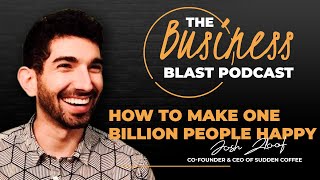
In this Business Blast podcast episode, host Tyler Wagner interviews Josh Zloof, co‑founder and CEO of Sudden Coffee. Josh shares a formative factory story where a simple wrench‑addition tripled production, illustrating the power of observation and low‑tech fixes. He expands the lesson to equipment failure, emphasizing acceptance of breakdowns and planning, drawing parallels to software QA. Josh then offers practical coffee advice—using fresh beans and weighing both coffee and water—to dramatically improve home brewing. He discusses a novel hiring tactic: publicly broadcasting a specific challenge to attract the right talent instead of cold outreach. The conversation moves to instant coffee production, explaining the superiority of freeze‑drying over spray‑drying. For business growth, Josh stresses the need for exponential scaling, seeking external perspectives, and broadcasting one’s mission. He advises his younger self to attend more classes and to experiment early, embracing failure as a learning tool. On happiness, he describes a Buddhist‑inspired practice of non‑attachment and letting go of expectations. The episode highlights his favorite book, Setting the Table by Danny Meyer, and the distinction between service and hospitality, applying it to Sudden Coffee’s mission. Josh shares a motivating quote, “Worse people have solved harder problems,” and concludes with contact details and distribution channels for Sudden Coffee (website, Amazon, upcoming Whole Foods presence, LinkedIn, email).
Chapters
All right everyone, welcome back to another episode of the Business Blast podcast. I'm your host Tyler Wagner. Today I have Josh Zloof with us. He is the co-founder and CEO of Sudden Coffee, founded on the idea of making 1 billion people happy. Today Sudden has served over 200,000 cups of their single origin specialty grade instant coffee delivered right to your door. So welcome to the show, man.
Hey, thanks for having me.
Of course, grateful to have you here. So the first one we ask on this show, Josh, is what is the best story from your life that has an underlying valuable message?
Best story from my life. Yeah, I think, you know, one of the things that shaped me the most, this is kind of a business-y related story. I was a consultant. I was working at a factory And it was this factory, it was a dog food factory. And there was a huge bottleneck at the factory. It was operating way below capacity. And you know, you're taught in school to do a bunch of math and look for the bottleneck in these factories. And I had a boss who, you know, I was at my laptop and he slammed my laptop shut and he was like, just go walk around the factory, go look at what's going on. And we go to this machine and it's the packaging line and there are just dog biscuits all over the ground in this factory. And it's really clear that there's a problem with the dog biscuit packaging machine. And, you know, you, we, we look, you know, so my boss at that point said, you know, just sit there and watch. And I watched for 2 hours and I just noticed that the operator was spending most of his time repairing the machine. And while he was repairing the machine, the biggest task he was focused on was finding his wrench. Cause he would, uh, you know, tighten a bolt on one side and then leave the wrench there and then need to go to the other side. And then he'd be looking for the wrench and would just spend most of the day if you actually sat there with a stopwatch going around this machine, looking for a wrench back and forth. And so we, um, instead of just saying, hey, you know, you're spending too much time looking for your wrench. What we did is videotaped him and had him watch the video and realize that, hey, I'm looking for my wrench most of the day. And we were like, okay, what do you want to do about that? And he was like, well, maybe we could buy more wrenches. Like, would that be okay? And I was like, yeah, well, I'll go to Walmart and picked up more wrenches. And literally within 4 days, that factory was operating at 3 times their capacity and he was less sweaty. It was an idea he came up with. Uh, he felt a lot more, uh, you know, composed at the job. And it was just, for me, really tied together all of these things, um, that I'd been struggling with at the time, which was, you know, you, how do you, um, coach someone who isn't necessarily an engineer? They haven't been trained on this stuff. To then make these really big productivity improvements. And a lot of times it's just something really simple, like a wrench problem. And it's not this massive problem that you think it is from the outside. And so that, for me, I think that's a thread that stayed with me in so many ways. That story has been really great.
Got it. Okay. So I got to ask this though, too, now, cause I would have thought the solution— I get the more wrenches, but what about just fixing the machine? So he doesn't need the wrench.
Yeah, so we, we did that too, you know, we, we ended up, uh, trying to get someone to actually go more in detail repairing the machine. But yeah, I think with, with any of these, and you know, we run a factory now for Sudden, um, when you're dealing with the, this industrial equipment, it just breaks. That's just the nature of the, the machines. And but I think to your point, like a lot of folks are like, oh well, why don't I just get a different machine? Or why don't I just outsource it? Or why don't I do something and get rid of this problem? And you kind of have to come in with this reality of like, it's going to break. And so it's how do you, how do you respond in those moments rather than pretending that they're not going to be there?
For sure. That's actually good to know. I mean, cause I have no experience whatsoever with like that, like that type of equipment. Like I've never run like a physical, uh, shipping type type of company like that. So yeah, that's interesting. So you just go into it knowing like every piece of equipment that you buy, obviously it'll eventually break, but it gets to a point where it's like instead of replacing it, it's literally just better to like, you know, buy that guy multiple wrenches and then he can, uh, until the point of like it literally doesn't work anymore and then, you know, you need a new one.
But yeah, no, I mean, it's, it's the, the same thing applies in software because I did software after that and You know, there's the attitude, like some companies are like, we don't need a QA team to test to see if the app breaks because we're so good. We don't have errors in our app. It never breaks. And the reality is, no, it does break. And you just have to assume that it's going to break and then to plan around that. And that's kind of part of it.
Yeah. No, I gotcha. Um, so the next one I got for you is what is the most valuable piece of information we should know that's within your expertise or industry?
Ooh, I guess a couple things. Can I do two?
Yeah, for sure.
All right, so let me give you a coffee one. I think if you're someone who's making coffee at home, I think the most valuable thing you can do to make a better cup of coffee, and this is not with Sudden, this is just regular coffee, is using fresh coffee beans and weighing your beans instead of using like a spoon, like instead of using a volume measurement, actually using weight and also weighing your water. Those are the ways that most people— that's the easiest way to make your cup of coffee 10 times better. I think from the startup perspective, what's something that I think, you know, the tip or something that I've realized recently is The power to put out into the universe what you're looking for, instead of trying to sit there and engineer a solution and sit there and crank out, you know, as many hours as you can, trying to solve a problem. How do you bring the world to solve the problem with you? So, you know, an example of this is, we need to hire a marketing person, instead of us instead of me going out and going one by one on LinkedIn, messaging people, can I write a blog post about how, about, you know, our most exciting marketing challenge and how awesome that is. And you know, how we, like, what we're really excited about internally and what we're working on, and then send that out to the world and say, you know, we're looking for someone to work on this really cool challenge if you're interested.
Um, So, and so just a question for you with that, with the coffee. So, because I'm gonna have to try your coffee. I actually, um, because I just, I'm a simple man and I like, uh, things like quick and easy. So I use, I think it's, and tell me if I'm wrong, but, um, instant coffee, does that mean that it's freeze-dried or?
Yep. Yeah. Well, so there's different ways to make it. All instant coffee is, um, you take coffee beans, you fully brew it, and then you dehydrate it. And some of it's the better quality instant coffee like ours is freeze-dried. The majority in the US is spray-dried, which uses heat to remove a lot of the water. Um, and so freeze-dried instant coffee is definitely better.
Gotcha. Okay. I think I have some sort of freeze-dried. I'm not sure. I think it is, but it's so quick and it's so quick. It's so easy. Like you literally, and I do use a spoon. I'm not going to lie. So I do, I use a spoon, but, um, I just, you know, like boil water, throw it in, mix it, and the coffee's there. So I'll have to try yours, um, because even like an actual, you know, making normal coffee is easy, but to me it's even too complex. So I get the freeze-dried.
Yeah, I mean, ours is just like that, you know. You take a tube of our coffee, you don't even need a spoon. We made it, uh, as easy to use as possible for that reason. And mix it with water and it's going to taste better than most coffee from any cafe.
That's all. Yeah. So I'm going to have to try that because like, I just love how quick it is.
It's amazing.
So you kind of answered it, at least on your second tip there. But the next question is, what's your best piece of overall business advice? So not necessarily like industry specific.
Oh, yeah. Yeah, exactly. I think, you know, that for me has been— and this really applies to when you're working at a small scale, like when you're at a startup, and it's really important, you know, in the industry, people always talk about exponential growth, and that's sort of like a buzzword that I think when you really break it down, it becomes a little more constructive. So when you start working on a startup, you're making $1,000 a month, and that's not enough to sustain anything, and you can't pay for your bills, whatever. And so, you're only gonna be successful if you can figure out how to quickly go from $1,000 to $100,000 a month, at least something like that. And so when you're trying to think on those terms, if you're within your own sphere and your own head, a lot of times you're only gonna think of linear ways to grow because that's what you're surrounded by. That's how, like, you've already thought of the things that you know. Versus if you pull in outside perspectives, people who you haven't talked to yet, people who come from a totally different industry, you're going to start to get these ideas that might catapult you to the next level. And so the best way to do that is to just put out your message and try and get it out there.
Gotcha. I like that. So next one is, if you could give your younger self one piece of advice, what would that be?
My younger self, one piece of advice. I think go to class more. That was a big one. I think, you know, I think one thing that has helped out is— there's a background noise in our office.
It's all good. We can still hear you like clearly, so it's fine.
Awesome. I think one thing that has been really helpful now that I wish I just did earlier on is just try things and fail. And I know that's sort of, you know, again, cliché advice, but I really feel like things in business, just like sports, just like any hobby, are— it comes with practice. And so when you look at entrepreneurs, like even someone like Mark Zuckerberg, these guys were starting companies throughout their whole life. Mark Zuckerberg made 3 or 4 apps when he was in high school and middle school, Facebook was not the first thing this guy started. And so, but that's what you hear, obviously. And so I think you kind of just have this, you need to have this willingness to just play and learn and try. And the worst thing you can do for yourself is say, you know, I'm going to wait until I have the business plan and investors and a website and a brand, just start messing with stuff. And I think I wish I had done that a little more when I was a kid instead of Yeah, like I think I always had ideas that I would write down, but I never actually tried them. And I think that would sort of have been something I wish I did earlier.
Dude, I couldn't agree more. I tell everybody that all the time. Like, I've just failed so many times and I just try so many different things. It's like outrageous. And all it takes is a couple— like, not even a couple— all it takes is really one big win for something to happen, you know what I mean? So even if it's like 1,000 failures and one win, that one win outweighs all those failures. So I think people are afraid to try, like they're afraid of failure, which you'll never get success without it, in my opinion.
Totally.
So the next question is kind of like a different, different route. So in your opinion, what is the key to happiness?
What is the key to happiness? Yeah, lately, and you know, I'm, I'm from San Francisco, so this will probably be cliché, but I've been, I've definitely been going down more of a meditation or Buddhist route and not, you know, not really like truly religiously, but there's this idea of not having attachment to things, which is, you know, I know that that's, it's kind of hard to grok until you start actually reading into it a little bit more. But the idea that, you can just put yourself out there and try something and not necessarily have an outcome, so, or desired need for an outcome. And so, you know, this happens with friendships, like, can I just invite people to things without necessarily expecting them to invite me back? It happens at work. Can I spend that extra time, you know, training someone or, trying to level them up and, you know, maybe it won't go well, or maybe they won't, um, you know, maybe they won't perform. And instead of getting caught up in this, sometimes you feel this frustration, like I've put, I've invested so much into this person or into this task or into this product and it failed. And then you beat yourself up about it and you say like, I'm never going to waste time on that again. I'm never going to do that again. I'm never going to trust anyone again. Um, let go of that stuff and just try and just keep experimenting with it. I think that Uh, you know, I'm not perfect at this, but I think in 2018 I started to really dial into that a little bit more. And I think that's been, been a cool path, a cool thread.
Yeah, man. I love that, dude. Dude, I don't— if you haven't heard of him, you'd probably like Alan Watts.
Oh yeah. I love Alan Watts.
Dude, that's my guy. That's awesome, man. Yeah, man. So it's about like removing attachments and removing expectations, you know?
Yeah.
So yeah, man, I love that. So next one, what is the best book that you've read and what was the number one thing you learned from it?
Setting the Table by Danny Meyer. Danny Meyer is a famous restaurateur. He founded Shake Shack, but before that Union Square Hospitality, Union Square Cafe in New York. And he writes about this idea called hospitality. And so the concept is, you know, when you're in a restaurant, there's good service, which is the idea that, you know, your food comes on time, it's hot, the, you know, those really basic things. And then there's the idea of hospitality, which is how do you emotionally feel as a customer going into that restaurant? And so hospitality is more connected to, you know, does the waiter smile at you, remember your name, How does the meal make you feel emotionally? And he writes about how these are two different things. So you can have really great service, your food can be on time, but bad hospitality. You can feel rushed, you can feel like you're having a bad time in the restaurant. It might, you know, the ambiance could be bad. And the point of the book, or one of the major points is you need good service as a basic table stakes, but good companies have strong hospitality. That's what makes them successful. I look at Uber, for example, and good service, does your Uber get there on time? Is it a fair price? But when I remember my first Uber rides, the idea that you didn't have to bust out your credit card or pay and how great that felt, or the idea that they would hand you a bottle of water, or that, you know, you got to say, you know, you got to give a rating, which at the time, you know, coming from cabs, you never got to do any stuff like that. Those drops of hospitality made you remember that experience and tell friends about it and feel like, oh my God, this is really cool. And so I think for me, we— I work on Sudden Coffee because I want to give people great coffee and that's, the service, but more importantly for me personally is, can I make you feel, you know, can I, can we make you feel happy when you start your day? Um, in the same way that you'll feel when you go to a great cafe, but make that really accessible for people.
Got it. Yeah, dude. I like that. That's cool outlook. Okay. Hospitality. That's good. Um, and I am Shake Shack every once in a while. I'll, you know, you can't eat that every day, but it is good. Yeah.
Yeah. We don't have them out here yet. We need—
oh, you don't?
When I go to New York, it's like the treat. But yeah, gotcha.
Yeah, there's like 3 or something in Miami. They're like all pretty close. Um, so my next one is, what's your favorite quote and why?
My favorite quote, um, other than— I probably have some Alan Watts ones that I can't think of.
Oh dude, hit them if you got them. Hit them with some of those, dude.
I can't remember any off the top of my head. I have one from a friend, actually it's from my sister. And this is not the most, it's not like from a famous author, but the quote is, "Worse people have solved harder problems." And I use that when, it's sort of just like a motivational kick in the butt when we're like struggling with something. And you're hitting a wall and you just need this boost of like, you know, like there's probably been harder problems out there that, you know, a less awesome group of people have gotten together and solved. So I think we can do this. We just gotta like, you know, take a step back and go for a walk and come back to it, but we'll get this, we'll get there. And I think that for me has, we've been, been a good quote that I've used to just keep going.
Dude, that's true too. Sometimes I say too, I go for like long-ass walks out here. And I'll say like sometimes just going for a walk, like you, it like solves the problem that you thought was so difficult in your head. It like solves itself. Like there is something that like, if you keep like forcing yourself to try to figure it out, it like becomes more complex. And then you just walk and then like an hour in, you're like, oh, that's That's the answer. Like that. So yeah, sometimes I walk, it just solves itself. Um, but yeah, man, dude, thanks for coming on. Last one I got for you. Where can our listeners, uh, find and connect with you online?
Yeah. So, um, so anyone who's listening, definitely try some Sudden Coffee. You can buy it on Amazon. Um, you can buy it on our website, suddencoffee.com. Um, and you're going to start to see that in more and more and more grocery stores. We're about to be in Whole Foods. Relatively soon. So you'll start to see it in more places. And then yeah, if you want to connect with us again, our website's the best place, or look us up on LinkedIn. Feel free to reach out. And yeah, my email is josh@suddencoffee.com. So easy way to, easy way to reach me.
Perfect, man. Thanks again.
Yeah, for sure. Thanks for having me.
More from Tyler


Catherine Nikkel : THE STORY EVERYONE HAS BUT HASN'T TOLD : The Tyler Wagner Show #1120



Scott Ritzheimer: Bring Predictable Success to your Organization | The Tyler Wagner Show #1115


Fred Moskowitz: A GUIDE TO GETTING STARTED WITH IN MORTGAGE NOTES | The Tyler Wagner Show #1113

Mark Podolsky: From Land Investor to Full Time Success How I Made $90,000 Cash in Real Estate


Mark Podolsky: How to achieve a 300% return on investment my foolproof strategy

Mark Podolsky: How to make passive income selling raw land the irresistible pricing strategy