Julian Camarena: Do What You Love | The Authors Unite Show #988
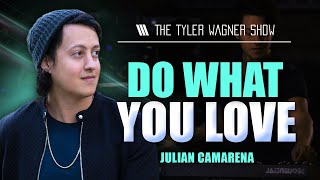
In this episode of The Authors Unite Show, host Tyler Wagner interviews Julian Camarena, a singer‑songwriter, music producer and owner of Camarena Productions, a visual‑effects studio. Julian recounts his early love of basketball, his switch to music at age eight with the saxophone and jazz band, and how that sparked his passion for creating original music. He describes his songwriting workflow—starting from a word or melody, using piano to craft a hook, and capturing ideas on the go. Julian explains his evolution into music production, balancing self‑produced work with collaborations, and how his brother’s expertise in visual effects expands their offerings into music videos and commercial work. The conversation covers the business side: building a massive social‑media following, handling brand partnerships with companies like Apple, Disney and Nickelodeon, and maintaining a hands‑on approach to management. Julian highlights his artistic family—parents, siblings and brother—all creators, which shaped his creative mindset. He shares how the pandemic forced a pivot to intensive writing and production, leading to a backlog of songs and upcoming releases, including the single “Fantasy.” Finally, he discusses daily routines (exercise, swimming) that keep him focused, his calm demeanor, and future goals of continued music, visual‑effects projects, and touring.
Chapters
All right everyone, welcome back to another episode. We have Julian Camarena with us today. He is a singer, songwriter, and music producer with a fan base of over 5 million across social media. As well as the owner of Camarena Productions, which is a full-service production company specializing in high-end visual effects. So welcome to the show.
Yeah, thanks for having me, Tyler.
Of course, grateful to have you on. Um, so what I like to do typically when I start off these podcasts is I like to go back to the beginning. Not all the way all the time, um, but close to the beginning. So, all right, First question for you is like, did you, when you were a kid, did you see yourself doing any of these things that I just said in your introduction? So yeah, let's start there.
Well, it depends how far you go back. I mean, when I was about, I would say when I was about 4 years old, I wanted to be a basketball player. And I was like, 'cause I was obsessed with the movie Space Jam and I know that—
Me too.
You know what I'm saying? That was like one of my favorite movies growing up.
Oh yeah.
But then I realized I wasn't gonna be that tall and I wasn't that good at basketball, so. Uh, but I eventually got into music. I actually got into music at a pretty young age. I started playing, uh, playing saxophone when I was about 8 years old, and I just, I just fell in love with music after that.
Okay, gotcha. Yeah, I also had the same dream at 4 years old for basketball players. Space Jam, I, I honestly, I'd have to ask my mom, but I think I watched that movie over 100 times.
Like, oh yeah, and I remember when you would buy the, when you'd buy the video cassette, it would come with this, uh I think it came with like this, uh, silver coin, like this special edition coin. Oh yeah, I don't know if you remember that or not, but I remember I kept that with me. I had it for like years.
Kept it. I mean, the movie was great. I— but I, I actually got to watch that again sometime because I'd love to know like if, if I— like the me today would still appreciate the movie as much as I did when I was younger.
Or, you know, because you just don't know just remember it as like the best movie ever.
Yeah, yeah, that actually— that's not a bad idea either. It's just like, let's not mess anything up here.
Don't ruin your childhood, man.
Not worth it. Um, okay guys, so, uh, I may have heard it wrong. Did you say saxophone?
Yeah, yeah, I played. Okay, well, I played the recorder before that, but that doesn't count. I mean, that's okay. Everybody plays the recorder. That's like the most annoying instrument in the world. But like, the first real instrument was a saxophone.
[Speaker:TYLER_WAGNER] And how old were you when you picked that up?
[Speaker:CHRIS_BREMER] I was 8. And, you know, I wanted to play— there's a few different types of saxophones. There's a— when I was— well, first of all, when I was 8, I was kind of a small, petite kid. So, I really wanted to play the tenor saxophone, but it was too big for me. I mean, it was like the same size as I was. So, I picked up the alto sax, which is a little bit smaller. And yeah, I just fell in love with that. I started off playing in my school's jazz band. And it was pretty cool because the jazz band would travel around and stuff, doing concerts at different places. So that was kind of my first taste of actually performing for people. And it was small, so you had a chance to actually— you got some stage time. And in jazz music, there's solo sections. So you would have a chance to kind of improvise and come up with your own little riffs. And that's kind of what made me just fall in love with creating my own music. I never liked to play other people's music for some reason. Just, I don't know.
Yeah. Yeah. So, not— you never thought of being like a cover band or anything like that?
I feel like— no.
Yeah. So, my, um, uh, how old was I? I think I was in middle school. I picked up the guitar and I learned Blackbird by the Beatles.
Oh, yeah. Yeah.
And that, that I have to say, if there is one to learn of another artist, that's a good one to know.
Oh, yeah. Yeah. All, all the, all the Beatles songs and all those stuff were Always a lot of fun to do.
So, so, so let's go through up until this point, and then obviously I want to talk about like everything that's going on now. But so you— so jazz band, I actually remember from my high school, um, I was not in it. I was actually in a, um, I was in chorus, so I used to sing a little bit. Um, but my— but I remember jazz band, and like the jazz band always seemed to have the most fun. So was that— was that your experience as well?
Yeah, because I mean, you know, a lot of times people just take band or whatever just to take something, you know, they have to either pick between, you know, choir or band or something. But the jazz band is something that you actually kind of had to like really want to do. And it was something that you had to actually audition for too in my school. So it was— so everyone that was in it really wanted to be in it. And, you know, everyone just loved music and stuff. So it's a lot more fun when everybody's kind of, you know, nobody's forced to do it. They're all just excited to play music.
Yeah, that makes sense. And then from there, like, did you start to take things like online? Is that how you started to grow the fan base? Or like, what was the next step when you like realized like, this is what I'm gonna do?
Well, you know, I actually started getting into— I actually really didn't start my, I would say, professional career until after university. Graduated when I was about 19 or so, and that's kind of when I started it. But before then, I got into I got into, you know, I was writing and I was producing. I started writing music when I was about 13 or 14 and started learning a bunch of different instruments. Like, you know, I picked up piano and a little bit guitar and everything else. And I started writing at that point. And it was during college when I actually started kind of getting into the whole production side of music and producing. I was working with a local producer named Jim Ryski and he was kind of, he kind of gave me kind of free rein in the studio. So I had a chance to really experiment and kind of develop my own style and what I wanted to do with my music. But then it was kind of, but then after university, during that whole time, I already knew what I wanted to do. You know, I knew I wanted to be a singer. I knew I wanted to write songs and make a living with music, you know, one way or another. So I started just putting out music. I put out my, I think my first song that I actually put out there was called "I Don't Wanna Wait." And I was just, you know, I got an amazing, response from that. We put a music video together and that was kind of the whole start of things. And I think the first social media platform I got into, obviously besides YouTube, was Twitter because it was kind of like, you know, you get instant feedback and it's sort of like a direct connection with fans and stuff. So you got to kind of chat and sort of build a relationship with fans. And that kind of really helped just kind of kick things off from there.
So, so the first one you put out there ended up, you know, and I guess everybody qualifies things differently, but ended up being kind of like a hit, like the first one you put out?
Yeah, I mean, I was surprised it got— I think it got in that time, it got like a million views within a month or so, um, and that was, that was a pretty big deal back then. And, and I was, I mean, I was shocked. And more than that, people actually loved the song, and that was literally the first song that I ever kind of put out there for people to listen to, uh, you know, before that You know, I would show my music to friends and stuff like that and family, and, you know, and they liked it and stuff, but you don't really know, you know, until you actually put it out there for just random people who've never heard of you before to kind of listen to it.
Oh yeah, 100%. That's the thing is, you know, I guess your mom loves everything you do, right?
Yeah, my mom's definitely one of my biggest fans, and she, yeah, she definitely loves everything I do. The rest of my family can be kind of They're actually pretty critical of my stuff, which is good because like they're dead honest with me. Like, if something sucks, they're gonna say, you know what, that sucks.
Got it. Yeah, no, mine are actually similar too, which is a good thing. Um, so I'm curious about, uh, let's talk about the songwriting because— and I'll equate this where I, um, so, so growing up I was always somebody in the crowd that like made everybody laugh, right? And it's, it's always been kind of a natural thing. And then I tried to do comedy and with improv, I was very good, but then attempting to write comedy— and I haven't been like trained or anything, but I attempted to do it— and that I found really, really difficult. So I'm curious, like, what is your process, if you have one, for songwriting?
Um, I mean, it's kind of developed over the years, and I have kind of different ways that I write songs. Like, sometimes I'll just start off with like one word Like, I just finished a new songwriting one the other day, and I just had the word in my mind, whisper. So I was like, you know what, I'm just gonna write a song with this word. So I kind of just built the song from there. And usually what I'll do is I'll just start kind of playing on the piano a little bit until I come up with a melody that I like, and then that's where I kind of build the lyrics from.
Okay, so it's kind of— so it's, it's kind of like a, a theme comes up or like a melody, and then, but for to kind of expand it outward and get that full song done, is it like almost like an isolation process? Like, do you go to the studio, like phones off, lock everything, or like how does that whole process work?
It just depends. I mean, like, I think you get to a point, especially professionally, where you kind of, you know, you say, I'm gonna go write a song today. You go in your studio and you start writing a song and that's it. But I mean, but also there's just times where you get inspired I mean, I've written so many songs in my car and I have so many just like sound recordings on my phone of just ideas. I've even written songs, literally woke up in the middle of the night at like 3:00 AM and kind of just mumbled some idea that I had in my head into my phone. And like, and you know, the next day I have to kind of decipher what I said exactly. But I mean, you know, sometimes you just, when an idea comes to you, you have to kind of capture it in the moment.
Yeah, that makes sense. And then from there, so you started to grow obviously, and then from there you were like, all right, I want to be a producer and help others as well. So like, how has that shift been? And I guess like, what have you learned from that? Because I'm assuming now you work with a lot of artists, uh, from being a producer.
Yeah, I mean, you know, I work with the— I do most of my own stuff. It usually keeps me pretty, pretty busy. And, and, but I do work with other people as well. I, I mean, the kind of the whole production side of things, obviously I started out as a musician. I didn't I started out as a singer or as a songwriter. So the whole music side of it has kind of always been the foundation for it. And, you know, I just, I never really, sometimes I just like working in the studio myself, you know, just, I think you can be the most vulnerable when you're by yourself. So you kind of have to learn pretty much every part of the production process and the songwriting stuff and whatnot to get sort of an authentic, song of yourself. And everybody's different. Everybody has their own kind of ways of putting together music and writing songs and stuff. And sometimes people need a, you know, whole group of people in a room to kind of feed ideas off of, and they can come up with some great music that way. But I always found sort of the most authentic thing for me is to, you know, to create the music, to create the, you know, to write the songs. And if, even if there's something that I need specifically, you know, I have a bunch of great musicians that I work with and and stuff that, um, that can, you know, obviously play much better than I can when it comes to the drums and stuff like that.
So, got it. So this actually might be my ignorance of terms in the music industry, uh, which would make sense because I don't know too well. But so, uh, music producer, I actually, I thought that meant that you produce other artists, but now, um, after having asked the question and hearing your response, is it more that like you just are able to produce music and it's just a different side, right? So it doesn't mean necessarily that you have all these artists underneath you. It's more so that you have the ability to produce other people's music for them.
Yeah, yeah. I mean, yeah, you know, music producer, you either produces, you know, there's a few artists that are music producers and artists themselves and they create their own music. Um, there's some artists that they, you know, they just write songs or they just sing and they work with different music producers to come up with their, their finished tracks. But, but yeah, I mean, you know, I do, I do produce for other people and stuff, and I, I do or for, you know, different clients and whatnot. I'll do some music scoring or something like that. But yeah, I mean, I mostly produce my own music for the most part.
Got it. Okay. And I also read as I was doing a little bit of research on you is that your father was or still is an artist. So, is it kind of something like artistry that comes through like your whole family or is it just you and your dad?
Uh, no, actually, my— yeah, my whole family is actually into some form of art. I mean, my younger brother, he's actually— he's a, you know, he's a comedian like yourself, and, uh, and he's screenwriting and stuff like that. So I kind of, you know, I understand your whole point of view. And honestly, comedy is such a hard, um, such a hard art form to get into. And, and so I, you know, it's kind of— yeah, I mean, that's something that I would never get into. But I guess it's like the same thing. Comedians say that, oh, you know, I don't know if I'd ever get into music, or or a musician said I'd never get into comedy because it's just a whole different ballgame. But yeah, I mean, pretty much everybody in my family is an artist in one way or another. My older brother is a visual effects artist. And, you know, my mom was a writer too. She used to write a lot of books and stuff. And yeah, my father's been a painter for a long time. So I kind of grew up in the whole art field and stuff. And it was a good— I mean, it was a good sort of platform to build off of and to kind of grow up around art is, it's, you know, it's a blessing because not everybody gets that chance.
Yeah. So too, being like a family of artists, and that, that's what's interesting, right? So there's like, I think there's, there's really high highs and then there's really low lows, right? That's the, that's the scary thing of a comedian is like, yeah, you know, some nights you can just crush and then other nights, I don't know, man, it's the crowd, it's you, it's the mix, whatever it is, it just doesn't pay So yeah, I don't know. I just find it's interesting. But what I was curious to ask is like, um, like what's the business side, right, of, of what you do? Like, do you have a manager that like handles all that, or is that something that you also like dabble in or manage as well?
You know, I, I've, I've explored all sorts of ideas, but I've never really kind of— I've always been sort of on the business side of things. That's sort of, I mean, I've always sort of loved that side of it too, is the business, because, you know, this is a business. So, and so I've, you know, I have a team of people that I work with and stuff, and I usually allocate different tasks to different people depending. But a lot of times, you know, I'll take care of it myself, or if I need someone else to take care of it or to manage a specific project, then I'll have them do it. But it just depends. But I'm very hands-on with pretty much everything. And I work, you know, I work a lot with family and stuff. So, it's sort of a good system that works for me.
So, because yeah, the reason I wanted to ask, and maybe we could dive into like one or two of these, is in your bio on your website at the bottom, it says like how you had partnerships with, or could be endorsements or partnerships, is the way the sentence is structured, but with like really big brands like Apple, Disney, Nickelodeon. So, like, How did those— did some of them like reach out to you? Was your manager or you like actively going towards them? How did that all work out from the business side?
Um, well, I mean, most, most, most big brands, it's always going to be them reaching out to you. I mean, you know, you build a big enough fan base on social media and stuff, and, and you've got enough stuff going on out there, you're going to have people get in contact with you for, you know, for whatever and stuff. So, you know, I've been fortunate enough to have a bunch of, a bunch of these big brands reach out, and, and we worked on a bunch of different projects over the years, and And yeah, I mean, it's always a lot of fun to work with brands that you grew up with or, you know, brands that you love, you know, to use in your everyday life. So, this is a lot of fun.
Yeah. So, now, what does it like look like? Do they like kind of like give you a direction or is it just like, hey, we love your music and we want you to do an advertisement for us or something like that. Now, just go be creative. We trust you.
Yeah, I mean, sometimes they'll do that. Sometimes they'll just give you kind of free rein, usually based off of what they've seen that you've done before. I mean, you know, since I have, you know, I have a whole full production company, so we can kind of just, you know, just give us free rein and we'll create something. I mean, that's one good thing about being sort of a team of artists is, you know, you don't— that's usually one of the hardest parts is being creative and coming up with an idea, but we can usually come up with something really quick and execute it pretty fast. Other times, you know, they'll have something in mind, they'll have sort of an idea And then we'll kind of just go off of that. But I mean, the best thing, the best times, the ones that usually work out the best is when they have sort of just like an initial concept and then they sort of give us free rein to, you know, to put the final, you know, final product together. But it's usually, you know, it's usually good communication between both parties before we kind of get to the final thing.
Okay. Now, I guess overall, Like, where are you going with things? Or like, where do you see yourself in like 5, 10 years? It's kind of weird to ask the question because time, everything's so crazy. Everything's like multiplying and moving so fast.
Yeah, you know, and always, you know, things always pop up. I mean, like this whole pandemic thing.
Yeah.
Popped up this last year. I mean, I was planning on doing a bunch of live shows this whole last year and stuff, and that's what I've been sort of working towards. But, you know, though, obviously you kind of have to adjust and you kind of have to always plan for the unexpected. So I pretty much spent this whole last year just writing and producing a whole lot of music. And I've got, you know, I've got albums worth of songs that are ready to be released. So I'm just going to be releasing a bunch of music this year, a bunch of new tracks. We're going to be— we're working on a few different music videos and stuff. We're always kind of trying to push the envelope, uh, in terms of the music videos, in terms of special effects and doing stuff that a lot of people haven't done in the past. Um, and yeah, then, and then hopefully, you know, get out there, do some, do some tours, do some live shows and, and travel a bit. And, and yeah, you know, just, just, just enjoy being creative and creating stuff while, you know, you know, doing what you love.
No, I love that because this is the thing, I feel like you, you always have to be ready to kind of like pivot, and not necessarily like a full pivot, but like you what you just said there because like I run a book publishing and book marketing company. What I've realized is a lot of people that wanted to write books, they decided to do that or like they had wanted to do it for a while but they never had the time, quote unquote. And but this pandemic actually like, you know, they were locked in their home for a while. Some people in the world still are. And so, you know, so they decided to use that time to write their book. So I feel like, you know, you had all these live performances lined up you couldn't do that, obviously. So you were like, all right, let me just write like 20 more songs, you know, which is like, well, and either is good, but, um, at least it wasn't like— and not that anything's like wasted time, but, um, at least it wasn't like a, uh, like the end-all be-all, like, oh, okay, I guess I'm gonna take off for the whole year because all my stuff's canceled.
And, you know, I don't think it's ever, you know, like you said, it's never an end-all be-all kind of situation. I mean, you just kind of have to work with what you have. I mean, and that's sort of the best way to succeed in, you know, in the music industry or industry, whatever, is to sort of just make do with what you have and make the best of it and keep moving forward. Because if you stop, that's usually when you end up going down.
So, here's kind of a question out of left field. We'll see where this goes. So, just from talking to you so far for the 25, 30 minutes or so, it seems to me like you're very like, calm and present. So, I'm curious, like, and maybe that's not the case, I'm judging you off of 20 minutes of interactions, but like, do you have any like daily practices that you do to kind of have this presence that I'm maybe forming on you that is not the case? I don't know, but it seems to be.
I mean, no, I'm usually kind of calm and collected. It's kind of just my personality. I'm more of a— I'm really not much of a talker, more of a listener.
Okay.
It will just help me out in a lot of situations. But I mean, I usually, you know, in terms of my routine, I always start my day off with exercising in one way or another, whether it's going for a run, you know, going to the gym or what I've been doing lately is just, you know, just swimming a lot.
Oh, nice.
And that's usually kind of how I start my day. And to be honest, if I don't start my day with some sort of exercise, then I'm kind of a little bit cloudy-headed the rest of the day. —Me too. So it's kind of just, I mean, it's about creating sort of a healthy lifestyle because this, you know, if you're gonna be in the studio all day long, you're gonna be, you know, working or sitting down and being creative just takes, being creative takes a lot of energy out of you. I mean, when you're kind of trying to create something or you're like, I'm sure you understand, like when you're trying to write or whatever, you know, it just takes a lot of energy out of you. So you kind of got to be in your best sort of mental and physical shape.
Exactly. So, um, I'm blanking on the name of the book. I think it's called Big Magic or something like that. But would you equate, or would you say that like, um, what you do before— I think it's kind of, uh, I think you definitely would say it, but I'm just kind of emphasizing on top— is that I think the morning exercise that you do is like just as important, if not more important, than the actual like being creative. Like, and to give an example, when I go on morning walks, that's when, if there was like an issue or a problem that I was trying to solve yesterday at the end of the day at work and I couldn't figure it out or something, that walk, it's almost like things like solve themselves.
Yeah, no, during it, like, I 100% agree. I mean, like, usually when we're working on a project or we're trying to, you know, create something in terms of the whole visual effects that I'm working with my brother and we're having issues, usually we'll just stop, we'll go for a walk And during that time, you're just— I think also it's just changing your environment too, because if you're trying to solve a problem in the same environment, sometimes you kind of need to place yourself somewhere else to get a different perspective on it. But yeah, honestly, I think going for walks or just, you know, doing something else helps solve a lot of problems.
100%, yeah. So actually, tell me more about that with the visual effects, because as we were talking, I was so focused on the music, I kind of forgot about that.
Yeah, no, I mean— Tell me. I mean, the whole kind of visual effects, the production side of things came about because of my music. I mean, you know, we wanted to create music videos and we wanted to create stuff that was unlike anything that people are creating out there. So my brother got into visual effects and now he's probably one of the best visual effects artists in Los Angeles. And he's just, you know, he's developed these crazy skills and he can pretty much create just about anything nowadays. So it's just left up to our imagination. And that's, I mean, that's pretty much kind of how it came to be.
And do you guys work together on that? But then also, so he'll do that for your music, but then he can kind of do it for any creator? Yeah, yeah.
I mean, you know, people have an idea and they'll usually come to us and they'll say, you know, I want this done. Or if he's working on a commercial or maybe a shot for a TV show or or whatever, you know, usually it's just, it's, you know, single shot kind of stuff. They want something to explode or they want, you know, whatever to happen. But yeah, yeah, I mean, he's, you know, he's able to do it for pretty much everything.
So see, this is where the definition of magic is interesting to me because if it kind of like you said, it's like anything you can think of because his expertise has gotten to that level, like he can just create it. And it's like, I don't know, man, if people don't think that I just think that's pretty magical to just think about. Like, I forget his name. There's a guy, I think his last name's King, Zach King, maybe it is. But I don't know, he's like big on social media and some of the effects that he does is just like, it's so wild. Like, he'll be holding like a toy car and then he'll like throw it and then it becomes a real car or something.
Yeah, I've seen this. Yeah, I mean, it's great to kind of get to— I mean, and you're, you know, we're always obviously you know, still developing our skills even, you know, we never stop. But when you kind of get to a point where you can kind of just create and you don't have to really worry about the technical side of things because you already got that down, I think that's sort of the best time and that's when you're most productive and that's usually when you create your best work too.
Yeah, no, I agree. So, I guess what's, you know, one of the last questions and if there's anything we didn't cover then, you know, feel free to jump in but Where— so you and your brother are going to do that, you're going to continue with music, and then it seems— and this is again just for me going through your feed— like, it seems like you have a very good, like, family bond as well. So is there, is there anything that you're, like, really trying to go for that you, that you don't feel like is in reach? Or, or do you kind of see the future as, like, if I keep on this path, like, everything will kind of work out the way it's supposed to?
Yeah, I mean, I guess it's more of the second one, you know. You kind of keep moving forward and eventually you get to where you want to go and you enjoy sort of the little victories and stuff along the way. But I mean, it's always good to have short-term goals and then have obviously the big long-term goals that you have in mind and just sort of take each day as it comes in and work towards those every single day. Yeah, no, I agree.
And again, I think that comes with like your personality of like just that kind of calm and collective But, yeah, either way, if there's anything else you want to share, please do. But then, also, after you share, let people know where they can connect with you, like social media. I know we connected on Instagram. Yeah. And website, anywhere else people can stay in touch with you.
Yeah. So, I mean, well, okay. So, I have a new song coming out. It should be out in either the last week of this month or the first week of May. It should be released. It's called "Fantasy." So you can follow me on all my social media and all the streaming services that you listen to music like Spotify. Be sure to follow me on there. I think my usernames for pretty much everything is @JulianCamarena, so my name. And yeah, and then, oh, and then if you want to check out our website, for our production website, it's camarena-productions.com. And you can see a bunch of cool breakdowns of visual effects and kind of get a behind the scenes of a lot of stuff.
Awesome, man. Thank you again for coming on the show.
Yeah, man, thanks for having me on.
It was a lot of fun.
More from Tyler


Catherine Nikkel : THE STORY EVERYONE HAS BUT HASN'T TOLD : The Tyler Wagner Show #1120



Scott Ritzheimer: Bring Predictable Success to your Organization | The Tyler Wagner Show #1115


Fred Moskowitz: A GUIDE TO GETTING STARTED WITH IN MORTGAGE NOTES | The Tyler Wagner Show #1113

Mark Podolsky: From Land Investor to Full Time Success How I Made $90,000 Cash in Real Estate


Mark Podolsky: How to achieve a 300% return on investment my foolproof strategy

Mark Podolsky: How to make passive income selling raw land the irresistible pricing strategy