Justin Donald: The Lifestyle Investor | The Authors Unite Show #964
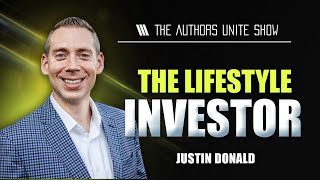
In this episode of the Authors Unite Show, host Tyler Wagner interviews Justin Donald, known as "The Lifestyle Investor," about his approach to building cash‑flow wealth and designing a life of freedom. Donald explains that a lifestyle investor is someone who purchases back their time by generating passive income from assets, allowing them to live on their own terms. He describes his client work, which is limited to a small group of high‑net‑worth entrepreneurs who have recently exited businesses and need to replace cash flow without eroding principal. Donald outlines his investment focus on cash‑flow real estate—particularly mobile‑home parks, multifamily apartments, warehouses, and storage units—detailing why these asset classes have low default rates, high cap rates, and are recession‑proof. He walks through how to acquire a mobile‑home park, from broker or direct seller outreach, due‑diligence, and financing, noting price ranges from $50 k to over $80 million. The conversation shifts to his views on stocks and cryptocurrency, emphasizing a small, long‑term allocation to equities, cautioning against day‑trading, and advocating for decentralized assets like Bitcoin while acknowledging regulatory KYC pressures on centralized exchanges. Donald critiques the recent surge in money printing, warning of inflation’s erosion of the US dollar’s value and the potential loss of reserve‑currency status, recommending assets that appreciate with inflation. He supports dollar‑cost averaging over active trading, citing data that most active managers underperform indices. Finally, Donald shares his daily routine designed around reading, writing, family time, and focused work blocks, and explains that proceeds from his upcoming book, "The Lifestyle Investor," will be donated to anti‑human‑trafficking charities.
Chapters
All right, everyone. Welcome back to another episode of the Authors Unite Show. Today, we have Justin Donald with us. So, welcome to the show, man.
Hey, thanks. Excited to be here, Tyler Wagner. Thanks for having me. It's fun to hang out.
Of course, man. Pumped to have you on. So, if you can just kick us off, tell us a little bit more about you and what you do.
Yeah, sure. So, my name is Justin Donald. I'm the Lifestyle Investor. That's the title of my book, the title of my podcast, and People ask me all the time, well, what's a lifestyle investor? What is that? What does that mean? And to me, it is really, I coined the term because to me, it's a person that is basically living life on their terms and they have cash flow from assets and they can live on that. They don't have to work. It's someone that gets to work. It's someone that's not handcuffed to a job or to a business or to security or to the golden handcuffs of lifestyle. It's someone that really can live life on their terms. And instead of being reactionary and kind of putting out fires, being intentional and proactive and living a life by design where your time is purchased back, you buy it back. So, you're not held prisoner to a job or business or anything else. So, to me, that's it. Having the cash flow to live the life you want on your terms and really giving you the freedom to pursue your passions and your gifts and the people that you value most.
Got it. All right. So, I'm really excited for this interview. Okay. So, first question I have and then I have another one. So, first one is like, is kind of in a sense like what you do then for people. Would somebody come to you and be like, look, Here's my lifestyle, and to live the lifestyle that I love and with my family, I need $30,000 a month passively, let's just say. And then, you look at it and then look at what their income is, their investments, and you could maybe create or do for them a plan that actually produces that result?
Yeah. So, I have pretty high net worth clients that hire me. So, I have limited what I do from the standpoint of one-on-one coaching. So, I used to coach more people, but I've limited down. Last year, I had 6 people and this year in 2021, I'm capping it at 4.
That's awesome.
So, yeah. So, I've got a waiting list, but that's exactly what I do with them. I mean, these are generally entrepreneurs that had a big exit and they, you know, basically had a high cost of living and now their cash flow, that came from the business has stopped. And so, they realize one of two things. Number one, they're going to eat up their principal really fast if they continue life the way that they're doing it, or two, they try and invest and fall flat on their face because it's a different skill set. You know, entrepreneurs often think, oh, I conquered the world and being an entrepreneur, being a business owner, I could do that with investing, but it's such a large gap to bridge. So, you see a lot of entrepreneurs just lose a ton of their wealth when they try to invest themselves. So, you know, my market really are, you know, people that have had 7, 8, 9-figure exits, mostly in that 9, and in one case, a 10-figure exit. And these are individuals that want to figure out, how do I create cash flow and not dig into any of the principal that I have? So, that really is kind of on a high level, but I also have a mastermind that is more in a group-style format. So, instead of diving really deep into one of my clients that we analyze every bit of their numbers, this one's a lot more community-driven and people asking questions applicable to them, but typically applicable to the group. And it's a killer group that are part of that tribe. And so, that's kind of how I can include more of the masses. And then, of course, I have my podcast and my book to really reach out to anyone and everyone. And to not have a significant price tag on it. You know, obviously, a podcast is free and a book isn't that much.
Yeah. So, is this— well, actually, before I get into the technicals, how did you like— what were you doing before this? Like, how did you find yourself here like with this sort of know-how being able to help people with this?
Yeah. So, I've had, you know, a job, let's call it my own business, my own sole proprietorship, that I worked for and really, it was kind of liberating having my own business, but in a sense, it wasn't fully my own. It wasn't totally my own asset. I was running a part of the business for a period of time and it was great because I gained awesome skills and I'm very appreciative for that. But I remember taking the step, the leap of faith out and starting a company with a couple of friends that we scaled and that one really took off and is doing very well today. And so, that was kind of like my first real endeavor with entrepreneurship and building a business. But I got to the point that I got tired of having the demands on my time that I had to put my family second in many instances instead of first, or at least that's how it ended up looking on my schedule. And I really wanted to shift that. I wanted it to be family first and business second. And so, I knew that I needed to buy my time back. And so, while I was working basically under the umbrella of another company, I was able to build a real estate portfolio that started producing some pretty significant cash flow. And by the time that I had built that cash flow, that passive income up over what I was earning from my business, from my small business, I knew that it was time to move on.
Okay. And now, that was gonna be my next question, is like, is it diversified, these investments, or is it, do you primarily focus on real estate? And if so, for the real estate, because it's obviously worked for you, is this like larger estates, like apartments, or what type of real estate?
Yeah. So, I've done a number of different things. And when I started out, I started out in mobile home parks. Now, at this point in time, I've done single-family homes, I've done apartment complexes, I've done warehouses, I've done storage, I've done, I mean, most real estate out there, especially especially if it's cash flow real estate. I've had some exposure to it, but, you know, my bread and butter is definitely multifamily, specifically mobile home parks. And that was the sector that I started on and really created my financial independence and financial freedom. And from there, I've been able to use that cash flow, everything that goes above and beyond what it costs us to live, to invest into other assets, other asset classes, other businesses. And so, I got to the point where instead of wanting to start a business, run a business, have my time be kind of in demand, I much rather buy businesses or participate as a capital partner where I don't have to put in time, I just put in resources, or I use my network to leverage and broker relationships that can be advantageous both ways. And so, that to me is really more the way I like to scale things today. And I found it to be just a great way to increase cash flow, increase net worth, all while not requiring my time.
Got it. And just, we maybe skip over this, but I'm just curious, like, any take on like stocks or cryptocurrencies, things like that?
Yeah. I mean, I think they're all great. I think everything has its place. To me, I don't know that— I mean, I certainly don't believe in the idea that all your assets should be in the stock market. I mean, I'm the furthest thing from that. I think alternative investments, as a general rule, are much better, much stronger, less volatile. And to me, I just didn't want any of my capital exposed to the stock market until I had my expenses covered, my bare minimum expenses, then my lifestyle expenses. And then once I had that, then it made sense to me, okay, now I can have money exposed to the stock market. So, it's not that I don't believe in it, it's just that if I'm going to do it, that really needs to be for the long haul. I'm not a day trader. I've done it, I've done it well, and I've done it poorly. So, it's not an easy thing and we're creatures of emotion. So, we tend to get in at the wrong time and out at the wrong time. So, I just want it to be, I just want it to sit there long-term, if I'm going to do it. And I do have that with a small percentage of my portfolio, but a lot of people, it's 100% of their portfolio. And often, they're in qualified plans, and so, they can't even use that money. Most people don't even self-direct their qualified plans to be able to get real utility out of those investment dollars. So, it's held captive till retirement.
Yeah, and I think the problem with it is too, is, you know, when the coronavirus and stuff hit, and like, I was having conversations with some people at that time, like last year we had an amazing year, but then I forget what it was, it's like April, March when it really started to hit. And I, it was literally like on repeat, I had conversations with people that were going to become clients, and then they literally said the same thing. They're like, yo, I literally just lost 60% of my wealth. Like in the last week in the stock market. And it just, I kind of, and I don't even know as much about investments, but it kind of just like rung in my head. I was like, whoa, like I can't even, I wouldn't even be talking to people if I lost that much. I would be freaking out, you know. So I wouldn't want 60% of my wealth exposed in that type of way. So I guess the reason I'm even saying that too is like With the mobile home parks and multifamily and stuff, have you kind of found a system or a way where like you're confident? Meaning like, if you put in $100,000, $1 million into this, you know what it's going to produce and the risk is like pretty minimal?
Yeah. I mean, keep in mind with real estate and especially cash flowing real estate, you're buying it based on a net operating income, which is basically, you know, the profit of the business. It's your revenues minus your expenses. That's your net operating income. So, you buy it based on a multiple of that. And so, you're investing in something that has tangible asset, it has intrinsic value, it's not going to go to zero. You can invest in a stock that could go to zero. So, with the stock market, it's always funny, I talk to people all the time. I literally just talked to someone this week and I talked to a few people last week that they were convinced that since the stock market dipped down to, in March, April, it really took a huge hit and then it came back up and then it finished at all-time highs and they're like, oh, Oh, yeah, I'm good because my portfolio was up X amount. And I said, yeah, but that amount is an average return. That's not your actual return. And they're like, what? I said, yeah, check it out. Check out how much money you had at the start of the year and how much money you have at the end of the year. Don't look at any of the average percentages. Just look at the dollars. And so, what's interesting is people think that because it goes down 30% and then back up 30%, that they're even, that their money's back to normal. It's not. If it goes down 30% and up 30%, do the math, you actually lost money. And most people don't realize that. And so, in their mind, they see these numbers of like, oh, the stock market's doing this, or on average, I should earn this, but that's an average. It's not an actual return. So, that's huge. So, I want to buy assets that have a very low likelihood of not performing that— I mean, I buy assets that banks love to do loans on because they're the least defaulted asset class that exists. And so, a couple of my investments, mobile home parks and storage units, are the two least defaulted asset classes in all of real estate and everything that a bank writes a loan on. So, that to me seems pretty safe and To date, I've done very well, plus you're in affordable housing. So, we saw an increase this year across the board in every metric and from a profitability standpoint, from an occupancy standpoint. So, I do think it's a great place. If people are unsure where to get started, I think it's a great place to start. It doesn't mean that that's the only thing you have to do and it doesn't mean that's where you have to end, but it can create good cash flow as you're figuring out what the next moves are. And You know, if you get enough expertise, maybe you stay in that one lane. You know, Warren Buffett always says, "Don't diversify," because when you know something so well, you want everything exposed to that one thing that you're an expert in. And then, you have other people that say, "Diversify," because if anything happens, you want to have some fallback plans. You want to have different asset classes that are a hedge to, you know, where you have your money. Something's down, something else is up.
[Speaker:ROD] So, let's stay on that. I actually have a friend down here. He does the mobile home park stuff. And I've never— he's a friend of mine, so I've talked to him about it, but never really in depth, never in a way of like truly trying to understand how to do it, right? So like, is the reason that the storage units and the mobile home parks are the least defaulted, I think you said, is that because they're like, it's very predictable in a sense? Like, I don't know, the rent's really low in a mobile home park. So like the chances of the person not paying the rent is low and then the storage unit, if they don't pay the rent, then what happens? I guess all their stuff gets taken out so they kind of have to pay it, right? So, is that why or?
You know, that's a component of it. You know, with mobile home parks, it's a limited resource. So, there are, you know, are very few being developed now. It's hard to even get the zoning and you got about 100 of them that are redeveloped into something else each year. So, you got 44,000 of them approximately in the US. And it's just decreasing. So, you've got supply and demand there. With storage units, you can build new and you'll see a lot of new ones popping up, but it's also pretty easy to get to what banks would consider a stable asset, which is generally like 70% occupancy or greater, or 80% occupancy or greater, depending on the bank's risk tolerance. And then, if someone does default, it's really easy to get someone new in there. And so, it's It's not hard if you buy in the right place and you do your due diligence and you know exactly what you're getting. It's not hard to make money. You know, the mobile home parks have one of the highest cap rates, if not the highest cap rate in all real estate, which basically just means if you're buying it for cash, it's giving you the best return of anything out there. And so, that's a positive thing to me. So, I like having exposure there. It's recession-proof. I've I've, you know, been doing this for about 15 years. But at the same point in time, I like, you know, I have other interests and curiosities and, you know, I'm hanging around all kinds of different people that invest in all sorts of assets. And so, I want exposure to it all.
[Speaker:ROD] So, and just so, because I'm actually asking this selfishly now because the mobile home park thing is just very interesting to me. So, just the steps. Say if somebody wanted to buy a mobile home park, you would, or what, yeah, what would be the steps? Like, how would you do it?
Well, there are a couple different ways you can go about it. You can, uh, first of all, go through a broker. Broker has some deals that are available and they've done some of the, the homework. They've kind of created the value based on, uh, what they think it's worth, and then you figure out a price that works. Uh, or you can go direct to a seller, and you can do that via Phone call, direct mail, stop-bys, you know, there are probably other clever ways to get to them. So, you know, those are kind of your two avenues, and then you just figure out a price that works and you sign a contract. Then you've got a period of time, a due diligence period, where you get to investigate and make sure that the asset's what you think it is and there's nothing too crazy there. And there are even companies you can hire to do all that work for you if you don't know how to do it. And I've got a friend that has one of the largest companies for due diligence called Due Diligence Partners. They're fantastic.
Oh, that's awesome. Great name too.
Yeah, totally. And so, that's just, it's a pretty easy way to get into the real estate game. There are a lot of ways to do it. You could do it in single-family homes, you know, takes a little bit more, you know, more homes to hit like a critical mass. I would prefer buying an asset that has multiple units So, if someone defaults, it's just a small percentage as opposed to the whole income stream, you know. So, I like apartment complex, you know, investments for that reason too.
[Speaker:ROD] That makes sense. And then, as far as, just the last question on that, for, I guess, because most people would need a loan, you know, like, because I don't know how much a mobile home park is, but I'm assuming, I don't know, I'm just throwing out $10 million for the whole park, like, that's kind of a lot, I would imagine.
It depends where you buy it and it's all across the board. You can get them for, you know, $50,000. You can get them for—
$50,000?
Oh yeah. No way. Believe it or not. It depends on the size, depends on the location, depends on, you know, how much income it's producing. And then, you can get them for a lot more. You can get them for $10 million like you said. You can get them for even greater than that.
Okay. Yes.
There was a mobile home park that sold out in Let's see, where was it? Malibu, I think, for $86 million, one mobile home park.
Well, yeah, that makes sense. So, before that though, so, when you say you're buying the mobile home park, and it's just because I actually don't know how these work exactly, is you're buying the land and then people have their own mobile homes and then they can bring it in there and then they pay you a rent to be in that park?
Yeah. And typically, you're going to buy them that are, you know, you have residents that are already there. And so, they keep their home, they're not looking to move it, and you can bring new homes in. Sometimes, you'll acquire some homes with it, sometimes you don't. It just depends how many people own their own home inside of that mobile home park you're looking to buy.
Got it. So, it's almost like, in a sense, it's almost like buying a business that, you know, you see the last like 3 years of data and you're like, okay, this is how much money the business is spending, this is how much it's bringing in monthly, here's my margin. And you could look at that at a mobile home park with people that are already in it and then you could be like, okay, well, I can kind of predict the next 3 years if the last 3 years were like this.
That's exactly right. Yeah, exactly to a T. And that's, by the way, why banks like to underwrite them. You know, banks need to see that. So, if a bank's gonna underwrite it, they're generally pretty conservative for the most part. So, I'd say it's pretty safe if you can get a bank to do it. And so, you're spot on. I mean, you do the same thing with a business and you just treat this like that business where you do your due diligence, you check the financials, you make sure that everything is what it says, and you project out what you think it's going to look like in the future.
Yeah. I love that. That was actually a big aha moment for me because like I feel with a lot of these things, anything financial related, and it's not everybody, I'll just speak for myself. Like, it just, there's so many technicals, right? Like, even like trading, like day trading, I've already just canceled that. I'm like, there's no way I'm gonna do that. But like, what I, my investment, it's not even like a full strategy, is I just put things in companies I believe in, right? So like Tesla, Spotify, um, Apple, and I just like, every month I'll take like a percentage of my income, put it some there. I have some cryptocurrency And real estate with my dad, I have a warehouse thing with him, but other than that, and he handled that whole deal from an accounting perspective, right? So, I don't even know even what financially it's doing exactly, right? So, I'm just saying, to think about it like that actually helps a lot because I do feel I understand business enough that if I could look at it from that standpoint of just like, you know, profit, monthly, you know, it's not all this like real estate, I don't want to say jargon, but you know what I mean? Like, it's a whole, it seems so complicated, but when you break it down to just look at it like a business, then it kind of uncomplicates it a little bit for me.
Totally. It's complicated till it's not. It's complicated until you do it and you go through one pass and you're like, okay, this isn't that tough. And then you go through another pass and eventually you've done enough and it's it becomes easy. You know, you can look at a deal, I could look at a deal and in 30 to 60 seconds tell you if I'm interested or not. Wow, that's sick.
Yeah, that saves time.
You know, that's thousands of deals that I've looked at at this point in time. So, you know, it becomes muscle memory. And then, you know, you talked about cryptocurrency. I think that we're in a day and age where that, you know, anything is a possibility there. You know, your altcoins are not having the same type of growth that Bitcoin is having, and that's kind of like your your reserve cryptocurrency, if you will. And I think that there's great potential there because once again, you're talking about scarcity, limited supply, and demand increases. And anytime you have a scarce resource, it generally is going to hold some sort of intrinsic value. So I like that. I like a lot of you know, the properties of it. I don't know that, you know, a lot of the altcoins have, you know, kind of gone down the tubes as of late, and you've got to be careful what you're getting into. Some are going to, you know, totally moon, and others of them are going to totally go bust.
I love this, dude. So I didn't actually know— so you seem to be pretty well versed in cryptocurrency, like, you know, some about it.
Yeah, I enjoy— my goal is to know at least a good amount about anything and everything in the financial space that is at least somewhat mainstream. And my goal is even with some of the obscure stuff to learn that. But I mean, I'm a student at heart, I'm a lifelong learner. And so, when someone's doing something that I don't know about, I mean, I can just pepper them with questions just like you're doing here. This is like my favorite. I love being on the question-asking side and the answering side.
Yeah. That's what I love about the podcast and that's why I don't know why everybody doesn't have one. I kind of do it selfishly. That's right. Because, right, I get to learn. It's a triple win, right? The audience, you're getting exposure, and then I learn. But I honestly kind of started it to connect with people and so I could learn. So it was actually started from a selfish reason. But the cryptocurrency— and then I want to touch on like lifestyle and what your kind of typical weekend's like, because I'm interested in that. Almost seems like a 4-hour workweek type of deal. Which is pretty cool if that's the case. But for the cryptocurrency, that's what it— I guess what I'm asking, because you know the finances, is like the worry for some people, I think, is that the government— because that's what just happened to Ripple, XRP— is that the government can somehow come in and just be like, we have our own digital currency. Like, I just found out a couple weeks ago that China already has their digital currency, and it's in direct alignment with their yen, is it? I guess with their whatever their currency is. So like, could the US come in and be like, look, like, good, you know, I'm so glad you guys invested all this money in these coins. But if you live in the US and you want to do business here, we're not allowing this anymore. We now have the US coin, and you are only allowed to use that. Could that happen? And then all your stuff is gone.
So, you know, certain things can be regulated. It depends. I mean, Bitcoin is built in a way that that's not going to happen because it's decentralized. Decentralized and no one's ever going to own the majority of it. So there's never going to be a centralized location. So it's a borderless currency. You know, the US could ban the use of it, but there's no way they could actually stop people from using it. So, you know, now other coins are different and it depends if— is the origin here? Is it a US company? I mean, most certainly the SEC and and the government can have control over what's here inside our borders, but— and sometimes they try to exert their force on other countries, but at the end of the day, if you have a decentralized currency that is truly borderless, it's not a sovereign currency, and there's no way that you can control it. There's no way even today that any government could buy enough of it to control it, to have even 51%. It can't happen. So you've got, at least in Bitcoin, a currency that can span beyond a government's control.
Okay, and okay, beyond the government's control, but they could still— because they just passed something I saw too, that because the founder of Coinbase, or the co-founder, I'm blanking on his name right now, but he tweeted that they're now requiring, if— or they want to pass this law if you send anything over $3,000 or receive anything over, they want to know who that individual is, which doesn't that kind of take away from the point? It's not the whole point, but one of the points is like, if me and you want to do business, why does the government have to know? Why does anybody have to know? Yeah.
The government wants to know everything. They're going to try and get as much data as they can. They're going to try and call it, you know, know your customer, KYC. That they have to do it for money laundering purposes, even though most of the people they do it with are not— they never have, never will.
99% never will.
Don't even deal in a volume even close to it mattering, but they just want control. Governments want control, plain and simple. If you're dealing with a centralized exchange like Coinbase, then there's a lot more control. You're dealing with an exchange that is a KYC, or know your customer company, so they have all your data, everything can be tied to you. If you look at your Bitcoin believers, like your purest form of people that believe in this currency being the long-term I guess, solution. These are individuals that aren't buying it on centralized exchanges, they're buying it on decentralized exchanges. No one knows that they're buying it. No one knows how much they have. They transact and they use all kinds of different mixers that can shake up basically your wallet address. And so there's no way that they're going to be able to connect that to you. Plus, I mean, the origin's even unknown. So it's kind of like a zero-knowledge platform. There are a lot of groups that are out there doing either end-to-end encryption, which is great, but if it's a true zero-knowledge platform or zero-knowledge provider, they can't connect you and your transaction to anything. They can see a transaction happen, but they have no clue who actually did that transaction.
[Speaker:TYLER WAGNER] Yeah, that's awesome. I got to learn because That's— it's funny because I started with those like types I get where like, I don't know, like when you pay each other with them, you just send the address. But it kind of was like, it was a little like sketchy. It felt like— and not sketchy in a way of like illegal, but sketchy in a way of like it wouldn't show up in like my other account until like a day or two later. I'd be like, did I copy that right? Or is it gone into the ether? So the thing about Coinbase that I do like, even though it's centralized, is the simplicity. You can't beat the simplicity of that platform. It's just— so that's a shame though that they are— yeah, it makes sense.
But if you're also wanting to move a lot of money and do a lot of trading and utilize that exchange, I think that makes plenty of sense. So it depends what your goal is. You know, some people hold Bitcoin because they believe in privacy and they believe in a new currency that is not controlled by a government where they can't print more money and devalue the dollar and devalue people that are savers and strip away their purchasing power. So there are purists, and then there are people that do it to make money. And so I think that your desire and your outcome, what your intentions are, really matters. If you're just looking to figure out how to profit and you are going to report all that, then you should be using Coinbase. And by the way, I'm not saying don't report, I'm saying, report anything and everything, you know, I'm just saying I know that there are people out there that don't because their whole purpose in buying it is that they want to stay under the radar.
[Speaker:ROD] Yes, I'm actually more on the purist side. I mean, my dad's an accountant, I still report everything. But I like, you know, the day trading or the profiting, like, I just think that it is something, I think there's something there. So, what I want, so now on the flip side, the US dollar, where, like, what do you think with everything going on right now, what is happening with, I guess, the whole US, you could say, because right, if the US goes down, then the dollar is going to go down. So what do you think the US dollar will look like in, I don't know, 10 years, 20 years?
It's, it's an interesting question. And there are a lot of opinions on this. So here's the deal. I just read something that said that 40% of the money in existence in the US was printed this year.
I read that too recently. That's freaky.
That is mind-boggling. And so one thing I know is that there, there's going to be a point in time where there will be repercussions for that. Now, there are ways to manipulate the numbers, there are ways to manipulate markets, there are ways that it might not show up for a period of time. So I don't know when it's going to show up. All I know is that the more money you print, the less valuable the dollar is. So, you know, decades ago, we removed gold, you know, backing the dollar, right? So that we used to have dollars that were based on gold, based on a standard, the gold standard, that was removed. So now we have a fiat currency, which basically just means it's not backed by anything, it's paper money. And that's what gives the government the ability to print, they can print as much as they want. And that's their way of solving problems. And short term, it works long term, at some point, it's It's going to catch up, and it could catch up in the way of the US dollar not remaining the reserve currency of the world. It likely at some point will result in that. I don't know when that's going to be. I know China would like that to change ASAP. There are a lot of countries that want that to change. There are a lot of countries that don't want the US dollar to be the reserve dollar, and for the US to stop manipulating markets. And here's the thing, when you are a saver, and a lot of people don't know this, a lot of people are like, well, inflation, prices just go up. And it's like, no, prices go up because more dollars are being printed. So, it takes more money to get the same thing. That's inflation. And so, when inflation happens and you're a saver, you lose money. Period. You're losing money. And they might tell you that inflation is 3%. I'm telling you it's more. Inflation going on right now with the stimulus packages that we've had, the CARES Act, and I mean, everything that is producing more money into our government, I mean, that is ramping up inflation. So monetary supply is expanding. So when that expands, you want to have assets that expand at the same time. Instead of keeping money in cash, you're going to lose money. You want it to be in assets because the assets will grow in proportion, uh, in direct proportion to the amount of money that's being printed. So you buy a property for X, um, and then you have inflation of 3, 4, 5%. Well, the value of that when you sell it is going to have increased that regardless of whether you have improved the property or not. And then, if you improve the property, you decrease expenses, you raise, you know, you grow revenues, you grow profit, you grow net operating income, then it is going to be worth even more.
So, do you know when it's like, when it can't be? Meaning like, do you think we have at least 5 years until And I'm asking this selfishly, until like this whole, until it is 40%, let's just say, if it's direct proportion, which I don't know if it works that way, but you know what I mean? Like, how much time do we have before it really, the hammer hits?
Yeah, I mean, we probably have time. Uh, things like this take time, but they also, you know, can happen out of what some people feel like nowhere. So do I personally think we have 5 years? Yeah. Do we have 10 years? Uh, that's a much more questionable number. I don't know that I'm convinced on that. 10 years is a long time away. And it's not to say that we lose the world reserve currency status, but there could be many other ramifications. And so, I mean, you could have inflation, deflation, stagflation. I mean, there's so many scenarios of what could happen. It is truly impossible to predict. And that's why you have all the smartest people in the world that No one says the same thing. Everyone says something different. No one knows.
That's why it's so hard. That's why, like, even though I totally actually agree with what Warren Buffett, with the quote you said earlier, what he says, like, if you know one thing, like, don't diversify. I totally agree with that. But like, in situations like this, it's like, you know, I don't— I have some in crypto, I have some in stock, I have some cash, because like, you just don't know. So it's like, I don't know, like if you put everything in crypto right now, you know, I remember in 2017 Bitcoin went up to $20,000, then I think it went back down to like $3,000. It did. Yeah. And that happened pretty quickly. Like, so I don't know, like right now it's gone up so much. So people that are buying right now, I don't know. I mean, maybe it is going to go to $500,000, like what's his name, John McAfee said, or the Winklevoss twins, like They like, they believe this, and I think over time, but I do think it's going to crash multiple times again before it gets there, uh, historically speaking, because that's what it seems to do.
Yeah, for sure. And I don't think it's ever going to go back to $3,000 again, but I think, you know, over this weekend it really ramped up, you know, over $34,000. And then today, today, you know, once you got your professional traders back in, uh, who are not purists, they care about making their profit and that's it. So, if they can lock in a profit, they don't care that it might go to $50,000. They want to get their profit, get out, and have their margin. And so, that's why you see today, Monday, being the first day back when we're recording this, it's trickling down and it'll probably continue to trickle. Now, it'll dip. I don't think it's going to go— I don't even know that we'll ever see $10,000 again. I mean, I hope we do.
Yeah, yeah, me too. Because being the purest that I'm in now, whenever it dips, I'm like, I'll get another one. I'll get a little more.
Well, that's why people say to average in, you know, average in and average out. So that way you're not locking in.
Do you like that? So there's a guy I follow. This is, this is, I don't want to say this, but I use TikTok for fun. I like TikTok. It's funny. And there's a guy following, what he says is like, He's a straight-up investor and he doesn't do any trading and he just, what's it called? Average, I think it's what I do without knowing what it's called, like daily average cost or what, meaning like—
Dollar average cost. Yeah.
Yeah. That like, yeah, that's it. He invests every month and he doesn't even look at the price. He says he just invests every month, same day. And then over a year, if you look at it, it's the average cost of what it would be. Right? And then it's less stress because I feel like me, like you said, most people are emotional. What happened to me with the Bitcoin, all that stuff earlier on, like I think I started to get into it, it was like $600 a coin is when I first heard about it. And I invested and then I found myself glued to GDAX, it was called. And I would just watch this thing. And I was like, dude, I can't take this. I'm not trading. Like I'm just going to invest and look away because I can't take it. So, do you find that as a decent strategy?
Yeah, I think that the statistics show that that is the best way because emotionally, we can't do it. We just can't time the market. You see, like, you stand a way better chance if you have an algorithm that you're working with that's timing the market and you're doing things based on that. As you eyeballing it, I think you're way better dollar-cost averaging in and dollar-cost averaging out. The stats will show, history will show that you're going to get better results with that. As algorithms improve and people are able to, I guess, program for even better efficiencies, there could be a point in time where that outperforms, but right now, I think all the data points to the fact that dollar cost averaging is the superior way to do it.
What are your— and then I want to move to the lifestyle, but I wanted to ask this, um, because I see it's funny, right? So when everything starts skyrocketing, that's when all the traders and the crypto, that's when they all come out, right? So now I'm seeing all this and everybody's a genius trader right now, right? Because that's right, you know, because, well, the market's gone up 100% or whatever. So What are your thoughts on these, like, bots? And, and like, people— like, there's these things that I see, I think it's bots, and then people that actually read charts and day trade, they're like, hey, like, pay me $100 a month or whatever and you come in my Slack group, and, and then like they'll tell you when to buy and sell altcoins, stocks, and because they know when it's gonna go up and down somehow.
Is that—
do you think like the algorithm, like, is that real? Like, do people— can you actually tell?
Over a period of time, uh, it's— no one's been consistent, you know. No one's beaten the market, you know. So like, let's just take the stock market in general. So if you look at the S&P 500 versus, uh, actively managed funds, we're taking— you were talking about the most professional people that have done this for the longest. And based on 2019 financials, since we don't have 2020s yet, so 2019 financials, said that only 5% of active traders or active managers of money outperform the S&P 500 index. So, 95% of the people out there managing money did not beat it. All right? That is so important to wrap your mind around that you are way better off just investing in an index, which by the way, is your cheapest way to get exposure to the stock market, than to go with active managers, because these active money managers are doing worse 95% of the time, but then you're paying them high fees, really high fees. So it's a double whammy, and they make money even if you don't. So you got to look at that as well and make some decisions there. And so the same holds true in a crypto space where people don't even have the same type of experience that day traders have and active money managers have. In the stock market. So, um, do I think that people, uh, can do it short-term or periodically? Sure. And I've got a friend that's done incredibly well. I've got a few friends that have done incredibly well with it. Um, but they have had huge busts as well, you know. And no one has, has been able to perfect the timing on, uh, you know, over a period of time. Like, no one is so clean that they have such a positive track record. Everyone becomes a loser at some point in time in that game.
Got it. All right, I think I'm gonna stick to the monthly.
I would, I definitely would. I think that's the recipe for success, in my opinion.
Yeah, and it seems to me, because I heard that too, there's this book that was recommended to me, I listened to it a while, it's like The Little Book of Investing. It's like a little red book. And that's what the author says is he's like, the S&P— I have a Vanguard S&P 500 index thing. And he's just like, this over the last— and he showed like a graph, like since, I think since the Great Depression, so the last 100 years, like 10% annually. And it's very predictable. And like nobody, like you're saying, like an actual active manager typically does not beat that. So, because you have to add in the fees. So even if they do actually make some really good trades for you, the fees associated bring you back down to like a 6% to 8%.
Totally. So, and that's being generous. 6-8% is incredibly generous.
Okay.
If you're looking at the real returns.
Yeah. Okay. So, yeah, last I want to talk to you about is lifestyle. So, what lifestyle have you created for yourself? Like, what's the typical day, week, like, look for you?
Yeah. I mean, it really depends on the time of year, depends on the projects that I have, you know. This year, I've done a lot more reading, well, Technically, this year, I've done more writing time than anything, but I generally start my day with reading. Even today, even while I was writing, I would start with reading. And I love that. I get up early. I do some of the things that are important to me. I journal. I get some time to myself. I read. I get some quiet time. I get a chance to think. That's really important to me. I spend some time in prayer. That's also important to me, my spirituality and faith. And then, when my family wakes up, I get time with them. I've got a daughter and a wife, and I want to get all the quality time time that I can and soak that up. When my daughter goes to school, I go to the gym, get a good workout in, and then I get back. I generally work on personal projects till about noon, and I like to start my, you know, what I call my work day, you know, at 12. And generally, I'll work like 3 hours, 2.5, 3 hours on the projects that I like that are most important to me. And then when my daughter gets home from school, I want to hang with her, get some time. And when we put her down to bed, we always do family dinners. And when I put her down to bed, my wife and I hang out, and I like to keep my Mondays and Fridays pretty open. So, Tuesday through Thursday, I do a lot more of my work stuff. You know, Fridays is kind of like fun for families, friends. I do a date day with my wife, you know, and we'll do some cool stuff. And then, Mondays is just like a time for me to think. It's a time, you know, I call it my think time where I am intentional and proactive and I leave that space open so I can be creative as opposed to, reacting. You know, I want to get out of the reactionary world and get into the proactive world where I'm intentionally building my life by design, which, you know, I outline a lot in my book, The Lifestyle Investor.
Yeah, that's awesome, man. So, we're looking Tuesday to Thursday, about 3 hours a day, but even though like the reading and writing, and it's— we're very similar in a lot of ways, but in that way, I enjoy— I don't consider that really like work. The writing can be a little hard. Reading is not work though. I love reading and audiobooks. So, but then, so, but you're keeping like still very kind of like still a nice schedule even though you have the freedom to kind of free flow. You have the schedule where it's like reading, writing, workout, and then 3 hours of work. And then, so you literally from 3 until your daughter goes to bed, like that's your time with her like almost every day?
Yeah. And it depends. So, during the book, I've had more times that I'm putting in writing. So, maybe she gets some time outside the neighborhood and then I hang out, I get an hour extra writing. So, it depends what's going on. If I have a big project, and also, in my Tuesday to Thursday, well, I guess this would go Monday to Friday depending on the situation, but I like to meet 1 or 2 new people a week. And so, I'll do lunch or coffee or smoothie or, you know, cold-pressed juice, you know, whatever, just to get some time with someone that I am interested in learning from or that I want to meet. And so, that is part of my day and I like to get that in prior to, you know, any of the work that I actually want to do. And a lot of the work I do is vetting deals. You know, a lot of, you know, my network, my mastermind, they rely on me for deal flow and finding invisible deals, you know, something I talk about in my book. And and vetting deals and connecting them with experts, you know, in anything, whether it be tax strategy or in estate planning or in legal. It's just finding the right people and the right connections and exposing people in my network to them.
That is awesome, man. I love it. Well, look, I loved this interview, man. Thank you for coming on, and I want to kind of leave the floor to you if there's anything else we didn't like touch on that you want to touch on. Please share, and then socials, obviously, the book's coming out. So, yeah, the floor is yours. Share where we can stay in contact and everything.
Sure. Yeah. So, The Lifestyle Investor book's coming out, and I'm so excited about it. And you can actually go to my website and check it out at justindonald.com/freebook. So, there's two different categories. You could do the free book one where I've got a bunch of different perks and, you know, some additional offers. You just pay for shipping. And then, you can get it just on Amazon or wherever else. And so, I just want all of your listeners to know that 100% of the profits of this book are all going to charity. So, the education of the book is geared towards buying people's time back and creating financial freedom. But there are a lot of people in this world, and especially, like most people don't realize in the US, there are a lot of people here that, you know, where human trafficking is more prevalent than people realize, they don't even have basic freedom. And so, The money from this book is going to buy freedom back. It's going to help save and protect people, especially these kids that are taken and they're forced into slave type of roles, whether it be sex slave or actual work. And it's really sad. So, the proceeds are going to that. So, the education and proceeds, all my goal is to help create freedom on either side of the coin. And then, on my website, there's a bunch of other stuff. So, I've got an online course, I've got a podcast with some really cool guests, I've got a mastermind and a pretty high-level private coaching program that I told you about earlier, but there's a big waitlist for that one and a pretty long application. But yeah, I mean, I'm excited for the impact that the book will have and I'm just excited about the feedback that I've already gotten from the people that have had an opportunity to read it and really give their feedback and their critiques.
Yeah, I'm excited for it too, man. Thank you again for coming on the show.
Yeah, thanks for having me, Tyler.
More from Tyler


Catherine Nikkel : THE STORY EVERYONE HAS BUT HASN'T TOLD : The Tyler Wagner Show #1120



Scott Ritzheimer: Bring Predictable Success to your Organization | The Tyler Wagner Show #1115


Fred Moskowitz: A GUIDE TO GETTING STARTED WITH IN MORTGAGE NOTES | The Tyler Wagner Show #1113

Mark Podolsky: From Land Investor to Full Time Success How I Made $90,000 Cash in Real Estate


Mark Podolsky: How to achieve a 300% return on investment my foolproof strategy

Mark Podolsky: How to make passive income selling raw land the irresistible pricing strategy