Kary Oberbrunner: Infinite Partnership System | The Authors Unite Show #993
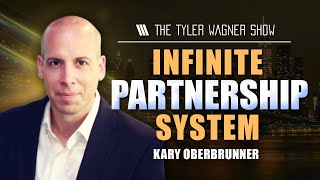
Kary Oberbrunner built a hybrid publishing company that keeps authors in control of their rights and profits. Her Infinite Partnership System replaces paid ads with referrals and collaborative calls, scaling businesses from five figures to eight figures without the traditional publishing squeeze.
Chapters
All right everyone, welcome back to another episode. We got Kerry Oberbrunner with us, so welcome to the show, man.
Tyler, it is great to be here. I love your show. Thank you, man.
Um, so yeah, I think, you know, for this episode, for everybody listening, we want to talk about like how we connected and what we're doing together. But to start, can you tell the audience just a little bit more about you and what you do?
Sure. So I started publishing way back in the day when Tyler was just a figment of his parents' imagination. Really?
No. How long ago?
No, it was, it was 2003. I got my first book contract. So you were, you're pretty young.
Okay, I was 12 then.
That's funny. So basically, I struggled as a kid with stuttering. And, you know, so I feel like writing kind of became my way of expressing myself. And I always wanted to get published, but I just thought, you know, it was behind the curtain, like, what's behind the curtain? How do you get published? How do you get an agent? So I started writing for, uh, I submitted an article for a magazine and to my surprise, they, they dug it and I submitted another one, another one. And then I found out they had a publishing company and they basically said, um, yeah, you want to write a book, write a proposal. And I had like no clue. And this was before the internet was big. So I, I just kind of hustled and worked my way to figure things out. Long story short, got my first contract, second contract, third, fourth, and I kept my day job. Let's just put it that way. I didn't know how to monetize. I didn't know how to basically go pro as a writer. And then my book, Your Secret Name, came out. And this was— this is the new version. Yeah, there's an old version. This is my fourth book, believe it or not, my fourth book. And for some reason, like with that book, it told my story about, about depression and self-injury and all. It was like totally open book and people really resonated with it. And I then figured out how to turn the book into multiple streams of income. Like, hey, I should speak on this book and hey, I should create a course and then people said, can we get certified on it? So it kind of happened by accident, but I started to turn a book into multiple streams of income. And then Tyler, you know, that that's pretty, that's pretty hot. Like very few people know how to do that or do that. They just think, oh, your book's your business card. What do you do with a business card? You usually throw it in the trash.
So, right.
So I always viewed books as as businesses, not business cards. And then sure enough, people began to say, look, man, you got to teach us how to turn the book. And then I figured out 18 streams of income. And I'm telling you what, once that hit, people are like, wow. And so that's, that's kind of my unique selling proposition in the marketplace is write a book, and then turn it into 18 streams of income.
God, I love that because people do say that a lot, like a book is a business card. But now that you're speaking that out loud, like I'm realizing like that is exactly what I do with business cards is I throw, but I don't throw books in the trash. I definitely—
No, in fact, in fact, it's almost like bad luck. If I know people like seriously, like even me, like when I'm clearing out the house or something, like I just can't throw a book away. And I think there's something ingrained us like, Like, what do you do? You put a book on a shelf, you put it in a case, you treat books with this reverence, but business cards, you're like, psh, throw it away.
Exactly, yeah. Now that you're saying it, I'm thinking about, I don't think I've really thrown a book out. I just like, and you know, you were down here in Miami, I just have some still at my parents' house because it would, you know, for an apartment, it would just flood the apartment. Yes.
Or you donate them, Goodwill. But it's kind of like bad luck or something to throw a book in the trash.
So I wanted to ask too real quick, 'cause I don't know, how many books do you have? How many have you written, do you know?
So my next book comes up, Show Up Filled Up. I think it's like 10 or 11.
Okay, yeah, you're like a real writer. This is awesome, dude.
Yeah, yeah, you know, we got the Unhackable book that came out. Um, in October, but yeah, Show Up, Filled Up comes out June 1st. And maybe, maybe, I don't know when this recording is going to hit, but it might be out by the time people listen to this.
So I think what would be a good kind of, um, segue to where we are now is, so 2003 is when things started. And I actually, because I got into it in like 2010, so I don't know when self-publishing like, like but I'm assuming it was between 2000— Yeah. Okay. Got it. So like, what were you— and you said you fell into it. It's funny, we have so many similarities because when I wrote my first book, I didn't do it to like help others with their book. I just fell into that.
Yeah.
So, so you fall into it and then what did you do like to grow your, your publishing? Like, what does that look like? Start to till now?
So ironically, I got into traditional publishing, and a lot of people are like, ooh, you know, when you talk to indie authors, they think that's the holy grail. You're going to get an editor, you're going to get cover design, or you're going to get an advance, or, you know, you're going to get all this stuff. And it sounds really sexy, it sounds really cool. Um, like, here's one of my books came out, I don't even know, like 2009. And Zondervan owns— is owned by HarperCollins now. So I mean, this thing was like legit in Barnes Noble and all this. But what I realized is, okay, it says $15. As the author, I had to buy these copies for $7.50. And you might be like, well, that's slick, you got half off. Until you and I both know, it probably costs $2.50 to print. So every time I'm buying my book from my publisher, I'm basically stuffing their pockets with $5. Yeah, I mean, that's, you know, that's the first thing people don't realize is like, okay, so you get a publisher. Not only do you give them your intellectual property for life, not only do you give your agent 15%, not only do you get a small advance And it's ridiculous what they give first-time authors who don't have a big platform. I mean, our mutual friend David Hancock, you know, he basically says it can be like $500 to $1,500 is average first-time author. Now, of course, Hillary Clinton gets millions, but we're just talking averages. So it's like you basically give away your content, you give away control. They chose the COVID they chose the title. You wish you had control, but then they're like, no, we're not gonna do that cover. And then you wanna put back ads for your programs and they're like, no, we're not gonna do that. You know? So it's like you give it all away and then you lose money. So in that sense, Tyler, oh, you'll like this. It wasn't until 2014, I don't know if you can see this, but this is the warden. Yeah, we're gonna go there together. I know we're gonna go there together. So I wrote a book called Day Job to Dream Job, and it talks about how your day job is your Shawshank and your dream job is your Zihuatanejo. And so, um, the cool thing is that, like, I got super in with the movie stars, and they had the 20th reunion, and they allowed me to launch my book at the 20th reunion with the warden. The LA Times picked it up, the New York Times picked up. Like, I get marketing, but here's, here's the crazy thing: my publisher did nothing. So in other words, what I realized is like, and this isn't, oh, I'm so good, this is most traditional publishers, you, you know it. They're just so bad at marketing. Like, they don't get the cutting-edge stuff. And I'm, I'm talking stereotype. I get it. There's some out there that are probably really good. But what I realized is like, why am I giving control to everything? And then I'm also doing all the work for marketing. And then I had this aha moment where it's like, I'm going to start my own publishing company. It's ridiculous. It's crazy. But But, but that's what I did because I had so many clients saying, teach us, show us, should we go with KDP? And I'm like, no, you actually shouldn't. So I kind of created my whole little unique model. I guess you'd call it a hybrid model, but it's kind of like the best of both worlds. It's the best of self-publishing, meaning profits, control, but then it's the best of traditional publishing where it's professional. And distribution. And together those models converged into what we call Author Academy Elite, and that's been my publishing company since 2014.
2014, got it. Yeah, I think one of the biggest things for me that I could never see myself doing is like you spend all that time writing a book, but then you don't get the final say with a traditional publisher. Yeah, cover or even the content. From my understanding, I've never personally like published with a traditional publisher. Obviously, I have— that, that have. But, um, yeah, it seems to me like the end decision is there. So even at the end, if you're like, hey, I don't like the book cover, but they're like, hey, this is the COVID you— that's right. It's like, well, wait a second, this is 300 pages of my stuff. Yeah, I can't imagine that conversation. That wouldn't go well.
It's crazy. It's crazy. And then sometimes authors sign contracts where they don't include audio. So then the publisher's like, well, we're not going to do an audiobook until you reach this threshold, then we'll invest the money. And you know, and you kind of say, I need the audiobook to get to that threshold, you know. So there's, there's these weird conversations. And again, I'm not throwing all traditional publishers under the bus. I've worked with probably 4 different ones.
I agree.
Yeah, yeah. And there's some good ones out there, and there's some people who are cutting edge and innovative, but there's a lot that, that simply view themselves as we print the book, you the author sell the book, and you market the book. And then, yeah, to your point, it's like if you didn't have a say in how it looks, it's tough to market and sell it.
Exactly. So 2014 is when you start your publishing company. And now, so now as we're recording this, it's 2021. So 7 years. What, or I guess talk about like what the first couple years were like and then when did it really start to accelerate, um, really grow?
The first couple years were faith, man. Um, I would be on webinars And I would blow up the models for people like, hey, here's all the negatives, here's all the negatives and let's create a third way. And they're like, I'm in. And then they'd say, how many have you published? And I'd be like, well, there's 20 in the works, but they haven't started yet, you know, or they haven't published yet. So in the beginning it was a lot of like, hey, do you trust me? And thankfully, I had a lot of clients that were people who took my courses, brought me in as a speaker, Deeper Path, you know, different books, and they said, yeah, we trust you. So then I started my first event tied to the publishing company. And I, you know, you've seen the big highlight reels now where we have 600 people and lights and cameras and LED walls and red carpets. And even the Oscars tried to sue us because we called it the Author Academy Awards. Like, you know, now we have tons of success. But Tyler, I just want to tell people, if they're listening to this, in the beginning, listen, man, we had to put plants in the room just to fill up half the room. Like, and then, and then the hotel said, and you can use this half of the room to eat, and you'll set it out and say that it got so full that you had to include tables to eat in. Like, man, in the beginning it was crazy, but just like you, we believe in something called MVP, minimum viable product. You start it small And then as you get capital, you start scaling it. And so I get letters today. I mean, just here's an example. This author is one of Gary Vee's premium speakers. She got married now, but it's Amy Landino, Amy Schmittauer, 400,000 YouTube subscribers, one of the most sought-after speakers today. She's got a huge— but here, I want to read you this quick card here. These are the things that light me up, okay? When I get a card here that says something like— I forget, but it says something like, publishing with you was— I see it— was one of the most important moves of my career. So I mean, this is the same woman that narrates Gary Vee's audiobooks She's worked with Tony Robbins, and yet here she is saying, look, because of you, my career blew up. I mean, that's awesome. And then we get, um, you know, like in the back of the book, you brought my book to life. So I kind of feel like the grandpa, you know. I'm not, I'm not the, I'm not the parent of the book. I didn't give birth to the book, but I'm the grandpa. You see what I'm saying?
Yeah, no, 100%. And actually, as you were saying that, we'll dive into this a little bit more, um, in the interview, but with Infinite Partnership System, what we're doing together, that's talking about 2014 when things started and you were trying things out. It just kind of hit me as we were talking, like, the importance of doing what IPS does once you already have a base is obviously huge, but I, I think it's like, it's, it's just as important, I'll say, in the beginning because it really removes the risk.
Right. So, it's like, oh yes. If I caught you, I didn't have money to spend on ads in the beginning. Oh my gosh.
Exactly. And so, I'm curious how, because if I heard you correctly, you said that most of your clients were people that had taken your courses. So, I don't know how, I know you're a very good public speaker. So, maybe you found those people through public speaking or I'm not sure how those people found you.
I'll tell you what it was, it was just old-fashioned, relationships. Okay, where, where they attended a conference, I attended a conference. And then maybe at lunch, they were asking questions about things. And I call it show up, filled up. In other words, serve, you don't sell, you serve. And that's why you and I connect so much. And then I tell people that marketing is storytelling. So when I meet people, they say all the time, I can't do sales and marketing. And I'm like, can you serve and tell stories? And they're like, yeah, I say, great, you'll be good at sales and marketing, you know, 100%. So I'm at lunch sitting with these people and they're asking questions about, do I need an agent? How do you come up with a title? What do you put in your table of contents? And rather than selling people, I was just, I just said, man, let's take some time. Let me grab a pen. Let me grab paper. And I served them. And then at the end, they would be like, uh, Dude, how can we hire you? What kind of program do you have? And you know, that's why you and I connect so much because the philosophy of Tyler Wagner Authors Unite, the moment I met you, you were on a call with my client. This is what's so crazy. And in the first minute, you know, well, probably the first 5 minutes, you know, I'm private messaging you on Slack and I'm like, dude, we gotta talk. Because I could just tell even there that you weren't super salesy. You were here to help. You were low-key. And I said, this is a guy that like brand match. And then, and then of course we chatted. But man, when you told me about your system, about how you get referrals and leads, I was so lit up. Like, I couldn't sleep. Yeah. In fact, I pinged you. How soon did I ping you and say, we gotta chat about this?
Yeah, it was bad. It was like early the next week, but I think, yeah, you had already like watched the whole thing. I watched the whole thing. But then after you watched it, you were like, all right, stop everything, we need to talk.
And then flights booked, like, and it was Listen, when you know, when you know, when you're in so much pain and you've seen people be in so much pain, and the pain that we got to talk about today is ads. Listen, I'm not against that, you're not against ads, but we live in a pandemic world now where people are like done. They're done with all the cheesy stuff, they're done with all the you know, blah, blah, blah. And ads, let's face it, you put all your money on a platform and they're like, nope, we're not approving your ad. And you, and, and you say, well, let me talk to you. Nope, file an appeal. I mean, my company has built their brand around ads, and then certain ad platforms just said you're done. And I felt that pain. And luckily we could pivot and we're smart enough and God's awesome to help us find solutions. But there's a lot of companies that would have turned in and folded. And then along comes you and I say, oh my gosh, you can build an entire 6, 7, 8-figure brand around no ads and no risk, but just simply taking action. And you're right, I said I'm booking my flight to Miami and I'm bringing my whole team. And yeah, and then, and then we not only did it, and Josh, man, just that little notification you just heard, it was just a sale. It was just a sale. He just put it all caps, score, you know, like it's, it works, man. And so yeah, let's talk about IPS, for sure.
And, um, so I'd love to keep talking, uh, about that. And also what I realized too, because when people ask me, I try to remember what it was like, like in the beginning when I started Authors Unite. And you know, it's hard to like think back exactly what it was like because now with all of the testimonials, it's obviously easier for me now to sell things. And, and like you said It's interesting, like, I don't ever view myself as like good at sales. I just get on the call and I just ask the potential client, I'm like, what are you trying to achieve? They tell me, and then if I believe that I can help them get there, then I will let them know what our service— like, that's really all it is.
Yeah, you know, so, and look, I'm sure there's great sales, but most people aren't like that, Tyler Wagner.
Yeah, yeah.
Most people, I'm telling you, most people got their script and they're like this, they're like, "Hi Tyler, how are you today?" I know.
And I, so in the beginning, I remember like trying scripts when I was younger because I, you know, I didn't know and I was just like, I'm gonna try. And like, I just, it felt like I couldn't be the real me with a script. So I just completely— I think I gave that like a month or two, and then I was just like, I honestly don't know if this is working or not working. But like internally— and this is not to say, look, if you use a script, I'm not saying it's necessarily a bad thing, but it wasn't you. Yeah, me and you are just more off-the-cuff type of people.
Yes, yes.
But one of the biggest things that I realized is in the beginning, before you have testimonials, trust, like you had mentioned, is really one of the biggest things. So how do you get around that? Well, IPS is actually the solution to that because you get around it by building these partnerships, and then you don't really need the testimonials because you already have like a trusted source referring you the person, which is pretty much the same thing almost.
So, um, yeah, when I, when I, when I saw IPS— and for all the people who don't know, Infinite Partnership System— and.com. But when I saw your, your model, I said, this is no wonder why it works, because everyone else is chasing the clients. As in, like, you get them, I get them too on LinkedIn. They, they, they friend you, they— and then the next day, hey, can we grab a call and can I walk you through blah, blah, blah? Infinite Partnership System, you don't go after the client. You actually serve someone who's in your industry. And by serving them, they're like, psh, here's all my leads. And you have so many leads now. So it is, it changes the whole game. And that's why I said, I'm gonna change my life. When I went— when I saw IPS. I literally did. I said, this is going to change everything, not only for us, but I said, this can change everything for every business out there.
Yeah, it really— it's, it's interesting for me. I was talking— I was actually talking with Colin recently about this, and like, the concept of IPS— sometimes things are like so big that like you can't really fathom how big they are. And like, that's what I feel like this is. Just to be completely real with the audience. Like, I just like, I do believe it could change the way that businesses do business. Like, oh yeah, like very dramatically. Because the other thing about paid advertising, and again, it has worked for some people, we've all seen this. But what I don't like about it is you can't see the back end of what's actually happening, right? So it's kind of like, it kind of feels like the lottery a little bit, but with with better odds, right? So it's like, oh, you're targeting, but you still—
oh my gosh, yeah, I, I have to walk people through my panic and anxiety. Okay, so, so I would literally say to a certain platform, I'm not going to name it, but a certain ad platform in our heyday, I would say, here's $50,000. And this is true, like, we were running $50,000 a month on ads. And, and here's the crazy thing. I didn't know, A, if people would show up. I didn't know if— and the ads would go to a webinar. Okay, so the ads would go to a webinar that they would sign up to hear me talk about why publishing is— why our model is better. And then after the talk, they They would then apply. Then we would have to interview them to see if they were a brand match. Then they would have to get the buy link. Like you look at all the tech and time, literally that was my entire business model. See what I'm saying? That was my entire business model. But here's what didn't happen, Tyler. One time I got strep throat. I already put $50K in the month. And now the webinar, and, and, and I couldn't speak. Okay, and then another time the internet went out. Like, that's $50K, dude, that's sitting there, and now your webinar's toast. These are the types of panic and anxiety that I would feel. And then along comes IPS, and I'm like, there's no upfront ads. This is ridiculous. This is unbelievable.
Yeah, and there's no panic because the other things too, and I think, um, you said with some ad platforms that we know some people this has happened to where your ads can get denied or whatever, right? So you could put in— and look, if your ad gets denied, um, like they don't spend the money, but if you're, if you're thinking that, you know, that $50K is going to turn into $100K you still lost there, you know, even though you didn't lose your direct cash, that advertising never went out. And sometimes it'll take like days. I've heard of it taking like up to a week on some platforms that before they decide to deny or not. And then once you start getting denied, it can just trickle. And if it shuts down and your whole business is set up on that, well, then you're, you know, then you got to figure things out and you're not—
oh yeah. And then they started getting AI, artificial intelligence, to approve the ads and certain keywords would flag it. So we would say, "Bill, turn your book into a six-figure business." And they're like, "Nope, you can't say that." You know? And so then they would deny the ad, but they wouldn't tell you why. They would say, "You used a word you shouldn't have used." And you're like, "Well, what word?" "I can't tell you." It was, I felt like I was giving my business away to other people to control it. With IPS, I decide how many calls I want to do. By the way, I do zero. My team does them all. Like, you see what I'm saying? But, or I can cherry-pick the ones that I really want. Like, you set your own— you've been doing it for years. You set your own pace, you pick your days off, you serve There's no high pressure. Um, and then leads just come in.
Yeah, it really, it almost is a situation where I don't even view it as sales calls because it's kind of like there's partnership calls and then there's get to know you calls. And that's really what I call it. That's all there is. And I think the big thing too is, um, like once people realize like what this like fully is and the capability of it, Sometimes, you know, you go from one side of like contraction, right? So it's like, okay, I only have so many options. What do I do? Like, I'm unsure. And then you go to the complete other side and there's so many options. And that's how I think me and you see marketing. It's limitless. And when it's limitless, it can be overwhelming. For instance, like, where do you want to grow your social media following? Well, there's 100 social medias, so that's— it's kind of hard to decide. Yeah, but with this, it's limitless, but it's targeted in its limitlessness. If that— I think you obviously know what I mean. And that's what I love about is you truly can pick like one direct lane with this to build partnerships, and it would take you like a team of thousands to actually get to the— and I think maybe a bit like to get to the limit of what you're capable of. It's just people haven't thought about it in this way before.
So not only that, the steps in IPS are so ridiculously simple that before you get on the get-to-know-you call— I, this is a weird analogy, but hang with me. You heard me say it before, it's easier to kiss when someone's leaning in. So in other words, a lot of ads are like you're leaning into the person, they're like, I don't even know you. When you, when you do IPS, they're leaning in, they're like, like, this has happened. Josh, Josh has been doing calls and they say, oh yeah, we've seen you everywhere. Like, we've heard about you. We know what you do. We've seen your testimonials, we've seen, and then there's like zero, and we call it friction-free. Friction-free selling, and they're leaning in already. And that's why you're saying there's no close, there's no sales call. So it is ridiculous. I think that it's going to be the way of the future because now that we're in a pandemic or close to a post-pandemic, people are done. They're just like done with all the, you know, behind the curtain, you know, all the salesy stuff and They just, they just want you to be authentic. And I think you've realized that IPS lets you be you and it lets me be me.
100%. I think that is one of the things that the pandemic has kind of done is I think for a lot of people it put the importance of things in perspective, right? So now it kind of comes to like if somebody sees a Facebook ad and then there's like a 2-hour webinar after that I feel like that decision with time and just with everything that's happened, it's, it's a way harder thing to get somebody to do.
Oh yeah.
So, oh yeah, yeah, it's like, what are those even worth at that point? So, and what's so interesting about this too is you can't even predict all of the positive, like, benefits, right? Because you're building all these partnerships, and like, I've had occasions where I built a partnership with somebody like 2 years ago and then I get a client from them, and then it just starts like going up and up, and then we end up doing a business together. And like, um, if you remember, we spoke, um, I think I told you the story. There was one time where I literally had 6 different, uh, publishers, PR types of people that referred me the same person, right? So it's, it's kind of like, do you think you're getting that sale? Like, the only way you're not getting that sale is if You literally just like don't show up to the call.
Like, in other words, in other words, these 6 different people all said you need to talk to Tyler because he offers exactly what you need. And, and the person, again, you hear, you hear someone say it twice and you're like, okay, I should talk with that guy. Third, fourth, fifth, sixth. And then your product, Tyler, is one that's highly sought after. So now you basically say It works, I'll guarantee it. But if you don't want it, 3 other people are going to be in line for it. And now they're suddenly here. You know what it does? It's Dan Sullivan's book. You become the buyer, not the seller.
Yes.
See, everyone else out there is, oh, let me sell you, let me sell you. What Tyler Wagner just did with IPS is he said, I become the buyer. And that's what you want. Nike is the buyer. Like, Nike basically has the pick of any athlete they want, and now they're like, okay, tell us why we should pick you, LeBron. You know what I'm saying? Like, it switches the formula. And that's what Disney— same way. Disney can have any animator in the world. They're the buyer now. And that's what we want for the people watching this. They want We want them to be at such a spot where, where people are like, Carrie, I gotta publish with your company. Like, I saw what you did for Amy, please work with me. And you're like, okay, all right.
No, 100%. And that's one of the things I think is your brilliance, is like you're able to take concepts and like really boil it down in that way. Like, you're the buyer. Because for me, I'll— I think I sometimes I feel like I do things, but I don't actually know what I'm doing all the time. And then when me and you connected And yeah, kind of like I knew the process I was doing, but I didn't fully see it at the macro. And yeah, we were like, whoa, man, like, hold up, look at what this is. And then came together and I was like, whoa, every business can run on this. No matter how small or big, it can start your business or it can like 10x your business, whatever the situation you're at is.
Um, Let's talk about that really quick, because I feel like it's, that's not, it's like nutty to say that with IPS, you can grow a 6, 7, or 8-figure business. And yet you and I have done it. We struggled in the beginning to go from 5 to 6. Then we went from 6. What does each person want? What does the 5-figure person right now want? And need, and then what does the 6-figure person want to go to 7? I know in the course we kind of like blow it up and break it down, but a 5-figure person, what, just wants steady, steady leads? Cause it's randomized right now.
Yeah. I think steady leads and like, they're still kind of refining potentially like what their product or service is fully, which again, it's so funny. And this is honest, like I'm realizing It's like epiphanies are happening. What better way to refine a product than to talk to others in the industry, right?
That's good, right?
So think about it's like even if you don't even have a business, let's say you're below 5 figures just and this is the first time we've talked about this, but you know, but you have an idea of how you can help people schedule some calls with people in the industry and run the idea by them, right? Wow. No ad spend, no risk.
No, they'll tell you. They'll be like, well, if we had this, that would be really cool. And you're like, all right, cool.
Exactly. It's like, okay, well, 10 people said this, so it might be a good idea. So, but yeah, I think 5, 5 trying to go to 6 is definitely like, I don't think they should be touching advertisements at that level. I just, because that's, that's the risky money. And I, yeah, there's no need to risk when you're at 5 figures.
Totally. And then you're 6 figures wanting to go to 7. What do you, what do you need? What are you looking for? That type of thing.
Yeah. So I think 6 going to 7, obviously 6 figures, uh, and I'll speak for myself, 6 figures is when I found like my freedom where I was just like, okay, I can do whatever I want. And like anything on top of this is like for impact and it's, it's just, it makes it more fun.
There you go.
So I think 6 to 7, you could dabble a little bit with the paid ads, but I wouldn't recommend it being your sole, uh, business at all. So I think from 6 to 7 is when you go into high gear and you're doing a lot of the calls. You don't have to, you could have sales, salespeople, partner people doing them, but I think it would be good for you to just fully immerse yourself into the system And because what you'll learn and the relationships you'll build that are forever. So I think consistency is really what they're looking for.
And then we, you know, and I know we have some people now that are getting excited that are ready to take the course and jump in, but they're 7 wanting to go to 8. What are they, what are they looking for? Yeah.
So it's, uh, what we discovered, it's funny, is it's like the opposite almost the opposite of 6 to 7, right? So my, when I was at 6 going on to 7, my calendar, I think I've told you this, I don't know what my, it's not like a record, but I believe I've done over 50 calls in one day. Like I've actually done that where it was like 10-minute increments. And then I realized pretty quickly that that's a little too short. So I'm not recommending 10-minute increments, But in a week, I was doing 50 on average, let's say, in a week. So, you know, that's what that was. And then what I realized is I was like, okay, I actually have like 20% of my partners are producing 80% of the revenue for my business.
Wow.
You know, really directly the 80/20 principle.
Yeah.
So I dialed back and I was like, let me focus on the people that I'm working the most with and what can we do to create more value together? And that's really where me and you came together. And it's, it's kind of like you scale the system with a team, but you personally dial back and focus on your top partnerships to get to—
yeah, yes. Oh, 100%. And I love that because, yeah, you don't need more, you don't need new leads, you just need to strengthen your current leads, um, when you're at that point. That's fantastic. Yeah, well I knew you and I wanted to get on to talk about this. I mean, I'm usually interviewed by people, you're usually interviewed by people, but we kind of wanted to co-interview each other just because we know that this model is the answer. Because there's so many people who are— I hear it like just last week, I heard a guy, I won't say the name of the platform, but he's like, I am so done with, you know, blank. He said, I'm never gonna invest a dime again. They treat me like crap. I've invested so much over the years and now they just blocked me with no reason. And I think people are just done. And the Infinite Partnership System is the answer because you're not focused on the client, you're focused on partnerships. And that is the way of the future.
I know, I agree. And I think so for anybody listening, if you are interested in this, and obviously me and Carrie believe in it wholeheartedly, Um, and like Carrie said, we're here to serve, and I just think you owe it to yourself to just like try this out. Oh yeah, it's great. Like the way we word it, it's crazy to me. Like it really does to me sound too good to be true, like no risk and get to 6, 7, 8 figures. But once you see what the system is and how it works, you'll be like, right away I feel like it just clicks. Think about it at a scalable level. So either way, um, go to infinitepartnershipsystem.com. There's a free training there and I highly recommend just checking it out and trying it out for your business and then watching the results. And me and Carrie are here to support you along the way.
Absolutely.
So thanks for coming on, man.
Hey, thanks so much. And I can't wait to see all these businesses just start blowing up and, uh, reaching their ideal clients. I mean, we're going to start a revolution, and, and I'm so honored to be part of it.
More from Tyler


Catherine Nikkel : THE STORY EVERYONE HAS BUT HASN'T TOLD : The Tyler Wagner Show #1120



Scott Ritzheimer: Bring Predictable Success to your Organization | The Tyler Wagner Show #1115


Fred Moskowitz: A GUIDE TO GETTING STARTED WITH IN MORTGAGE NOTES | The Tyler Wagner Show #1113

Mark Podolsky: From Land Investor to Full Time Success How I Made $90,000 Cash in Real Estate


Mark Podolsky: How to achieve a 300% return on investment my foolproof strategy

Mark Podolsky: How to make passive income selling raw land the irresistible pricing strategy