Kyle Gray: SELLING WITH STORY | The Tyler Wagner Show #1107
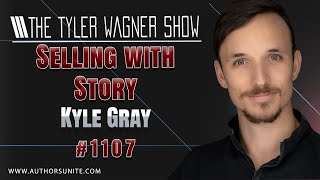
In this episode of The Tyler Wagner Show, host Tyler Wagner interviews storyteller, author, and content‑marketing consultant Kyle Gray. Kyle shares his unconventional path from a restless college student who loved travel and language learning to becoming a professional storyteller for entrepreneurs, founders, and coaches. He critiques traditional teaching methods, arguing that most educators focus on problem‑solving details rather than shifting perspectives, and he explains how he helps clients reframe challenges to spark imagination. Kyle offers practical language‑immersion tips, emphasizing total immersion, making mistakes, and dedicated “Spanish‑only” time with a partner. He recounts the disciplined writing routine that produced his first book, The College Entrepreneur, and how that modest launch led to a bestseller and the creation of his second book, The Story Engine. He details his book‑marketing tactics—daily word counts, Amazon keyword optimization, Amazon ads, and leveraging a loyal audience for reviews—contrasting a low‑royalty book with a strategic, lead‑generating book. The conversation then dives deep into Kyle’s signature‑talk framework, which he likens to a martial art of the mind, blending story structure, presence, and artistry to create compelling, sales‑driving presentations. He describes his coaching style, which blends therapist‑like deep questioning with copywriter precision to surface vivid, emotionally resonant stories. Finally, Kyle outlines his upcoming projects, including his third book Selling with Story and the forthcoming Magnetic Storytelling, which expands on storytelling as a tool for personal leadership and addressing a perceived “human resources crisis.” He closes with contact information for his website, podcast, and social media.
Chapters
All right, everyone, welcome back to another episode. Today we have Kyle Gray with us. So welcome to the show, man.
Tyler Wagner Wagner, I'm so excited to be here. Thanks for creating this space and this wonderful audience to enjoy our conversation together.
Of course, man. And yeah, for people that don't know, I was on— I don't know if it's live yet, but I was on Kyle's podcast, I guess, a few weeks ago. That conversation was incredible. So whenever it is live, everybody go check out that one as well. So just to start us off, Kyle, can you tell us a little bit more about you and what you do?
Absolutely. So I am a storyteller by trade, and I've been working on this craft through the practice of writing and telling the stories of startups, of entrepreneurs, of authors, of founders, of coaches, of leaders. Of people who are making really big changes in this world and have a hard time communicating effectively all of the amazing things that are happening in their brain that they've worked so hard to cultivate in a way that actually lands in the hearts of those that are listening to them. And it's been a, it's been a really long road to get here. And I never would have expected that this is where I would end up if you would ask me 5 10 or more years ago, I would have not been able to tell you this. 5 years ago, probably. But it's been an incredible ride of creativity. And I think this particular podcast and this space is a great place to explore that journey.
Okay. And it's funny because that's normally one of the first questions that I ask is like, when you were— and obviously we know your answer now, but I think I can still ask it because you could elaborate— is when you were in like middle school, let's say 13, because I think middle school is where you do start to like— you're not like mapping out your career typically, but you do start to like think about like, what am I going to do when I'm older? So let's just say around 13, like, what did you see yourself doing? Was it at all what you're doing now or even a little bit or completely different?
Yeah, 13, there was, there was really no clue. And if we advance a few years, I can remember being 18, a freshman in college, and experiencing an existential dismay and frustration, a deep desire. I wanted to know what my path in life was. And I was mad that the person to my right was pre-med and the person to my left was pre-law. And everybody seemed to have it all figured out. And I had no idea what was going on except The one little clue that I had at this time was I knew I wanted to travel. And so I started figuring out ways to travel internationally and experiencing different cultures. I learned different languages—Spanish first, Portuguese after that—and as I was progressing through just living in other countries and all these things, I started to hear about people. This is kind of 2010 through 2014, people who were growing businesses online. The first podcasts were really coming out. I was listening to these people who were working from their laptops in Thailand and growing businesses, and it was amazing. But me, I, well, I knew how to speak Spanish, but that I wasn't a business person. And when I thought business person, I thought tall glass building. And powder blue button-down shirts and MBAs. Yeah, none of which particularly resonated with me.
Me either, dude. So you know what, I, I feel— I think a lot of people do go through that around that age too, like the first year, second year of college, because there's so much pressure to figure it out. Even high school, probably a little bit too, because when you're like picking colleges, there is some sort of like wanting to know, like picking the college based on what you want to do, you know? But what's so interesting to me is I don't think school, especially before college, like they don't really help you discover what you want to do. Like they just have a curriculum that they just kind of push down your throat. So I don't know, I feel like the main thing, and I don't know why I'm going on this rant right now, I just want to share this. I think the main purpose of school should just be for you to discover what you enjoy doing that could also be a career. And if that could be figured out, your whole life is so much different. Not calculus and all that. It's just like, no, man, you got to find out who you are. And I don't feel like they touch into that even a little bit. It's like zero. Not in the slightest.
And there is a, a different problem that I feel like I'm the only one that really sees this, this particular problem. But it's how to teach. And there's a residue that a lot of the people I work with, we like to teach just like we learned in high school and in college, which is we teach how to solve the problem. We get into the details and all of the things. And then we try and do this when we're speaking on podcasts or on stages and all the things we teach, just like we learned in school. But it doesn't work to create the results that a lot of people want to create when we're teaching and speaking and talking about our businesses. If we just get into the technical, like if we were talking about here's how to get abs, somebody in the academic world would say, well, we need to do 15 sit-ups. You know, you need to stop eating bread, do these things. Blah, blah, blah. I'm already bored talking right now. Instead, this is, this is what I work against most of the time. And 95% of the people I work with start like this. But instead of talking about here's how you get abs, we, we shift their perspective on how to look at the problem. And this could be as simple as, well, instead of just thinking about how to do hard work, or what you're going to eat, you've been thinking about this problem wrong. And you you want to understand your digestion a little better, and it might not be so much about how you eat or what you eat, but maybe when you eat. And if you just use intermittent fasting and skip one meal or time you're eating differently, you don't have to change how you eat, you don't have to change your diet, you don't have to do the sit-ups, and you can get the abs. Now, that might not actually be true. This is an example, so don't hold me to that. But hopefully it illustrates the, the point of, of opening up possibilities, of inspiring the imagination, instead of just distributing information. Yeah, I love that.
And actually, I mean, I'm sure I've thought of this a little bit before, but I've never thought of it, I guess, at this magnitude. Is like, there— if you haven't, maybe you've already written a piece on this, but like, just the idea of like how to teach, it's actually super important. Like, it's, it is basically the found— it's not just like what you learn or like what the topic is. It's also how is it distributed and what, what works the best way. And I know there's like 3 different types of learners, right? It's like audio, visual, visual, and kinesthetic. And I think most people, and people will see how little I know about this, but I think kinesthetic, is that basically experiencing the thing or like—
That's learning by doing. Yeah.
By, and that's most people I think, right? So it's interesting if you think about it in school, How much is it learning by doing? It's, it's really, it's, it's all no real life application. It's all just like read textbook, regurgitate textbook and test it. So none of it is really kinesthetic. It's so crazy. Well, that is what we're learning to do.
And sometimes I miss college and I don't miss— well, I do miss the Red Solo cup parties that I had, but, but especially as an entrepreneur, what I miss is once or twice a year, I would pick out my schedule and then everybody else would tell me like what I needed to do, what success looked like, when I was done. All of the decisions were made for me. And that's actually delightful now that I've had to make so many decisions and sit in the uncertainty of leadership and expansion. All of the time. I wish somebody would be able to say, here's the plan for the next 6 months, here's exactly what you need to do to be successful, here's what you're going to be graded on. That's nice, but it's not what is necessary in any kind of adulthood or particularly entrepreneurship and creative pursuits. I agree.
You know what? And I won't go down this whole tangent, but I just realized when you said that, it's funny because, and maybe it's the type of girls that I date, I don't know, but I was talking to my girlfriend the other night and I was like, hey, what do you— I forget the exact question. I think it was like for dinner, like, where do you want to go for dinner? And she was— and she basically flat out said to me, she's like, I don't like to make decisions. Like, I'm not good at making decisions. I just want you to decide everything for me. And I thought about it. I'm like, that is— and again, I'm sure obviously it's whatever type of girls I'm attracting, they seem to be like this. And I thought, what a great life in a sense. Like, part of it I thought was great. The other part I didn't because I do like to have control. But at the same time, to know that when you wake up that I'm going to literally map out the entire day and you're just kind of waiting for me to say what's next, that's kind of peaceful in some sense. It's kind of cool.
Totally.
So I was like, wow, I don't know. And it was something as small as where do we go for dinner? So it was just funny. But okay, so what I want to ask you here before we go all over the place, which we've already Is, um, which— so you decided you wanted to travel. Now, uh, before I go into how you got to where you are now, because I'm curious of like the building blocks of what was your first career and like how this all came to be, to how you got to where you are now. But when you figured that out, that you wanted to travel, like what was your first move? Like what, what was next after that?
The first move was, uh, a study abroad program in Chile. I spent about a month in Chile learning how to speak Spanish, learning how to dance reggaetón, and all of those good things. I was 19, just turned 20 when I was over in Chile, and it was such a good time, such a defining thing. And I can remember hearing one of my teachers told me, You know, in Argentina, they have delicious meat and incredibly beautiful women. And I was like, dang, I got to find a way to Argentina. And so then that was the next thing and the next goal. And sure enough, when I was in Argentina hanging out with a buddy of mine, he was like, man, in Brazil, they have delicious meats and beautiful women. And I was like, what? This guy's telling me this, I gotta go to Brazil. And I started figuring out everything I could to get to Brazil. And there's a really interesting conversation that happened. I went back to my university and I heard about an internship for an airline in Brazil. And I wanted to do it. I set my mind on it. And I remember walking into the, the advisor or the program coordinator's office. And I said, "Hey, I'd like to go to Brazil." And she said, "That's great. Do you speak Portuguese?" And I said, "No, but I will by the time I get there." And there is a certain like attitude and magic in that moment that I reflect on. And this is kind of the opposite dynamic. This is the power of making such an incredible choice. And knowing that it was going to work. It was hard. It's not easy to learn another language. And there was all kinds of challenges that, that were laid in my path. But I did go to Brazil and I spoke better Portuguese than, than most people who, who had participated in that internship before. I had an advantage of knowing how to speak Spanish and they're very similar, so it was easier to pick up. Relatively, as far as languages go. But that kind of was, was one of the first glimmering moments. And like decisions like that, there's been just a shining few that I can think of and remember that have set my life in the most beautiful directions. Dude, that's awesome.
And I want to ask, just as a side note, do you have any tips for learning languages? Because I've been down here in Colombia now almost a year. And I still— and my girlfriend is like mostly Spanish and everybody I'm around is Spanish and I still can't pick it up. Like I am just not— I can do Spanglish, I guess you call it. Like I can understand now and kind of put pieces together so they can comprehend me. But as far as like fluent or anything, it's very far in the distance. So I'm just curious.
You're in Medellín, right? Yes. Yep. You got to get out of Poblado and you got to start hanging out with the locals. You know, it's all about being immersed and making 1,000 embarrassing mistakes. You know, you're like, you think you say, can we go to the lake this weekend? And you insult their mother because some vowel is changed. And it just takes, it's an entrepreneurial endeavor, or at least this is how I've reversed engineered it, is like you're in an environment you don't understand and you're slowly collecting data and being observant. So you have the core skill set, And as long as you're patient, and if your girlfriend speaks Spanish, then have a time or a night where that is the only thing, the only Spanish. We have to speak Spanish. I'm sure she probably— you probably primarily speak in English. And once you're in a couple, I've noticed this in my own experience and in other kind of multinational couples, that whatever language you start the relationship in, you tend to continue the relationship in. But really making an effort to say we're only speaking Spanish tonight. And even if there's something that you're trying to wrestle with and you want to say it in English and it would be so much easier, just stand in that intensity.
That is what we got to do. One of my assistants actually said that. She's like, some days we should just only like, we, we should force you to only speak to us in Spanish. And I got to take them up. So yeah, I guess I got to do it. Yeah. If you're, if you immerse yourself in it, it'll end up working itself out over time because you literally are being forced to figure it out. So no, I love that. And the good thing is her family only speaks Spanish. So when I'm with them, it's the only chance I have of ever actually having a conversation with her mother because as of now, every time I see her, it's hola. And then she says hola. We both just stare at each other and nothing can happen after. So hopefully that'll improve that relationship. But so, okay, so then you travel all these South American places and then just, I guess, more particular because this podcast, it actually, I don't know if you know this, this podcast used to be called the Authors Unite Show related to my company, but now I just personal brand myself. I changed the name, but there are a lot of our listeners are authors and aspiring authors. So when does your like first book come into play? Where does that question?
So a few years after South America, well, I went, I returned from South America, returned from Brazil, and still have no idea what I want to do with my life. I start progressing through a master's degree. And also simultaneously, I'm working at the University of Utah in the study abroad office. And so I'm coordinating with all of the professors and students traveling to South America, Africa, the Middle East, or Spain. And during this time, I learned the ins and outs of how a university really worked. And I used to think it worked more like an anthill where everything is kind of unified and working towards one purpose. But looking back on it and working within it, it's more like a Game of Thrones thing where the College of Engineering is battling against the kingdom of business for students and reputation and prestige, and there's different knights and actors and fiefdoms within it, a little bit less incest, but not really that much. That's amazing. So I learned how to operate in this system both as an administrator but more as a student, and I realized that there were a lot more strings I could pull when I could see it this way, and it helped me create a network and build the foundations that, and the skill set that right when I graduated, I started working for a startup called WP Curve. My boss lived in Australia and I ended up moving to Thailand, which was a similar time zone. Immediately when my boss hired me, he self-published his first book called The 7-Day Startup, which was an outstanding success, and I got to witness what happened to him. Ride in there and read his articles about how he was doing and start to learn from him. And, you know, for that first year, I was like, well, I can't really write a book because I need to be more interesting. You know, I've only worked for a year in a startup. I don't really have that much cool things to say or that many experiences. I need to be a cooler person before I can write a book, is how I was thinking. And somewhere along the lines, I created a course about what I had learned in the university about this. And I also got hired after finishing with this startup to work for a company for a short time consulting with them called Self Publishing School, and learned from Chandler Bolt, started reading all of his books, understanding a lot of his work. I'm sure if he's not been on this podcast, you guys probably know each other. And I started to see how to write the book and dispel this myth of like I needed to be something more before I could actually do this. And so I was like, okay, I'm going to write this book. And speaking of another book, I also read The Miracle Morning, and that was a pretty cool book. Hal Elrod, and what an author he is. He has the authorship strategy down, but we'll talk about that later if necessary. But I just started writing 500 words a day, first thing in the morning, plugging away at my book, and it started to be called The College Entrepreneur: How to Graduate with More Than Just a Degree.
And after— I like that subtitle, How to Graduate with More Than Just a Degree. That's cool.
OK, and after 500 words a day, just weekdays, that's 2,500 words a week. That's 10,000 words a month. And it took me about 3 months to get a 40,000-ish word book out and published, published the book. And it was self-published on Amazon, learned, learned the techniques and all of these things. And got Amazon bestseller. And that was a true milestone for me. And I became an author. But I didn't become an author through whatever I was doing. I became an author through the process of showing up and starting to write that book and wrestling with my thoughts every single morning until it was done. My thoughts weren't good before the book was written. It was the process of writing the book and wrestling with them that made the thoughts good, that made me author worthy. And I think that's a really important distinction that very few people understand. The problem was I didn't really have any business or backend and didn't really want to sell to college students. I was a storyteller and a content marketer and a copywriter at the time. And so the book didn't, didn't really have long-term legs or a long-term strategy other than just selling more copies, even though it was very well received and even became curriculum at a couple of different universities, which was a big honor. The second book was called The Story Engine, which is the foundation for all of my brand and was an absolutely life-changing success. I wasn't like the biggest author ever, but it was enough that I was paying my rent for almost a whole year plus just with book, book sales. And it became the foundation for my email list, my podcast, my website. And everything that I do in my business now.
That's incredible. Sorry, I was just letting that sit because that is so— I mean, I think there's so many common things about that that happen, especially in the beginning when you said, like, a lot of people, I think they don't believe they're worthy enough to be an author. Like, they don't think that they have, like, they're expert enough or that they've experienced enough in life And, you know, at the end of the day, I think anybody can really be an author as long as you, you know, you just decide to put in that effort. And I think another beautiful thing you said there is so many people, I think what stops them is they try to organize the book in their head before they start writing. And it, dude, it don't work that way. Like, that ain't how it works. It's a messy process. Like, it is like, from my experience, it is you just dump everything out of your head and then it gets organized kind of down the road and you chip away away the stuff that isn't supposed to be there, but you cannot organize a beast like a book in your head before you start writing. It's just never going to happen. And then so Story Engine, so you have 2 books total and Story Engine was kind of the bigger success and more long-term planned out. And then book royalties paid for rent a year. So that is not common. Like, that's incredible. I do, before we get into Story Engine, and I want to talk like deeper about your work because I find that to be one of the most interesting things. And I guess we only met a little bit ago, but I just find what you do so interesting and so unique. So I want to make sure we have time for that. But can you touch on— you had said about how Elrod's like authorship, or maybe it was a marketing strategy and stuff, and what you did a little bit about the marketing stuff for books.
I think Hal Elrod in particular is brilliant because he wrote one book and just rewrote it 72 times. He called it The Miracle Morning. Amazing book. And then he was like, well, I'm going to make The Miracle Morning for salespeople. I'm going to make The Miracle Morning for X and Y and Z. And then he just said Miracle Morning for this audience, that audience, this audience, that audience. And I doubt he actually rewrote them. He just had some good editors kind of repurposing. But he was— so he was the genius repurposer. Of the century when it comes to authoring. So that's what I say. Well, that's why I think he's brilliant in that. And then book marketing, one of the biggest things about book marketing, I think, is I think about what I stand to gain from a book sale. The College Entrepreneur did not do well because all I stood to gain was $3 to $5 in book royalties per book sold. That means I have $3 to $5 of effort to spend per book. But the Story Engine, I could give that book away and see it like a business card. I had really good links inside to resources and helpful things that went to grow my email list and expand my reputation and attract clients. And so I was more willing to invest in the marketing and invest my energy and time and money into the, the sales and expansion of that book and went on a lot of different podcasts. But I think the thing that, that really did it for that book was I had a good, a good following or a good group of people that were committed to writing reviews, paying for the $0.99 and getting that big bestseller launch right away. And then I spent a lot of time thinking about where I would list it, what keywords I would put inside my subtitles, my book description, and it was really well positioned in that respect. And I also use the Amazon advertising platform, which I think is really good. I can get a good return on ad spend. I can't scale it up. You can't dial up, like, you can't dump hundreds of dollars a day into the platform as far as I can tell. But, uh, yeah, I agree, it does help.
And I mean, it's pretty cheap in comparison to like Facebook ads or something. But as far as scaling it, that's, I think that's a pretty common issue with the Amazon ads. But so how, and then I want to talk about the work. Well, and actually first, it's funny, I knew that about how, but I never thought about it from a strategic way for some reason. I just never really looked deeper into it. But dude, you could do that for almost like, I'm even thinking about my first book, Conference Crushing. Like, I don't know if it really applies there, but you know, it could be like conference. Absolutely does. Yeah. For business owners, for runners or for what, you know, any health practitioners, like anybody who goes to conferences, pick every niche and then just repurpose the book. So that's, that's pretty smart. So can you tell us a little bit more about the back, like story engine. So you have the book here in the front, and then what is the process all the way in the end of somebody, like, if they were to fully work with you and do everything with you, what does that look like? And then let's get, like, deeper into your actual work and, like, how it impacts people and, like, what it truly is. Because obviously in the intro you spoke on it a little, but there's a lot more to it, obviously. So I want to talk about it.
Absolutely. And thank you for the space for this. When I wrote The Story Engine, I was primarily a content marketer and a content marketing consultant. So I was telling the stories of businesses through writing great content, usually blog posts, but this could work in videos. And so somebody would purchase my book and then download some useful resources and templates from my, my website, and then they would be in my email list. Listening to my podcast. And I've had various different products and services that have evolved over time. Right now, or the latest version of that is I do have a simple course that allows people to build a signature talk. And it's kind of evolved past just content marketing. And really, instead of content marketing is a very long long game. And I've been through— my career has evolved into compressing the amount of time in communication to— now I work in about 45 minutes, and I want to create a signature talk with somebody, which I believe is kind of the foundational series of movements that you need to be to be a very effective communicator and create sales and results in your business. Mm-hmm. And so people will read my book, listen to the podcast, and oftentimes they will come onto a call with me, and we'll work together on creating a story from their life, from their experience. And how I work these days is by somewhere between a therapist and a copywriter. I ask you questions about your client, what's going on in their world, how does it feel to be them, And then once we really dig in and we're really clear on that, then I ask you, well, how did you feel? Or when did you feel like that? No, specifically, was it a Tuesday? Where, what room were you in? What did that person say to you? What did it smell like in there? What did it sound like when you walked into there? And drawing out these details, and a lot of times people are a little bit they, they can't quite access all of these memories. There's this interesting effect, and authors will know this, like, you can't just sit in front of a blank page and think, let me recall whatever story from whatever moment in my life that's most relevant right now. You actually have to immerse somebody emotionally to unlock certain thoughts and ideas and feelings. And so we use our understanding of our ideal client and their situation as an emotional compass to guide us to our own stories and our own moments. And then this results in people saying a lot of things like, well, I never thought I would share this story before, or I would never want to share this story before. But with the new context of this is a story that I could use to connect with my audience and show them that I understand them and their problems and I have the, the solution. And so when, when I work with people in that way, and they can see and feel their own story in a completely new light, then I would invite them to work with me. And there's a couple of different ways, either I have a mastermind right now where we go through this process of not only crafting stories, but we do this with your teaching too. And we've already talked extensively about what I think about teaching and how I how I work in that. And then how do we— one of the more important things is guiding people through the process of making a good offer. And a lot of times we misunderstand or we expect that a signature talk or, you know, 45 minutes of speaking needs to do the entire job of making a sale go from I don't know this person to I'm ready to buy the thing. But if we can really start to break it down into more segments, like our origin story, the only question— it doesn't need to do the wholesale. It just needs to get somebody willing to listen to us for the rest of what we have to talk. This person understands I'm ready to listen instead of like pretending to be listening while actually checking my emails on my phone. When we teach, we're not trying to say, I need to buy this thing. We just want them to feel like, could this work for me? And, and that's, that's opening their minds up for possibilities, overcoming the limiting beliefs that, that sit between them and the solution to their problem. And then a good call to action is, do I want to do this right now? Or is, is, is whoever's speaking to me the right person for this? And so when you, when you understand that, it becomes a lot more simple to compress. Like, instead of trying to cram as much teaching as possible into the next 30 minutes, you think, well, what's the least amount of teaching I could do that can make the biggest amount of impact? And in my offer, what's the— what, how do I frame this as the ideal next step? Not the whole journey, but the ideal next step. And it's just by applying a bit of friction here and there, applying frameworks and systems, which I have used and adapted throughout my career. I've always been a big fan of templates, frameworks, and systems to make complicated ideas more easy and accessible. And that's, that's still primarily how I work. And once we start to understand those pieces, the real beauty is that it's not just about having one simple story or one perfect script or a few teaching points that you know are going to work every time. And in fact, there's no story that's going to work every time. There's no teaching point that's going to serve everything. But when you understand the frameworks and what a story needs or what teaching really is, you start to be able to tell stories like a martial artist responds. Like, if somebody tries to punch a great martial artist, they don't think about, I'm gonna move my hand and do this, you know, chop to block this punch, and then I'm going to do this specific kick. They're not thinking about it. They're just moving and responding with confidence and the environment. And that's how when you start to understand the frameworks, understand what all of this adds up to, and this is the real gift here, which, which is kind of funny because I'm like, we're going to build a signature talk to make you more money. But what I really want to teach you and how I want to help you is I want to make you a kung fu master of the mind. And you listen to people in a way that you've never listened to before, and you can hear what they need through what they're telling you. You can ask questions that will draw out the qualities that you're you're looking for, and you can start to tell stories naturally, authentically, and effectively. Wow. That was probably—
I'll just say I could not have said it better myself. So, dude, that's amazing. And like, storytelling is so important. And I really like what you said there because again, it's like simplifying. I always love when something can become more simple, right? Because I think a lot of times people, especially in business, they make things way more complicated than they need to be. So the one thing you said there was, and correct me if I'm wrong, but when you're telling a story or copywriting on a sales page, you want the person when they're reading it to ask themselves the question, like, could this work for me, right? Like, that's what, like, one of the goals. It's not the only goal, but like one of the things. Is that accurate?
Ideally, ideally, they answer the question for themselves without, without it having to be asked. But that's what they're— this is what we should understand that they're asking us. You know, in the first 5 minutes, in the first 5 minutes of this podcast, somebody was listening, and they didn't think this consciously, but they're like, well, is this worth listening to? Or do I need to go back to cat videos on Instagram? And hopefully, well, if they're still here, then I did something that, that, that answered that question enough for them to pay attention.
You know what, dude, this just potentially changed, uh, something in my podcast. So this is big. I just want to share this with you because the reality, as you just said that, I was thinking about our, our show up to this point, and I'm glad that this is recording. So everybody listening, this is kind of funny to bring this up, but if you think about it, the initial, maybe let's say 10 minutes of the call was like super fun conversational, but maybe not like direct, like value for somebody listening, but entertaining, let's say. But the last thing you just said there of like the kung fu and all that, like that was incredible. Like I don't even know how to repeat it. It was, it was like a piece of art. So what I was just thinking, and I've seen some other podcasts do this, is they'll take a clip, one of the best clips from the show, they'll put that in the front and then they start the show after. And I've never done that. So I'm almost thinking is like, if I kept this show and this is literally so funny to have this be in the show, but I think it's cool is like if I kept this show as is, would we get some, would we get a higher percentage of drop-off? Or if I put what I believe to be one of the best moments that was more at the end in the front so people know what's coming up and then go into the beginning. Would we have a higher retention? I think I should do that. I don't know. It's just a thought.
It would be a great question. Great experiment. Yeah. I don't know if I have— I can't say definitively from here, but that's a beautiful question to ask and very thought-provoking. Yeah. So I'm going to have to—
maybe you'll be the first show that I try that with. So nice. So I guess one of the last questions I have for you is what does the I guess I'll say near future look like for you? Like, do you have any more books that you're working on? Is— are you like super focused on the Story Engine Company and just, you know, kind of growing that in one direction? Or what's like the next 5 years look like for you?
Have you— Absolutely. So I'm working on my, my 4th book. I did have a 3rd book come out called Selling with Story. And there's a very interesting disastrous Amazon launch story that I'm not sure we have time. But next time, for the next podcast, we can talk some longer horror stories. And it's called Magnetic Storytelling, which really goes into the metaphor of the martial art. And what is magnetic storytelling? I believe it contains two different parts. And this is the two different sections of the book. The first is structure and strategy. The frameworks, the templates, the tactical, practical things of how and why to tell a story. But then the second part is presence and artistry. Knowing how to tell a story is really cool, and getting more sales is great. I'm all about it. But stories can go so much deeper. And when you— these same frameworks that you use to overcome limiting beliefs in your audience to create connection and inspiration, you can use these as tools to lead yourself, inspire yourself, guide your teams, your family, and direct your life. And I find that people, when they can get really clear on who they are and why they're doing what they're doing and finally be able to express them, it changes how they show up in the world. Even if you don't have— even if it doesn't change the exact words you say, you can have the same script and get an entirely different result because there's an understanding and an energy that comes with the upgraded level of clarity through storytelling. And so this presence and artistry allows you to live your stories, to use them as a tool to lead your life and your business. And both of these together creates this martial art of the mind. And, and just because I— the martial art metaphor, some people get a little about it. And who is the opponent? There's not necessarily— the opponent is not our listener. But I believe that the opponent is the systems, the limiting beliefs, the problems that they're facing that are keeping them from taking the action they want, from achieving what they want to achieve. And right now, what I believe and where, where I am and why I'm doing all of this stuff is because I believe a lot of us know about this thing called the— there's the natural resources crisis. Some people say climate change, global warming, all these things, whatever your opinion is on this, people can, people understand it and can agree. And I believe that there is an equally pernicious human resources crisis. And what that is, or what I believe is that there's Einsteins, there's Malalas, there's geniuses out there that haven't been able to connect with who they are and why they're doing what they're doing. And right now, more than ever, we need all hands on deck. All of the problems that we're facing, they are certainly large problems, and we have everything within us, within our human resources to overcome these problems. And that's why we need to tell better stories. We need to connect with ourselves and our purpose so that we can light up and wake up as many people as possible. In this time and usher in the future that I believe is possible and that I believe we all deserve. And it comes by being able to express your truth effectively and authentically. I love it.
Um, I think we leave it there because that is a beautiful ending in my opinion. Um, last thing I'll ask you though, just so people can stay in contact, where do people like website, social media, book? How can people stay in touch and grab the book? Absolutely.
You can go, you know, thestoryengine.co..co is the place where you can find all of my books. You can find my podcast and many, many blog articles and infographics on storytelling. If you'd like to connect with me on social media, I'm most active— Instagram is kind of where I give a few tips and share some goofy ins and outs of my life. And on LinkedIn, I also share a lot of great content, and that's a little more professional world. You can find me at @HeyKyleGray, like, hey, Kyle Gray, on Instagram, or I'm just Kyle Gray on LinkedIn. It's an unfortunately common name, and there's another Kyle Gray out there called the Angel Whisperer. I'm not him, although I feel kind of— I'm becoming a little bit more like him, unfortunately for both of us, as I'm progressing in this life and becoming a little bit more spiritual in my own way. I love it.
Thank you again, man, for coming on.
What an honor. Thank you so much for, again, creating this incredible platform, holding this space. And thank you, everybody who has given us the trust to listen throughout this whole conversation.
More from Tyler


Catherine Nikkel : THE STORY EVERYONE HAS BUT HASN'T TOLD : The Tyler Wagner Show #1120



Scott Ritzheimer: Bring Predictable Success to your Organization | The Tyler Wagner Show #1115


Fred Moskowitz: A GUIDE TO GETTING STARTED WITH IN MORTGAGE NOTES | The Tyler Wagner Show #1113

Mark Podolsky: From Land Investor to Full Time Success How I Made $90,000 Cash in Real Estate


Mark Podolsky: How to achieve a 300% return on investment my foolproof strategy

Mark Podolsky: How to make passive income selling raw land the irresistible pricing strategy