Laura Hearn: Relationships Are Everything | The Tyler Wagner Show #1031
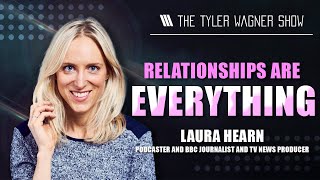
Laura Hearn left 16 years at the BBC to start a freelance storytelling and brand consulting practice. Tyler Wagner shares tactics like pricing higher upfront, using separate Calendly links for business versus friendship, and framing offers around results instead of hourly rates. They discuss why genuine relationships matter more than follower counts.
Chapters
All right, so this is my friend Laura Hearn. Laura Hearn, what's up, girl?
Hi, Tyler Wagner.
Yeah, great. Our story, I should actually say, let me actually start with that because that's pretty cool. Like, we connected. Tell me if I mess anything up here. But we— you had found my podcast, you reached out on LinkedIn, I was on the StairMaster, I responded within seconds, and then we connected. Next thing we know, we're in Dubai together, and then I got really sick, and then I never saw you again until now. Is that pretty accurate?
It was accurate other than we actually never did see each other. No, the first night I got sick Oh yeah, no. Yeah. Okay. We did. You left such a good memory on me. I forgot that. Yeah, no, that is true. But the reason why I can't see— this is interesting. This is interesting. I can't even remember the podcast I listened to that you were on, but I remembered you because of your super positive, like, energy. It was just like infectious. And I was driving in my car, like, in the little villages of England. I was listening to this podcast because I was Googling. I wanted to know about book marketing and how you get promoted. And you came up and I was just like, this guy, I have to reach out to you, not expecting you to get back at all. But you did straight away. And then we had this call and after that it was just like, you were totally awesome. Wanted to hang out.
Oh yeah. And now we're like, there's so many other things we're doing together now. But yeah, I'm glad you reached out and I'm glad I was on the StairMaster at that time. Um, because yeah, my phone was like right in front of my face on the thing and I was like, Laura Hearn, what's up? And then I responded. So LinkedIn, thank you. Um, but yeah, so you, you now— well, I'll let you tell your own story, but like right now you're kind of like in a transitional time, or like what, what are you working on right now? And like any questions I can answer, I'm happy to answer.
Okay, so yeah, so I'm sort of in— but yeah, like in a bit of transition. I've been, um, a sort of journalist and producer at the BBC for the last 16 years, so I actually got cut off my email on Sunday the 31st. It was pretty brutal. There were no like, you know, just there were no warnings. It just went straight. So yes, so now I'm kind of working around communications and using my skills that I learned at the BBC. So storytelling, narrative structures, working with brands and companies on how to tell your story to create, you know, more interest in And I guess my own personal interest around social impact, you know, philanthropy and brands and businesses that are doing, you know, good for the world. So yeah, it's quite an unusual time because when you've come from a company where you've been employed, as it were, full-time, you kind of are working for them. So you eat, breathe, and sleep them. And I totally, I loved my time at the BBC. It was like the best learning platform and the people there are wonderful. But when you, it kind of becomes a bit of an identity almost, you become institutionalized and it's a bit of a joke that you're leaving the institution and it was kind of like a big decision but I really wanted to do it because I wanted to know what I could do outside of that as an identity or, you know, people want to connect with you because you've been at this, you know, at the BBC. And so yeah, meeting you was quite a, like, quite an interesting time because you are, you know, you're quite inspirational in how you have curated your own world. And we have this little joke that, um, you have this calendly and you're like super booked up speaking, speaking with people all the time. You're like maxed out all the time. And I'm like, God, Tyler, how do you do this? You're so young. Like, how have you become so successful? And when we had that first chat, just one night or one night only in Dubai before you got sick, telling me a little bit about how you've got to where you have with Authors Unite, and I was like, geez, this is like, this is incredible, how have you done it? So we were having a bit more of a sort of a chat around sort of mentoring and how do you find the right mentor. I think a lot of people sort of say they'd like a mentor but don't know where to go and find one and actually what they ask. I mean, my My feeling now is that you can find one if you reach out and ask, and you can have lots of multiple different mentors that can give you different things. But I think definitely having somewhere, someone to guide you through processes that you've not had before. So yeah, my problem, my issue that I, you know, hopefully, you know, you've been helping me with, we have been helping me with, but going forwards is that asking for money. Like, I just don't know how to ask for money. I've done so many things for free, and now that I'm flying solo, like, I find it a really awkward conversation. And also, I'm learning to value, like, what I've learned, my experience. So I don't know how to have that conversation, and when you have it, so you don't feel like, you know, you're baiting someone or it's, like, inappropriate. Because I feel that, you know, building up a relationship first But yeah, it's something that I feel like I'm, I'm not very good at valuing my experience and time and how you approach that conversation.
I have an answer. So, uh, first, the Calendly thing. I did actually almost shed a tear earlier. I'm not even kidding. I know that's kind of a weird thing to get emotional about, but I love when somebody uses that tool because it's life-changing. Um, so either way though, I think you said you have two links. You might— and I don't know what the— uh, maybe one's for like, uh, more friend friendship and then the other one's for business. But I actually, I have like, I don't even know how many. I have probably 20 different links actually. Like, you only know of a couple of them, but I have the one is, um, authorsunite.com/connect, and that is for just like a call like me and you would have, right? Like, I typically would send that Now consult, which sometimes I send because it has more availability, that one is for like somebody who's interested in our services. So you can kind of just right off the bat, if you have it clear like, hey, this one is for us to have a consultation, which in the end of that would be a business type of discussion. So that kind of helps you to not wonder like, is it okay to pitch or not pitch, right? Because you already know that person's interested. And then the other thing I'd say is, and I know you're just kind of starting off on your own, but like once you get clear on what the offer is and like the value that feels good to you as far as like a money exchange, then I think it'll be a lot easier because it was hard for me in the beginning too. But now it's like, I'll just use like the bestseller lists. Like that's the best example I can give. Like we've done it so many times and I know the price tag that people are willing to pay for it just because we've sold so many of them. And I know the value that it brings to that person is worth more than what I'm charging. And because I know that, it is very easy for me to just be like, it's $60K. And like, I don't even, you know, I'm just like—
But you've built that up. See, for me, it's like, yeah, people say, well, I'm just like, well, I don't know how much to charge. Like, because also you don't wanna be overprice yourself too much because then you're like, well, you're never gonna get a client 'cause they're like, wow. And then when you haven't built up your reputation like you have, also, you know, if you price yourself too low, it sort of devalues what you could offer. So where do you find the happy ground?
So I think it's a lot of trial and error, but I would, it sounds funny to me, but I would start higher for sure. Like remember that book that I told you? I don't know if you've read it yet. The $100 Million Offers book.
Yeah.
If you haven't read that, you should read that book.
I haven't read it. I'm going to be honest. I haven't read it.
Okay, yeah, no, no, it's very, very good. And like, so a couple things. One, I think like perception is reality in the sense of like what you're saying. So if I charged like $100 for my services, which I wouldn't be able to because I would actually lose money, but if I did, people I don't think would buy them actually because they would be like, like, how are you— this isn't even possible for you to deliver a result like this at that price. Um, so my opinion is going as high that you feel comfortable with, right? Without you like stuttering. And with— and again, I think the value exchange should be that no matter what you're charging, you believe that it's worth more than that. Um, so that when it comes across and you say 10 grand or whatever it is, you know that if you deliver it and the person does whatever they need to do too, that they will make more than $10 grand, whatever that looks like. It doesn't have to be monetarily exactly. Um, you know, so I would say with your package, like, do you know what your packages are yet, or have you—
yeah, it came up the other day and someone said, um, so someone asked me to help them with something and I was like, yeah, sure. Um, and then they sent me a load of documents and actually it was quite a difficult subject to get my head around because there were politics involved and, um like actual proper politics, governmental politics. So I needed a bit more time. So I spent a couple of hours in the evening sort of reading it all. And then I kind of went back and was like, oh, I might, you know, is there, I was like, this is how I was. I was like, is there a budget for this, blah, blah, blah. And then they were like, no, there is no budget. And I was like, okay, fine. I let go of it. But then I probably should have had that conversation in the beginning because I'd already invested in two 2-hour Zooms. And 2 hours in the evening reading these documents. So do you think that it's best to have a conversation beforehand? And how would you approach that? What sort of—
Yeah, I would. So then that's why I think we get along. Like, we're very similar in that way. It's— I don't know if you know this or if I told you, but I, when I was— and when I— whenever I say when I was younger, people are always like, dude, you're young. So I'm aware.
You're younger than I am, so it's okay.
But like, When I was like 19, 20 is what I'll say, I had a conversation with my dad and I was like, I am very good at building relationships with people and I'm connecting people and they are doing business together. And, but I'm still broke and they're all making money. So I was like, I have some sort of superpower, but it's not like formulating into any monetary value for myself. So I was like, how do I use my superpower and like what I like to do, but actually make money from it? And one of the ways was, you know, said like saying upfront, like, hey, I do know someone that can deliver this for you, but I'll make the intro. But like, I get a percentage of the cut, like a referral commission, basically.
Yeah.
So I actually make a lot of money just from that alone due to all the contacts that I have. But what I was saying about how we're similar, when I was that age, I— and even now I have to catch myself. I just get so excited to help. Like when somebody asks me, like, can you do this? Like my initial reaction is like, yeah. And then I'll like start for a couple seconds and I'm like, oh wait, like, what is this? Like, my time's limited. Like I gotta actually have the conversation. Like, hey, like, do you, like, how is this gonna look? You know, like this is what I would charge. So when you catch yourself in that position, I think then you should have the conversation right away. And, you know, because it's— I was sort of—
phrase is— I mean, like, yeah, good question. You have a budget for this, or—
yeah, because I— the best way to word it is I would view myself as a— yeah, like, I was a yes man. You ever heard of that term?
Like, yeah, yeah, yeah, yeah.
Like, I said— and it was because, like, I didn't want to let anyone down, so I would just say yes to everything.
Yeah, me too.
And then, like, my— I was letting myself down though, because I was still broke. I was doing free work for everyone.
Yeah, this is it because I've spent like the last, you know, I've started a full-time job on Monday, but yesterday I wrote a list of all the things that I've been doing as a full-time job before I started my full-time job, which weren't paying me, haven't paid me anything yet. And I did it and I thought, my God, I felt a bit overwhelmed because I was like, I commit to people and I believe in some of the, you know, these causes are really good and I want to help. But I was like, my God, like, I don't have to do all this now. And I've been working weekends. I haven't actually had like any sort of social time at all. Now, like, this is like not okay, but don't know what to do about it.
So in the scenario that you were saying, like, I think initially when they sent you all the documents, like, you should have spent maybe like 5, 10 minutes and like look through it, and then, and then right away just reach back out and be like, hey, like, I just like looked at everything, I can definitely do the work, um, but based on how long it's going to take, or however you want to measure— I don't personally love like measuring money with time because I like to measure it with like the value delivered. But if it's a custom quote before you spend the 2 hours, that's how I would've worked. Be like, hey, I just reviewed everything. It's gonna be $2,000 for me to do this. You like, you know, and then just send the invoice. Like I would've sent the invoice, right? Here's the link. As soon as you send the payment, I'll get started.
Um, yeah, tricky. And I felt after when they said there was no budget, I felt really bad. And I had to then think— I went back and said, I'm so sorry, like, I wish you all the best, like, because that's me. And then I suddenly was thinking, oh, maybe I should have done it, like, you know.
Well, yo, so here's the thing, right? If you had said it in the very beginning, then that feeling that you had wouldn't have occurred. But because it was like not clearly communicated then you felt bad, right? And so that's why I always believe in over-communication.
Yeah, for a communications expert, it was poorly communicated.
No, but it's fine because it's kind of— it is perfect. Yeah, I trust me, I get it. Like, I know when it felt weird, like, I, I forget how— I think I charged like $3,000 when I used to— started out to like consult people on books. Like, I used to do it that way. And it used— I was like 20, you know, I was like, I was like, it's 3K.
Yeah, 50 bucks in my account.
Yeah, yeah, yeah. Like my rent at the time was $400 a month. I was living in like Iowa, so it was like one client and I was like good for the whole year of rent pretty much. So like, but I think it's, uh, at least for like once that first client like paid the $3K or whatever it was. It could have been $2,500, $3K. And then I was just like, oh, okay, like this works and like the value is there. And then it just got—
confidence thing. You build up like confidence around it.
Exactly.
Yeah. Yeah.
And then it starts to become, uh, and I'm not saying I'm like all the way, but it starts to become in a way of like they're seeking you instead of you seeking them. And when you're in that position, um, and obviously, you know, I only have one day available on my calendar.
Yeah, I know. Actually, you extended it to today. I was like flabbergasted when you said, oh, we can speak on a Thursday. I was like, what?
No, it's getting weird over here. I know, there's something in the water here. Um, but yeah, I think it is a comfort thing, like the more you do it. But I think next time Like when you— I would do it initially, even if it feels awkward. You know, did Jordan Peterson— you know who that is?
Yeah, yeah.
So one thing he says, and for people listening, like, don't quote me exactly on this, but he's like, you don't want to avoid conflict. And that's kind of what it— like, I do it all the time, but it's like, if you avoid something in the short term to just like whatever that little conflict was, in the long term if you bury it, it becomes like so much worse.
Yeah.
You know, so for your—
I really did that in my personal life now, like, oh yeah, I had to do that around my own personal life to like speak my emotions and feelings. But yeah, when it comes to sort of my, yeah, professional world, and maybe that's because I've come— I'm leaving, you know, a company where I've always been on a salary and now I've got to like judge my own worth, I suppose. Um, Do you also— that's a good question. So, um, do you, um, would you say like have a fee per hour or a flat day rate?
I would. So this is what I would do. I, I like results-based stuff. So like, I know— so, okay, so I think there's two different ways. So for us, a lot of the stuff we offer, right, it's like a guaranteed result, which I'm aware in like media and stuff, a lot of times you, you're not able to like offer that. But you can offer certain things, meaning like, I guarantee to pitch you to 100 different stations a month, or what— whatever that looks like. Um, and then you can prove to them that you're doing that, and you have the BBC background. So like, if I was your customer, instead of you telling me like, hey, I'm gonna work like 10 hours a month on this, so I'm gonna charge you $2,000 a month, I'd rather know not the hours you're gonna work, but the value you're gonna give me, which is like your 15 years of expertise plus how many reach-outs you're gonna do. And then, not that you can guarantee it, but like if you— for every 100 reach-outs, on average I'll get 10 interviews, let's say. Maybe that's high or low, I have no idea, but yeah. If it was like that, then I think the person is like, okay, makes sense. So I can expect 10 interviews a month, here's the 2 grand, you know, like, or whatever the charges, you know.
I guess that's because there's so many different things I do. I do, you know, someone wanted me to write like a profile piece for them or to help them with their social, you know, their brand identity or their, you know, yeah, I guess, or some perhaps presentation skills. How do you communicate with journalists? How do you present yourself to the media? I suppose there's lots of different things I do, so I Would I value them all differently?
I think so. So the profile, that stuff's a little easier, I think. So like the profile piece, you're saying like it's a, it's just like a 1,000, 2,000 word?
Yeah, I've got someone, he wants me to write a profile piece and send it to a few publications for them. Yeah.
Oh yeah, so that is result-based, right? So I, I wouldn't measure that by time at all. I would, I would measure that, I was like, okay, so you got 15 years of experience BBC, like it is more valuable for you to do it than somebody who's like 20 years old who's like a freelance writer. Yeah, obviously. So it's like you shouldn't charge that hourly. I'd be like, I don't know what you should charge, I don't know that industry that well, but like maybe it is— I— $5,000 feels good to me. Like that feels good, you know? Like, and, and if it hits one of them, that's huge.
Like if they accept the piece and they publish it Um, you know, yeah, next week I'm going to London to do like a, in, on an onstage presentation. I'm delivering like a keynote to a conference around communications. Um, I am being paid for that, but it's probably nowhere near to what you would say.
Well, like, so if you were to write a 1,000-word, um, art, like a profile piece on someone, like, how much time Let's just look at the time just to see, like time, effort, like how much would that take you and like energy?
Yeah, it would, yeah, it, got it. I'm actually gonna start working this on Saturday because I wanna make sure that I write a piece that no one else is gonna write and I would bespoke it probably to each publication. So I've already outlined, I've already identified 10 key publications that they should get featured in and reached out to some of them. So I'm gonna write maybe like a 1,000-word piece about this person and pitch it to them. So yeah, it's probably maybe 3 days work, good 3 solid days work.
3 days work. All right. That's, that's a lot of days, I think, you know? So like, the other way to look at it, I haven't thought about it this way, but like to reverse engineer it for you. So I think it's clear the value for the client, but it's like, what is, what would you want 3 days to be worth, right? Like, do you want to do $10K? Like, I'm thinking like your own payment, right? So like, would you feel good with $10 grand a month? If so— I'm bad at math— then I think 3 days would be around $1,000, is what—
yeah, I guess. Also, someone said to me, but it's what the market is willing to pay, and some markets are more willing to pay, say Yeah, no, I agree.
I think it's a— it is a— I mean, there's a lot of different ways to choose it. What I would want though is that you to feel good about it. So whether that's— it has to be good for the client obviously, but then secondary, like, and maybe not secondary, maybe equally, it has to feel good to you, right? So it's like, yeah, if 3 days of full work, $1,000, if that's like If you're like, yo, that's like feels good to me, then okay, so that's good for you. And then if you, I don't like comparing prices with other, maybe that's because I'm, you know, we all have our own experiences.
I mean, do you ever negotiate?
Um, I used to, not anymore.
You don't need to.
Yeah. And I am, I'm really trying to put myself back. Like I definitely used to, right? Like in the beginning when I was saying the $3,000, like if somebody would have offered me $2,000, I would have been like, Yeah, like 100%. Um, so, but yeah, it's not bad to look at the marketplace, but I wouldn't like the idea— and actually in the book, um, The $100 Million Offers, I believe he talks about this— what a lot of people do is they'll look at the marketplace and be like, okay, all these people are charging this, I'm gonna charge $500 less than all of them.
Yeah.
And then it's like a race to the bottom. Um, Whereas what I would prefer you did is look at the marketplace and then see how you can make your offer better than all of theirs and charge 10 times more because it's 10 times better. Yeah, right. So you're not just writing a 1,000-word article, like you have 15 years of BBC experience, you got 10 people you're gonna pitch that to. Like, all that kind of stacks on top of each other.
But also I take the time. So when I did an interview 2 weeks ago, went to London, interviewed like a celebrity footballer. I mean, I actually had a call today from the company, said like, just want to let you know your content is being used everywhere because it was really good. But the most, the most, the thing that was so important to me was the actual interviewee, the guest came up to me afterwards and said, thank you so much for such a meaningful conversation. You asked me 2 questions no one's ever asked me before. And that to me meant a lot as a journalist because she'd already done a lot of media. So I spent a lot of time watching the YouTubes and press articles and thinking, right, I really want to get something out of her that hasn't been talked about before. And so for her to actually say that and put her out of her comfort zone, but actually in a way that she felt was a safe space, that was really important to me. So I guess that is a value that maybe I have, and that's what I've kind of kind of curated at the BBC. So I was always known to, you know, get people to trust me and to open up in a way. So yeah, I'm trying to learn my value, I guess.
Well, okay. So I don't even know if you said it, but this is what, not to get woo-woo on everybody here, but this is what I'm feeling. So I think you might be overthinking this because based on what I know about you, I think your intentions are clearly good. So I don't think we need to even think like no persuasion or sales or like you should be comfortable with saying any price that you're comfortable with. Because if anybody knows you, then I think they would know that—
No one's going to pay. I spoke to someone the other day who charges £30,000 for a speech. I mean, no one in the UK, no one is going to pay $30,000 for a Well, I mean, uh, are you gonna say they do?
No, no, I was gonna say, um, I'll just say because I don't care, it's fun. I was gonna say Hillary Clinton gets paid a quarter million for a speech.
Hillary Clinton, I, you know, do you know what I mean?
I do, but, but does she really talk that well? I'm just saying. I don't know.
She could just turn up, she doesn't need to say anything, she's going to get paid because she's Hillary Clinton.
I know she's like a mime or something. Um, no, but okay, so I— depending on the person, I think so. Um, but again, a speech— yeah, I think it depends on the person's— okay, so the brand, right? So if you help people with their brand, um, because I like Gary Vaynerchuk. I think he charges like six figures for an hour keynote, and people pay it. I don't know in the UK if they pay him there, but a lot of places. He's— excuse me— he's spoken. So I think it just comes down to the value exchange. But if a person has millions of followers and they're engaged, then you can charge that, because then obviously the conference gets a lot of value out of that too from that person promoting.
Even though a lot of followers have bots these days. Oh yeah, yeah. As a publisher, like, I was— because I was doing some work around books They were like, you know, and with BBC I often spoke to a lot of publishers who are pitching books to me and, you know, they say, you know, this person's got this platform and then I'd go onto their Instagram and be like, look down and be like, bot, bot, bot. I mean, anyone can buy 10,000 followers. It's like, as a publisher of authors, how do you navigate that?
You know what's crazy about that? So I have a friend here and this is where I feel old sometimes. I have a friend here, she's 25, and she was showing me this person's Instagram. So for me, I can tell when somebody has bots just from the obvious, right? So somebody has 100,000 followers and their post gets like 20 likes.
Yeah.
Okay. Obviously, not only do they have bots, but I would say there might be something mentally wrong with the person because it is so obvious.
Yeah, there's no engagement, no nothing.
Yeah, like you're not even trying to fake this. Like, I think that you're playing a joke on yourself at this point. Um, okay, so that's that. But then you can actually look in— they show you like data like on the back, on the back end. Have you ever seen that on Instagram?
Yeah, there's a couple, uh, well, there's a couple of programs you can download to see.
Okay, see, I didn't even know about this. So she was showing me like we were going through like people Instagrams that have like hundreds of thousands of followers, and she was showing me the data behind it. It's because you can buy likes too, actually.
I don't know. Yeah, you can buy everything.
You can buy video views, likes, comments, and all this. But you can actually see like where those likes are coming from, and like just like the time almost. I think you can see even the timing of the likes, because one way you can tell too, somebody's faking it is they post a picture, it gets like 5 likes, and then you wait an hour or two and then it jumps like right away to like 220. And that's because the bots or whatever, they kick in. Yeah, so there's ways, there's ways to always know. So anybody listening, I advise— it's funny, so I got like 13,000 followers or something on my Instagram there's this thing I tell you, but all bots, all bots. No, no, I, I will actually say, um, I did hire a company like years ago, and what they did is they would like follow, unfollow, and like that definitely got me some followers.
Yeah, that's different. That's very different. There are lots of different things you can do.
But, um, but I didn't even like that either though, because I— what I had realized, that's why I stopped using them, is because I was just like Okay, I'm getting some followers, but they're not necessarily following me for the right reason. Like, they're following me because they thought I followed them, and then a day later I unfollowed. So just, it felt wrong after a couple months. I was like, yeah, I'm done with that. But, um, it's almost like I like having a lower follower count. Like, so having the blue check and a lot— I feel like it's kind of cool and techie, you know, where I'm like kind of low-key. But like, um, yeah, I don't know. I just think build it up right, because the people that— the people that can tell that it's like BS, you don't want those people to think you're BS, you know?
Like, yeah, I always think be honest, transparent, quality over quantity, and long— be there for the long game, not the short game.
Oh, 100%, because all it takes is one, like uh, how would they say, like, I feel like the crowd at the top is very close-knit, so all it takes is one person to recognize, and that word can spread so quickly. So it's like, I'd rather have 100 followers and it be real than 100,000 and it'd be fake, because I mean, word will get around quickly.
So yeah, um, so yeah, so tell me, okay, so tell me about, did you have a mentor?
Oh yeah, yeah. So, oh yeah, I did. That's a fun question. Um, okay, so my first mentor was from afar, but it was, uh, Tim Ferriss, 4-Hour Workweek. Yeah, I, I kind of view like authors, uh, books that I read as mentors, but you know, from afar. Um, and then I ended up meeting him at a conference. I probably told you this story. I met him at a conference and the founder of that conference was Jason Gaynard. That was his name, from Canada. He became my mentor. I actually moved to Canada for 6 months and like worked for him for free, but for mentorship. And I have to say, if I look back at it all, like he was all about relationships. He always used to say, your network is your net worth. And like, I'm 21 at this point, I think, when I was there. So obviously that really stuck in because that's how I built my whole career pretty much. Um, so yeah, those two would be my, my top probably.
Yeah. And I think, um, you know, in a, in another part of my world, I've had mentors in, in personal capacity. And I think anyone that is kind of be like a role model to you who is willing to share their experience is such a is such a generous gift, even if it's just their time. It doesn't have to be a monetary offer, but just someone who has been, has a lived experience who can share that with you. And so I just think the value of mentorship is huge in whatever capacity. And I think I always say like my story, like people say, what's your story? And I'm like, I just have multiple stories and different, I just have different chapters, one story, but the chapter's always growing. I've been on a really big journey chapter in the last 4 months, which is including meeting you and all sorts of people that I totally unexpected. So I think, just as we have multiple stories playing at any time, you can have multiple mentors that come into your life. Like friends, you have different friends that give you different things in different reasons, seasons, or whatever. So I think that you can, um, totally find different mentors at different times in your life you might need.
Yeah, and for different things like you're saying. And one thing I always tell people too to remember is it feels good on the mentor side too. Yeah, because a lot of people feel like the mentee is the only one getting the value But the mentor, like, they're— I'd say it's equal, like, I really would. Like, I, and I'll speak for myself, but I know there's a lot of other people that would agree that, like, it feels good to help other people. So it's like, I also get value out of it, and I still, like, I'm not just like people— I ask people questions. I have mentors that are, like, you know, way bigger than what I've accomplished so far. But like, I don't know, I think it's equal. So you should never be afraid to ask, because understand that the ask, you're actually helping them too in, in a way, right? Because they want to.
Yeah, yeah. And it's a way that like, we, we had no idea that we would connect and be able to help each other in different ways. So I think it's like, always ask, because you're only gonna get a no. Like when I— especially when the BBC and my editor was like we wanted a certain— we had a cast list or a guest list, and I always, always just say, let's start at the top. They can only say no. Yeah. Like, if you don't ask, you have no— you could just— obviously you're not going to get anywhere. So, um, and if someone can't help you, they might put you in touch with someone else that just, you know. So I think, um, and I have been— yeah, as a mentee, I've done some mentoring. Totally. You feel like you have been a good— you know, it helps you as well. Um, but what would you say to someone if they say like, I don't know where to find one, I've reached out to people, they don't get back to me, like I don't know what to do?
Well, I gotta plug it now, I have to. Well, no, I mean LinkedIn could work, but, um, no, so it's not out yet, but when it does, findamentor.com, that's going to be the place, I hope. Um, if it works, because I think my belief is that there's a lot of people that want to mentor others and they just don't have like a clear like access point to it, or like a, like, um, how would you say, like it's not like formulated in a way that would work with their schedule exactly. Um, and then there's a lot of people that are mentees that are like afraid to ask or can't get a hold of them in other platforms. So my thought was like, okay, well, what if there was a platform that that was the only purpose of it? So, okay, so that would remove the fear of asking because the only reason a mentor would be on there is because they want to mentor people. Um, and then the mentor could pick their schedule, and, and I would advise 1 day a week, 20 calls in that day or whatever, or 10, whatever you want to do, 10 calls. I like 20. And then, yeah, so that's why. Yeah, that's what I'd say.
And honestly, I'm not here. I'm not being— you're not paying me to be your PR person, but I just— my own experience, like, you have given me so much of your time and you are such a positive person. That's why I love listening to your podcast. I just— you're such an energy— there are energy vampires and there's energy— what would be the opposite to that? You're an energy giver. It's a really bad word. I should be better with my wordsmith, but it's infectious, like, and it makes you come off feeling good. And that's what I felt through the podcast. And I'm like, I suppose why I think what you're offering or you're going to offer is going to be so valuable is that I don't really mind reaching out to people because that's been my job for the last 15 years to reach out to people. But I do know, so I'm comfortable with doing that. But that's because it's been part of my professional skills. Now, there are many people who are just way too afraid because they fear rejection. They think that person won't even get back to me. Many don't, but I still don't take no for an answer. I just move on to the next person, will keep being annoying. But, um, but many people aren't able to do that. So if you create a platform where there's, you know, people already willing to be on it, to be a mentor in it, and it helps take that that level of, you know, intimidation out or fear, then I think it is just going to be amazing for so many people and for you to do it. I mean, yeah, it's like run with your teammates, right? You're a cool teammate to run with.
Yeah. No, you know what? We should end it there. That's—
there's nowhere to go after that.
Yeah, that's the best. We're at the tippy top of the mountain right now. No, but I appreciate you, you doing this and hopefully it was valuable and obviously I'm always here. So, and we have so much more that we're going to be doing. So I'm excited. Thanks for coming on, Laura.
Thanks, Fajda.
More from Tyler


Catherine Nikkel : THE STORY EVERYONE HAS BUT HASN'T TOLD : The Tyler Wagner Show #1120



Scott Ritzheimer: Bring Predictable Success to your Organization | The Tyler Wagner Show #1115


Fred Moskowitz: A GUIDE TO GETTING STARTED WITH IN MORTGAGE NOTES | The Tyler Wagner Show #1113

Mark Podolsky: From Land Investor to Full Time Success How I Made $90,000 Cash in Real Estate


Mark Podolsky: How to achieve a 300% return on investment my foolproof strategy

Mark Podolsky: How to make passive income selling raw land the irresistible pricing strategy