Laurie Woolever: A Life As Anthony Bourdain's Assistant | The Tyler Wagner Show #1062
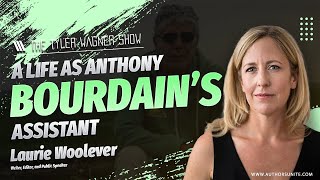
Laurie Woolever was Anthony Bourdain's assistant from 2009 until his death in 2018, managing his schedule, travel, and creative projects. She wrote Bourdain: The Definitive Oral Biography as a faster alternative to traditional biography, capturing voices absent from his memoir Kitchen Confidential. She recalls his generosity, obsession with jiu-jitsu, and private shyness during travels through Vietnam, Japan, and Hong Kong.
Chapters
All right everyone, welcome back to another episode. Today we have Laurie Woolover with us. She is the author of Bourdain: The Definitive Oral Biography, a New York Times bestseller published last year and now out in paperback. So welcome to the show.
Thank you. Thanks so much for having me.
Of course. Thanks for coming on. And what I wanted to— and how I normally start these, because I'm always just curious with this, is So when you were— let's just say you're in like middle school or something— and where you're at now, did you foresee any of this playing out to where you're at now or not at all?
Ah, God, I had so little vision for myself, uh, up until about honestly very recently. It's been always really hard for me to sort of, uh, imagine the next thing. So certainly not, you know, uh, middle school. It was like You know, I was like, well, I just want to go to college, you know, and I was always interested in writing and reading and literature. So I thought, well, maybe I'll study English. I think I took a career test at some point in middle school or high school, and it was like, well, maybe you could do advertising or, you know, something kind of practical that would use my interest in writing and literature. But I really had no idea, you know, I didn't I didn't see myself in a cooking-related career until a few years after college. And then, uh, you know, my career has been kind of a funny, strange path of, of opportunities coming up and me going, well, all right, I'll try that. Uh, it's, it's, it's been a strange thing, but ultimately a really good one. It's, it's led me to a really good place.
So, and actually, I feel like maybe I skipped over— so for the people that don't know, how did you— like, what's the foundation of this book? Like, how did you end up writing the book that you wrote, and tell us a little bit about the background of that.
Sure. So I went to culinary school about 2 years after college. From there, I worked as an assistant to, or the assistant to, Chef Mario Batali for about 4 years. And I did a lot of different things, cooking and administrative stuff and writing and media and just kind of general, you know, whatever needed to be done on a certain day, I did it. When I was getting ready to move on from there, Mario introduced me to Tony Bourdain. He had just published "Kitchen Confidential." They had become friends just by virtue of being kind of media, you know, chefs in New York at the same time. And Tony was looking for someone to help him write his first cookbook, which was called "Anthony Bourdain's Layal Cookbook." I had done that kind of work with Mario, and so Tony hired me based on the fact that I had worked with Mario and that, you know, Mario recommended me. He hired me just to do that as a one-off job to work with him on his book, which I did. Several years later, after I had worked in magazines for a while, I was looking for a different kind of job. I had a baby. I was looking to kind of pull back from the life of a full-time editor and writer. And Tony just happened to be looking for a new assistant. And so, you know, he offered me that job, and I took that job. And so I was his assistant from 2009 up until the end of his life in 2018. So during that time, we wrote a book, another cookbook together called Appetites that was published in 2016. And then we started working on another book called World Travel: An Irreverent Guide, which I have here also, that was also published in 2021. Unfortunately, the two of us didn't get that much time together to work on it. It was something that we had— we were a few months into when he died, and so that was something that I had to kind of recalibrate what the expectations of that book were to be and to finish writing that on my own. I had a lot of help from the publisher and some other people. But so I had a history not only of working really closely with Tony for a long time, but also of writing books with him. When he died, the idea of this oral biography came up, you know, in all of the discussions that I had with his agent and his publisher and his, you know, the editorial team that he had worked with for a long time at Eko. And the idea, you know, that just this idea came up of maybe not a deeply researched biography that would take a long time to write, but something that really allowed people to tell their stories about Tony and told his kind of came into his story in a different way. This was a man who wrote a hugely popular bestselling book, Kitchen Confidential, which functioned as a kind of autobiography for up until about the age of 40, 45 for him. So this was the definitive oral biography, is a chance to look at his story from a different perspective and also to pick up where Kitchen Confidential left off and talk about his life from the time that he became a famous author and television host right up until the end.
Got it. So there's two, two different angles I want to go to here. So first one about you personally, and, and the reason I want to ask this is, so I actually, I run a company called Authors Unite and work with a lot of authors. So I'm curious, and a lot of authors, uh, watch this, uh, show because of that. So what is your— do you have like a process for, um, like writing your books and like getting a public— like how— what's been your journey, or any advice you'd have from that front? And then obviously I want to talk about Tony and your interactions with him and stuff.
Yeah. Well, you know, I've been very, very lucky to work with well-established authors and people who are not first-time authors. And that allowed me to skip what I think is often the most challenging and painful part of being an author, which is actually getting someone to believe in you, getting a literary agent to take you on as a client, and then getting a publisher to take on your project and, you know, invest, the resources in getting that book to market. So, you know, my path has been different, I think, from a lot of people. And again, I've been very lucky. I, you know, started working with Mario Batali, who had already published a cookbook when I came on as his assistant. And in the time that I worked for him, we put out 2 more books. And then from there, I went with Toni. Now, I do have my own agent. She was Toni's agent, so she was someone that I got to know through my work with Tony. So again, you know, I've been really lucky to kind of skip those really difficult steps that keep a lot of people from getting into the marketplace. I did just recently have to go through the full process of really proving myself despite the fact that I've done a lot of collaborations with established people. I now want to write my own book, and so I had to, kind of take a few steps backward to what it felt like and write a proposal, you know, really understand what is the full structure of a proposal and, you know, and really kind of come at it as a first-time author because I am. This is the first time I've done a book that's just me. And it was a lot of work. It was, you know, a couple of months of crafting the proposal and sending it to my agent and getting edits and rewriting it. And then, you know, waiting for her to send it out to a list of, editors and getting a, you know, list of rejections. And then ultimately, you know, we got a hit, and it was with our same friends at Echo who I've worked with a lot in the past. So I can't say too much about it because we're not— the ink isn't dry yet, but I am very excited. And it was a real education in, you know, the challenges of getting someone to believe in your idea and getting them to offer you a little bit of money to do a project that you believe in. I spent a lot of time talking to other authors who had been through that process on their own without the backing of a big name and, you know, a lot of good advice. I mean, you know, there's nothing like having a community of writers, of people who've been through a process and who know, you know, the ego bumps from day to day and the self-doubt and all those things. And just to, you know, to have a community of people that tell you to keep going and to believe in the project that you're doing is super valuable.
Yeah, yeah, because I can imagine, like, well, I shouldn't say imagine, it's just been so long since I've done it. Was like when I wrote my first book, it was like 12 years ago. And it is when you're doing it, and mine was like short, my first book was like 75 pages, like little guide stuff, take this for what it is. But when you're, when you're spending years on a book, right, like that's when I feel like there's probably times where you wake up and you're like, am I crazy to be writing? Like, is anybody gonna read this? Like, because It normally— like Tim Ferriss, he wrote The 4-Hour Workweek. I think if I remember, he said each of his books took him about like 3 years, and it was like a full-time job for 3 years. So when you spend that much time writing something and you're, you know, you're not— you can never be 100% sure if it's going to do well. You know, some mornings you do wake up and you're like, is this worth doing? Like, this is crazy. Absolutely interesting. Um, so about the latest book that you came out with on Tony, you know, I think a lot of times in podcasts what helps people to kind of, you know, visualize and then, uh, want to learn more is like storytelling. So, um, you know, obviously we know some of the darkest, uh, stuff, but I think that like I would be curious first to hear like through your time of being his like assistant What are some of like the best stories or memories that you have of working with him? I'd be curious to hear some of those.
Sure. So a few years into working for him, I had a baby when we started. And then, you know, a few years in, my son was a little bit older and I felt more comfortable leaving for a week or so at a time. And, you know, Tony's child was also young when we started. And so he really understood what it was like to be a parent. So after a few years, he said, you know, Are you interested in traveling now that your son's a little bit older? Would you ever want to come along on, on one of our shoots? And I was like, oh my God, yes, you know, like, absolutely. Uh, and I had never— it would never occur to me to ask because that was really outside the scope of my job, you know. I wasn't, I wasn't the kind of assistant that was traveling, you know, by his side all the time. I was really someone that was staying back in New York and keeping things going, you know, in our time zone so that he could focus on being wherever he was in the world and doing his thing and knowing that his life was continuing to run smoothly. So to have this opportunity was really incredible. So I had, I don't know, maybe 5 trips, one a year. And he said, just look at our schedule and you can just choose any one of the trips that you want. I'll get you a business class ticket. You know, you can stay in the nice hotel where I stay and just, you know, just enjoy it. And, you know, if you want to do some of your own writing while you're there, you know, pitch us magazine article about whatever place we're in, that would be great. You know, whatever, however you want to use these trips. I mean, it's just a really extraordinary, generous gesture from him. And so my first trip was in Vietnam. This was in 2014. I had never been on the ground in Asia before, had never, you know, been— certainly had never been to Vietnam. And we were in Hue, which is a little— a smaller city in the central part of the country. He had also never been there. So it was this really interesting experience of getting to see Vietnam, which is a place that he loved and went back to many, many times, but to see this part of the country that he had never seen before and to sort of see him experiencing something new for the first time. And I was, you know, I just didn't know what to expect and I wasn't a very seasoned traveler. And, you know, he said, well, I always get a scooter whenever we go to Vietnam because I love riding a scooter around. So anytime they're not sharing shooting me for the show, just, you know, you'll be my passenger on the scooter. So, you know, I got to, I mean, even though I wasn't particularly starstruck by Tony, it still was such an incredible experience to be on the back of a scooter with, you know, literal Anthony Bourdain. I mean, I allowed myself to feel a little bit starstruck, you know, 'cause it was like, this is the place, one of the places that he loves most in the world. He's doing something that he really loves. Driving this scooter around, and I'm getting to see this extraordinary place from this vantage point. You know, not even so much about like who's driving the scooter, but that I am, I am, you know, I have this guide, this person that, that people, you know, lots and lots of people look to to sort of tell them how to travel or how you might travel. And I'm, I'm getting to see it from his perspective. So that was really, that was an amazing first experience to go out and to see how the show is made and the exciting parts. And then there's some parts that are like watching paint dry. It's like really boring, you know? And I got to see that too. I mean, there's days when Tony would be back at the hotel and I would go out with the crew shooting B-roll and they're just, you know, you might see 30 seconds of some beautiful scene and that's like 4 hours of shooting, you know? And it's like, oh, okay. Like, I really, I learned so much. So every year from 2014 to 2018, I went on one of those trips. I went to, Okinawa the following year, which was incredible. And then the next year after that was Kanazawa, Japan, and Tokyo. Again, just extraordinary. And another place that Tony really, really loved, Tokyo. The following year we went to Sri Lanka, which was really special. We were in Colombo, then we went all the way up to the north to Jaffna, which had been very much off limits to the outside world for a very long time because of the civil war and was just starting to open back up. And then the last time I traveled with him, we were in Hong Kong in 2018. So, you know, all of those experiences, just to see it from his perspective, to be able to travel in the kind of comfort and luxury of business class. I mean, it basically broke me for traveling like a civilian, you know, it's like, I don't know if I'll ever get that opportunity again. It was really, really amazing. And to, There was some— you know, it's very easy to get cynical about television and about the way people are in the world. And Tony truly loved to bring people, you know, in real life, actual human beings. He loved to show people the things that he loved. It gave him such an almost childlike thrill. When we were in Tokyo, the crew was about 6 hours behind us. We took a train to Tokyo. They were on the road. So we had an evening where he wasn't shooting. Shooting. And he said, well, let's just go out and get some food. And we took a taxi into Shinjuku, which is kind of a lively young person's district. Lots of bars, lots of, you know, cheap restaurants, really exciting. And, you know, it was like we went and had yakitori and beer, and then we went across the street and had ramen. And it was so simple, but he was truly just enjoying the opportunity to show me this place for the first time in a way that was, you know, I'll, I'll never forget that.
Yeah, that's so awesome. And I, it's, um, it's just, I, it's very random. I, I just started dating a girl from Vietnam, so this is just cool that you are, that you were saying, uh, very cool. Um, so in, uh, maybe this could help me out, give me some brownie points. In Vietnam, what were some of, uh, like your favorite dishes? Did you have some dishes there?
Yeah, I mean, so Hue has a really interesting culinary history. They were the, you know, the seat of power in the country for a very long time. And so they have this really delicate imperial cuisine, and a lot of that has lived on even though, you know, the political landscape has changed quite a bit. So there are all these beautiful, really delicate dishes, almost— I mean, tapas isn't quite the right analogy, but they're, you know, they're small, a lot of different little rice cakes and pancakes stuffed with shrimp and pork, but just extremely delicate. And there's as much emphasis on the beauty of the presentation as there is on the flavor. It's almost Japanese in its kind of, you know, attention to detail and really delicate. So there were all these, you know, I can't, I can't necessarily remember the names and I would butcher the pronunciations, but all of these different, you know, million different little rice cakes of different types that were just, that are really, you know, worth reading more about and checking out. And then on the other end of the spectrum, there's a very famous soup that's from the city of Hue called bun bo Hue. And it's a noodle soup like pho, but it's much more complex. The broth is much more complex. It's a pork broth. You add a lot of chilies to it. It's often quite bright red. There are sometimes crab dumplings in it. There's a pork shank. Sometimes there's sliced beef. One of the things that really sort of defines it is this cube of gelatinized pork blood called huiet. And it's served with bean sprouts and lots of herbs, and it's just— there's so much going on in this bowl of soup that's really fantastic. And you can get it, you know, you can get it from the street vendor, you can get it from the central market, the Dongbae Market. We were staying in a pretty fancy hotel, and they had their fancy French hotel version of it. I mean, it's a really terrific soup. It's not that easy to find in the city. States, probably more so in, in parts of the country where there are big Vietnamese population centers. In New York, we don't really— that's not, you know, one of the big groups here. So it's very rare. I'm always very excited to see it on a menu because it's hard to find in New York, but it's definitely again worth checking out, worth seeking out.
Yeah, just like— so, bun bo hue? That's how you say it?
Bun bo hue. So it's b-u-n B-O-Hue.
Okay, okay, got it. Let me adjust this real quick because that sounds amazing. Uh, okay, gotcha. Um, so another question that I'm just curious about is like, is there anything that you think that the like outside, you know, because obviously with Tony everybody saw there's a lot of like the show and like books that were read, but Is there anything that you think the outside world would be like surprised to know that like in his— and again, obviously, whatever is appropriate to share, but I mean, like when you were hanging out with him and it was just you guys rather than what we saw on the TV, is there anything that is like not— was like missing in a sense? You know what I mean? Like, I guess.
Yeah. I mean, a lot of people talked about this in, in the book, in the oral biography. And I think this probably would surprise people to know that he was very He was kind of a shy, awkward person. You know, I think when you see what you saw on television was the product of someone who really knew how to perform and really, you know, knew how to be in front of camera. And it's not to say that he was inauthentic on camera, but he was the most swaggering, confident version of himself with a job to do and with, you know, with a goal, which was to have good conversations and explore new things and really communicate where and what he was doing without the cameras around and just being a regular guy, he was a little bit awkward. He was a little bit shy. He could be sort of, he didn't always make eye contact. And he would sometimes fall back on jokes or on certain topics that he was comfortable with. He got very, very into jiu-jitsu for a while. And—
Yeah, I remember hearing that. Yeah.
He would, it didn't matter whether or not you were interested in jiu-jitsu or knew anything about it. This is what he wanted to talk about. So he would talk about jiu-jitsu in great detail to anyone who was around. And some people loved it and were like, great, and got into it because of him. And then, you know, people like me were like, I truly have no idea what you're talking about, but it obviously makes you really happy, so I'm gonna listen and, you know, try and learn as best I can. So yeah, I think there was this misconception of him as this incredibly self-assured, suave guy, and I think he could present that to the world, but I think he was much more sensitive and much more shy and awkward than I think the public persona would lead you to believe.
Yeah, that's so interesting. I remember Rogan talked about that, about his obsession with Oh, now jiu-jitsu. And so I'm curious what your thoughts are on that. Like, I feel— and Rogan's probably similar— like, a lot of very successful people, they have this, like, mentality of— they're very— they're, I guess, extremists is the word. So Tony, you would agree, obviously, was probably one of those individuals. Just like, once he picked something, it was like, I'm either going to just absolutely win at this or I'm not doing it.
Like, yeah. That's exactly right. Yeah, he was, um, yeah, he was an extremist, and he was, uh, you know, I think I rarely ever saw him do something. I don't think I ever saw him do something that was, that was sort of half in, half out. It was either like, I'm gonna do this 1,000%, or I'm not interested at all. And so whether that was television or writing or, uh, you know, parenting or cooking, whatever it was, he was in all, all, all in. So when he was really into jiu-jitsu, it was an obsession, you know, and it was— I mean, it was great. It was, you know, he was really healthy. And despite, you know, whatever injuries I think are sort of, you know, inevitable with that sport, he was in great shape. He was really happy. But it really— it came to dominate everything, you know, when he would go on shoots. We would all have to sort of figure out, okay, well, how can we work in training? You know, where, where's the, where's the dojo? And, you know, how can we get him in with a general population 7 AM class, you know, as many days a week as possible, because that's going to make him happy, and that's going to set him up to, you know, to have a good shoot day. You know, everything started to revolve around that.
So yeah, it's, it's a Yeah, it's like a blessing and a curse, right, at the same time. I feel like the blessing is like, yeah, I mean, anything you set your mind to you can accomplish. But I think the curse is like that, like balance in life, like it's very hard to gain. And I've— I struggle with— I think just a lot of like very driven people, they struggle, uh, with that. Um, curious too on your end, so as his assistant, what did you find yourself like most— and obviously we all kind of know like what normal, I guess, assistant duties are, but I mean, like, what did you find yourself doing most? Like, what did like a typical, untypical week look like for you, I guess?
Sure. Yeah, I mean, it was a lot of communications. You know, there were, as you can imagine, there were a million requests for him all the time, meetings, phone calls, interviews, you know, the shoot schedule for television. And then, you know, he always had a million other projects going on on the sides. So it was a lot of communication, a lot of handling requests and passing them on to him, you know, kind of streamlining things so that he didn't have to fill up his consciousness with the entire weight of what people wanted from him. You know, there were certain requests that I could just say, well, you know, I know that's a no because of, you know, I said no a lot just because there were— his schedule was so demanding that it was like, So many, you know, so many great opportunities would come in and he just didn't, you know, he— the shooting the show took up a lot of time. So it was, it was being that kind of stopgap between him and everyone who wanted something from him. And just a lot of organizational, you know, talking to the production office about what, you know, what was coming up, what was required. Does he need to get travel vaccines? You know, is his passport up to date? You know, what's— here's 6 flight options. Let's figure out what works best. You know, all of that kind of juggling. There was also a fair bit of writing. A fair bit maybe is too— is not exactly right. But, you know, there was— he would be asked to write a foreword for a book or write a blurb for a book. And I would sometimes give it a first draft and then he would take it and make it his own. Or more often, he would write something and just pass it to me and say, can you clean this up? Um, so, uh, you know, I always really enjoyed that, that kind of work that was a little more, uh, you know, a different part of the brain than just the kind of air traffic controller side of things. Uh, and, you know, so, and that was, I mean, that was kind of the, the bulk of it was just handling all the incoming and, and and dealing with him. And then, you know, special projects. We did the cookbook. We were working on the travel book. He had an imprint, a publishing imprint with Ecco called Anthony Bourdain Books, and I did some line editing for a couple of the books that were published there. So that was another, you know, really great opportunity. He knew that I was a writer. You know, he knew I had ambitions beyond being an assistant, and so he was really you know, conscientious about giving me enough, uh, interesting stuff to do that I would stick around and continue to do the, uh, the important work of air traffic control.
Yeah, it's— what seems really cool about what you're saying is that, yes, I mean, you certainly worked very hard and were his assistant, but he also— it seems like he gave you like breathing room to be like, hey, you're also your own person, you also have your own dreams. So yes, you work for me and I do expect these things, but at the same time, go write your own book, go or whatever, go do your own. So yeah, um, two things on that. One is, so, uh, I'm assuming with the TV and with the travel and stuff, so that's within the budget of like the, the TV, uh, stuff, right? Meaning so that business class, so like when you were saying you would pick the six flights, it almost didn't matter the cost, right? It's just like, hey, what's the most comfortable and what's the best? Is that kind of how it was?
Yeah, well, for him. I mean, for my own, yeah, when he— when I got to go on those trips, that was coming out of his pocket. I mean, he wasn't going to charge— he wasn't going to charge the network or the, the production company for my travel because it was really just a perk, you know, of my employment. Um, so yeah, that's, uh, but for him, um, most of the time I was, I was picking flights for him, uh, you know, or, you know, working with him to pick— to figure out, you know, what's what, or, you know, here's the, here's the hotels that are kind of within the range of things that you like. Which one do you want to stay at? You know, that, that kind of logistics stuff. Um, but yeah, no, to be clear, I mean, he, his, the, my travel was, was a gift from him, which—
Got it. Okay. No, no, that's awesome. And yeah, I was curious with, because even say, even as a person, say you have a lot of money yourself, you still like look at the things. So it would be cool. Like, I've never worked for like a big corporation and, um, like had that, uh, thing where it's like just book anything you want, it's on the corporation. So that sounds like that would be cool. I'd like to try it someday.
Yeah.
But, um, and then for you, I'm curious, so like, and I know you can't say a lot about the book that you're working on now, like your own book, but like what, where, where, where, what is your like future like, like now? Um, you know, it's obviously, I guess, so it's been like 4 years since his passing. And so, yeah, what, what's kind of your— I don't, I don't know if the right word's mission, but like, what are you trying to do now?
You know, well, you know, I've, uh, I've been able for the past 4 years to, to, to work as a writer without having a second job, which, uh, it's great. And sometimes it's a little scary, uh, but I would like to continue to do that as long as possible. Uh, you know, I was really lucky to have World Travel and The Definitive Oral Biography to kind of keep me afloat for a couple of years. And then I just turned in a manuscript for a cookbook that I co-authored with a bread baker called Richard Hart. He's a British chef by profession who then switched over to become a bread baker. He has a bakery in Copenhagen called Hart Bakery, and he's about to go open a new bakery in Mexico City, and he's just a brilliant, brilliant bread baker. So he needed somebody to help him with his book. And I spent the last year working with him, traveling to Copenhagen, you know, meeting with him all the time on Zoom, and we just put the book together. That'll probably come out in a year. And, and now I've really tried to clear the decks to work on my own book, because I think it's going to take, you know, a lot of, of time and concentration. But I have also been working with a couple of different groups of people on developing television projects. And, you know, I'm trying to manage my expectations. I think that, you know, there's a million ideas, there's a million, you know, possibilities. And if, you know, it's a miracle when something gets made. So, but I'm really enjoying just the process of development and understanding everything that goes into it and starting to pitch. And so if one of the three things that I'm, you know, talking about gets gets, you know, greenlit for a pilot, it'll be amazing. Yeah, that's awesome. And I've, you know, I've been lucky to meet a lot of people through Tony through the years who, you know, have a lot of experience in television, really brilliant people. And, you know, there's a little place for me with my experiences, with my, you know, writing skill and my point of view. So, you know, we'll see how that goes. But I hope to just continue to do, you know, creative projects with a focus on writing. And, you know, if I have to get a day job at some point because I start to not be able to pay the rent, then I'll do it. You know, it's— there's no shame in it. But it's been really nice to have a couple of years respite to, to simply focus on being a writer.
For sure. So, and maybe— and stop me if you can't— but can you give us any hint on your own book, like any direction on it, or not at all?
Sure. Well, it's— yeah, it's— yeah, it's not like it's a huge secret. It's going to be my own basic basically my own stories, you know. I've, I've been, um, I've been in New York for 27, 26 years. I've been, you know, working in and around the food business and the media business for a long time. I've worked with some, some pretty major names, you know, being Tony and, and Mario Batali, and they both have interesting and very different trajectories, both, you know, tragic in their own ways. Um, and I've had, you know, I've lived a lot of my own life, so it's still— it's going to be a book that sort of encompasses all of those aspects.
Got it. And then curious, this might be— so my mom, she always cooked for us growing up, still does. With the— you said, I think you said French baker or Copenhagen baker?
Yes. Yeah, yeah, he's, he's British, but he's working in Copenhagen now.
Okay, so maybe this is completely different, but my mom makes amazing shortbread. So does that— is there any shortbread recipes in that book? Or is that like bread baking?
Yeah, you know, I came into it thinking like, okay, we're going to do bread, but we're also going to do croissants and cakes and cookies. And he was like, no, I'm the bread baker. I don't— in fact, he has this great story, Richard, that when he first got to Copenhagen, the people he was working with said, hey, can you, can you make this cake? Can you make this special birthday cake that the owner of the company really loves? And he was like, Mate, I don't make cake, I make bread. And he didn't realize that what this guy's cake that he actually loves is in fact bread. It's a brioche with caramel on it. So he's like, I could have made it, you know, I really like— I screwed up. But he's— I'm sure if he were asked to, he could kill it, you know, making any kind of baked goods. But no, this book is strictly— it's sourdough baking. And there are a few recipes that don't, you know, strictly call for sourdough, but by and large, It's sort of the philosophy and technique of sourdough baking. And, you know, he's a very intuitive baker, and so he doesn't really get too bogged down in all of the, like, science nerd stuff of it, you know? And there's lots of books that do that really well, but he's more about kind of doing it by feel, which has been a really interesting thing to try and translate to the written word.
Oh yeah, I can imagine. That sounds— Actually, I mean, translating it would be difficult. Um, well, so this might already exist, but I'm just saying, I'm— I literally just thought this now. Like, this shortbread's very good. I'm just saying, I don't know. I feel like shortbread is something that not everyone even knows about. Maybe, but there should be like a cookbook on like— should just like focus on shortbreads.
A shortbread cookbook. I'm sure that— I'm sure there is. At least a small market for that. Yeah, maybe that's, maybe that's a project for you.
Yeah, maybe, maybe me and my mom will tackle that. I think there's something there, um, because I just think once people try it, then they'll want more of it. But it's just like people, I just think, don't know like about it, or they've seen it in like little sleeves, but that's not like good shortbread and like the—
right.
So yeah, so what, uh, One of the last questions that I want you to, where people can stay in touch with you, but what was that actually back to the baker translating that, like, because a recipe is pretty direct. So if it's about the feel, like how did you actually translate that into the book?
You know, the easiest method, the way that I started was just recording everything. You know, I went and spent 2 weeks in Copenhagen last summer and just followed Richard around. I was in the bakery every day. And then we would go and sit and, you know, have a coffee and talk for hours. And I just recorded everything. And I just came back and listened to what he had to say about, you know, his process of baking bread and his philosophy of baking bread. And then I started baking bread myself, and I really had never— I'd never done sourdough baking before. And so, you know, having my own experience of what it felt like to put your hands in a starter and to put your hands in a dough and to move the dough around. I mean, I kind of used all of those different things, you know, the transcript of our conversations, my own experience. I asked a million questions. I read a lot of other people's books, watched a million videos. And then, you know, there's a lot of back and forth. I mean, co-authoring is its own special challenge, you know, with someone like Richard, or really anyone that I've worked with in a co-authoring way, people have very, very strong voices. And sometimes it's a real challenge to both help them say things in the most clear and, you know, the best way, but not to sand off the edges of what makes them unique as speakers and writers. And, you know, we ran into some bumps along the way on that. But yeah, it was just a process of really trying to listen and, you know, there's a million words that you can use to describe dough and flour. And, you know, there's— I fortunately, you know, I've been in this food writing space for a long time, so I felt like I had the recipe part down and the, you know, all the vocabulary down, and it was just sort of really honing in on what is the technique, um, yeah, and keeping it in Richard's voice. So it's, uh, it was a really— it was a much bigger job than I expected, and these things always are, but it was super, super rewarding.
I'm so glad you said that because, like, so one of the things we offered— and I think you're saying co-author, would you say it is more like ghostwriting or a true—
no, it's a true co-authorship because I'll, I'll have, um, cover credit for the— on the book.
So, okay, got it, got it. So, um, because I think, uh, it's, it's just so cool to hear that, you know, you actually did these things. And I think I— me, I'm more like marketing mind, so I always think it's so wild to me for people like yourself— co-author, ghostwriter, editor, a lot of different terms, but I'll just put it together for this to say, like, whenever you're doing any of those activities, to actually capture the voice of another. Like, it's hard enough to write your own book in your own voice, so have the ability to actually write a book in someone else— like, you have to get in their head. So like you said, you felt the dough, you did— like, you had to almost become him for a little. So I don't know, I just think it's— a lot of people just think, oh, you're just writing. It's like, no, you actually did activities to feel like him so you could sound like it.
Like, it's more than that. So yeah, and you know, I think some authors are, you know, uh, when I say author, I mean, you know, in this, in this case, like, if you look at our contract, I was the writer and Richard was the author, right? So, uh, some authors in that scenario don't necessarily care as much, you know. I mean, you read lots and lots of chef's cookbooks that have been either ghostwritten or co-authored with another writer, and it's just kind of a, not a sterile voice, but a kind of bland, you know, a voice that's, it's well written, but there's not a lot of personality there. But the information is there. And then there are some people who really have a strong voice. I mean, Richard, like I said, he's British. He has, he speaks with kind of a Cockney accent. He's got all this funny slang. You know, he's every other word. There's so many curse words we took out of the book. You know, he's just like, he's He's got a super distinctive voice. So, you know, it really depends on who the author is and how, you know, invested they are in making sure that this book really, really sounds like them. And, you know, we had plenty of arguments, you know, where I'd be like, that's just not grammatically correct, or, you know, you need a comma here, or like, that's not how we say it in the US, you know. And he's like, well, I'm British, you know, I don't care. So it's, you know, it was, uh, it was, it was funny. It was, it was a good time.
Yeah, no, I just, I love to hear always like behind the scenes of that because, you know, the public, they just see the final version of the book, so they don't. But truly, whether it's with someone else or by yourself, the journey of writing a book is, it's emotional, man. It's wild stuff. And like you get arguments like you said, and like I just think, um I always find it very interesting to hear behind the scenes, and I think it helps a lot of people too to hear it so that they know that no, the first draft was not perfect, and no, it wasn't just like this, it was like this.
Lots and lots of work behind, behind the scenes always. Yeah.
Um, so yeah, what I, what I want to do now, if there's anything that we didn't cover that you want to say, please do. And then please, um, because we'll promote this on all of our socials and stuff, so like, where can people contact with you, get the book, website, website, socials, you know.
Sure. Okay. So, well, the other thing, the other sort of piece of my, uh, my career as the writer, and the thing that's also kind of kept me afloat, uh, because it's not hugely lucrative to write books, uh, is I'm also a public speaker, uh, and I, I've been doing a lot of that, especially in the past year. I did a number of, um, travel shows, uh, obviously I'm talking about the books, I'm talking about Tony, I'm talking about my, my experiences as a world traveler, uh, but, and I'm very, very open to doing more of that. So I do have a lecture agent. I think I just, you know, as advice for authors, I mean, if you can get into— if you're comfortable public speaking and you have something to say, it's a great way to supplement your income. It's, you know, it's the bang for the buck is completely different scale than writing books. And if anybody is out there who is looking for a speaker on any number of topics, travel, you know, addiction, you know, I'm 4 years sober and I'm very happy to talk about that. You know, working with celebrities, cooking, New York, you know, parenting, divorce. I'm ready to talk and I'm ready to get paid to talk. So there's that. So I'm very active on Instagram and it's Laurie Woollever, L-A-U-R-I-E-W-O-O-L-E-V-E-R. I'm kind of— I enjoy it. I have fun with it. I put up a lot of weird stuff. I'm also on Twitter, same place. Our same, same handle. And I have a website that's lauriewilliver.com that's got, you know, upcoming speaking gigs, upcoming publications, the stuff that I've written, you know, contact form if you want to contact me for any reason. I'm out there, you know, trying to, trying to, trying to make it as a writer. So definitely get in touch.
Of course. Thank you again for coming on too. I really enjoyed it.
All right, thank you so much. This was fun.
More from Tyler


Catherine Nikkel : THE STORY EVERYONE HAS BUT HASN'T TOLD : The Tyler Wagner Show #1120



Scott Ritzheimer: Bring Predictable Success to your Organization | The Tyler Wagner Show #1115


Fred Moskowitz: A GUIDE TO GETTING STARTED WITH IN MORTGAGE NOTES | The Tyler Wagner Show #1113

Mark Podolsky: From Land Investor to Full Time Success How I Made $90,000 Cash in Real Estate


Mark Podolsky: How to achieve a 300% return on investment my foolproof strategy

Mark Podolsky: How to make passive income selling raw land the irresistible pricing strategy