Lisa Fasulo: Addicted To Starting Businesses From Scratch And Selling Them
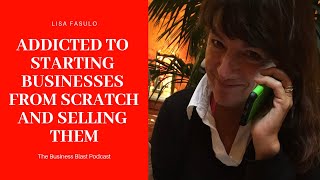
In this Business Blast Podcast episode, host Tyler Wagner interviews serial entrepreneur Lisa Fasulo, who is passionate about founding and exiting businesses. The conversation opens with a teaser from Fasulo’s memoir In Living Ink, recounting a memorable student, Oscar, whose hidden homelessness and military background highlighted the unseen stories behind people. The interview then shifts to Fasulo’s entrepreneurial journey: she sold a 20‑year hand‑painted clothing line, a small tattoo‑needle manufacturing venture (a 4‑figure deal), and her most significant success—a chain of tattoo schools that she sold for a six‑figure sum, complete with a TV show on TLC. She reflects on subsequent ventures, including a failed on‑demand website franchise, emphasizing the importance of loving what you do. Fasulo shares her core business philosophy: bootstrap with under $1,000, stay lean and mean, handle all key tasks herself, and keep overhead low to make a company attractive to buyers. She advises aspiring founders to master every aspect of their business before scaling. Personal advice follows: save more money, prioritize family for happiness, and live by the quote “Love many, trust few, and always paddle your own canoe.” The episode concludes with her online presence, directing listeners to her life‑coaching site lifecoachingbylisa.com.
Chapters
All right everyone, welcome back to another episode of the Business Blast Podcast. I'm your host Tyler Wagner. Today I have Lisa Fasulo with us. She is a serial entrepreneur that is addicted to starting businesses from scratch and selling them. So welcome to the show.
Thank you, Tyler. I'm happy to be here on the Business Blast Podcast.
Yes, I'm pumped to have you here. Um, so the first one we ask on this show is what is the best story from your life that has an underlying value valuable message?
I think I would have to draw upon a lot of the experiences I had at my tattoo school. I met all kinds of people, all walks of life, and a lot of them came with a really hard shell. And, you know, some of the people that were, you know, society might say is alternative and harder to kind of get friendly with, but what I learned especially with many individuals, is that everybody is just a person deep down. Some of them, and if the harder they are to get to know, the more things that have happened to them, but that everybody just wants a friend and to be heard. And there's— I have so many stories, I actually had to put them in a book about— yeah, so many people. I mean, It would take me a half hour to describe even just one that I'm thinking of, but it's all in my book, you know.
Okay.
Everybody, they all have a story, you know. So, everybody has a story.
Yeah, no, absolutely. So, this is a book that you already have published. So, what is the book?
Yes, it's called In Living Ink.
Okay, perfect. And so, I know you said it would take like 30 minutes, but can you give us a little, at least like a teaser, like of the story?
Yeah, sure. Um, I have to think about— a man named Oscar came to our program, and it was, it was funny because we— our school was very expensive to come to, our tattoo school. It had to be for many reasons, but we offered a, like, kind of a wounded warrior scholarship, and a fellow named Oscar from Chicago replied to me. And his letter was so colorful and he was so lively and appreciative at a possible opportunity to come to, you know, Albany to our kind of nationally famous tattoo school. So we said, okay, Oscar, you're the one, you know, I'm not even gonna interview any other people, just come, come along. So he came and he was this giant hairy Sasquatch man. Huge, huge man. Like he belonged on Harry Potter, you know?
Like, yeah.
And he was the, the most gentle man we had ever met. He was the absolute sweetest thing. And the funny part is, when he came, he stayed in a student house that we provided, and we happen to have one of our worst students ever as far as a drug addict. Sometimes parents sent their kid to us instead of rehab, frankly. So we had a really dangerous individual at our place, and Oscar like took care of everything and kept him in his place and kept him from getting crazy and so on and so forth. And he was just kind of special. There was something that came off of him we really couldn't put our finger on. But he was amazing. And we just loved him. We were sorry to see him go. They all stayed for 2 weeks. And so he left. And Jeff and I, my husband, we couldn't get him off of our minds, you know. He was just one of those ones that stood out. Well, it wasn't until a few years later that I found out that he was homeless. He was homeless before he got to us. And he was homeless after he left us. We just didn't know it, and he never said that. But we did realize when he left, because we all just adored him so much. But then we all looked at each other and said, wait, did we know him? Where did he live? Because he kind of kept hedging where he lived. And it wasn't until later I found out he was homeless. So, you know, You think, well, that's a crazy story, but it just reminded me that always there's a backstory to everyone that you have no idea. You know, he didn't look any more homeless than like you or I. Yeah. But, you know, he had a, you know, having found out a little more later, he had problems from being in the service. He was a Marine. And so—
Gotcha.
What we were seeing was a lot of fallout from his service.
I see.
But anyway, you know, he was kind of— he had like an angel presence that we all recognized that we hadn't experienced before. And—
Yeah.
And then afterwards, another thing my husband and I said was, you know, was he real? Like, was he a real person when he left? Yeah, amazing. So to this day, I'll be honest, I don't know if he really was real.
That's awesome.
I mean, I'm not sure, and I haven't been able to get a hold of him, which is even adds to this.
Yeah, well, okay, there's a lot, a lot of that curiosity is now piqued. All right, I like that. So I'm sure our listeners will definitely want to check out the book. Very good story, great way to start off a podcast. So my next one for you is, because, you know, starting all these businesses from scratch, selling them, you have a lot of, a lot of skin in the game. What is the most valuable piece of information we should know that's within your expertise or industry?
As far as, you mean my history of what I sold, or advice for somebody?
Yeah, yeah. Tell us a little bit more about, you know, maybe some of your biggest wins and then biggest losses. I'm sure there's some losses in there too of, you know, flipping businesses, and then I'm sure advice will come from that.
Okay, well, it's kind of funny how this how it all got started because it kind of came on a dare, this whole business selling aspect. I had run a 20-year hand-painted clothing business that was successful, and when I was done, I just stopped doing it. It never occurred to me to try to sell it, so that wasn't anything I thought about until the next thing was my husband had a tattoo needle making company. Very small, very small cottage business. And one day he said, I'm done doing this. I can't do it anymore. It's really boring. It's very tedious. He said, I'm just done. I said, well, wait a minute. I said, let's sell it. And he said to me, you can't sell that. No one is ever going to buy that. So dare accepted. So when he said that to me, I was determined to prove him wrong. And I did. I sold the business probably 3 weeks later.
That's awesome.
That's quick. Honestly, the pump I got from that made me realize that it's a thing. You know, I love starting businesses, but I had never entertained selling them before. And that turned me on to, okay, wait a minute, you know, there's, there's something to this.
Yeah.
So then my next big thing, this was my biggest so far, was my chain of tattoo schools. So I went from, you know, the needle business was a little 4-figure deal, but then my tattoo school business, when I sold that, was a big 6-figure deal. Yeah, I had, I had a really big situation going there, and I sold it to another school curriculum and all. I was approved by the New York State Department of Education and so on, so forth. So super legit. I even had a TV show on TLC called Tattoo School. That was me.
That's awesome.
Which was— which was, I'll tell you, no fun at all, but that's another story. So my tattoo school thing was big, and when I had enough, I decided to sell it, and I did. And so that was Great deal. It was difficult though. You know, when I realized when you're in that amount of, um, when you're in that league, selling it is not a one-month process. It was really difficult. It was a lot of lawyers, a lot of, you know, there was a lot to it. But anyway, I successfully did that. And then since then, I've kind of dabbled in a couple other little businesses. I started a websites while you wait business hoping to franchise it. The only thing I missed on that one was that it just wasn't fun to do. I still think my concept was great. It was like on-demand websites, you know, make an appointment with me, sit down, we're gonna have your website done in 2 hours. Like, there is nowhere you can go to have that happen. So I thought I have a really great franchise idea since I had never franchised before but had a desire to, you know, try my hand at that. But I missed the part that I hated it. I hated doing it. You know, after the tattoo school, it was so colorful, you know, so zany and exciting that the website business was really too Boring. I, you know, I did it for a year and I was like, I can't, I just can't.
So absolutely, I think that's— I mean, and there's the lesson, like you gotta love it. And I guess so, like, it seems to me, right, so you know, because you've sold some companies, so you must be good at like building systems in your companies, right? Because if you're gonna like be able to sell a company to somebody else You know, they need to know how— they need to be able to run it themselves. And I think a lot of people, when they first start out running a company, they get trapped kind of because it's all dependent upon them. Um, but what you've been able to accomplish is, you know, building something, an actual business that can work without you. Um, so is there anything like— is there any advice you have in that area? Like, how do you have like that mindset, or is there anything different you're doing?
I think yes. I say yes, there is something different that I see when I talk to other people who start things. I am a hardcore bootstrapper, absolutely hardcore. I start with like nothing. That way the possibility of success is much greater if you don't have a ton of skin in the game. So I don't believe in like getting a $50,000 loan to start something. I am all about organic growth. So if you have something good, you don't need a lot of money, you know. You just need— I say I do all these for less than $1,000, you know. But of course, I'm a great do-it-yourselfer, so I build my own website, make my own cards, graphics, all that. And then the rest is I do all the jobs that a lot of people hire people to do. So I don't I start out with a staff of 10 people. I do everything so that, A, I know every aspect of the business. I think to be successful, you have to be able to do every aspect of your business.
Yeah, see, I love that.
Yeah, and you know, you'd be surprised at the people that I've known that are willing to open a business that they don't that they're gonna hire someone to do the key jobs for. It's like, are you crazy? That's the worst idea ever. So I start out lean and mean, I call that. Super lean and mean. And then it's a lot easier to sell something when the person can see it doesn't take a huge staff to run. You know, it doesn't take a huge amount of money every month. And I keep my overhead super, super tight so that, you know, people aren't scared to death to come into something that, you know, the overhead's crazy, the staff is, the payroll is huge, and that. So lean and mean is my secret.
Yeah, and I think that's amazing advice. I think just going into it, I was actually at this conference this past weekend, and they were saying that one of the number one reasons why businesses fail is because they're actually over-financed. Like they have too much money in the beginning.
Yes.
And when you have too much money in the beginning, you can, you'll make decisions that you wouldn't make if you were bootstrapping.
Yeah.
So, I think that's a great, a great lesson. Like, if you're gonna go into a business, just know that in the beginning at least, you need to know all the elements. And then, to scale, obviously, you'll need to hire and do things of that nature. But before you know, dabble in everything a little bit, you know, and then you'll know what's going on.
So that's absolutely right.
Yeah, that's a great point. Um, so my next one for you is, if you could give your younger self one piece of advice, what would that be?
Oh, you got me on this one. Okay, okay, yes. Um, save more. Okay, save more. Because I've always kind of been on the, um, the role where it's always coming in, it's always going to come in, um, just keep kind of jogging down the road, you know. But I never really realized that there may come a point— I certainly have not hit it— but Someday, I might not want to keep doing this. I probably will, to be honest. I mean, I'd like to think I'm gonna be opening businesses till I die, but I think I would have saved more. Just, you know, put a little aside as I went.
Okay. Yeah, that's great advice.
That's about it.
And then, so now, going down a little bit of a different path, not all business-related. In your opinion, what is the key to happiness?
Family.
Family.
Family. No doubt about it.
Okay.
No doubt about it. And, you know, when you get, um, when you get like immersed in your professional life, you can forget that. And as I've gotten older, I certainly realize that it's all about your personal connections that will give your life meaning and color and joy. It's definitely family and friends.
Got it. I agree. Um, and then what is the best book that you've read and what was the number one thing you learned from that?
The best book I've read? Yeah, I read a lot of, um, I read a lot of them.
Awesome. Me too.
Oh boy, okay, let's see. Uh, the best, best one I've read. I don't want to overlap on Alex because I've certainly, um, I've handed, I've handed some down of some favorites, but, uh, hold on, let's see.
It is tough for an avid reader that isn't—
You know, OK, I'm going to think of one that has stuck with me, even though I really never followed anything in it. But it was a reminder that— all right, so it was— I think it was like How to Be a Millionaire or something. Bach. Who's that? He's a really popular— I want to say his last name's Bach. How to Be a Millionaire, but it really had nothing to do with that at all. It was just some basic, like, prudent life lessons. And there was a lot about saving in there, you know, and a lot of it, you know, you remember the latte factor. You remember hearing that, that all the people who were blowing their money on this every day and what they could have done if they saved that and how it compounds. I really never followed any of it, but I always remember that, that that was good Good advice in that book. Yeah. But, as far as for motivational, I love Entrepreneur and Incorporated magazines. I love reading every month who's doing what, where, and the latest like young guns and what's happening.
That's big. I haven't heard that yet on the show. I feel like, you know, like magazines, like they're kind of out of style now.
I know.
But no, that's a great point. Like, I'm an Audible fiend. Like, I listen to audiobooks every day. Like, like 3 hours a day, probably like a crazy amount, and I love it. But I don't stay up to date too well. Like, I don't watch the news, and you do got to stay up to date on what's happening now in some fashion. That's probably the best way to do it.
I love that. I love that. And so you have to know then that Alex, my daughter, she is an entrepreneur.
Yes, I do.
Yep. So like, can I tell you, for me That I couldn't be any more excited than to have my daughter in a magazine that I have been reading for decades.
Oh, absolutely. And I— and that's still like the online, still very relevant, right? All these like blogs. Um, and yes, no, I did know, you know, as— and everybody listening, we had, uh, her daughter on the show, Alex, who's just crushing it as a writer on Fiverr. Um, really unbelievable story. So I'm really— it was awesome having her on, and I'm really happy to see, you know, everything she's doing as well. It's inspirational.
And then you have to meet the other one who's also, you know, yeah, I know, we gotta say that real quick.
So I have not met the other one, so I don't mean to say Alex is better or anything. I have not met the other one yet, so they're both great, I'm sure, just in case she listens to this. So next one for you is, what is your favorite quote and why? And if it's not like word for word, it's okay.
It's easy.
It's okay.
This has been mine forever and it's still as relevant today to me. Love many, trust few, and always paddle your own canoe.
Oh, I haven't heard that before. I like that.
Okay, I mean, think about that.
Yeah, that's good.
Trust few and always paddle your own canoe.
Yo, I'll never forget that. That's ringing in there. That's good stuff right there.
Yeah.
Um, well, listen, thank you so much for coming on. The last one I got for you: where can our listeners, um, because I think you have a lot going on, where can they best connect with you online? Find your website, websites maybe? What's the best way?
I am everywhere, but I would say the easiest thing to remember would be maybe my life coaching website, which is a lot of fun and kind of like just a little steady thing I'm always doing. And that is lifecoachingbylisa.com.
Perfect. All right, well, thank you again for coming on, Tyler.
It was great.
More from Tyler


Catherine Nikkel : THE STORY EVERYONE HAS BUT HASN'T TOLD : The Tyler Wagner Show #1120



Scott Ritzheimer: Bring Predictable Success to your Organization | The Tyler Wagner Show #1115


Fred Moskowitz: A GUIDE TO GETTING STARTED WITH IN MORTGAGE NOTES | The Tyler Wagner Show #1113

Mark Podolsky: From Land Investor to Full Time Success How I Made $90,000 Cash in Real Estate


Mark Podolsky: How to achieve a 300% return on investment my foolproof strategy

Mark Podolsky: How to make passive income selling raw land the irresistible pricing strategy