Meredith Bell: Sustain Growth and Improvement | The Authors Unite Show #999
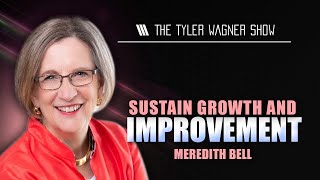
In this episode of The Authors Unite Show, host Tyler Wagner interviews leadership‑development expert Meredith Bell. Meredith recounts her journey from elementary‑school teacher to consultant and software founder, describing how she left education, learned sales and consulting through trial‑and‑error, and eventually partnered with Denny Coates and a third colleague to create a 30‑year‑old business. In 1993‑94 the team pivoted to develop a customizable 360‑degree feedback platform to fill a market gap. Throughout the conversation Meredith shares the principles that underpin her work: strong listening (listening to understand), giving constructive feedback using a "sandwich" structure, expressing specific appreciation, and fostering psychological safety. She explains how they maintain a long‑lasting partnership—testing the relationship, aligning values, managing ego, and communicating openly about major changes. Practical conflict‑resolution tactics are illustrated with examples of interrupting habits and how to support behavior change. The interview also covers how to ask effective questions, create a culture where people feel safe to give and receive feedback, and the impact of appreciation on motivation and performance. Meredith promotes her resources (growstrongleaders.com, free "Listen Like a Pro" ebook) and invites listeners to connect via social media.
Chapters
All right, everyone, welcome back to another episode of the Authors Unite show. Today we have Meredith Bell. She is an expert in workplace communication. Her books and software tools help people improve the way they interact with each other to get work done. So welcome to the show.
Thank you, Tyler Wagner. I'm excited about our conversation today.
Me too. Um, so I kind of, most of the time I like to start these interviews off from like the origin. So when, um, I guess let's start when you were maybe like middle school, high school area, did you think you would be here at all? Or what, what path did you think you'd be on?
Never, never. I grew up thinking and always wanting to be a teacher. And so I— that's what I became, an elementary school teacher. But what I realized after a few years of teaching in the classroom is I didn't care for the routine, the repetitive nature of the lessons year after year. So I got my master's and started working in a supervisory and managerial capacity inside school board offices and realized, well, I don't do politics and bureaucracy well either. So I ended up leaving with no business experience, no business book having been read, nothing. But I just had this belief because I loved— it goes back to loving people and loving how we interact with each other and wanting to help those interactions go better. So I just decided I was going to help at the time small businesses. I would do consulting and leadership development and team development around How do you play nicely together?
So, so this love for people, was that kind of, do you think that was like embedded in your DNA, like natural, or did it kind of happen as you grew as a person?
I guess, you know, I think it's always been there, Tyler Wagner Wagner. In fact, I went through an assessment recently and found out that that was a key part of who, of who I am. What I love to do is be helpful and serve other people. And I feel like Over the last several years, I've been honing and refining that so that I look at how I can bring value to everybody who interacts with me.
So a little bit more on the journey. So then I guess when you first started out, like, doing your own thing, how— what was that like? Like, was it kind of a roller coaster? Did you have some wins and fails? Um, obviously things are going well now, but in the beginning stages, what was that like?
Oh yeah, I mean, I didn't know what I was doing. It was— there was no internet back when I did this in the early to mid-'80s. It was all experimentation. And so I would make sales calls, you know, and meet with people and realize, uh, I didn't know the best ways to, you know, guide a conversation or even the right questions to ask. So all of that I had to learn over time, and that was So that was an interesting journey. But then what started happening is getting referrals and introductions to others because of the work I had done in one organization. So I quickly learned that is really the best way to build your business rather than cold calling, because you've got that element of trust and rapport before you even meet with the person you've been introduced to. So that was huge for me. And then in 1990, I met one of my two business partners, Denny Coates, and he and I started collaborating on some things and realized, gee, it's kind of nice to not be solopreneurs and put our businesses together. And at the time we did in '91, we brought in a third partner who managed all the other aspects of the business. And so the three of us have now worked together for 30 years. So that's been a journey in itself to, you know, work with the same folks, and we're really close. You know, we have this basis of trust, respect, and love that guides everything we do.
That is amazing. So I think that's one of the biggest things, uh, I think a lot of people when they are in corporate and they're wanting to potentially like move over to the freelance, uh, and then to the solopreneur is it can get a little lonely, like that's for sure. Um, so once you've teamed up, you brought the third person, Now with this, well, obviously I'm sure they'll listen to this, but any bumps in the road with partnerships, or rather, better question, like any advice you have to keep a partnership good? Because 30 years is incredible.
Yeah, you know, I think it helped that, um, the three of us all had strong communication skills. So of course we're three different people, we're going to have conflicts at times and disagreements on direction, on on different decisions, but the ability to be able to talk through them and really listen to each other and have that respect, I think, has been really important. So I think, in fact, what was funny is Denny and I got shared office space for a while. So sort of like we moved in together to make sure this was going to work before we said I do. So I think though the lesson is looking at what are the opportunities that we can kind of test test the relationship to see how might it work because it is tricky to have a business relationship. And I think another key thing is we've gotten our ego out of the way. And I think that sometimes can create problems for people when each one wants to be right and that fear of looking bad or losing face. That can get in and just kind of mess up things. So the key is to look for shared values. I think that is the foundation. It's like when you're looking for someone to marry. If your values aren't aligned, it doesn't matter how much fun you have together. Over time, there's going to be some issues that are difficult to resolve. So agreeing on basic things like honesty, fairness, telling the truth, integrity— do you do what you said you were we're going to do. All of those really count to being able to form a good business relationship. The other is if you decide that you need to change course, like in '94, we decided to become a software company, actually in '93, because we were looking for a tool that didn't exist. That was a 360 feedback tool for getting input that wasn't all the few that were out there at the time were not customizable. So we said, we're just going to create one ourselves. So to have that agreement that yes, that makes sense as a new direction for us. So you don't have somebody dragging their heels and you're trying to pull them along. So again, it's getting agreement before you make major changes for sure.
And I, I think like over-communicating too, this is from my experience helps because when you like don't communicate enough, you'll take action and then it can kind of explode later on. And then that's where conflict can happen. And, you know, that's why I totally agree with you in both aspects. I can tell you from experience, there was a girl I thought maybe we were gonna, you know, do the whole marriage thing, and then she moved in with me and 6 months later did not work out. And it's like, you know, you don't— you shouldn't move in until after you're married. And I'm like, well, If I did that in this case, it wouldn't be good. So I'm glad I did it before.
Yeah, you just have to look at what are the different ways we can find out about each other before we seal whatever agreement it is that we were considering moving forward with.
So you did mention the software. Can you tell us a little bit more about that?
Sure. One of the things that became popular in the early '90s is this idea of not just relying on a person's manager to do the annual review for them to find out how they're doing. So this idea of 360 feedback where someone gets input about their performance from their boss, from their peers and direct reports. So it's like a full circle, which is why it was called 360. And it's using software to create the survey, send out the questionnaires, pull them back in, and then provide a report that shows what are the person's strengths based on what others have experienced in working with them, and then what areas for improvement are identified. So it helps the person create a plan to develop because, you know, we all have blind spots. And so this kind of assessment is really helpful for someone not just to learn about the blind spots that are bothering people, but the blind spots where they don't realize how much someone appreciates what they do. Because oftentimes when we have a clear strength, like you and I are so good at connecting with people and, you know, networking, that we think, well, it's an easy thing, but it isn't automatic for most people. So we tend to minimize how valuable that is. And that can happen in the workplace too, where someone doesn't appreciate how much others value what they do. But also how much somebody's bothered by something that they're doing. So this gives them that ability to look at what is it that others are wanting and needing from me that they're not getting. And if I change that behavior, the whole experience in the workplace will be better for everybody.
100%. And you're so— it's taken me so long to realize that because like when people— and you said you listened to that interview with Carrie. Like when people ask me like how I grew my business, to me it is like, it's— I don't want to say it's easy, like it took a lot of hard work, but like what to do, I mean, like the steps, those are easy. Like the actual doing of it was a lot of time and energy, but, um, but I've come to realize as I've gotten older, like it's— it would be the same as if an engineer was like, oh, well you just do these equations. Well, to me that's like really hard. You know, and to sit by myself in a room without any human interaction for, you know, weeks on end, you know, that would be so foreign to me. So, so, and that's how it is for a lot of people with networking, whereas for me and you, literally I can do 20 phone calls in a day and I'm like pumped about it, like very easily, you know, like it's, I don't know, it's just, it's interesting how we are just different as people.
So, well, exactly. And I think recognizing what, what we bring to the table so that we're providing something that, you know, may be missing among the other folks. And that's another advantage of having a group of people get this kind of information because, you know, to me, this kind of assessment is really just a stepping stone. So it's one step to finding out, but then the other is communicating with everybody. You know, and saying, oh, I'm going to do more of this because you said this is important for you that I do this. And I'm going to stop doing these things. And I'm making a commitment to you, help me with that. Because it's really hard if we have a habit, let's say, of interrupting people. You know, a lot of folks are impatient, or they think they know what the person is going to say and they jump in. And we actually did this in our company, just to give you an example of how you can support each other when somebody's trying to make a change. Um, several, many years ago, Denny had the habit of interrupting Paula and me and thinking he knew what we were going to say and he'd finish our sentences. And we finally said, you know what, this isn't working for us. We need to come up with a way to support him because we want him to change, but we don't want to just catch him when he does it wrong. Right. So the other people who are involved can look for ways to be supportive to the individual that's trying to make a change. So we came up with two things. One is if we were in an in-person meeting and he started to jump in, we just put our hand up like a stop sign. That was a cue to him, I'm interrupting. But the other one is something we still do with each other today, because when we get— we're all three in different states, so we've been working remotely for over 10 years. And when we're on a call, and somebody jumps in, the other person simply says, "I wasn't done yet," or, "I wasn't finished." So it's just, you know, making the other person aware, "Oh, I was interrupting. Sorry, go ahead and finish." What can happen when people allow their egos to get in the way is if they get offended by somebody interrupting them, they don't think, "Oh, this person's so excited about what they want to say, they can't wait." And so they get offended and go, that's so disrespectful. And instead, if we just take a lighter approach, you know, because what can happen is, instead of saying, I wasn't done yet, you, if you say, well, I wasn't done yet, you see, that kind of puts a whole different tone into the whole conversation, and creates an awkwardness or tension that can be hard to dig out of. And so I think Just recognizing and giving people the benefit of the doubt. In most cases, you know, we definitely have toxic bosses who aren't open to change, but most people aren't intentionally trying to make life hard for others. And so giving them the benefit of the doubt and thinking about how can I be helpful to them as they're trying to improve in this area? What could I do along the way to give them feedback? To give any other ideas of things they could do that would be helpful.
So do you have any suggestions? And you kind of said it there, but I'm wondering if there's kind of like a guide to it in a sense, like of how to bring that up, because I think that's the hardest part for people. And that's where, like, passive aggressiveness— and this is in work and love relationships, all types. It's like, so that guy or person would keep interrupting you. And then it's bothering you, but you don't know how to address it. So you just keep going and then eventually you end up hating them. But in reality, they're just excited when you speak, right? So it's just this whole miscommunication. So I think the first way to solve it is just addressing it like you said, but do you have any tips?
Yes. Yes. In our book, Connect with Your Team, we have a whole chapter on giving constructive feedback. And the key with that is to bring to the conversation the idea that I want to be encouraging to this person. I don't want to set them straight. I don't want to lecture them. You know, it's not that. So a lot of it is the mindset and the attitude that you bring. And sometimes there's fear. If we were raised in a home where people didn't confront each other and you didn't bring up things that bother you, that's when you are more susceptible to that passive-aggressive. You just take it and take it, and then all of a sudden one day you explode and the person's going, what happened? So the way to think about it— and there is a structure to it, and we call it a sandwich approach— because you want to start with some type of positive or affirming of the other person and either their importance to you or their normally good contributions and then also end with a positive note. But in the middle is where you need to be specific. So let's just say we had somebody that we overheard interacting with a customer, and that person, the employee, was rude from our perspective. They were impatient. And so if we've observed that firsthand, then afterwards, you know, we can approach them and say, you know, Tyler, normally you are so, you know, compassionate and service-oriented when you interact with our customers. I noticed though, Mrs. Jones just left pretty upset, and it sounded like you were, you know, interrupting her and getting defensive when she pointed out her concern. So Tell me what was going on. So that's an important thing, is to ask questions and not assume we know why someone did something. Um, because, you know, maybe they've just found out a family member's dying, you know, or they had something happen, a fight with one of their kids. I mean, we don't know, and that's why it's good to get the context for what was going on with them. You know, he may have had a negative interaction with this particular customer. We don't know. So getting at that and then saying, you know, well, I'm concerned because that kind of interaction could cause her to never want to do business with us again, and that costs us money. So you talk about, you know, the specific behavior, how you felt about it, you know, I'm disappointed, I'm upset, and then you talk about the impact that it had because it's important for them to know that this didn't have a good outcome. And then look at what, what do you— and it's good to get them involved by saying, so what do you think you ought to do? You know, what do you think the next step ought to be? And they may come up with, well, I probably ought to call her and apologize. Yeah, I think that would be an excellent idea. It's always better if it comes from them. Instead of you saying, okay, what you're going to do right now is give her 15 minutes to get home, and then you call her. You know that no adult responds well to that kind of dictate. Yeah, having a more collaborative interaction is better, but then you're clear on what you want in the future. So, you know, in the future, if you find yourself getting impatient with someone, you know, take a breath, pause, and, and and get someone else to help you with that situation so it doesn't escalate again like it did today. So you want to then assure them you're there to support you, support them. So, you know, Tyler, here's the thing, here's what we're gonna do in the future, and I am here to be a support to you. So you let me know what you need from me, and you're committing to do these things, right? So you get their agreement on what they're committing to do. If it's someone who's been interrupting you, you know, you can cite the specific situation. Let's say they're doing it in a meeting. And this has happened to a lot of people, you know, somebody runs roughshod over others that are trying to talk, and you can sense the whole room of people getting frustrated. So it's— you got to muster up your courage and say, okay, I'm going to go in. Okay, Tyler, you've got so many great ideas, and I see in every meeting you have this great desire to participate. The thing is, I don't think you realize that your enthusiastic input prevents other people from being able to participate and get their ideas. So I feel like the team as a whole is kind of being robbed because we don't have input from everybody else. And when you interrupt and talk over them, they get frustrated. I can see it on their faces. I can see it in their body language when they just sit back and cross their arms. And so this has been a problem, and I've observed it in a number of meetings. So what do you think would be the best thing to do in the future? How can I support you in the middle of a meeting if you start doing this? Because it's not productive for us to have you do that. So what would support look like for you?
Got it. That's really good. And then they actually tell you what they want you to do to support them.
Exactly.
And then when you do it, they can't, like, they can't get mad at you because they're the ones that told you.
Yeah. You know, I think the key thing is, and that's right. And that's why it's always good. When in doubt, ask a question. That's a good rule of thumb. Because we often know, think we know what's best for someone or what someone else would like, but often it's what we would want.
Yeah.
I think another underlying principle is being respectful to the other person so they don't lose face. Because in the moment you can feel good if you turn to the person and say, "Look, we talked about this. You need to let these other people participate." Well, that's a real reprimand, and that's embarrassing. And anytime you— the other people may even inside their heads jump to that person's defense because they don't like the way that person's being talked to. And so you can actually undermine the whole effect on the team if you aren't aware of what you're saying and the impact your words could have, not just on that individual, but everybody else in the room.
Yeah, no, 100%. And I was going to— oh, so I think what it is too is it's like people like to avoid conflict, right? People don't like conflict. So what happens is that initial, like, you were— like we were just talking about there, it is a little bit like conflicting, right? Like, it's not like something you necessarily like want to do, even if you do it in the way that you said. It's still like, it's not like you're, you know, waking up in the morning and be like, I can't wait to tell Jim about how he interrupts me. So, but what happens when you don't address it, it just, it really can build into something crazy, so much bigger than it has to be.
Well, and you think about the airtime than that we're giving to thinking about how we're going to talk to this person, you know, and, and how much they're bothering us instead of just addressing it. And, you know, a lot of times just being honest with them and saying, you know, Tyler, I've got something I'd like to talk to you about, if you're open to it. I have to tell you, I've been struggling with this because I've been afraid of your reaction. And just being willing to be honest, because that kind of puts the person's guard down. You've been afraid of me. Well, what do you want to tell me that you've been afraid to tell me? And so I think being honest with people is huge. Just to acknowledge, I'm afraid, I'm afraid of your reaction because of how I've seen you respond to other people in the past when they've pointed things out.
I think that's another rule of thumb right there. Honesty. And then asking questions. Those two. So I think what would be cool, and obviously I know people should get your book, Connect with Your Team, but if we want to, there's 10 like main skills in there. So I wanted to kind of just go through them briefly. Obviously, you know, I'm not asking you to like tell us, go as in-depth as you just did.
Yeah.
But, um, so the first one is listen to understand. Um, can you tell us just a little bit more about that?
Sure. You know, Tyler Wagner Wagner, a lot of people think they're really good listeners, but they're not. And the reason is, it takes a lot of effort to really block out other things and tune in exclusively to this other person. Because today, especially, there's so many distractions, even on Zoom calls, you know, we're— if it's a group call, we're tempted to look at our phones or email or you know, check all kinds of things instead of being fully present. And so the listening part is not— it doesn't mean sitting passively and letting the other person do all the talking. Listening actually is active because you want to be checking along the way, am I getting this message correctly? Is this what I'm understanding them to say? So you pause and just say, hold on a second, let me just see if I'm tracking you. Is this what you're saying? And then You don't repeat verbatim like a parrot. You rephrase it in terms of your own understanding to make sure you got it. And then you say, do I have that right? Or is that, you know, is that what you meant? And then they can tell you, yeah, you got it, or no, that's not it. And then you can invite them to say something to help you get it more clearly. So that's a key thing is asking questions to make sure you understand what they're getting at and get more information. Because sometimes people think they've said everything, but there might be some key elements missing from you getting the full picture. And most people, you know, don't talk in a sequential state, they're bouncing around, and you have to kind of piece it together. And so some of those pieces can be randomly flying around, and we have to see if we can get them to help us put the message that they're trying to say. The other piece of listening has to do with empathy, and that is helping the other person know that you really get them. And you do this in a number of ways. You can ask them a question, so, "Are you frustrated that this hasn't gone the way you hoped it would?" Or you angry because of this change in plans. Or you could say it as a statement to kind of check it out. Sounds like you're pretty angry about the decision that was made and the fact that you didn't have any input in it. And then you— then they'll say, oh, I am so mad right now. And, and they can go on, but you've heard them and they know that you've paid attention and you've gotten them, you know. Tyler, to me, this is the most critical skill because it's the basis of all the others. And it's core to helping another human being feel valued. Because so few people do it well that when you do do it well, people notice.
Yeah, I think podcasting has helped me a lot with that. Because when you podcast, you listen a lot, right? And being very curious helps too. But I think I can't remember what age I was or if it was kind of an in and out thing. But a lot of people, I think they listen to respond. Right.
That's right.
Yeah. That's like when you're in your head and you're actually not really listening then because you're thinking about what am I going to say next as they're talking. And it's kind of hard to do both at the same time, at least effectively. Multitasking is a talent, but I don't know if that's— if it's really doable. But at some point in my life, I can't remember when it was, I feel like when you're younger, you naturally are just curious and you listen. But then at some point in school, like elementary, middle, I went through a phase where I was really listening to respond. Like I was always in my head thinking about what am I going to say? And then when you drop that, it comes back to you almost as if you're, I guess, a little kid again, where you just, like, I don't think about what I'm going to say to you when you're talking to me. It's just like, This is naturally what is occurring and coming out of my mouth now, basically, because I listened and this is my response. So I don't know.
I love the word curiosity and curious because that to me is just fundamental to being a good listener because you're genuinely curious to learn what's going on in this person's head. And you brought up a couple of really important points. Number one, Listening isn't waiting for your turn to talk. It's really noticing that this person has a need to discuss something that's important to them. And so when I see that, what we call a listening moment, I set aside what I'm doing if it's a good time and tune in, and I try to set aside thoughts too. So that I'm not— because this all happened with my husband. We've been married 39 years, and every now and then, if he's telling me something, especially if it's technical because he's a mechanical engineer, sometimes I'll blank out, and then he'll ask me a question, and then it's like, uh-oh, caught. So I have to say, I'm sorry, my mind was wandering just then. Go back over those last couple of things you said because I missed it. You know, just acknowledging that that happens to all of us instead of pretending you were listening and coming up with an answer that makes no sense.
Yeah, no, and that's, and it's such like a small example that you would think was almost like minuscule, but it's not because it's that avoiding conflict again. Like it always comes up. So instead of like addressing, like, 'cause that happens to me all the time when people talk about math, numbers, like my dad's an accountant, right? Like, thank God, because he manages all my stuff. But when he starts talking to me about like all these numbers, I can't help myself. Like I want to hear it. I want to take it in, but my mind is just in another place because that, that stuff just isn't interesting to me. When it comes to a person and like psychology, philosophy, that's where I'm like, I'm all about that.
Like, I know, see, you and I are similar that way. But we have to recognize not everybody is like us either. Totally. But you know, here's one of the things that I think might be helpful for your listeners related to conflict, because that it's so true when we feel a difference and in conflict, really in terms of the definition is it's a difference in what you want and what I want. So we want to do different things. It's not just a difference of opinion, it's the actions we want to take. So you want to do this, I want to do that. We got a conflict here. If we can reframe that as a difference, you know, we just have a difference here, and approach it from a more neutral stance. Oh, and recognize, you know, this is natural. It's never going to happen that everybody agrees on everything unless one of them is just giving in all the time. But if you're both independent thinking people, you're going to have times when you just don't agree on the path forward. And so the ability to talk through that and to be creative in and be open-minded about exploring other ways that both of your needs could be met. And another key aspect of conflict is, you know, people will say, I want this. And what we don't always take time to do is dig below that and ask what's the need they have that's driving that want. You know, what is it that's going on inside them that's causing them to say so adamantly, "This is the way we're going to do things," when you say, "Mm, I don't think so." So being willing to set aside your two stated wants and explore together other possibilities, doing some brainstorming, just getting creative outside the box and say, well, you know, what else could we do that would feel good to you and to me that could be totally different from these two? Because compromise is when you both give a little. Yeah. Okay. But collaboration is when you both say, you know, there, there could be other kinds of solutions here that we haven't considered. And so opening our minds to playing with those so we don't get our heels dug in and say it's my way or the highway, then that puts people off and it does not create an environment for creative thinking, brainstorming, and collaboration.
So, um, and I knew me and you, we could go for 6 hours, so I don't think we'll get through all 10, but I just want to ask you Is there a favorite skill out of the 10 that you want to discuss?
Yes. And you'll, you'll love this one. It's expressing appreciation or giving positive feedback. And the reason it's a favorite is because people are starved for this. It's not done enough. So one reason is in the workplace, A manager might think, well, heck, that's what I'm paying them for. I don't need to be telling them how good they are every other minute. That's not what I'm really referring to. It's expressing appreciation for them, even as they're about their value as a human being. And one of my favorite people in this is Dan Sullivan of Strategic Coach. Oh yeah, I heard a podcast with him and Joe Polish. It's probably been 7 or 8 years ago, but it always stuck with me. And it's beautiful because what Dan said is the word appreciate means to increase in value. And so when we invest in the stock market or real estate, we expect those to appreciate, but we don't often think of that word as it applies to people. And so he made a commitment that when he was going to have a meeting with someone, he would take a few minutes before the meeting to think about all the things about that person that he genuinely appreciated. And he might write them down, you could also just think about them. But the idea was, when that person came in the room, he had this elevated sense about their value. Now, he didn't say, "Oh, I appreciate all these things about you." He never talked about it. It was the way he treated them, the way he focused on them and interacted with them, so that after their conversation with him, they increased their value in their own mind about themselves, just because of the way they were treated. Imagine if each one of us consciously made the choice to do that with everyone we interact with, instead of, oh gosh, I got to talk to this person again, and I'm dreading that because she's done this or he's done that. Instead, if we can think of what are things about this person that I actually value and appreciate, and we left them in a more elevated state than when they started talking to us, the whole level of energy and feelings among people would be raised immeasurably. And so expressing appreciation, even in the smallest ways, Tyler Wagner Wagner, but the key is to be specific. You know, it isn't just, oh yeah, you're great, or you're wonderful. I really like the way you led that meeting. You kept everybody on track. You ended on time. It was such a pleasure to sit in on a meeting where the facilitator really ran it like a pro. You see, you're focusing on specifics. Anybody you encounter, you can find ways to express appreciation, even at the checkout line in the grocery store. If the cashier has been really efficient, I will look her in the eye or him in the eye and say, I appreciate how efficient and quick you were. I love getting in and out of here. Fast. Hardly anybody does that. And so it's, it's not looking at what can I get back from this person, it's looking at how can I add value to their life.
Yeah. And actually, in turn, it does also add value to your life as well, which is just kind of the way the universe works in general. But, um, because yeah, so that if you get the same person, then next time like if they remember, or if you do it enough, they'll probably remember you and they'll know that you like it that way, you know. So it makes them feel better, they're higher valued, and then also what you want is getting done.
Well, and when you think about it in a workplace, it's, it's really immensely practical for a manager to recognize this and apply it. Because if you are genuinely appreciating people when they do things well, you're reinforcing the behavior you want, and you're building up their, their sense of self-esteem, their sense of worth, and they're going to be more motivated to perform at the highest levels for you because they feel valued. And, and that's huge for getting the best from people. You know, we talk about high levels of performance and productivity. Well, that comes because people want to do that work in that way. And so we have to recognize needs that human beings have. And if they don't get those needs met, they may not stick around very long.
No, I love this. So I want to, I want to leave the floor to you if there's anything else you want you want to share, please do. Um, and then also let people know, like, websites, social media is where they can stay in contact.
Sure. Well, I think the, um, the key thing I mentioned earlier is worth repeating here, and that is when you're in doubt, ask a question. And so if someone comes to you, you know, some people feel like, oh, you know, I can't get any work done because everybody keeps coming to me asking me questions. But if we turn it around to help people think for themselves, a fundamental question would be, what do you think? You know, if somebody says, how, how, what should I do here? I don't know what to do. Well, what do you think? What options do you see are available to you? So you're not doing the thinking for them because you create dependence on you if people feel like they need to come to you in order to get the answers. Instead of themselves. So if you're finding yourself complaining about people coming to you too much, then it's time to look inward and say, what am I doing that's encouraging people to come to me? Because I don't make it safe for them to make decisions on their own or feel like it's okay to have a mistake and not get fired for it. You know, we have to think about what have we created in the way of culture safety, freedom of action, freedom of thinking for people. And here's a final thing that is so important. If you work with any, anyone, you know, whether it's a vendor, clients, employees, if you go to them and you have the courage to ask this one question: what's one thing I could do differently that would make your experience working with me more enjoyable for you? So you're not asking them to criticize, right? You're asking them, what's one thing I could do differently? So I'm not saying I'm defective, I'm just wanting to get input because we all have these blind spots and everybody around us knows what they are. But if we can invite them to tell us, then that again makes it safe and receiving it graciously. So we say thank you, and I didn't realize that, and I commit to change, and help me by pointing it out when I do that because I don't mean to. You know, giving people permission to be supportive of us is an important aspect of being effective at work also.
No, that is incredible. And, uh, websites.
Yes. Our main website is growstrongleaders.com and we actually have a free ebook there that is the chapter of listening from our book called Listen Like a Pro. And you'll see it growstrongleaders.com/free to get that. And we've got a place for you to contact me and set up a call if there's anything you'd like to, um, talk about to learn more about our books or our products. And I'm on LinkedIn, Facebook, and Twitter.
Perfect. Thank you again so much for coming on.
It's a pleasure, Tyler. Thanks for having me.
More from Tyler


Catherine Nikkel : THE STORY EVERYONE HAS BUT HASN'T TOLD : The Tyler Wagner Show #1120



Scott Ritzheimer: Bring Predictable Success to your Organization | The Tyler Wagner Show #1115


Fred Moskowitz: A GUIDE TO GETTING STARTED WITH IN MORTGAGE NOTES | The Tyler Wagner Show #1113

Mark Podolsky: From Land Investor to Full Time Success How I Made $90,000 Cash in Real Estate


Mark Podolsky: How to achieve a 300% return on investment my foolproof strategy

Mark Podolsky: How to make passive income selling raw land the irresistible pricing strategy