Mike "C-Roc" Ciorrocco: Rocket Fuel | The Authors Unite Show #989 #RocketFuel
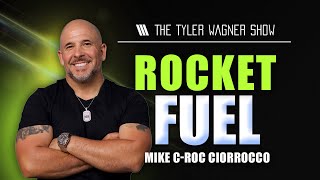
In this episode of the Authors Unite Show, host Tyler Wagner interviews Mike "C‑Roc" Ciorrocco, a former in‑home sales professional turned mortgage‑real‑estate entrepreneur and author of Rocket Fuel: Convert Setbacks, Become Unstoppable. The conversation begins with Ciorrocco’s turbulent childhood—exposure to addiction, abuse, and family suicide—which forged his core mission: "All people are unstoppable living the life of their dreams." He recounts a period of heavy partying and drug use from ages 18‑25, followed by a turning point after meeting his wife, leading to a decisive shift toward purpose and responsibility. Ciorrocco describes nine years in in‑home sales, then a bold move to mortgage and real‑estate in 2005, where he built a company with 30+ employees alongside his wife and two close friends, emphasizing relentless accountability and high standards. He outlines his mindset framework: taking 100 % responsibility, defining an ideal life, and converting setbacks into "rocket fuel" for growth. Daily rituals include gratitude affirmations, intense workouts, meticulous daily assessment, and health habits such as CBD oil, vitamins, and a low‑sugar "healthy candy" line. He cites influential books—The 10X Rule, Beyond Positive Thinking, Dianetics—and mentors like Grant Cardone. Philosophically, he affirms a Christian belief in unlimited spiritual potential and the ethical duty to honor the creator by maximizing impact. Ciorrocco also reveals new ventures: a Blueprinted product that pairs digital courses with step‑by‑step project blueprints, and a partnership with Sela Labs to co‑found tech startups, emphasizing execution over ideas. The interview closes with his social media handles and a call to connect.
Chapters
Welcome back to another episode of the Authors Unite show. Today we have Mike C-Rock Siraca with us. So welcome to the show, man.
What's up, Tyler Wagner? Hey, man, I like to start every interview that I go on with gratitude, man, because I'm just so thankful for the opportunity to share and just want to let you know that and let your audience know, thank you for being here and listening to what I have to say.
Of course, man. So, that actually just jazzed me up. So, we'll start us off. Tell us a little bit more about you and then, I'll tell you why that jazzed me up so much.
Sure. No. So, I'm just an animal, man. I mean, I went through a lot of tough times as a kid with family and, you know, being around a bunch of broken people. Drug addicts, alcohol, suicides. I mean, you know, broken home, like all that kind of stuff. And at the end of the day, I have a mission that all people are unstoppable to live in the life of their dreams. And I've proven that and I want to basically, I've bottled the formula and I want to share that with as many people as possible on this planet. And so that's, I do a lot of things, but that's my mission. So that'll give you a little bit of background and everything is filtered through that mission.
Got it. Okay. So yeah, I want to start from the beginning and I'll just close that loop real quick where I'm very big on gratitude. Um, so I'm actually coming out with an app that, uh, is about helping people, uh, be more grateful in their life. So just stay tuned for that. When you said it, I was like, yeah, this is my guy.
That's awesome. I'm in tech too, by the way. So we got to talk offline. We can talk a little bit about on the show too, but yeah.
Um, so let's start off not all the way from the beginning, but when you were younger, did you think like you would be doing anything of the sort that you're currently doing, or did you have a way different like futuristic image in mind?
Yeah, you know, I think when I was about 3 or 4 years old, my mom used to tell me that I was inspiring. I just remember her saying that and she said, you're going to be a leader, you inspire me so much. And I think that subconsciously she was preparing me for what I was going to be dealing with that, you know, as a child, because she knew that, you know, my dad and her split up. She knew that, you know, her family had issues and I think she just kind of subconsciously prepared me for that and you know, being around a lot of people that were broken and all that, I just always was trying to help people lead. I was never accepting of people's condition. I always wanted to improve people's condition even if they didn't see it themselves. And so, uh, I didn't know exactly what I'd be doing, but at a young age, I knew I'd be trying to inspire and lead people.
Okay, got it. And then you had talked about like alcohol, drug use, and stuff. So is that like in your family? Did you personally go through that? Or like, tell us a little bit more about I guess. Yeah, yeah, yeah, yeah.
So, uh, you know, my uncles, um, my grandmother committed suicide. She was hooked to antidepressants and anxiety medication. Um, you know, I went through a lot of abuse from my stepmother when I was living in my dad's house. Um, like, you know, my uncles, a bunch of them alcoholics. I mean, it's just, just being around and seeing a lot of people, divorces, you know, nothing seemed to be like thriving. You know? And I was just like, man, that's not, I'm not okay with that. Like there's gotta be a better way. You know, I'm not accepting that that's the way life needs to be. And so I got this little thing inside of me. Like I'm like a stubborn guy. Like I know that what I want and the way I want to live and I just go for it, man. And I don't let anything stop me or tell me otherwise. And so that's kind of what came from growing up like that. I could have went in a different direction and all that. But I did for a period of time. From 18, I didn't drink in high school, didn't do drugs or anything.
Yeah.
18, I get to college. I was playing football and I saw parties. I saw girls. I saw just fun, what appeared fun. And, you know, I lost my intention and my focus. And for about 5, 6, 7 years, I don't know, 18 to 25, 7 years, man, I was always like, just where's the next party? You know? And that led to drug use. And yeah, I didn't like myself. And I look back at that, it was some very dark times, especially at the end. But then I had met my wife and I recommitted myself to a purpose and intention and cleared everything up. I didn't ever have to go to treatment or anything like that, but, uh, probably could have, you know. I don't know where I would end up if I didn't meet my wife, honestly.
Yeah, you know, it's interesting. I, um, to me it's interesting. I'll just speak to alcohol. So alcohol is something that when I was younger I had somewhat of an issue with, I'd say, but I've now very slowly kind of like tapered off of it, like almost completely, like every once in a while I have a drink, but I pretty much got rid of it, is I've never met somebody that drinks that like doesn't not want to stop drinking, you know? Like even if they do it in a way of socially and they can control it, they would rather just not do it at all because they're not like really living at their highest level by doing it, right? So, I don't know. I just find that interesting that literally, like I was just at an event a couple weeks ago and they were all socially drinking, seemed to have control, but they were all saying like, dude, we're trying to just completely stop. Like, I don't wanna do this anymore, the hangover. And it's so interesting to me that like a majority of people, that's, you know, the weekend, that's what it is.
Yeah. For me, like, well, so, I have my mission. I filter everything through my mission which is all people are unstoppable living the life of their dreams. But, you know, I was thinking about that, you know, and I go, we don't drink at home at all. Like I have alcohol in the house, but we don't drink. But when I go out to dinner, I like to have one drink, maybe two. But that's it. I never have hangovers anymore. I don't like that feeling. I don't like the feeling of going past two drinks, that feeling that it's just not something I like anymore. And I'm trying to go towards, I have such a big mission and I'm so serious. Like passionate and serious about it that anything that's going to stop me from going there, I just eliminate it in my life. So, but, but yeah, I don't like the feeling, and the feeling is a big part of it. So, um, I, I sometimes think like I went 2 and a half weeks just recently without any drinking at all, which has only probably saved me 6 drinks in the whole period of time. But then I realized like, you know what, if I want to go out to dinner with my wife and have a bottle of wine and split a bottle of wine with her, I'm not going to, you know, reject myself from that because I'm not getting hungover and it's not stopping me. But it's also given me a little bit of relaxed feeling so I can, you know, hang out a little bit. And that's good for my mission. That's how I justified it. But whether it's right or wrong, but at the end of the day, it's, it's, uh, it's to each his own. But really what it comes down to, does it serve your purpose in life or not?
Whatever.
Yeah.
So what was the, I guess, like first success? We all define success differently, but what was that first thing where you started to feel momentum, right? So, 18 to 25, you know, fun times but obviously, maybe the mission wasn't there. So then, what got you to kind of stop and then focus more? Like, what was that?
So, I would say like, so when I got out of there, I was doing in-home sales for 9 years. And during that time, I was still like just not happy. I could tell that I wasn't on my, on an alignment with my purpose. Like I didn't know what my purpose was then, but I just knew I wasn't in alignment with it. But I was cutting my teeth in sales, learning how to build rapport, handle objections, close, do all those kinds of things. And that was a good period of time and good thing to go through. I don't know if I needed 9 years of it, but I felt trapped and I felt like I didn't know, I didn't have enough knowledge to exit that. I felt like that was like, I knew I had more in me, but I didn't know what else was out there. And I didn't know, like if I stopped doing that, could I make that money that I was making? Going somewhere else. And what, you know, it's just so many unknowns. And I was, I felt trapped because of it. And at some point I just, you know, decided that to get into real estate in the mortgage world, I'm like, screw it. I'm just going to burn the ships. And once I did that, burn the ships, everything changed. And from there it was just up, up, up, up, up, up and away. Every year got better and better and better. So that was back in 2005. And so what's that now? Shoot. 5, 15, I mean 16 years now. Everything's just been up every year after that. And I'm just going to continue that journey. But really over the last 2 years, I found the purpose, which is that I told you, it's all people are unstoppable living life for their dreams. And once I realized that, what happened was I saw my graphs going up, right? My life, everything in my life is going up no matter what happened to me, no matter what setbacks, no matter what screw-ups I've made, no matter what people did to me. And I said, you know what? This is crazy. What, why am I still having success. And I found that I was taking everything that would stop normal people or slow them down. I was sticking it in my tank instead of my trunk where it weighed me down, and I was converting it into rocket fuel for my future to become unstoppable. And that's that. Once I became aware of that, dude, like awareness, it's powerful.
Yeah.
Because it gives you something to really like, you know, put to push the pedal down on. And that's what happened to me. And then for the last 2 years, dude, the graph, instead of just going gradually up, it's going straight up.
Got it. Okay. So the first was like mortgage and real estate, right? And you still do that?
Yes. My wife's a realtor now. I gave her the license, let her do that part. I do the mortgage. I have 30+ employees in the division that I run with 3 best friends. They do the day-to-day operations and I work on it, on the business, maybe an hour to 2 a day. And then I focus on the other stuff that we're attacking.
So with, I feel like it's just like a saying out there, like, be careful with like friends doing business, friends and family, right? Or something like that. You've probably heard it. So what, how has things gone with working with your wife and with your two best friends? Any, any lows or has it all been good?
Like, well, yeah, I mean, uh, it's not easy, but the reason that most people say that is because they're too much of like little bitches to, to hold people accountable. Like, you got to hold people accountable. And the reason people don't hold people accountable So I'm not afraid because I hold myself to such a high standard. I hold myself accountable that like I feel okay calling people out on their bullshit because if they come back to me, I want them to hold me accountable. If I'm slipping up, I want it. Bring it because I know I hold myself to a standard. And if I'm slipping, let me know so I can pick it up. If I have blind spots, let me know so I could pick it up. Most people don't do that. They don't take care of their own agenda. They don't hold themselves accountable. They don't have high standards. They're not assessing their situation constantly. And that's why they say it's hard. When it comes to me, I told my partners, guys, you're going to have a hard time outworking me, but I challenge you to outwork me because we're not going to have a situation where I'm coming to you guys and saying, you're not doing this and this and that. And you have to come to me and say, hey, you will, you're not doing it because it's not going to happen. I'm committing right now that I'm going to outwork you guys. I'm going to make sure that I'm elevating and staying ahead of you guys in knowledge, leadership ability, all of that. But, and then I'm going to hold you guys accountable. And I say to my wife too, and now my wife, she's hardheaded as I am stubborn. And she doesn't always listen to me or say she's listening to me when I tell her something or like, hey, this is how you should do this. Sometimes she'll push back or act like she knows. And then I see her implement it later on, but I'm not afraid to just because I'm going to, might hurt somebody's feelings or, you know, they might get offended. I don't worry about that because at the end of the day, my mission is All people are unstoppable living the life of their dreams, and if they're not held accountable or shown blind spots, they're not going to be unstoppable.
100%. So if somebody, if somebody were to come to you, right, and they're struggling, I guess, how did you— because obviously you did it for yourself, but then I'm curious how to help somebody else, because it seems the biggest thing is a mindset shift, right? Like, that's the first part, is a lot of people it is like the daily struggle and that's what's in their head rather like what you're saying is not putting it in your trunk. So, I guess, how would you walk somebody through that?
Well, first thing is taking 100% responsibility for where you are in life. Like where you are right now is your fault. Everything you said in the past, did or didn't do, your attitude, where you, your environment was, like all that is your fault. Now, not everybody will take that responsibility and admit to that, but until you do, you're stuck.
Yeah.
To the degree you give up responsibility, you give up control. And so that's the first step is making people really understand that they got to be responsible for where they are. And the good news is, is that their future is going to be dictated on what they do from here on out. Then from there, they have to figure out what life they want to live. Like, where, what's your ideal life? Like, in a perfect world, if you could have anything you wanted, what would it be? And don't limit yourself. Write it down, get very clear on it, visualize it. And then set your core purpose or mission off of that. And then filter everything that you do in life, your thoughts, your words, your actions, everything goes through that to make sure you're going towards that instead of away from it. I talk about rocket fuel a lot, Tyler, but I don't talk about rocket science. I like to make things simple. It's either going building or destroying, living or dying, going towards my dreams or away from it. And once you do that, life becomes very simple.
Yeah, I think it's interesting. I think sometimes, I can't remember the name of that basketball movie, but they talk about how, there's a quote like, the thing we're most afraid of is our highest potential. So I think a lot of times people, they will, they have like these handicaps that they create for themselves, whether it be mental, whether it be substance abuse, it could be anything, but they have this one thing that they can say, well, I didn't get here because of this.
Yeah.
And I think that is maybe sometimes what people are most afraid of because if they take full responsibility, then they're actually going to see what they are made of.
Yeah, yeah, yeah. No, here's the thing. So, it's all about responsibility because if you don't do that, then what happens is you're playing the blame game and you're always looking at like you're looking for excuses of why you're not accomplishing something and then you grab onto it and that serves you. That serves your reasoning for not being successful instead of saying, I'm going to be successful. And then here are the reasons. 100%. That's why I start with that all the time. Because if you don't start with that, then you're never going to get anywhere. You're going to keep self-sabotaging. You're going to keep like just getting by, just surviving, letting life live you, living the life that you're living right now instead of really taking ownership, creating your future. I mean, that's That's the kind of thing I want to do, and that's what I want to teach people to do.
Yeah, and I, I think it ties in with this. I was having a conversation with one of my business partners earlier, and we were talking about kind of just the different mindset of an entrepreneur, right? So when, uh, I guess I'll just say average person— I don't really mean it like that, but average person— if they see a problem or an obstacle, then they'll be like, oh, I can't accomplish this because this is in my way. Whereas if you can just switch this one thing Like every challenge or obstacle that I see, I'm like, oh wow, there's opportunity here. You know, like, like people are struggling with this. If I find the solution, there's a business here. And that's like, I think similar to you, I don't see anything as a direct obstacle as if I can't get through it. I'm just like, actually, please tell me all the issues because then I'll know what needs to be solved. And that's where all the opportunity lies.
Yeah. Well, and don't apologize for saying average people because that's what it is, man. It is what it is. Like, you know, if you beat around the bush, you're not going to get to the point to help people.
Yeah.
You know, I just tell it. And if people don't like it, they're just showing their weaknesses. You know? So I would never apologize for that. When I said things that would stop a normal human being or slow a normal human being down, that's the kind of stuff that I take and convert into rocket fuel. Dude, I'm not normal. And I'll tell people that. I'm not ashamed of that. I'm a superhero. I think you're a superhero. Like Everybody has superhero abilities. They just got to accept it and acknowledge and be aware of it and then use it. So don't be afraid to say that. I think that, uh, beating around the bush doesn't serve anybody.
I agree. You know what's all right? So I love this because I've actually had, uh, uh, somebody else on the podcast and he like called me out on that too because we were talking about business and, um, and I, to me, a lot of business is actually very easy. Like, because it's almost like you just create something of value and then you just get it in front of the people that you're delivering value to. Like, I don't understand why it's so complex for so many people, but I kind of, I beat around the bush and he's like, dude, just own it. Like, growing businesses is easy for you. You know, so I don't know. Either way, I appreciate the call out.
Yeah, no, I mean, I just talk like it is, man.
I know, dude, it's still hard for me because I want to— I don't know why I feel like this. It's like I coddle them there. I'm like, I, uh, but it's not the right way. Like, you need to be right, right? Yeah.
I mean, it's just like enabling, you know, people, you know, it's just not— that doesn't serve it and it doesn't— definitely doesn't serve my mission.
Yeah, for sure, for sure. So tell me, as, uh, I'm all into rituals and stuff, and as I was saying, for like gratitude, for his instance, I always do in the morning, I'll do 3 statements of gratitude. And then at night, I don't always get there, but I try to. So what are your rituals or like morning routines or what's a typical day, week look like?
Well, first of all, when I wake up, I say thank you every day. And I wiggle my fingers and toes and pay attention to the fact that I have hands and fingers and toes and feet and legs and arms. You know, there's days that People like, they'll go by, and I've done it in the past where I didn't even pay attention to my arms and hands. Like, wow, dude, like, there's people that don't have these, you know? They either were not born with them or they had an accident or something, and I have mine. What the heck do I ever have to complain about? Yeah, you know, I can get up and walk, I can run, I'm very athletic, I'm, you know, strong. Like, thank you. Because when you do that, it eliminates everything to complain about. And when you get in the habit of complaining, it's like a muscle you build up and it gets worse and worse and worse. And so that doesn't serve the mission. And the other thing is, what does it do to other people? Like a lot of people don't realize what it does to other people when you're not right with yourself. So that, I start with gratitude. I work out like a maniac. I go into the gym and try to destroy the gym. I don't go there just to show up or just to get a sweat. Like I want to punish it. And then from there, I mean, I'm just, I mean, I have several businesses I run. I write my goals down. I read. Yeah. You know, I'm always training too. I'm a big Cardone guy, Grant Cardone guy. And, you know, I love the content that he's put out. So my team and I, we train on that all the time. I look at his stuff, I pay attention to it, and I develop my content off of some of that and mixed in with my mission. And yeah, man, I mean, at the end of the day is assessment time. Every single day you should assess your day. How is my thinking going? How are my words? How was my action? How are my actions? Did I accomplish and hit my targets? How far off was I? Did I go over them? How did— what time did I spend with my kids and my wife? You know, like elevation comes from assessment. If you're not assessing, you're not going to elevate. So you got to pay attention so that the next day, instead of the end of the week or the month or never doing it at all, you can correct course. Or if you got some momentum going, take it to the next level. So those are some things I really focus on. Throughout my day besides like the, you know, the work that I do and hitting targets and making connections with people.
So, so remove the workout. How different do you think you are if without working out?
Oh man, I could tell you a night and day difference in how I feel. Like I do take off days, but like, you know, try to do like 2 off days a week because I think rest is important. But even on those days, like I can notice a difference, man.
I mean, oh yeah.
By the way, I don't always feel like going in there, just so you know. I'm so trained now that like I'll go most days at the same time, but one day a week, Wednesdays, I get up an hour earlier and I go an hour earlier just to keep myself off balance. And that day, when I first started doing that, the morning, the night before, I'd be like, man, you don't have to do that. Why do you got to get up an hour early? That's stupid. And that this conversation was going on in my head and I had to keep beating it away. Beating it away. Like, no, you're not doing that. The morning would come, I'm like, oh man, I don't feel like getting up. It feels so good to just lay here. Nope, do it anyway. Do it anyway. You committed to something, do it anyway. Now, I did that over and over again. Now, it's like I don't even, like the conversation doesn't even go on anymore. That dude died. So you just got to, when you need to do something, you know it's the right thing, you got to hear in your head, do it anyway. When you do it anyway for a period of time long enough, you develop this muscle. And you hear this stuff all the time. Just when you do it and you see it, It's like freaking magic. It's awesome. And now, like I said, I, my one day a week, I get up early. I absolutely love it. I look forward to it now rather than hating it. So when you hate something or you don't, you're scared of something, if you lean into it long enough, you start to like it. It's weird.
100%. Yeah. I, I'm a cardio guy, so I can relate 100%. And I do like at least 6 miles every morning. And I notice like, I do not think I'd be nearly as successful without it. Like A lot of, even if there's something like a problem I'm trying to solve, if I just go on my, it's a walk/run, it's not, I don't sprint the whole thing, but like the problems answer themselves.
Yeah.
Like during that time.
Yeah.
Yeah.
I love it.
I don't know. And if I do, like you said, if I ever miss a day, which is very rare, like I'm 7 days, but also this is more cardio. It's not like weightlifting. I just feel off, man, that day I feel very off.
Well, you know, like I believe in rest just as much, especially lifting, but cardio, Cardio too, like, you know, instead of running, do just a walk day or something, because I think that your body definitely needs to recover at some point and that recovery will lead to higher gains in certain areas because that rest helps. Um, you know, and, and I've been there before where I went 7 days and my body would be hurting, everything would, joints would hurt here, there. And, you know, but I feel like I'm older than you, aren't I?
So I'm 29. I don't know.
Yeah. I'm 44. So yeah, you don't need to rest.
I have noticed a difference though. That was, That was one of the reasons with the alcohol. Like, I was like, holy crap, I'm getting hangovers. I gotta stop this. I never got that younger. And then the aches and stuff a little bit, but I, I don't know, not too much yet. Hopefully that delays as long as possible.
Yeah, man. I mean, yeah, just your mind. If your mind stays young though, your body does follow your mind. So that's good.
So let me ask you, so one of my, one of the things that I invest in heavily, I have a doctor down here that basically every 2 months I get my blood work. And then he just like soups me up with like everything to optimize whatever I might not be optimized on with that blood work. Do you do anything like that health-wise, or like how focused are you on health?
Yeah, no, I actually don't do that. I probably should, um, I just don't. Um, I just eat right, I drink a lot of water, and I exercise. And I mean, that seems to work pretty good, uh, as far as physical goes.
Probably.
By the way, I take vitamins. I mean, I take CBD oil every day. I'm a partner in a CBD company, online company. And so, I believe in CBD oil. It's fantastic. And vitamins like crazy. I invested into a healthy candy company that has candy for 15 different health conditions. You know, I'm big on that kind of stuff. So, I don't do the blood work though.
Healthy candy. I'm interested in that.
Yeah, I'll get you hooked up. It's great, man. It's like, it's a crazy thing is it's like Jolly Ranchers or Lifesavers. And I love that stuff, but I don't want a bunch of sugar. So each one's got 1 gram of sugar. It's healthy. And it's got like all these natural herbs and like fruits and vegetables, all this other stuff. It's just a little lozenge. It's like craziest thing, but I'm into that now. So I love it.
I'm sold.
Yeah, yeah, I'll get you hooked up.
That's freaking awesome, man. Honest, healthy candy, that's all it should be called. And I think it's interesting. That's freaking amazing. So, what was, so I'll start with me and then I'm curious, was there a book that just like absolutely changed the game for you? For me, it was The 4-Hour Workweek. I literally read it and then like 2, 3 weeks later, I dropped out of college and started everything. Thing over. So, that's how profound that book was for me. Do you have like a book? Yeah.
I dropped out of college too, dude. I had a 4.0, dropped out with 13 classes left. But I didn't need it. Like, at first, I thought I was gonna be Tom Cruise in Cocktail. I watched that movie when it was out and thought I was gonna be in the restaurant business, open up a place, and I had no idea what the hell I was doing. But anyway, I would say there's a few, man. Really, The 10X Rule, obviously, since I'm a Cardone guy, fantastic. The other one is, Beyond Positive Thinking by Dr. Robert Anthony. Fantastic book. And this book right back here, as you see, Rocket Fuel: Convert Setbacks, Become Unstoppable. That's going to be a game changer for people if they get a hold of it. And so, those are the ones I would say, you know, and also, I'm into Dianetics was a really powerful book too. Understanding how the mind works.
Yeah. So, I'm curious to go down the rabbit hole a little bit because one thing you said, it's I do the same thing. Dude, it's so weird. First, I'll just say this. I literally watched that movie Cocktail as well, and I had like the same bit. I was like, I'm just gonna open up a bar on the beach.
Yeah, yeah.
So, just kind of funny. Yeah.
I still think sometimes to myself like, dude, that might be easier than what I'm doing right now. So, because I put myself in some really uncomfortable situations and really press the limits and think of some crazy shit to do, and then before you know it, I'm like, what the frick am I doing? Like, what? I could just be doing that and it might be like great, cause you don't need a whole lot of money in it, but then it goes away.
Yeah, no, that's similar to me, which is actually, so it's similar to this too. So you said like some mornings you'll wake up and you'll just like look at your fingers and just real, like just realize that you're grateful to even have them. So what is, what are your like beliefs? It's a huge question. So I'm just, Like, on like what even this whole thing is. Like, what do you think this is? Like, what's going on? Meaning like Earth. Like, because what I do sometimes, not to go down like an acid trip or anything here, but, um, is like I look at it some mornings just like you, and I'm like, I noticed I hadn't even recognized because I get so busy in things. But then I'll look at it, I'm just like, this is kind of funny. Like, this whole thing is funny. So what do you think of it? And when I say whole thing, I mean like Earth, the universe.
Yeah, dude, look, man, here's the thing. So we think our problems are big and we're like, some days you get stressed out and like, dude, I get on an airplane and I take off and as I get higher and higher and higher, the people that I saw were like this big, they shrink until you can't even see them anymore. And that really puts things in perspective and you're like, dude, my problems ain't that big. Like, are you kidding me? I'm just— and if that's the case, I don't look at it the other way where like, I'm so insignificant. Oh no, I'm not gonna. No, dude. I look at it as like, dude, I'm gonna live this thing up, man. If I'm only a little tiny speck, I'm gonna freaking like, let me see how big of an impact this little speck can make. That's the way I think about it. So I believe that we're put on this planet. I believe in God created us with unlimited potential with our spirit, our minds, physically. Look, dude, I'm 5'6 3/4. I probably can't dunk a basketball on 10-foot rim. Even if I tried and tried and tried, I mean, I'm not going to do it. So physically, there are probably some limitations. However, mind, spirit, dude, we're unlimited and we can accomplish whatever we believe we can accomplish. So that's what I think. And I think that we're here to make an impact and build things, create things. And that's my belief of it. And while we're here, and then when we're done, we go off into heaven or wherever, whatever you want to call it. And Look, and I'm a Christian by the way. So, and I don't ever apologize for my beliefs. I do study some other things, but I have no idea. Like I don't know when we leave here, if our spirit just stays somewhere else or if it comes back into, I don't know. So, you know, I've read things and it's that, I don't know the answer to that. I just know that I'm just going to make a fricking big, big, big impact. That's all I know, brother.
[Speaker:JEFF_LERNER] Yeah. No, I'm with you. It's like I feel if you want to be, and, and, you know, who knows what's next, but I feel like if you on your deathbed, if you want to be content with it, you should really live it fully out. Like, I, I don't, um, I guess, you know, it's, it's, it's impo— I'm curious on your thoughts on this. Like, I, I suppose it is impossible to actually live your full potential because you can always do more, right? But you can get as close as possible.
Yeah, so, so yeah, I mean, we're created with all this. So to me, it's a slap in our Creator's face to, uh, not go after it and continue to go after and find out what you can accomplish. What can— what are you capable of? Like, I, I think like you're climbing a mountain, right? And there's clouds at a certain level and you can't see how high the mountain is, and you just keep going because you got to get through the clouds to see. And it's not about greed, by the way, like accomplishing things and gathering money. It's not about greed. It's about One, it's about seeing how far you can go for the hell of it. And two, it's to honor the creator that put you here with this potential and give you stuff to use and you don't use it. It's a, to me, that's a problem ethically. And number three, it's, if you ever deal with disappointment or rejection, it's only because you don't have enough of something. So to me, abundance is important for that reason and to be able to help people. So those are the things I look at with it.
Yeah, I agree. I love— I don't know if he still uses it, but for a while Cardone was, uh, his like one of his taglines was like, success is your duty. Yeah, that really resonated with me because I just think, yeah, the whole idea of people thinking it's like greedy to like become really successful is just really, uh, I can't even, uh, really get there mentally. Like I don't understand because the more— and I guess you don't have to be this way, like you could get really successful and keep it all to yourself. But I just feel like that's not really the natural cycle. Like if you think about even billionaires, right? They're still working because people that don't have it yet, they have this idea that like once you get there, then you'll just retire, be on the beach, and that's it. But what you find is like, dude, the mind keeps going and like there's no way, like at least for, I'll never retire. I can never.
Nah, I mean, I go to the, dude, I'm right now thinking about like, I love Miami by the way, but I'm thinking about a resort somewhere and I'm I want to go to a resort and just chill, just to go to this resort, but not to just, I can't sit on the beach. I can't sit by the pool for long. Like I don't do it now. So I don't see myself doing it when I have money. I just, I want to create, I want to build things. I want to impact things.
Right? Like a week, even a week is kind of long. Like a weekend for me, I could do, but I'd still get a little bored, honestly.
A day, like I can't for a day. Like I like having fun, talking to people, interacting with people, impacting people. And I could do that at those places. But like, if we go there and it's just my wife and I, and even if it's just another couple, and you go there and you're just sitting on the beach drinking and like looking at the ocean, and I'm like, dude, all right, how long? Let's do something.
Like, I don't know, man.
That's just not my— yeah, that's not even a week. That's one day. Like, I just— what are we doing next? Yeah, like, can't you just relax? No, why do I want to relax? I'll relax when I'm dead, bro. I don't think relax now.
Yeah, no, I agree. So what is, it seems to me, and then I apologize if I missed in the beginning, but you, you have a very large mission and then everything kind of filters through that with your decision-making. So again, what is the overarching mission?
Yeah, all people are unstoppable to live in the life of their dreams. And so that's what it's about. So I want to just make people aware of that. Like, too many people aren't aware of that. They're unstoppable, man, until they quit, die, that they're unstoppable. You just keep going. And, you know, like, what happens a lot of times is like people like let life live them instead of living life and creating their life. And they just wake up and they go about their— through the motions. Dude, what kind of life is that? Are you freaking kidding me? Like, stop. Just stop that. Like, that's not even— and by the way, I say all people. I don't say White people. I don't say guys, fellas. I don't say Americans. I say all people. All people. So what happens is somebody might say to me, well, all people aren't unstoppable. Well, yeah, yeah, they're not, but all— that's my mission, to make all people unstoppable. So you have to aim at something, right? So, you know, that's what I look at. And, you know, I don't know, man. I'm just like Most people are just living to survive and get by and instead of thriving, and all they got to do is just switch that one little thing in their mind.
Yeah, no, it's it. I think, uh, you know who comes to mind actually from what we're talking about right now is, um, Jim Carrey. He talks, he's like, I wish everybody could have all the fortune that they want so they could realize that like that's not it. And that's what I think because that's survival. Brain, it's like people working and then they have enough where they can live in, in a decent place, watch Netflix, and they can eat, and then that's their— they're like, okay, I'm good. But it's like, dude, once you switch— and I, I don't know how to switch it on for people. Like, for me, The 4-Hour Workweek really kind of was it. Like, it just— his stories, the way that book was formulated, made me realize that I didn't have to work in corporate and I could go after this. And, and I think what helped was also the worst-case scenario. He talks about that in the book because our imagination runs and we get so fearful about things that aren't real. So it was like dropping out of school, I'm sure at the time was a very big decision for you. I could be wrong. For me, it felt huge. But then I read that book and I was like, oh, my worst-case scenario is I end up back at my parents' which is like a pretty nice crib and like home-cooked meals. I was like, fuck it, I'll just drop it.
Dude, I even go beyond that. Like I look back and say, look, I came into this world butt naked, didn't know how to talk, could barely see probably, you know, no clothes, no nothing, and I made it. Now if I have to go back to being butt naked, right, I know how to talk now, I have all the knowledge and everything and experience and wisdom. My mindset, attitude, like, dude, I can do anything I want to even if I go back to that. That's the worst. Here's the thing, dude. The thing is, is people are worried about what other people think and being embarrassed. Look, if you didn't worry about that and you had to go through bankruptcy or foreclosure and lose your house, but you didn't worry about what people think of you, dude, it would be like, I tried. Next. What's next? How can I, what do we got to do next to get the next house or whatever we got to do? Like you wouldn't care, but everybody's so worried about what people think. Now, I don't worry about what people think of me. At the end of the day, I know in here and here that I go hard and I'm going to go as I burn the ships. And if it doesn't work, I'm just going to come back again. Right. And so, but I am concerned with how people experience me. It's a difference, you know? And like when I go on a podcast, like I want you to be off this podcast when you're done and be like, damn dude, that was one of the best I've ever had. If not the best. That dude lit me up. I feel like running through a wall. Like he's my superhero. Like that's the kind of, like that's the way I approach things. So my intention is that to bring that to a show. Now I'll go on shows where people are just starting a podcast. I've been the first guest on podcasts before. People's first guest. They never had a show before. They don't even know what the hell they're doing. I still go there to light them up and light that show up like they'd never seen before because also I want it to be a situation where like down the road, I got to keep pushing my mission even if I don't feel like doing it some days because I want to be like, huh, Tyler's like that C-Rock dude that you see who he is now. Like I had him on the show before he was that, you know, that's the kind of things that go through my head. I'm just being transparent with you. I don't know how that comes off.
No, no, no. It comes off right.
I don't, again, I don't care. I want you to experience, I want you to experience a powerful being, dude.
Yeah, no, I think the bankruptcy metaphor is perfect because I really like that. It really sat with me. I'm like, I don't know, I've never been close to bankruptcy or I've never personally really thought about it, but if I were to be about to go bankrupt, I just realized that like my biggest worries would actually be what others think of me. The bankruptcy in itself just like isolated, that's all it is. Who the hell cares?
Right, exactly. It's all because you're worried about what people think.
Yeah, yeah.
And it's like once you don't give a shit about that anymore, you let this thing go and it's like, wow, dude, I can go for the, I can go for the world now. Like I can, I can do whatever I want. It's a freeing feeling but also powerful. And, you know, that's what I do. Now, look, let me, I don't know if I shared the story with you or not, but I can't remember. But yeah, hey, my dad, when I was young, And I decided to leave my dad's house after going through abuse, psychological, mental abuse, threats. I used to live with my, or sleep with my baseball bat at night from 8, some 9 years old. I decided to leave and move in with my mom after that. And when my dad found out and got those court papers delivered to him, he confirmed that with me. And I just didn't talk about it. I didn't want to discuss it. I said, I made my mind up. And I'm 11 years old at this time. My dad was my hero. He actually took a wad of $100. He used to carry this wad with him. right? $100 bills, rubber band wrapped around it. He was a mason. He laid brick and block. And he took that wad of $100 bills out that I always looked up to him for. And he peeled one off and crumpled it up and threw it at me and said, you're going to need this when you're living on the streets with your mother one day. And like, cause he was confronted by me wanting to leave. Right? And I guess he was in denial about what was going on. But at the end of the day, that spark right there is what lit me up all these years. And so now I'm like, dude, Anytime something gets tough or if I want to take it to the next level, I just think back about that. Like, what are you made of? Look what you, look what you've been through. And you can't let him be right. So keep pushing. Yeah. You're never going to need that $100 bill. And so you got to look back in life for little moments. That was a big moment, but little moments, big moments that you can use to fuel off of. And then once you do that, you're like, you just, you become unstoppable. There's so many tricks, by the way, in that book Rocket Fuel that I use. If you implement, it's a Rocket Fuel law. It's like John Maxwell's LOLs.
Yeah, no, I love that, man. It's not as extreme, but I feel like for me it was the college dropout thing, right? Like, it's like I do in my subconscious and it comes up every once in a while, but I'm like, you're not ever gonna fail because there's no way that you're gonna look back at your like high school friends that were like, dude, you're nuts for dropping out and like them being correct. There's no way that's happening.
I'm in that same boat. That's another thing I use. Yeah, same exact thing, man. I had, I, you know, I went through a phase though. I was like, dude, what did I do? Why should I go back? Matter of fact, just thinking about this now, I forgot. I went back and tried to take some classes like a little bit at a time to get it. And when I, when I did that, if you're not committed, I went back, I didn't even go to class. I stopped going to class because I had a plan B. I was making $60,000 at 20, what the hell was I, 20, 21? I was making $60,000, $70,000, no bills. I thought I had made it. So I wasn't committed. I had this plan B. So I would go, I signed up, I wasted money on the class and didn't even finish the class. Got it, got it. I think I failed one and got a D in the other. I took two classes. I just thought about that as you're saying that. And so, yeah, dude, I mean, I'm with you. I use that. I use, there's, dude, I've lost so much money. I've had money stolen from me and I use all that for fuel. I have so much fuel that I like Man.
Yeah, you use it for fuel. That's the mindset.
Rocket fuel. Yeah.
Because I think that, that's just so huge. Like, there's things like my first business partnership when I was like 20 years, like fresh out of dropping out of school, I got, you know, I got screwed over in a sense. And, and I, for a little while, I really let it beat me down. And now it's just like so much fuel. Like, so it really is a mindset. And a lot of people let it like take them down instead of using it as rocket fuel, like you're saying.
Yeah. And let me add one more thing here. So I got into something recently over the last 6 months. I got a tech product coming out called Blueprinted. And the reason I'm bringing this up, a couple reasons. Let me tell you about this product that's getting ready to come out. First of all, Blueprinted is B-L-O-O-printed instead of U-E, and it's a product instead of having digital video courses. Like if you're going to go build a house, and somebody said, hey, here's a digital video course. Go build this house based on watching this digital video course. Most people aren't going to be able to retain the information. They may not even finish the course. Even if they finish the course, they're going to be like, okay, now what? What's the first step? What kind of material do I use? Like what measurements do I use? So I saw a big problem with digital video courses. To me, they're ineffective. People that are good at marketing make a lot of money without concern about the student's success.
That's a problem.
Ethically, that's a problem to me. So we saw that and we're like, okay, 20% or less people complete the courses. The people that do don't know where to go with the next step. Let's figure out a system where we can use a software, create a marketplace where people can go build blueprints to their success that they've had, step-by-step algorithmic project management-based blueprints, sell them on a marketplace and create successful people that win and they can make money. So Blueprint was formed. And 60 Days of MVPs Launching. And I'm so fired up to get this out because everybody that has digital courses needs to have a blueprint to go along with it to really have impact. And if they don't use the blueprints with their digital courses, they really don't care about their students' success, period.
Yeah. No, I love that.
That's coming out. And then I partnered up with a guy named Jared Yellen who's got Sela Labs. And we're basically finding non-tech entrepreneurs that have tech ideas Bringing them to us, we ideate with them, and then we go and co-found companies with them if it's a legit idea. Because ideas aren't valuable. People have an idea and they're like, dude, I'm not telling anybody about this idea. Somebody might steal it. It's not the idea that's valuable. Ideas go to the grave most of the time. The thing that's valuable is the idea with the person that has the idea and the execution. And those three things together is what's valuable. And that's what we do. We work with people and we co-found. Tech companies, even if they don't have any money, we help them raise money, fund money, uh, crowdfund, and with angel investors to open and launch tech companies to solve inefficiencies. And I'm fired up. Like, that's— this is my big thing that like we're really pushing the pedal down with right now and growing a big, big, big portfolio of tech companies to help people impact the world.
Dude, that's awesome. Okay, so we definitely have to talk about the grateful thing then, but Just to wrap this up, tell us a little bit more, like your main website, like where people stay connected with your socials.
Yeah, you could— I got websites, but at the end of the day, if you just go on Instagram and Mikey C-Rock, or LinkedIn, Mike Sirocco, Mike C-Rock, Mikey C-Rock on Instagram, that's the best way. DM me, message me, I answer all my stuff. And that's where you can stay up to date with me because I'm in shit. I put probably 5 posts No, probably 5 stories and 3 posts a day. Most people don't have enough content for that, but I have plenty.
Well, thank you again for coming on the show.
I appreciate you, Tyler Wagner.
More from Tyler


Catherine Nikkel : THE STORY EVERYONE HAS BUT HASN'T TOLD : The Tyler Wagner Show #1120



Scott Ritzheimer: Bring Predictable Success to your Organization | The Tyler Wagner Show #1115


Fred Moskowitz: A GUIDE TO GETTING STARTED WITH IN MORTGAGE NOTES | The Tyler Wagner Show #1113

Mark Podolsky: From Land Investor to Full Time Success How I Made $90,000 Cash in Real Estate


Mark Podolsky: How to achieve a 300% return on investment my foolproof strategy

Mark Podolsky: How to make passive income selling raw land the irresistible pricing strategy