Mike Rhodes: Google Ads, Robots, & Artificial Intelligence | The Authors Unite Show #983
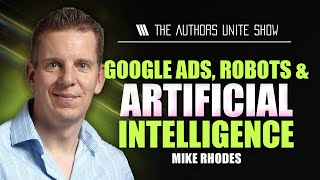
In this episode of The Authors Unite Show, host Tyler Wagner interviews Australian digital‑marketing veteran Mike Rhodes. Rhodes introduces himself as the founder of a 15‑year‑old digital agency that specializes in Google Ads, Facebook Ads and other performance‑marketing services for clients worldwide. He breaks down his "Google Ads pyramid"—bidding (robots), targeting (human‑machine hybrid), and messaging (human‑crafted copy)—and explains how data drives each layer. Rhodes walks through the different Google ad formats (search, shopping, display) and how the platform has evolved from simple rule‑based systems to a machine‑learning‑driven ecosystem, citing the 2011 introduction of ML and the role of pioneers like Andrew Ng. He recounts his unconventional career path from helicopter flight‑operations to entrepreneurship, the influence of the E‑Myth and Cashflow Quadrant books, and his transition into Google Ads after a chance encounter with Perry Marshall in 2004. The conversation then pivots to broader AI topics: the nature of machine consciousness, the ethics of treating conversational agents, the future of voice‑assistant commerce, robot taxation, job displacement, and the societal impact of pervasive AI. Rhodes shares his experience teaching AI basics to 11‑year‑olds during lockdown and reflects on the human‑machine relationship. The interview concludes with practical resources—his free Google Ads Fundamentals course (gafcourse.com) and his agency WebSavvy (websavvy.com.au)—and a call for listeners to reach out for advice or services.
Chapters
All right, everyone, welcome back to another episode of the Authors Unite show. Today we got Mike Rhodes. So welcome to the show, man.
Thanks for having me, man. It's great to be here. Thanks for having me on.
Of course, grateful to have you here. If you can just start us off with a little introduction, who you are and what you do.
Okay. I'm here in Melbourne, Australia. I've been running a digital agency here for 15, 16 years. So deep into the Google Ads side of things. We now do Facebook Ads and a bunch of other things for clients. Clients are all over the world, mostly Australia and the US.
Awesome. Okay. So I'm going to— my first question to you is selfish, okay? Because I just hired a team for Google Ads. So tell me, I know you have The Ultimate Guide to Google Ads, and I checked it out and it looks like it's a pretty, pretty long book potentially. Um, so if you were to kind of— and I know actually over 130,000 copies sold, so because this is the Authors Unite show, let me first congratulate you on that. That's incredible. That's, that's a lot of copies. Um, so I guess How would you, I don't know the right words, dumb it down, but summarize it? Like if somebody wanted it to be successful with Google Ads, what would you say?
Well, yeah, one, it is a long book because there is a lot of nuance to Google Ads. It is very easy to get started, which is how Google make maybe so much money if you're a cynic, but it's very hard to master. So there are lots of little gotchas in there I won't say it's designed to make Google a lot of money, but there's a lot of ways you can get trapped where it looks like, oh, that looks like a sensible thing to do, we'll just do that. But why isn't it doing what I thought it was going to do? Or why is it showing ads in all these different places? So there's a lot of little nuance to it. So with that said, the way I typically describe it is picture a pyramid with 3 levels. Your bottom level is the Bidding, targeting, and messaging, because what we're ultimately trying to do is show the right ad to the right person at the right time and do so profitably. And there's 3 main levers that we have to do that inside of a Google Ads account. Bidding, the reason I draw it as this pyramid is the robots are coming up from the bottom. So that's the fundamental stuff, that's the first bit that robots are at this point basically better than humans at doing. It's basically a gigantic math problem. Robots are pretty good at that. When I say robots, software, computers, machine learning, kind of all the same thing. Then our middle layer is targeting. Who are we going to show ads to? So right now, Google is incredibly powerful at that. There's two main ways that we do that, either based on keywords, so what people are typing into Google. That's mainly going to result in a search or a shopping ad. Let me come back to ads. Basically keywords or audiences, audiences of people that have behaved in similar ways, and that might be behaved in similar ways on your site, people that have added a product to a cart but not bought yet. There's a whole group of people that have done that in the past few days. Hey Google, go show an ad to those people, or here's my email list of 50,000 people, go show an ad to these people. You know who they are, you know where they are, follow them around and show them this ad. So we've got bidding and targeting. Targeting, kind of 50/50 at this point between the humans and the machines. The machines are pretty good at it, but a human can add little tweaks and nuance that make that better. The last little bit, the top of our pyramid is messaging. What ad do you actually want to show? And this is where humans, for now at least, have the edge. Persuasive copy, testing different offers, thinking about the ad that someone needs to see if they're at that part of their journey, and then obviously which page of the website do we take them to, what offer do we show them. So bidding, computers have pretty much won that one. Targeting, 50/50. Messaging, a little bit more on the human side. Those 3 things are the main things you want to worry about, and then of course the whole thing is wrapped in data. What data do we want to collect? How do we know it's working? What is our measure of success? What data do we feed back to the machine so it does a better job of doing all of those things? That's good.
Okay, got it. So it really comes down to like, well, I guess for the listeners, is there any, is there any like budget that you'd say minimum you want to start with? Because it seems to me then it's kind of like testing, right? So you'd start out with what you think is best And then based on some data over the next couple of weeks of that spend, then you would look at it and then change accordingly, I suppose.
Exactly. We are buying data, or data, and the data we collect is what helps us optimize. So it's time or money, maybe both. If you spend more per day, you're going to get more data and you can optimize faster. If you spend a little bit per day, less risk, but it's going to take you longer to optimize. So how much should you spend? There are so many variables in that. It depends on so many things. You can get an idea because there's also 4 main parts to Google Ads. I think when we say Google Ads, a lot of people will hear those little text ads at the top of the page on Google, but there are also shopping ads, those little square images with the price and description underneath. If you're a retailer, I would urge you to try running Google Shopping ads. A lot of retailers I meet are only running Facebook ads or possibly only running Amazon ads, but there are so many people searching Google every day for the products that you sell.
Oh, are those the ones, just to make sure I'm understanding, so say if, 'cause I think I looked up like StairMaster 'cause I'm thinking of buying a StairMaster soon. And then the top, it actually was like little boxes up top that came up and those were ads actually.
They're all ads.
Oh, okay, got it, got it.
Sometimes you see those little pictures down the right-hand side, but yeah, those little square images, they've generally got the price, maybe a title or a little bit of a description underneath it and the business name. So those are shopping ads. Super profitable. At least half of our clients are e-commerce these days. We used to be predominantly lead gen, now it's kind of half, half. Those make a lot of money. For advertisers and therefore for Google. So Google love them. So Google are showing those ads in more and more places, including in your Gmail account or on YouTube. So you might watch a video and see some of those little product ads, some of those little shopping ads next to the video you're watching or underneath the video if you're on a mobile device. So Google love those. And they love them because consumers love them. Because when you click that, so you search for Stairmaster, If you click one of those, you've seen the product, you've seen the price that that particular retailer has it for, so you've got that much more context before you click, and so they're more likely to convert. So they're good for advertisers, they're good for users, they know what they're getting before they click, compared to a text ad that, "Well, I think I'm going in the right place, but I'm not quite sure." For sure. They're all powered by keywords, so that's what you're going to see when you go to google.com and you do a search. They're the two types of ads you're going to see there. But there's this whole other half of network, of Google, called the Display Network. So this is some Google properties like those ones I've mentioned, YouTube, Gmail, Google Maps, where Google have all this inventory that they would love to make some money from. A billion people a month logging into YouTube, they want to make some money from those little videos that pop up before the video that you're trying to watch and those really annoying mid-roll videos that show. Occasionally down the right-hand side of YouTube, some of those are ads as well. But Google's view on this is an ad, a good ad, is information. Larry and Sergey never wanted to get into the ad business. They had to be convinced that an ad could be useful information. Remember, their mission is all about the world's information and making it useful. Well, an ad done right can be useful information. If you see ads for things that you are interested in that you haven't quite got around to buying yet, that can be useful. There's a lot of ads that are really annoying and that really is just a targeting problem. So as you're wandering around the web, so this display network contains over 2 million websites and over a million apps at this point. So basically they've all done a deal with Google to say, well, BuzzFeed, we've got loads of people, coming to our website all the time, we'd like to make a little bit of money from that. So Google, you can have this corner of our website here and this bit down here. We'll put some code there and then you figure out in that moment when somebody arrives on my website, you figure out what's the best ad to show to that person based on all the stuff you know about them, which is quite a lot. And then they'll think about everything that that person's been doing recently, what they've been searching for, which websites they've been going to, based on all of that, figure out which ad to show you in that moment, and then split the revenue with the owner of that website. So massive sites like CNN and Oprah, Livestrong, all the way down to tiny little blogs that you and I have never heard of, but somebody somewhere has said, we get some traffic, we'd like to make some money, Google, put some ads on our site. And yes, there's a fair bit of fraud there, and yes, there are a lot of sites that are designed just to show ads so that they can make revenue. But that's a whole different rabbit hole that we could wander down. But yeah, 2 million sites, and that's where you're going to see predominantly banner ads, but also the remarketing ads. So, you know, you've just been looking at the Play-Doh princess castle— I speak from possibly recent experience— but you haven't bought it yet. And then as you wander around and you check in the sports scores for the next couple of days, you see the picture of the Play-Doh princess castle because that website knows you were very interested in that product, but you haven't bought it yet. So we're going to wander around, follow you around and show you ads and try and nudge you into buying.
Got it. That makes sense. So normally it was just a timing thing because I had just hired a team. So I went right to that. But I do want to learn more about you and how you got into this. That was just selfish. It's funny for everybody listening. They're like, hey, we don't know much about this guy. But So I, um, how— I guess normally when I start off an interview, I, I ask, like, because I'm just curious, like, how did you actually— like, what were you doing before this? What led you to this?
I could, I could, yeah, I could set it back bit by bit, or we could start at the beginning. It's entirely up to you.
Let's start at the beginning.
So when I was sick, okay. I saw this thing on TV, this guy like leaning out of a helicopter. They were shooting tranquilizer darts or something, I later found out. At that time I just saw this guy whipping around the mountains in a helicopter and I went, that, I want to do that. I did actually fly a plane before I drove a car. My mum sent me off to do this, this week flying course when I was 16. Thanks, Mum.
That's cool.
I don't think I was ever like super, super serious. It wasn't like I mean, yes, I built models of planes like most kids do. But then I ended up in Hawaii when I was a uni student. I ended up in Hawaii for a summer. I'm watching all these helicopters fly around. I'm thinking, yeah, why not? Why not now? Why not finally, you know, realize that dream that I had since I was a kid? So I got the Yellow Pages, that's how old I am, and I called every helicopter company in Honolulu. I got myself an interview the next day. With one of them and I talked myself into a job. This was early '90s and computers were starting to become a thing. I kind of knew a bit about computers because my dad worked for Xerox and I said like, I will help you computerize your office, computerize your operations, improve your business, and you don't need to pay me. Huh? No, no, just teach me how to fly and we'll swap my time for flying time. And they said yes. So I learned to fly, belting down the canyons of Kauai and along past the volcanoes on Maui. And I learned to fly helicopters. I ended up going back to the UK, that's where I was born, and finishing uni. And then I ended up working for the most prestigious helicopter company in Europe. So we had clients like, I don't know, the Queen and this guy and, oh, I don't know, like Bill Gates. And Michael Schumacher, um, all these silly boy bands from that time, that era. That'll really date me. But it was fabulous. And I wasn't a pilot at that point. I was in flight operations, so I was arranging all of the flights. But I would talk to the pilots down in the ready room and chatting to them. What I discovered was that every single one of them couldn't wait to retire. I'm like, how sad is this? I mean, they've been in this industry for 15, 20, 25 years. They were terribly poorly paid, really, for the risks they were taking and what they were responsible for. And they couldn't wait to retire. They referred to themselves as drivers. They were basically posh taxi drivers. And I thought, I don't want to do this for the rest of my life. I want aviation to be a hobby. I want to be the guy sitting in the back of the helicopter like him, drinking champagne, and getting flown around. That looks way more fun. So I decided not to spend the rest of my life in aviation and kind of, I always knew at the back of my mind that I would have my own business. I had never had any like strong, like this is what it's going to be. I guess I was always a bit entrepreneurial, but I didn't know for sure. And then I left the UK about that time, went to New Zealand for 3 weeks, stayed for 3 years, like you do. On my way to Australia, and I ended up starting my first business there. That was a success. I built that up, sold it, and moved to Sydney within 18 months of starting that business. And it was all down to one book, or two books: The E-Myth by Michael Gerber and The Cashflow Quadrant by Robert Kiyosaki. The Cashflow Quadrant was the why, and E-Myth was the how, how to systemize things. I landed in Sydney and bumped into this E-Myth consultant. I was like, There are consultants, there are people that can help you do this. I just read the book. I ended up writing to Gerber and there is, I will get there eventually. I promise you.
Oh no, no, I'm all in, man. I love this stuff. So you're good. I'm in.
Well, um, so I wrote to Gerber and this was a month after 9/11 and he called me back and I was freaking out like, oh my God, I've got Michael Gerber's PA on the phone. And apparently Michael wants to talk to me. He said, well, 4 times a year we invite people to California to come train with us. And become E-Myth consultants. I went, that sounds awesome, when is it? He says, the next one's on Tuesday. This was Friday. So I dropped everything, which wasn't much to drop at that point because I thought I was semi-retired. I was wrong. And I flew to California a month after 9/11, very empty plane. If you remember that time, like, you know, American flags everywhere. It was I'd been to the States a few times before that, but that was a different experience. And trained with Gerber and his team and became an E-Myth consultant. And I would rock up, you know, fresh-faced. I've built one business and sold one business. Woo-hoo! And I'd walk into these businesses going, I'm going to help you systemize your business. And they'd all go, mate, I just want more customers. I'm like, yeah, yeah, yeah, we've got that. That's module 5 of the 7 modules. Ding! You know, we're going to do this. And they were like, well, I just want Module 5. I'm like, no, no, no, see, it's Gerber, it's a system. We have to do all 7 modules. Okay, well, when do we get to Module 5? Is that like day 5, week 5? Oh, usually month 10. Mate, get out. And I sucked. I absolutely sucked being an eMyth consultant because everybody wanted more customers and I was supposed to teach them mindset and systemizing and Getting the right team. And I realize now, being older, how smart Gerber was to do it that way. Because if you double the leads in most businesses, a lot's going to break. And so this was all about getting them ready for that and changing the mindset and building the foundation of the business. But back then, I didn't know that. I was just like, yeah, we can't just jump to Module 5, sorry. So I would get kicked out of all these offices. Not long after I sucked at that, I saw this guy, Perry Marshall, who's now my co-author on the book, giving this presentation about Google Ads. It was brand spanking new back then. This is middle of 2004, Perry's first time in Australia. Here he was talking about this tool, this platform. Well, hang on a minute, you only show ads to people that are searching for the stuff that you sell? And you only pay if they're interested enough to click on that little ad and come to your website. Oh my God, all these people I'd been talking to, they were doing letterbox drops and radio ads and Yellow Pages ads. This was— wow, this sounds amazing. Now, I certainly wasn't smart enough back then to go, when these guys float, buy loads of their shares and just sit on that for the next 15 years. I mean, that omnipotent, but I wasn't. But I did come back to my mastermind and I was telling everybody that would listen about this thing. One of my mates said, I don't want you to consult me, and he gave me half of his business to come in and do Google Ads, and we sold 100 grand's worth of stuff in 3.5 weeks. And I went, this stuff really works, okay. And I would just try and teach everybody that wanted to know, or a lot of people that didn't want to know, about this thing. I've always loved the business of business. I've always loved just trying to grow businesses, and here was this magical tool that did just that. But for every 10 people that I spoke to, 9 would say, mate, I don't care how it bloody works, just do it for me. And so I'd start, you know, swapping it for cases of beer and a bit of cash here and there, and eventually I thought, oh, okay, we could probably build a business out of this. And I started the agency, and that's what we've been doing ever since. And now we've got a team of geniuses down the end of the room there doing this stuff for clients all over the world, and we grow businesses. It's what I've always loved doing. It's what I did way back in the day with that helicopter business of like, let's systemize and grow and put repeatable processes in place to help you get more customers, more clients, more patients, whatever it is. That's what Google Ads does. It's the best analogy I've ever heard, is not mine. It's from this guy, Dean Jackson, for me, one of the best marketers on the planet. And he compares your marketing to being a vending machine rather than a slot machine. For most businesses, their marketing is a slot machine. Put your money in, pull the handle, and hope for the best. With a vending machine, you know exactly what you're going to get. You put your dollar in, you press the button, and the diet Coke falls out, or the $5 note in this case falls out, or the $10 note, or the $20 note. Depends how you've set up the machine. That is a Google Ads account done well. You put a dollar in, you press the button, and $10 falls out. So how often do you want to play that game?
All day. Yeah, all day. That's awesome. So yeah, we actually, we had Perry on the show a couple months ago. So, yeah, no Perry. And what was it? Oh, this is what I wanted to ask. So, I'm a Gary Vaynerchuk fan and I've heard him talk about Google Ads with wine. Like, I'm assuming maybe similar timing when it, because I think he said when it first came out, it was just like the pricing was just so ridiculous. In a good way, I mean. And so, from, you said 2004? Is that when the platform really first came out?
2002.
2002.
Okay. But when it first started, they thought they were selling to big companies, you know, Toyotas and Cokes and Nikes. It was all through ad reps. So AdWords as we know it started really around 2003. So yeah, we were, I must have been one of the first people in Australia to actually use it and go sell $100,000 worth of stuff in 3 weeks.
That's sick.
Yeah, it was all 5-cent clicks. Back then. It was hard to mess it up. And it was simpler. I've compared it being an occasional pilot, I've compared it back then to like flying a small plane, which is like a car that also goes up and down. If you can drive, you can fly a Cessna. It's dead easy. These days, it's like a 747 cockpit. There's buttons and bells and whistles everywhere. And if you get one of those things wrong, you're going to hurt a lot of people. It's so more complicated now. I'm very glad I learned it when I did, because learning that next little bit, that next bit of nuance, is so much easier when you've sort of started simple and it's slowly over time become more complicated. Diving in and learning it from scratch today would be a pretty daunting process, I'd imagine.
Yeah, that's what I was going to ask you, is like the main differences that you've seen from the start to now. But I guess it's just like Everything, pretty much.
Basically everything. I mean, I guess the huge difference would be machine learning. When Google started, there was no machine learning involved. They didn't get into machine learning until about 2011, as I understand it. The smartest bloke you've never met introduced machine learning to Google, this guy Andrew Ng, who since built a machine learning department at Google, went on to Baidu, then founded Coursera, this little company you might have heard of that's about to float. And a whole bunch of other AI companies. Absolute genius. But he had to fight back in the day to get machine learning introduced at Google. They had to do these little projects and prove how good it was. Do you remember Google Translate? You'd write something in English, you translate it to Italian, you get the Italian, you paste that back in and translate it back into English. And it was absolute gibberish most of the time. The step change with that thing was machine learning. And that's when they all went, oh, this is kind of, yeah, okay, kind of useful. Google itself, like the page of search results that you see when you search Google, that used to be run by a whole bunch of rules. If this, then that. So, you know, if I'm searching for the Saints, well, I'm going to see a very different result if I'm in Italy compared to if I'm in New Orleans. Am I searching for the Saints? Right, so there's a rule based on location. If they're in New Orleans, they're probably looking for the football team, so show these results. If they're somewhere else in the world, they're probably looking for people with halos.
Ah, okay, that makes sense.
There were up to 4 million of these rules, all hand-coded by the geeks in Google, and they were realizing that they had a problem. These rules were starting to interfere with each other We all started using these little things and we were searching in different ways. They knew that voice was going to become a thing. But 15% of the search terms they see every day, they've never seen before. How do you write a rule for a search term that no one's ever used before? If lots of people are searching for the same, then you can write a rule for that. But then somebody pops up and asks this question of Google that's never been asked before. How do you write a rule for that? And that's where they realized that machine learning was the future to be able to serve those results and make them really, really good in the time available. I mean, what is it now, like 50,000 searches a second or something on Google?
Yeah.
A chunk of those it's never seen before, and we're all using it in weird, wonderful ways. That's the genius of the system is that it's sort of getting better and better all the time. And the proof's in the pudding. I mean, like, look at the market share of Bing, or bless them, Yahoo. You know, it's basically gone now. Google is basically 95% of search in the world, at least outside of China. They've done a very good job of that.
Yeah, it is. Just to even think about that is so crazy to me. So like, Google starts out at— so you said there's 4 million rules written by humans. So they have it. And then, yeah, I don't know, it's just actually over my head. I don't even know what to say about that. But let's just acknowledge it. So one of the questions that I was looking at, and I think now's a good time to like go deeper down the machine learning AI rabbit hole. So can AI have a consciousness? This is one of the questions. So curious, I want to know this. And then I'm sure this will take us on a wild journey.
I'm not sure. Well, I was asked this question recently by an 11-year-old. Oh, okay, cool. During lockdown, I had this— I've been really interested in AI, machine learning. I am not an AI engineer. I have bugger-all qualifications other than the Google course and the Coursera course. But I'm fascinated by it. And I want to be able to think a little bit more like a Google engineer so I can see or start to see where they're going with AI, like why is it behaving like this, the more I understand it, I figure the better marketer it will make me.
For sure.
And so during lockdown, I basically put together this course. I got asked by a friend of a friend who's a primary school teacher, hey, would you do a Zoom call to my class of 11-year-olds about AI and machine learning? I've heard about a talk that you did last year, sounds awesome. Could you do that for 11-year-olds, would they get it? I'm like, hell yeah, I love education. It's a massive sort of passion of mine. So I said yes. And then he knew a whole bunch of other teachers. And then I started getting emails from all over Australia saying like, would you do your AI talk to my 11-year-olds? So we did a whole bunch of these during lockdown last year. And that was one of the questions that came up. And I'm like, the first call I did, they ask that question, like, what did— what conversations with your parents at night? Oh my goodness.
Like, yeah, I was just gonna say that I didn't even acknowledge it fully. It didn't register. But now it's fully registering. The fact that an 11-year-old even used the word consciousness, in my opinion, is pretty profound. So that's cool.
Kids are way smarter than we give them credit for. So yeah, with that said, I have thought about this a little, but I don't have a good answer. What is consciousness? What defines that? I don't think— I think the various engineers, the ethicists, the theologians, all the people way smarter than us, frankly, are all still debating that of what would that actually mean? Does that mean that a computer can actually feel? But then what is a feeling? I guess the way I'm going to choose to answer that is, if they are so good at faking it— so we can maybe talk about GPT-3 and machines writing the written word— but if they're so good at faking it that you can't tell the difference, then does it matter if they do or don't have a conscience at this point? If you can't tell the difference, Does it matter if they actually do or actually don't? Because it's going to appear to everybody that they do. I don't know. That starts to blow my mind. I haven't had near enough red wine because it's 7 o'clock in the morning. But for sure. So let's take the writing one. Like, you know, are machines intelligent? Let's maybe start there. It's easing into the consciousness thing. Well, if they are able to put words together on the page in such a way that it certainly appears like they're intelligent and we can't tell the difference, which is kind of the Turing test, Alan Turing from 1955. Can that machine basically trick you into you believing that it's human because its answers are so good? Then does it matter? Really if it's a human or a machine.
I don't know.
That's the philosophy around that. Does my head in. I was never trained in that sort of stuff. But at university, I was always like the maths and the stats and the engineering stuff. So it kind of hurts my brain, frankly, to think about all of that. I don't know in the sense that we think of consciousness like as a living, breathing human that hurts and feels, that has empathy. But again, I think we will create machines that are a very close facsimile of that, that appear to have all of those traits, at which point, does it really matter? I mean, like the way people talk to their Google Assistants and their Alexas. Shush. We tend to talk down to robots. There's a bunch of studies on this, and it's really quite sad. About the way we treat robots. And there's actually a difference if you have a male voice or a female voice on your Siri, Google, whatever.
Really?
Talk to them differently. I've turned on this. There's actually a feature on the Google Assistant. My house is full of them, sadly, or good in a way. But there's a feature there where you kind of get rewarded for being polite. So if you say thank you at the end of a thing, it says something like, hey, no problem. So I've turned that on on all of our devices and make a point of saying thank you so that my kids, who are still quite young, hear me talking to the robot, the computer. They think Google's a woman, you know, to them. They've grown up with her being, you know, in this little device in the house. My younger daughter was 2 and a half when I got my first Google Home. And yeah, she watched her older sister for a few days. Okay, and we could barely understand Frankie at that point when she was 2 and a half. She wasn't like super clear when she was talking, and she walks up to this device and says, "Hey Google," I can't do it because everything will light up around here, "Hey Google, play Frozen," which was like the thing she wanted to listen to all the time. And it did. And I was like, that was my moment, 2016, where I went, oh my goodness, this is going to change the world. If you can understand my 2.5-year-old who is not speaking that clearly and figure out what she said, what she meant by that, and then do it— this is way, years before she learned to write or type, and yet she could now control this thing. You should see her eyes light up at that point. She can control this thing and play music on this thing and play music that her sister doesn't want to listen to but that she does. Oh, that's a win.
I don't know how I ended up on that rabbit hole, but no, no, it's, it's so interesting because, well, I always think too, like, I'm, I'm just grateful that I was, I was kind of on the cusp, right? So I'm 29. So I had my first cell phone in 7th grade, I believe. So like, I still remember a time like before I was like, like so embodied by all the tech. And I So I'm grateful for that. But what I think is interesting is like the generation below me, I suppose, like they're just— they don't know a life without it, you know. So I don't know. I just wonder from a developmental standpoint what that looks like down the road. That's just a curiosity thing.
Interesting to see what happens there. I mean, I know there are schools like the Steiner School where you don't touch technology until you're 7. And clearly we didn't do that in our house. But I figure that technology is going to—
It's not going anywhere. Yeah, I'm with you.
Yeah. The sooner they learn to interact with it, to be polite to it, to use it as a tool, I figure the better. I mean, I'm— one of the reasons I've ended up doing this, I've always been interested in computers and the engineering side, was because Dad would bring computers home from Xerox. Get the screwdriver out, and we'd pull the COVID off and we'd poke around inside. So I loved the hardware side of things more than the software side of things because it made sense to me. Software, when I was doing like it tech, which was one of the jobs I had when I was traveling around the world, that was always like, oh good, there are so many different things that can break and there are so many different reasons. But hardware was so black and white. It's like you pull this card out, you can You see it's burnt and broken, you throw that away, you get a new one, you plug it in and you fix the machine. Like that was always— I pulled my nan's— she had like a Magimix, like a blender. I pulled that apart when I was like 8 years old and put it back together again and it worked. I was like, oh my goodness, I have no idea what I'm doing, but it works. Like that was a definite, like one of those moments that you go, wow, that's, you know, those sliding door moments where life changes where you go, This is really cool. I can, I can fix machines.
Yeah, no, for sure. Have you ever heard of Lex Fridman before?
Yes. Yeah, yeah, great podcast series.
Okay. Yeah, yeah, I love his stuff. I was just gonna say, I think you'd love him. He— I was just listening to one of his last episodes and he was saying that he thinks at some point, like, robots, there's gonna be like a movement, like a rights type of movement, right? Where like, because of kind of going off what you were saying which is an interesting study. I was not aware of that, of just the way we speak to robots. So like, once they do get to that human, full human level, you know, as we're kind of treating them like, hey, do this, do that, but once they get to that human level, whether it's real or not, they will like emotionally respond. And, you know, there could be some sort of like, you know, treat your robots right movement or something, you know. And it sounds funny now, but like He was like, yo, it's a real thing. This is going to seriously happen.
And I mean, there's going to be a whole bunch, I think, before then too, because money side of things, how do you tax a robot? Who owns the rights? Because Hollywood and the news media will keep telling us that the robots are coming, the machines are going to take depending on which report you read, 30%. Oh yeah. They're going to take half the jobs. I think it's much more hopeful than that. I don't think they take half the jobs, but they do replace a number of the tasks that we currently do. So we have to basically keep leveling up and we will change the way we work and do things that machines can't do as well as us yet. And we'll move away from the stuff that machines are better at, like maths and just doing that math stuff over and over quickly, like bidding in Google Ads. But as we keep leveling up, some jobs will be lost, some new jobs will be created. Net-net, we probably do lose some jobs, probably not half, but then people are using these machines to do the work. There's no income tax being collected on that. You know, that's like the top end of town is really interested in this RPA, robotic process automation. If I could replace my 5,000-person workforce with a whole bunch of machines, oh my goodness, I'd be rolling in money like Mr. Burns. It's a big thing at the top end of town, like replacing headcount. Google has said to us a few times, hey, look, if you lean into this automation more and more, you'll be able to cut 3 or 4 people from your team. I don't want to cut 3 or 4 people from my team. They're awesome. They're wonderful. They're great at what they do. I want to I want to use the tool to augment what they do, to help them level up and do more interesting things, do less grunt work, do less repetitive stuff. But I don't want to use the tool so I can get rid of people. But some businesses will. And then, yes, I mean, jump forward a bit, less people in work. Where do the taxes come from? There's all these people then that need some sort of welfare. Help, and universal income is one of those things that's been floated, where does the money come from for that unless we tax the robots in some way?
Good point. That's interesting. And that right there might be the test, because if you hear a robot complaining about taxes, that's real. You can't fake that. Okay, that's real. So there's the—
yeah.
So another thing I want to ask you about is on the voice side. So How do you think like Google Home and Alexa and stuff with advertisements, how is that going to kind of start happening without it making it not an enjoyable tool to have, right? So, in my mind, it's like, you would be like, hey Google, order me some toothpaste. And I actually think Gary Vee said this, so I might be taking this from him, but he's like, order some toothpaste, and then they're like, Oh, we think you might like Colgate whitening, and that's Colgate actually paying for them to say that or something. Or maybe it's worded a little differently because that sounds a little inauthentic. But do you think it'll be like that? Or how will they monetize the voice? Because I think it's coming.
You're right. I mean, if it's going to be— I think the predictions were a bit off. It was meant to be something like 30% or 50% of searches would be done without a screen by this point. And that doesn't happen. Yeah, in our house we have a bunch of the Google things and we use them for finding out what the weather is and playing music. We don't use them for a whole lot of other stuff. Now I don't have an Alexa because I don't know, I just somehow trust Bezos less.
Yeah, no, they're definitely listening. I mean, look, they're all, they're all listening. It's happening.
Hello. Oh yeah, they were. Well, so like where Amazon, I think, will go with it, and Professor Scott Galloway has talked and thought about this a lot more than I have, so I'm stealing some of his stuff here for sure. But with zero-click, you know how they've patented or trademarked one-click ordering? Okay. So zero-click ordering, where they're going to get to is they're going to send you a box of stuff that might be weekly, monthly, whatever. Here's the stuff that we think you're going to love and need. And just whatever you don't need, send back to us, we'll pay for it, don't worry about it, just put it in this thing and send it back. Because we got the cars driving, the vans driving around all the time anyway.
What? That's crazy. I didn't think of that.
So if you're ordering your toothpaste on this cycle through Amazon at the point where they start selling everything, I mean, I think something like a third of the batteries sold in the US are Amazon-branded batteries now. They thought that was a super profitable niche. They watch everybody selling on their platform, then they go, awesome, right, we'll do that. And then they start putting their own ads and their own products in front of everybody else's, and now they're selling a third of the batteries sold. Crazy. They are doing that in a whole bunch of niches, which is why I've never gone down the whole create the Amazon store, and like, it just—
Totally.
See, it ends well. But if they could send you a box of stuff, and eventually this could be clothes, it could be groceries, it could be books, it could be all sorts of stuff, it could be the latest iPad Pro. Based on my search behavior, Google and Apple and maybe Amazon know that I'm probably in the market for a new iPad Pro when the new one comes out next month. They might just send that to me going, "We're pretty sure you want this." How likely am I at that point to send it back? It's gonna like, tipped me over the edge on a few things that maybe I wouldn't have bought. If they send me new Moleskine notebooks every few weeks because they see that I tend to order them every 5 weeks, then they're just going to send me 5 and say, "Just keep them." At that point, will they need to monetize voice in an annoying way? I don't know, I'm thinking about this for the first time now. Would they? Need to do that and need to try and jam ads down our throat, or will they just say, we've compared everything, we think this is the best one for you. And people are lazy when it comes to convenience, right? We'll just say, oh yeah, go on then, send me 2 of those.
Oh yeah, 100%. Yeah, no.
Give me tickets to Cirque du Soleil. Would you want the really, really fancy ones down the front, or do you want the cheap ones at the back? Get me something in the middle. How many do you want? 4. Done. If it can be quick and painless and convenient and easy and they don't try and jam ads down our throat in the middle of that, I suspect they'll do it in a way that makes them money for sure. Yeah. But in a way that isn't annoying. Again, Google are always balancing that between the stakeholders, the users, and the advertisers. They're trying to keep those 3 groups happy. But they always say that they're focusing on the users first, and yet the revenue keeps going up and up and up. It's interesting.
Yeah. Well, yeah, to me, I think the reason for that kind of delay is for a lot of purchases now, maybe not the tickets like you were talking about, like I think that works perfectly. But for a lot of other things, like visual is just such a, you know, like a lot of times when you make a purchase, you want to see it, right? So if it's just voice, you can't see it. So kind of like it's probably already possible, probably already exists. But like in movies, when you see that, like the tech movies, and they'll like plop a computer screen, but it's like just a holographic or something, you know, you know what I'm talking about? Like, it's just a projector. So if like the Google Home, if you could tap on top of it, and that came up, so then I think voice would be used a lot more. Because then you can, because even with an eye, like, I'd still want to like, kind of compare diff— maybe like different ones, like, oh, there's a new one.
So maybe they'll either send us 4 similar but different ones and say, look, yep, yep, sounds good, I kind of know what you want based on what you've ordered before. I reckon these 3 or these 4— I've sent all 4 to you, just send the 3 back you don't want. Yeah, that's good for the planet. There's going to be a whole bunch of returns flying around. There are at the moment, certainly like fast fashion, people order 5 and then send 4 back because— yeah.
Oh, well, that's the Amazon Wardrobe thing. Do you know about that? Like, there's a thing on Amazon. So, when I first heard it, because I hate shopping, I was like, I was like, kind of into it. I was like, so, you basically order like as many clothes as you want or up to 7 pieces of clothes from Amazon and then, they come to you. It's called Amazon Wardrobe and then, you try what you, and then, you send back. Now, here's the thing that happened with me. I'm too lazy to send it back. Like, so, it doesn't work for me and I, so, I tried it once. I didn't like half the stuff but I just kept it because I was like, what am I gonna do? Like, actually take the time to package this thing up, go to FedEx or whatever, and like do all that? I was like, no. So I just kept it. So maybe for others, you know, they did it, but that's the one thing with that. Now, if they make sending it back really easy, like, you know, just—
Yeah, delivery service. That if they insist you have to take it to the FedEx depot, there'll be somebody else that pops up like an Uber driver on his day off that goes around and collects all the packages from people.
Yes.
FedEx and charges you a bit for that. Like, yeah, I mean, to fill the gap. For sure. For sure. Peter Diamandis, author of Bold and Abundance, has talked about this, that maybe we'll get to the point where your AI will talk to their AI. So if we give permission to an AI, let's just say, you know, I think where he's coming from is— you've seen The Circle, Tom Hanks movie?
Oh yeah, yeah.
Camera that basically is watching and listening the entire time. If we gave permission to an AI to do that, because there was so much convenience by doing that, you know, like a week from now where I'm trying to remember that thing that I said to Tyler, and what was that thing? And it just popped up and said, you said blah blah blah blah blah. Oh, thanks, that's super convenient. Or, you know, you're in the pub talking to your mates, I'm like, yeah, oh yeah, that would be helpful. And it would just pop up and I know where Google Glass was going, but way before its time. If my AI sees everything that I see and everything that I do and type, it would know that I want the iPad Pro, not the iPad Mini, and certainly not the HP laptop. It would know my preferences and it would understand the context. We're way, way, way away from this, right? Because Siri can't even bloody understand me when I ask for directions. Yeah, I'm sorry, I didn't understand you. Um, ah, it's so much worse than Google Assistant. This is the only reason I might get a Pixel phone is to get away from Siri. Oh wow, I've been so plugged into the Apple ecosystem that I just, I can't escape at this point. Yeah, just Apple shares went up so much last year. Where was I going? Um, no, we're, um, actually wait, we went down a couple different So then, yeah, thing would come out and my AI would have a chat with their AI and it would figure out which thing I was most interested in and it won't need to send me 4. It will know my preferences and the context I'm going to use it and it will send me the one that when I get, I go, oh my God, this is the best thing ever. How did I not know about this? But what happens to ads at that point? Why do you need to see an ad? Something. If your AI can talk to other AI, and again, I think we are a long way away from that, but the way Peter Diamandis talks about it, it's like it's a certainty and it's just around the corner. I think it might be a little bit further away than that, but it's an interesting thought experiment.
I think that is really interesting because when I saw that movie, like, two things ran through my head. One was, okay, if everybody had that, then there would, you know, there'd be less crime, I would imagine, because, you know, you're not— unless you're like really crazy, you're not gonna like rob somebody while you know that they are recording you and you're recording the robbing. So, so there's a positive. The con though, obviously, is the privacy. And I think that's like in human nature, like we, you know, obviously do like to have our privacy, not necessarily to do bad things. It's just like because you like privacy. You don't want everybody watching everything you do.
So the state can see, I mean, because—
yeah, that's what I'm not in for. I don't really like that.
A country that exists a bit like that today, where everything is seen, everything is filmed, and it's just, it's just too much power in the hands of too few at that point. Yeah, not a democracy anymore. And ultimately somebody's going to use that for bad. Everybody says they won't, but ultimately, like, having that much power is going to corrupt some people.
Yeah, I think it's inevitable because that's the thing. It's like, if you could have it— because I actually thought where you were going, and that's why I laughed when you were talking about the pub, because I was thinking, um, and I, I don't really drink much anymore, but when I did, um, you know, waking up and forgetting So then you could just go to your AI and be like, yo, I have no idea what I said to this person. Can you like let me know? That would be convenient.
Incredibly embarrassing too.
Yeah, yeah.
Very glad I can't remember what I did.
Or maybe like AI is so smart, it like, it like knows, it's like, hey, do you like, Tyler, good morning. Do you want to see the top 3 things that you like screwed up on last night? And I'd be like, I'm not really in the mood to work on myself today. Maybe on Monday. Appreciate you. That, um, no, that's awesome. So, um, yeah, look, I, I, we could, uh, I love going down these rabbit holes, but, um, I want to leave the floor to you. Is there anything that we didn't touch on that you'd like to touch on? And then also, uh, let people know where they can connect with your website, book, you know, everything, social media.
Uh, I've already enjoyed it. We've covered a lot of ground, some interesting tangents. Yeah, I'm all about the tangents on tangents.
Me too, man. That's why I love podcast. I'm almost thinking like, like for a conversation like this, I'm like, the 3 hours would have been useful. So, but you know, it is what it is.
Um, yeah. So if someone wants to get in touch, let's just come— I'll bring it back around to the Google Ads. If you want to learn, because if you've made it this far in, you must have some interest in Google Ads. So I've got this whole course on Google Ads that I put up for free. If you go to my Google Ads Fundamentals course, so gafcourse.com, and whether you like videos, whether you like podcasts and just listening to the audio, whether you like the written word, we've got like super like, I don't know, there's 10,000-word posts. You can get it as a PDF. You can get 39 individual videos. It's all free. If you want to learn the basics of Google Ads, it will not turn you into someone that can start managing $10 grand a month. Accounts, but you'll learn the basics in a lot more detail than we went into today. So that's gafcours.com. That's probably a great place to start. If you're running Google Ads and you would like a second pair of eyes looking over your account, you're spending at least $10,000 a month, then we might be able to help. In which case, just find me at websavvy.com.au and get in touch, ask a question. I love the business of business, so if you want to even just ask a question about how to grow your business, hit me up, find me, and I'll do my best to answer it the best I can.
Perfect, man. Thanks for coming on the show. I really enjoyed the conversation.
Yeah, so did I, man. Absolute pleasure.
More from Tyler


Catherine Nikkel : THE STORY EVERYONE HAS BUT HASN'T TOLD : The Tyler Wagner Show #1120



Scott Ritzheimer: Bring Predictable Success to your Organization | The Tyler Wagner Show #1115


Fred Moskowitz: A GUIDE TO GETTING STARTED WITH IN MORTGAGE NOTES | The Tyler Wagner Show #1113

Mark Podolsky: From Land Investor to Full Time Success How I Made $90,000 Cash in Real Estate


Mark Podolsky: How to achieve a 300% return on investment my foolproof strategy

Mark Podolsky: How to make passive income selling raw land the irresistible pricing strategy