Molly Marie Keyser : Profitable Courses | The Tyler Wagner Show #1068
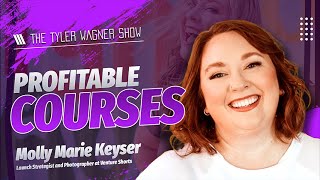
Molly Marie Keyser went from six-figure photography to building Profitable Courses, a scalable online education business. She shares how to launch a course: define one specific result, validate messaging with live webinars before automating, and expect 5-20% conversion rates live versus 1-2% automated. She's shifted from paid ads to organic YouTube traffic as acquisition costs rise.
Chapters
All right everyone, welcome back to another episode. Today we have Molly Kaiser with us, so welcome to the show.
Hello, super excited to chat with you today.
Yes, you too. Um, so if you can, just to start us off, tell us a little bit more about you and what you do.
Yeah, so yeah, I basically, I am someone who's done a lot of courses and I now help people turn their knowledge into their own online course. But I was not always a course creator. So what usually surprises people about my story is I actually, my very first business that I started when I was 17 years old was a photography business. So I started out in college, you know, just really out of necessity. Like I loved photography, but also I needed money. So I like went to Craigslist and booked a bunch of like weddings and I ended up dropping outta college, going with that business, grew it to multiple six figures and other photographers started asking me, how I did it. And I dabbled with like coaching and workshops and stuff, but I quickly realized that I was really busy with my photo business. And then now I'm just extra busy with the coaching and workshops because it's trading more of my time for money. So I had to find that solution so that I could help a lot of people and scale my business without trading more of my time for money. So that's where courses came in. And I taught photographers through courses for over 6 years. And recently I transitioned to helping, uh, business owners to create their own online courses. I just sort of found over the years, I did 16 years of photography and really found that I just really love talking about courses and digital products.
It's so, um, I won't go into my entire, because this is about you. I won't go into my entire, what you just said is literally almost the exact outline of my story. It's just with books.
I listened to you before this and I just copied it. I'm just kidding.
Oh really? Oh, oh, oh, I'm joking.
I'm joking.
I didn't, I didn't hear the copy part when I had that reaction. I thought, I thought you had maybe listened to an interview interview me or something, because it's literally like same thing, like drop out of school, wrote a book, people ask me how I did it, started to help others do it. And then, you know, so same exact college dropouts for life. Yeah, yeah, I know, they're always the best, I think. Well, I don't know. But, um, so yeah, I wanted to ask, so dropping out, I remember when I, uh, when I dropped out, it was such like a big decision for me at the time, even though I kind of I did have a pretty good plan and things were already working out. So it was like comfortable, kind of. For you, do you remember like what it was like? Like, was it like a huge thing for you or was it just like, I'm done with this?
Yeah, I never wanted to go to college. I always wanted to just, honestly, I wanted to sail around the world. Like literally I wanted to just do like crazy stuff, you know? And, you know, I wasn't very structured back then. I was just kind of wake up and, you know, do whatever. Take me wherever the wind takes me. But, um, yeah, basically, you know, so I didn't enjoy college at all other than like meeting people and, you know, partying and all that kind of stuff. I didn't enjoy it. I really enjoyed doing my photography stuff on the side, and I just was, you know, watching the debt rack up, and I didn't have time to do, you know, a lot else. And so I was just like— and my photo stuff, as soon as I decided to start getting paid for it and like start you know, seeking out people needing wedding photographers and stuff, it really just took off. So there wasn't, you know, it was so clear that there was a need for it. And I was just like, oh, like, if I'm going to school for photography and I'm already booking all these people, like, what's the point in even getting my degree? Because I already have a business. So I just decided I was going to drop out. And luckily, I was actually living with my grandma at the time. She lived near the campus that I went to. My family years ago actually sold a bunch of land for them to build that campus, which is kind of funny. Sounds like it makes my family sound like they're really wealthy, but we're not. But, but yeah. So anyways, I— it was easier for me to transition out of college because I was already, you know, had that stability of like being able to live with my grandma. And then I already had some money coming in from weddings. But when I started my first business, I only had $0.81 to my name, you know, $60,000 in debt. I had, I had nothing. I didn't even have a bed. I was sleeping on her guest bed. So Um, but yeah, you, as you can imagine, that was quite the motivator to like get my business going so I could, you know, move out.
Yeah, it's wild when your back's against the wall, like you, you make things work. And then I do feel on the flip side, like once you have the momentum that like your business has, my business has, like, I— do you feel like right now with where you're at, like, like failure is even an option? Or do you— like, I just feel Yeah, it's just not even like—
Yeah, no, I actually have a little story I can share with you about that. So I just, I mean, let's see, in 2021, we started, my husband and I started together Profitable Courses. So my husband used to be in it, and I ran the photo education business by myself. And then we decided to go in and do this together, which has been really fun. But yeah, basically, you know, I was really super cocky, like, because my my last business, it was, you know, we were up to $2 million per year, I think, before we started this new business. And I was like, oh, this will be so easy. Like, I know what I'm doing, you know, like, obviously this will be like a walk in the park, you know, blah, blah, blah. Well, it was a lot harder than we imagined. Not only is it like a new niche, new people, new messaging, all this stuff, but it's also like, you know, during COVID recession, you know, like ads are shifting, things are shifting in the market, you know, we need to learn all this new stuff. And You know, as entrepreneurs we have ups and downs and I was definitely having like a down moment, like, oh, like, what was me? You know, I can't— I think it was like probably Facebook ads or something I was struggling with at the time. And my mom goes, well, when do you think— by the way, I've never lived by my mom during my whole business career, so like she doesn't really know a whole lot about it. But yeah, she goes, when do you think if things are going to keep being hard, when do you think you'll quit and get a job? And I was like, I've never thought about that. Like, that's Not an option. Like, this is just a bump in the road. I'm just having a bad day. Like, so yeah, failures, it just doesn't cross my mind. Absolutely.
And because you have so much momentum. And also, I was on a podcast yesterday and kind of similar thing came up where I had realized when I decided to drop out, and this sounds a little extreme, but the thought I had is I was like, I would rather be homeless than work a corporate job. I just don't like suit and tie.
Absolutely.
I just can't. And I thought I, at the time, uh, like I'd been to San Diego and like warm areas, and I literally was thinking this all the way through. I was like, if I fail, like worst case scenario, I live with my parents. And like, let's just say they're like done with me and I keep failing. Worst case scenario is I live on the beach in San Diego under a palm tree and 70-degree weather. It's like not that bad.
That's funny.
And I really thought it out, and that's what enabled me to drop out because I felt like the risk It was like, if that's the worst, that ain't too bad.
The reward, yeah, far out, out, you know. Yeah, performs the risk or whatever. Yeah.
Um, so, um, and then I want to get to profitable courses and stuff, but just curious because I think, uh, stories, I think are, you know, people like stories. So for, um, the photography, when you were focused on that, if you were to say like what was maybe your best memory of like maybe a success or like a, a moment that you remember, and then craziest, like did you ever like film or do photography for a wedding and it just completely was a mess.
Maybe not your fault, but this would be hard to honestly choose which story to tell. Like, there are just some.
Okay. All right.
Um, most success. You know, it's funny, I feel like we remember the crazier stories almost more than like the, you know, because like a good day is just a good day. It's like, oh, we, you know, had good clients and we took good photos. And yeah, I mean, there were definitely a lot of, a lot of fun days with my employees where like I don't know, like, um, we would just go get ice cream and have like an employee party, and I really enjoyed that. I really like having like a really good team, um, and so that was probably one of the biggest successes was when I was able to like hire another photographer and train her and hire a studio manager, and then I was able to just take, you know, I guess it sounds kind of bad, but like my favorites, you know, like take those clients and, um, And yeah, so that was probably just overall, it was really, really fun. Like, it's just a fun— it's a fun career to be like, oh, I just take photos for a living, you know? Yeah, I have a lot of wild stories for sure. You know, weddings where bridesmaids are giving uncles lap dances, all that kind of stuff. You can imagine when alcohol is involved, you know, there's a lot of crazy stuff that happens. But wildest thing that's ever happened that I think people could really learn from is I used to do a lot of conferences where I would have these booths, you know, where I would sell my photo services. And so I remember there was this competitor of mine, this male photographer, very old, very traditional, very set in his ways. And I was actually starting to shoot boudoir photography and portraits at the time, which is like a, you know, like a female empowerment session for women. And this guy came, and so I made my whole booth all about that, and I was kind transitioning out of photographing weddings. Well, anyways, this old kind of traditional photographer came over to me and whispered in my ear and he was like, you'll never be successful if you transition out of weddings. Just being super negative to me for absolutely no reason. Like, I don't know this person at all. He's clearly jealous. And I remember, you know, I was in my early 20s at the time, so it really affected me. You know, I went into the bathroom and I cried. And I think about that story a lot. You know, just how, like, I'm glad I didn't listen to him. I'm glad I did what I felt was right at the time anyways. But also, yeah, don't let those, like, naysayers or— I don't think with online business I've really ever experienced, like, negative competitors. But I think when you're in, like, a local business, that tends— there tends to be a little bit more drama. So maybe— I don't think authors maybe have to deal with competitor drama. I'm not sure. But anyways, um, hopefully that story will resonate with someone.
Oh yeah, yeah. What's funny, I mean, what I remember most is the uncle getting the lap dance out of that.
Like, literally, I have thousands of those stories. You know, we can do a whole podcast on that.
It's always, um, I mean, and look, I'm not gonna— I mean, I like to have a drink here and there, but I have found that, like, I like to give uncles lap dance.
Yeah.
Oh, well, actually, you know, if I, if I have done that, I don't remember I wouldn't put it past us.
Hashtag Miami. Yeah.
But I have felt the times where I don't drink and everybody else is, it's so interesting, like, what you actually notice when, you know, because when you're drinking with everybody, you just don't notice all the things because you're drinking.
That's a good point because, yeah, I obviously was never drinking on the job. So, like, yeah, that probably is why it was also extra, like, ooh, you know?
You, like, really notice and, like, it's interesting. Um, okay, so then your story though, then, so you do that for— did you say 16 years, or that was only—
yeah, 16 years in the, in the photo industry and also educating photographers. I was still doing photo shoots at the same time, so 16 years of photography.
Yeah, so 16 years, and then you— and then during that though, you had courses and you were helping other people. So what was that, I guess, how was that happening? Because like, for me when I, like, I launched my book and it had success, and then people started asking me how I did it. So for you, was it like you were at the weddings and then some people were like coming up to you and being like, oh, this is a cool career, like, I want to— is that how you kind of—
you know what, this is the best question. I think I've never been asked this question. Like, you win, this is cool. Um, and I've never thought about it either until right now. So really what happened was, like I said, I started shooting these boudoir photos, which it sounds way dirtier than it is. You can Google it. But anyways, basically everyone always like takes it to the far side. But what happened was other photographers started seeing my success and I didn't offer any coaching or workshops or courses or anything at this time. So what they did was they booked photoshoots with me and they would ask me questions during the photoshoots. And then they started asking me, well, can I just pay you for coaching? And I was like, sure. Wow.
That's—
yeah, that's kind of how it happened. And it's sort of, I mean, you don't have to wait until that moment to create, you know, to share your knowledge, but that is just how it happened for me. Yeah. Yeah.
Well, I think from hearing your story in the beginning when you said your intro, I think a lot of times like success can come down to like awareness, right? Because like I never thought I would be like—
And saying yes to opportunities. I think a lot of people turn stuff down too much. Yeah.
Yeah, for sure. And like, there's no— unless maybe I'm wrong, but I would guess that in the beginning you never thought you would be running like profitable courses.
No, no, I never did.
But what happened is like, you, you at the very least, you were just like aware of what was happening, and then you're like, oh, there's other photographers that want to learn from me. That's a whole nother business. Um, whereas I think some people, they're just so in it that they're not collecting data from others. So I don't know, however you want to do it. If you journal—
those are really good thoughts. And also, I was also taking courses and things from other photo educators as a photographer, and then I was seeing, oh well, they're, you know, I was doing the math in my head because I've always been such a business-first person. And I think that is part of why my photo business was so successful is because a lot of creators, they're like you know, the, the artist first. I've always been like the business owner first. But when I was in these other courses, I'd be like, oh, $397 and they have 2,000 students, you know, that's a, that's a lot of money. And then I'm like, wait a minute, like maybe that's what I should do.
Yeah, no, literally we're very similar in that way. I always thought, and actually there's like a quote that says that, it's like you only need 5,000 people to buy your $200 product, you know, and then it like goes down the line.
It's $83,333 a month for a million.
Internet marketing world.
My favorite number, $83,333.
Yeah, there you go. That's exactly what it is. So, so then, okay, so then you do, and that's what reminded me of my story too, is when you were saying, so then you do coaching consulting real quickly. When you do that, you realize there's a ceiling because you can only do so much of that.
And yeah, I think I only coached like maybe 4 people, honestly. It wasn't very many because like the people during the photo shoots were like, will you coach me? And I'm like, I'm like, sure. Like, that'd be— it honestly just came down to like, I do really enjoy helping people, you know. I didn't really need the money, you know. My photo business was really successful, but I was like, well, I really like this person. It'd be fun and I'd love to help them, you know. And, uh, never— and these people were all in my same state, and I think that's where a lot of people maybe would have been like, oh no, these are my competitors. Like, I've never seen it that way. I was always just like, there's plenty of clients for everyone, you know. But, um, yeah, I just coached a few people, but then I was just like, I I just don't have time for this. You know, I was just like, if I do this, you know, each photo shoot on average was like $3,000 and it was only 1 hour of my time. So I'm like, there's no way these people are going to pay $3,000 an hour for coaching. They were paying more like $3,000 for like a whole day with me. So it's just like, that doesn't make sense. I was like, I'm almost like trading my time like down, you know? So that made it easier to decide to go the courses route too, because I was already making so much with the with the services.
Yeah. And this, I'm curious on this kind of a selfish question, but I'm sure everybody would like to know too, is, so I've had a lot of success with high ticket offers, but honestly courses, I would say like not even close to the same success. So if you were to, I guess, summarize it, if you can, or you can say—
I've done high ticket too. So maybe that will help with the question.
Well, I just think like, you know, high ticket to me is just so, I don't wanna say it's so easy, but For me, over the years, it's been pretty easy to sell because you're selling to people that have money. So money is not really an objection, right? So there's other objections that can come up, but typically money for most things is typically the number one objection, or like time or something. So either way, I feel like I have that down. But courses, when you talk about like a sales funnel, it comes in a webinar and then they purchase a course without any human contact. I've always found that just difficult. So I don't— have you found any like trends through all the courses you've done or people you've helped of like why a course is successful?
Yeah, I would say first of all, going back to the high ticket thing, um, I mean everything I always look at— so I've, I've really tried— I'm not a dabbler anymore, but I was a dabbler for a while where it's like, you know, I tried courses, I tried ebooks, I tried memberships, I tried high ticket, like I've done all of it. And so it is now easy for me to kind of step back and look at like what works best for me. So by the way, what I'm about to share, like this is just my opinion and what works best for me. So like I've done the high ticket thing and for me personally, like I really don't enjoy managing people. And obviously you can hire a sales manager, you know, tried it, hired an operations manager, tried it, you know. It's hard. It's not for, for me, it's not a skill that I have like that I'm just like naturally very good at. I am very, very good, however, at managing teams of like creators, like web designers, graphic, graphic designers, copywriters. Like I think I just understand that world a lot better. And so I do think that you need to play into your strengths. So it's like if high ticket is easy for you, by all means, like do it. I found it to be insanely stressful. It just really went against what I enjoy doing. And you have to find like what's also fun for you because otherwise you won't want to do it. Yeah. For me it's like, oh, I find it so much fun. I find webinars just so much fun. Like I enjoy them. I find it like a game to try to match the messaging. So I do think it's harder. No. Are there hard things about it? Absolutely. Like especially if you're trying to do an automated webinar funnel. Am I allowed to swear on this podcast?
Oh yeah, anything. And also, just so everybody knows, I actually, as you're talking, I'm going to turn the light on. It's daylight savings and it's like sweet lighting.
I just— photographer's trolling you.
It's literally 5 o'clock here in Miami.
It's dark.
I don't know.
Should I keep talking? All right. So yeah, basically, if you're doing an automated webinar funnel, you know, like you said, people are not talking to other people. So therefore you need to handle every objection. You need to make sure your messaging and all that shit is on lock because, you know, there is no person for them to talk to. So it just depends like where your strengths lie. And if you don't have any of those skills or strengths yet, then just ask yourself like, what's the kind of lifestyle that you want to have? And for me, I am all about like spending the majority of my time, you know, going on road trips and hiking and like just letting my courses and ebooks and things sell in the background and just focusing. I mean, whether you have high ticket or courses, also you have to have traffic regardless. So also ask yourself, you know, what kind of traffic would you enjoy the most? Yeah, there's a lot of different ways to do it, but right now I'm like really, really into YouTube. But yeah, kind of getting off track. I think that answered maybe one of the questions, but what were some of the other ones?
Yeah, I think, um, and maybe you could walk through it like this because it's, it is interesting, right? Like there's pros and cons to, I guess, both sides. The one thing I just completely stay away from is the middle, which is coaching. And I know I've heard group coaching, and what's funny, just like you, I actually enjoy it.
It kind of is group coaching if you offer it. It depends.
Well, so here's what's interesting. I'll just explain, like one of our services is like We help people hit the major bestseller list, right? So we charge $60K and we'll help them hit the Wall Street Journal list.
Oh, well, that makes so much sense for high ticket, like, absolutely. Yeah.
And how that works though is literally like they'll pay us and then we do the marketing and then they're on the list. There's really not much maintenance or anything.
Yeah, that's awesome.
Whereas if it was like Facebook ad management or something at $10K a month for 6 months, to me that sounds like a nightmare personally. Like, I wouldn't want to run that business.
I am very— yeah, I try to stay very, very far away from teaching ads because they're a nightmare. They change all the time. It's just— yeah, anyway, sidebar.
So what I discovered though, if the high ticket is something where it's just like there's a guaranteed result at the end and there's not much involvement from the customer, it's kind of just like you pay, you wait, you get it, and it's done.
And it's kind of like— I'm sure— have you heard of like Alex Hormozi?
Oh, of course.
What am I thinking? High ticket. I figured you have, but yeah. So anyways, he— I just want to kind of explain for anyone who's interested in it. But, you know, with their offer, it's like they were like, he helped me with my sales script and everything. So I know him pretty closely. But like, we were in Inner Circle with Russell together, so that's how I met him.
Yeah, but that up there.
Yeah, but like, just what you're saying, it's a lot of done for you. It's like they were running their clients' ads. They were, you know, doing done for you. And I think a lot of people go wrong with high ticket where they just take a course and they slap a super high price on it and they get a sales team and then they wonder why people are unhappy. You know, you, you have to actually deliver on the amount of money that you're charging, you know, like $60,000 to get on the bestsellers list. You know, if that's going to get someone, you know, a shit ton of traffic, and they have a product that's selling, they're absolutely going to make way more than $60,000.
So yeah, and that's what's interesting is that's most of the time the people that buy it, they have a product on the back end because I'm always upfront. I'm like, you are most likely not going to make your money back from book sales. Like, it's just not going to happen.
Nobody ever— or sorry, I don't know too much about books, but I've never heard of people really doing that. It's in my space, it's very rare.
Like, in fact, what's weird, like Alex Hormozy, because you brought him up, like He's made way more money from his other stuff, but he's actually made some money from his book. It's actually doing really well because there's no, no ads too.
It's all organic.
Yeah, yeah, it's just so rare. Now here's the thing though, on the flip side, so I like done-for-you high ticket like that, like done-for-you coaching. I don't like, um, I enjoy it, but it's not scalable. The courses is the dream situation. I've just never really found like I think like our most successful course has probably done like low 6 figures, which is great, but our high ticket, like we do 8 figures a year high ticket. So I'm like, now what was your—
can I use you as my student? Like what was your course about or what, or do you have it right now?
We have multiple courses that we've tried. The main one that we're doing now, it's called Infinite Partnership System. And, um, that's where basically we teach people how we got Authors Unite to 8 figures just through partnerships.
So, so you teach people how you did your high-ticket program?
Yeah. So it's like a course that it's a $1,000 course and it walks through a system where essentially you can get like unlimited leads, uh, with no risk. And it's like no paid ads.
Actually, tell me who this is for first, because I think maybe that's why I'm not understanding it.
Yeah. Yeah. So, or here I can explain it through my— this is actually fun. It's like a live example. So So here I can explain it best through how I did it with Authors Unite. So we started as being like, we focus just on book marketing. So I discovered, I was like, okay, if I connect with book publishers, ghostwriters, editors, and PR agencies, those 4 types of companies or people, they have large groups of authors and we're not competing. So they'll refer me their people and I'll give them a commission. And the way I discovered it is in my CRM, I had noticed one publisher was worth a million plus to us in a year. And I thought, I was like, okay, I just got to find 19 more of this type of publisher and I'll have a $20 million business. That was how my head, my brain thought. So then I told my sales team, I was like, we're stopping everything. No more SEO, no more Google Ads, no more webinars, nothing. We're just going to reach out to every book publisher in the world. And that's like what we did.
We— And what's the result of that, that you get your book in more places? Like what's the result of that?
The result was we just built relationships with all these book publishers at scale, and then they referred us their authors, the ones that had enough money to pay us to market their books. And that's when I just discovered— I was like, I believe this could work for any— like, for example, your business, Profitable Courses. We would actually be good referral partners because a lot of my authors want to create courses from their books, so I could refer to you.
And then can I take your $997 course, or is it for like authors?
No, no, you could. It's not for authors. It's, it's actually how I branched out of just servicing authors. That was my way of kind of doing it through that. And we do it for people too, where we'll like basically become their CMO in a sense. And like, for example, we're doing it for a health business down here. We're connecting— the guy does like IVs, you know, like IV drip. I mean, um, Yeah, drip IVs. So we're reaching out to all of the local fitness trainers and we're making them affiliate partners to send them— send us all their clients for IVs.
So the course, obviously there's no done for you, it's just teaching them. Basically you're like, let's just call it for easier example, like affiliate system or partnership system.
Perfect.
Okay. I mean, I could be like, I don't know, I would say right off the bat here, your high ticket offer, you explained it to me in one sentence. And your course offer, and it could just be me, maybe I just don't, like, I get it now, but it took you so much longer. And so my guess is maybe the messaging isn't as clear on that one. I'm not sure. Could be.
Yeah, no, it definitely—
But you said you've sold 6 figures, right?
For this course now combined with done for you, it's 6 figures that, cuz we do offer a done for you for it too.
Do you mind sharing how much do you think it's done on its own?
Um, just the course?
Yeah.
Um, probably $1,000. We maybe have like 60 students or something now.
Okay, I mean, that's still enough to like prove the concept. How did you get those 60 students?
Well, this is what's kind of funny. So it's been referral partners and some Facebook ads. So, and what's funny though about is in the course what we're teaching is like, yo, you can grow your business without paid ads, but we've gotten some clients with paid ads. So that's what's funny about it.
But like, no, I mean, I do, I do the same thing. Like, I mean, it makes the— it's a different business.
So yeah, I think the difference though that I've come to conclude, and this is why I'm interested in learning, like, whatever your system is of like getting somebody to come in and convert without a phone call, even though it's only $1,000, like I'm finding selling a $60,000 offer is easier than a $1,000.
I think you just haven't figured out your— it did. I honestly just think it sounds like you're $60,000. I don't think it has to do with the price point. I think you just have figured out out your funnel, so to speak.
I agree.
And I think that the course funnel, you know, you're like, well, we kind of got some from here and we kind of got some from here. Like, you know, nothing will— like, it will all click and convert really, really easily once you find that like one source, you know what I mean? And so like, if like, are you running ads to that course right now?
Not right now. We honestly—
Yeah. So like, you know, if you had figured out ads where you could just keep running them, then obviously it would be easy, right? Because you would just turn on the ads and For sure.
What's, what's weird, because to me, I agree completely with you. I just think the phone call, like selling something without a phone call has always been difficult for me. And with a course, like, I don't want to get on a phone to sell something.
Like I said, I think it's just different skills because like, I think, you know, some people would find creating a script and hiring salespeople and training salespeople and learning the skill of sales You right away to me sound naturally good at sales, whereas other people might be better at writing, you know, and that's really what it comes down to. Sales, like high ticket is just like phone sales versus— so I mean, we can talk about this more. You don't have— you don't start your course with an automated course funnel. That's more of like the advanced. So I just want everyone to know that that's not where I start. But once you get there, you know, instead of doing phone calls, you're essentially just doing copywriting. That's the only difference. It's all about— it's the same. It's just writing versus speaking. And so you can learn those skills, or you can hire a copywriter. Most my life, I've just hired copywriters. Um, so you just, you have to— a good copywriter is going to cost you, you know. It's just a good salesperson is going to cost you, you know. So to me, I mean, I've never really thought about it this way, so this, this is a great conversation. But like, that's— I mean, really, I think that's what it boils down to, is like learning how to sell on the phone versus learning how to sell with words. And I started as a blogger, so that was like naturally more my skill.
Yeah, that's— yeah, no, this is amazing because I never equated it like that. And you're right, that's why it's always been hard for me to like teach sales because I don't use a script and like I don't—
like, I don't use a script.
What? I'm telling you, I just get on the phone with people.
Alex Hormozi would slap you in the face right now.
This is the script, right? I mean, it's like, it's like in my subconscious, it's just like, hey, like, tell me a little bit more about you.
You have other salespeople?
Yeah, yeah. And they don't— what's interesting, my number one salesperson, she's been in the industry longer than me, so she like, she knows the stuff incredibly.
And when I say script, I don't mean you're supposed to read it word for word. I just mean like typically you have like questions or like—
well, yeah, really the only question, and this is like why it's funny, like there's no technique to what I do. I feel I just like Hey, like, what's your goal? I just like, what's your goal? And then if they tell me what their goal is, like, if I can get them to the goal, then I'll offer the service. And that's all it is. Yeah.
I mean, honestly, you just described a sales script. Yeah, exactly. That is all it is. But you can also apply that to copywriting.
Well, that's what I'm thinking. What I've gotten out of this part is I think our sales page for Infinite Partnership System is not by a professional copywriter. Like, it was me and my— one of my partners. We filmed a course, we did it pretty high-end, but like the page, we did not hire a copywriter. We just wrote.
So maybe it sounds like you put the money in the actual— which is good, you want to have a good product. Because I mean, honestly, if you— let's, let's say you didn't put the money in the product and you put it in selling it and it sold really well and the product was shit, that's bad. You don't want to scale.
Yeah, yeah, that's not good. So yeah, I guess maybe we're halfway there.
But it sounds like you're pretty close because, I mean, you already have a traffic source. I know you at least have this podcast and, you know, you have— so you have traffic, you have a community, you have a good niche, and you already have one product, at least one product that's selling really, really well. So yeah, you've got to be real close for sure. Yeah.
So I guess the question though, to come full circle on it, is, and maybe you could use an example, like, what is the typical process to get to a success? And I guess some people would say, you know, a 6-figure course, and that's again in combination with the done-for-you, but would say that is a success. But to me, I've always been wanting, like, I would love to have a course that does like 7, 8 figures automated.
And my guess, yeah, and my guess is it's less about that number and more about like like, oh, I would like to get X sales per day consistently, you know.
Yeah, like that would be—
yeah, absolutely. Because that's the other thing with high ticket is like, um, it's not as passive because, you know, you have to do phone calls, um, or hire people to do phone calls or whatever.
But you do a lot of calls.
Yeah, yeah, yeah, exactly. You know, even if you're a great salesperson and you convert, you know, 20— we had a, we had a girl who was like 50% and she still had to take a lot of—
oh, that's awesome, that's great.
Yeah, but yeah, so yeah, I'll take you guys through my whole process. So Essentially, when I start a, a new course, okay? And this is the same process I take my students through. But when I start a new course, the first thing I'm gonna do is, and by the way, this, this works if you don't have any audience and if you do have an audience, you can use wherever your audience already is. 'Cause I'm gonna use Facebook groups as an example. But let's say you're like, oh, I already have, you know, 10,000 followers on Instagram, by all means, like apply this exact same thing to that. But I'm just going to talk to people who don't have a following for their course. That's another thing I have to say because a lot of people will tell me they have a following and then I find out that their following is for like a cookbook and their course is about running and I'm like, that's not a following for your course. So you have to actually have the right people. But yeah, so the first thing you want to do is obviously, you know, come up with what is the result the one, one result. You're gonna get someone. You're not— your course is not gonna be, I help women become confident. Your course is not gonna be, I help men change the world. These are too broad of topics. It needs to be a specific result. You know, just like Tyler shared, he's helping businesses with, like, learn his specific partner system, which if you don't already have a name for that, maybe you should, because that would be good.
Well, it's called Infinite Partnership System, but that part alone, if you— my high ticket has a very specific result, whereas the course is kind of just like grow your business.
There you go. Yeah. No, really, that's honestly the— like, not only is that the most important part, it's the hardest part for people because, you know, they'll say, you know, they'll start out with, I want to help women be confident. And I'm like, well, why? How? What are the things you're going to do? You know? And we can keep asking these questions until we really, really, really get it down. You know, my course could have been I help women become happier, but no, my course is Profitable Courses. And I mostly help— I do help men as well, but I'm just used to talking to women. But obviously, if they make a course and they make money, they're going to be happier. But I'm not calling the course How to Be Happier. I'm telling them the specific result they're going to get.
That's a bonus. You can stack the offer. You will also be happier at the end.
You will also be happier. Yes. But yeah, so basically, you need to think of that result and just think of what have you done in the past? Like what have you gotten yourself results with? What have you helped other people with? What are people asking you questions about? Are people booking photoshoots with you demanding coaching calls? Just kidding. Any of those things. Okay. So then what you're going to do is you're going to come up with the curriculum. You're not going to build the whole course. Okay. Just the curriculum. And you're going to ask yourself, how do I get this person, my ideal client, from point A where they are now to point Z, the result, the one result you're going to get them with the course. That's how you're going to create your curriculum. I have a lot more like videos on this on YouTube and stuff because obviously I'm just like going as quick as I can. Yeah, but then you're going to price it. Okay, then you are going to— if you have no following for your course, you are going to start a Facebook group. And yes, I can already hear everyone screaming through their microphones. I also hate Facebook. It is just the easiest way to grow a following from scratch and you only need 200 people in your group to start and then you never have to do it again. So you just do the Facebook group if you have no following to start and you're going to add people, you know, from your friends list. You're gonna friend people from other groups, and then you're gonna invite them to your group, and you're just gonna do a bunch of those strategies till you get your group to like 200 people. Then you're gonna post some messages in your Facebook group saying, um, I want to help insert ideal client here, um, with— or I want to help— so, okay, like, I want to help 2 women, um, launch their online course in the next 30 days.
If you're interested, post like this. So maybe people—
you— I've honestly been doing it for so long, I'm sure I'm not like the only person, but like, I've been doing it whatever. So yeah, I'm looking for 2 women who want to launch their course profitably in the next 30 days. Comment your favorite emoji below. And then what? And then so now you're not cold messaging people, they're inviting you to like, they want you to reach out and message them. So now you're just gonna comment because otherwise you're, you know, your message is gonna go to spam probably. So you're going to comment and be like, hey Tracy, look for a message from me or whatever. That way they can check their, you know, spam archive, whatever Facebook decides to rename it to tomorrow. Like I could rant about Facebook in a whole podcast, but so then, yeah. And then you just simply have conversations with people. Like literally you would be so good at this, Tyler. You just have conversations with people. And what you're doing is you're gonna pick a start date for your course. You're not gonna create the course. You're gonna teach the first round of your course live. You only have to teach it live one time. I know that's not passive immediately. Don't panic. You will eventually be able to make it passive. But yeah, so you're going to say like, hey Tracy, I'm, you know, I have so many spots left or whatever. I have— I give scripts to my students, but something like, you know, we have these many spots left for you to learn this. We're starting on this date, you know, are you in? Something like that. And then, you know, you're going to try to— let's say it's, I don't know, November 1st, let's just say. And you're like, okay, I'm going to start my course 2 weeks from now. So you're just going to try to sell in as many people as you can in 2 weeks. So even if you only get 2 people, it's still awesome because you'll get to do the rest of the process. But my guess is you'll probably get at least 5 to 10 depending on how many people you got in your group. Then you're going to teach the course live. And this is good for like literally so many reasons. Like you're going to— first of all, you're never going to be able to be that person that's like puts off their course for years and years and years because because you just sold people in, you have to deliver now, which is good. You need a little bit of fire under your butt to do it, you know? And then the biggest thing though is most people will create their course first and they just create it based on what they think people want to learn. But you don't know what questions people have, you know, they're different than you. So by teaching live, you're gonna get like live feedback from these people, live questions from these people to be able to take that feedback and make your course so much better. And you're going to learn so much from messaging these people to sell them in as well. You're going to be like, oh, I thought they wanted— I thought they wanted to take this course because of this, but really they want to take this course because of this. You know, like it's important to learn about your ideal client, how they think, what, you know, what they say they need help with, all of that. And then once you teach it live, now you can put it into course hosting software. Now you can start doing webinars, you can start doing the next thing. So just to simplify, the next step after that would be to do your webinar live over and over until it converts. Because most people go wrong where they just put their webinar immediately automated. And that's a huge mistake because Tyler Wagner Wagner himself.
That's me.
Yeah. See, I mean, like, not to be like, you know, crapping on your strategy here, but like, I've made this exact same mistake. Like I said, you know, I was in the, I was an educator for 6 years before I started this business. I was like, oh, I've done hundreds of webinars. I've sold $8 million. Like, I don't, I don't need to do another live webinar. So I automated it. What do you know? We lost a ton of money on ads. It didn't perform. You have to do it live until you hit all those good stats, good show up rate, good engagement, good sales, all the stats that you need for all the, for the people that show, which I'll just throw some stats out there, but you should be getting anywhere between 15% and 20% to show up to your live webinars. If they're not, you need better text messages, better follow-up emails, all that stuff, right? If they're showing, then you want to convert anywhere from 5% to 20%. For me personally, I won't automate my webinar until I'm converting like 20% because I know that once I automate it, that percentage will go way down. So I was converting 20% live and now I'm 5% automated, which is amazing. Most people only do 1% to 2% on automated. And you also need to know the stats because you might be thinking your auto webinar sucks. You might be thinking your funnel sucks right now, Tyler, but maybe you just don't know. And I don't know for sure, but like maybe you don't know what the numbers are or what numbers they should be. Maybe you just need more traffic. Like you never know, you know what I mean? It could be a number of things.
Well, it's good to hear that 1% because I definitely was thinking, but I see it now though. If you do the numbers, I mean, even a 2%, 2%, I think we'd still be in the green. If you like, I'd have to look at it all like per click, per up, but something like that. I think somehow we might still be in the green. But that's interesting though, because that's very low, but it makes sense because it's automated. When there is no human connection, I think it's kind of unavoidable. No matter how good the copywriting is and everything, it's just going to be lower rather than if you get on the phone.
Is that— Yeah, it just is going to be lower. And like Personally, with how expensive ads are and stuff right now, like, I'm not, I'm not going to settle for a 1 to 2%, you know? Yeah. But that's also something you can look at, like, oh, well, you know, I like, oh, maybe I need to do my webinar live again so it converts better, or maybe I need to raise my price, or maybe I need to lower my price, or maybe I need to have better follow-up sequence. I remember one of my friends, Dan Henry, he used to have an automated funnel. We did his book.
Book. We did his book.
Oh, nice. Yeah, I'm in his, I'm in his book, you know.
Yo, so this is so— you want to know something so wild is like, wait, which book though?
Because I'm in the Millionaire Secrets one, not the high ticket one.
We did Millionaire Secrets to the Wall Street.
So cool, awesome.
And yet he is like a great example of where I was on his show because he got a big ROI from our campaign because his book funnels into his stuff. So he's Perfect ideal. So either way, as you were talking, I was thinking of him and I'm like, you two should know each other.
Yeah, I had him on my podcast way back in the day and it's not just small world. That's great. Dan's great. He's hilarious. He pushes the edge. I enjoy it. It's fun.
Yeah.
And he's very, very smart. But yeah, basically I remember when he— because I believe if I'm not mistaken, I think he made his first million from an automated webinar funnel and it only converted like 1 or 2% or something. Which is normal, you know. So, but yeah, I mean, can you get it to convert higher? Absolutely. Oh, what I was gonna say is I remember him telling me that something like 80% of his sales came from retargeting. So like people were going through the funnel, but like if you only, only have the funnel and you're not retargeting people with emails, ads, you know, different things, that could also be where people are falling out of your funnel. So So, um, yeah, I mean, there's just, you know, it's a funnel and there could be holes in the funnel, you know, you gotta look at all that stuff. And, um, yeah, follow up once you get it. But once you get it without holes and you can just, you know, pump traffic to it, it's pretty sweet.
I know, like another, um, like Sam Ovens, I'm sure you've heard of him.
I took his program. Yeah, I was in his mastermind, everything. Yeah, he taught us high ticket.
Yeah. So I never, um, took it, but like I always just thought, because I remember just seeing some of his like just videos. And that's always been the idea in my head is like, I mean, we have the high ticket is pretty dialed in, but the course thing, I've always thought like it would be cool to know that if I put $100K into ads, $200K is going to come back. Like that would be pretty cool to just know, you know? So now I do think—
well, you do know that with your high ticket, right? Like I'm assuming you—
well, we don't even do— because we do all partnerships. So what I can say is like, oh, I see. Okay, I do kind of— what's interesting is like our referral partners know our prices, so it's like, that's why I said it's almost not like a sales call. When one of our publishers refers somebody, it's kind of a done deal already because they know what the price—
I was gonna say too is like, it sounds like you have a really good niche and stuff, but like, you know, for some other people with high ticket that aren't able to get traffic, because like we only were able to get traffic from ads And then it becomes harder, you know, anyways. Yeah.
Well, I mean, so literally, if I like my— the strategy of the partnership system thing is like, I think if you connected with a lot of book publishers, you could create affiliate deals with them because so many authors want to create courses from their book. So just an idea. I mean, it's a—
No, I will take all the free advice.
Thank you. But yeah, and I know What's interesting, and maybe we have another interview at some point, but with Ovens, didn't he like dialed his operation down a little bit or something? Didn't— because it was like—
Ovens. Oh my God, I love Ovens.
I call him Ovens.
Like we're bros. Yeah.
I do not know him personally, by the way.
No, I love it. I don't think many people know Sam personally. He's a very private dude. He's awesome. He's insanely smart. He is like— I know people jokingly are like, he's a robot. It's like he's so good with data. Like, anyways, I really— he's one of them, one of my favorite mentors I've ever had. But yeah, basically, and I was going to talk about that as well because this ties in really, really nicely. So when we were doing high ticket, you know, we learned from Sam and all that and we had the spreadsheet, we were running ads, we tracked all the data, all that, right? Yeah. I mean, I'm not going to sugarcoat it. Ads are not what they were in 2018. Like, they're not, you know, and so like We have actually— I have not shared this on any podcast yet. I don't think I've shared this at all. So this is just for you guys. You get to be the first ones.
There we go.
But from October to June of 2022, we were running a ton of ads. I was doing live webinars every week because I was trying to dial it in, you know, and number one, we did, which is awesome. And number two, ads became really expensive. For summer of 2022. They have actually come down. And again, your niche might be different than mine. I have a few friends who run very successful ads agencies, so I'm able to get that data on like where the ads are going and all that stuff. But, um, so we actually have switched our model, um, to instead of running ads directly to our funnel, whether it's live or automated, doesn't matter what we are doing. Is we are— we picked one social to go heavily organic on, which is YouTube. And Sam has done the exact same thing, which I find so fascinating. And he actually— his program used to be called Uplevel, just Uplevel, I think, and now it's called WeTube. And it's all about generating traffic to your high ticket from YouTube. I'm not in the program, so I apologize if I'm misunderstanding, but like, I think that's what it is. And anyways, I think YouTube is like, you need to get on that. Like, it's, it's, it's a great traffic generator. But what we're doing with ads now is we're going back. So when I first started my first online, like, course, ebook education, you know, for photographers, what, what I did was I had a blog. Okay. Now I have YouTube. Interesting. Very similar, right? I had a blog at the time. Blogs are different now though, so I wouldn't put all my eggs into blogging. I'd rather put it in YouTube. But ads back then, I don't— I think people just like didn't understand. And they were— I mean, they don't even think ads existed in 2014. But when they did come on the scene in maybe like 2015 or something, what we did was we just would create like a freebie and then we would run an ad and we would get people onto our email list and then we would sell people from our email list. And that's a longer strategy. And so obviously it's a lot more fun to just turn on ads that go to your funnel and it pumps out money. But it's just a lot— it's just different now. I don't even want to call it harder because it's actually easier if you just go back to this other method that I used to use and now we're using it again. It's actually a lot less stressful. It's a lot easier, honestly. You just— it does— it's a longer sales cycle. So we find, you know, sometimes it can take, you know, 6 months for someone to purchase our course. And we track all of that. We use a software called— well, I think my husband set up Google, whatever the Google tracking is, but we also use Hiros to track the ads.
I knew you were gonna say that.
Yeah, I mean, Hiros is like, you know, it's hella expensive. Alex Becker, what in the heck? But it's good. I like it.
It works really good. Okay. I'm very highly considering, um, YouTube ads now for— I would wonder if, um, I mean, I watch a lot of YouTube too, so I'm wondering maybe it's like a different audience than the other platforms, like, like a high-ticket audience. I don't know, like maybe that's the case.
Um, I mean, this is just my theory. My theory is that social media is social media is social media, because like I am crushing it on TikTok and I'm trying and I tell everyone, dude, I have this method, it's working, you should do it, and they're like They're like, my audience isn't on TikTok. People on TikTok don't buy. I'm like, they're people. They're holding a phone. What's the fucking difference?
Like, I agree.
Yeah. No false beliefs for your listeners to be had because I will yell at them. But no, I'm with you. Like, I think rather than, you know, I don't think YouTube is like a higher ticket or I don't know. I don't know. But what I do think is I think, and I shouldn't even say I think, I know the data is there that people are deleting their Facebook accounts. There's less people on Facebook. I don't think Facebook's the future. Do I think Facebook groups today is still a great way to kick off your course? Absolutely. Do I think it will be the way to do it 5 years from now?
No.
I definitely, I mean, you can Google it. Like Facebook is like laying off people, they're losing users. I don't think it's going to like a good place.
I think LinkedIn, I think LinkedIn LinkedIn's the future. I mean, it's really interesting.
Tell me more.
I, I just don't foresee LinkedIn ever dying. Like, okay, here's how I view it. Yeah, all the other socials are like social, right? Just like friends. But LinkedIn, I can't think of a competitor to LinkedIn. And people on LinkedIn, they want to do business. Like, that's kind of like why they're there.
So now I will say, because I would think that would be great for you given, you know, your Oh, I think it's perfect.
I will say they're like way more ex— like, I think on one of the campaigns we tried, it was like $20 a click or something. So it's like crazy. Yeah, it was something crazy.
And I've also heard that their groups— I actually think the reason Facebook is holding on, yeah, I've read, is their groups. But like LinkedIn, I've told my students, like, if your people are on LinkedIn, just do my same system on LinkedIn. But they tell me that like the groups aren't as good or something.
I don't know. I haven't messed with the group. We, we mostly use it just for like messaging part— like potential partners. So if there's a book publisher where like we can't— we, we try to get them on their website and for some reason they don't respond, then we'll get them on LinkedIn too, you know.
So that's the thing that I don't like about TikTok is in order to message someone, you both have to friend each other.
I know. Yeah, not good.
Yeah, it's such a bummer for all of us, you know, salespeople.
I love this.
It's almost like they don't want our spam messages.
Yeah, you don't want me to send thousands of messages to people on your platform offering them to hop on a phone call.
Well, like, same with— same thing with YouTube. Like, YouTube isn't, you know, for messaging. Like, Instagram is still pretty good for messaging, but yeah.
Oh yeah, well, Instagram, I think you can do like 30, 40 a day, and then they like will give you a warning, you know.
So Everyone's like mad at Instagram though right now. Like, it's harder than ever to grow on Instagram. Like, they totally shifted.
Uh, yeah, I don't even, um, I don't know. I'm trying to— yeah, I, I mostly just do stories now on there because I found my engagement is just so up and down. Like, sometimes I'll post something and it'll like not go viral, but like it'll get traction, and then other times it just gets nothing, and I'm like Okay, like, I don't—
yeah, I think they just— I don't know what they're doing. Um, it's almost like, what are you doing over there? Like, I don't know what's going on. One day I logged in and like 3,000 of my subscribers were just missing, and then I— or like followers, whatever the hell they're called. And then like the next day they were like back. I'm like, what is— what's going on here?
To me, I feel like Instagram is just kind of like a— it's like almost your like social badge or something, you know? Like And I don't view things this way, but like, I notice in Miami— this has nothing to do with business— but I'll just be like out at a party and I'm connecting, and like, people will be like, what's your Instagram?
Yeah.
And then I like— they'll see I have the blue check and they're like, oh, blue check, like, it must—
wait a minute, you have a blue check? Um, I should be paying, to be honest.
You are so— dude, it's for it. Like, the blue check is just like— it's like a signal. And like, what's funny though is—
oh my God, can you imagine you go to a party, they're like, you have a blue check, here's my number? Like, no.
You want to know something? That's how it is.
Oh my gosh, stop.
No, that's—
you know what, I think that's just a Miami thing. Just kidding.
No, it very well could be. I mean, look, here's what I can say. It doesn't hurt in any way, right?
That's what I'm saying.
It's the only reason, but I think it's like you're an influencer. I would do the same if I could. Nice. But yeah, no, that's so— and then the follower, I think the blue check is even like like more significant from like a perspective like, or a—
No, I'm totally with you on the Instagram thing too, because like if I go to a conference or any like, and I've been thinking about this a lot lately actually, how like Instagram lately, a lot of like even, I don't know if you know who Brock Johnson is, but his like number, so he's Chalene Johnson's son.
Okay.
He's really big in the space. But anyways, he teaches 100, pretty much 100% Instagram. Even he's been like just put out 2 YouTube videos. He started his YouTube channel. He's now like going back to TikTok, like, and I'm just noticing this trend. But what's interesting is when I go to these conferences, people are not asking me for my TikTok. They're not asking me for my YouTube. They only ask me for my Instagram. And so, yeah, I mean, I don't— until that changes, Instagram's definitely not good.
It's just like a status thing. I don't think, like, I can't—
like a business card. Yeah, yeah.
Like, I don't get any clients from it. I mean, maybe down the line because they perceive me as some something, and then they're like, oh, like, I trust him because of whatever. So maybe indirectly. But you motivated me for YouTube. The thing that's funny— this is like a funny side story— with TikTok, my algorithm's so messed up because when I first got on it, me and my brother did a video. And this is kind of funny, but we pretended to jump off of a balcony and like pretend we didn't do it, and it Viral. I mean, like, 30 million people saw it, like 2 million likes.
Well, I'm sure some of those people were authors.
Well, they were like, are you alive? Like, it went completely viral, okay? And I got like 250,000 followers from that, and then I started to post normal stuff and I get like 500 views. So it's almost as if I bought fake followers because none of them are at all my audience. They were just like kids that were wondering if I died or not from jumping off the back So yeah, I really messed up there. But it was—
I mean, I think you could— I don't know. I think the thing with TikTok, I don't think you really messed up because with TikTok they're not really showing your videos to your followers. Because like, you know, if you go on TikTok, okay, you pick up your phone, you go on TikTok. Yeah, I want to be able to say the exact right words here. Let me turn down my volume, otherwise, you know, TikTok. But, um, it says right at the top You can, you know how you scroll your feed, right? You can scroll your feed for you or you can scroll your feed following and nobody ever clicks following because for you is like the default. And when I look at my analytics on my actual videos, it's always like 80 to 90% of people who don't follow me. And so the benefit of that is just create better videos and you'll get more views. Like honestly, I don't think that it's really, I agree. Yeah. But then also, and the other thing that it's good, like, I think TikTok is a great way to get new eyeballs. There's this girl I know that's like making, like, I don't remember, like $7 million a year with her course with no ads. And all she does is she gains her followers from TikTok, nurtures them on Instagram, sends them to her automated webinar funnel. That's it. Like, that's her funnel. It's so interesting.
There's so many— that's one of the things I love about marketing is like, it really— strategy is limitless. Like, it never ends. If you don't want it to end, it never ends.
Like, yeah, I'm trying to give you hope. Like, I know saying create better content sounds like people are probably like, what a bitch. But no, no, I just mean like, I think it— I think you're fine. Like, I don't think—
yeah, I, I agree. But I also say just based on the stuff, because like I have 230,000 followers on there and my videos we're posting are getting 200 views. So all I can say is like that one video that we constructed definitely went very viral and it was way different. And now we're posting like podcast clips, so it's like, well, that's the problem. Yeah, I just think it's like different. Like, people—
your podcast clips would probably do better on YouTube Shorts. TikTok doesn't really like clips very much.
There you go. So yeah, and it almost— it looks fake. That's what— because I mean, for 230,000 followers, you should get more than 200.
Yeah, you can look at the analytics Basically, what I'm trying to say is you don't need to create a new account.
Yeah.
If you don't want to, and you can look at the analytics from your videos, it'll tell you a lot, like, you know, but yeah, I've tried a lot of— so I love TikTok. In just a couple months, I got like 7,000 followers of not of a falling off a balcony, like, actually relevant videos.
Like, legit people that are interested.
I can share that really quickly how because I've gone viral like 10 times. I can share a recipe really quick. I know we probably need to get going, but yeah, essentially all I do is I just Google one of my keywords. So if I'm teaching people courses, ebooks, passive income, digital products, right, I can Google any— or not Google, sorry, I can search in TikTok any of those terms. Okay. And then what it's going to show me is it's going to show me the first section is going to be the top videos, the most popular videos. Okay. So they're going to be the videos with the most views, most engagement, blah, blah, blah. So you can find like your competitors this way. So what I did was I found this girl who also teaches courses and she's crushing it on TikTok. So I scrolled through her feed, some of the videos, you know, 300 views, some 2,000, some frickin 500,000, right? right? And I'm noticing, so a viral video typically is like 3 times or more the average view duration for the account. So I'm, I'm looking like, oh wow, 100,000, 200,000, 500,000, whatever. And I'm noticing every viral video is the same concept. It's all Canva tutorials. So I'm like, hmm, if I did a Canva tutorial that would attract my ideal person because I, I like working with business owners. And what business owner, like, doesn't use Canva, you know? Yeah, exactly. It's rare, you know, especially because most of my audience is women. I love working with men, but since I'm a woman, I just, like, naturally attract, like, other women to my business. So, but yeah, anyway, so I did this, I did a Canva tutorial. I just found, like, a new feature on Canva, did a tutorial on it, and then I took another— so that, like, that was, like, a viral concept, right? And then I took a viral hook, hook from another creator. You probably know this creator. I can't think of his name, but he always says like, I can't believe I didn't know this till I was in my 30s. And I basically took that exact same hook and I just said, I can't believe I didn't know this Canva hack until today. Like, this would save me thousands of hours. And then I did the tutorial and 250,000 views later. Yeah. So I've done that a lot. It works super well.
I can't believe I didn't know this blank until And so, and you plug in both things, huh?
And, and I will say, full disclosure, I watch 30 to 60 minutes of TikTok every night, um, solely because I enjoy it. And that has— but, but that has made me a, a good, you know, TikToker because I get to see the good hooks. I get to see— it, it's like fun on a personal level, but then I'm also studying like, what's the hook? What's the call to action? Like, what's the story arc? You know?
And that's the marketing brain that can never be turned off once.
Never, never.
You can't go back.
Yeah, I have to limit my TikTok and then I need to like actually go to bed, you know.
Um, well, look, what I want to do— thank you for coming. I feel like we can honestly, we could do a full Joe Rogan.
Yeah, this is really fun chatting with you. Yeah, I'm sure all— I'm sure everyone listening is super cool too, but like, you guys should chat with Tyler.
He's pretty fun.
Thank you.
Um, but yeah, I want to— if there's anything we didn't share, please do. And then tell people, website, socials, where can everybody stay in get in touch with it.
Yeah, sure. Yeah, well, I just, I hope you guys will, hope you found at least one nugget out of this. If you enjoyed it, you know, shoot me a message, like I'd love to chat. I'm not gonna, not gonna get you on a sales call, you know, just wanna chat. But yeah, so profitablecourses.com is my website. We are rebranding to freedomcreator.com. So if you go there and it redirects it's the same place. And then I'm Molly Kaiser on pretty much every single social. So I'm on YouTube, TikTok, Instagram. You don't need to follow me on Facebook.
I'm going to follow you on Instagram now.
Yeah, that'd be great. I don't have a blue check though, so I don't know if we can be friends. Oh, and did you hear that Elon is rolling out on Twitter, you have to like pay $8. To have your checkmark.
Yeah, I, I love that. I think that's the blue check thing. It really is just such a— it's so funny to me.
I think he's just making guys pay so that when they go to parties, they can get numbers.
I know, he's genius. I honestly—
everyone's like mad about it. I'm like, it's genius.
Like, no, the most value the blue check has provided me is that.
That's amazing. I cannot wait to tell my husband how that's zero business value, you know.
It's just like, it is purely the other direction.
You're like, my audience is 95% women.
I like look at my stats on it, it's just like only because we just— I only exchange with them.
That's funny. Do you own a yacht?
I rent them sometimes, but that's awesome. Very Miami of you.
I like it. Well, um, next time I'm— next time I'm in I think April or May. I really liked it. That was cool.
Oh, I love— and it really, it's, it's, it's very crypto, uh, that's, that's the biggest thing here. But a lot of entrepreneurs and like tech is starting to come, so it's cool.
Yeah, New Mexico is just bustling.
Oh, is it? I don't know much about it. Are you kidding?
No, it's really not. Like, I literally— out my window, all you can see is like desert and mountains and trees. Like, there's no one. That's why I love it though, because I love to to go hard, you know, with my business, but then I love to just go hiking and—
yeah, nature. And that's like, um, I think the two cities that are going— I was just there in Austin. Have you been to Austin?
I lived there from 2018 to 2020. Yeah.
Oh, perfect. Well, yeah, that place seems to be a lot going on too.
Yeah, it was, um, it was not nature-y enough for me, which is why we moved, but, uh, entrepreneur-wise, it was best networking ever.
Yeah. Well, yeah, we— I look forward to seeing you in Miami. And thanks again for coming on.
Awesome. Thanks. Super fun.
More from Tyler


Catherine Nikkel : THE STORY EVERYONE HAS BUT HASN'T TOLD : The Tyler Wagner Show #1120



Scott Ritzheimer: Bring Predictable Success to your Organization | The Tyler Wagner Show #1115


Fred Moskowitz: A GUIDE TO GETTING STARTED WITH IN MORTGAGE NOTES | The Tyler Wagner Show #1113

Mark Podolsky: From Land Investor to Full Time Success How I Made $90,000 Cash in Real Estate


Mark Podolsky: How to achieve a 300% return on investment my foolproof strategy

Mark Podolsky: How to make passive income selling raw land the irresistible pricing strategy