Monte Schulz: Artist, Songwriter, and a great storyteller | The Tyler Wagner Show #1079
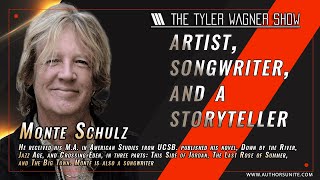
In this interview, host Tyler Wagner talks with Monte Schulz, son of Peanuts creator Charles M. Schulz, about his upbringing, career path, writing habits, publishing experiences, and his latest novel Metropolis. Schulz explains that his father's fame was largely invisible during his childhood and that it has not opened doors for his own literary career. He recounts a varied early life—sports, music, game testing—before turning to novel writing, producing titles such as Down by the River, Crossing Eden (later split into three volumes), Naughty, and the expansive dystopian work Metropolis. He describes his writing process: aiming for a page or two each day, avoiding outlines, self‑editing, and using multiple reading streams (literary, commercial, nonfiction) to develop craft. Schulz shares his unconventional editorial philosophy—he edits his own work, trusts his publisher Gary Groth to provide minimal feedback, and is skeptical of heavy editorial intervention. He details how he secured book deals, especially with Fantagraphics, emphasizing personal connections, persistence, and the uniqueness of his manuscripts. The conversation also covers his broad reading habits, from Stephen King to Joan Didion, and his belief that wide reading is essential for writers. Finally, Schulz provides an in‑depth synopsis of Metropolis: a fictional republic reminiscent of early‑20th‑century France, exploring eugenics, war, underground societies, and a love story, with a structure that emerged organically during writing. He expresses hopes for a miniseries adaptation and offers advice for aspiring authors on manuscript submission and the importance of reading both fiction and nonfiction.
Chapters
All right, everyone, welcome back to another episode. Today we have Monty Schultz with us. He is the author of Metropolis and son of Peanuts creator Charles M. Schultz. So welcome to the show, man.
Thank you. Glad to be here.
So, yeah, first question I have for you is, well, Well, we're gonna get to the book, and obviously this is a show about books. But before that, so son of the Peanuts creator, I'm sure you get asked about this a lot. I guess first question would just be like a general one is, what was it like, you know, growing up as the son of the Peanuts creator? That's pretty cool, actually.
Well, yeah, he wasn't famous when I was younger. He didn't really become famous in the popular culture until the release of that little, uh, book, uh, by Determined Productions, Happiness Is a Warm Puppy. And then, uh, and then maybe in a 3 or 4 year period, it was then, uh, Clark Yesner's musical, the You're a Good Man, Charlie Brown, okay, stage, stage show. And then, uh, I think in 1965, I think that's when it was, uh, A Charlie Brown Christmas. So otherwise, I was— I had a friend in 6th grade who told me he was a fan of, you know, Peanuts or something. I was really surprised. I didn't know— I didn't know anybody read it except for me. Yeah, I mean, so Dad wasn't like— I got asked, I did an interview this morning where they're saying, what is it, I mean, everybody must have known your father was famous and everything. I said no, didn't seem like it. It was just, uh, I think some kids when I was in grade school, I think some of the kids whose parents were, um, doctors were more popular. And then when I went to a school I went to one private school in my life. It was my sophomore year in high school down here in Santa Barbara. I came down for it. And there are 2 or 3 of the kids there were, had more famous parents than I did. One of those kids, David Wyler, his father was the movie director William Wyler. And he seemed to be kind of a celebrity. And although I really wasn't, I didn't know anything about him, but I mean, nobody's, one of the dorm monitors had a Peanuts poster in his room, I thought was kind of interesting, but I'd never, I mean, even that kind of surprised me. So if there was— okay, so point is that, uh, and even in Sonoma County, he wasn't— where we grew up, he wasn't— he didn't seem like a movie star or something, right? I mean, he just didn't— that kind of fame was not as pervasive as it seems now in hindsight, right? So he's, he's like, even being dead for 23 years, he's way more famous than he ever was when I was say, in school. So that's just how it is. There was no sense of— it was like growing up son of Cary Grant or something like that, you know? Yeah, it wasn't really like that. It wasn't at all.
No, no, that, that makes sense. And then, so, and a lot of times I like to start the interviews off this way. So, and I know you wrote a book and I want to talk about the book. What, besides writing of the book, or maybe you are, maybe that's your core thing is, is writing books, but What is your, I guess, profession? And then when— and the reason I'm asking that is when you were younger, is it anything that you expected you'd be doing now?
Or—
okay.
Yeah.
So what was your— what was your view?
Okay. So when I was a teenager, I always thought I would get a job. I liked languages, so I thought I'd get a job maybe at the United Nations as a translator. I don't know. I didn't— I had— you know, they're all pipe dreams. And I was— I really like sports. I played baseball, and then I started playing hockey when I was 17 and went to college to play hockey. And, uh, um, so sports were a big deal to me. Um, and then when I was in college playing hockey the freshman year, I suddenly— this whole music thing came to me, and I started writing song lyrics, and then right then I got a guitar and started writing my own music. And then Dad saw that I had a gift for lyrical language. And so he steered me directly to Thomas Wolfe and John Steinbeck and Carl Sandburg and those people. And I tell people that I— the books I write now, I would never read when I was 20 years old, 19 years old, never in high school, never would have read these books. They wouldn't have interested me. I read— I did read, but I read, you know, war histories and I read Ray Bradbury and I read science fiction, I read H.G. Wells. First Man on the Moon was one of my favorite books and Jules Verne. And I just, where I am now is not where I had ever imagined I would be. So, and I would do things differently too. I think I left that private school after one year, 'cause my family was building ice rink up in Sonoma County and I kind of chased the hockey thing. Had I do it to, had I to do it over again, I would've stayed in that school. Gone to a better college that— or maybe got my— maybe figured out what I really want to do, be more directed. I was sort of undirected. In my mid— in my late 20s, I started to, uh, be a computer game tester and writing game reviews, which was kind of fun. And then I wrote my master's thesis and then wrote and published my first novel. Um, so, uh, I still didn't really know I mean, it didn't make me any money, so it didn't make me famous or anything. So none of these books have. So in fact, I got asked this morning, the guy thought it might be an impertinent question, but has your father's fame opened doors for you? And I have to say, looking back, the answer is no, not at all. It does not. I think it would have had he been alive when I published my '20s novel. Crossing Eden. I think, I think you would have. I think people who didn't look at it seriously would have. And I think Metropolis, the same sort of thing. I think I would have got a very good look at this book. It's a really great book, and it's just— but I'm happy with the publisher, Fantagraphics Books. That's sort of a coincidence. Fantagraphics published the complete Peanuts, but the editor and publisher, Gary Groth, didn't even know I wrote books until I told him about it. And then I, I, I, so, um, it wasn't like there was a straight pipeline to it, you know. And he's, in fact, he told me after the fact that he was really nervous about me sending the book, even though he asked me to send it to him, because, you know, how is he gonna break it to me it wasn't very good and I was not going to publish, you know, Charles Schulz's son's novel? Instead, he thought it was just, uh, he loves my writing, said it was just a great, great book. And he says he only He doesn't publish— they publish— Panagraphics publishes mostly graphic novels and comics and those sorts of things. But Gary, a few years ago, started publishing what they call prose fiction. And he says he only publishes writers he thinks are great. He said, and you're great. That's why I publish your books. I mean, my books aren't making any money, but still. So that connection to my dad has been tenuous. I guess if I wrote a comic strip, it'd probably be different. You know, like, for example, Stephen King's sons, Like Joe Hill is pretty good, right? He writes like his dad. He sounds like Stephen King and even puts caps in where Stephen King puts caps in. And Stephen King and his other son Owen wrote the novel Sleeping Beauties, and you can kind of see that. That would sort of— I mean, Joe Hill didn't want to go under the King name, but everybody knew it was Joe Hill anyway. Joe Hill was Stephen King's son. So that's a direct one-to-one. For me, no, I think I'd have to be Well, when the first book came out of my big 20s— now we broke it into 3 books and it's called This Side of Jordan— but it came out and I thought there's like a million fans in Snoopy, in the Snoopy Club. And I thought, well, just 1%, 1% of that million, if they buy This Side of Jordan just because of my dad, it becomes a bestseller. But they must have not liked it. They must not read books like that at all because it just didn't do anything. So that's when I realized that it wasn't going to make any difference at all. It just was not. And, and that's played out over the years. I write music and music doesn't go anywhere. And so I just, I don't really have, I don't really have, uh, and they did the Peanuts movie and I didn't want to write it, so my brother did with his son and they, they made more money on that. My brother doesn't even write, he doesn't even write, he made more money on that. Than I've made all my writing my whole life combined. I was irritated about it. Well, because it doesn't seem fair. I just didn't want to play dad. I didn't want to pretend I was dad and write a Peanuts movie, you know? And, uh, and people I know, even our family attorney and all those people said, no, you shouldn't. We don't want you involved with it. Although then after it came out, they said, um, they said, you know, um, it would have been better if you'd been one of the writers on it. So here, but whatever. Uh, that's just how— that's just how things go, you know. And now I'm— I guess I'm too old to have it matter, but still, it's just, uh, it's just different from what you could imagine. You would imagine. Definitely.
So wait, how many books have you written?
Uh, well, okay, I've written, uh, let's see, uh, this is Down by the River, Crossing Eden, uh, Naughty, and I've written 4, published 7. Because we broke Crossing Eden, which is a 1,086-page novel set in the spring, summer, fall of 1929. We broke it into 3 books. So it's 4 plus those 3. So those all 3 came out before we put the whole book back together. And nobody understood the structure. They thought it was like, they thought I wrote these 3 novels and then, and then when it's together, you're going to see them in sequence. It wasn't like that. I wrote the whole book together. You change chapters, you change storylines. So it was 3 novels interwoven as one, but I wrote it as one novel. I never thought it could ever be 3 books because it's a— it's the 3 characters are husband and wife and then the wife's cousin. I realized the cousin could be broken off, but that still would make a 600-page novel. And, uh, and then I realized that the husband and wife talk about each other enough in their parts of the book that I could split them up too. And so I did. I got 3 novels out. But even in Fantagraphics, when they're going to put the book back together, they kept referring to it as an omnibus, right? A collection of 3. It's not. Don't think of it as one novel, as 3 novels we're putting together as one. It's one novel broken into 3. The structure is similar to John Dos Passos' USA, which I discovered after writing my book. I kept asking people, well, can you think of an example of a book where you have 3, uh, you have multiple storylines occurring simultaneously in different locations? And nobody could come up with one. It turns out USA was the answer. The closest was Carson McCullers, uh, The Heart Is Only a Hunter, where there's multiple storylines occurring simultaneously but in the same location. So clearly different characters. And so, uh, mine is more like— I, I end up reading USA and I saw, wow, it's just like my book. That's how it was. And it works. It worked really well. In fact, they have— he has more than just 3 narrative voices. Um, so anyway, yeah.
So a question. So a lot of our, um, a lot of our audience, they're authors or aspiring authors, um, just due to the— because I, I actually run a publishing company. Um, so I'm curious, I mean, it, it, it seems maybe the marketing Maybe that's maybe not what you're best at, but the writing you're very good at. Is that a fair statement? Uh-oh, he's frozen. No, see if he comes back. Oh, you back?
Say, I'm curious. I'm curious.
There we go.
That's what you're gonna ask.
Oh, okay. Now I can— sorry, you froze for a second. So my question was like the writing side, you seem very good at that part of this process, right?
So like, right, right, right.
You have like a rhythm or like how do you like to write a 1,000-page book is insane in a good way though. Amazing.
Yeah. Yeah.
How do you do it?
Well, my goal was to write at least a page or two a day, every day, which I did not do because the book took 10, 12 years to write. So obviously I missed a lot of days. Um, and I got that idea by, uh, the mystery writer, uh, the late Sue Grafton, who said she just would write 2 pages a day. She wouldn't write 3 or 4, she just wrote 2. So it just flows along. And, uh, so I wouldn't write by time. Some people say I'll dedicate like 5 hours. I can't do that. I would write in a certain amount of time. Maybe I was writing from 1 till 9 o'clock at night or something like that and had to get those 2 pages done. And so the book took a long time to write. Metropolis is a 668-page novel. 668 pages, I wrote that in 9 months. And I had a different writing schedule. I started in Hawaii in summer 2019, and I had already written 50 pages back, as it turns out, in 2001. I actually started that book, first saved files June 11th, 2001. I was shocked. To see it. Um, so obviously while I was working on Crossing Eden and editing it and getting it published and doing book signings and all this sort of thing, I'd given that book up, Metropolis. Um, but what I did was I had an interesting schedule. I told myself, okay, you have to write one page in the morning, every morning, before you eat or drink anything. Okay, you can't have anything to drink, you can't have anything to eat, you have to write at least that one page. And of course then I could write two if I wanted to, or what if I was really on a roll? And then in the afternoon, of course, I could write another 2 or 3 pages, right? But I had to write that first page. And so I, for 9 months, I only missed 3 days and it's 'cause I was outta town. But I wrote, you know, Thanksgiving morning and the Christmas morning and, you know, New Year's morning and on my birthday morning, I just, I wrote, I just, I would go along. Sometimes I was super hungry, right? And it's like counting words. I'm counting lines down, right? So the other, let's say the, the previous page had ended like 25 lines down. That means I would go to the bottom and go up and then come down to the 25 lines. Sometimes it's like, how many lines do I have left? How many sentences I got? You have 13 left. Oh my God. Okay. Okay. You got how many? Okay. 9, 5, 4, 2. That's painful. Go and eat. But I did, but it allowed me to just blast through that book. I also, I don't, I never have an outline. I don't really plot the book. I made the whole thing up as I was writing. I mean, I knew where it was going to end. The sort of opening paragraph foreshadows the ending, but beyond that, and I kind of knew what the last scene was going to look like, although when I got there I wrote it a little bit differently. But it wasn't supposed to be 668 pages. I thought it'd be like 400. It's just that I did, and the book has 4 parts, one set in Metropolis, and the second one, my character goes off to where the war is taking place called the Desolation. Then he's in another location I won't tell you about, and then he comes back to the city. Those 4 parts are really different. So the first part was like maybe 230-something pages. The second, the war part, was like 95. The third part is 75. And the last one, I thought, well, it's going to be really short because, you know, I don't know what's going to happen. But it turns out that was the longest part because I just wrote. I mean, it just all came to me. I never had any writer's block. Since you have a writer's audience, I can tell you what my dad said about writer's block. Only amateurs get writer's block. Professionals can't afford it. So Dad had to have a daily and, uh, 6 dailies and a Sunday in the newspapers every week. So he— and then I teach at the Summer Writers Conference and I tell them that, I said, you— writer's block is 2 things: either being lazy or afraid of writing something bad. But you're always better writing something bad than nothing at all, okay? So, so people say, I just stare at the empty page. We'll just write something. Just write it even if it's terrible. You might cut a whole page and keep one sentence out of there and that was a good idea, okay, or it might be you write that page, you realize, yeah, I shouldn't be going in that direction, you know. I'm writing the sequel to Metropolis called Undercity right now and I had a scene I spent a couple days on and just like 3 days ago I cut the whole thing. I didn't need it because I had— because I'd been— I needed— but I needed to write that scene to move the narrative forward and then I could look back and say, now I don't need it. Right now it's out, okay, because everything works. So that's what you have to do, you know, right? So, but it was really good. I've had— I had a friend I told this writing schedule to. I think it was a he or she, I don't remember who it was, and they said they're taking that up. The other thing I would do, by the way, is I would write— I write on my desktop Mac, but I never read the book. On the computer, on the desktop. I don't read, I just write on that. I read it on either my iPhone during the day, standing in line at a restaurant or something, or sitting down or something, or at night I read it on my iPad. So I'm watching a show or reading another book, I stop and take— I'll just read a scene or read. So I'm re— I was reading it all the time, and that creates the effect that we do as writers, at least I used to do, where you, you know, you write on the computer, so then you print it out so you can see it in a different format, right? Well, this saves pages. A 1,000-page book, you can't really do that because I would print it out and I'd make some changes and now I have to print out the 400 pages again or something, you know, to make it smooth. So, and I found that by, because I'm reading it in Gmail, so it already looks different. So, what that also does, and 3 friends of mine now have picked up my idea to do this, you see mistakes in Gmail that you don't see in Word. Okay, in fact, I would see mistakes on my iPad, go downstairs, turn the file on, and not be able to find that again. I say, where was that? Then I have to go back to the iPad again because on the computer, I'm just seeing right through those words. The text is tighter on my pad in Gmail and it just looks different. And so I'm seeing it objectively like that. And plus then, I mean, let's get real. I can go out to the store, some just look at the book on my phone, you know, and I can read, I can just read stuff. Yeah, you can say it's smaller, but I can still read it, whatever, you know, and it's fine. Sit there eating lunch, I'm reading the book, and then I go back to the computer and then continue on. So I make that separation. I also, one other thing I did was I would never, um, I would never surf the net, I'd never go on the internet on my desktop computer. So when I was in Hawaii and then I was here, if I want to look something up, I would not look it up on the computer. I would look it up on the phone or the iPad. And if I'm just going to surf the net, take a little holiday briefly, I had to leave the room. I had to leave the room. I had to go to another room, sit down, open up a little search Safari or whatever, look at some sports stories or something. I have to do that in another room. I cannot do it in the room I'm working in. So the room and the desktop computer are dedicated 100% to the actual writing of the book. Everything else is a distraction. Yeah.
There's so many key points there. Like I just highlight a few of them is one, I think a lot of times when people write books, they try to map it out exactly. So they're like, they come up with the title first, then they come up with the first or the introduction chapter and they try to do it so orderly. And it's like, this is not an orderly activity. This is like a creative activity from my point of view. So The way that you said that, it's like you kind of just write and then sometimes you just take it out, right? And, and you just, but it's, it's better to have more to work with than less, right? And then you can take away.
Always. You can't work with less. You can't work with nothing. Right, right.
Exactly. And I think too, um, I'm assuming the answer's yes, but I'll just add, like, do you have like mult— do you have editors and stuff for your— I'm assuming you have to, right? Like that's Or no? No editors?
I'm a really good editor.
Oh, okay.
Okay.
Tell me.
I'm really good. My publisher— So tell me more about that.
Yeah. Sorry, go ahead. You're just very good.
So my publisher, Gary Groth, doesn't believe in editing his writers. He said the only thing I'll do is if I— because if I get a really young cartoonist, I might guide him one way or the other, guide him or her one way or the other. But other than that, I buy the person for how they write. And so he would, uh, like, there's a, there was a scene in Crossing Eden where my character's in a big amusement park, sort of like Coney Island at the turn of this last century. And, um, when we're going over the whole book, he asked me, so what is that in the book for? Okay, explain that to me. I'm not sure I understand it. So I, I spent the next 20 minutes explaining what the point of it was. Okay. And then when I'm done, he said, okay, thank you. I appreciate that. Not now. I get it. I guess I'm sorry for having you have to do No, no, no, you should— I— you could ask what you want to, and I should be able to defend everything I've done in that book. And if I can't, it shouldn't be there, or it needs to be rewritten somehow. So, so we— he and I have a sort of a, uh, Socratic discussion. He was one of the proofreaders of the book, although I said, Gary, you did find some mistakes. I found a lot more than you did, okay? So I have to give you a D-minus. For proofing, okay? But other than that, no, I don't, you know, I was at a book conference years ago, Portland, called the Wordstock Festival, and I talked to an editor who said, "I believe all novels are, they're a collaboration between the editor and the writer." I go, "That's not, that is not true." I mean, can you really imagine editors editing Faulkner and Truman Capote or Cormac McCarthy or whatever. I just don't think it's true. I hear there are some writers who need a lot of work. I don't know, but I heard that my old agent told me that Anne Rice's novels needed a lot of work. And some writers say, oh yeah, I gotta have my editor really, and it helps me do this or that. I'm sort of horrified by that idea. You know, like, how can you not know?
Yeah, I love this perspective. So, 'cause like what I tell people a lot of times, and maybe it's because Like a lot of our clients, it's like business books and self-help books and stuff, and it's kind of like a business tool type thing. So maybe writing is not their expertise, right?
Right.
So I wrote my first book when I was like 19, 20. It's called Conference Crushing. It's this little 70-page book, but I think it was pretty terrible at first. But then my editor came in and she made it actually a good piece of work.
Yeah.
So I always just tell people like, an editor really can change a book. Like, she took it from like a 2 out of 10 to a 10 out of 10. But I would also say I'm probably not a great writer. So it's like, you know, so for you though, you edit your own work and your writing ability is at a level that you would say like, and not only do you not need an editor, but it scares you to have somebody, like you don't want them messing with your work that much. Like maybe a proofread or something.
Yeah, I, I, so I, when I'm writing, I send little scenes or snippets or whatever to friends, have them read it just for their impression. I don't want them to tell me what they would do. Uh, I don't want, oh, you should really do this. No, I don't. I mean, if they, they, and, and for, I have a friend who's a really good writer. She's published a couple novels, really great novels. And, and, uh, she sent me a scene recently that I really liked, and the only thing I said was, um, Two things. One, I said you should have the person speaking French, put more French in there, okay? And the other, I said, I said, when you're doing a reverie, we always call flashbacks, they're not flashbacks, little reveries, I said put them in italics, okay? It's easier to follow. But I'm not going to tell her how to write. She's really good writer, so I'm not going to do that. I don't want anybody line editing my book, and I don't believe it, and Gary Groth doesn't do that anyway. He reads The other thing is, though, what I don't understand about writers who just need a lot of editorial help is, do they not read books? If you read a lot, you can see how to do it. So I have a friend who said, "Wow, you're in Metropolis. How these chapters have such good, you know, sort of a cliffhanger ending. I mean, how do you know how to do that?" And I go, "Well," I said, "First of all, you don't read commercial fiction, and I do. I read literary and commercial." So I'm reading John Grisham and Stephen King. I'm reading Lee Childs and Preston Childs and all those people. I read these books. And so pacing is a big deal for me, and also knowing how to structure stuff. But I also read literary novels, uh, so to see how these things are done. Literary novels to me have to have something happen, and a lot of times the commercial novels need to be written better. I'll still like them if they're not written super well, but if they have good stories, I'll like them too. But I read really, really widely. I've read— so for instance, I'm a literary writer, but I read I read Midnight or Twilight, and I read Fifty Shades of Grey, you know, and I had friends, some literary friends ask me, why would you read those books? Why would you read Grisham and Stephen King? We don't understand it. Because I learned how to tell stories. Okay, you guys haven't really grasped that yet. Okay, you haven't figured it out because you don't read those things. But you have to read those things. I read super widely. I'm always reading. I like to have a commercial novel and a literary novel going simultaneously. And I'll see books where I would— I wouldn't have done this or that, you know? I mean, I— you might say, well, Metropolis, 668 pages, couldn't have been shorter? No, actually. I went through and cut everything that I thought was extraneous. Anything else in that book that was cut would leave a hole in the story, hole in the plot. So some books are the length they are. You probably heard the story about Thomas Wolfe needing the big editor from Maxwell Perkins because he had this massive manuscript needed to be cut right down. It's not true. His manuscript for Look Homeward, Angel was shorter than Gone with the Wind. The scholar Matthew Bruckley and his wife edited, looked at that book, it's originally called O Lost, and discovered that it was just, it was just maybe 100 150 pages, 200 pages longer than Look Homeward, Angel. What they said, what Perkins did was he took out all the references to, you know, sex and religion and a lot of humor. They said in the end of their introduction, Oh Lost is a greater book than Look Homeward, Angel. And I read Oh Lost and I really liked it. I could see what they're talking about. It just, it's, it's so— but, but the Scribners love that story of Max Perkins. Therefore, This is actually a funny story. The Bruckleys had to publish "O Lost" with the University of South Carolina Press. I think that's where they published it with. They wouldn't— it couldn't be published with Scribner's. They would not do it. And I'm sure they didn't do it because it would spoil the Maxwell Perkins, Thomas Wolfe myth by having this book out there. So they prefer to hold on to the myth than have the reality of a writer who was still— was a really great writer. Yeah, you can cut the book down, but it's not— Do you know the novel Andersonville by McKinley Cantor? Have you heard of it? It takes place in Andersonville Prison Camp during the Civil War. Well, that book won the Pulitzer Prize and was a bestseller in 1956 when it came out. I read a review of it on Amazon. The person said it would have been a better book 200 pages shorter. Okay, well, I don't know what does that mean? It won the Pulitzer Prize, was a bestseller. How would it have been better? I mean, what would the result of it be better? Whatever.
There's not much better.
Yeah, I don't know. It was a weird thing to say. Everyone wants to say it'd be better for sure. Okay, fine. But no, you just— yeah, I don't— I've never had— I've never written any book with an outline at all. I'm just too lazy to do that. I know some people, they actually write out character sketch of who their character is and everything. That just seems to me personally, to be a colossal waste of time. If it works for some people, great. I just would never do it. I just know how to write. I know how to, I know how to introduce my characters and develop my characters. And, uh, I know how to pace my book.
Do you think the core of that though, is because you've read all those other books? Like, is that what you're kind of saying?
Like, that's the reason? Yeah. Yeah. I think my editors, I think that's a good, that's a good thing to say. My editors, are all the writers I read. Okay, they got it. And then, and then I think also some writers— I know it's true of a couple friends of mine— they're not able to make the connection from what they read to what they write. There's this disconnect in pacing and this when they go, oh yeah, no, I should have done this, I should have done that and everything. Well, what do you get from this book you're reading? Don't you see that? No, no, I just, I don't. But you read all these kind of books. I know, but still. But I can see it directly in my own book. Because I've been writing for a really long time, and I just, I don't know, I just, I, I found it, uh, easy to do. Now, I wrote my first book, a novel called All the Circle of the Hills, took place in a private school, and, um, I didn't even actually even reread it because I knew it wasn't great. There are parts of it were really good, but I've— and I still have never reread it. I don't want to because I know it's a mess. And but the second novel I wrote then, which became my first published novel, Down by the River, I knew I would sell it. I know what— first person I sent it to in Viking bought it right away. Um, I knew the editor, but that didn't mean anything because he didn't want to see it before that he saw it and wants to buy it. And, um, so, um, but I could— in other words, I could tell what was good and versus what wasn't, right? I knew it. You have to know, um, what, uh, it was, uh, I think, um, Hemingway said every writer has to have a built-in shit detector. Right? And you have to, you just simply have to know, otherwise you're at the constant mercy of editors who may have had their previous job selling cars for Ford. Okay, what makes them experts? Well, the experts now, they're controlling your professional life, your artistic life, and they're all they're doing is offering their opinions, which in many cases are not necessarily well considered. You know, I had a I had an editor tell me at the end of Crossing Eden when I hadn't written the epilogue, which would have obviated what he said, but he loved it, loved it, loved it. And finally he said, oh, it's like too many Thanksgiving dinners or something like that. And he said, every novel has to have, so you have these multiple storylines and they all have to come together at the end. I said, you mean like in, he told me he was a Carson McCullers fan and a John Dos Passos fan of, you know, Hart's Lonely Hunter and USA. And so I said, come together, you mean like in Hart's Lonely Hunter? Oh, that's right, they don't come together. Or— but you say, oh, that's right, they don't either. And he goes, oh, well, you're very glib about what books you've read. Fine, but you're bragging to me about how you know those authors, and now you're telling me how a book should end. Okay, so, uh, don't just blow smoke at me here, okay? I'm not, uh, I'm not an inexperienced writer, and I'm not an unread personality. I read a lot, and I have a lot of different opinions, you know, about how some people say, oh, books, you have to get right to it right away. Well, I don't know, um, Catherine Ann Porter's Ship of Fools stays at the port for, I think, the first 40 pages of the book. You know, what's going on there? Nothing really. Well, that's just the book. It's how she wrote it. Okay, it's what it is. Okay, so you don't have to like the book, but you can't say that we don't want every book written the same way. And, uh, I read books I don't like. I, I read all of the late Clive Cussler's books, even the ones written by his son Dirk, and I love them with his Dirk Pitt character and a couple other storylines I like, but I don't say— I'm not going to say the writing is great, but the storytelling is terrific, so I read them for that. I don't read them for the writing, and I guess I'm more annoyed by the literary writers, some of whom I really like, who don't seem to think that telling a story or having anything happen is important. So I find those books kind of boring sometimes, even though the writing is is fabulous. Um, but the writers are really good. Uh, the late Dennis Johnson, really great. The late, uh, Roberto Bolagno, Chilean writer, is a really great writer. Uh, read all of his books. Paul Bowles, you know, lived in Tangier, and I just love his books. Literary writers where stuff happens. And, um, uh, yeah, I, I just, I like a lot of different things. It's just important for people to read really widely. They just don't get it. They get it, or yeah.
No, I mean, you're kind of motivating me to read more fiction because I like, I mean, I read a lot of business, self-help, and memoirs. Like I read all those, but fiction, I just don't read that much. So it's interesting. I mean, I would say fiction, I mean, not only for the reason you're saying, but like reading fiction can also probably kind of open up new pathways too, right? Like, because I think the reason I'm reading these business self-help memoirs, it's like there's like the purpose is to learn and then act, right? Like a growth mechanism, right? Whereas I think a lot of people view fiction as kind of like a distractor or something, but it's more than that, you know? It's not just entertainment. Like you can learn from them too, even though they're fiction, you know?
Right. Well, Stephen King has a really good line about that. He said, "Fiction is the truth wrapped inside the lie." So you can, you can— so people say, I like reading true stuff. Well, Sophie's Choice is very true to the Holocaust. So if you don't see that, then you can't— you shouldn't— I don't know, what do you think you're going to read? You, you can see in non-fiction, in general, you can't get inside the character's head, so you can't imagine what's going on. So they seem— they're— so the characters, the people involved in those books are held at a distance, okay? Whereas in fiction, you can go inside of people's head, you think, but that's not what they really thought. Well, that's not really important. There's a memoir, something like Being Late to This Party, you know what it is by— God, I can't remember his name now. Anyway, he says about the dialogue in his memoir, he said, he goes, since we don't go through lives with a tape recorder running the whole time, we don't know what things were exactly said. He goes, but this is what I'm writing, what I believe was said or I want to have been said. Now, if you're talking about also the other reason you would read— by the way, they're really good nonfiction writers, really good. So have you ever read Dispatches, Vietnam? Or a very famous book you should look at, that's for— it's nonfiction, just reads like— I mean, it's literary, it's really artistic. And Joan Didion, have you read much any of Joan Didion? No. Okay. Okay. Joan Didion.
I've read a lot of like entrepreneur books, you know, like there's—
Joan Didion will show you how to write nonfiction. Okay. Her nonfiction. Okay. Her two most favorite books. Well, okay. She has a first collection of essays was "Solitude Towards Bethlehem." The second was called "The White Album." And then she also wrote a very famous book called "The Year of Magical Thinking" about the death of her husband. And then later on, I think there's another one called, I think it was "Blue Nights" about the death of her daughter. So those books are very stylistic. She's a tremendous— she was a tremendous writer. She just died this past year. And so they give you an idea how to write. Some writers even— Vine Deloria wrote Custer Died for My— Died for Your Sins or Our Sins. And then another writer wrote Bury My Heart at Wounded Knee. Dee Brown wrote Bury My Heart at Wounded Knee, which is really elegantly written.
To.
So the really best nonfiction writers blur stylistically that wall between fiction and nonfiction. And some are just really good, right? Carl Sagan was a really good writer. He's a really good writer, really, really fun to read, really interesting. Michio Kaku, also a really good writer. I like reading his stuff. So I also read, I do read And this historian Will Durant, Will and Ariel Durant. Will Durant's Caesar and Christ, really beautifully written book. So those books influenced my writing as much as the novels because they're really great writers. It has to do with use of voice. A lot of nonfiction people don't think voice matters. They don't think how they write matters. It's what they're trying to get across, but they don't realize that a book can be illuminating and informative and also be written super well. They just don't try. And also, again, if you're not reading these, like these type of examples, these writers I just told you about, and you're not reading fiction, then you really do yourself a stylistic disservice. You're not writing as well as you could, and reading these writers would open up vistas for your own writing. You see, yeah, I could do that. In Joan Didion's essay, she projects herself into it. Okay, she's there. You'll see if you look it up, look up Southern Bethlehem, and you see she's there. She has opinion. She was— it's— this is how it feels to be me in these situations. She also has a great line at the end of Southern Bethlehem, the introduction, where she said, one last thing to remember: writers are always selling somebody out. Which is what I like. So there's just a lot of things. Yeah, there's, uh, yeah, Michael Hare. Wrote, uh, Dispatches. He wrote the voiceover for Apocalypse Now.
Okay.
Yeah, that you hear from the— yeah, Martin Sheen's narrative. Yeah.
So, um, you had said one thing I did want to touch on because you said you sold one of your books to the publisher. So like, what was— and I think you said you had a relationship with them, but that wasn't like the reason. So like, what if, if we have authors that'll come to us and they're like, I want to go the traditional route, right? Like we're like a more service hybrid type publisher. So what is your method for, I guess, getting a book deal? Because I think a lot of people struggle with that. I mean, obviously the book has to be good for sure, you know, but—
Yeah, yeah. So the story of my first novel was there was an editor who was working with my dad when my dad was being published by Henry Holt. And his name was David Stanford. And at one point I told him about, or Dad told him I was writing a novel, and he goes, oh well, you know, just write your novel, you know, I mean, I'm busy, essentially, you know, okay, whatever. So I just continue, I end up writing Down by the River, and I told him about it. Now he'd moved to Viking, he said, well, send it to me. I go, okay, well, it's not edited yet, it's not finished. Well, you know, hurry up. Okay, well, I'll send it to you when I do, okay? You know, essentially like you blew me off like 5 years ago or whatever, so I'll send it when I send it, okay? And he read it and loved it and pitched it to the publishing house and they bought it right away. So Gary Groth at Fantagraphics was a little bit different. So what happened was there was, um, they, they're having, uh, writers do introductions to the complete Peanuts volumes one after another, and one of them was John Franzen's writing one, and he was repeating some biographical facts from David McKay's biography which were completely wrong. And then he also talked about Charlie Brown opening, you know, the mailbox, getting a valentine, and he said like it opened like a vulva. And so I was like, no, you can't really have that in the introduction. So So the studio, my dad's studio, said, we want you to call Gary Groth and talk to him about it, about contacting Jonathan Franzen. So I said, okay. I never met— I only vaguely knew about Fantagraphics books, and, and, uh, I gotta remember kind of hearing the name Gary Groth, but I didn't know at all. I called him up, talked to him for a while, and he gave me Franzen's number. And I talked to Franzen, and he seemed like a nice guy, and, uh, And I just, I told him what he was getting facts wrong. He goes, oh, I don't want anything wrong, you know, the book like that, because, because he had sensed some, some, um, resistance from the family, and there's going to be a feud between Jonathan Franzen and the Schultz family. And I was like, come on, really? Just, you're just talking about something's wrong. David Michales wrote false things. And, and then, and then I told him about the vulva thing. Whatever. Anyway, he's at the end of the conversation, goes, I really appreciate it, you know, this will be, uh, great. Although then I sent him, Gary Gross sent him my novel This Side of Jordan when it came out for a blurb. Because he told me the writing world is very small and our paths will cross again. Gary sent it to me, wrote back and said, not my cup of tea. Okay, whatever. Thank you. But anyway, but then meanwhile, I wrote this response to David McKay's biography. Or yeah, I was, or I put up some, stuff on— it was on Facebook, but something else on the internet, and Gary had seen it. And he said, so we're having a roundtable discussion on the biography, would you want to contribute something? I said okay. So I wrote what ended up being like a, I don't know, 56— not 56 pages, but 56,000 words or something on it, refuting all these parts of the book. You know, Dad was cold and didn't have time for his kids when he was taking me to Candlestick and all this stuff all the time, you know, playing baseball. It was a total lie. So, and then at one point, a friend of mine sent me an email saying how Fantagraphics Books had just published their first prose fiction by Alexander Theroux, "Laura Warholic." And so I called Gary up and I said, "So I see you guys," in the middle of this conversation about continuing my essay about that disastrous biography. And I said, so you published a novel? He goes, yeah, it was our first prose novel. So I said, did you know I have a book? He goes, no, do you? I go, yeah, I'm working on it. He goes, well, send it to me. I go, well, I'll wait till I finish this essay for you. He goes, okay. So it took me another, I don't know, I think I sent it to you about a month later, 6 weeks, something like that. And then I sent him The Cited Jordan and he loved it and he bought it right away. So that was a connection where— it seems like an obvious in, but you can see it's not an obvious in. He did— I didn't even know him. I didn't know anything about Fantagraphics. And in fact, when I told my agent I sold the book, he goes, what? To who? I go, Fantagraphics. Oh, wow. All right. And then I— and remember, the book was in 3 parts. So I said, but what's going to happen to the other parts? He said, well, they'll wait to see how This Side of Jordan does before they commit to the other. But then, Then those books are sitting in a drawer. Yeah, I called Gary up, he goes, uh, oh no, no, we're gonna do a deal for all three. I said, what about the book put back together? Because we'll do that too. So I got it like a four-book deal, which a big publisher would never have done, would never have done for me. And they look beautiful too, Gary. What Fantagraphics is known for is how beautiful the books look. Have you seen what, uh, this side, what Metropolis looks like?
No, no, no, I haven't. I have the, uh email from your PR agent.
You see, can you see this? Oh wow. Yeah, yeah, yeah. Metropolis. Yeah.
Anyway, yeah, yeah, that's very well done.
I know, it's fabulous. So, um, yeah, uh, the paint— the COVID is a painting by a woman named Angela Lison from Bristol in the UK. Um, so, uh, we, we purchased the rights for that, and so it's just really Yeah, that's right. So does it— does this answer the question about it? Yeah.
Um, so here, what I want to do, just because we're coming up on time, is if there's— oh, sorry for that noise, it's the helicopter. Um, if there's anything we didn't cover that you want to cover, uh, please share. And then let people know, we like websites, socials, and where they can get the book and stuff.
Um, So maybe I— did I explain the book? I don't know if I explained the book. I don't know if I said much about the book.
I think— oh, yeah, sure. Yeah, please do. I think it's going to be in Spanish, but go ahead. Sorry.
So it's a novel set in a fictional republic. The narrator is Julian Bream, who's a college senior in a republic that has been essentially corrupted and destroyed by eugenics. The search to improve the race, which in the case of us, which is very American— this is not an American novel, but where they just— the trick is to get rid of all the people you don't like, you know. So in the book, they've emptied— 100 years before Julian is in college here, they emptied half the metropolis, million people, put them on trains, sent them to the hinterlands, the east, and hoped they'd all die. But they didn't die. And then 40 years later, the Republic the Republic decides they need those lands out there. If you can pick— see, the problem with the book for me is I didn't know where it was taking place. I finally realized what it is. It's France, but it's— a friend of mine said it's like history bifurcated 1,500 years ago and created this Republic. So the provinces are eastern France, Germany, Eastern Europe, and the metropolis is Paris, and the holy river of Livorno would be the Seine. But instead of the Eiffel Tower, there's this huge— called the Dome of Eternity. And so it's this— So the society is being destroyed. And so they try to recapture some of this land that these outerlands and ends up starting a war where the metropolis, people from the metropolis, the Republic kill a million people in the first year. And then there's some resistance. Then the war continues. Now the war has been going on for 60 years and has led to the death of so many people. They say the counting machines in the metropolis can't keep track anymore and they don't care. So many people have been killed. And so Julian, meanwhile, meets a young woman who's sort of bohemian, kind of revolutionary, named Nina Rinaldi, and he falls in love with her. Now he's falling in love with a 27-year-old woman with an 8-year-old sister who is doing stuff that he's not really, you know, really aware of. He's from an upper— well, he's from a kind of well-to-do family, you know, and he's going to Regency College, living in Thayer Hall and studying philosophy and law. And doing okay. He's an okay student, he's not great. His roommate is really clever, great puzzle solver, but is an alcoholic and probably going to wash out of college. So, but he, Julian, through Nina gets drawn into this subversive world of the Republic, and he finds out that he's led by one of Nina's housemates, a guy named Marco, into the undercity. Some of the people didn't go on those trains, they went under the city like, say, for Paris, Rome, into the catacombs. But in this book, the caverns are even deeper. They said they go to the bottom of the world. And so there are a million people living down underground. And they had an uneasy war initially. Now they're at a sort of an armistice. They still kill each other now and then, but it's not on a mass scale anymore. And so Julian has seen something he thought was just all sewers, sewers and rats, you know. It turns out he sees, he sees, he sees arcades and people living their lives and selling stuff and coming and going. And he had no idea what it's really like. So what the book is, it blooms in his mind of what he sees, what he knows of the world. And then he ends up in this again, the same part of the book, going into the war. He goes to the desolation, sees what's actually going on. The landscape looks like the trench warfare of World War I, and maybe what it was like in the Soviet Union, you know, during the '40s. So that's what the book is.
That should be a movie, dude. And I hope— I guess maybe that's the goal sometimes. But also One thing I just noticed that you just said there is that you didn't realize where it was taking place from the beginning, right?
And that—
yeah, yeah, highlight that again, that you just began writing and then the actual place that you were writing about came to you after the writing, not before.
That's why— and that's why I stopped working on the book, uh, along, you know, 18 years ago. I stopped working on it because I couldn't figure— I did not understand the geography of it. And once I understood it in the spring of 2019, Then the whole book came clear to me. So the book opens up there, go to Julian with his roommate and a couple friends, go to some seaside resort called Saint-Étienne Shores. And I realized now it would be the coast of Western France, but I didn't realize that. I needed to know that to write the book. And once it all became clear, then the book was really easy to write. Then it all became freeform. I can make up anything I want to. There's a lot of different— well, okay, so you can look this up. The website is called metropolisthebook.com. Okay, can you remember that? metropolisthebook.com. It's a really good— it's a really good website. It even has an explore the book where it's sort of a slideshow of the book. I mean, I don't give the plot away, but you see images, what would be images, and then text from the book in it, and lists of foods and colleges or institutions and weapons and music and art and whatever you see. It's really It's a lot more advanced, it's a lot more extensive than I thought when I wrote it. I wasn't really sure about that. So, but that's what— so the book is really fun to read and yes, lots of stuff happens. In fact, I was standing in the shower about 2 months ago, I was thinking, so how many people does Julian see killed in this book? I thought, I don't know, what, 5 or 6? I started adding them up and go, by the time I got to the end, he goes— I go, oh my God, he saw like over 100,000 people killed in front of him. So it's just like, it's— he has— he's had, let's say, a big education, you know, at 20 years old. And so, but it has a happy ending. It does have a very happy ending, very satisfying ending. The epilogue is called Infinite Riches, which sort of gives you an idea of what it can be like. So, because it's really, it's really, it's really gruesome, but beautiful and poetic. A lot of musings about life and love, what it means to be in love, what it means to be a person, what it means to The meaning of morality, what's right, what's wrong. He asked somebody in the book, this guy named Mr. Sutro, so what about eugenics? What, what the scourge of all, he says, it's simply an excuse for hatred. I could give you more discussion on it, but that's, that's basically what it is, excuse for hatred. Eugenics targets anyone you don't like. Ultimately, you name them as defective. Feeble-minded, infirm, sociopathic. It's not like genocide where you target a certain group. Eugenics targets everybody you don't like. That's why it's so dangerous. And the example of eugenics war was the Germans and the Soviet Union in the '40s. So if you want to understand what the book is sort of— it could be if Julian Green were a college senior at Heidelberg University in like 1943. And the desolation is the war in the Soviet Union, where the Nazis were going to try to kill everybody. And the ones that didn't die, they'd make slaves of and then work them to death. But that was the idea. They saw them all as subhuman and so deserving of death. So the book is kind of— but it has— but you can't write a book— Julian himself says, I'm tired of writing this because I want to tell a love story, a beautiful love story that begins one spring afternoon or something like that. So that's kind of what the book is about. Yeah, a lot of different things going on in the book.
Yeah, I really hope, uh, and again, I don't know if that's the goal at all, but I hope it becomes a movie because that sounds like it'd be a sick movie.
I think it should be a miniseries, one of those streaming miniseries, because it's really big. It would be— I've watched a bunch of these, and I, then, and, and I'll tell you what's unusual about it. It's a— so it is sort of by definition a dystopian novel, but it's not like any of— it's not like my publisher Gary and my agents I were talking about, they both said it's a totally original book. It's not like any other book they'd ever read, or we could even look up a dystopian novel about eugenics, negative, what they call negative eugenics. Um, so, um, it's not, you know, the death is not like, uh, the, a pandemic, right? So it's not like the, um, the fungus in The Last of Us, right? It's not like I was watching this movie, sort of retelling of War of the Worlds. It's not like an alien invasion. It's us killing millions of people on the other side. So it's almost easier for us to have post-apocalyptic when it's not us, right? It's also not a nuclear war. It's an ongoing thing. I don't think anything can be seen as more apocalyptic than that war in the Soviet Union. The Soviets lost 25 million people, if you can imagine. We only lost 400,000 killed in both theaters. They lost 25 million, but they also killed, on the other side of it, they killed 3/4 of the German army. Can you imagine? When we talk about D-Day and we saved the world with D-Day and everything, the Soviets had killed 3/4 of the German army already over there. So you can imagine what that was like. It must have been, You know, Stalingrad is just a nightmare, right? Death, death, death. So that's— yeah, anyway, this— the lesson in the book is, is to find the, the moral course, right? Find what's good in our hearts. And that's what the book is about, dude.
Yeah, I'm excited. I, um, and again, if the miniseries comes, let me know. Um, thank you again, man, for coming on. I appreciate it.
I appreciate it. Okay, thank you.
More from Tyler


Catherine Nikkel : THE STORY EVERYONE HAS BUT HASN'T TOLD : The Tyler Wagner Show #1120



Scott Ritzheimer: Bring Predictable Success to your Organization | The Tyler Wagner Show #1115


Fred Moskowitz: A GUIDE TO GETTING STARTED WITH IN MORTGAGE NOTES | The Tyler Wagner Show #1113

Mark Podolsky: From Land Investor to Full Time Success How I Made $90,000 Cash in Real Estate


Mark Podolsky: How to achieve a 300% return on investment my foolproof strategy

Mark Podolsky: How to make passive income selling raw land the irresistible pricing strategy