Morgan Fallon: Cinematographer & Director | The Tyler Wagner Show #1064
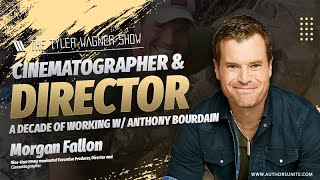
In this episode of The Tyler Wagner Show, host Tyler Wagner interviews Morgan Fallon, a producer, director, and cinematographer known for his work on documentary television. Fallon recounts his unconventional path from a high‑school ceramics enthusiast to film school at Emerson, where hands‑on training and peer networks set the stage for his industry entry. A chance summer PA job led to a three‑day stint with Michael Mann, which turned into a two‑year assistant role on the feature film Ali and opened doors to documentary work. He explains his philosophy of documentary storytelling—prioritizing authentic human connections, approaching each location as a guest, and embracing humility over the scripted, arrogant mindset of traditional reality TV. Fallon highlights signature series such as MeatEater (a scrappy, unscripted hunting show), Anthony Bourdain’s No Reservations and Parts Unknown (a decade‑long collaboration that took him to 70 countries), and United Shades of America with W. Kamau Bell. He shares vivid travel anecdotes from Bhutan’s rugged road construction sites, helicopter‑filled Antarctica, and the desert landscapes of Oman, illustrating the value of “rough‑and‑tumble” moments over luxury. The conversation delves into the technical side of documentary production: a typical 100:1 footage‑to‑final‑hour ratio, the evolution of a fast, reactive crew likened to a special‑operations unit, and the current industry tension between high‑volume content demand and the need for flexible, unscripted storytelling. Fallon also reflects on the social impact of documentary work, emphasizing dialogue across political divides and the role of storytelling in fostering empathy. He closes with brief mentions of his limited social‑media presence and a shout‑out to his work on United Shades of America.
Chapters
All right everyone, welcome back to another episode. Today I have Morgan Fallon with us, so welcome to the show, man.
Hey, thank you for sure.
Grateful to have you on. Uh, so yeah, for everybody watching, we did color coordinate. I called him before and we're both in blue, so that, that did happen.
Um, yeah, a couple months in advance.
Um, But no, so before we dive in though, if you could just tell us a little bit more about you and what you do.
Yeah, sure. I am, you know, my name is Morgan Fallon. I'm a producer and director and cinematographer. I work mostly in documentary television and mostly on, you know, serialized documentary TV shows. That focus on culture, food, people. You know, those are the stories I really like to tell. Most of that work is with post, post-base shows. I'm currently on a project that is, is not any of those things. So doing a 3-part series about Adidas and Puma right now.
So got it.
All right. Yeah, we're having a lot of fun with that one. So, so yeah, that's it.
So earlier on, I always like to kind of start here because I always find it interesting, is like when you were younger, is this at all what you saw yourself doing or that you like enjoyed? Or when you were younger, did you have a completely different— or maybe you didn't have a vision at all? A lot of kids have no clue what they're going to do.
So how young? Because I was going to be a pro skater for a long time.
Oh, okay. I'd say I feel like middle, like 13 maybe.
Yeah, man.
Yeah, maybe I could do that.
Maybe I could Yeah, it was high school. You know, I originally, I was always into like art and that's where it kind of clicked for me. Can't say I was like the best student outside of kind of the art room, but I did really well there. And I was actually focused on ceramics and like originally that was it. I was gonna like go to Alfred University and become like a famous ceramicist, you know? And I had like pieces in the National Art Show and stuff. Pretty proud of my high school ceramics career. But about middle of high school, it just, it just clicked. And my mom was a writing teacher at the high school, Brewster Academy, private high school in New England. And she used to use films to teach intensive writing. So it was a lot of like watching films and analyzing, writing about it. And all of a sudden it was just like, that's, I mean, in terms of a medium, if you want to tell stories, it's like infinitely more powerful than wheel throwing. Yeah. So I think that's what was originally, you know, exciting to me. And I got really into film and went to film school and that was it. I've never really, you know, I've only had one job that wasn't in the film and television industry, and that was working for my dad in the summers. So yeah, that's it.
All right. So a few questions. Is there— I'm sure there are. There's got to be in every niche. There always is. But for like ceramics, is there like— what does that career ultimately look like? Is there— is there some rich people in that career? There has to be.
Oh, absolutely. Yeah. If you're, if you're like— if you really hammer it and you're really good and you're like, um, Adam Silverman, you know, these like this famous ceramicist— and I don't know, I'm like kind of way out of that world, but I did happen to work with one who's like— I mean, you're talking about those cats are selling pieces for you know, 6-figure pieces, high 6 figures. Yeah. And, uh, and so you can really, you can crush it in that, you know. And then there's other people that have branched out and built, you know, companies, you know, that, that produce ceramics and do really well. So like, of course, like anything, yeah, you can crush it, you know.
Yeah.
Likely you're, you're probably making, you know, likely you're probably making some, some sweet-looking coffee mugs than selling them a Kenny book for me, you know. Yeah, yeah, a decent living. And, and hey, you don't have to go into, you know, an office every day and you do what you love, you know. So that's kind of— I think that's kind of the more likely route, you know. But yeah, you can kill it just like anything else.
So then you ended up going to school, but I'm curious on what— like, when you found success in your creative career of like directing and stuff, was Do you think like school was a big component of it, or was it more like relationship building?
Obviously talent, relationship building. Okay.
Yeah, yeah.
You know, like I went to Emerson, uh, college. It's a great school. It's very technical. It's hands-on. You know, year one, we're like producing stuff and getting your hands on actual equipment, uh, and being on set. And that, that's really important because when you get out into the industry, it's like, you know, you're young in the industry, you're gonna try a lot of different things. You come in as kind of a production assistant. People like, can you do this? Can you do this? Can you do this? Can you do this? I was able to do all of those things. So I don't want to say it's just relationship building, but the really important thing about that was like, you have a whole group of peers that are going out into the industry. And so you get this de facto network right from the beginning. Yeah. And that's a school that's very focused on kind of one thing, and that's, that's entertainment, you know. And so that really paid off for me. It was those connections that got me my initial leads in my initial start.
Okay, so there. And then did you like— because you're— I know you're in California, so is California like— obviously that's like the place to go if you want to go into that industry. So you met other people there then that obviously like propelled things?
Yeah, definitely. I came out like— I was still in school, uh, when I started coming out here, so I'd come out and work in this— that is the biggest coffee mug, my God. Look at that thing. Wow.
You are my dad. I got it for my dad, but he like left it down here.
So I like something out of Alice in Wonderland or something.
Um, the engagement on YouTube.
So, um, so, uh, yeah, I came out here while I was still in school and just started working at the studios in the summer. And so I just come out and PA in the summer, uh, production assistant, you know, and just try to get a foothold. Uh, but yeah, you, you know, eventually again all my peers graduate and, and it was the, the first really big lead was, um, so I got a, I got a call out of nowhere from a friend from school who said, hey, you know, a friend of a friend said that, you know, Michael Mann needs a production assistant for like 3 days. Uh, and I was like, I mean, absolutely. And I went into that and I was just like I am not leaving this office. And, and I, they must have thought I was psychotic. I'm like, stay. I was staying during those 3 days. I'm like, stay until like midnight cleaning the copy room, scrubbing the refrigerator, anything. I'm literally anything I can do. And the end of the 3 days, they're like, hey, we're, you know, we just got greenlit on Ali, the Will Smith, Michael Mann directed Columbia Pictures film. And do you want to be a PA on it? No, of course, you know. And then that led to me being Michael's assistant and, um, and was there for 2 years, you know.
Yeah. And then that kind of rest is history in a sense from there.
Yeah, you know, history, but like it's, it's up and down, man, like anything else, you know. It wasn't like, it wasn't like everything was just, you know, sweet from there, you know. I, I That was a real incredible entry point. I learned quite a bit, worked really hard, but it wasn't documentary. And I kind of found documentary after that and realized that was really kind of where my heart was and what my path was.
Got it. And actually, and I'll talk to you about this after, I just had an idea 'cause one of my clients, we just came out with a book and we're looking for somebody for a documentary. I literally, I hadn't thought about it before, but I'll run it by you afterwards, so.
Just all right.
Um, so what are— talking about documentaries, what are— two questions on that is what are, um, like the things that you like most about them? Like, you know, obviously different than like your normal movie. So like what draws you to documentaries in general? And then what are some of the ones that you're most like, uh, well known for that you were involved with?
Yeah, I, I mean, um, when I say documentaries, you know, there's, there's documentaries, there's documentary feature films, and then there's documentary television. And I really do look about it is different from what we call like the modern kind of reality television, you know, genre. Those are largely produced shows where you're basically writing a script and then going out and making that happen with real people in a real setting, you know. Uh, what I like to do and, and where I really found myself was in working with real people in real context, doing a ton of kind of research on them, and then putting together a show, an episode of a show. The ones I'm, you know, kind of most well known for are I did Meat Eater with Steve Rinella, which is on Netflix. That was a really, really interesting show. It was kind of early in my career and we really were able to build something from the ground up there that is very scrappy, very kind of organic. That's a show where you go out into the field with no script, no concept of what you're doing. Other than, you know, you got a camera. We were hunting, we were cooking, we were teaching about conservation, we were teaching about how to use, you know, a whole animal. And we'd get dropped off by, you know, a bush plane in central Alaska for 10 days. And whatever happened is what happened. And so it was a lot of using your wits, following story along the way, making sure that we're constructing something that is gonna be viewable and editable and all those things like on the fly. It was great. It was super cool.
Has Rogan been on that?
On Meet Eden? Yeah, we took Joe on his first hunting trip in Montana. Yeah, that's where I first met Joe. Got it. And he's awesome. And that was so much fun, man. That was actually a pretty profound experience 'cause you get to see someone, you know, I don't care who you are, you know, obviously Joe's a pretty tough dude, you know, but that first experience, you know, going out and hunting and like actually, you know, shooting an animal, watching it die in front of you, carrying it out, butchering it and eating it and being part of that whole kind of process. That's a profound experience for anyone. And to watch someone as kind of, you know, present and aware and sharp as Joe, uh, like go through that process was, was pretty amazing on camera. Yeah, anyone can watch that episode. That's an episode worth watching for sure.
Yeah, I think I saw it on YouTube, I think, or something. So maybe repurposing or something, or maybe it was a clip of it. It might have been a clip.
Yeah, totally. Exactly. Yeah. Yeah. And so working with Steve Rinella, that was amazing. He's an amazing person. And then, you know, the big one, the one we always talk about is Parts Unknown. No, well, first No Reservations and then Parts Unknown with Anthony Bourdain. I spent 10 years with him as part of his team. And that was phenomenal. I mean, you know, that's the lot. That's, you hit Powerball. And in my industry, that's hitting Powerball. And, you know, so rode that out as long as we could, you know? And then lost Tony, unfortunately. But man, what a hell of a ride. And, you know, miss him, miss that. Every day, you know. But extraordinary experience. 70 countries, uh, you know, 7 continents, um, uh, you know, got to the South Pole and, you know, and got to, you know, got to the central DRC and the Darién Gap and, you know, the finest restaurants in the world and, you know, the, the, the dark corners of Tokyo. I mean, it was just incredible.
Dude, yeah, I mean, do it. I'd do it for free, you know.
That's awesome. I kept, I kept saying that, you know, some of my first shows, we are like, I remember my like third show or something, we were like in, you know, the Caribbean, like, uh, uh, uh, the, um, we were in like Saint Vincent and the Grenadines, I think was the name of the show. And I did the whole time like, you know, like, you're gonna pay me for this shit? Like, you gotta hanging out on a catamaran, you know, like just shoot a little, we'll hang out a little, eat some food, you know, have a couple beers. Like, it's amazing. And I think that's where it really— for me, that's where it all really clicked and blossomed, because what I realized in that is like what I truly love, and what I'm truly passionate about is, is people. And especially people who we, within, you know, kind of our own context, and whether that's, you know, growing up in America, growing up in Japan, growing up in wherever, the people that we view as like the other, you know, the other people, the foreign people, right? And getting out there and working with them and realizing like, man, there ain't no foreign people. We're like, we're all the same. Like, we all got the same concerns, we're all into the same things, you know. We like we can communicate over food and hanging out and getting an understanding of who each other are. And that was the real beauty of that show. And the thing I think that ultimately, like, I'm truly passionate about and the reason I love documentaries so much is because you are cast out into the world. You get these jobs that you're like, know nothing about, you know, and get thrown into a world. And the next thing you know, you're hanging out with, you know, kind of ultra-conservative ranchers in Texas, and this is going to go, and you get there and you're like, yeah, people are great, they're awesome, you know. Like, we may have some different political views, but then, you know, I love them, man. And, you know, no, no, being able to experience all of that is really amazing.
I think the biggest thing, because I remember, and I don't know if we talked about this when we had talked on the phone a few months ago, but Basically, like, I'm— when I traveled in Europe and I went to Africa, it was— it's— if anybody listening or watching, like, has not traveled outside of their hometown— and actually, and I'm not saying anything bad about— but like, the hometown I come from, it's just— it's one of those small towns where a lot of people, they just stay. Like, they don't—
me too.
Yeah, like, and I love my hometown. Like, my parents still live there, I think. But like, you should be too. Yeah, you should like still venture out because it's like the whole world We all have similarities, but the whole world is not exactly like your hometown, in case you didn't like know. And like, it's, it's so good to just like put yourself in different cultures. And I think you almost, for those experiences, they're like priceless. Like you really can't put a money tag on it. It's, you know what I mean? It's just so different than like the 70 countries and, or, you know, however many places you went with this, like Again, I just don't think you can put an actual monetary value on those experiences. Like, it's—
there is a, you know, one time like we kind of sat down and just joking around, we tried to, tried to figure out what it would cost to have experienced the things that we had experienced. It's in the tens and tens of millions of dollars. You know, it's like you just— there's no way to, to— I mean, yeah. There's no way to quantify it because you're also, you know, especially when you're working, you know, lucky enough to work with someone like Tony is universally respected. And so it's not just that you're like, it's not that you can just like, yeah, sure, we could go to Monaco and go to a sweet, you know, restaurant and be like, you know, you know, everyone's stoked that we're, you know, but we'd also go into like these tiny villages where like people knew him and they were like, they wanted us in their house and they wanted to show us their, their lives, you know. And, and once you get that and you get that kind of access, you just, and you just are able to open up and just let it wash all over you, you know, and just really absorb like what that is all about, what their lives are about, with the experience of being in a foreign context and learning all those things are about. And again, You always have those root commonalities where you realize like, man, we did like most of our concerns are the same, you know? Yeah, most of our things are the same, you know? And like, that was the best. And also that that show, what was great about that show is like kind of built into the philosophy of the show and how we went out into the world was like the idea that we're like guests, you know? And that was really refreshing because a lot of television production, a lot of entertainment people go out with like a very kind of arrogant, you know, perspective. We are, we're, you know, we're Hollywood and we're coming in and we're gonna, you know, we're gonna make our show and move the pieces around the way we want. And I guess that's what I mean about the difference between the two kind of subgenres and like reality and documentary is like, in reality, there's a lot of that, a lot of going in and saying like, like I'm sitting in an office and, you know, in the West Valley in LA, and I'm making a show about, you know, I mean, you know, throw a dart, you know, like making a show about Oman, right? And the Bedouin and, you know, in the Empty Quarter of Oman. The fuck do I know? I don't know anything. You know what I mean? I got to—
I got to—
I got to figure out what they're about and then— and then construct the show out of that. Where a lot of times in— in television production, it's people sitting in an office like this and being like, I'm going to write the script and then we're going to go out and cast it and we're going to go make it happen. And I think the fact that we went out as guests and we went out with humility and we went out with a— with an openness led to us constantly being able to be surprised and allow the kind of magical stuff that you don't expect, that you can't script, that you can't predict to happen. And we also just got really good at capturing that. And I think when people appreciate the show and they watch it, that's what they're seeing. Is that, yeah, this is real. We're not lying to you. This is authentic. And, uh, and, and there's some real magical moments that, that happen out there, you know. Yeah, put yourself in the right place and be open to it, you know.
100%. And that's— so that's gonna be my next question, but I wanted to tell you this first real quick because, as you know, with this podcast, like, we have like a schedule link. So I did not plan this, but yesterday I— because I just realized— so yesterday I interviewed Lori Woolover Oh, Lori, yeah, it's fantastic.
That's amazing.
So it's just so— I wanted to tell you because like I didn't purposely line it up like the next day. Like, there's no way I would have been able to predict it, but like literally, yeah.
Oh my God, so you've been like fully, uh, fully bornade now. I mean, what am I gonna say? Lori is, you know, Lori's the—
well, yeah, no, so I mean, her, um, and yeah, her, her podcast will probably go live in probably like a week or two, but Um, but yeah, no, so that's my next question, and I wanted to ask you because it's kind of fresh in my mind, some of the things that she had mentioned. But what are— and look, you had so many amazing experiences, so it's kind of hard to say this was better than this, but like, what are some of the ones that you like remember out of all that traveling and being with the crew that— like, I guess the question would be like, what are the first 2 or 3 that are in your mind right now that I've like brought up?
You know, I always kind of like my— I always really liked the kind of more more, I guess, I don't know. For me, like, if you're gonna— if you were gonna say what are your favorite experiences, I'm not gonna pick out like all the, the like super fancy restaurants and sweet hotels we stayed at. I like, like, I like, I like the, the kind of more rough and tumble stuff. I mean, most of us, I think. So I— going to Bhutan. Bhutan was— Bhutan was insane. That was super cool because we also, you know, a lot of these shows, it's like you're on a finite schedule, you're on a finite timeline, you're trying to make the show happen. So you do got to answer to certain things. And so yes, we get immersed in the culture, but we get a somewhat limited view because we gotta, we gotta hit a schedule, we gotta, you know, we gotta, we gotta deliver, right?
Yeah.
Um, Bhutan though, we drove across the country, um, and, and I mean, on like exactly what you would picture, like a ribbon of dirt that goes through the mountains, you know. And it's a road that's being constructed, and it's being constructed by basically Bangladeshi and Indian construction workers that live up in the mountains as they push this road forward. It is sketchy. You know, there's places where it's 1,000 feet drop on the side. We had to stop because a gigantic boulder had rolled down into the road. You know, it's all of that stuff, you know. But along the way, we would stop at these little kind of waypoints where they had put together literally like a tarp you know, like a tarp tent over a structure, and there'll be like a little pot-bellied stove in the middle of it. And you go in and it's all the workers, you know, warming up, and then us, you know, in these benches kind of around these pot-bellied stoves. And they make like, you know, ramen soup and doctor it up with, you know, the, the local, uh, you know, chilies, like, like chilies, you know, like chili you know, chili oil and all this. So you're sitting there eating it like drinking a cold beer with these workers from Bangladesh. You couldn't have come from more different contexts with everyone sitting around the stove there. That kind of stuff to me was like, that was precious and that's gold, you know?
Yeah.
Um, so that, that comes to mind. Uh, one that, you know, I keep telling, I told on Tim's, uh, Tim Ferriss's podcast too though. Um, yeah. We were flying around, uh, when we were down in Antarctica, we had like basically unfettered access to, uh, helicopters. And so in Antarctica, that's, that's what you want because the only place to get anywhere, or only way to get anywhere. And, um, you know, there are people who've been going down there for 10 seasons and never been off McMurdo because you gotta have access to the helicopter time, right? Um, we got a ton of helicopter time. And so one day we got picked up and we were taken out just to shoot B-roll and basically get in the— get in the— get in an A-star with a pilot who had just come out of Afghanistan flying Apaches. And he was like, what do you want to see? I'm like, man, what do we know? You tell us what we want to see, you know, just take us for a ride. Yeah, you know, I'll take you for a ride. So I mean, you know, you got— you got one of the best pilots, best trained pilots in the world. You got Antarctica and a helicopter We just went and flew around all these insane canyons and ravines. And, you know, we'd pull up on— it'd like pull up and land on a cliff. And we're like on a cliff with like a 2,000-foot drop with a valley in front of us that's bigger than Manhattan, you know. Uh, just the scale of it, you can't imagine. We did that all day. And on the way back, we're flying back and we had to stop for fuel. They got these little refueling stations kind of around. And so You're working a refueling station, right, in Antarctica. You're like a 3-person crew that's out there for an entire season in a place that looks like Hoth, you know. It's just like you're on the glacier, it's just ice, and it's you and several 155-gallon drums of jet fuel. But we go and we land here and these people come out, uh, the people who work there of the little, um, the little kind of, you know, a hut. I don't, I don't want to call it a hut. It's a, you know, no, yeah, yeah, I know, a decent living situation for that condition, uh, with this big pot of pulled pork, uh, and coffee. And we're like sitting there with the, the rotors are still spinning, we're pumping jet fuel over this one of these 55-gallon drums, like eating pulled pork sandwiches, uh, drinking coffee. You know, and it's like, man, what, what did I do, you know, to land? I mean, it's the coolest thing you can imagine. And so there were a lot of experiences like that. Oman, I, you know, anyone who's ever gets the opportunity to go to Oman should go to Oman. Uh, it's absolutely stunning, completely like out of a fantasy, you know, really beautiful. Extraordinary landscape. They've got coral reefs, they've got quasi-rainforests in the south, you've got these incredible mountainscapes, you got, you know, the desert and the Empty Quarter of the Arabian Desert touches into Oman. So sitting out there, being out there at night with the Bedouin in the sand, that was totally unique.
Yeah, I'm similar to you with that. I mean, look, luxury stuff is always—
that's always nice, nice.
And actually, when you're traveling that far, you know, this class wouldn't hurt, right? But at the end of the day, I think the coolest stuff though is being in the real— like when I traveled to Europe and Africa, I remember one when I went to Prague, uh, Czech Republic. You know, there's the main strip, if anybody ever been there, there's like a kind of main touristy part, and if you just venture off like 20 minutes, then it gets into where like the locals actually are. And like, I was like, where are the locals? That's where I want to go.
Yeah.
Um, so it seems like you were similar in that. It's just like, I want— yeah, I want to be with the locals. The tour— I don't need to go to KFC in Africa, you know what I mean? Like, I know what a KFC is.
Oh, though I gotta say, at the— at the end of a long Africa Africa trip, uh, I'm, I'm hitting KFC. Yeah, yeah, in the airport and like, you know, in, uh, Doha on the way back or something.
Hey, and I'm not hating on that, I think it's great. It's just not my focal point is what I said.
No, but you know, you're totally right in like the whole, you know, the base philosophy of that show was finding those places and seeking those people out, getting off, getting off the path, you know. And, and that was You know, but, but it, but also understanding that like that, that has many faces, that, that particular experience has many faces. That is, that's a different experience when you're in Rome as it is to when you're in, you know, like I said, like Central DRC or Ethiopia or, you know, it's, it is, uh, I think it's, it's, it's going with an openness and an ability to recognize like the real stuff, you know?
Yeah.
And, uh, and, and recognize authenticity. And when someone is, uh, putting something in front of you, and from an eating point of view, when someone's putting something in front of you that they— that there's like actual heart in, that it's not just a commercial transaction, you know? You go to Rome and eat nothing but commercial transactions, and you're not gonna really experience Rome. Or you can get off the path and look for a restaurant that doesn't have you know, pictures of all the food with English descriptions on it and, uh, and just have them throw anything down in front of you and, and you're gonna get something that has like a real piece of that place and a real authenticity to it. And I think it's seeking that out, which was the kind of base, um, the base philosophy and the drive, uh, for the show. And then learning how through the various techniques that we had kind of develop as a team, you know, how to translate that for people and bring it into their house and in their living room. Yeah. And we were successful, you know?
So yeah, I wanted to ask too about kind of like the creativity side of things. So, I mean, like when you're doing one of these projects, like what is, and you kind of touched on it a little bit, maybe it was like 10 minutes ago, Um, where you said like, you know, you basically just film and then, you know, you try to capture the moments in a sense, right? So it's maybe you like film a lot and then— yeah, so is the process really basically like just keep the cameras rolling and then whatever we like, or how much of it is, you know what I'm trying to say? Like, what's the—
yeah, to an agree—
the end product, I guess, is the—
yeah, to a degree. I mean, like, I'm a notorious overshooter, you know, and, uh You know, so anyone who's looking to hire me in the future, don't listen to this portion of it. But I mean, I have shot 100-to-1 ratios on these shows, meaning that I've shot 100 hours of footage for an hour of TV. Absolutely absurd ratio. But it's how— it's honestly how, especially in the beginning, it's how I got the good stuff. Yeah. You then, you know, as you get older, you learn, you get more developed in the industry, you learn technique and an ability to kind of predict those things and kind of sort out, you know, the wheat from the chaff. Or we got, what we got is, and if for anyone who's watched Morgan Neville's film Roadrunner about Tony, you know, it talks about this. What we got is we got fast. We got to the point where we were very, very quick. We had developed, we had developed a kit, we had developed techniques, we had developed an understanding of what we were doing. We had developed a shorthand with each other. We had built a team that, that was able to be really reactive and know, you know, when we see something coming down the road like, oh, this is going to be good, this is going to be right for Tony, it's going to be right for us. And like, we're equipped to, we're equipped to jump right now. I would never, never, ever compare myself to anyone who had, you know, legitimately gone through military experience, uh, you know, but the closest thing I can kind of, uh, relate it to is being kind of a, like a special operator within the military. You know, you are a very, very highly designed, purpose-built, uh, unit that operates small, lightweight with, with excellent training and excellent equipment that is reactive and, and that is trained to understand context and, and, and react. And, and that's, I think where we got is we felt that way where we, we, we were really humming, you know, you look at, you look at those as we really got going and Parts Unknown. I mean, you look at those episodes and we're just, we're just cranking at that point, you know? Yeah, uh, that was, it was so exciting.
Yeah, and that makes sense because like, I mean, yeah, you guys basically created it. It just became like a rhythm almost, like a harmony was all there. And, and dude, that's amazing. So yeah, is there an average? I'm just curious because you said the 100 to 1, that obviously does sound like wild. Is there like an industry standard, like 5 to 1 or something, or is it just depending?
No, I mean, no, I don't think there's an industry standard. I mean, this is an interesting thing that's going on in our industry right now within documentary. I mean, you have this massive, massive push for content right now as all of these various platforms scramble for content. A huge amount of that is documentary and reality, right? But what you're getting increasingly is people who come from like a narrative background and have those kinds of expectations from a managerial side on the, you know, within the networks that are expecting that kind of accuracy. And we're saying, hey, listen, like, it doesn't really work that way. This is documentary, you know, you've got to be able to be willing to withstand an X factor. Like, we can't answer every question in advance. Like, This is finding a story. This is finding a path. This is shooting and stuff is gonna hit the editing room floor. And that's gonna be frustrating for some people who come from a narrative background where everything is so hyper planned out and where you have these incredible artisans and technicians. And I mean, if you've ever seen a feature film crew work on a big budget feature film, it's absolutely amazing. Amazing what the talent pool that is brought together on a film. You have all these people executing this one very particular kind of hyper-focused vision. That's a very different animal from what we do. You know, we go out and we're like, you know, eyes and ears open, absorbing stuff, shooting, throwing stuff to the side, you know, moving through the story, moving story elements around. We're literally scripting it out as we go. We plan, we have a schedule, you know, we kind of need those things to keep structure, but there's a looseness and you have to play free safety on stuff. You have to, that's how you do it well. That's, that clashes a little bit with some of the, some of the philosophy of the, of the platforms right now. So we're, we're, we're in a little bit of growing pains in this industry right now because of that very dynamic. And if I go back to some of these platforms with 101 rate, 100 to 1 ratio, there's they're gonna be like, dude, what is your problem? I'm looking for it, you know? I'm searching for it, you know?
Yeah, no, it makes— I mean, in my opinion, and again, I mean, obviously for the editing team that would be a lot of work, but you'd rather overshoot than undershoot, right? Because if you undershoot, you can't do shit about it. You have to go back and shoot again, right?
Yeah, totally. But it's like loading a barge too, man. Like, you want to carry as much coal as you can, but you don't want to sink the thing, you know?
Yeah.
And, uh, you know what I'm saying? And, and like, you know, you can do that too. Like, you know, I've, I've, you know, I've definitely gotten my fair share of, uh, of pissed off editors. I'm like, well, yeah, but, you know, we're in the jungle in Guyana and we're there for 10 days and I don't know what the hell's gonna happen. And I don't know what thing that happens now is gonna be relevant in, you know, down the road. I, I don't, you know, and as we go along, It's like, you know, at first, like, seeing the anaconda on the side of the river, that was the most exciting thing, and that was going to be the thing that was like the most exciting thing in the show. 10 days later, you're like, oh yeah, I remember that, remember that snake? You know, you've been through so much other shit that's like amazing. You got to shoot it all, you know?
Yeah, see, that's a great point because there's actually, um, he's a YouTuber, his name's Casey Neistat. I don't know if you ever heard But one thing that I think, like, why he's become so popular is that he, like, he shoots so many things and he, like, dates everything. So you'll be watching, like, one of his vlogs and then he'll, like, flash back to, like, 2 years prior. And if you're, like, a real fan of his, you're like, holy shit, like, how did he have that on file? Like, how did he—
like, that's awesome.
Yeah, yeah, you know, so, like, yes, I mean, sure, overkill is, like, a real thing, but at the same time, you're correct, like there is relevancy that you could only know in hindsight, right? So absolutely, and that adds flavor to it. So that's cool.
We do not have a script, you know. Yeah, we do not have a script. And, and, and, you know, we need to— so we need to react.
Yeah, for sure. And yeah, in a jungle, literally anything you don't want to miss, like, I don't know, a monkey or something jumping like that, that, that's the fucking thing you want.
Yeah, yeah.
Um, that's right. But, uh, so what I want to do now, man, is like, just in case if there's anything that you wanted to cover that we didn't, I want to leave the floor to you. And then also, um, you know, let people know like how they can stay in contact with you, like website, socials, and all that stuff.
You know, I have— I like— I have a— I have several, you know, I have a couple thousand, you know, fairly disappointed Instagram followers, but it's not really my jam, you know. I don't— I don't do a ton of social media and stuff like that. I I'm, you know, I do, I do kind of this, you know, never been a great self-promoter, you know. I love talking about it though.
No, no, yeah. Is there anything like, do you want other stuff?
Yeah, I mean, um, you know, there's a, there's the— I just, I, I gotta mention the third show and, and kind of like that chronology that meant, you know, has meant so much to me is, uh, you know, a show I worked on called United Shades of America with W. Kamau Bell. I don't know if, you know, people are familiar with him, I think, you know, through the show, but also he just released the documentary on Cosby. And I just got to give a shout to like that work and being able to work with Kamau. It was kind of amazing because I met him, you know, I met him in Kenya when we went to film in Kenya with Tony. And this is 2 months before Tony died. And it was almost like, just, it was like the passing of a torch, you know, ended up going on after Tony died and working with Kamau for 3 years at a time when like, we got to focus like on our country. So after all this time of being out in the world, and learning about, you know, other people and telling other people's stories all around the world. We got to like go in and look at our country at a time when our country is like really hurting. And, you know, I don't care what political stripe you're from. I've hung out with everyone. Like I said, I appreciate everyone on a human level. I may have some different opinions than you, but the fact that we got to go out and really examine that and jump out into the world, that meant so much to me. And to have like a very, very brave voice in Kamau who's willing to like really kind of shake the structure up. That was another very powerful experience and one that was kind of like very important, you know, to me as well. So those are also shows worth checking out for better or worse, whether you agree with like our, you know, kind of social and political conclusions or not, you know. I think the most important aspect of that is I would hope we can all kind of stay in dialogue. We work through this, this rough patch.
Yeah, dude, I think that's the most important part too. It's like, whatever side you're on, I think the discussion needs to happen. And I think that's the hardest part that I see. Yeah, on both. Like, so many YouTube channels, I find like they're— they just like, if they're on one side, they'll like have a whole video and all it does is bash the other side. Like, it doesn't present a solution, it doesn't conversate. And it's like, dude, that ain't— I mean, let's, let's play that out for a little and see where we end up. It's not going to be where we want to be.
It's not good. I mean, you don't have to read a whole shit ton of history to know that that doesn't end well. Yeah, I was, I was talking to someone today. I was actually talking to this gentleman, uh, Chris Saberne. You know what he did? Chris, Chris invented and designed the Adidas Superstar.
Oh yeah, okay.
Shoes of all times. I was talking to him today and I was telling him about work we had done in Montana. And something I love so much about Montana is like, and, you know, listen, Montana's changed a lot. A lot of billionaires have come in and really kind of like bought things up and stuff. But I'm talking about like old school kind of classic Montana. And I think folks from Montana will understand what I'm talking about. Montana was a very mixed political place. You had labor-based Democrats that came out of places like Butte where you had really, really strong union roots. And then you had conservative Republicans, you know? And so you'd get, in Montana, you'd get ranchers that live next to each other and they're like, one dude's a Democrat, one dude's a Republican, one dude's liberal-ish, and one dude is conservative, you know, within, you know. And they can't hate each other, you know? They can't not talk to each other. 'Cause like, in the middle of February when you're calving and it's 3 in the morning, like, you need that dude and he needs you, man. You're going to end up working together, getting shit done and going and having coffee and breakfast and talking about your families and realizing like, man, we are all in this lifeboat together. And if we get in a fistfight in the lifeboat, we're in big trouble. You know, lifeboat's going to sink. We can talk to each other. Like, it's cool. You know, it's all right. You can be frustrated. Like, you're allowed to be frustrated with the point we get violent, the point when we shut down conversation with each other, we're in trouble, man. You know, I hope we can get over that. And I hope that the work that we've tried to do over time as documentarians— I'm certainly not just talking about myself, you know— has, has helped in that respect. You know, we keep getting the stories out there and we keep talking about each other and we keep sharing and we keep being open to to people that we consider to be other than ourselves, I think we can be okay, you know? I hope. So I guess I'll get off my soapbox now, man. But no, but it's important, you know?
No, it is super important, man. I think it's pivotal, especially in today where we're at. But dude, thank you again for coming on.
I really appreciate it. Yeah, I'm so stoked. Thanks for reaching out, Tyler. Appreciate it.
More from Tyler


Catherine Nikkel : THE STORY EVERYONE HAS BUT HASN'T TOLD : The Tyler Wagner Show #1120



Scott Ritzheimer: Bring Predictable Success to your Organization | The Tyler Wagner Show #1115


Fred Moskowitz: A GUIDE TO GETTING STARTED WITH IN MORTGAGE NOTES | The Tyler Wagner Show #1113

Mark Podolsky: From Land Investor to Full Time Success How I Made $90,000 Cash in Real Estate


Mark Podolsky: How to achieve a 300% return on investment my foolproof strategy

Mark Podolsky: How to make passive income selling raw land the irresistible pricing strategy