Namya Manghnani: The Bedsheet Campaign | The Tyler Wagner Show #1067
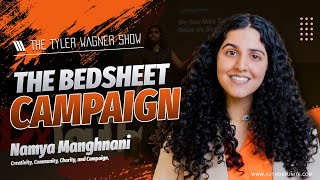
In this episode of The Tyler Wagner Show, host Tyler Wagner interviews 18‑year‑old Namya Manghnani about her "Bedsheet Campaign," a grassroots initiative that collects donated bedsheets, tablecloths, and curtains in Dubai, repurposes them into costumes, and supplies them to a visually‑impaired orchestra in India. Namya explains how the idea emerged during COVID lockdown when she could only use household fabrics, and how her background in costume design for local theater informed the project. She describes the logistics of setting up donation boxes, organizing the fabric, and crafting the garments, emphasizing the softness and ease of working with bedsheets. The campaign’s motto – “reuse, rewear, redefine” – frames the work as a sustainability effort that sparked dialogue about waste in the clothing industry. The orchestra now wears the costumes for every performance, fostering a sense of community and professionalism. Namya discusses plans to expand the model to other orchestras, theater groups, and women’s empowerment organizations that teach sewing skills. She reflects on her personal creative journey, from early school costume projects (golden‑ticket, Golden Snitch, Moby‑Dick) to the 4 C’s (Creativity, Community, Compassion, Curiosity) that she articulated on her website. She describes her flow state while sewing as rhythmic, intensely focused yet calming. The conversation also touches on her introverted nature, the multicultural community of Dubai, and how the city’s rapid growth shapes social connections. Finally, Namya shares her academic interests in history and politics, her ongoing university applications (about 15 schools), and how she intends to keep the campaign alive alongside future studies. The interview blends casual, conversational tone with moments of enthusiastic encouragement from Tyler, highlighting Namya’s youthful drive, philanthropic impact, and vision for sustainable creative work.
Chapters
All right everyone, welcome back to another episode. Today we have Namia Magnani. She is the creator of the bed sheet campaign where she repurposed recycled bed sheets into costumes for a visually impaired orchestra. So welcome to the show.
Hi, it's very nice to be here.
Yes, great to have you here. So to start off, and I think this is what all the listeners are going to want to know, can you explain— because I said that introduction but I don't I don't know if it's like super clear exactly what that means. So can you explain like what you actually did here and then we'll dive in a little deeper?
Yeah, sure. So basically I set up donation boxes around Dubai, um, in my school and all over, and, um, collected bedsheets, tablecloths, curtains that nobody was using. And I collected them, I organized them, and I made costumes out of them for this orchestra in India that's visually impaired and kind of like, especially because of COVID kind of struggled to keep afloat. And they didn't have costumes, so I made them for them.
Okay, that is awesome. Now, how did you come up with this idea?
There was kind of a few things that went into the idea. The first one was I— my background is kind of in costume making and costume design in terms of like I do a lot for local theater in Dubai and at my school. And so I've always kind of been drawn to costume making. And then the idea to use bedsheets was— it was kind of inspired by my time in lockdown. I wanted to make costumes, but I couldn't really go out and buy fabric, so I kind of had to like make do with what we had at home. And that ended up being like bed sheets at the bottom of a drawer that nobody was using. So I used those to make costumes and they actually worked really well. They're really soft, really comfortable, really easy to, you know, sew and cut. Edges were hemmed, so I didn't have to do that. And yeah, so that's kind of how I thought to use bedsheets to make the costumes. And then I reached out to the orchestra because I knew they were like struggling to find costumes. And this was also one of the ways I thought they could like kind of gain more prominence. If you have costumes, it's kind of not only like a sign of professionalism, but also it's like this— it creates this unity on stage that I think is really special and I thought costumes were really important for them.
Yeah, that's so— and wait, how old are you again?
Now I'm 18.
Nice. Yeah, see, this is, um, this is just so cool. And I, I know, like, to me age doesn't matter. Like, when I was 19, I wrote my first book, so it's like I don't think age matters. But I do just think that, like, when you're as young as you are and you're already thinking in such, like, a philanthropic way Um, I just think you have a lot of life ahead of you, so I'm excited to see what you do next. Um, so okay, now what has been— and I'm actually on your website, so this picture I wish everybody could see, um, and actually it's just yourname.com, so for anybody that does want to check it out, because the main picture when you click, uh, campaign and you see the orchestra there, like, that picture is so cool. Um, so what has been like the impact so far? Like, obviously, you know, you helped them with their costumes and stuff, but I guess what's been their experience like from you talking with them and stuff? Just tell us a little bit more about that with them personally.
So, um, with them it was actually really interesting because at first it was kind of a case of they didn't want to wear like old bedsheets, and then it became like— it sparked a really interesting dialogue about like sustainability and kind of promoting more sustainable practices, which I think is really important for kind of the current climate because the clothing industry specifically is so wasteful and so detrimental to the environment that this sparked a really interesting dialogue about reusing fabric. And I kind of came up with a motto for the campaign that was reuse, rewear, redefine. And the whole idea behind that was kind of to, to repurpose what we have and try not to be wasteful. And so that kind of— they were really accepting of that and they really liked the costumes. They wear them to all their performances now, which I think is really, really special. And yeah, I think they kind of— it's kind of created a real like sense of community between the members of the orchestra. And I think that, I mean, I do want to keep supporting them, so it's just, it's been really nice to see.
Yeah, that's so cool. And then how do you— I mean, and not that you would have to be thinking like this, but I'm just, I'm assuming that you might be. So how are you planning on expanding? Like, are you planning on expanding this and like helping other people that need certain, like, costumes? And also, and apologies if I did, if I missed this because I might have, how did you end up choosing this particular orchestra to help?
So, um, the first part of that, um, the— I would like to continue with other orchestras or local theater. I do already make a lot of my costumes for theater out of bedsheets, um, but I would like to take it on a wider scale. I think it's a really not only sustainable in terms of it's like repurposing old fabric, but sustainable because people always have old bedsheets. So I think that in the long run, this could— like, I could continue doing this and it's really— it's actually quite fun. And so, so that's the first part. And then the second part, this orchestra specifically, I was— they have kind of— they were in contact with one of the clubs in like golf clubs in India and they told me about it and they were telling me how this orchestra has kind of been struggling because of the pandemic and could use some support and they needed costumes. So I was like, okay, they were kind of the first ones, so.
Gotcha. Okay, that, that makes sense. And, and I can tell, and again, I do advise people, um, listening to this to check out your site because you actually have like videos on here that like shows the 4-week process, um, and there's, and they're like short little clips showing like how you— it is actually sick and you can tell that you're having fun with it. Um, so now have you thought, so obviously theater and orchestra, that makes— well, theater to me even makes like the most sense because obviously they need they need costumes. But are there any other, I guess, what am I, how am I trying to word this? Are there any other people or like types? And when I say types of people, I mean like, like people that sing or people in theater that you can think of that would like need like this type of, the type of thing that you're doing? Like, have you thought about others or have you just focused on like theater orchestra type of individuals for now?
Well, the theater orchestra thing. Dubai has a pretty big community, like a growing community theater scene, and it's not super well-funded. So this is one of the ways I guess this could kind of work for them. But then also this is not the costumes made out of bed sheets specifically, but I think the skill set and the And the idea of like sustainable costume making or just clothing in general was quite important for like women's organizations that are trying to promote like women's financial independence. And I visited one in India when I went to give the musicians the costumes, and it was an organization that worked to kind of provide women who had been kind of victims of trafficking with like skills to, to make their own products and to sell them and to kind of gain financial mobility. And there was kind of a panel discussion that I was a part of that where we kind of discussed ways that whatever each of us was doing would help them. So in my case, it was about being resourceful and learning to sew and using it to make something concrete and tangible that they could then use, they could then sell.
Got it. Okay. So, and actually, and I normally do this, it's funny, I skipped it and I think I probably did it because of your age subconsciously. So as I'm reading more about you, as we're talking, When you were like even younger than 18, when did you realize, or like what was it in your life that led you to realizing that creativity, uh, is, you know, I know you have the 4 C's, um, because I'm reading like through your About Me right now. So you have the 4 C's, now creativity being the number, and not necessarily that it's in an order, but like when did you discover that you were more of a creative person and that's what kind of is your your thing? When did that happen?
I think I was quite young when I got involved in like music and theater and art. It was just kind of— I think it was really fun because I've always been quite like involved in school. And so this was kind of a way to like relieve maybe not necessarily stress because I don't think at age 6 I had that much stress, but like a way to kind of foster a side of me that I wasn't getting to foster at school. And it really, I think, started with— I don't know what it started with. It probably was like painting or something like that. But I think— I don't think I was particularly good at painting. I think it was like piano and theater that really kind of— like community theater. I did like— youth productions of Annie and things like that that really like kind of made me like find a like an outlet that I enjoyed so much and that I really felt connected to.
Yeah, it's interesting. I would wonder, so yeah, I mean everything you said obviously, uh, is accurate. I mean it's your life. I would be curious though, and maybe your parents or somebody would know, like what was like the original spark. And it's not that that happens with everybody, but sometimes there's like a life-changing moment or something that like leads you down a path. So maybe it was the painting and then you realize, because it says here that like, allow me to explore the depth of art. So it like provides meaning to you, like artistry does. It's like, yeah.
I also think actually I can give you a definitive answer for when costume making became like a true part of the line. I just remembered, do you know what World Book Day is?
No, but I'm a book publisher, so I should know, and I'm embarrassed that I don't.
To be fair, I don't know that it's a very American thing. I go to a British school, so they kind of—
OK.
I probably not. It's OK. You're excused. It's a day where— I'm pretty sure you're just supposed to like celebrate the love of reading. But at school we would always have to like come in dressed up as a book character. And my crowning achievement to this day is my third grade golden ticket costume that I made and I won a prize for, and it was really exciting. And that was my kind of entry into costume making. And then every year since then I've tried to kind of top it. So it was a golden ticket. Um, from Charlie and the Chocolate Factory. Then it was, um, the Golden Snitch from Harry Potter. And then it was Moby Dick, which was like the whale eating the man. And that was— those were my like kind of entries into costume making. And that's kind of how I really fell in love with that part of the— that side of me creatively, I guess.
Got it. And I'm curious too about this. So, um, like for me, uh, like going on like a long walk, um, or like a workout in the morning, and then I get into work and I get into like a flow state. And I, I remember when I was checking out your little videos, the clips, I think it was on week 3 if I remember, it said that you like get into flow. So when you're, when you're like creating the costumes or like sewing, or there's different words for it, but like just overall creating, what's going on in like your— like, is that when you feel the most at peace, or does it like feel like work to you? You know what I mean? Or is it kind of more like a I guess it kind of—
yeah, it's very rhythmic and it's also like, it's like because it's, it's so action-based, almost like I am physically doing something, but it's also so like rhythmic. It's like a moment of extreme focus, but not in a way that feels like painful, like physics. It's like intense focus, like on what I'm doing in in a way that I feel like I wanna make it the best it can be, but also in a way that doesn't stress me out. It's a very calming sense of purpose for that, for those few hours that I'm doing it.
Yeah, that makes sense. It's interesting 'cause I think you've found something that, and again, I hate to keep going back to your age, it's just, it is somewhat interesting to me because I think you found something that some people, like actually never find in their whole life, which might sound surprising to you, but there's a lot of people that struggle with actually like discovering something in a healthy way that actually provides them like peace and also is productive to society, right? So it's kind of cool that you have found something that you— it's like very— there's like so many good elements about it, right? Like you enjoy doing it, it relieves stress. Um, it's like peaceful for you and it's helping the community. So it's just like this thing that all around it's just a win, you know? So I'm just saying, I don't know if you realize it, but like it is, it is like most people, if you're like, uh, what do you do to relieve stress, you know, like it's not normally like making costumes, let's put it that way, you know? So that's actually awesome that it is that for you because it's helping other people and it's productive. Like, there's just so many good things. So I just wanted to highlight that, that it's kind of cool.
Yeah, I hadn't thought about it that way. Sounds really nice when you say it like that.
Yeah, because, well, yeah, and obviously because you're, you're in it, right? So normally, uh, you need like an outside perspective to, to notice, you know, something that you're doing yourself. So either way, very cool. Um, and actually, and we'll talk about some other things, but now that I'm focused on these Cs, I'm curious, how did you Um, this is like a two-sided question. So like the 4 C's that you talk about, did you like create them or were you living them and then you realized after that those were your 4 C's? You know what I mean?
Yeah, I think when it came to like putting the website together, I needed to kind of figure out like divide up my kind of the things that comprise my identity into a way that was like concrete. And I think the 4 Cs kind of came naturally, especially creativity and community. They've always kind of been really big, important parts of my life. And so, um, then yeah, it was— it was— it just came very naturally. Finding a word that started with C was a bit of a challenge, but the general premise of it was, was quite easy to come by.
Yeah, no, in that— see, I'm going to highlight another cool thing that you might because it's you, you might not realize, is that a lot of people too are not very aware. And the reason is because they don't really take the time to become aware of what they are doing. Because a lot of people are— what's the word— is like they, they basically make decisions based on react. They're very reactional, right? So in this case, it's interesting, like you've lived and you've done things, and then when you were building the site, you, you you reflected on your life and became aware of what you were doing. And you were like, oh, these are my 4 things that I have been living out. And this— so it's just cool that at 18, and again, it's not the age, but it's just cool that you've kind of discovered almost like a theme of your life already. And obviously that can change and stuff. It's not like it's set in stone, but it's just kind of cool because it'll help you develop even more as, as you grow. So, um, With the community thing, and obviously you can, you know, help others in community, but how much, like, how much do you value, or how much do you like— maybe value is the wrong word— what, what part of the enjoyment do you think is like being involved in your community? Like, are you more extroverted or introverted?
It's weird because I think I'm quite an introverted person, um, but I think I've kind of Throughout my life, I've kind of belonged to so many different communities that I found real comfort in the idea of community, especially since because I am, I think, an introvert to an extent. I think that finding comfort in communities is so important to kind of establishing friendships and like, like having a kind of circle of people. So I think that I've kind of always really valued community and it's just kind of been a case of finding so many different ones that I resonate with, like a strong theater community and a strong academic community and social. And it's just been like a case of finding the right community to kind of help me with each kind of facet of my life.
Yeah. What is, um, and I don't know if you'll know the answer to this, but like, how would you describe, um, because you remember before I hit record I was telling you that I was— I live in Miami and I was considering Dubai as like a secondary home. Maybe I would live for like 3 to 6 months out of the year or something. What— how would you describe Dubai as far as like community in general? Is Dubai like— do you find that like people in Dubai are very like together, like community, or is it more everybody's kind of doing their own thing and doesn't really engage? And kind of a way to know is like, an example would be when you walk down the street in Dubai, and I guess different places, people would be different, but do people like say hi to each other or is it more like everybody's like in their own world?
I think that The thing with Dubai is there's so many people from all over the world. It's like a real melting pot. And so you do find your community quite quickly. And so, well, it's the whole walking down the street thing. I do think it depends where you go, but I have found that like every time we go anywhere, my parents do know someone that's just there. So it'll spark up a big conversation and It's kind of, yeah, I think Dubai is a very strong, it's got a really strong sense of community. There's a lot of different communities though, and it's, and I think that's really interesting because there's so many interesting people here because of how many different communities there are. So you kind of do get exposed to a lot of different cultures and ideas in a way that I didn't necessarily appreciate when I was younger, but I think now as I've gotten a bit older, I've kind of Um, because I've lived here my entire life, so I've kind of learned to appreciate different communities in terms of— for me, that kind of comes more in like a— from like a school sense, like different communities of interests and ideas.
Yeah. Um, and that, that was like a selfish question due to my interest there. And actually, now I'm really curious because I know, uh, recently like Dubai has just grown a lot and it's been in the recent, I think, kind of like 5 years or so. So, and I know you were very young obviously then, but like, wasn't it like when you were— do you remember it being like basically like not— like, how long ago was the city built? Like, do you have memories of it being just like mostly desert, or, or was that like even, uh, like, or was it already kind of built up by that time?
I think it was probably in its early stages. If I talk to my dad, who's been here for a lot longer, he kind of constantly goes on about like, oh, it was so— it was like all sand when I moved here. And as I've grown up, it's kind of become this like global hub and this like really interesting place to see like innovation and And it's kind of— yeah, it's grown exponentially in the last few years and it's been, it's been really interesting to see from the inside because I think everyone has this perception of what Dubai is like. And I think living here, it's very different to what, you know, the kind of idea is about it. But it's, it's definitely an interesting place to grow up. There's always something new being built or being— yeah, or being like new, new buildings, new attractions. It's, it's a really fun place to live, I think.
Yeah, it's, it's cool to, to hear that because, um, like, I think it's similar with Miami because Miami's like grown a lot too. And I, I've lived here for 6 years in Miami, and, you know, people have a perception of it from the outside, but you don't really know until you're on the inside. And even, like I said, I visited Dubai and I was there— I think I was there like 10 days or something— and And I certainly did not get like an experience that like a local, like the highlight for me, I remember we went to get sushi at the top of, it's called like Address Hotel or something. You go like to the very top and there's like a pool up there and you get sushi and then the view is insane. Like I'm talking like this is one. And I actually went to the tallest building there too. I forget the name of it. But, um, that view was awesome. But there's something about the view from Address Hotel rooftop that was just like— it, it— I don't even— I can't even describe it. Like, gives you chills. Like, it was so sick. And, and the way that they're building there is so wild. Like, there's so many cranes and just like so many— so I just can't imagine from your dad's perspective. Like, from your dad's vision, he probably sees like literally just sand, and now there's like 100,000 buildings, you know, like, it's crazy.
But it's really, it's really funny because the, the tallest building in the world, the Burj Khalifa, I, again, like, I've lived here my whole life, but I hadn't been to the top of that till I was about, I think, like 15 or 16. Like, it was, that's so, like, growing up here, it's, it's very different because I, like, I It's just kind of like, it's just kind of where my family is and it's just kind of home. It's not like, oh wow, Dubai with the, with the big buildings and the fancy cars. It's like, it's just kind of life, I guess.
No, I, I totally can relate because it is— I mean, the big building thing is different with Miami, but it's kind of like, I think when people think of Miami and Dubai, there are some similarities. It's like, you know, the big boats, the yachts, the water, stuff like that. So there are some similarities, but they don't actually think of it as a place that you could call home. Most people, they vacation in Miami. They don't live here. Right? And Dubai, I would imagine maybe Dubai is similar. It's very touristy. There's a lot of people that just, like I did, I went there 10 days for an event and then I left. But it's just cool to hear somebody's experience that actually lives in a place like that. Um, and isn't there, um, there's like, is it the biggest mall in the world too or something?
Yeah, I'm, I'm quite scared of that mall. It's so big, I always get lost.
Oh, okay. Yeah, I would imagine. That's fun. And then isn't there— have you been to like the, um, it's like a 7-star hotel or something?
Yeah, it's shaped like a, um, like a, like a dhow, which is like an Arabic boat. It's beautiful. Yeah.
Okay, cool. Yeah, I gotta— when I go back, um, again, I gotta explore a little bit more. I'll probably message you for some, uh, just like, um, from some tips of where I should go and stuff because— and I want to go— sorry, no, no, I was just— I want to go to Abu Dhabi too because I've heard that that's really like the big white building there or something. I want to check.
Yeah, I think what's really cool is like the way they kind of integrate their history with like such modern kind of buildings. Like if we're going back to that 7-star hotel, it takes this, like the history of and traditions of this culture and kind of uses it in a very interesting way in terms of like the architecture. 'Cause like this area, this region's got such a rich history and it's kind of, Dubai's become so associated with like, technology and growth, and it kind of like— you do miss like this, this very rich history. And, and there's actually so many beautiful places here that, that share that history that I think are kind of overlooked a lot of the time.
Oh, for sure. And that's why I want to ask someone like you, like a local, because when I was there, I was with like friends and stuff, but they weren't like local. So You know, even by me telling you the things I did, you can tell, like, we just did the normal touristy stuff, which is cool. I don't think there's anything wrong with that, but my whole idea of experiencing a place is more wanting to know, like, okay, where do the locals hang out? Like, where do they go? Because that's where you really get a real kind of taste of, like, what it's really like. So either way, thanks for having that little combo about Dubai. But back, back to you. I, I'm curious, um, so it seems you're very philanthropic, you know, community creative. So, so that side is obviously in motion. Now on the other side, like career-wise and stuff, what are your, what are your thoughts there? And obviously you still have plenty of time to figure it out, but I'm just curious, like, are you going to work in a creative field or what does that look like?
I'm really interested in history and politics. Those are kind of my, like, main subjects of interest. So I'll go to university hopefully first and yeah, and then kind of figure it out. I don't necessarily know what I want to do, but I definitely want to— even if like the whole creative side or like philanthropy isn't what I do for work, it's definitely something that I want to continue doing. Just because of how important it is to me. Sorry. And yeah, I'm kind of open to like whatever. I have no idea what I'm going to do after university, but I know that it'll be something in the humanities field with hopefully connecting all these interests together.
Yeah, no, that's cool. And have you— I'm assuming, do you already have a university that you're kind of wanting to go to? Or you're not sure yet?
Yeah, no, I'm in the process of applying right now as we speak. Yeah, I've got a dream university, and it's all getting so close. It's all getting scary.
Do you want to share it or no? You don't have to. I was just curious. Or maybe it'll— But how many, uh, how many have you like applied to? Like 5, 10, or like a lot more?
In total, I'm applying to about 15.
Okay.
Um, and I have so far pressed submit on none of them, but hopefully tomorrow. Actually, I'm gonna submit all my early ones.
So no way! So this is like literally in action happening right now. That's so—
yeah.
I think I'm like having a flashback because I remember when I was applying to colleges and stuff. It definitely— you should sew a lot more now because it's stressful.
That would help.
Yeah, yeah, because it just is. And I know what you mean, because like you don't want to press submit without like really giving the application like the fullest potential that it has, because you know, that would stink that like if you could have said something or put something different that you would get in. Um, but that's cool. And, and yeah, I think, you know, college is kind of the place where you— that's kind of what it's for, I feel, is to like actually figure out. So I think it's kind of cool that you're going into it with at least some, uh, macro direction of where you want to go. And then I think those 4 years or however long you're there, I think it'll help you get more clear. And then I, I think it will be great. Um, So what I want to do now is, uh, if there's anything we didn't cover, I kind of— I want to leave the floor to you and feel free to share it. And then also let people know, like, your website, social medias, like, how can people stay connected with you?
Um, in terms of what we haven't talked about, um, I don't think there is much. I just think, like, what I was trying to get out there is the message of sustainability and philanthropy and creativity and how all of these things can be connected and And I think, oh, in terms of how to contact me or get in touch or stay in touch, my website is just myname.com. That's N-A-M-Y-A-M-A-N-G-H-N-A-N-I.com. I don't think anyone's going to remember that spelling, but there you go. And then all the socials are on there for the Betsy campaign, for— oh, I run the Dubai Costume Society. So that information is on there as well. And yeah, there's also an email if anyone has any questions, it's on there. But yeah, that's kind of how to get in contact. And yeah, that's kind of it.
No, that's perfect. Thank you again for coming on and thank you for just doing all the stuff you do because I think Not to sound so cliché, but it seems to me that you're definitely making the world better for everybody. And it's just, it's just cool to see. And I do, it's just cool to see somebody with so much runway. So definitely keep, keep me posted on stuff because I'd love to have you on like again in the future as you continue to grow and do other things. So if there's any, any more messages you want to get across in the future, definitely reach out. And thanks again for coming on the show.
Thank you so much for having me. It was really fun.
More from Tyler


Catherine Nikkel : THE STORY EVERYONE HAS BUT HASN'T TOLD : The Tyler Wagner Show #1120



Scott Ritzheimer: Bring Predictable Success to your Organization | The Tyler Wagner Show #1115


Fred Moskowitz: A GUIDE TO GETTING STARTED WITH IN MORTGAGE NOTES | The Tyler Wagner Show #1113

Mark Podolsky: From Land Investor to Full Time Success How I Made $90,000 Cash in Real Estate


Mark Podolsky: How to achieve a 300% return on investment my foolproof strategy

Mark Podolsky: How to make passive income selling raw land the irresistible pricing strategy