Nikki Merkerson: How To Empower Others And Make Smart Investments? | The Tyler Wagner Show #1016
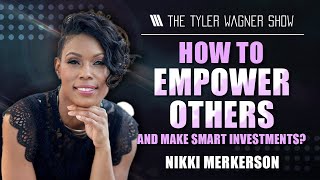
In this episode of The Tyler Wagner Show, host Tyler Wagner interviews Nikki Merkerson, founder of PairGap, a platform that enables shared‑ownership of real‑estate to lower the barrier to entry for new investors and address the housing‑affordability crisis. Nikki recounts her 23‑year career in mortgage banking and community development, which exposed her to rising housing costs and displaced urban communities. Inspired by the idea of pooling resources—originally likened to a matchmaking service—she launched PairGap in 2019 to digitize co‑ownership transactions, provide legal contracts, and connect buyers with financing alternatives beyond traditional mortgages. She shares concrete data on non‑married borrower mortgages, early beta successes, and her own wealth‑building journey through multifamily purchases, co‑living conversions, and leveraging equity. The conversation expands to millennial home‑buying challenges, regional market shifts (Miami, Texas, New York), and the broader post‑COVID urban transformation. Nikki outlines PairGap’s five‑year vision of expanding financing options, scaling the technology, and fostering generational wealth through homeownership. The episode concludes with a call to action for listeners to join the beta, follow her on Instagram and LinkedIn, and visit pairgap.com.
Chapters
All right everyone, welcome back to another episode. Today we have Nikki Merkerson with us. She is the founder of PairGap. PairGap, uh, lowers the barrier for new class of investors using a shared ownership model to purchase real estate in efforts to close the wealth gap creating a unique and innovative solution to housing affordability. So welcome to the show.
Thank you, Tyler Wagner Wagner. Great to be here.
Of course. So how, how did we get here? Like, how did you come up with this idea of PairGap? Like, what were you doing before that led you to this?
So I spent 23 years in the financial services industry. Most of my banking career was in mortgage banking. And once the market crashed, I switched over to community development and started working with different cities along the Northeast and noticed that a lot of urban communities, they were basically being disrupted just like they were in New York, where I'm originally from. And the price of housing was increasing so much and people were were being pushed out of their neighborhoods or priced out of their neighborhoods. And I was there to promote homeownership, but it was getting more and more unaffordable for not just low to moderate income people, but for middle class. And so when I first started originating mortgage loans, I re— you know, I originated for people who had a lot of money, but I also originated for people who made very small wages who weren't from this country and would pool their money together. So I had this idea while I was on the dating site, um, match.com, um, it would be cool to kind of pool people together and, and really, you know, look at people based on what their goals and align it with other people's goals and, and kind of join together to purchase property if their goal was home ownership and they couldn't do it by themselves. Um, so this was really a solve for the work that I was doing in these communities. And then it got to a point where I either believe that this could be a solve for affordable housing or not. So I eventually in 2019 resigned from banking to do it full-time to build PairGap.
Nice. That's awesome. And so PairGap, how many, like, is it still fairly new or has there been like a lot of, or maybe like, is there a story so far in the platform where people have brought together funds and purchased something?
Yeah, the crazy thing is that people are already doing these types of transactions. In, you know, 2017 alone, there were over $1 billion in mortgages originated for non-married borrowers. So it's basically co-ownership, people who are not married. So people do this all the time. We are just in the first phase of this project. We are building the technology to make this process seamless. So we are in the middle of our first round of funding right now. So right now we are working with our betas, and we have matched a couple of teams together to purchase, and they're actually going through the process and have— we had 2 close already. So yeah, we're doing it. We're just, you know, at the point where we're trying to scale it and make sure that we digitize the entire process.
Got it. Okay. That makes sense. And so is it kind of like, um, so I totally get the reference of match.com, but it's kind of like a syndicate, right? This just allows you to connect with others to create kind of your own syndicate in a sense.
Yeah. To connect with others. And also if you have partners in mind, like a lot of people, you know, want to go in with family members or with friends or with coworkers, and they just don't know where to get started. They wanna make sure that they're protecting themselves. 'Cause when you think about shared ownership, you know, there are a lot of risks in that model. So we make sure that we provide them with contracts, with the partners in the transactions, with the attorneys to make sure that not only do they protect the property, but they protect themselves.
Got it. So I wanna, you know, one of your speaker topics here, which I think, will like most connect with our audience is building wealth through home ownership. So first, can we, I know you own obviously some real estate, but I guess overall, you know, a lot of people, are you familiar with Grant Cardone?
Yes.
Okay. Yeah. So he, you know, he's, he lives in Aventura. It's like 30 minutes north of where I live. So kind of like that idea of having your passive income become more than your earned income. So what is, I guess, how would you describe that and how have you done that in your own life of creating wealth through homeownership?
No, absolutely. I'm very familiar with Grant and it is important to, you know, utilize this asset such as a home to create wealth. And I think that the way it's been taught in the past And even on a federal level, when you look at these homebuyer education, it's not to really— they don't have a wealth-building component. You know, they teach you to buy and really be house poor. So when you look at homeownership, traditionally it's not looked at as a wealth-building tool, but it absolutely can be. I am living proof of that. Housing became an issue for me at a very young age, and I was able to purchase my first property at 29. And I purchased a multifamily property. Um, and then 11 months later, I was able to purchase my second multifamily property. And let me just say, this was a time when it was much easier to get a mortgage. Um, and then, you know, I was able to, to rent these properties out, create some cash flow. And over time, the equity in these properties grew. Um, and when I purchased these properties in Brooklyn, New York, I knew that they had plans for Brooklyn. And the great thing about it is, you know, these cities have plans for their neighborhoods 10, 15, 20 years in advance. So I did a lot of due diligence to look for the right neighborhood, to choose the right investment. And I purchased these properties, you know, for $670,000, actually both of them. And within a matter of 10 years, Collectively, they were worth over $3.5 million. So it was important for me to really be intentional about where I bought. And then over time, not only did the properties build equity, but I was able to pull cash flow out of it. And because I've been in this housing industry for so long, my goal was to utilize my properties to create shared housing. To solve this housing affordability. So I started renting rooms instead of apartments. And then I, um, discovered co-living where you actually have roommates that fully furnished and building communities with like-minded people within the homes. Um, so I turned my properties into co-living spaces, which increased the cash flow and made it possible for me to resign a 23-year banking career. So It absolutely does build wealth. Homeownership, again, traditionally people don't look at it as that type of investment, but I think at a time like this where people are, you know, striving to be entrepreneurs and financially independent, homeownership is the best way because you're satisfying two needs. One, housing, because housing is ridiculously expensive, especially if you're living in a high-cost city. And I'm talking about just rental, but then on the homeownership side is even more expensive. So it's easier if you can join together, if you're not able to purchase a property on your own, and then you'll begin to build wealth early. And over time, you can really be intentional about your future.
100%. Thank you for sharing that and kind of laying the foundation. So I guess I would, because before we started this, I was reviewing. Normally I don't just go right down the line, but your speaker topics are just like, you nailed them. So I'm like curious about all of them. So like, for what's going on with millennial home buying, I think, so I'm 30. I think that would classify me as a millennial. I think it does. Yeah. And I am a, I'm a straight up renter, right? So I'm a renter, which, Is that kind of what you're— like, are a lot of millennials more renters?
Absolutely. And what happens is, is because a lot of millennials are not purchasing property, you know, in the previous generation, homeownership was that key to building wealth. So if the younger generation is not purchasing property, you know, how are they building wealth? You know, what position are the younger generation gonna be in the future if they're not owning homes and paying high-cost rent, you know, and where are those savings going? So I know, you know, now there's a lot of young people, you know, my children included, that are really interested in the stock market. And, you know, the stock market used to be really intimidating before, and now more and more young people are doing it. And they're, you know, they make, you know, they're actually, winning, right? They're making money off of it. But for long-term wealth, homeownership is the easiest way to do that. So the goal is to encourage more young people because, you know, there's a lot of people making a lot of money. You know, there's actually, you know, millennials that are making pretty decent salaries and paying a lot of rent. So I really want to show them the benefits of homeownership and just ownership in general and how that can lead to building generational wealth.
Got it. Yeah, no, that makes sense. And yeah, I couldn't agree more. Like, I, so I've lived down here in Miami, uh, for 6, 6 years now. And in the past 1 to 2 years, the rents, like, I remember I noticed a place that I rented, um, and actually I'll give you even a little bit more background because you're probably familiar with a lot of this stuff. And to me it's, it's pretty mind-blowing. So I lived before moving here, I lived in San Diego And we were renting this place. It was nice, but it wasn't like oceanfront or anything, you know? So it was inland a little bit. It was pretty nice. But then I came to Miami to visit, and one of my friends was a real estate agent here, and he was just showing me some stuff around. And literally for the same price that I was paying in San Diego for like a decent spot, I found a penthouse here for the exact same price in Miami. So I was just like, and it was like one of those, like, it was crazy. It was like the tub, like, there was a tub like in my bathroom and it was, had like kind of a French looking, like it was crazy stuff. And like, I know, right. And I couldn't believe, so either way, needless to say, I was convinced. And then I moved to Miami and I got that place. Now that same place has gone up. I want to say, uh, what would that be? So it's not doubled, but it's half of doubled. So it's, it's, it went up a lot because it just got back on the market. Um, and the place that I'm in, I know has gone up. I actually live in the Four Seasons down here. And are you familiar with like Brickell? Like it's kind of the city of Miami.
I'm not, I'm not that familiar.
Okay. Yeah. So like it's, but everything, needless to say all that, it's just, everything has gone up so much. Um, it is crazy. So it would have been nice to be on the side of owning some of this stuff.
Well, you still have opportunity in Miami. The thing about Miami is that Um, and, and I'm really, you know, I've really become obsessed with what our cities are gonna look like in the future post-COVID. And a lot of these cities in the US are really looking to become those technology hubs, and Miami's one of them. So I think there's still huge opportunity in Miami. And usually when prices go up and these neighborhoods change, It happens in a wave, and there are a lot of indicators too. You know, transition is one of them. These cities are trying to become walkable cities, smart cities. So I think that there is a lot of opportunity if you dig into that, you know, that, that plan for Miami, the city's plan, where they talk about what they, they're going to do with their neighborhoods and how they're going to transform. You can actually get in these neighborhoods before they transform. And as they transform, you benefit. So it's not too late, Tyler Wagner.
Okay. No, no, this is good to know. I'm hopeful then. Cause yeah, it seems like, and I think there's a lot of different reasons, but a lot of people seem to be flooding, uh, Florida. And a lot of them are actually, I know, because I've met a lot of people from New York. A lot of people from New York have come down here. And then I think Texas is another one where a lot of people seem to be going, cause Austin is, you know, kind of becoming another tech hub that, Miami is, is also kind of becoming as well. Um, absolutely. So I'm curious, like, just overall, and we don't need to get into— like, I'm, I'm actually open to talk about anything. We don't need to get into politics or anything though, um, if you don't want to. But it's more like, so you're still in New York. What do you think, like, why is it that some places like my— like, like, uh, Florida and Texas are booming And then other places, and I could even be wrong on this, but I think at least last I heard, I thought New York is in a pretty big downfall, isn't it? Or is it coming back up?
Well, it depends what you mean in terms of downfall. When it comes to real estate, you know, there was some talk about people fleeing cities, you know, and people leaving New York. But they, you know, people, there were people who left, but New York is still doing well. And I'm not sure, where that rumor happened, but it's still, you know, the same New York. It hasn't changed for me. Now, the city, New York City, is going to look different. It's not as robust as it usually was before COVID but there has been some changes. But like I said, I think cities in a whole have more— people are not hanging out as much as they used to be. And now these plans for these cities are gonna really change the way people live in general. So yeah, I think New York is still, you know, one of those tops. But you know, when, when you think about Texas, there's a lot of tax benefits. I know there's a lot of corporations that have moved their corporate offices to Texas because of those benefits. So I do see an influx of people moving to different cities like Texas and Florida because now more people can work remote. So now you can kind of live wherever you want to live as long as, you know, you have that freedom. So I think that, you know, we're going to begin to see some cities become more popular, but I think, you know, the top cities are still going to be the top cities.
Got it.
Maybe I'm biased because I'm from New York.
Yeah, maybe.
No, no.
And I, and I actually messed up there because it's funny. So I actually grew up in Philadelphia, but when I think of New York, I always just think of the city. But New York is so much more than just the city. I mean, the city is a big part, but you know, it's, it's, you know, there's a lot more land there. So when I say New York, I mean, what I actually mean is the city, because that's just what my brain thinks of. But yeah, but no, that makes sense. So another thing that you talk about here is like housing crisis in America. So is that kind of going back to what we were already talking about of like, you know, rents are just keep increasing. So it's kind of like putting a lot of people out of the market of being able to buy. So would you— let me ask you this question, like, do you think buying almost at any time is okay because in the long term it will inevitably go up, or is that false?
Well, I wouldn't say that it will eventually go up, you know, it depends on where you buy. But I do always think that buying is a better option, um, because when you buy You know, when you rent, you're paying the landlord's mortgage, right? When you purchase, there's two ways to gain equity. One is through the payment. When you make your monthly payment, a portion of it goes to interest, which is taxable, which is a great benefit of owning. And then also the part that goes toward the principal, it acts as a silent savings. So as time goes on, the more that gets paid toward the principal, the more you can leverage. And leveraging that equity is where, you know, you can start to create that cash flow and be able to purchase more property and increase your real estate portfolio until you get to the point where you have enough cash flow to sustain and you can, you know, pursue your entrepreneurial journeys and have that financial independence at the same time. Because at that point, you're making money in your sleep. So I think people who you know, purchase real estate and they look at it like an investment, it does become addictive. And any, you know, millionaire, billionaire, they have real estate in their portfolio. So I think that owning where you live is where it should start because you stop the bleeding, right? You stop paying that rent and now you're paying toward your future. So I always think homeownership is the best option.
Got it. Okay. Yeah, no, that makes a lot of sense. Um, so where, uh, you know, time is, uh, I feel like a lot could change in 5 years, but is your main, um, thing right now that you're working on PairGap and, or like, where do you see things going for you in 5 years? Like multiple businesses, just focused on PairGap, or what does that look like for you?
Yeah, absolutely. I mean, I'm still working in the affordable housing space in 5 years. Um, PairGap, Um, the goal of Pair Gap is really to help more people be able to purchase property. Um, but also kind of open up the, the pool of financing options. You know, right now we're, we're moving into a non-traditional space and we're moving outta that traditional space. And in the traditional space, um, there's, you know, this perfect box, um, that you need to have, you know, you have to have all the components in that box in order to get qualified for a mortgage. And now things are changing, you know, there are other financing options that are making it possible for, you know, more people to enter into the real estate space. And the goal for PeerGap is to open up those options for people and to be able to have the best, you know, home buying experience through technology. And, you know, the goal is really to have the people who buy to continue to buy and build wealth and be able to utilize homeownership as a way to build that generational wealth. So Pair Gap is there to assist with the home buying process in addition to opening up financing options for people who are limited.
Got it, got it. So yeah, what I'd like to do is kind of, if there's anything we didn't cover that you'd like to cover, I wanna leave the floor to you. And then please like let people know how they can stay in contact with you in regards to Pair Gap and just maybe they wanna reach out to you personally. Social medias, things of that nature?
Yeah, sure. I mean, we are taking people into our beta program. So if you are interested in the idea of co-ownership but don't know enough about it, I would definitely say follow me on my social media handles on Instagram @nickimurkison and also on LinkedIn. I do workshops, I do a lot of educational events so that people understand the benefits of homeownership, especially young people, and how homeownership ownership helps to build wealth and to utilize it as an investment. And to really, you know, the goal for, you know, most people, and I guess I don't know, I can't speak for everyone, is to really have that financial independence and be part of that 1%. And I think that, you know, now's the time to be proactive and not sit around and wait for it to happen, but to make it happen. And these traditional systems that we have can be changed. And we need to take advantage of, of this time right now that things are changing and we'll have more opportunity to enter into these spaces where we couldn't enter before. So definitely, you know, follow me on my social media panels and go to Pairgap if you're interested in learning more about co-ownership, and that's pairgap.com.
Perfect. Thank you again for coming on the show.
Thank you for having me, Tyler Wagner Wagner. Take care.
More from Tyler


Catherine Nikkel : THE STORY EVERYONE HAS BUT HASN'T TOLD : The Tyler Wagner Show #1120



Scott Ritzheimer: Bring Predictable Success to your Organization | The Tyler Wagner Show #1115


Fred Moskowitz: A GUIDE TO GETTING STARTED WITH IN MORTGAGE NOTES | The Tyler Wagner Show #1113

Mark Podolsky: From Land Investor to Full Time Success How I Made $90,000 Cash in Real Estate


Mark Podolsky: How to achieve a 300% return on investment my foolproof strategy

Mark Podolsky: How to make passive income selling raw land the irresistible pricing strategy